
Reviewed · TOKYO FOOD TOURS
Tokyo: Ramen Tasting Tour with 6 Mini Bowls of Ramen
Tokyo: Ramen Tasting Tour With 6 Mini Bowls of Ramen
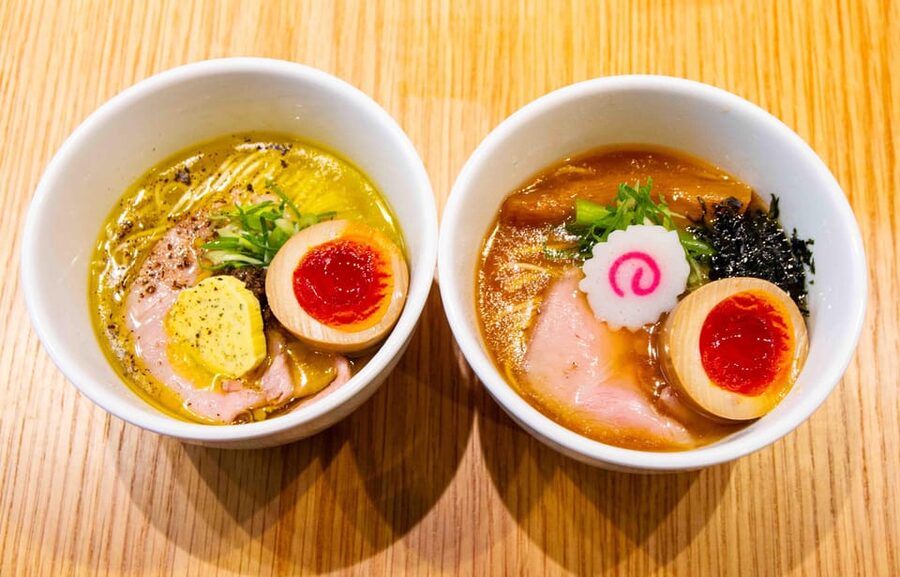
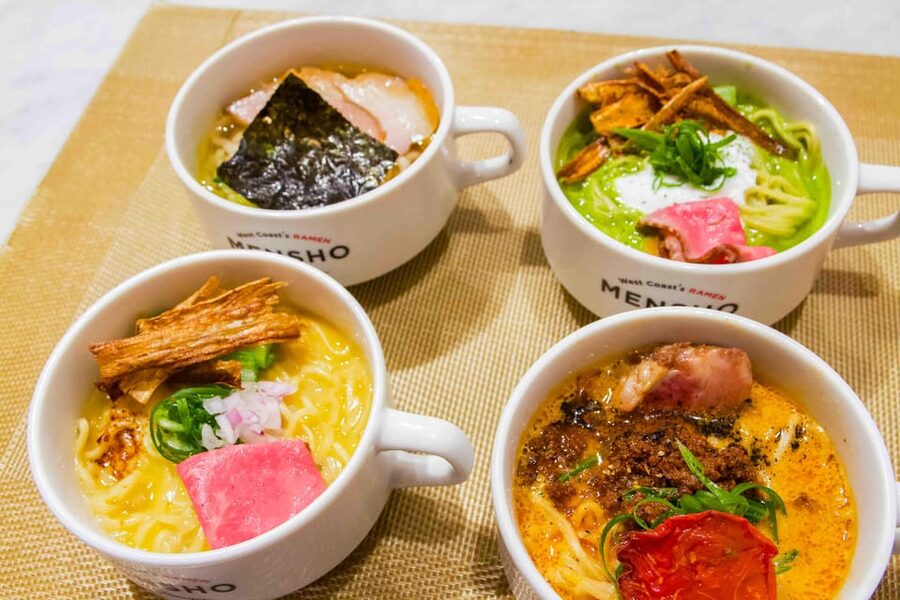
Six bowls of ramen in three hours sounds excessive until you see the clever format: each serving is about one-quarter the size of a normal bowl. You choose six from 11 or 12 options, so you can compare broths, noodles, toppings, and regional styles without ordering three enormous meals.
I like two things right away. First, the tour takes you to three different shops rather than one restaurant with a sampler menu. Second, the guide uses slides and handouts to explain ramen’s origins, styles, and cooking methods. The main drawback is price: at $122 per person, this is a premium food tour, and the 3-kilometer walk plus six tastings may still leave you very full.
In This Review
- Key points before you book
- Why the mini-bowl idea works so well
- Three shops and three different ramen lessons
- Shibuya route: Hokkaido, tonkotsu, and curry
- Shinjuku route: Tokyo classic, chicken paitan, and a luxury bowl
- Ueno route: Kyushu, tsukemen, and modern Tokyo ramen
- The guide is part teacher, part Tokyo helper
- A meal that keeps changing at every stop
- Walking between bowls in Shibuya, Shinjuku, or Ueno
- Is $122 a fair price for a ramen tour?
- Who will enjoy this experience most?
- Booking details worth knowing
- Should you book the Tokyo ramen tasting tour?
- FAQ
- How many bowls of ramen do I get?
- How many ramen shops does the tour visit?
- Which Tokyo neighborhoods are included?
- Are vegetarian or vegan ramen options available?
- Is transportation included?
- How large is the group and what language is the tour in?
Key points before you book
- Six exclusive mini bowls: Each serving is roughly one-quarter of a regular bowl, and you select six from 11 to 12 choices.
- Three shops, three neighborhoods: The route introduces distinct ramen styles in Shibuya, Shinjuku, or Ueno, depending on the option and day.
- A real lesson, not just lunch: Slides and handouts cover ramen’s origins, regional types, broth, noodles, and preparation.
- Small English-speaking group: The group is limited to eight people, with guides including Sahori, Bunga, Makayla, Michaela, Daisy, Brian, and Manny.
- Walking is part of the meal plan: Expect about 3 kilometers on foot, with train travel sometimes required and not included.
- Not suitable for vegetarian diets: Every broth on this tour contains chicken, pork, and fish. A separate vegan and vegetarian tour is offered.
Why the mini-bowl idea works so well
A full Tokyo ramen bowl can be a serious commitment. You may love tonkotsu but have no room left for curry ramen, or order miso and never get to try tsukemen. This tour solves that problem with small servings that are made only for the tasting experience.
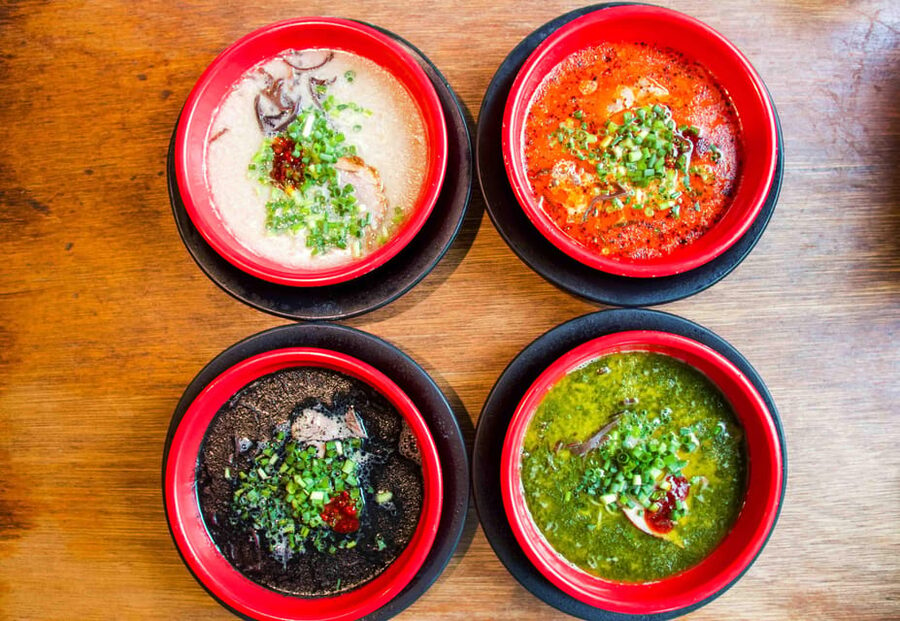
You choose two styles at each shop, for six bowls in all. The selection changes by route, but the choices cover a broad range. You might compare a light classic broth with a thick chicken broth, then try something less familiar, such as curry, squid ink, pesto, or dipping ramen.
The bowls are small, not tiny. That distinction matters. Six quarter-size servings add up to roughly one and a half full bowls, before counting toppings and the included drink. Walking between stops helps, but you should still eat lightly beforehand. One sensible plan is to skip lunch if you take an afternoon tour, or have only a small breakfast if the tour starts earlier.
The format also gives you room to form your own opinion. You do not need to pretend every style is your favorite. A guide can explain why a broth tastes smoky, salty, creamy, or savory, but your job is simply to notice what suits you.
A few more Tokyo tours and experiences worth a look
Three shops and three different ramen lessons
The appeal of this experience lies in the progression from shop to shop. These are not six versions of the same pork broth. Each stop introduces a different approach to ramen.
The precise order and neighborhood depend on the route you book. Shibuya, Shinjuku, and Ueno each have their own lineup.
Shibuya route: Hokkaido, tonkotsu, and curry
The Shibuya route begins with classic Hokkaido ramen. Hokkaido is strongly associated with miso ramen, hearty flavors, and noodles with enough character to hold up to a fuller broth. This first bowl gives you a useful reference point for the rest of the tasting.
The second stop moves to fusion tonkotsu, built around pork-bone broth but presented in a more modern style. Tonkotsu is often creamy and substantial, so the quarter-size bowl is especially helpful here. You get the signature texture without having to surrender your appetite for the remaining stops.
The third shop serves savory curry ramen. This is the sort of bowl many first-time visitors would not think to order on their own. It shows how far ramen can move from the familiar soy, salt, and pork-bone categories while still feeling like ramen.
The Shibuya route also gives you time on foot in one of Tokyo’s best-known districts. One tour guest specifically described it as a good walking tour of Shibuya in addition to the food. Do not expect a full sightseeing tour of the district, but the movement between restaurants adds some city texture to the meal.
Shinjuku route: Tokyo classic, chicken paitan, and a luxury bowl
The Shinjuku route opens with classic Tokyo ramen. This style offers a foundation for understanding the dish, with a more traditional Tokyo profile before the later bowls become heavier or more unusual.
Next comes modern tori paitan, a rich chicken ramen. Chicken-based broths can be silky and dense, and this bowl makes a useful contrast with pork-based tonkotsu. The guide can point out differences in the soup and noodle pairing, which are easy to miss when you eat ramen one bowl at a time.
The last stop features a luxurious chicken or fish ramen. This gives the route a polished finish and keeps the tasting focused on contrast. You are not simply sampling regional names. You are comparing the ingredients that shape the final bowl.
The practical detail to check is the finish point. The tour starts in Shibuya and may end in Shinjuku, depending on the day and route. Meeting points can also vary by option, so read the selected route carefully before you set out.
Ueno route: Kyushu, tsukemen, and modern Tokyo ramen
The Ueno route begins with classic Kyushu ramen. Kyushu is closely linked with tonkotsu, so this stop provides a regional point of comparison with the fusion pork-bone bowl on the Shibuya route.
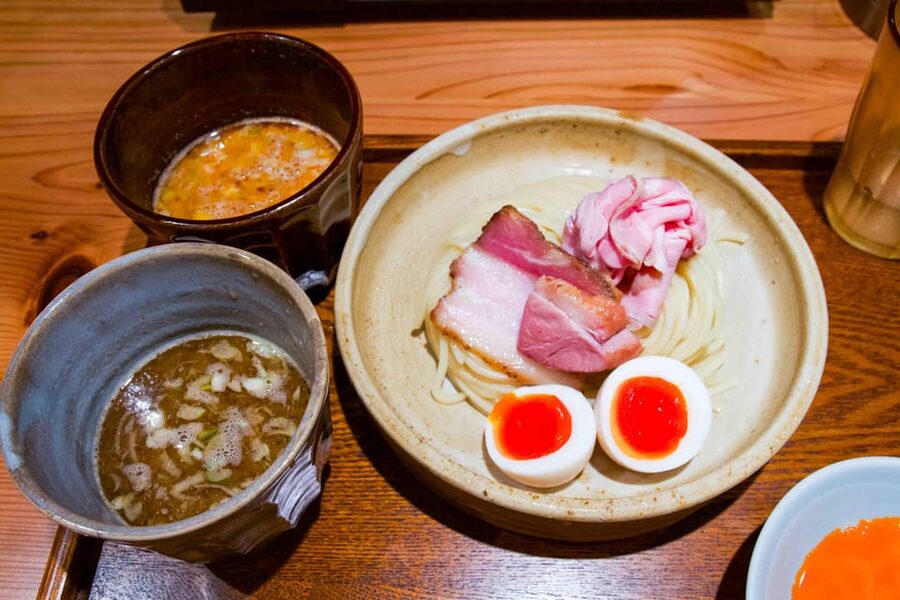
The second shop serves contemporary tsukemen, or dipping ramen. Instead of noodles sitting in broth, you dip them into a concentrated sauce. It is a different eating method as well as a different flavor and texture experience, making it one of the most useful stops for someone who has only tried standard ramen.
The final stop is modern Tokyo ramen. After the traditional Kyushu bowl and the separate dipping style, this closing bowl brings the tasting back to Tokyo while showing how local shops continue to experiment.
A train ticket may be needed on some routes, and it is not included in the tour price. That is not a major issue in Tokyo, but you should keep a transit card topped up and allow for the fact that this is a moving food tour, not three restaurants clustered on one block.





The guide is part teacher, part Tokyo helper
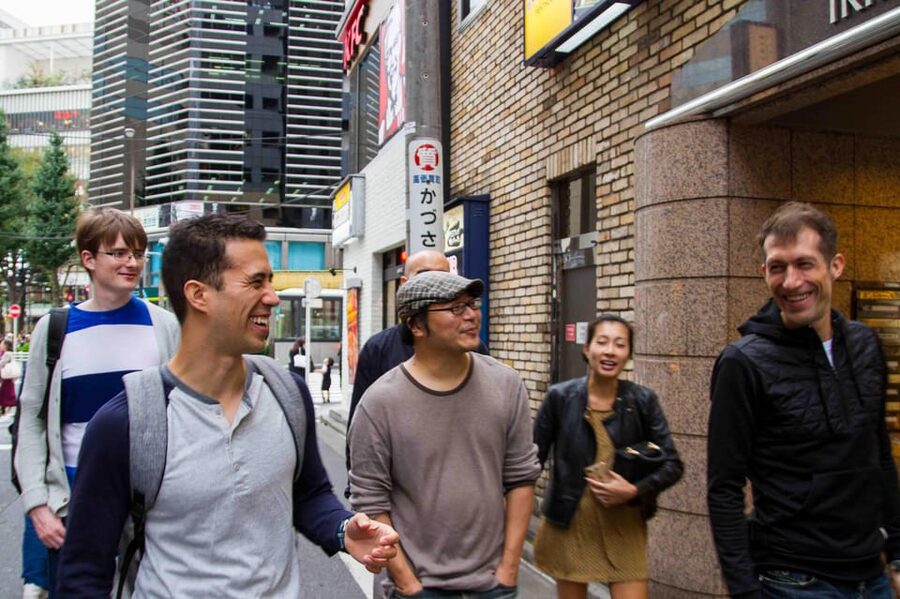
The guide can make or break a food tour, and this experience relies heavily on that person. The most praised guides include Sahori, Bunga, Makayla, Michaela, Daisy, Brian, and Manny. The names vary by date, so you cannot necessarily request a particular person, but the guide is consistently presented as an important part of the experience.
Sahori is described as warm, clear, and especially good at explaining the food. Bunga brings strong enthusiasm for ramen and has shared useful advice about Japan beyond the meal. Makayla has used an iPad presentation to show how ramen came to Japan and changed over the last century. Daisy has helped with wider Tokyo questions and even assisted one family with an anime-themed reservation.
Those details tell you what to expect from the guiding style. You are not merely led from one ticket machine to the next. You get context, explanations, and a chance to ask questions. The best guides connect each bowl to a broader story about regional cooking and modern Japanese food culture.
The presentation aids matter more than they may sound. Ramen terminology can become a blur after the second bowl. Visual slides make it easier to remember the difference between broth types, noodle styles, and regional traditions. If you want to continue eating ramen after the tour, this information gives you a better way to read menus and choose with purpose.
The guides also appear to be useful for general Tokyo advice. That is a welcome bonus, though I would treat it as an extra rather than the main reason to book. The core product is still the ramen tasting.
A meal that keeps changing at every stop
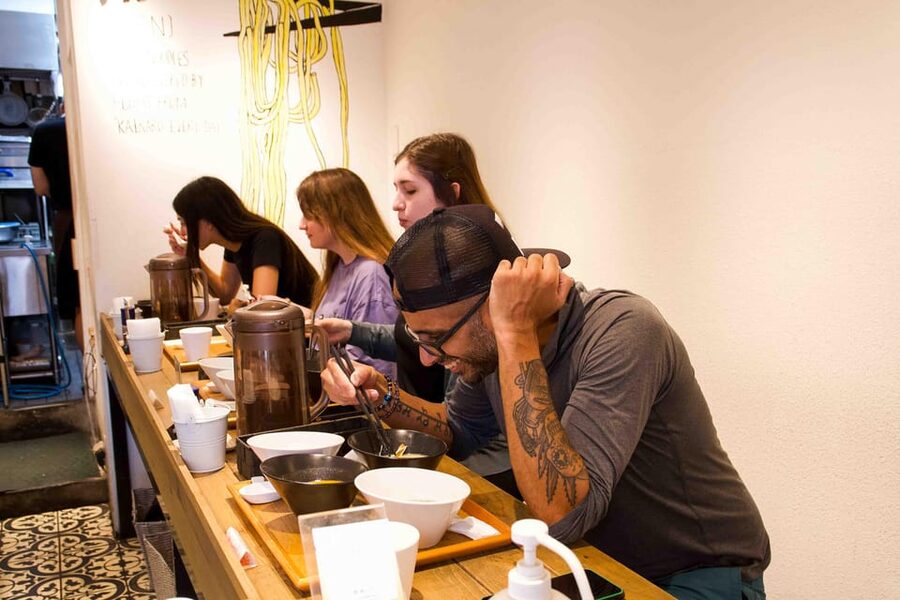
The strongest part of the tour is the variety. One bowl may be a familiar salty or miso style. The next may be a thick chicken broth. Later, you could meet curry ramen, squid ink ramen, pesto, or a new noodle style connected with Hokkaido.
That range is valuable because ramen is not one fixed dish. The noodles can be thin, thick, straight, or curly. The broth can be clear, creamy, fish-based, chicken-based, pork-based, or blended. Toppings and seasonings shift the balance again.
One particularly useful feature is the option to choose your own six bowls. You can select safe choices if you are new to ramen, or use the tour to try the oddest items on the menu. If your group has different tastes, everyone can make different choices and compare favorites afterward.
The only catch is that menus and available choices can vary. The experience promises a selection of 11 to 12 ramen styles, not every style on every route. Your guide will explain the choices available at each shop, and your six selections will depend on what is being served that day.
Walking between bowls in Shibuya, Shinjuku, or Ueno
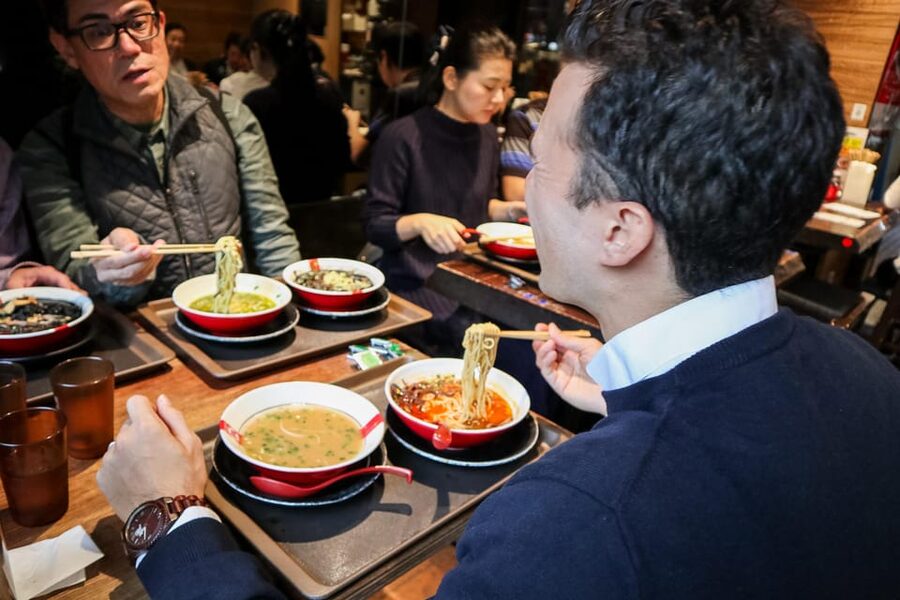
The tour covers about 3 kilometers, or 1.86 miles. That is not an extreme distance, but it is enough to matter when you are eating six portions and navigating city streets.
I see the walking as a plus. It breaks up the meal, lets you see parts of the neighborhood between restaurants, and keeps the experience from feeling like a succession of tastings in one room. It also gives the guide a chance to point out useful Tokyo details along the way.
Still, wear comfortable shoes. The tour is not a good fit if you have a low level of fitness or prefer to avoid extended walking. A train ride may be part of the route, and you pay that fare separately.
Weather can affect the experience. One group faced heavy rain between stops and took a taxi for the final leg with the guide’s help. That is reassuring, but you should still bring suitable shoes and rain protection when the forecast looks poor.
The tour starts in Shibuya and ends in Ebisu or Shinjuku, depending on the day. That can work well for an evening plan, since you finish in areas with plenty of food and entertainment, but check the endpoint before booking a timed attraction afterward.
Is $122 a fair price for a ramen tour?
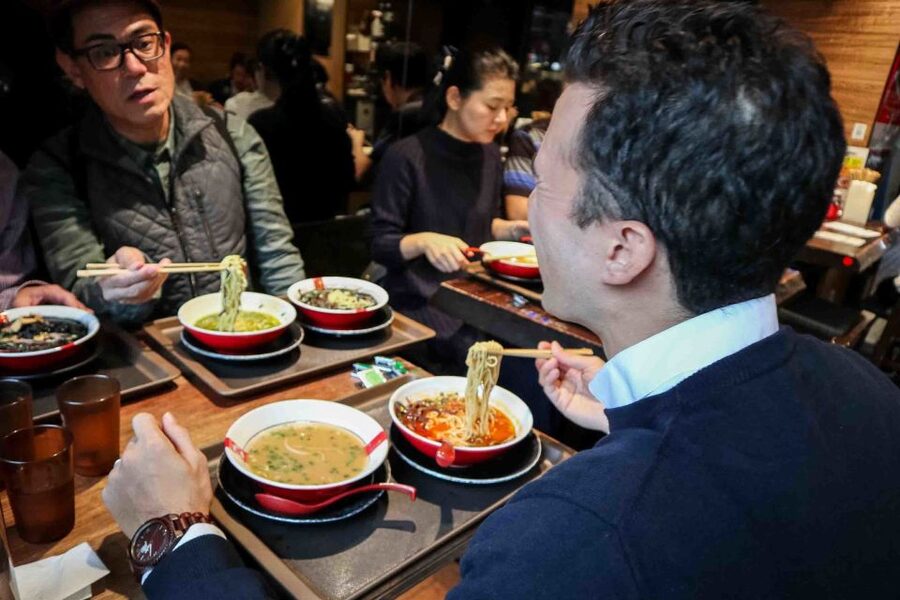
At $122, this is not a cheap way to eat ramen. You could order individual bowls for much less, especially if you choose simple neighborhood shops and skip the guide.
The value comes from access and structure. You get six special tasting portions, three selected shops, an English-speaking guide, a beverage, and an organized lesson. You also avoid the usual problem of ordering a full bowl and finding out too late that the style is not for you.
The tour makes the most financial sense if you want to taste widely, have limited time in Tokyo, or feel unsure about Japanese menus. It is less appealing if your main goal is simply to eat one large, inexpensive bowl of ramen.
Some people may consider the price high even after enjoying the food. I think it is easier to justify for first-time visitors who want a guided introduction, especially when you count the time saved finding and comparing shops. Dedicated ramen fans may also see the value in trying styles they would not locate alone.
The included drink is a small benefit, not a major part of the calculation. Train tickets are extra, and the tour does not include other meals.
Who will enjoy this experience most?
This tour suits you if ramen is already high on your Tokyo list, or if you want one food experience that teaches you how broad the category really is. It is also a good choice for curious eaters who like comparing small portions rather than committing to one dish.
Families can take part, provided everyone is comfortable walking and eating several servings. A nine-year-old joined one group successfully, and children who enjoy noodles may find the variety exciting. The three-hour length and full stomach are the main things to consider.
Small groups help here. With a maximum of eight participants, the guide has a better chance to answer questions and keep the tasting organized. A smaller group may also make it easier to discuss which bowls everyone preferred.
This is not the right tour for vegans or vegetarians. All the broths contain chicken, pork, and fish. Book the separate vegan and vegetarian ramen tasting tour instead.
You should also think about timing. If you take the tour early in your trip, you can use what you learn to choose ramen shops for the rest of your visit. Several people wished they had not saved it for their final day, since the guide’s wider Tokyo suggestions could have helped earlier.
Booking details worth knowing
The experience lasts three hours and is offered with an English-speaking live guide. Starting times vary, so you need to check availability for your date.
The meeting point changes with the option booked. Read the route details closely, especially if you are choosing between Shibuya, Shinjuku, and Ueno.
Free cancellation is available up to 24 hours before the tour for a full refund. You can also reserve now and pay later, which is useful if your Tokyo schedule is still shifting.
The tour has a rating of 4.9 from 432 reviews, with repeated praise for the guides, the range of ramen, and the teaching. The same practical cautions come up too: it is expensive, and it is a lot of food.
Should you book the Tokyo ramen tasting tour?
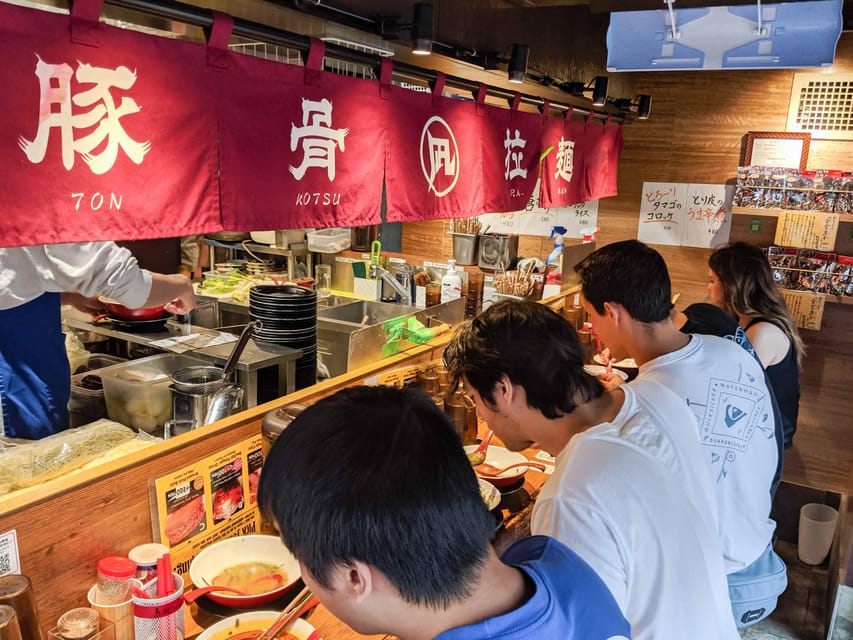
Book it if you want more than a meal. The six mini bowls let you compare styles that would be difficult to sample alone, and the guide’s explanations give the tasting a clear purpose. I especially like the chance to choose from 11 or 12 bowls and the contrast between traditional, regional, and modern ramen.
Skip it if you are watching your food budget, dislike walking, or only want a single classic bowl. You should also choose the separate vegan and vegetarian option if you do not eat chicken, pork, or fish.
For most ramen fans with three hours to spare, this is a well-planned introduction to Tokyo’s noodle culture. Go hungry, wear good shoes, and book it early enough in your trip to make use of the advice you collect along the way.
FAQ
How many bowls of ramen do I get?
You get six mini bowls of ramen. Each is about one-quarter the size of a regular bowl, and you choose the six from a selection of 11 to 12 options.
How many ramen shops does the tour visit?
The tour visits three award-winning ramen shops. You generally choose two mini bowls at each stop.
Which Tokyo neighborhoods are included?
The available routes cover Shibuya, Shinjuku, or Ueno. The exact route depends on the option and day. The tour starts in Shibuya and ends in Ebisu or Shinjuku, depending on the schedule.
Are vegetarian or vegan ramen options available?
No. All broths on this tour contain chicken, pork, and fish. Vegans and vegetarians should book the separate vegan and vegetarian ramen tasting tour.
Is transportation included?
Train tickets are not included if the route requires train travel. The tour also involves about 3 kilometers of walking between locations.
How large is the group and what language is the tour in?
The tour is conducted in English, and the group is limited to eight participants.
More Tokyo Food Tours in Tokyo


More tours in Tokyo we've reviewed











Tokyo Food Tours, compared.
 ★ 5.0Tokyo: Shinjuku Food Tour (13 Dishes at 4 Local Eateries)From $86
 ★ 4.9Tokyo: Shinjuku Food Tour (15 Dishes and 4 Eateries)From $853 hours
 ★ 5.0Best of Shinjuku: Izakaya Food Tour (4 Stops, 14+ Tastings)From $92
 ★ 5.0Tokyo Night Foodie Tour in Shinjuku – Seasonal Sushi, Wagyu BeefFrom $111
 ★ 5.0Eat and Drink Like a Local: Tokyo Ueno Food Tour-Taverns&RamenFrom $95
 ★ 5.0Tokyo: Shibuya Food Tour (13 dishes and 4 Eateries)From $77