
Reviewed · CYCLING TOURS
Tokyo downtown bicycle tour Tokyo Backstreets Bike Tour
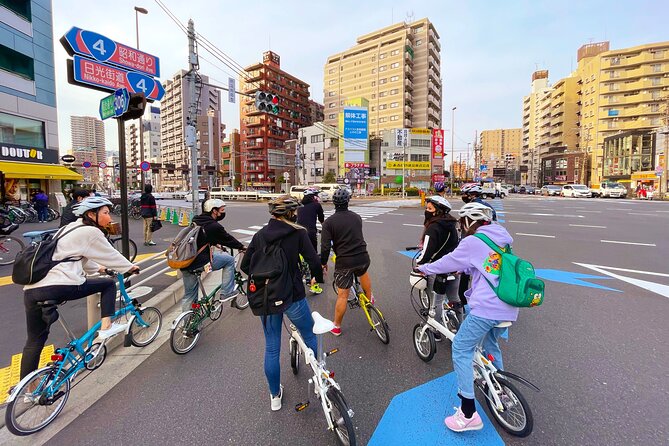
Tokyo’s best surprises are often found beyond the famous crossings and department stores. On this four-hour backstreets ride, you cycle through eastern Tokyo, stopping at small temples, a traditional sweet shop, a craft museum, a Japanese garden, and ordinary neighborhood streets that most walking tours skip.
I like the small maximum of six people and the flexible route. I also like the useful mix of major sights, such as Senso-ji and Tokyo Skytree, with quieter places like Imado Shrine and Kyojima Minami Park. The main consideration is the folding-bike size: standard bikes suit riders from about 140 to 180 centimeters tall, so taller riders should contact the operator before booking.
In This Review
- Key points to know before you book
- Why a bicycle works so well in eastern Tokyo
- Yamamotoya and the first taste of sakuramochi
- Honryuin Matsuchiyama Shoden and its unusual daikon symbols
- Imado Shrine, beckoning cats, and local spiritual life
- Traditional crafts at the Edo Taito center
- Senso-ji by bicycle, then on foot
- Kyu Yasuda Garden and the Ryogoku sumo district
- Oyokogawa Water Park and Tokyo Skytree
- Kyojima Minami Park and everyday Tokyo
- Bikes, helmets, and the practical riding experience
- What the guide adds to the ride
- Price, timing, and overall value
- Who will enjoy this Tokyo bike tour
- Should you book the Tokyo Backstreets Bike Tour?
- FAQ
- How long is the Tokyo Backstreets Bike Tour?
- What sights does the tour visit?
- Are bicycles and helmets provided?
- What rider heights suit the standard bikes?
- Can I use a tandem bike?
- Where does the tour start and end?
Key points to know before you book
- A 15-kilometer ride can cover far more ground than a walking tour, while still leaving time to stop and look around.
- Guide Takeshi Akiyama keeps the pace personal and flexible, with time for questions, photos, and route changes.
- Sakuramochi at Yamamotoya gives the tour a tasty start and a small lesson in Japanese food tradition.
- The route mixes famous Tokyo sights with local streets, including Senso-ji, Ryogoku, Skytree, and old-fashioned shopping arcades.
- Folding bikes and helmets are provided, with tandem-bike use possible if arranged at least three days ahead.
- The tour is weather dependent, and cancellations caused by poor weather qualify for a new date or a full refund.
Why a bicycle works so well in eastern Tokyo
Tokyo is easy to explore by train, but rail travel can hide the city between stations. A bicycle lets you see the short stretches in between: quiet lanes, small storefronts, temple gates, canals, residential blocks, and neighborhoods where daily life carries on without much fuss.
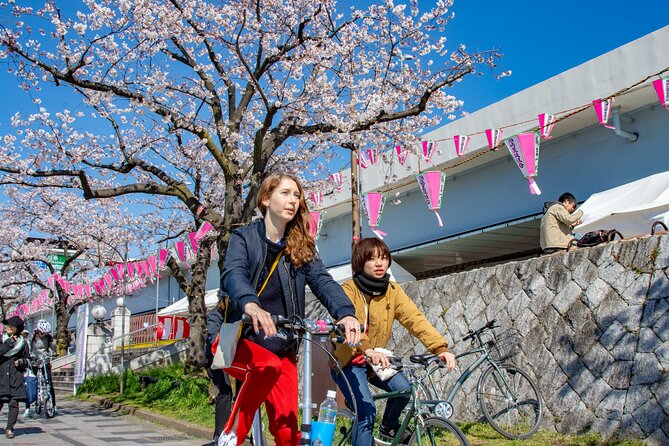
This tour focuses on the eastern side of central Tokyo, around Asakusa, Sumida, Ryogoku, and Skytree. It is a useful part of the city for cycling because the route includes relatively quiet streets and parks rather than forcing you onto major traffic corridors. One family described the ride as easy, and another older couple found the streets comfortable for cycling.
You should still expect a real ride, not a short photo stop with a bicycle. One participant covered about 15 kilometers in four hours. That is a manageable distance for most people who are comfortable on a bike, but summer heat, rain, or simple tiredness can change the feel of the outing.
The pace is described as relaxed. Stops are frequent, and the guide can adjust the plan around your interests. If you want more time at temples, neighborhood streets, or craft shops, say so early. This flexibility is one of the strongest reasons to choose a small group instead of a large, fixed-route bike tour.
Other cycling tours in Tokyo
Yamamotoya and the first taste of sakuramochi
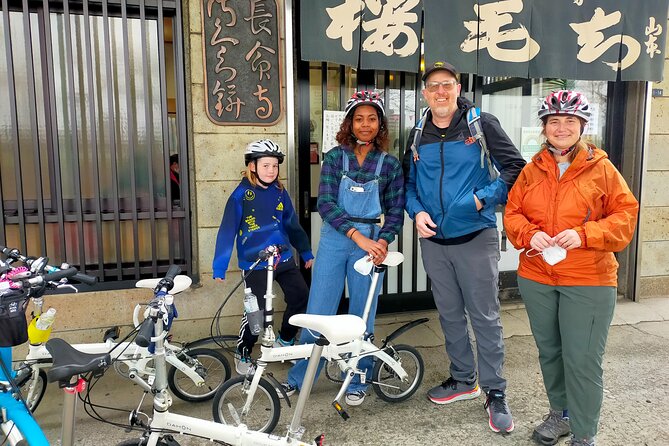
The ride begins with a stop at Yamamotoya, known for Chomeiji sakuramochi. This Japanese sweet is made with red bean paste wrapped in a salt-pickled cherry leaf. The leaf is part of the experience, not just decoration, giving the treat a light salty note alongside the sweetness of the bean filling.
The shop is said to have created the first sakuramochi, making this more than a quick snack break. You get a small introduction to the way Japanese food connects seasonal plants, local custom, and long-running businesses.
Ten minutes is enough for a taste and a brief explanation. If you are new to Japanese sweets, this is a helpful first sample because it is traditional but not an elaborate formal dessert. Water is also included, which matters on a warm day.
Honryuin Matsuchiyama Shoden and its unusual daikon symbols
Next comes Honryuin Matsuchiyama Shoden, a temple linked with the Senso-ji complex and founded in 595. Its most striking feature is the repeated use of images of daikon, or Japanese radishes, along with pouches.
The daikon represents the mind caught in ignorance, while the pouch carries its own religious meaning. The guide explains these symbols in context, helping you see why a humble vegetable appears so often at a Buddhist temple.
The stop lasts about 20 minutes. It is a quiet counterpoint to Senso-ji, where the crowds and large gates can dominate your attention. If you want a calm temple visit with time to notice details, this is one of the better parts of the route.
Imado Shrine, beckoning cats, and local spiritual life
Imado Shrine dates to 1063 and is now known as a power spot for people hoping to find love or a marriage partner. Its connection with beckoning cats, or fortune cats, gives the shrine a lighter and more familiar visual character.
The shrine is associated with the first beckoning cat, according to local tradition. The guide can explain the connection between the figures, good fortune, and the shrine’s modern reputation.
You spend about 15 minutes here. That is not long enough for a major shrine visit, but it works well as a compact stop between longer cycling stretches. The appeal is less about grand architecture and more about a specific piece of Japanese belief and popular culture.
Traditional crafts at the Edo Taito center
The Edo Taito Traditional Crafts Center displays Japanese handicrafts and offers a look at the care behind everyday objects. This is a useful stop for anyone interested in how Japanese craftsmanship moves from raw material to finished item.
The visit lasts around 20 minutes. The museum is not presented as a long, formal museum tour, so you should expect a focused look rather than a full afternoon of exhibits. The guide can add meaning to what you see, especially if you are curious about local makers and traditional techniques.
A flexible itinerary may allow extra time at a craft shop or a candy-making business. That possibility came up in one account of the ride, but the exact stops can vary according to the group and the guide’s judgment. Ask Takeshi what is possible on your date.

Senso-ji by bicycle, then on foot
The tour cycles in front of Kaminarimon, the huge gate that marks the approach to Senso-ji in Asakusa. You leave the bikes and walk into the temple grounds, which is the right way to handle this landmark. Trying to view Senso-ji while riding would miss the whole point.
You have about 20 minutes here. That gives you time to see the gate and enter the temple area, but it is not a full Asakusa tour. If Senso-ji is a top priority, tell the guide. The route can be adjusted, but the four-hour schedule still limits how long you can spend at each major sight.
This stop is a good example of the tour’s balance. You get a famous Tokyo landmark, then move on before the outing turns into a standard sightseeing circuit. The bike lets you connect Senso-ji with smaller places that are harder to reach efficiently on foot.
Kyu Yasuda Garden and the Ryogoku sumo district
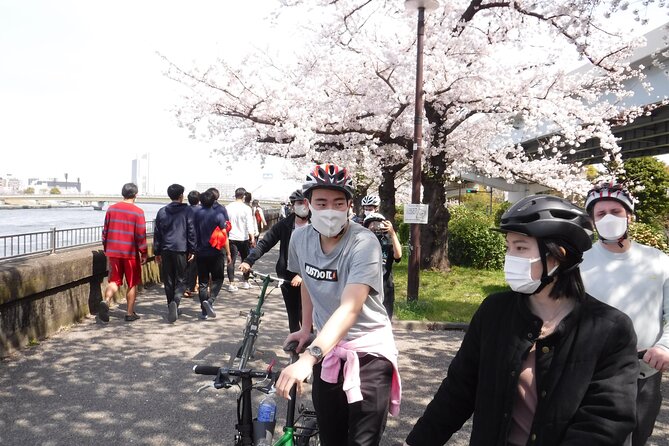
Kyu Yasuda Garden was built in the 17th century and offers a short walk through a traditional Japanese garden. The 20-minute visit gives you a change of pace after the temple and city streets.
The garden is valuable because it shows a different side of Tokyo’s past. Instead of looking up at towers or passing through crowded shopping areas, you pause beside a carefully arranged garden setting. The tour does not promise a long garden visit, so think of it as a calm interlude rather than a destination in itself.
From there, the group cycles past Ryogoku Kokugikan, Tokyo’s famous sumo stadium. The stop is brief, around five minutes, and is mainly for photographs. If a sumo tournament is taking place, the area may have extra interest, but the tour does not include entry to the stadium.
Even without going inside, Ryogoku helps place the neighborhood on the map. It is one of the city’s key sumo districts, and the guide can provide context as you pass the venue.
Oyokogawa Water Park and Tokyo Skytree
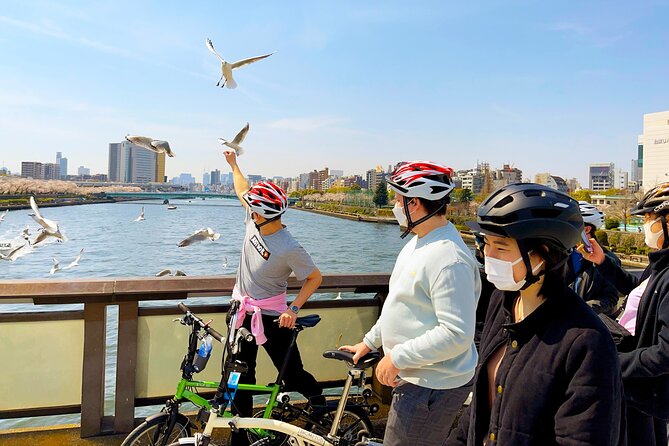
The route then follows Oyokogawa Water Park for roughly 30 minutes. This is one of the longer cycling sections, giving you time to settle into the ride rather than stopping every few minutes.
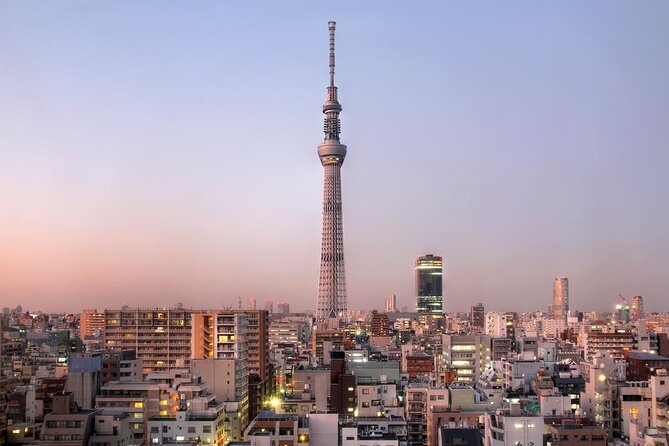
The park route leads toward Tokyo Skytree. You cycle beneath the tower and pause for about 10 minutes. The tower is one of Tokyo’s most recognizable modern landmarks, but this experience does not include an observation-deck ticket or an interior visit.
That distinction matters when you compare this tour with a Skytree admission package. You get the setting and photo opportunity from ground level, not a panoramic view from above. The benefit is that Skytree becomes part of a broader neighborhood ride instead of taking up several hours on its own.
Kyojima Minami Park and everyday Tokyo
The final major stop is Kyojima Minami Park, where the tour passes old-fashioned shopping malls and local streets. You spend about 30 minutes in this area, seeing a more ordinary side of the city.
This is the section I find most useful for understanding Tokyo beyond its famous sights. Small shopping streets show the practical city: places where people buy food, handle errands, and live their daily routines. The streets may not provide a long list of headline attractions, but they give you a better sense of how a neighborhood works.
The contrast with Senso-ji and Skytree is the point. You see Tokyo as a collection of communities, not just a set of monuments. The ride ends back at the original meeting point in Sumida City.
Bikes, helmets, and the practical riding experience
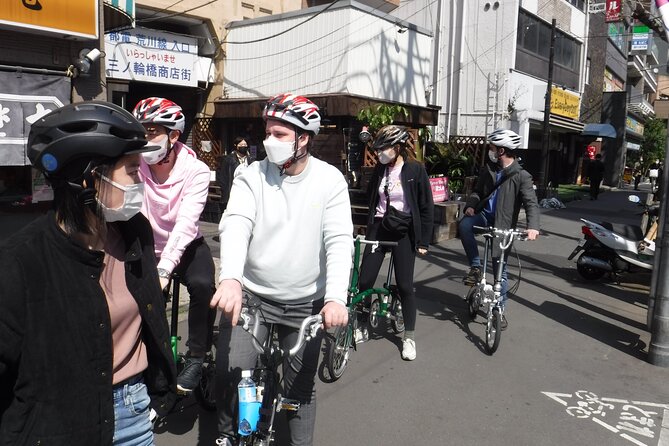
The supplied bikes are folding bicycles with wheel sizes from 14 to 20 inches. They fit riders from approximately 140 to 180 centimeters tall. If you are over 180 centimeters, contact the operator in advance rather than hoping the standard bike will be comfortable.
Helmets are provided but are not mandatory. I recommend wearing one, especially if you are not used to cycling in an unfamiliar city. The equipment has been described as being in good condition, and the route is generally easy to follow.
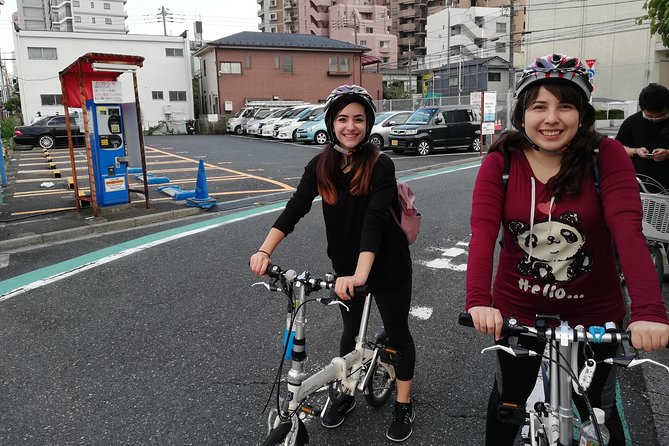
A tandem bike can be arranged, but you need to request it at least three days before the tour. This is useful for families with a child who is not ready to ride independently. One family used a tandem for a nine-year-old, while children aged 12 and 14 rode their own bikes.
The operator says most people can participate, but you should still be comfortable riding for several hours. The tour is not suited to someone seeking a completely passive sightseeing experience. You will be pedaling, stopping, starting, and occasionally walking the bike near busy sights.
What the guide adds to the ride
Guide Takeshi Akiyama is central to the experience. His role is not just to lead the group through streets. He explains temple symbols, shrine customs, food traditions, local history, and present-day neighborhood life.
He also takes photos during the ride, which is a practical bonus if you want pictures of your group rather than only scenery. The tour’s small size makes it easier to ask questions and request a short pause.
The guide has also helped participants with local restaurant suggestions. That kind of advice can be more useful than another list of famous places, especially if you want to eat near the neighborhoods you have just explored.
The route is not fully private by default. A small group can include other people, even if your booking is for only your own party. The maximum is six, so this is still far more personal than a large coach or mass-market cycling tour.
Price, timing, and overall value
At $65.41 per person, the tour is priced above a basic bicycle rental, but you are paying for much more than the bike. The fee covers about four hours of guiding, the bicycle, a helmet, water, and the traditional sweet-shop snack.
The value is strongest if you want context and efficient sightseeing. In four hours, you can reach temples, a shrine, a museum, a garden, Ryogoku, Skytree, and local shopping streets. Walking between all of those areas would take far longer, and navigating the route alone would require extra planning.
The value is weaker if you only want Tokyo’s main highlights. Senso-ji and Skytree receive short visits, and there is no admission to Skytree or the sumo stadium. You are choosing breadth, local streets, and explanation over long stays at major attractions.
Group discounts may reduce the cost for larger bookings. Since the group limit is six people, families and small parties should check the available rate when booking.
The meeting point is inside the Synapse shared office at 2-24-14 Higashimukojima, Sumida City, Tokyo 131-0032. One person found the pickup point a little confusing, so allow extra time and confirm the exact entrance before the start. It is near public transportation, and the tour returns to the same place.
Who will enjoy this Tokyo bike tour
I would choose this tour for a first or second visit to Tokyo if you want to understand how the city fits together. It is also a good option for repeat visitors who have already seen Shibuya, Shinjuku, and the standard central sights.
Families can do well here, provided everyone can manage the ride. The tandem-bike option is especially useful, but arrange it in advance. Older riders may also find the quiet streets and relaxed pace comfortable, assuming they are confident on a bicycle.
The tour suits you if you enjoy:
- Local neighborhoods more than shopping malls
- Short visits to many different places
- Japanese food customs and temple symbolism
- Flexible guiding and personal questions
- Moderate exercise during sightseeing
- Photography and everyday city scenes
You may want another experience if you dislike cycling, need a guaranteed private group, want a long visit inside Senso-ji, or expect a high-speed itinerary covering every major Tokyo landmark. You should also check your height and arrange a suitable bike before booking.
Should you book the Tokyo Backstreets Bike Tour?
Book it if you want to cover a lot of eastern Tokyo while seeing places you would probably miss on foot. The combination of sakuramochi, small temples, traditional crafts, a Japanese garden, local shopping streets, Senso-ji, and Skytree gives the half-day ride a good range.
I especially like the chance to adjust the route with Takeshi, the small group size, and the focus on quiet streets. Just treat the tour as an introduction rather than a deep visit to each attraction. For active visitors who want Tokyo to feel like a lived-in city, the $65.41 price is fair value.
Free cancellation is available up to 24 hours before the start time. If bad weather cancels the ride, you can choose another date or receive a full refund. The same applies if the minimum number of participants is not met.
FAQ
How long is the Tokyo Backstreets Bike Tour?
The tour lasts approximately four hours. One recorded route covered about 15 kilometers, though the exact distance may vary with the group and route adjustments.
What sights does the tour visit?
The planned route includes Yamamotoya, Honryuin Matsuchiyama Shoden, Imado Shrine, the Edo Taito Traditional Crafts Center, Senso-ji Temple, Kyu Yasuda Garden, Ryogoku Kokugikan, Oyokogawa Water Park, Tokyo Skytree, and Kyojima Minami Park.
Are bicycles and helmets provided?
Yes. Folding bikes and helmets are provided. Helmets are available but not mandatory.
What rider heights suit the standard bikes?
The folding bikes are suitable for people approximately 140 to 180 centimeters tall. Contact the operator before booking if you are over 180 centimeters.
Can I use a tandem bike?
Yes, but you must request a tandem bike at least three days before the booked tour date.
Where does the tour start and end?
The tour starts at Tokyo Backstreets Bike Tour, inside the Synapse shared office at 2-24-14 Higashimukojima, Sumida City, Tokyo 131-0032. It ends back at the meeting point.
More Cycling Tours in Tokyo

More tours in Tokyo we've reviewed







Cycling Tours, compared.
 ★ 5.0Tokyo Guided Small-Group Biking TourFrom $106
 ★ 5.0Tokyo Great Cycling TourFrom $99
 ★ 5.0Tokyo Top Highlights 3h Guided E-bike TourFrom $63
 ★ 5.03h Tokyo E-Bike Tour: Hidden Gems, and Local Life with guideFrom $63
 ★ 4.8Tokyo: 3-Hour Bike or E-Bike City Highlights TourFrom $453 hours
 ★ 4.8Tokyo: 3-hour Guided E-Bike Tour of the City’s Hidden GemsFrom $65