
Reviewed · MT FUJI DAY TRIPS
Tokyo Day Tour in Mt. Fuji, Lake Ashi Cruise and Owakudani Cable
Mount Fuji is the star here, but the best part is how many different views you get in one day. You may see the mountain above Lake Ashi, from Owakudani’s steaming volcanic valley, beside swans at Yamanaka Lake, and reflected in the clear ponds of Oshino Hakkai. The tour does not take you to the mountain itself, so think of it as a Fuji viewing and Hakone day trip.
I like the six-stop route and the included Hakone Ropeway ticket. I also like the easy coach transport from central Tokyo, especially since reaching Hakone and the Fuji Five Lakes by public transport in one day would take careful planning. The main catch is time: traffic can swallow hours, and the return may be after 8 p.m. on weekends and holidays.
In This Review
- Key points to know before you book
- What this Tokyo to Fuji day trip really covers
- Hakone Shrine and the red torii at Lake Ashi
- Lake Ashi aboard the optional pirate ship
- The Hakone Ropeway and Owakudani’s volcanic vents
- Yamanaka Lake, the swan-shaped stop
- Oshino Hakkai and Fuji reflections
- How the schedule feels on the ground
- Mount Fuji views are never promised
- Is $67.39 a good value?
- Who should book this day out?
- My call: book it for range, not relaxation
- FAQ
- Does this tour visit Mount Fuji itself?
- How long does the tour last?
- Is the Hakone Ropeway ticket included?
- Is the Lake Ashi pirate ship included?
- Is lunch included?
- Can I see Mount Fuji on every departure?
- What languages does the guide speak?
- How large is the tour group?
Key points to know before you book
- Fuji views depend entirely on weather: Clear skies can produce unforgettable photographs, but the mountain may be hidden by cloud.
- The Hakone Ropeway ticket is included: This saves 1,000 Japanese yen per person if the ride operates.
- The Lake Ashi cruise costs extra: The optional pirate ship ticket is about $12 per person.
- You visit six distinct sights: Hakone Shrine, Lake Ashi, Owakudani, Yamanaka Lake, and Oshino Hakkai are packed into roughly 10 hours.
- The bus group can reach 45 people: A guide keeps the day moving, but this is not a small, private outing.
- Guides speak several languages: English, Japanese, and Chinese are offered, with guides including Jack, Kousei, Tom, Andrew, Sato, and others reported on recent departures.
What this Tokyo to Fuji day trip really covers
The name can cause confusion. You do not climb Mount Fuji or visit a station on the mountain. Instead, you travel through Hakone and the Fuji Five Lakes area, collecting views and short visits at several famous places.
That distinction matters. If your goal is to stand at the Fifth Station on Mount Fuji, hike a trail, or spend a quiet morning at the mountain’s foot, choose another tour. If you have one free day in Tokyo and want a broad taste of Fuji country, this route gives you a lot for the price.
The experience lasts about 10 hours and uses an air-conditioned vehicle. Pickup and drop-off take place at designated points in central Tokyo, rather than at every hotel. You receive the exact meeting details, guide contact number, and vehicle license plate by email around 9 p.m. the night before, so make sure your email and phone are working.
This is a shared group tour with a maximum of 45 people. That size helps keep the cost down to $67.39 per person, but it also means that every stop runs by the clock. You will need to return to the bus when asked. A late arrival or no-show is not eligible for a refund.
A few more Tokyo tours and experiences worth a look
Hakone Shrine and the red torii at Lake Ashi
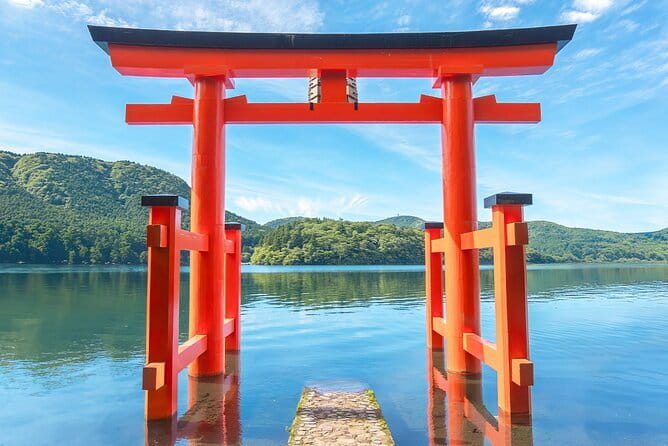
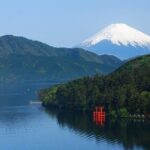
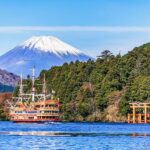
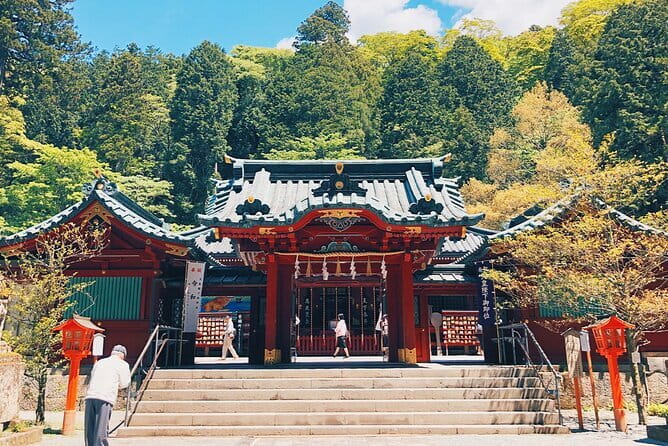
The day begins at Hakone Shrine, one of the prettiest cultural stops on the route. Its famous torii gate appears to rise from Lake Ashi, giving you the classic Hakone photograph: red shrine gate, dark water, and wooded hills behind it.
You have about 50 minutes here. That is enough for photographs and a short look around, though not enough for a slow shrine visit or a long walk through every corner. The lakeside gate can draw a crowd, so your guide may point you toward the best photo position and explain how much time remains.
I like this opening because it adds a Japanese cultural touch before the day turns toward volcanic scenery. You are not seeing only roads and viewpoints. You get a shrine, a sacred lake setting, and a chance to see how religious places fit into the natural world.
Bring small cash for food and small purchases. Some Fuji-area stops do not reliably accept credit cards, and the guide specifically recommends carrying yen.
Lake Ashi aboard the optional pirate ship
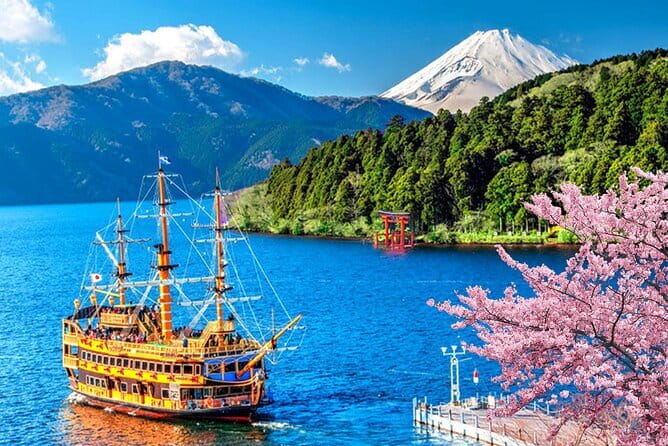
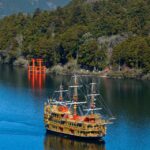
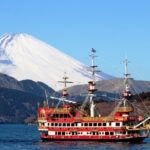
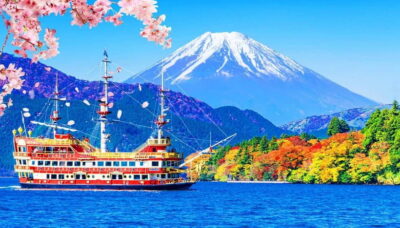
From Hakone Shrine, the group reaches Togendai Port for the Lake Ashi cruise. The boat is designed like a European pirate ship, which sounds a little theatrical, but it makes the crossing memorable and gives you open views across the lake.
The cruise lasts about 25 minutes. From the deck, you may see the torii gate, Hakone’s wooded slopes, and Mount Fuji if the air is clear. The boat ride is also a welcome change from sitting in the coach.
The cruise ticket is not included. It costs about $12 per person, so add that to the advertised price when comparing this tour with other options. The supplied details describe the boat ticket as an extra expense, and the short crossing means you should follow the group closely when boarding and leaving.
Rain can affect the experience. One account describes waiting on the dock in pouring rain, so pack a compact rain jacket even if the forecast looks friendly. The tour operates in changeable mountain weather, and the ship may feel exposed on a cold day.
The Hakone Ropeway and Owakudani’s volcanic vents
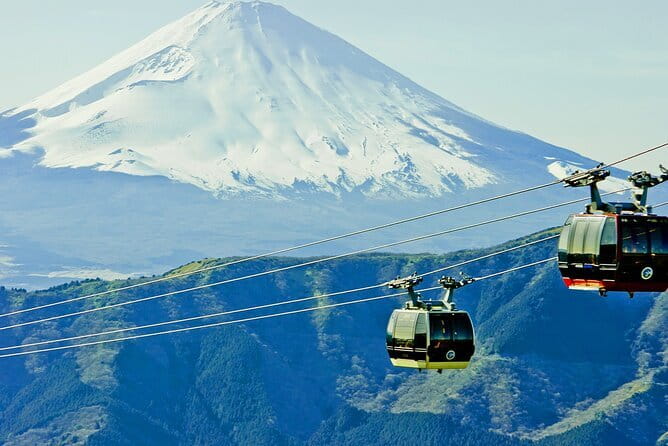
The included Ropeway ride is one of the strongest reasons to choose this outing. From Togendai Station, the cable car carries you over the volcanic area around Owakudani. As the cabins rise, you get a high view of steaming ground, rugged slopes, and, on a clear day, Mount Fuji.
The ride itself takes about 30 minutes within the stop schedule. This is not just transportation. It is one of the day’s main sights, and the elevated view helps you understand the scale of Hakone’s volcanic activity.
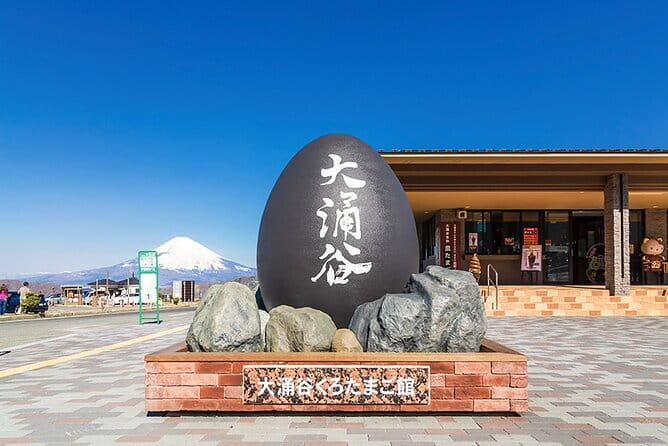
At Owakudani, you have around 50 minutes to walk around the viewing areas and look at the sulfur vents. Steam rising from the earth gives the place an unusual, almost otherworldly feel. The famous local snack is the black egg, boiled in sulfur-rich hot spring water. The shell turns dark, while the egg inside remains familiar. Sampling one is a simple way to connect the geology of the place with something you can eat.
The smell of sulfur can be strong. If you are sensitive to odors, asthma, or other breathing concerns, keep that in mind when deciding how much time to spend near the vents. The site can also be crowded during peak periods.
Ropeway service can stop because of weather or other conditions. If the ride is suspended, the operator says you can request a refund of the 1,000 yen ropeway ticket value per person by email. The mountain views are never guaranteed either. Cloud can cover Fuji even when the rest of the day is bright.
Yamanaka Lake, the swan-shaped stop
The route then moves toward Yamanaka Lake, also called Swan Lake. You have about 20 minutes here, making it mainly a photo stop rather than a long lakeside visit.
The appeal is simple: swans on the water, Mount Fuji behind them, and a quieter setting than some of Hakone’s busier viewpoints. When Fuji is visible, this can be one of the most pleasing compositions of the day. When cloud covers the mountain, the lake and birds still give you something to photograph, though the stop loses much of its special pull.
Twenty minutes goes quickly. Have your camera ready before leaving the bus, and listen for the meeting time. This is a good example of the tour’s basic tradeoff: you see more places, but you rarely have time to linger.
A few more Tokyo tours and experiences worth a look

Oshino Hakkai and Fuji reflections

The final major stop is Oshino Hakkai, a small village known for eight clear ponds fed by snowmelt from Mount Fuji. The water is famously transparent, and the ponds can reflect the mountain when weather cooperates.
You get about 40 minutes here. That allows time to walk among the ponds, take pictures, and look at local food stalls and small shops. It is also a useful place to spend some of your yen, since cash is recommended at several Fuji-area locations.
Oshino Hakkai gives the day a gentler finish after the sulfur vents of Owakudani. The ponds show a different side of Mount Fuji, not as a distant cone over a lake but as a source of water and village life.
The stop can be crowded, especially in high season. Keep your expectations practical. This is a short visit to a popular site, not a peaceful half-day in a rural village.
How the schedule feels on the ground
The schedule is ambitious. The bus journey between Tokyo, Hakone, and the Fuji Five Lakes area can total at least five hours, and weekend traffic may be slow. That leaves a limited amount of time for six stops.
I would call the walking moderate. You are not doing a mountain hike, but you will board and leave the bus several times, walk around shrine and lake areas, and move through Owakudani and Oshino Hakkai. Comfortable shoes are important.
Lunch is not included. Some departures stop at a restaurant, but the time may be short. One account describes a meal that had to be eaten quickly, while another recommends bringing water and snacks or using street food near Hakone Shrine and in the village. I would pack something small and easy to eat. You can still buy a local meal if the schedule allows, but do not depend on a long, leisurely lunch.
Guides often provide short explanations before each stop rather than a constant stream of commentary. That suits you if you prefer free time for photographs. If you want detailed cultural interpretation at every site, you may find the explanations too brief.
The guide’s practical role is just as important as the narration. Guides such as Jack, Kousei, Tom, Andrew, Sato, Peter, Mizuki, and Miskito have been praised for clear instructions, keeping the group together, helping with photographs, and making sure slower walkers are not left behind. The quality of the day can depend heavily on the individual guide, but multilingual guiding is part of the service.
Mount Fuji views are never promised
This is the most important booking warning. Fuji is famously shy. Clouds can gather around the summit and block the mountain for much of the day, even when nearby lakes and valleys are clearly visible.
On a clear day, the route offers several angles and settings. You may see Fuji from Lake Ashi, Owakudani, Yamanaka Lake, and Oshino Hakkai. That variety is a real strength. You are not relying on one viewpoint.
On a cloudy day, the tour becomes a general Hakone and Fuji-area outing. You still have the shrine, cruise, Ropeway, volcanic valley, ponds, and local food, but the central mountain view may disappear. One useful criticism of the schedule is that Fuji visibility may be better earlier in the day, while clouds can build by afternoon. You cannot control the weather, but you can understand the risk before booking.
If seeing Fuji is your only goal, a flexible overnight stay near the mountain gives you better odds. If you want a full sightseeing day and can accept uncertainty, this tour spreads the risk across several attractions.
Is $67.39 a good value?
At $67.39 per person, the tour is priced well for a 10-hour day with coach transport, a guide, and the Ropeway ticket included. The route covers ground that would be costly and time-consuming to arrange independently in a single day.
You should budget another $12 or so for the Lake Ashi pirate ship, plus lunch, drinks, black eggs, and other snacks. The cruise is optional in the pricing information, but it is a central part of the Hakone section, so most people will want to add it.
The value is strongest for a first visit, a short stay in Tokyo, or anyone who wants to see several famous places without handling train connections and local buses. The value is weaker if you dislike group schedules, want long visits at each site, or already plan to spend several days around Hakone and the Fuji lakes.
The advertised price does not buy a private experience. It buys access, transport, and an efficient route. That is a fair trade if you use your time well.
Who should book this day out?
I would choose this tour if you have one open day in Tokyo and want a broad first look at Mount Fuji country. It suits photographers who are happy to chase clear views, couples who want lake and shrine scenery, and families who prefer a coach over several train and bus changes.
It also works well for people who enjoy variety. In one day, you move from shrine architecture to a lake cruise, a cable car, volcanic steam, swans, and clear mountain-fed ponds.
I would hesitate if you need a slow pace, a guaranteed Fuji view, or a full meal break. The coach may carry up to 45 people, and the return can run beyond 8 p.m. on busy days. Do not schedule an airport transfer, dinner reservation, or evening show too close to the expected return.
The free cancellation policy allows cancellation up to 24 hours before the start time for a full refund. Changes or cancellations inside that window are not accepted.
My call: book it for range, not relaxation
I recommend this tour when your priority is seeing as much as possible in one long day. The included Ropeway, central Tokyo pickup points, multilingual guide, and six-stop route make it a strong value, especially for a first visit.
Book it with realistic expectations. You are not visiting Mount Fuji’s slopes, the cruise costs extra, lunch is on your own, and traffic can make the day tiring. Pack yen, water, snacks, comfortable shoes, and rain protection. Most of all, leave room for the mountain to hide.
If Fuji appears, you may come home with views from several different settings. If it does not, the shrine, volcanic valley, cruise, and ponds still give you a worthwhile day outside Tokyo.
FAQ
Does this tour visit Mount Fuji itself?
No. The tour visits sights around Mount Fuji, including Lake Ashi, Owakudani, Yamanaka Lake, and Oshino Hakkai. It does not take you to the mountain’s actual climbing area or a Mount Fuji station.
How long does the tour last?
The experience lasts approximately 10 hours. Weekend and holiday traffic may delay the return past 8 p.m.
Is the Hakone Ropeway ticket included?
Yes. The Ropeway ticket is included. If the Ropeway is suspended because of weather or another condition, the listed refund amount is 1,000 Japanese yen per person.
Is the Lake Ashi pirate ship included?
No. The Lake Ashi cruise costs about $12 per person and is not included in the tour price.
Is lunch included?
No. Lunch is not included. Bring water and snacks, and carry yen because some locations may not accept credit cards.
Can I see Mount Fuji on every departure?
No. Visibility depends on weather, and the tour cannot guarantee a view of Mount Fuji.
What languages does the guide speak?
Guides can speak English, Japanese, and Chinese. The tour is shared with people from different countries, so explanations may be given in multiple languages.
How large is the tour group?
The tour can have a maximum of 45 people. Pickup and drop-off are available at designated points in central Tokyo, and the guide carries a yellow flag marked Gogoday Travel at the meeting point.
More Bay & River Cruises in Tokyo


More Hakone Day Trips in Tokyo
More Mt Fuji Day Trips in Tokyo
More tours in Tokyo we've reviewed






Mt Fuji Day Trips, compared.
 ★ 5.0Mt Fuji and Hakone 1-Day Bus Tour Return by Bullet TrainFrom $163
 ★ 4.0Mt Fuji & Hakone Cruise, Drum Show Bullet Train 1 Day from TokyoFrom $149
 ★ 4.4Tokyo Mt Fuji 5th St & Hakone Cruise Bus Tour w/Bullet TrainFrom $15410 hours
 ★ 4.5From Tokyo: Mount Fuji Full-Day Sightseeing TripFrom $6810 hours
 ★ 4.7Tokyo: Mt. Fuji Tour, Hakone Ropeway, Owakudani, Lake AshiFrom $5410 hours
 ★ 4.4Tokyo:Mt.Fuji,Kawaguchiko Oishi Park,Arakurayama Sengen ParkFrom $5410 hours