
Reviewed · CRUISES & BOAT TOURS
Tokyo Cherry Blossom Express Tour with Boat Ride
Tokyo’s cherry blossom season gets its finest treatment here through four different viewpoints: a formal Edo garden, a lively city park, a moat-side walk, and a boat ride beneath flowering branches. The variety keeps the day moving and gives you more than the usual quick photo stop.
I like the compact six-hour route, which packs several famous sakura sites into one day, and I like that entrance fees and the boat ride are included. The main catch is weather: rain and wind can close the boat, and the walking pace may feel demanding if you are not comfortable on your feet.
In This Review
- Key points at a glance
- Four Tokyo sakura views in six hours
- Koishikawa Korakuen Garden begins the day
- Ueno Park brings a livelier city scene
- The 700-meter Chidorigafuchi walk
- The boat ride adds a water-level view
- Guides can shape the experience
- Cherry blossom timing is the real gamble
- What the $141 price really covers
- Who will enjoy this route most
- Should you book the Tokyo Cherry Blossom Express Tour?
- FAQ
- Where does the tour meet?
- How do I reach the meeting point from Iidabashi Station?
- Is parking available at Koishikawa Korakuen Garden?
- How long does the tour last?
- Is the tour conducted in English?
- Is the boat ride included?
- Are train and bus fares included?
- What happens if it rains?
- Can I cancel the booking for a full refund?
Key points at a glance
- Four distinct cherry blossom settings: Compare a formal garden, a large public park, a moat, and water-level views in one outing.
- A 30-minute boat ride: See flowering trees reflected on the water, weather permitting.
- A 700-meter Chidorigafuchi walk: This is one of the prettiest stretches of the route and requires steady walking.
- English-speaking guides: Denise and Jim Smashy are among the guides who have led this experience, with some flexibility to adjust the day.
- Public transportation is essential: Train and bus fares are not included, and you need your own IC card such as Suica or Pasmo.
- Cherry blossom timing is uncertain: Mid-March through the end of April is suggested, but bloom dates change with weather.
Four Tokyo sakura views in six hours
This tour works because it does not treat cherry blossoms as one single sight. Tokyo’s famous flowers look different in a traditional garden than they do beside a moat or from a boat. In six hours, you get a useful sampler of the city’s spring character.
You meet at the West Entrance of Koishikawa Korakuen Garden, then move by public transportation and on foot between the stops. The route is guided in English, but the transportation costs are yours to cover. Bring a loaded IC card, since one previous participant found the payment arrangement less clear than expected.
At $141 per person, this is not a cheap stroll through a park. The value depends on how much help you want with routing, timing, garden entry, and the seasonal search for trees still in bloom. If you already know Tokyo well and are happy navigating trains alone, you may prefer visiting these places independently. If you have one cherry blossom day and want someone else to connect the dots, the price is easier to justify.
Other boat tours in Tokyo

Koishikawa Korakuen Garden begins the day
Starting at Koishikawa Korakuen gives the tour a calm opening. This Edo-period garden was designed as a traditional retreat, with carefully arranged scenery and a quieter mood than the city streets nearby. During cherry blossom season, the trees add a soft spring frame to the garden’s ponds, paths, and old-style views.
The West Entrance is close to Iidabashi Station. From the Toei Oedo Line, use Exit C3 and walk about three minutes. From the JR Sobu Line, use the East Exit and allow about eight minutes. Those directions are simple, but I would still arrive early. A first meeting at a large Tokyo station can take longer than the map suggests.
This is a good first stop because it gives you time to notice how Japanese garden design controls the view. You are not simply looking for the biggest cluster of pink flowers. You are seeing how trees, water, paths, and borrowed city scenery work together.
The garden has no parking, so public transportation is the practical choice. That also sets the tone for the day: this is a walking and train tour, not a coach excursion. Wear shoes you can trust for several hours and expect to stay on your feet.
Ueno Park brings a livelier city scene
Ueno Park changes the mood. Instead of the measured calm of Koishikawa Korakuen, you get a broad public park known for its large cherry blossom display and seasonal activity. The flowers here are part of a social occasion as much as a natural sight.
That contrast is one of the tour’s strengths. The first garden helps you notice structure and quiet detail. Ueno shows how Tokyo turns blossom season into a shared public event. You may see dense clusters of trees, people enjoying the season, and a more energetic atmosphere than at the opening stop.
The park is also useful for anyone who wants a classic Tokyo sakura scene without spending the whole day in one place. The itinerary does not present Ueno as a private or secluded experience. Its appeal is the scale and public spirit of the setting.
Because the tour covers several locations, your time at each stop is limited. That is the tradeoff for variety. You will not get a leisurely half-day at Ueno alone, and the exact amount of time available can depend on walking speed, transport, and bloom conditions.
The 700-meter Chidorigafuchi walk
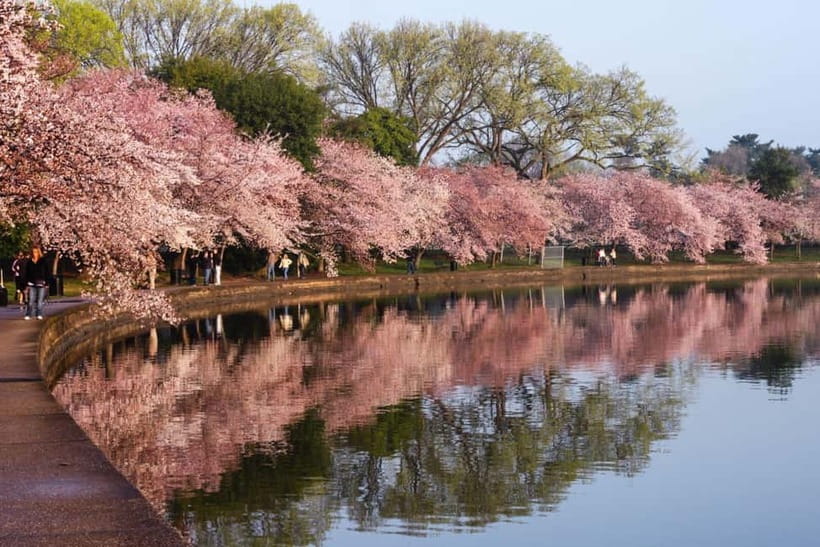
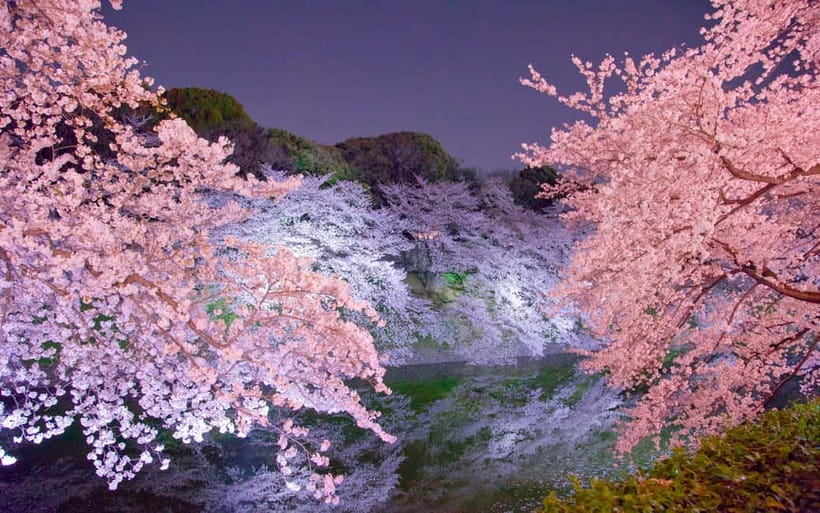
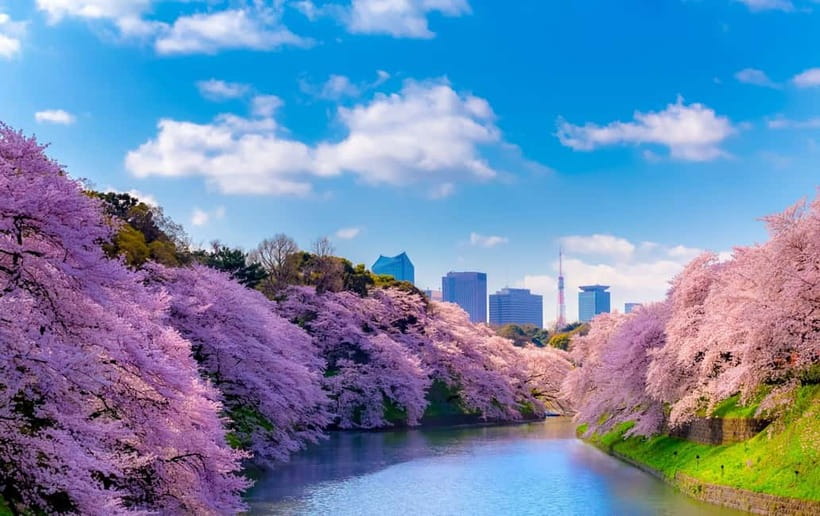
Chidorigafuchi Moat provides the route’s most memorable walking section. A roughly 700-meter path follows the water beneath cherry trees, creating a long view rather than a single garden composition. The moat adds reflections and depth, while the flowering branches form a natural canopy along the route.
This is the point where comfortable footwear matters most. Seven hundred meters is not an extreme distance, but it comes after other stops and city transfers. Add the walking inside the gardens and parks, and the day becomes a proper urban walk rather than a gentle sightseeing loop.
The moat also gives you a different kind of photo opportunity. At Koishikawa Korakuen, the setting is formal and contained. At Chidorigafuchi, the water and long path make the blossoms feel more open. The route is especially attractive when the trees are near full bloom, though the tour still operates when conditions are less than perfect.
The guide can help you keep moving between scenic sections, explain what you are seeing, and manage the practical side of the route. The experience is not designed for visitors who need step-free access or regular vehicle transfers. Wheelchair users cannot join, and children under five are not accepted.
The boat ride adds a water-level view
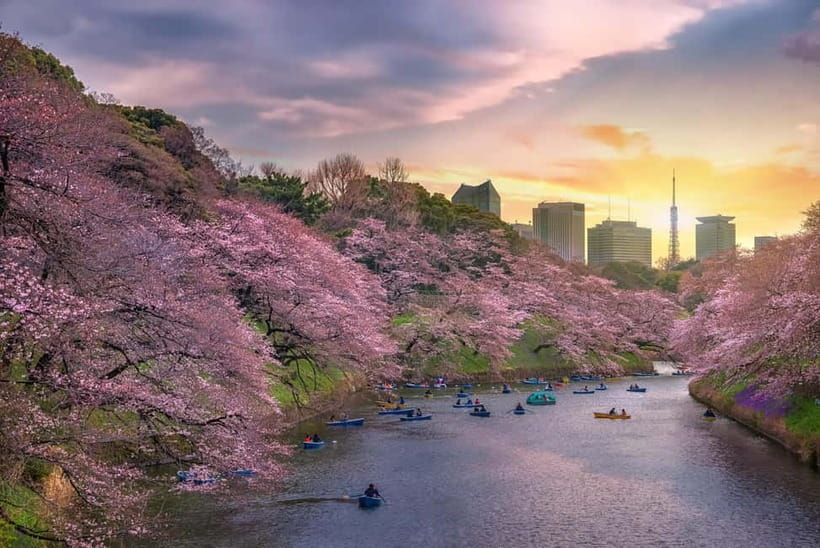
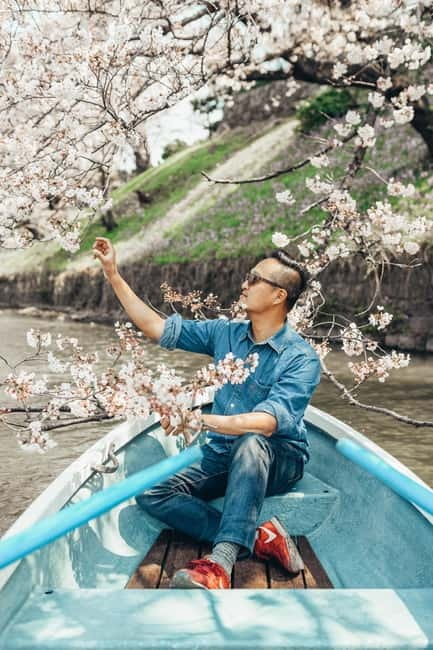
The included 30-minute boat ride is the day’s most distinctive feature. From the water, the blossoms sit above you and reflect below, giving you a view that walking paths cannot provide. After seeing the trees from garden paths and the side of a moat, this shift in angle can make familiar scenery feel new.
The boat is also the tour’s biggest uncertainty. Operators decide if conditions are safe, and wind or rain can close the service. One rainy April outing ended without the boat because of rough weather. That is an important point to understand before booking: the ride is included in the price, but it is not guaranteed in every condition.
The tour runs in all weather, so you need to dress for the forecast rather than for an ideal spring afternoon. A rain jacket, waterproof shoes, and a small towel would be sensible choices, although only comfortable shoes are specifically required. Smoking is not allowed.
If the boat closes, the day can feel less complete because this is the one paid feature that clearly separates the experience from an ordinary blossom walk. A guide may offer an alternative, such as an evening illumination visit, but bad weather can affect that option as well. Book this tour for the full route, not on the assumption that the boat will always operate.


Guides can shape the experience
The quality of a six-hour walking tour rests heavily on the guide. The strongest guide feedback has been very positive. Denise has been praised for adjusting the day to suit the group, including an unscheduled shrine visit and help with local customs. Jim Smashy has also been singled out for being helpful, informative, calm, caring, and easy to spend a long day with.
That flexibility matters. Cherry blossom conditions are never perfectly even, so a good guide may point out trees that still look strong, change the emphasis between parks, or respond to what interests you. In one case, most of the blossoms had already finished, but the guide still found attractive trees and made the day worthwhile.
You should also keep expectations realistic. Guide experience can vary. One participant found the young guide friendly but felt he had to check some facts online. That does not ruin a walk through Tokyo’s parks, but it suggests you should value this tour mainly for company, routing, seasonal judgment, and practical help rather than for a formal lecture in Japanese history.
The tour is in English. Since the group size is not specified, do not assume a private tour. A small group may allow more conversation and flexibility, but the exact arrangement can depend on the date.
Cherry blossom timing is the real gamble
The flowers decide how successful this experience feels. The suggested window is roughly March 15 through the end of April, but that is only a guide. Weather can bring an early bloom, delay it, or cause petals to fall quickly after opening.
The 2025 season began early in some parts of Tokyo. That illustrates the problem: even a carefully chosen date can produce mixed results. One April tour found many trees past their best but still located beautiful blossoms. Another early April outing saw flowers in bloom despite cold rain and wind.
I would avoid booking this as a once-only bet on a single exact peak day unless your schedule gives you no choice. The route includes several sites, which helps because different trees can bloom at slightly different times. Still, no guide can make every park reach full bloom on demand.
The best approach is to treat the tour as a Tokyo spring walk with a strong chance of blossoms, not as a guaranteed peak-bloom event. If the flowers are your main reason for visiting Japan, build some flexibility into your wider schedule if possible.
What the $141 price really covers
The $141 fee includes all entrance fees, the 30-minute boat ride, and six hours with a live English-speaking guide. It does not include hotel pickup, food, drinks, or train and bus fares.
That package has real value if you want a planned route through several parts of Tokyo. Entry fees are handled for you, and you do not need to work out how to connect Koishikawa Korakuen, Ueno Park, and Chidorigafuchi on your own. The guide also helps turn separate sights into one coherent day.
The price is harder to defend if you are comfortable with Tokyo’s rail system and already plan to visit these parks. Your extra costs are not large in isolation, but transport is one more detail to manage, and you need your own Suica, Pasmo, or another usable IC card.
Food is not included, so carry water and plan for a meal before or after the tour. The supplied information does not specify a lunch stop or a meal break, so I would not count on one. Six hours can pass quickly when much of the day is spent walking.
Free cancellation is available up to 24 hours before departure, and you can reserve now and pay later. Those terms help if your blossom dates or weather plans are uncertain.
Who will enjoy this route most
I would recommend the tour to a first-time Tokyo visitor who has one spring day and wants help seeing several major blossom sites. It also suits you if you like walking, prefer a guide who can explain local customs, and do not want to spend your limited holiday time planning every train connection.
It is a good match for photographers who want several settings in one day, especially the moat and boat views. The changing locations give you more visual variety than staying in one park.
I would be more cautious if you dislike rain, have limited mobility, or need frequent rest. The experience operates in all weather, does not accept wheelchair users, and is not suitable for children under five or people over 95. The guide can be friendly and flexible, but the route itself remains a six-hour city walk.
Should you book the Tokyo Cherry Blossom Express Tour?
Book it if you want variety, guidance, and a full day of seasonal sightseeing without arranging the route yourself. The combination of Koishikawa Korakuen, Ueno, Chidorigafuchi, and the boat gives you four useful ways to see Tokyo’s cherry blossoms, and the best guides appear willing to adjust the day to the group.
Think twice if the boat is your main reason for paying. Rain and wind can close it, and the tour still runs under those conditions. Also check that you are happy paying extra for public transportation and spending much of the six hours walking.
At $141, this is a convenience purchase. You are paying for the connections, the guide, the included admissions, and the chance to find good blossoms across several locations. If that sounds more useful than saving money with a self-guided park tour, it is a sensible spring booking.
FAQ
Where does the tour meet?
The meeting point is the West Entrance of Koishikawa Korakuen Garden in Tokyo.
How do I reach the meeting point from Iidabashi Station?
From the Toei Oedo Line, use Exit C3 and walk about three minutes. From the JR Sobu Line, use the East Exit and walk about eight minutes.
Is parking available at Koishikawa Korakuen Garden?
No. There is no parking at the garden, so public transportation is recommended.
How long does the tour last?
The guided experience lasts six hours.
Is the tour conducted in English?
Yes. The tour includes a live English-speaking guide.
Is the boat ride included?
Yes. The booking includes a 30-minute boat ride, provided the boat operator can run it safely in the current weather.
Are train and bus fares included?
No. You pay your own transportation fees by train or bus, and you should have your own IC card, such as Suica or Pasmo.
What happens if it rains?
The tour operates in all weather, so you should dress appropriately. Rain or strong wind may cause the boat operator to close the boat ride.
Can I cancel the booking for a full refund?
Yes. You can cancel up to 24 hours in advance for a full refund. You can also reserve now and pay later.
More Boat Tours & Cruises in Tokyo

More tours in Tokyo we've reviewed











Cruises & Boat Tours, compared.
 ★ 4.0Mt Fuji & Hakone Cruise, Drum Show Bullet Train 1 Day from TokyoFrom $149
 ★ 4.4Tokyo Mt Fuji 5th St & Hakone Cruise Bus Tour w/Bullet TrainFrom $15410 hours
 ★ 4.2Tokyo: Mt. Fuji 5th Station & Hakone Cruise 1-Day Bus TourFrom $12911 hours
 ★ 4.7Tokyo: Meiji Shrine, Asakusa, Skytree Bus Tour and CruiseFrom $12210 hours
 ★ 4.0Mt Fuji & Hakone Cruise, Drum Show Bus 1 Day from TokyoFrom $122
 ★ 4.6Sumida River: Japanese Traditional Yakatabune Dinner CruiseFrom $1032h 30m