
Reviewed · CRAFT WORKSHOPS
Tokyo: Calligraphy Experience with yukata or Samue
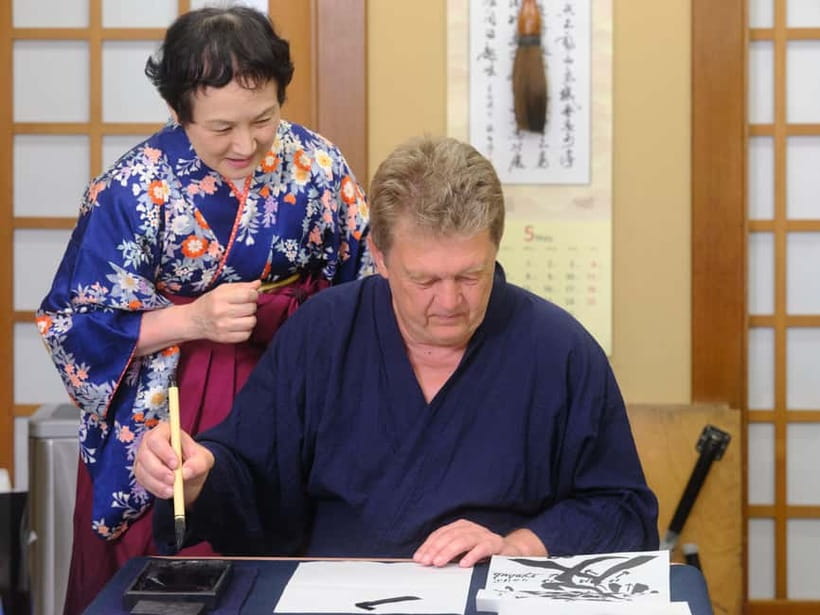
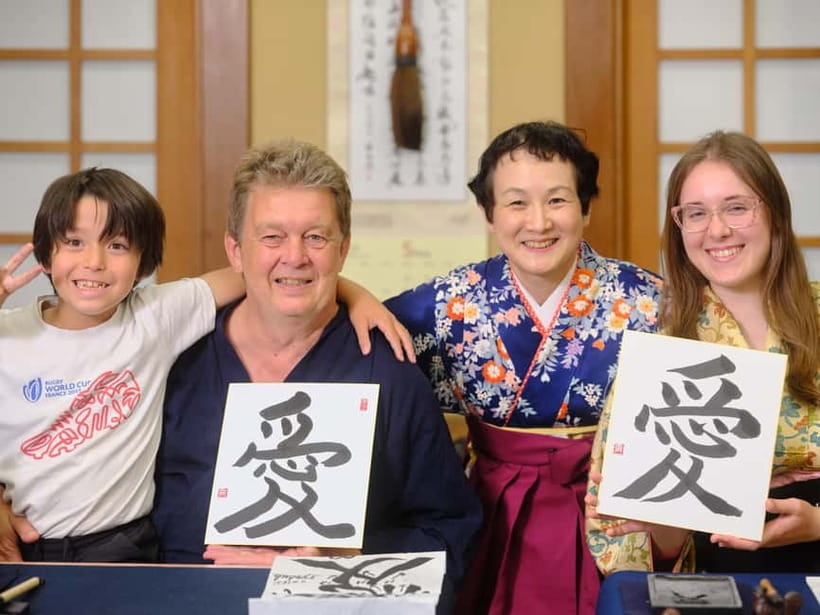
Japanese calligraphy gets you away from Tokyo’s rush and asks you to slow down, sit carefully, and make one brushstroke at a time. You’ll learn from a professional calligrapher, practice basic lines and brush handling, then create a finished kanji artwork to take home. I especially like the chance to wear a yukata or samue and the calm tea break at the end.
I also like that the class explains the spiritual meaning and history of the characters, rather than treating calligraphy as a quick craft project. Teachers such as Hana, Tomo, and Koushi have been praised for patient, step-by-step instruction, with English and French support available. The main drawback is the short 90-minute schedule, which gives you a fine introduction but not enough time for advanced technique.
In This Review
- Key points to know before booking
- Why this Tokyo calligraphy class feels different
- Arriving beside the nursery and temple
- The first brushstrokes: control before beauty
- Understanding kanji beyond decoration
- From practice sheets to your final artwork
- Tea, conversation, and a calmer finish
- Is $64 a fair price in Tokyo?
- Who should book this experience?
- Practical details that affect your day
- Should you book the Tokyo calligraphy class?
- FAQ
- How long does the Tokyo calligraphy experience last?
- How much does the activity cost?
- Which languages are available?
- How many people can join the group?
- Is traditional clothing included?
- What do I take home?
- Are calligraphy tools provided?
- What should I wear or bring?
- Is tea included?
- Can children join the class?
- Is transportation included?
- Can I cancel for a refund?
- Can I pay later?
Key points to know before booking
- You create a finished kanji artwork: Practice first, then put your best work on a board or card to take home.
- Traditional clothing is part of the experience: You may wear a yukata or samue before picking up the brush.
- English and French instruction is available: Teachers and interpreters can guide you through the lesson in either language.
- The group is limited to 10 people: That keeps the class small enough for personal help.
- Tea gives the session a gentle pause: A Japanese tea break adds a social and restful moment after the focused practice.
- Bring clothes that can get dirty: Ink and traditional brush work call for practical clothing, not your best outfit.
Why this Tokyo calligraphy class feels different
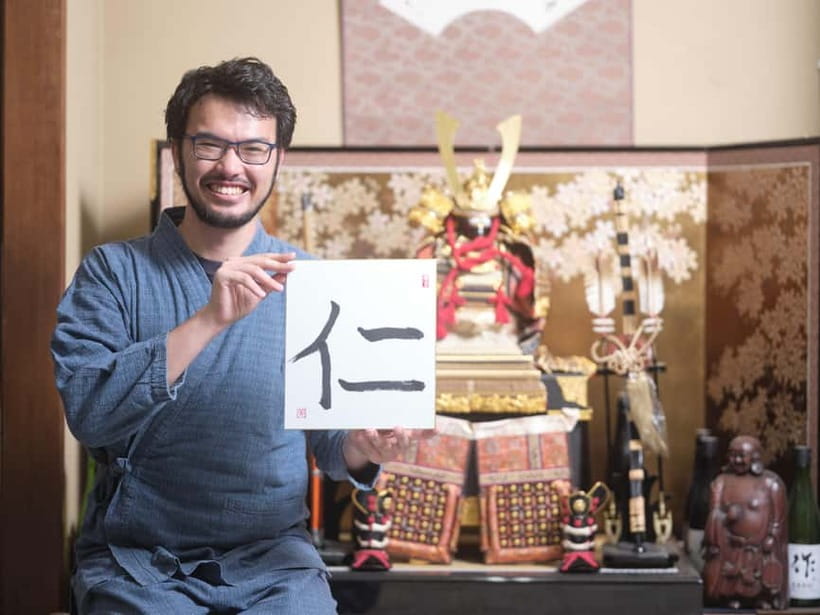
I like activities that let you do something with your hands, and this one has a clear result. You do not simply watch a calligrapher make beautiful characters while you stand nearby. You hold the brush, learn how to use it, make mistakes, practice again, and finish with artwork of your own.
That process matters. Japanese calligraphy, or shodo, is not only about writing a word neatly. Brush pressure, speed, balance, and the order of each stroke all affect the final form. Even a simple line can look heavy, thin, lively, or stiff depending on how you move.
The class also gives you cultural context. Your instructor explains the history and spiritual side of the characters, so the kanji you choose has more meaning than a random decorative symbol. If you want your name written in Japanese, the teacher may also prepare it for you. Koushi, one of the instructors associated with the experience, has been praised for his artistic skill, and one family received help selecting a calligraphy set afterward.
At $64 per person, this is not the cheapest souvenir activity in Tokyo. It is a reasonable price if you want instruction, use of all materials, traditional clothing, tea, and an artwork to take home. You are paying for personal guidance and a cultural lesson, not just a paper craft.
A few more Tokyo tours and experiences worth a look

Arriving beside the nursery and temple
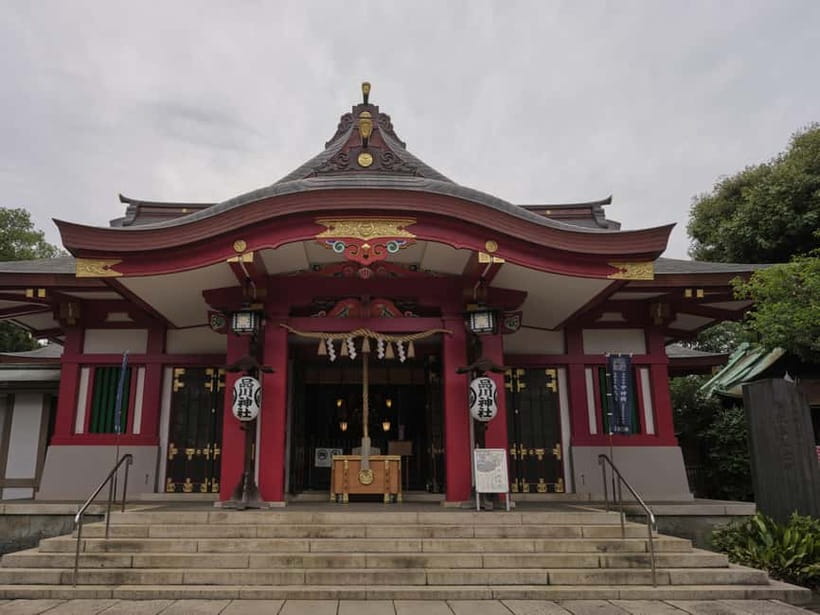
The meeting point is described as being next to a nursery and beside Kaideiji, written in the supplied directions as 海德寺. Because the location notes use nearby landmarks rather than a full English address, check your booking details carefully before setting out.
Individual transportation is not included. You’ll need to make your own way to the meeting point, and the experience does not include a transfer service. Allow time to find the correct entrance, especially if you are carrying luggage or arriving from another part of Tokyo.
Once inside, expect a welcoming introduction before the formal lesson begins. Tea is included, and the atmosphere is intended to be relaxed rather than rushed. You may be offered traditional clothing to wear at the start, with yukata or samue options mentioned for the activity.
A yukata is a light cotton garment often associated with summer and informal traditional dress. Samue is practical Japanese workwear, traditionally linked with Buddhist workers and craftspeople. Wearing either one helps you feel the difference between ordinary sightseeing and taking part in a cultural practice.
The clothing is not just a photo opportunity. It sets the tone for the class and gives you a better sense of how calligraphy fits into Japanese daily and religious traditions. Still, you should wear something underneath that allows comfortable movement and follow the advice to bring clothes that can get dirty.
The first brushstrokes: control before beauty
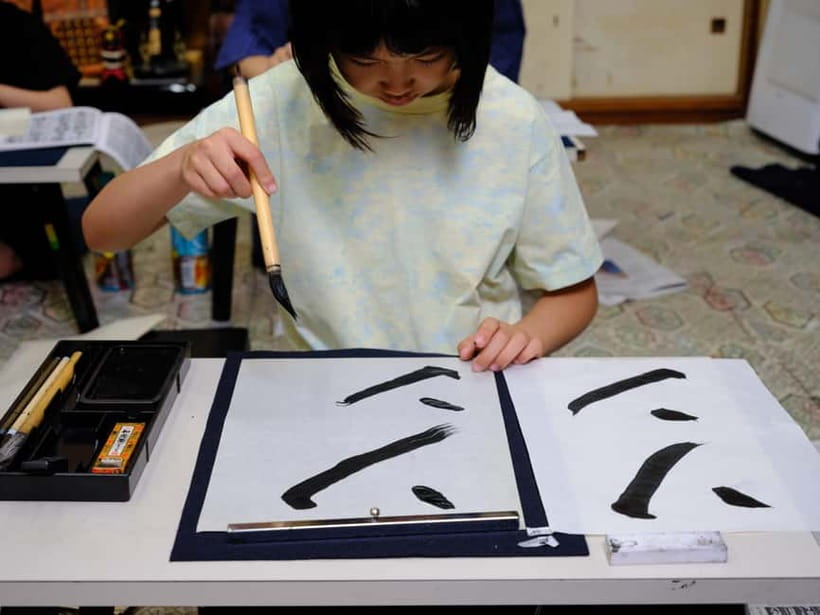
The teacher begins with the basics. You’ll learn how to hold the brush, how much ink to use, and how to guide the bristles across the paper. You practice straight lines and other simple marks before trying a full character.
This opening section is useful because calligraphy looks easier than it feels. A brush does not behave like a ballpoint pen. Press too hard and the line spreads. Move too quickly and the stroke becomes thin or uneven. Hold back too much and the mark can look weak.
Your instructor demonstrates each movement, then gives you time to repeat it. The small group limit of 10 helps here. You are not left to copy a finished example from across the room, and you can receive corrections while the motion is still fresh.
The teaching style is patient and practical. Hana has been praised for guiding participants through the process one step at a time, while Tomo has been described as taking time to explain the art clearly. French instruction is available, and French-speaking participants have found the explanations easy to follow. English is also available.
Do not expect to produce museum-quality work on your first try. That is not the point. The value comes from noticing how much thought goes into each mark and how quickly small changes in grip and pressure affect the character.
Understanding kanji beyond decoration
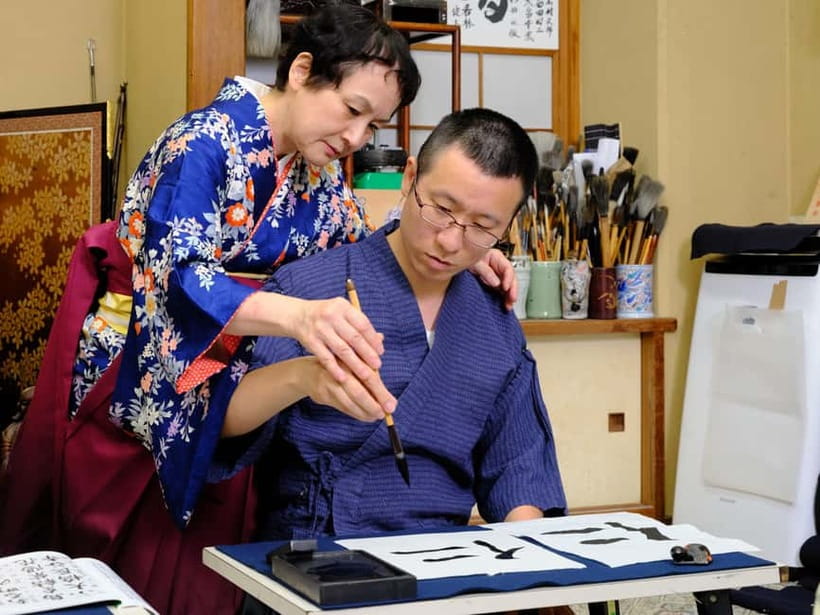
After the basic strokes, you move toward writing a kanji character. The teacher explains its meaning, background, and spiritual associations. This gives the activity more substance than choosing a character because it looks attractive on a souvenir.
Kanji can carry ideas such as strength, peace, love, beauty, or good fortune, though the specific choices available during your class are not stated. Your instructor will guide you through the character selected for the lesson or help you choose an appropriate one within the session.
The explanation is valuable for two reasons. First, it helps you connect the shape to an idea. Second, it shows why the character must be written in a particular order and balance. You begin to see that a character is not a picture assembled piece by piece. It is a sequence of gestures.
The spiritual side also encourages a different pace. Calligraphy rewards attention. You have to watch the brush, breathe, and commit to the stroke. There is no easy way to erase a dark mark once it lands on the paper.
That may be the most authentic part of the class. Tokyo can easily become a parade of sights, shops, and photographs. Here, you spend time with one traditional art and learn why it still matters. I would choose this activity for a quiet afternoon when you want a break from crowded streets and large attractions.
From practice sheets to your final artwork
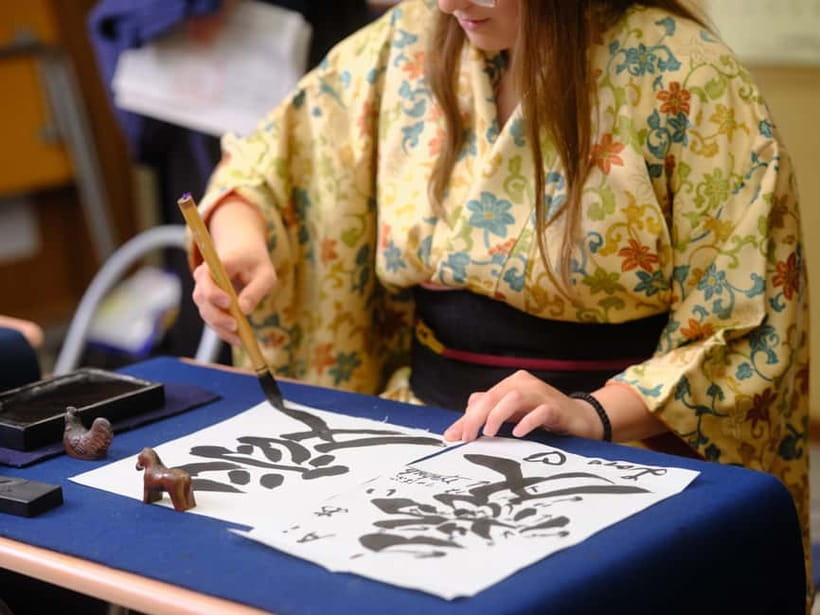
The class gives you time to practice before the final piece. This is important. You can test the brush, make a few imperfect characters, and learn where your hand tends to wobble before working on the item you will carry home.
When you are ready, you create your final calligraphy work on a board or card. The exact format may vary, but the central idea is consistent: you produce the piece yourself, with the teacher nearby to help you make the best version possible.
That final sheet makes a better souvenir than a shop-bought decoration because it records your effort. It may not be flawless, and that is part of its charm. You will remember the concentration it took to make one character look balanced.
Some sessions also include a character or version of your first name written by the instructor. This is a particularly nice extra because a professional hand can show you the difference between a beginner’s work and an expert’s control of the brush.
You should plan how to carry the artwork safely afterward. The experience provides the finished work, but no special transport details are given. If you are continuing sightseeing, keep it flat and protected from rain.




Tea, conversation, and a calmer finish
A Japanese tea break is included. It gives your hand and mind a rest after the concentrated brush work, and it lets you ask questions about the characters or the instructor’s own practice.
This pause also helps the experience feel personal. The teachers are not only demonstrating technique. They are sharing an art form tied to language, tradition, and spiritual thought. A cup of tea creates room for that conversation.
Some sessions have included tea and small snacks at the welcome, but tea is the item specifically included in the activity details. If you have dietary needs, do not assume snacks will be available or suitable.
The mood is warm and considerate, based on the teaching approach described for the sessions. One family used the class for a daughter’s birthday, and the activity also worked well for a small family group. The format gives you something to do together without requiring everyone to have the same skill level.
Is $64 a fair price in Tokyo?
At $64, the class sits in the mid-range for a short cultural activity. The 90-minute duration is brief, but you receive professional instruction, all calligraphy tools, traditional clothing, tea, an English or French-speaking guide, and your finished work.
The strongest value comes from the instruction. If you only want to try a brush once and take a photograph, you may find the price high. If you want to understand the process and leave with a personal piece of art, the cost makes more sense.
The small group also matters. With no more than 10 participants, the teacher can watch your technique and correct your grip or stroke. That personal attention is hard to get in a large demonstration class.
You also avoid buying every tool yourself. Paper, brushes, ink, and other necessary supplies are provided. If the class sparks a new interest, you can ask about purchasing a calligraphy set, though buying one is not part of the stated package.
The experience has a perfect 5 rating from 21 completed reviews, with particularly strong praise for the instructors, the warm welcome, the chance to dress in traditional clothing, and the quality of the explanations. The repeated theme is personal care, not just the final souvenir.
Who should book this experience?
I would recommend it to adults and families with children aged 4 and over who want a hands-on cultural activity. It suits you if you enjoy learning a skill, asking questions, and accepting that your first attempts may look a little crooked.
It is also a good choice for a birthday or a special family outing. One family booked it for a daughter’s birthday and received extra help with practical matters afterward, including arranging a taxi and finding a calligraphy set for a child.
French-speaking visitors have a clear reason to consider it, since French instruction is available. English instruction is also offered. If language is important to your enjoyment, confirm your preferred language when booking.
The age restrictions need attention. Children under 4 are not suitable, and people over 70 are listed as not suitable. The latter is a broad rule, so if you are close to that age or have concerns about sitting, clothing, or brush work, contact the provider before paying.
This is not the right pick if you need a long, advanced workshop. Ninety minutes allows for an introduction and one finished work, not mastery. It may also disappoint you if you dislike sitting still, handling ink, or concentrating on fine hand movements.
Practical details that affect your day
The activity lasts 90 minutes, with start times depending on availability. Keep the rest of your schedule flexible enough to reach the meeting point without rushing.
Wear clothes that can get dirty. Ink can mark fabric, and the experience specifically gives this warning. Even if you plan to wear a yukata or samue, sensible clothing underneath is the safer choice.
All calligraphy tools are included, as is the instructor fee and English or French guidance. Individual transportation is not included, so plan your route separately.
The activity allows free cancellation up to 24 hours before the start time for a full refund. You can also reserve now and pay later, which is useful when your Tokyo schedule is still changing.
The group size is limited to 10 participants. That is small enough for a personal lesson but not necessarily private. If you want the room to yourself, the supplied details do not promise a private booking.
Should you book the Tokyo calligraphy class?
Book it if you want a thoughtful souvenir, direct contact with a Japanese art form, and a teacher who will guide you through the process rather than simply demonstrate it. The clothing, tea, language support, and final artwork make the 90 minutes feel like a complete cultural visit.
I would especially choose it for families with older children, couples, first-time visitors who want more than sightseeing, and anyone who values a quiet hour away from Tokyo’s noise. The best reason to go is not that your kanji will be perfect. It is that you will understand why the brushstroke matters.
Skip it if you want a fast photo stop, a large-scale attraction, or an advanced technical workshop. For everyone else, $64 is a fair price for a small-group lesson, professional help, provided materials, and an artwork that carries your own hand across the journey home.
FAQ
How long does the Tokyo calligraphy experience last?
The experience lasts 90 minutes.
How much does the activity cost?
The listed price is $64 per person.
Which languages are available?
Instruction is available in English and French.
How many people can join the group?
The small group is limited to 10 participants.
Is traditional clothing included?
The experience includes the chance to wear a yukata or samue. The supplied information also describes kimono and samue clothing during sessions.
What do I take home?
You take home your finished calligraphy work. In some sessions, the instructor may also write your name for you.
Are calligraphy tools provided?
Yes. All necessary calligraphy tools are included.
What should I wear or bring?
Bring clothes that can get dirty because ink may mark fabric.
Is tea included?
Yes. Japanese tea is included as part of the experience.
Can children join the class?
Children under 4 are not suitable for the activity. Families with older children have taken part, but the age guidance should be checked when booking.
Is transportation included?
No. Individual transportation is not included, so you must arrange your own way to the meeting point.
Can I cancel for a refund?
You can cancel up to 24 hours in advance for a full refund.
Can I pay later?
Yes. The reserve-now, pay-later option lets you book without paying immediately.
More Craft Workshops in Tokyo

More tours in Tokyo we've reviewed







Craft Workshops, compared.
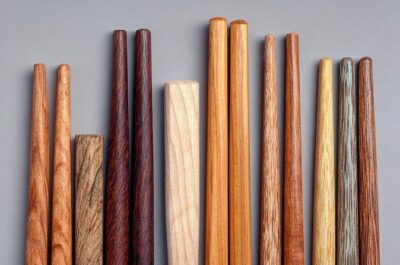 ★ 5.0Tokyo Shinjuku Chopsticks Making ClassFrom $20
 ★ 4.8Chopstick Making Workshop in GinzaFrom $251 hour
 ★ 5.0Kintsugi Experience: Art of Golden Joinery in TokyoFrom $59
 ★ 5.0Tokyo Chopstick Making Workshop with ArtisanFrom $26
Tokyo: Shinjuku Chopstick Making ClassFrom $121 hour
Tokyo: Chopstick-Making WorkshopFrom $61 hour
★ 5.0Tokyo Chopstick Making Workshop with ArtisanFrom $26
Tokyo: Shinjuku Chopstick Making ClassFrom $121 hour
Tokyo: Chopstick-Making WorkshopFrom $61 hour