
Reviewed · ASAKUSA TOURS
Tokyo: Asakusa Walking Tour -Sumida River to Senso-ji Temple
Tokyo’s oldest-feeling sights come together neatly here: a short Sumida River cruise followed by a guided walk through Senso-ji, the city’s famous Buddhist temple. Guide Nori has explained the Edo period and temple etiquette with warmth, while Naoko has offered a funny, personal look at the temple complex.
I like the way this tour gives you two views of Asakusa in only 90 minutes. I also like the included fortune telling, since a guide can explain what the ritual means instead of leaving you to guess. The main consideration is time: 30 minutes on the river and one hour at Senso-ji is enough for an introduction, not a leisurely full-day exploration.
In This Review
- Key points to know before booking
- Why this short Asakusa tour works well
- Starting near Kuramae and reaching the river
- The 30-minute Sumida River cruise
- Kaminarimon Gate and the approach to Senso-ji
- Nakamise-dori, Asakusa’s traditional shopping street
- The main hall and the temple’s rituals
- Drawing a fortune at Senso-ji
- A small group with named guides
- Who will get the most from the $43 price
- Ending at Asakusa Station
- Booking, weather, and timing details
- Should you book this Asakusa experience?
- FAQ
- How long does the tour last?
- Where does the tour start?
- Where does the tour finish?
- Is the Sumida River cruise included?
- Is admission to Senso-ji included?
- Is fortune telling included in the price?
- How large is the group?
- Is a mobile ticket available?
- Can I cancel for a full refund?
- What happens if bad weather cancels the tour?
Key points to know before booking
- Two classic Asakusa experiences in 90 minutes: Cruise the Sumida River, then walk through Senso-ji Temple.
- Guides add cultural context: Nori has discussed the Edo period and temple etiquette, while Naoko has made time for questions and photographs.
- Fortune telling is included: You can draw a fortune at Senso-ji as part of the visit.
- Small groups keep the walk personal: The maximum group size is 10 people.
- The tour ends at Asakusa Station: This makes it simple to continue sightseeing or head elsewhere in Tokyo.
- Weather matters: The experience can be moved or refunded if poor weather prevents the tour from operating.
Why this short Asakusa tour works well
Asakusa is easy to visit on your own, but it is also easy to see only the obvious pieces: take a photograph at Kaminarimon Gate, walk down Nakamise-dori, enter the main hall, and move on. The value of this tour is the explanation between those stops.
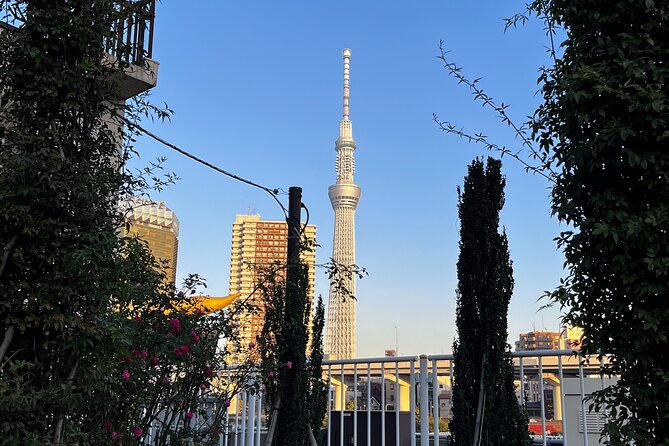
You get a quick look at Tokyo from the water before entering one of its best-known religious sites. That change of setting matters. From the Sumida River, you see Tokyo Skytree and Kaminarimon Gate from a wider angle. On foot, you notice the gates, shops, rituals, and details that are easy to miss from a boat.
At $43 per person, this is not the cheapest way to visit Senso-ji. The temple itself does not require an admission ticket, and you could walk along the river without paying for a guide. Still, the price can make sense if you want the river experience arranged for you and prefer a small group with cultural explanation rather than a self-guided visit.
The 67-day advance booking average is also worth noting. It suggests that you should not assume a last-minute place, especially if your Tokyo dates are fixed. Check availability early, then keep the cancellation terms in mind before committing.
A few more Tokyo tours and experiences worth a look


Starting near Kuramae and reaching the river
The meeting point is Kuramae 2-chome Police Box at 2-chome-15-8 Kuramae, Taito City. This is not the same as the final Asakusa Station area, so you need to pay attention to the starting address when planning your morning or afternoon.
The tour is near public transportation, which helps, but the supplied details do not specify the exact rail line, platform, or walking directions from the station. I would allow extra time to locate the police box rather than arriving at the last minute. Your mobile ticket should be easy to keep on your phone, and confirmation is provided at booking.
From the meeting point, the experience begins with the Sumida River portion. The exact boarding procedure is not described, so follow the guide’s instructions and avoid assuming that the boat departs directly beside the meeting point.
The 30-minute Sumida River cruise
The river cruise lasts about 30 minutes. It is a short ride, but it gives you a useful change of scale. Asakusa’s streets can feel dense and tightly packed. From the water, the city opens up, and you can frame Tokyo Skytree, Kaminarimon Gate, and the riverfront in one view.
I like this part because it is not simply a transfer to the temple. It gives you a visual introduction to the area before the walking portion begins. If you are visiting Tokyo early in your trip, this can help you understand how Asakusa fits into the wider city.
The cruise also gives you a good chance to take photographs. You may want to keep your camera ready, since the most useful view can pass quickly and the ride is brief. The tour description calls the voyage serene, but remember that weather can affect the operation. If poor weather causes cancellation, you are offered another date or a full refund.
The cruise is not a long sightseeing boat trip. If you want extended commentary about every river landmark, this tour may feel too quick. Its purpose is to pair a pleasant river view with the temple visit, not to replace a dedicated Sumida River cruise.
Kaminarimon Gate and the approach to Senso-ji

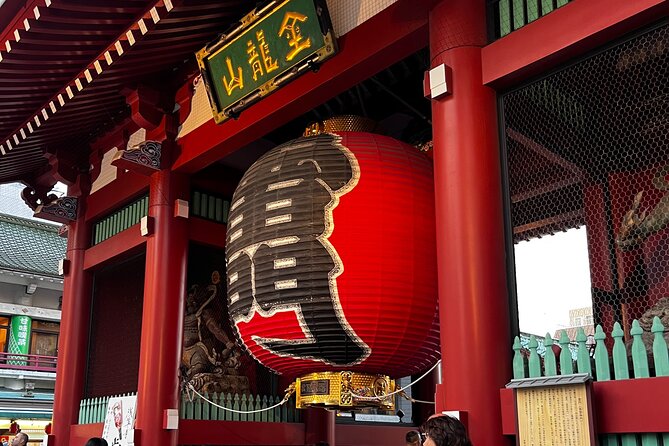
The walking portion centers on Senso-ji Temple, beginning with the famous Kaminarimon Gate. Its large red lantern makes it one of the easiest symbols of Asakusa to recognize, but a photograph alone tells you little about the gate or the religious setting around it.
This is where a guide can make a real difference. The strongest part of the experience is not simply pointing out the gate. It is explaining how to behave at a Japanese temple and helping you understand the difference between looking at a site and taking part in its customs with care.
Nori has been praised for discussing the Edo period while walking beside the Sumida River, as well as for explaining etiquette at shrines and temples. That combination is useful because Asakusa is not just a collection of old-looking buildings. It connects to Tokyo’s earlier identity as Edo and to living religious practice.
The guide also gives you a chance to ask questions. That is especially helpful if you are unsure about what to do at the entrance, how to approach the temple, or why people pause at certain points. You do not need prior knowledge of Japanese religion to benefit from this part.
Nakamise-dori, Asakusa’s traditional shopping street
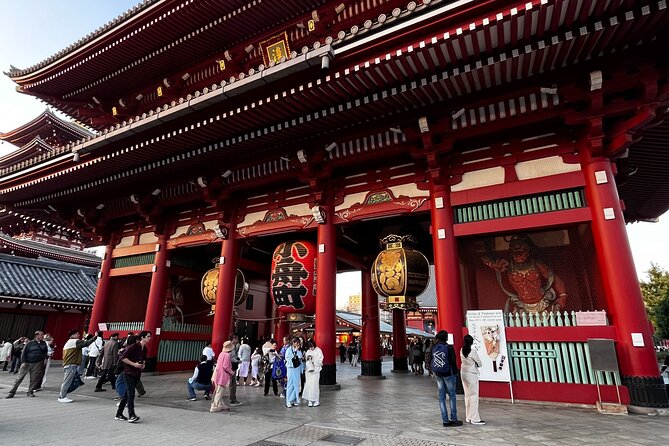
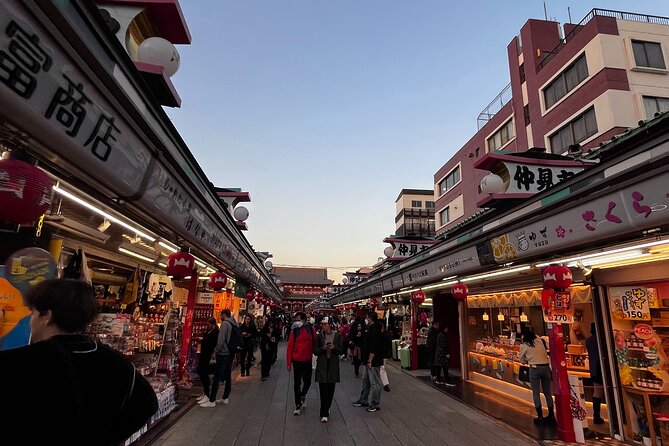
After Kaminarimon Gate, the route includes Nakamise-dori. This shopping street leads toward the temple and is one of the most recognizable parts of the approach to Senso-ji.
You can expect shops selling souvenirs and traditional-style goods, along with plenty of visual detail for photographs. The street is part of the sightseeing experience, but it can also be busy and distracting. If you are hoping to browse every shop, the one-hour Senso-ji segment may not leave much spare time.
That is an important trade-off. The tour is designed to explain the area and keep you moving through its main sights. It is not a dedicated shopping walk. You may need to return on your own if you want a slower look at Nakamise-dori or time to choose gifts.
I like having a guide here because shopping streets near major temples can blur together after a while. A good explanation gives the street a stronger connection to the temple and to the wider customs of Asakusa.
A few more Tokyo tours and experiences worth a look
The main hall and the temple’s rituals
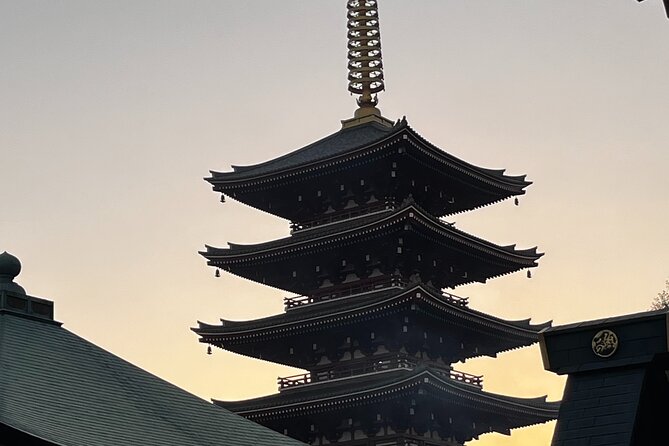
The one-hour temple visit includes the main hall and a guided look at the Senso-ji complex. You will learn about Japanese traditions, religious practices, and the role of the temple in Asakusa.
The temple is a working religious place, not only a sightseeing stop. That makes guidance about etiquette valuable. You can enjoy the architecture and atmosphere while also understanding that people may be visiting for prayer, ritual, or personal reasons.
Naoko has been described as smart, funny, and informative, with a personal approach that leaves room for questions, exploration, and photographs. That style suits Senso-ji well. A rigid lecture would make the visit feel hurried, while a guide who responds to your questions can adjust the experience to your interests.
Do not expect unlimited time inside every part of the complex. The stated schedule gives about one hour to the whole Senso-ji visit, including Kaminarimon Gate, Nakamise-dori, the main hall, explanations, photographs, and the fortune ritual. You will get the essentials, but you may want to return later for a quieter visit.
Drawing a fortune at Senso-ji
Your fortune is included in the price, which gives this tour one of its more distinctive touches. The guide can help place the ritual in context, so it becomes more than a quick souvenir activity.
Fortune telling is also a practical way to take part in the temple visit. You are not only looking at a famous building. You are trying one of the customs associated with the site and learning how it fits into the visit.
The supplied information does not specify the exact fortune system, the language of the written result, or what happens if you receive an unfavorable fortune. I would treat this as a guided cultural moment rather than expect a long personal reading.
For many people, this will be the most memorable part of the tour. It is small, hands-on, and tied directly to Senso-ji. If you prefer to observe rather than take part in rituals, you can still appreciate the explanation and atmosphere.
A small group with named guides
The group is capped at 10 people. That is small enough for a guide to answer questions without turning the walk into a private tour, though the actual group may be smaller or close to the maximum.
The guide names connected with this experience include Nori and Naoko. Nori’s strengths have included Edo-period context, river views, and temple etiquette. Naoko has been praised for a personable approach, humor, and allowing time for questions and photographs.
Those details matter more than a generic promise of local insight. At Senso-ji, you want a guide who can explain what you are seeing without rushing you from one photo stop to the next. The available comments point to guides who engage directly and make the visit feel personal.
Still, your exact guide is not guaranteed in the information provided. Book this tour for the format and subject, not on the assumption that you will definitely have Nori or Naoko.
Who will get the most from the $43 price
I would recommend this tour most strongly for a first visit to Tokyo, particularly if Asakusa is scheduled early in your trip. The combination of city views, Edo-period background, temple customs, and a fortune gives you useful context before you explore more of Japan.
It also suits you if you have only a short window in Asakusa. In 90 minutes, the guide handles the main sequence, and the tour ends close to a major station. You can continue exploring afterward instead of spending extra time working out how to connect the river and temple.
Families and first-time visitors may also appreciate the simple structure. Most people can participate, and no special ability is listed as a requirement. You should still expect time on foot during the temple portion and plan for weather, since the river segment depends on suitable conditions.
The tour is less suitable if you want a slow photographic walk, an extended shopping session, or a detailed study of every building at Senso-ji. In those cases, visit the area independently and allow several hours.
Ending at Asakusa Station
The tour finishes at Asakusa Station, at 1-chome-1-3 Asakusa, Taito City. This is a practical ending point, since you can ask the guide how to get home and choose among the available ways to leave the area.
The ending also gives you flexibility. You can continue around Asakusa, return to Nakamise-dori, spend more time at Senso-ji, or take public transportation elsewhere in Tokyo. The tour does not trap you in a fixed return route.
Because the final location is a station rather than your hotel, check your onward plan before you start. The guide can help with directions, but the supplied information does not identify which specific train or subway route will suit every destination.
Booking, weather, and timing details
Confirmation arrives when you book, and the experience accepts mobile tickets. The maximum group size is 10, and it requires a minimum number of participants to operate.
You can cancel for a full refund up to 24 hours before the start time. Changes or cancellations inside that 24-hour window are not accepted for a refund, and the cut-off follows Tokyo local time.
Bad weather can cancel the experience. In that case, you are offered a different date or a full refund. The same choice applies if the minimum number of participants is not reached.
Since the average booking point is 67 days ahead, I would reserve this early if the tour is important to your schedule. Keep the 24-hour cancellation deadline visible in your plans, especially if your Tokyo itinerary may change.
Should you book this Asakusa experience?
Book it if you want a compact cultural introduction rather than an open-ended day in Asakusa. The river cruise adds a welcome view of Tokyo, while the Senso-ji walk gives you context for Kaminarimon Gate, Nakamise-dori, temple etiquette, the main hall, and fortune telling.
The $43 price is reasonable when you value a small group, a guide, and an arranged two-part experience. It is harder to justify if you are happy to visit Senso-ji on your own and have plenty of time for the river and temple separately.
My practical advice is to place this tour near the start of your Tokyo stay, arrive early at the Kuramae police box, and keep the rest of the day flexible. That way, the 90-minute introduction gives you bearings, and you can return to whichever part of Asakusa deserves more time.
FAQ
How long does the tour last?
The experience lasts approximately 1 hour and 30 minutes. About 30 minutes is spent on the Sumida River cruise and about 1 hour at Senso-ji Temple.
Where does the tour start?
It starts at Kuramae 2-chome Police Box, 2-chome-15-8 Kuramae, Taito City, Tokyo 111-0051, Japan.
Where does the tour finish?
The tour ends at Asakusa Station, 1-chome-1-3 Asakusa, Taito City, Tokyo 111-0032, Japan.
Is the Sumida River cruise included?
Yes. The experience includes a cruise along the Sumida River with views of Tokyo Skytree and Kaminarimon Gate.
Is admission to Senso-ji included?
The tour includes the guided visit to Senso-ji Temple. The tour details list admission as free, and the included fortune telling is part of the experience.
Is fortune telling included in the price?
Yes. You can draw a fortune at Senso-ji as part of the tour.
How large is the group?
The experience has a maximum of 10 participants.
Is a mobile ticket available?
Yes. The experience offers a mobile ticket, and confirmation is provided at booking.
Can I cancel for a full refund?
Yes. You can cancel at least 24 hours before the start time for a full refund. Cancellations or changes made less than 24 hours before the start time are not refunded.
What happens if bad weather cancels the tour?
You are offered a different date or a full refund if poor weather causes the experience to be canceled. A different date, another experience, or a full refund is also offered if the minimum number of participants is not reached.
More Temples & Meditation in Tokyo
More Bay & River Cruises in Tokyo
More Asakusa Tours in Tokyo

More tours in Tokyo we've reviewed











Asakusa Tours, compared.
 ★ 4.8Tokyo: Japanese Dance Cabaret Theater Asakusa-Kaguwa TicketFrom $492 hours
 ★ 4.7Tokyo: Meiji Shrine, Asakusa, Skytree Bus Tour and CruiseFrom $12210 hours
 ★ 4.9Tokyo: Roll and Authentic Sushi Making Class in AsakusaFrom $581h 40m
 ★ 4.8Tokyo: Asakusa Walking Tour with Sensoji Temple VisitFrom $222 hours
 ★ 5.0Tokyo Asakusa Rickshaw TourFrom $42
 ★ 4.5Tokyo Panoramic 1 Day: Meiji Shrine, Asakusa, Odaiba and SKYTREE®From $85