
Reviewed · WALKING TOURS
Tokyo Architecture and Contemporary Art Walking Tour with a local guide
Tokyo’s best architecture is scattered across the city, and this private tour gives you a smart way to connect the pieces. In one long day, you move from Ginza’s polished storefronts to Roppongi’s museums, Omotesando’s designer buildings, Harajuku’s youth style, Shibuya Crossing, and the calmer streets of Daikanyama.
I like the private format, which lets your guide adjust the pace and respond to your interests. I also like the chance to see Tokyo through buildings and design, not just famous sights. The main drawback is the amount of subway travel and walking. One full day reached 13,000 to 20,000 steps, and another outing spent a lot of time underground between stops.
In This Review
- Key points to know before booking
- Why this tour works for architecture fans
- Ginza: polished streets and serious design
- Tokyo International Forum: a quick look at a major landmark
- Roppongi: Tokyo’s art triangle
- Omotesando: where fashion stores become architecture
- Takeshita Street: youth culture in full color
- Shibuya Crossing: a brief stop with a huge view
- Daikanyama and Nakameguro: a quieter final chapter
- The real cost is measured in steps and train rides
- How to make the private format work for you
- Who should book this Tokyo walking tour?
- Should you book it?
- FAQ
- How long does the Tokyo architecture and art tour last?
- How many people can join the private tour?
- What is the price of the experience?
- Which neighborhoods and sights are included?
- Does the tour use public transportation?
- Is hotel pickup available?
- Are museum or attraction admission tickets included?
- Is bottled water provided?
- Can I cancel for a full refund?
Key points to know before booking
- Seven very different Tokyo districts: Ginza, the Tokyo International Forum, Roppongi, Omotesando, Takeshita Street, Shibuya, and Daikanyama each show a different side of the city.
- Private group of up to nine: You avoid a large tour group and can shape the day around your interests and energy level.
- Architecture is the main subject: Expect attention to famous modern buildings, storefront design, museums, galleries, and urban spaces.
- Public transportation is part of the experience: Trains and subway lines connect the stops, with IC cards used during at least one tour.
- Guides vary by booking: Tomoya, Richie, Riley, and Masa are named guides associated with the experience, with strong praise for their English, planning, and flexibility.
- Plan for a long, active day: The advertised duration is about 6 to 8 hours, with bottled water supplied and lunch not included in the price.
Why this tour works for architecture fans
Tokyo can feel like an enormous collection of unrelated neighborhoods. One street has tiny shops and old homes. The next has a glass tower, a museum by a major architect, or a fashion store that looks like a work of art.
This tour gives that jumble some order. Your guide helps you notice how buildings fit their surroundings, how commercial districts use design to attract attention, and how contemporary art appears in galleries, museums, storefronts, and public spaces.
You are not simply checking off buildings from a distance. The day is built around walking through districts and using local transportation to connect them. That makes the tour useful if you want a broad introduction before returning to one area on your own.
The tour is private, and that matters here. A group of nine can move more easily than a large coach party, while a smaller group can stop longer for questions or shorten a section if the heat, rain, or walking begins to wear you down.
Guides named in the supplied information include Tomoya, Richie, Riley, and Masa. Riley is specifically noted for strong English and for responding to suggestions. Masa is described as friendly and willing to accommodate requests, while Tomoya is praised for planning a full day around architecture. Those details point to the tour’s strongest feature: the human guide, not just the route.
Other walking tours we've reviewed in Tokyo

Ginza: polished streets and serious design
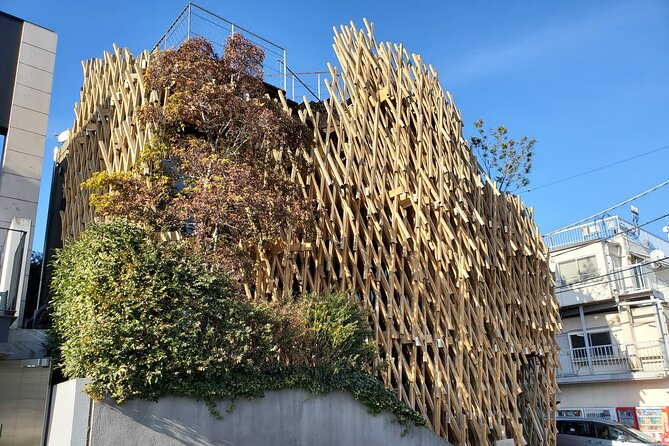
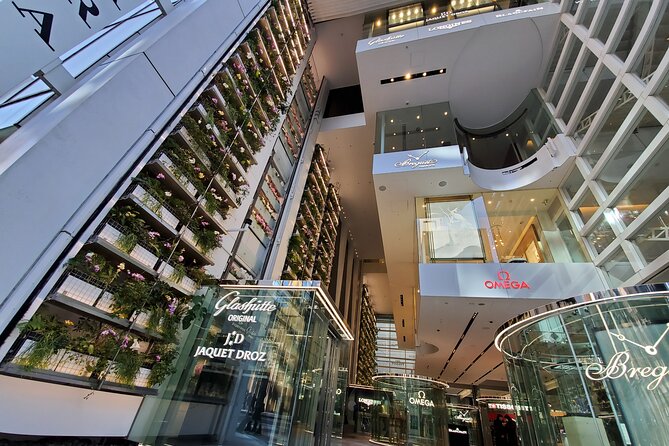
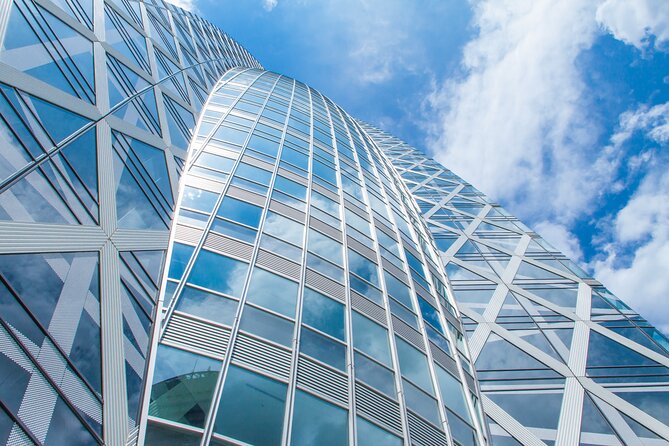
The tour begins in Ginza, one of Tokyo’s best-known shopping districts. This is a useful first stop because the architecture is easy to compare. High-end boutiques, intimate galleries, Japanese stores, and large international brands share a compact urban area.
Ginza’s shops often treat the building itself as part of the product. Facades are sleek, spare, playful, or deliberately unusual. Your guide can point out how leading architects have shaped the area and help you look beyond the merchandise inside.
You should expect roughly an hour here, with no admission fee listed. The value is not in entering one paid attraction. It is in seeing a concentration of buildings and storefronts while walking at street level.
Ginza is also a good place to ask your guide what to look for during the rest of the day. If you are interested in concrete, glass, retail design, galleries, or how Tokyo handles tight urban space, say so early. The private setup makes that sort of adjustment possible.
Tokyo International Forum: a quick look at a major landmark
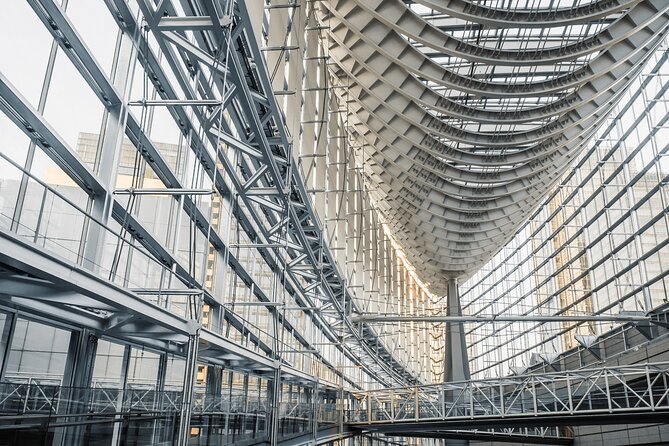
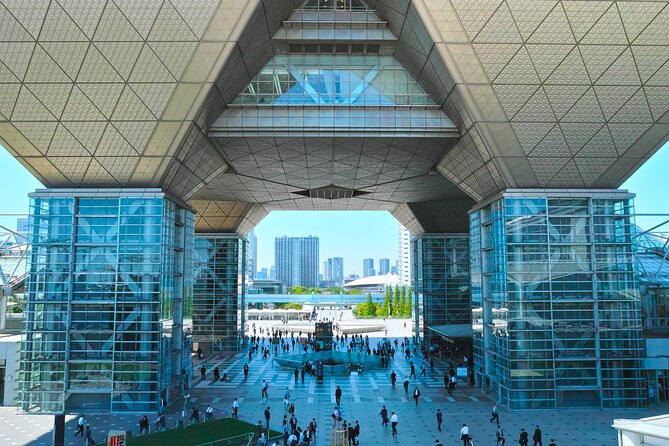
The Tokyo International Forum gets only about 15 minutes, but it is one of the most important architectural stops. Designed by Rafael Viñoly, an Uruguay-born American architect, this postmodern convention and arts center is known for its large, dramatic structure.
The short visit means you should think of it as a focused viewing stop, not a museum visit. Your guide will likely explain the building’s role and design while you take in its scale and form.
This is one place where timing matters. If you enjoy architectural photography or want a long look at the interior, 15 minutes may feel brief. Still, the stop adds an important civic building to a day otherwise filled with shopping streets, museums, galleries, and neighborhood walks.
Roppongi: Tokyo’s art triangle
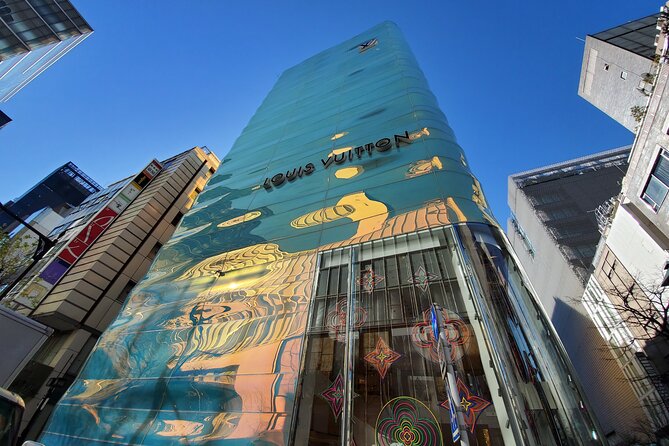
Roppongi gives the tour its strongest concentration of contemporary art. The district is home to three major institutions known together as the Art Triangle Roppongi: the National Art Center, Mori Art Museum, and Suntory Museum of Art.
The schedule allows about an hour, and admission is listed as free for the tour stops. That does not necessarily mean every museum exhibition or special display is included, so confirm with your guide if entering a museum is important to you.
Roppongi also has galleries and other design-focused sights. The area can feel more polished and commercial than older parts of Tokyo, but that is part of the point. You see how major art institutions, offices, restaurants, and public spaces operate together in a modern district.
I would tell your guide if you want more art and less exterior architecture, or the other way around. With only one hour assigned, your priorities will affect how satisfying this stop feels.
Omotesando: where fashion stores become architecture
Omotesando is one of the tour’s most rewarding sections for people who like buildings with a strong visual identity. The avenue is lined with high-end fashion and jewelry stores, many designed to attract attention before you ever walk through the door.
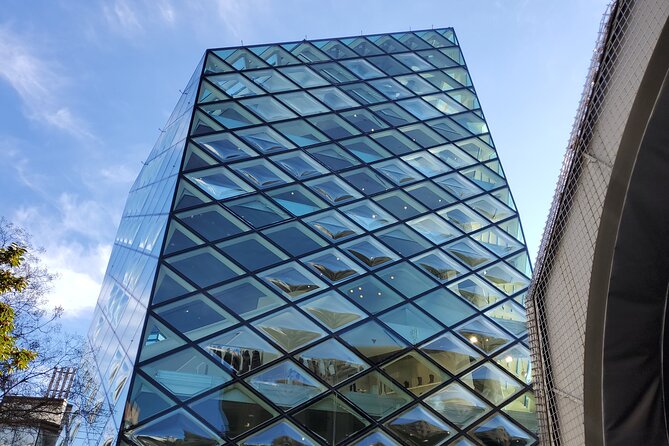
The route begins at the Prada flagship store, designed by Swiss architects Herzog and de Meuron. That gives you a clear example of the tour’s approach: architecture is treated as part of Tokyo’s shopping culture, not as something separate from daily city life.
Plan on about an hour. You will see polished commercial buildings, but the stop is not only for luxury shoppers. Even if you never enter a store, the facades, materials, angles, and use of glass make the area a useful outdoor lesson in modern design.
This section can feel crowded, especially around popular shopping streets. It is also one of the places where the tour’s walking pace matters. A private guide can keep the group moving or pause for a closer look without waiting for a large party.
Other guided tours in Tokyo


Takeshita Street: youth culture in full color
A short trip from the controlled style of Omotesando brings you to Takeshita Street in Harajuku. Here, the focus shifts from major architects to youth fashion, unusual design, and the way shops create a strong visual presence in a narrow area.
You get about an hour to explore. The stop offers a useful contrast with Ginza and Omotesando. Those areas show carefully planned luxury and international design. Takeshita Street shows a louder, more playful side of Tokyo, with clothing, signs, storefronts, and styles aimed at younger shoppers.
The street can be crowded, and the route may feel less like a formal architecture walk than the earlier stops. That is not a flaw if you want to understand Tokyo as a living city. It is a weaker match if your only goal is landmark buildings.
Keep your group together and listen for the meeting instructions. A private tour is easier to manage than a large group, but narrow, busy shopping streets still require attention.
Shibuya Crossing: a brief stop with a huge view
Shibuya Crossing receives about 30 minutes. It is one of Tokyo’s most recognizable urban scenes, with streams of pedestrians crossing from several directions while traffic pauses around them.
The stop is short because the crossing itself does not require a long visit. Your guide can explain the district, direct you toward useful viewpoints, and help you understand how this famous intersection fits into the surrounding neighborhood.
The supplied description compares Shibuya Crossing with Times Square, though the experience is different. Shibuya’s appeal comes from the choreography of people moving through a large intersection, along with the signs and buildings surrounding it.
If you want extensive shopping or a long café break in Shibuya, this schedule may not leave enough time. The stop is best understood as a concentrated city experience before moving on.
Daikanyama and Nakameguro: a quieter final chapter
Daikanyama and Nakameguro change the rhythm again. After Ginza, Harajuku, and Shibuya, these neighborhoods offer boutiques, cafés, and a less hectic pace.
You have about an hour here. That makes the stop useful as a counterpoint to the major districts. Tokyo is not only giant intersections and dense commercial centers. Smaller streets can also show how design, retail, books, and cafés fit into everyday neighborhood life.
The Tsutaya bookstore in Daikanyama is specifically included in the route. It gives the architecture and art theme a practical ending, since the area combines design-conscious retail with a more relaxed local setting.
After a day of trains and heavy walking, this may be the most comfortable part of the route. On the other hand, if you are already tired, an hour of browsing boutiques and cafés may feel less urgent than the major architectural stops earlier in the day.
The real cost is measured in steps and train rides
The price is $424.58 per group, with up to nine people included. For a full group, that works out to about $47 per person. For two people, it is roughly $212 each, so the value depends heavily on your group size and how much you want private guiding.
You are paying for a long day with a local guide, route planning, commentary, and help connecting districts that are spread across Tokyo. You are not paying for a meal or a package of museum admission tickets, at least based on the information provided.
The route uses public transportation, and IC cards were used during one reported outing. That is a practical way to cover a lot of ground, but train travel takes time. One person specifically found that much of the day was spent underground moving from one site to the next.
Walking is the other major cost. One outing reached 13,000 to 20,000 steps. Bottled water is provided, which helps, but you should still wear comfortable shoes and be ready for a physically active day.
A bus or taxi may make sense for some connections, especially on a hot or rainy day. The guide has acknowledged that these options could add interest and reduce some subway time, but the exact transport plan can vary.
How to make the private format work for you
Before the day begins, tell the guide what matters most. You might want modern commercial buildings, museum architecture, contemporary art, Japanese retail design, neighborhood bookstores, or simply a broad introduction to Tokyo.
The named guides have different styles, but the strongest pattern is flexibility. Riley responded to suggestions, and Masa accommodated requests. That is exactly how you should use a private tour. Do not wait until the final stop to explain that you wanted more galleries or fewer shopping streets.
The route contains seven stops, but the time at each is not equal. Tokyo International Forum receives only 15 minutes, Shibuya 30 minutes, and most other areas about an hour. If one building is essential to you, ask how much time can be adjusted.
The experience is offered from 8:30 a.m. to 3 p.m. on the listed operating dates, from December 24, 2025 through January 4, 2026, and from January 5, 2026 through January 20, 2027. Since the activity lasts 6 to 8 hours, confirm the exact start time, meeting point, and pickup arrangement when you book.
Pickup is offered, and the guide meets you outside your hotel according to the tour description, though the meeting information also refers to a central point. Get the exact location in writing so your morning begins without confusion.
Confirmation is sent within 48 hours, subject to availability. Free cancellation is available if you cancel at least 24 hours before the start time. Last-minute cancellations and changes are not accepted for a refund.
Who should book this Tokyo walking tour?
I would choose this tour if you want to understand Tokyo through its buildings and neighborhoods rather than spend the day inside one museum. It suits first-time visitors who want a broad orientation, as well as repeat visitors who have already seen the obvious sights and want a design-focused route.
It is also a good choice for a family or group with mixed interests. One person can focus on architecture, another on fashion, and another on cafés or bookstores, while the guide helps connect the stops.
You should think twice if you dislike public transportation, long walks, or quick visits. The route covers a lot, and the subway transfers are not filler. They are part of the price of seeing districts that sit far apart.
Should you book it?
Book it if you value a private guide who can explain why Tokyo’s buildings look the way they do and adjust the day to your interests. The strongest reasons are the broad route, the guide-led context, and the chance to compare Ginza’s luxury design with Harajuku’s youth culture and Daikanyama’s quieter style.
Skip it if you want a slow day in one neighborhood or a tour built mainly around museum entry. At $424.58, it is much better value for a larger group than for one or two people, and you need to be comfortable walking up to 20,000 steps.
For architecture fans, design students, photographers, and curious first-time visitors, this is a useful way to get your bearings fast. Bring good shoes, keep your priorities clear, and treat the route as a flexible city study rather than a string of formal attractions.
FAQ
How long does the Tokyo architecture and art tour last?
The experience lasts approximately 6 to 8 hours.
How many people can join the private tour?
The price covers one private group of up to nine people.
What is the price of the experience?
The listed price is $424.58 per group of up to nine people.
Which neighborhoods and sights are included?
The route includes Ginza, Tokyo International Forum, Roppongi, Omotesando, Takeshita Street in Harajuku, Shibuya, and Daikanyama.
Does the tour use public transportation?
Yes. The tour uses Tokyo’s public transportation, including trains and subway services. IC cards were used during one outing.
Is hotel pickup available?
Pickup is offered, and the tour description says you meet the guide outside your hotel. Confirm the exact meeting location after booking because the meeting information also refers to a central point.
Are museum or attraction admission tickets included?
The listed stops show free admission tickets. The supplied information does not state that paid museum exhibitions or special displays are included.
Is bottled water provided?
Yes. Bottled water is provided during the tour.
Can I cancel for a full refund?
Yes, if you cancel at least 24 hours before the experience start time. Cancellations or changes made less than 24 hours in advance are not refunded.
More Guided Tours in Tokyo
More Walking Tours in Tokyo

More tours in Tokyo we've reviewed





Walking Tours, compared.
 ★ 5.0Tokyo Tsukiji Fish Market Food and Culture Walking TourFrom $99
 ★ 5.0Tokyo: Imperial Palace and Shogun Historical Walking TourFrom $22
 ★ 4.9Tokyo: Shinjuku Local Bar and Izakaya Guided Walking TourFrom $343 hours
 ★ 5.0Tokyo: Tsukiji Fish Market Food and Walking tourFrom $30
 ★ 4.8Tokyo: Asakusa Walking Tour with Sensoji Temple VisitFrom $222 hours
 ★ 4.9Tokyo: Tsukiji Fish Market Guided Walking TourFrom $222 hours