
Reviewed · NARITA
Tokyo Layover Tour with Licensed Guide:Narita Airport Dep
Tokyo is too large for a quick airport stop, but this private eight-hour layover tour makes a focused visit possible. You meet a licensed English-speaking guide at Narita Airport, ride into the city, explore three or four chosen sights, and return by train. Guides named Masa, Shuji, Yoshi, and Yoshii have led past departures, with especially strong praise for airport help, train navigation, and flexible planning.
I like the custom route, which lets you choose between places such as Senso-ji, Meiji Jingu, Shibuya Crossing, Tsukiji, or a Japanese garden. I also like having a guide beside you on Tokyo’s trains, since the long ride from Narita and the city’s many lines can consume precious layover time. The main concern is pace: trying to cover too many distant sights can turn an enjoyable visit into a forced march.
In This Review
- Key points to know before you book
- Why a Narita layover can support a Tokyo visit
- Meeting your guide at Narita Airport
- Choosing three or four Tokyo sights
- Imperial Palace
- Shibuya Crossing
- Tsukiji Fish Market
- Meiji Jingu Shrine
- Asakusa and Senso-ji Temple
- Koishikawa Korakuen Garden
- Hama Rikyu Gardens
- Tokyo National Museum
- Akihabara
- Rikugien Garden
- Yoyogi Park and Takeshita Street
- Roppongi Hills
- Shibamata and Nezu
- Shinjuku Gyoen and Golden Gai
- Odaiba
- How the pacing affects your experience
- What the $435.74 price is really buying
- Who will get the most from this tour
- Should you book this Narita layover tour?
- FAQ
- Where does the tour begin?
- How long does the experience last?
- How do I return to Narita Airport?
- Is the Narita Express fare included?
- How many Tokyo sights can I choose?
- Is this a private tour?
- Are admission fees included?
- Is lunch included?
- Is the tour suitable for someone with limited mobility?
Key points to know before you book
- Three or four sights are the realistic target: Tokyo’s size and train connections make a short, focused route far better than chasing every famous district.
- You meet at Narita Airport: The guide helps you leave the airport and later takes you to the station for your return train.
- You pay transportation separately: The adult round-trip Narita Express fare is listed as ¥6,140, with prices varying by destination.
- The tour is private: Only your own group participates, and the route can be adjusted with the guide.
- Walking is central to the experience: You should be comfortable walking and using public transportation.
- Several garden and museum entries cost extra: Koishikawa Korakuen, Hama Rikyu, Rikugien, Shinjuku Gyoen, and the Tokyo National Museum are not covered.
Why a Narita layover can support a Tokyo visit
Narita Airport is not in central Tokyo. Reaching the city takes time, and you still need to return to the airport for your onward flight. That makes this experience less like a casual airport excursion and more like a carefully managed city outing.
The tour lasts about eight hours, including the trip into Tokyo and the return to Narita. The opening and closing portions each allow about an hour for train travel. That leaves a useful block in the middle, but not enough time for a long list of far-apart neighborhoods.
I would treat the tour as a chance to experience one slice of Tokyo. You might choose traditional Asakusa and nearby gardens, modern Shibuya and Meiji Jingu, or a museum and old downtown neighborhood. The guide can help match your choices to the time available.
This is a private activity, so you are not tied to a large group’s schedule. That matters during a layover. You can discuss changing the order, shortening a stop, or swapping one district for another. Past guide comments show that Masa helped one group change the timing, city area, and selected sights during the day. That sort of flexibility is one of the strongest reasons to consider this tour.
If you're still narrowing it down, here are other tours in Narita we've reviewed.



Meeting your guide at Narita Airport
You meet your guide at Narita International Airport, at 1-1 Furugome, Narita, Chiba. A guide has previously used a Welcome sign at the busy airport, which is a useful touch when you are arriving after a flight and need to find one person quickly.
From there, you travel by train toward Tokyo. The guide accompanies you from the airport and helps you reach the city using public transportation. At the end, the guide takes you to the nearest suitable station for a Narita Express train or another service back to the airport.
The train fare is not part of the tour price. The listed adult round-trip Narita Express cost is ¥6,140, and the child fare is ¥3,060, though the exact amount can vary with your destination. You should also budget for any subway or local train rides needed between selected sights.
This arrangement has a practical advantage: you do not need a private vehicle sitting in Tokyo traffic. The drawback is that you must be comfortable walking through stations, transferring between trains if needed, and keeping your group together in crowded areas.
Choosing three or four Tokyo sights
The activity offers a long menu of possible stops, but the smart move is to pick a small cluster. Tokyo rewards a neighborhood-based plan. If you select places on opposite sides of the city, you will spend more of your short visit watching station signs and less time actually seeing Tokyo.
Here are the main choices and what each one offers.
Imperial Palace
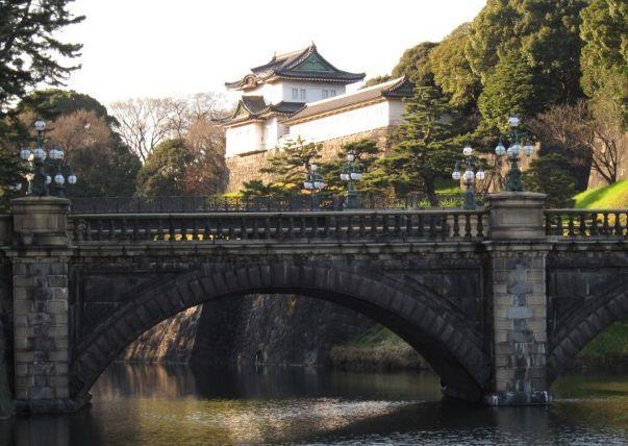
The Imperial Palace occupies the former site of Edo Castle and is surrounded by moats, broad grounds, and large stone walls. The tour does not include access inside the palace.
This is a good choice if you want a central Tokyo introduction with a sense of ceremony, open space, and old castle defenses. The scheduled visit is about 30 minutes, so expect an exterior visit rather than an extended palace tour.
Shibuya Crossing
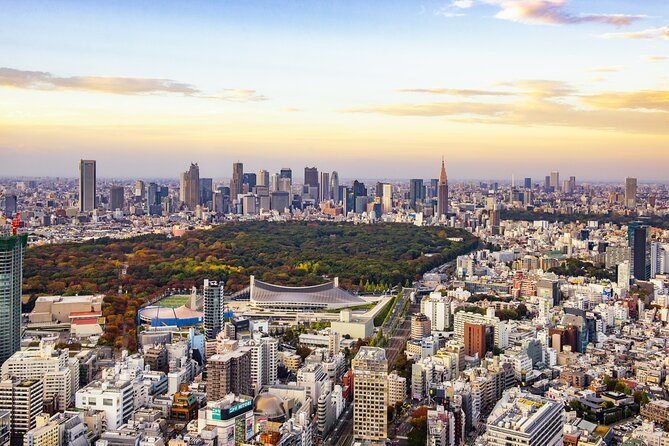
Shibuya Crossing is Tokyo’s famous intersection, a quick way to experience the city’s modern energy. It works well as part of a west Tokyo route with Meiji Jingu, Yoyogi Park, Takeshita Street, or Shinjuku.
The stop itself can be brief, but reaching Shibuya and moving onward still takes time. I would not pair it with several faraway eastern districts during a layover.





Tsukiji Fish Market
Tsukiji offers a look at Tokyo’s older food-market identity. The suggested stop is about 30 minutes, which is enough for a short walk and a taste of the area, but not a leisurely food crawl.
Ask your guide what is practical during your visit. Food purchases and lunch are personal expenses, and the tour does not include a meal.
Meiji Jingu Shrine
Meiji Jingu is dedicated to Emperor Meiji and Empress Shoken. Its setting beside Harajuku Station gives you a striking contrast between a major urban rail hub and a traditional Shinto shrine.
This is one of the best pairings with Takeshita Street, Yoyogi Park, or Shibuya. Allow more than the listed 20 minutes if you want to walk calmly through the shrine grounds, since the actual approach can take time.
Asakusa and Senso-ji Temple
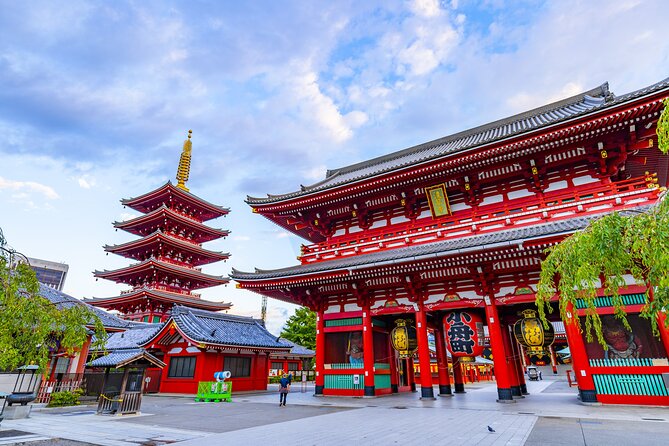
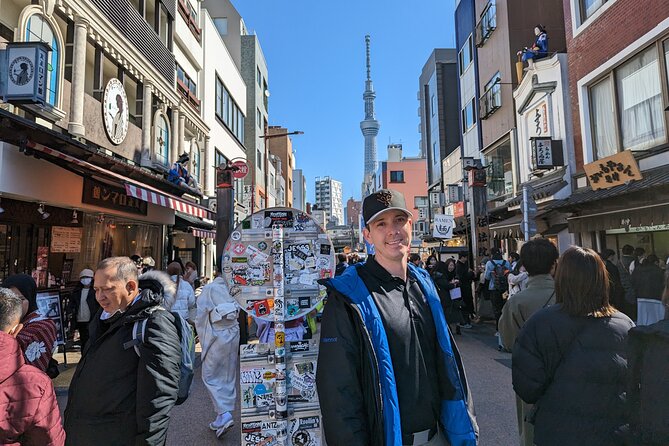
Asakusa brings together traditional Tokyo atmosphere and one of the city’s most popular Buddhist temples, Senso-ji. The temple is colorful and historic, while the surrounding area gives you a stronger sense of old Tokyo than the modern districts do.
The suggested Senso-ji visit lasts about 15 minutes, and Asakusa is listed separately at about 30 minutes. You can combine them naturally. This is a fine choice for a first taste of traditional Japan, though pairing Asakusa with Shibuya may create a long cross-city day.
Koishikawa Korakuen Garden
Koishikawa Korakuen is one of Tokyo’s oldest Japanese gardens, created during the Edo period for the Mito branch of the ruling family. It offers ponds, paths, and carefully arranged views in the middle of the city.
Admission is not included. The listed time is only 10 minutes, which is too short for most people who want to appreciate a garden properly. Choose it only if the garden itself matters to you and you can agree on a longer visit.
Hama Rikyu Gardens
Hama Rikyu is a large garden beside Tokyo Bay, known for seawater ponds that change with the tides and a teahouse. It makes a good choice if you want a quieter break from streets and stations.
Admission is extra, and the suggested five-minute stop is clearly a brief orientation rather than a full visit. Confirm the timing with your guide before making it one of your three or four main sights.
Tokyo National Museum
The Tokyo National Museum is Japan’s oldest and largest national museum. It is the right pick if art and Japanese cultural objects matter more to you than checking off several neighborhoods.
Entry is not included, and the listed five-minute stop only makes sense as an outside look or a very quick orientation. A museum visit normally needs more time, so select it only after discussing opening hours, ticketing, and the time you can spare.
Akihabara
Akihabara is known for electronics shops and its connection to Japan’s modern pop culture. It can appeal to you if you want a distinctly contemporary side of Tokyo rather than shrines and gardens.
The suggested stop is five minutes, so this is best treated as a quick walk through the district or a short photo stop. It is not enough time for serious shopping.
Rikugien Garden
Rikugien is often considered one of Tokyo’s finest Japanese gardens, created around 1700 for the fifth Tokugawa shogun. It is a strong choice for anyone who prefers traditional design, seasonal plantings, ponds, and quiet paths.
Admission is extra, and the listed visit is about 30 minutes. Like Koishikawa Korakuen, it works best as the main focus of a garden-centered route rather than a quick add-on.
Yoyogi Park and Takeshita Street
Yoyogi Park has wide lawns, ponds, and wooded areas. Takeshita Street in Harajuku is associated with youth fashion and teenage culture, though the area also gives you a lively look at Tokyo shopping.
These two stops pair naturally with Meiji Jingu. You can move from a quiet shrine to an urban shopping street with the park between them. The listed time for each is about 30 minutes, making this one of the more efficient combinations.
Roppongi Hills
Roppongi Hills is a large city complex with offices, apartments, shops, restaurants, a hotel, and art spaces. It shows Tokyo’s polished, modern side.
The scheduled stop is about 15 minutes. Choose it if architecture, shopping, or dining is a priority, but do not expect a full meal or extended shopping session within the normal tour window.
Shibamata and Nezu
Shibamata, on Tokyo’s eastern edge near the Edogawa River, retains an old-fashioned neighborhood feel. Nezu, along with nearby Yanaka, is part of Tokyo’s old downtown and escaped major damage from wars and natural disasters.
These districts suit you if you want a less obvious version of Tokyo. They are not the quickest choices from Narita or from western Tokyo, so they require a route planned around them. Nezu’s listed stop is about 15 minutes, and Shibamata’s is also about 15 minutes.
Shinjuku Gyoen and Golden Gai
Shinjuku Gyoen National Garden combines a calm green setting with easy access to one of Tokyo’s busiest commercial areas. Admission is extra, with adult entry listed at ¥500, group admission at ¥400, seniors at ¥250 with valid identification, and students at ¥250 with valid student identification.
Shinjuku Golden Gai grew from postwar black-market roots into a dense area of small eating and drinking establishments. The suggested visit is about 15 minutes. It is a good choice for a quick look at Tokyo’s layered urban past, but lunch or drinks are not included.
Odaiba
Odaiba is a shopping and entertainment district on a man-made island in Tokyo Bay. It began as a set of defensive fort islands, and its present character is modern and spacious.
The stop is about 15 minutes. Odaiba can be appealing for bay views and contemporary city design, but it is not an easy fit with many central Tokyo sights in a short day.
How the pacing affects your experience
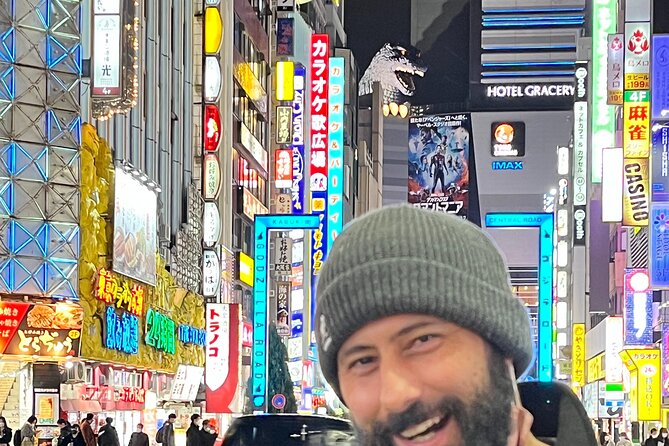
The tour’s biggest strength and biggest risk are the same thing: customization. You can shape the day around your interests, but you need to make firm choices before the schedule becomes crowded.
One past departure was described as moving too quickly and feeling like a forced march. The useful lesson is simple: tell your guide that you prefer fewer sights and a slower pace if that is your priority. Three places enjoyed properly will usually serve you better than four rushed stops, especially if one includes a garden, museum, or large shrine grounds.
The suggested stop times are often very short. Five minutes at Hama Rikyu or the Tokyo National Museum is not a full visit. Fifteen minutes at Senso-ji or Golden Gai gives you a taste, not a detailed exploration. Treat those times as planning markers, then agree on adjustments with your guide.
What the $435.74 price is really buying
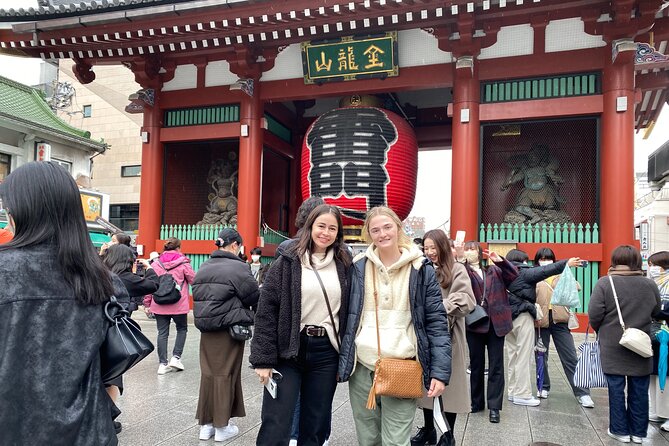
At $435.74 per person, this is not a budget sightseeing option. The price covers the licensed local English-speaking guide, airport meeting service, and a private custom walking tour for your group. Transportation, meals, admission fees, and personal spending are extra.
The value improves if you are traveling with several people and can use a group discount. It also improves if you place a high value on getting out of Narita efficiently, handling Tokyo’s train system with help, and shaping the day around your own interests.
The price is harder to justify if you only want one nearby sight, dislike walking, or already feel comfortable planning Tokyo’s trains. You are paying for time management, language help, and personal attention more than for included attractions.
Who will get the most from this tour
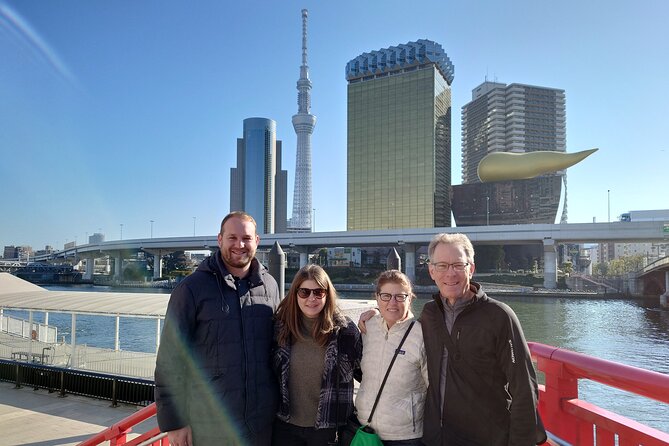
I would recommend it for an active person with a substantial layover who wants a guided first look at Tokyo without committing to a longer stay. It suits families or small private groups that want one route and one guide rather than a fixed group schedule.
It is also useful if you want help with translation. Shuji was praised for being punctual, assisting with the bullet train and subway system, and explaining Japanese history, culture, food, and daily life. Masa was praised for handling major changes to the timing and selected areas. Yoshi, also listed as Yoshii in the guide response, was praised for building a route around personal requests and adding sensible suggestions.
Do not book it if you have difficulty walking or using public transportation. The activity specifically advises against it for people with those limits. It is a walking tour with pickup on foot, not a private-vehicle tour.
Confirmation is provided when you book, service animals are allowed, and the activity is near public transportation. You can cancel for a full refund up to 24 hours before the local start time. Changes made inside that window are not accepted.
Should you book this Narita layover tour?
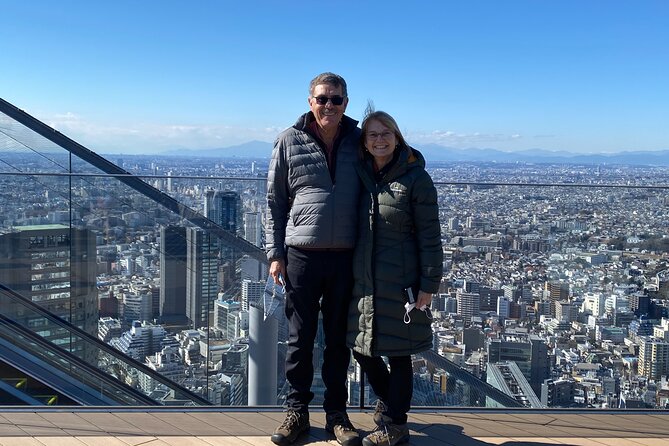
Book it if you want a private, guide-led introduction to Tokyo and are willing to plan a focused route. The airport meeting, train support, English guidance, and ability to choose your own sights can turn a difficult layover into a real city visit.
Before booking, decide which three or four places matter most. I would choose one of these styles: Asakusa and Senso-ji for traditional Tokyo, Meiji Jingu with Harajuku and Shibuya for old and new Tokyo, or one garden paired with a nearby district. Tell the guide clearly if you want depth rather than speed.
Skip it if the $435.74 price feels high once train fares and admission are added, or if your connection does not leave enough room for an eight-hour activity. The tour can be excellent for the right layover, but only when you respect Tokyo’s size and keep the plan modest.
FAQ
Where does the tour begin?
You meet your guide at Narita International Airport, located at 1-1 Furugome, Narita, Chiba 282-0004, Japan.
How long does the experience last?
The tour lasts approximately eight hours, including travel between Narita Airport and Tokyo.
How do I return to Narita Airport?
At the end of the tour, your guide takes you to the nearest station for a Narita Express train or another train service back to the airport.
Is the Narita Express fare included?
No. The listed round-trip Narita Express fare is ¥6,140 for adults and ¥3,060 for children, with prices varying by destination.
How many Tokyo sights can I choose?
The tour is designed around three or four sights selected from the available options. You should discuss the route and pace with your guide.
Is this a private tour?
Yes. Only your own group participates, and multiple tour groups cannot be combined.
Are admission fees included?
Admission is not included for the paid attractions. The guide’s entry fees are covered only for sights listed under the available attractions. Garden, museum, and Shinjuku Gyoen fees are specifically listed as extra.
Is lunch included?
No. Lunch and other personal expenses are not included.
Is the tour suitable for someone with limited mobility?
The activity is not suggested for people who have difficulty walking or using public transportation. It is a walking tour, and pickup is on foot.
More tours in Narita we've reviewed





Narita, compared.
 ★ 4.5Narita Airport (NRT) Private Transfer to Central TokyoFrom $166
 ★ 4.5Private arrival Transfer from Narita Airport(NRT) to central Tokyo cityFrom $92
 ★ 5.0Narita Airport(NRT): Private Transfer to Tokyo/Yokohama 1-9paxFrom $127
 ★ 4.5Airport transfer: Narita, Haneda (Tokyo), HND-NRT Airport shuttleFrom $224
 ★ 5.03 Day Japan Highlights Tour: Tokyo, Mt.Fuji, Nara, Kyoto, OsakaFrom $1,310
 ★ 4.0Shared Arrival Transfer : Narita International Airport to Hotel (Central Tokyo)From $108