
Reviewed · SHINJUKU TOURS
Shinjuku Tokyo: Authentic Japanese Home-Style Culinary Class
Near Shinjuku, this 150-minute Japanese cooking class turns familiar restaurant dishes into practical home food you can make again. You might roll sushi, shape gyoza, turn takoyaki with a pick, or cook an entire gozen meal with soup, rice, fish, meat, and side dishes. I like the choice of menus and the way instructors such as Kana, Lulu, Kayo, and Chieko explain both technique and food customs.
I also like that dietary needs are discussed before class, with vegetarian, vegan, allergy-aware, and special-request options available. The main thing to watch is the meeting address: it is sent after booking, and one person once had trouble finding the building entrance. Menu choice can also be limited if another group joins the class.
In This Review
- Key points to know
- Cooking Japanese comfort food near Shinjuku
- Choosing the right menu for your appetite
- Menu A: Okonomiyaki and yakisoba
- Menu B: Gyoza and takoyaki
- Menu C: Rolled sushi and teriyaki
- Menu D: Traditional gozen set
- Menu E: A request of your own
- What happens during the 150 minutes
- The food knowledge you take home
- A warm fit for children and mixed-skill groups
- Price, value, and practical details
- Dietary needs and menu planning
- Small cautions before you book
- Who should book this class
- Should you book the Shinjuku cooking class?
- FAQ
- Where is the Japanese cooking class held?
- How long does the cooking class last?
- What languages are available?
- How much does the class cost?
- What menus can I choose from?
- Can I choose my menu after booking?
- Can the class accommodate vegetarians or vegans?
- Can food allergies be accommodated?
- What is included in the price?
- Is transportation included?
- Can I cancel for a full refund?
- Can I reserve now and pay later?
Key points to know
- Four main menus: Choose okonomiyaki and yakisoba, gyoza and takoyaki, rolled sushi and teriyaki, or a traditional gozen set.
- A real meal, not just a demonstration: You prepare several dishes, then sit down to eat what you made.
- English instruction: Kana, Lulu, Kayo, Chieko, Miyuki, and other instructors explain recipes, ingredients, and cooking methods in English.
- Good for families: Children from about seven to teenagers can take part, with tasks adjusted to suit the group.
- Dietary requests are welcome: Vegetarian, vegan, allergy-related, and other food preferences can be discussed ahead of time.
- Central Tokyo setting: The kitchen studio is in or around Shinjuku, though the exact address arrives after booking.
Cooking Japanese comfort food near Shinjuku
Tokyo has no shortage of sushi counters, ramen shops, and department-store food halls. This class gives you something different: a look at the everyday dishes Japanese families cook at home, with enough hands-on work to make the meal feel like your own.
The cooking studio is in or around Shinjuku, one of Tokyo’s most useful bases. You are not being sent far out of the city for the class, and the central location makes it easy to fit into a day of sightseeing. Still, do not assume that the studio is directly inside Shinjuku Station. Wait for the exact address and map details after booking, then allow time to find the entrance.
The class is taught in English. The instructors use simple explanations and guide you through each stage rather than expecting prior cooking skill. Kana is praised for clear English and warm hosting, while Lulu, Kayo, Chieko, Miyuki, and other teachers have each led sessions with a friendly, patient approach.
I would describe the mood as personal and relaxed rather than formal. Some sessions are private, while others include another group. That difference matters: a private class gives you more time to ask questions and may make menu selection easier.
A few more Tokyo tours and experiences worth a look

Choosing the right menu for your appetite
You select from four main menu choices when you book, as long as your group is the only booking on the day. If another group attends the same class, the menu may already be set. A custom menu can sometimes be arranged, so put your request in advance rather than waiting until you arrive.
Menu A: Okonomiyaki and yakisoba
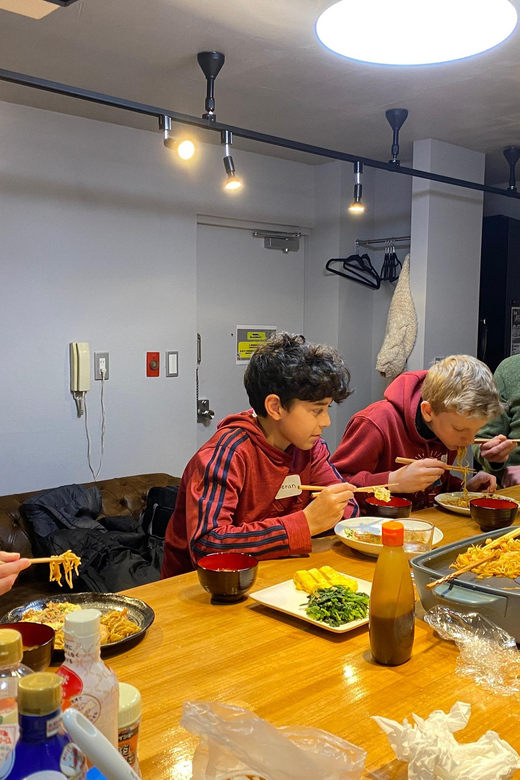
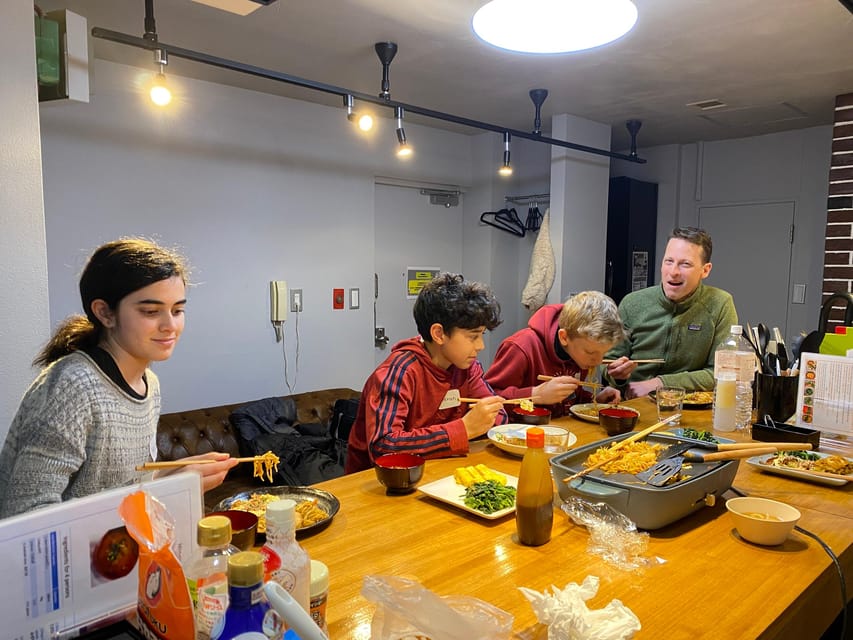
This is the lively, filling choice. Okonomiyaki combines batter, chopped cabbage, and other ingredients on a teppan-style grill. You cook it, then finish it with Japanese sauces and toppings.
Yakisoba brings noodles, vegetables, and usually pork or seafood together in a sweet and savory sauce. The two dishes make a hearty meal, and the preparation introduces you to a style of Japanese cooking that feels informal and social.
Choose this set if you want dishes that are easy to recreate at home and fun to cook with family or friends. It is also a good pick if you like a substantial lunch. Since ingredients can vary with dietary needs, tell the instructor ahead of time if you need a vegetarian or vegan version.
Menu B: Gyoza and takoyaki
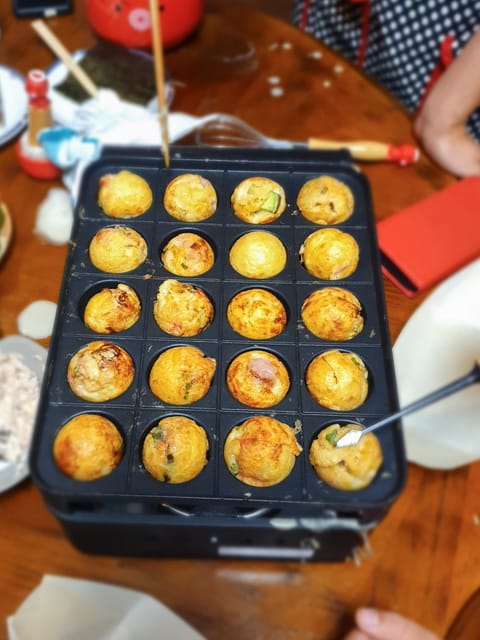
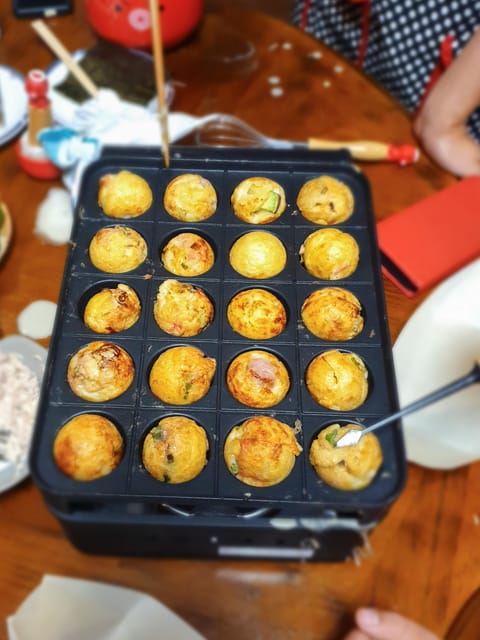
This is probably the most playful menu. You prepare Japanese gyoza, then pan-fry them until the bottoms are crisp. The class also covers takoyaki, the round savory dumplings strongly associated with Osaka and summer festivals.
Takoyaki can be tricky at first because the mixture is cooked in rounded molds and turned as it firms up. That makes it a useful class dish: you learn by doing, and the finished result is far more satisfying than simply watching someone else cook it.
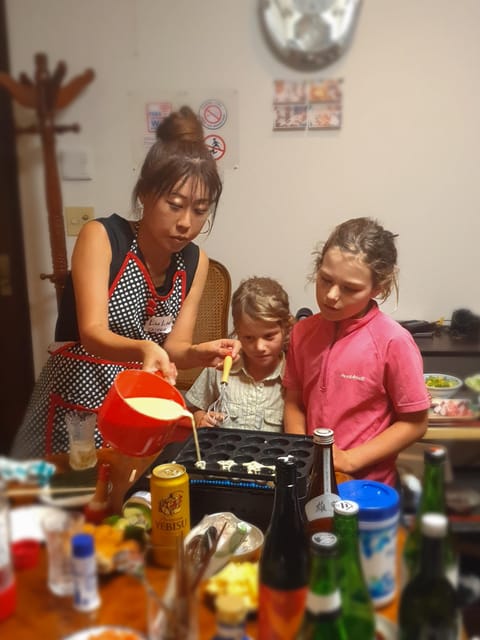
This menu suits families and first-time cooks especially well. Children can take part in shaping and turning food under instruction, though the instructor handles any task that requires care around hot equipment.
Menu C: Rolled sushi and teriyaki
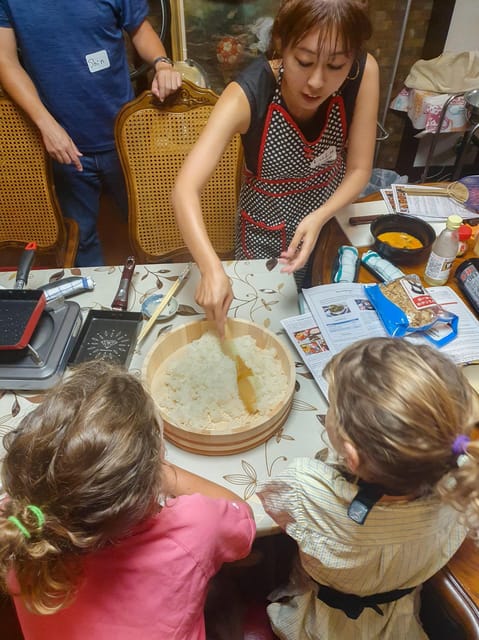
Here you roll and cut your own sushi, then pair it with chicken or yellowtail teriyaki, side dishes, and miso soup. It is a good choice if you want a mix of preparation skills rather than one large cooking project.
Rolling sushi looks simple, but even spacing the fillings and cutting clean pieces takes a little practice. The class gives you a chance to learn the basic process without the pressure of a professional sushi counter.
The teriyaki portion shows how a familiar Japanese flavor is built at home. You can choose chicken or yellowtail, depending on the available menu and your preferences. This set also travels well as a recipe lesson. One person specifically found that sushi and miso soup were easy to repeat after returning home.
A few more Tokyo tours and experiences worth a look


Menu D: Traditional gozen set
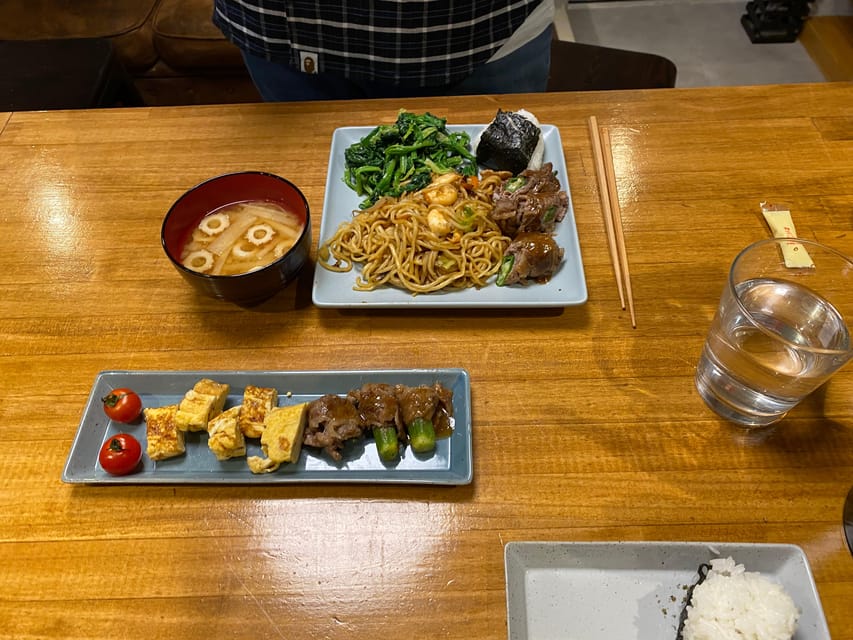
The gozen menu is the best choice if you want a rounded picture of a Japanese home meal. It includes a meat plate, fish plate, side dish, miso soup, and an onigiri rice ball.
Instead of focusing on one famous dish, you learn how different items are balanced on the table. Rice, soup, protein, and smaller dishes each have a place. That makes the menu useful for understanding the structure of an everyday Japanese meal.
The menu can also be adapted. One group chose the gozen set and arranged chicken teriyaki as a special request. If you prefer a broader meal and want cultural context along with cooking steps, this is the menu I would consider first.
Menu E: A request of your own
The provider also invites you to suggest another menu. This is not an unlimited promise, so discuss your idea before booking or as soon as possible afterward. The kitchen can then explain what is practical and what substitutions may be needed.
What happens during the 150 minutes
The full session takes about two and a half hours, including cooking and eating. Ingredients are prepared in advance, which keeps the class moving and leaves more time for you to work with the food.
You begin by meeting the English-speaking instructor and reviewing the menu. This is the right moment to repeat any allergy, vegetarian, vegan, or other dietary request. The instructors have adjusted recipes for allergies and preferences before, but advance notice is important.
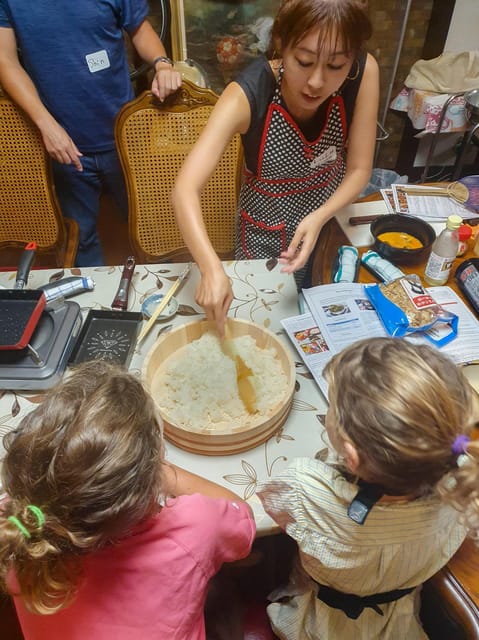
Next comes preparation. Depending on your menu, you might chop cabbage, mix batter, fill gyoza wrappers, prepare sushi ingredients, shape rice balls, or work with the seasonings used in miso soup and teriyaki. The point is not to race through a recipe. You learn what the ingredients do and why each step matters.
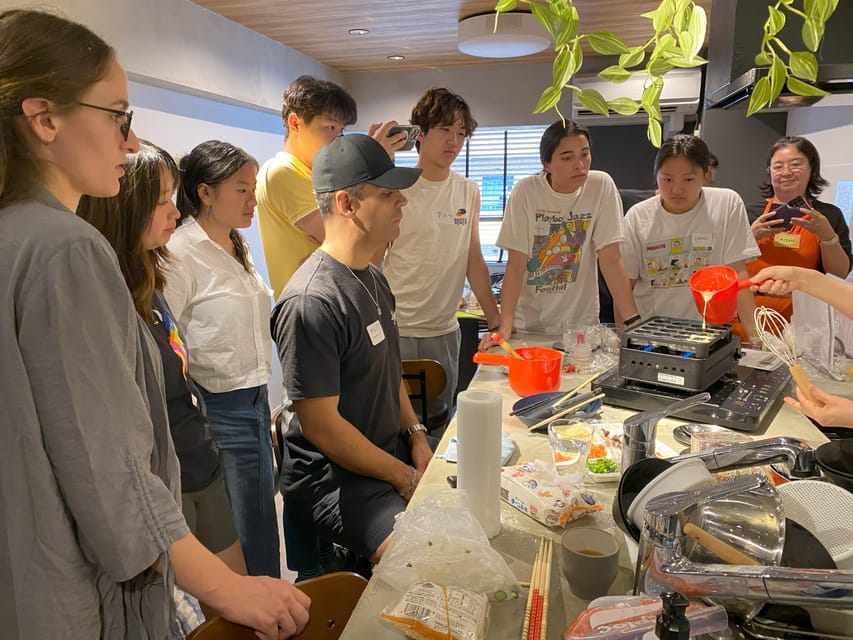
Some parts are hands-on, while the teacher may demonstrate techniques that are difficult to explain without showing them first. If you are an experienced cook, ask to take on more of the active work. One participant enjoyed the class but would have preferred less watching and more cooking, so this is worth stating clearly at the start.
The instructors also add cultural information. Chieko, for example, has explained traditional recipes and cooking methods, while other teachers have discussed ingredients, local food habits, nearby restaurants, and other Japanese cities. That turns a recipe lesson into a useful food conversation.
Once the dishes are ready, you eat together. The portions can be generous, with several people finding they had made more than enough for a full meal. You are not simply given a small tasting plate after an hour of work.
The food knowledge you take home
The best value here is not the meal alone. It is the practical information you can use after Japan.
The recipes are built around recognizable dishes rather than elaborate restaurant creations. That matters if you want to cook Japanese food in an ordinary home kitchen. Participants have received recipes afterward, and several found the instructions clear enough to repeat at home.
You also learn how ingredients are used. The class may introduce sauces, fillings, soup components, rice preparation, and seasonings that can seem unfamiliar when you first encounter them in a Japanese supermarket. Ask about substitutions if you live somewhere with limited access to Japanese ingredients.
The meal also gives you a better sense of balance. A Japanese home meal is not always one large bowl or one main plate. The gozen set, in particular, shows how soup, rice, fish, meat, and side dishes can work together.
I would not book this only for a formal chef certification or advanced knife training. The class is aimed at basic, authentic home cooking. Its strength is clear instruction, cultural background, and food you can realistically try again.
A warm fit for children and mixed-skill groups
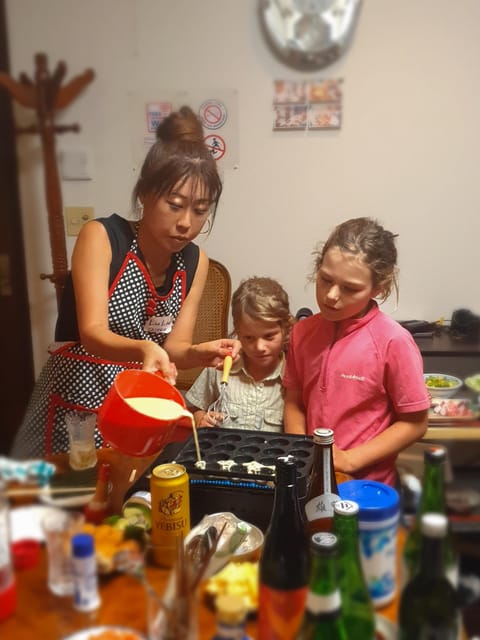
This class works well when people in your group have different levels of cooking experience. A teenager who wants to learn can take part alongside adults who already cook. The recipes are broken into manageable steps, and instructors have been patient with younger children.
For families, the takoyaki and gyoza menu offers the most activity. Sushi also gives children a clear task, especially when assembling and rolling. Hot pans, grills, and cooking equipment still require adult attention, so you should expect the teacher to control some of the hotter stages.
Couples and solo visitors can also benefit from the smaller setting. A private session allows more questions and makes it easier to discuss food preferences. If another group is present, you may have less control over the menu, but you can still learn and eat with the class.
The social side is part of the appeal. You cook with the instructor, talk about Japanese food, and sometimes work alongside another group. If you want total privacy, ask about the booking conditions before paying.
Price, value, and practical details
At $88 per person, the class is not the cheapest way to eat lunch in Shinjuku. You can find a good Japanese meal for less. The comparison changes when you count the instruction, ingredients, equipment, cultural explanation, and recipes you can take home.
The price includes all fees and taxes, cooking tools, ingredients, and drinking water. Private transportation is not included, so you make your own way to the studio. The exact address is sent after booking, and the provider communicates with you before the activity.
The class lasts 150 minutes. That is long enough for a full meal and a proper lesson, but short enough to fit around a morning or afternoon in Tokyo. I would avoid scheduling a train reservation or another fixed activity immediately afterward. Cooking times can be hard to predict when a group includes children or first-time cooks.
The cancellation policy is friendly: cancel at least 24 hours before the start for a full refund. You can also reserve now and pay later, which helps if your Tokyo plans are still shifting.
Dietary needs and menu planning
Tell the provider about allergies and food restrictions before the class. The team has worked around allergies, vegetarian diets, vegan preferences, and special requests, but the options depend on the chosen menu and available ingredients.
This is especially important for menus containing seafood, pork, meat, eggs, or sauces with particular ingredients. Do not rely on a last-minute explanation at the kitchen door. Early communication gives the instructor time to discuss substitutions.
The menu may also be adjusted for personal taste. A chicken teriyaki request was accommodated within the gozen set, and other groups have arranged menus around their preferences. Ask what is possible before you finalize your plans.
Small cautions before you book
The exact kitchen address is not provided until after booking. That is normal for some small studio activities, but it means you should check your messages before setting out. One person found the building entrance confusing and lost about 15 minutes before calling the organizer.
Another point is menu control. You can choose among the four listed menus when your group is the only booking, but a shared class may use a set menu. If one dish is the reason you are booking, confirm the menu in advance.
Finally, the class is not always identical from one day to the next. Different instructors may lead the session, including Kana, Kayo, Lulu, Chieko, Miyuki, Aki, Miho, and others. The teaching style can vary, but the repeated strengths are English guidance, patience, clear steps, and generous food.
Who should book this class
I would recommend it to:
- Families looking for a hands-on Tokyo activity
- Couples who want a meal they can recreate at home
- First-time cooks who want clear instruction
- Experienced home cooks interested in Japanese ingredients and methods
- Vegetarian or vegan visitors who arrange their needs in advance
- Anyone staying near Shinjuku who wants a break from restaurant meals
I would be less likely to recommend it if you want advanced culinary training, a large professional kitchen, or a tightly scripted performance. It is home-style cooking, taught in a personal kitchen-studio setting.
Should you book the Shinjuku cooking class?
Book it if you want to do more than eat Japanese food. The class gives you useful recipes, direct practice, a full meal, and a friendly conversation about how the food fits into Japanese life.
The strongest reasons to choose it are the menu range, the flexible approach to dietary needs, the English instruction, and the chance to cook with teachers such as Kana, Lulu, Kayo, or Chieko. The main cautions are the post-booking address, possible menu limits in a shared class, and the fact that some demonstrations may replace hands-on work.
For $88, I see good value if you will use the recipes again or want a personal cultural activity near central Tokyo. Check the menu, send your dietary details early, save the arrival instructions, and leave with enough time to find the studio. Do that, and this is a satisfying way to bring a little Japanese home cooking into your own kitchen.
FAQ
Where is the Japanese cooking class held?
It is held at a kitchen studio in or around Shinjuku, Tokyo. The exact address is provided after booking, so check for the provider’s message before leaving.
How long does the cooking class last?
The class lasts 150 minutes, or about two hours and 30 minutes. This includes cooking the dishes and eating the meal together.
What languages are available?
The class is taught in English.
How much does the class cost?
The listed price is $88 per person.
What menus can I choose from?
The main choices are okonomiyaki and yakisoba, gyoza and takoyaki, rolled sushi with teriyaki, and a traditional gozen set. A custom menu may also be discussed by request.
Can I choose my menu after booking?
Menu selection is available when your group is the only attendee group on the day. If another group joins the class, you may not be able to choose the menu.
Can the class accommodate vegetarians or vegans?
The class is designed to accommodate dietary preferences, including vegetarian and vegan diets. Tell the provider about your needs in advance so the menu can be discussed.
Can food allergies be accommodated?
Yes, food allergies can be discussed before the activity. Contact the provider in advance to find out which menu options and substitutions are available.
What is included in the price?
The price includes all fees and taxes, cooking tools, ingredients, and drinking water.
Is transportation included?
Private transportation is not included. You are responsible for getting to the kitchen studio after receiving the exact address.
Can I cancel for a full refund?
You can cancel up to 24 hours in advance for a full refund.
Can I reserve now and pay later?
Yes. The booking option allows you to reserve your place and pay later.
More Workshops & Classes in Tokyo
More Shinjuku Tours in Tokyo
More tours in Tokyo we've reviewed







Shinjuku Tours, compared.
 ★ 5.0Tokyo: Shinjuku Food Tour (13 Dishes at 4 Local Eateries)From $86
 ★ 5.0Tokyo Bar Hopping Tour in Shinjuku (All-You-Can-Drink + Dinner)From $106
 ★ 4.9Tokyo: Shinjuku Food Tour (15 Dishes and 4 Eateries)From $853 hours
 ★ 5.0Best of Shinjuku: Izakaya Food Tour (4 Stops, 14+ Tastings)From $92
 ★ 4.9Tokyo: Shinjuku Local Bar and Izakaya Guided Walking TourFrom $343 hours
 ★ 5.0Tokyo Shinjuku Chopsticks Making ClassFrom $20