
Reviewed · SHIBUYA TOURS
Shibuya and Shinjuku Photography Experience
Tokyo after dark is made for photographs, but getting good pictures of yourself while traveling alone is another matter. This two-hour walk with Kenji, an English-speaking guide and photographer, solves both problems as you move from Hachiko and Shibuya Crossing to Shinjuku’s neon streets and Godzilla Road.
I like the small maximum of four people, which gives Kenji room to help with poses and framing. I also like that you receive 25 to 50 color-graded photos, not just a few quick snapshots. The main consideration is the strict 8 p.m. start: arrive more than five minutes late and you cannot join or receive a refund.
In This Review
- Key points to know before booking
- Why this night walk works for photographers
- Meeting Hachiko at 8 p.m.
- Shibuya Crossing and Center-gai
- Miyashita Park’s modern contrast
- The train from Shibuya to Shinjuku
- Old Tokyo atmosphere in the narrow alleys
- Omoide Yokocho and the texture of Memory Lane
- Godzilla Road and Kabukicho after dark
- What the included photographs are worth
- Timing, weather, and who should book
- FAQ
- How long is the Shibuya and Shinjuku photography experience?
- What time and where does the tour begin?
- Where does the tour finish?
- Is the train fare included?
- How many people can join the experience?
- What happens if the weather is poor?
- Should you book this photo walk?
Key points to know before booking
- Hachiko to Kabukicho in two hours: The route links two famous Tokyo districts without wasting the evening.
- A personal photographer, not just a walking guide: Kenji helps with poses and takes portraits as well as street scenes.
- 25 to 50 edited color photos included: This adds real value for solo visitors who want polished memories.
- Small group of no more than four: You get more attention than on a large city walk.
- The Shibuya to Shinjuku train costs ¥170: Bring this extra fare, since it is not included.
- Weather matters: Poor conditions can lead to a new date or a full refund.
Why this night walk works for photographers
The appeal here is the change of mood along the route. You begin in Shibuya, where giant screens, traffic, and crowds create big urban images. You finish in Shinjuku, where narrow lanes, old bars, and Kabukicho neon give you a more textured view of Tokyo after dark.
You are not signing up for a technical photography class with a long lecture. The format is more practical. Kenji guides you through busy streets, points out useful scenes, and takes your photographs as you go. If you are unsure how to pose, he offers help. That matters when you are alone, traveling with a partner who does not want to take endless pictures, or simply tired of holding your phone at arm’s length.
The group limit is especially useful here. Shibuya and Shinjuku are crowded, and a large group would be awkward at crossings and in narrow lanes. With no more than four people, the walk can stay flexible, although you should still expect a brisk urban stroll and frequent stops.
The price is $62.13 per person. I consider that fair if you place real value on professional-looking portraits. The cost is less compelling if you mainly want general sightseeing, since most of the route is free to explore on your own. The included photo set is what changes the calculation. You are paying for access to a local guide, help with the city’s visual details, and a package of 25 to 50 finished images.
A few more Tokyo tours and experiences worth a look

Meeting Hachiko at 8 p.m.
The meeting point is the Hachiko Statue, at 2 Chome-1 Dogenzaka near Shibuya Station. This is a sensible place to begin because it is easy to identify, close to public transportation, and already one of Tokyo’s most photographed corners.
Hachiko is remembered as a symbol of loyalty and devotion. The statue also functions as a practical landmark in a station area that can feel confusing on a first visit. Give yourself extra time to find the correct exit and locate the statue before the 8 p.m. start.
The punctuality rule is unusually strict. If you are more than five minutes late, you will not be able to join, reschedule, or claim a refund. I would aim to arrive 10 to 15 minutes early, especially if Shibuya Station is new to you.
This first stop is brief, about five minutes. Think of it as an orientation and opening photo stop rather than a long explanation of Hachiko’s story. You can photograph the statue, the surrounding station scene, and perhaps a portrait before the group moves into the heart of Shibuya.
Shibuya Crossing and Center-gai
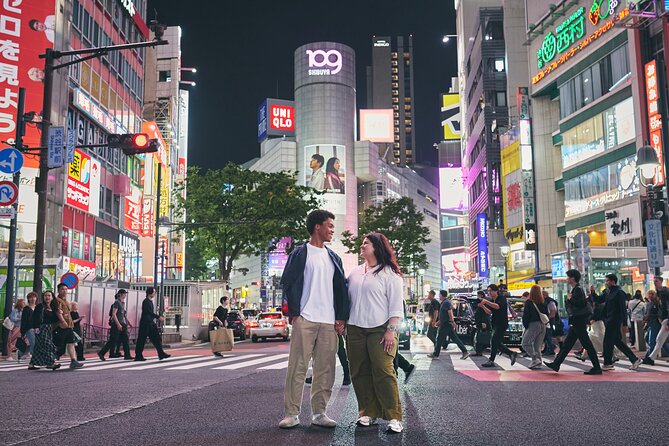
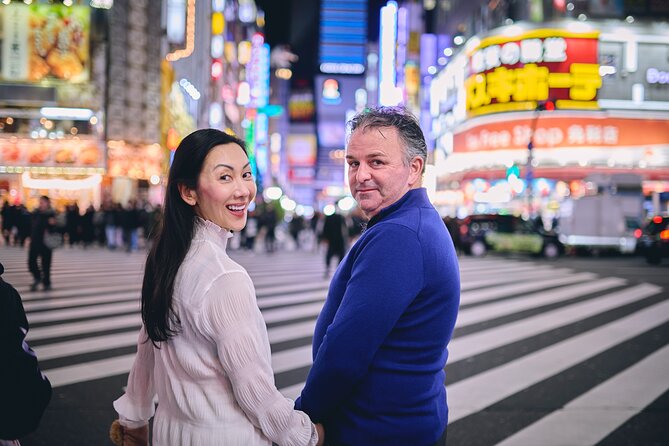
From Hachiko, the walk heads to Shibuya Scramble Crossing, probably the route’s most recognizable location. When the signal changes, people cross from several directions at once, creating the layered movement that appears in so many images of Tokyo.
You get about 20 minutes here. That is enough time to watch the crossing cycle, take wide street photographs, and work on portraits with the crossing as a backdrop. The visual strength is scale: you can frame yourself against traffic, signs, video screens, and a mass of moving pedestrians.
The drawback is also scale. This is a public crossing, not a private photo set. You may need patience to find a clear position, and the crowd will not pause for your composition. Kenji’s help is useful because he can suggest where to stand and when to move, rather than leaving you to guess in the middle of the crowd.
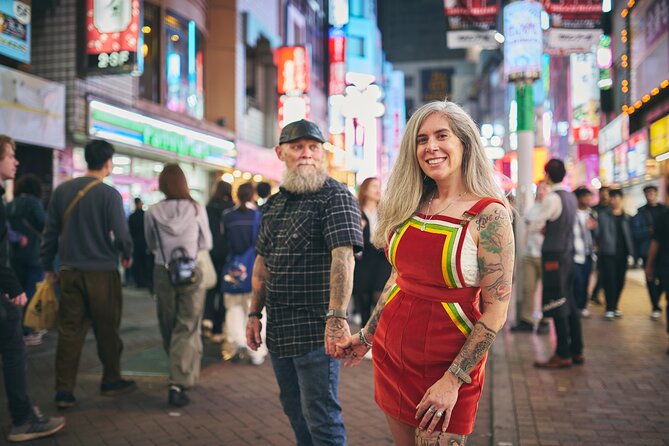
Next comes Shibuya Center-gai, a narrow street packed with shops, food spots, arcades, and bars. The tone shifts from a single grand scene to smaller details. Look for signs, storefronts, reflections, and the close-packed feel of youth culture in Shibuya.
You have around 20 minutes here. This part is better for candid-looking portraits and close street scenes than for sweeping city views. It is also a busy area, so stay close to the group and keep your belongings secure. The tour is designed around photography, but you are still walking through an active entertainment district.
Miyashita Park’s modern contrast
Miyashita Park offers a change of pace. The area combines green space, a skate park, cafes, and a shopping complex, giving you a cleaner, more modern setting after the tight streets of Center-gai.
The stop lasts about 20 minutes. Here, Kenji can work with different backgrounds and lines, including the contrast between planted areas and the hard edges of the city. You might prefer this section if you like contemporary architecture, relaxed portraits, or images that show how Tokyo adds public space to a dense urban center.
Miyashita Park is not an old Tokyo quarter, so it does not provide the same nostalgic mood as the later alleys. That variety is part of the route’s appeal. You see several versions of the city in one evening: a famous monument, a massive crossing, a youth district, a designed public park, and old drinking lanes.
The train from Shibuya to Shinjuku
The route continues from Shibuya to Shinjuku by train. The fare is ¥170 per person and is not included in the tour price.
This is a small cost, but it is worth planning for. Keep a ¥170 fare or payment method ready so the transfer does not slow the group. The train ride also means the experience is not one continuous walk from start to finish. If you prefer a self-contained route with no transport change, this is a point to consider.
On the other hand, the short transfer lets the evening cover two major districts without making you walk the full distance between them. That is a good trade for a two-hour experience. You get the visual variety of both neighborhoods while keeping the tour focused.
A few more Tokyo tours and experiences worth a look

Old Tokyo atmosphere in the narrow alleys
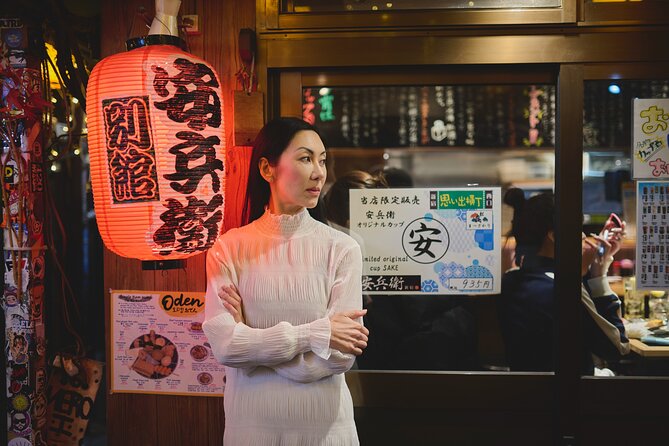
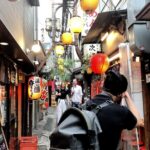
The route includes a narrow alley beside Shibuya Station lined with small, old-fashioned bars and izakayas. The supplied schedule does not name this stop, so you should treat it as an atmospheric pause rather than a specific venue visit.
This kind of lane gives you a different picture of Shibuya. Instead of huge screens and open crossings, you find tight doorways, small signs, and the close setting of post-war drinking streets. It is a useful reminder that Tokyo’s modern image exists alongside older forms of neighborhood nightlife.
You are not told that food or drinks are included. Bottled water is provided, and if you need another beverage, Kenji can point you in the right direction. If you want to eat at an izakaya, plan to pay separately and do not assume there will be time for a full meal during the photo walk.
Omoide Yokocho and the texture of Memory Lane
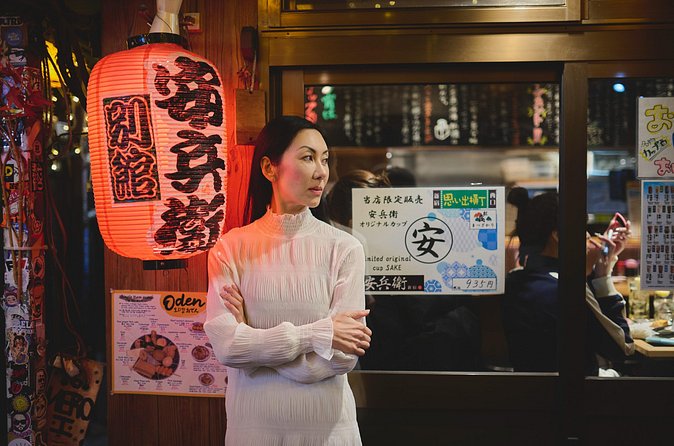
In Shinjuku, Omoide Yokocho translates as Memory Lane. The alley is known for smoky yakitori stalls, cramped bars, and a worn, old-school look. It is a strong setting for atmospheric photographs because the space feels close and layered, with small businesses pressed into a narrow passage.
The scheduled time here is about 20 minutes. You can expect photographs that feel very different from those at Shibuya Crossing. Instead of open space and crowds moving in every direction, you get tighter compositions, warm signs, cooking smoke, and the character of tiny food stalls.
The alley is described as safe, but it remains a working food and nightlife area. Be respectful when photographing businesses and people. The tour may show you the lane and its mood, but there is no promise of a meal or reserved seating. If you want to stop for yakitori, ask Kenji how much time is available.
For me, this is one of the route’s most useful contrasts. Shibuya gives you the polished, high-energy image of Tokyo. Omoide Yokocho gives you a rougher and more intimate side without taking you far from the main station districts.
Godzilla Road and Kabukicho after dark
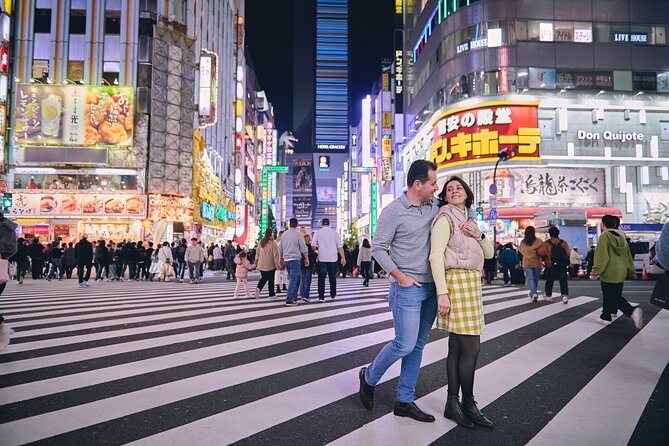
The final main stop is Godzilla Road, near the entrance to Kabukicho. Kabukicho is an entertainment and red-light district often called Sleepless Town, and it is known for bright signs, nightlife, and an unmistakable after-dark atmosphere.
You spend about 20 minutes in this area. The end point is the entrance to Kabukicho, not a long excursion through every part of the district. That makes the tour a good introduction to the area without pretending that two hours can explain all of Shinjuku nightlife.
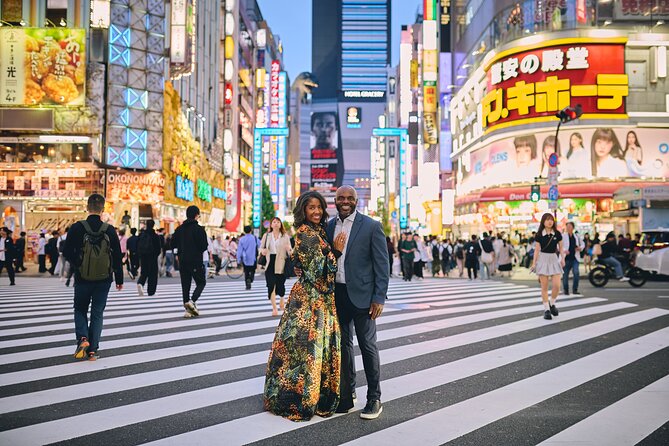
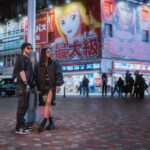
Godzilla Road offers a strong final backdrop. The giant character reference, neon signs, and dense streets give your last portraits a distinctly Tokyo feel. This is also where the tour finishes, so you can continue exploring Shinjuku afterward if you wish, provided you make your own plans.
Because the area is busy and associated with nightlife, follow Kenji’s directions and stay aware of your surroundings. The route description presents it as a public urban stop, not a bar crawl. You are there to photograph the streets and finish near the entertainment district.
What the included photographs are worth
The package includes 25 to 50 color-graded photos per person. This is the feature I would examine most closely before booking.
A set of that size gives you more than one hero portrait. You should expect a mix of images from the route, including photographs around Shibuya, the crossing, the alleys, and Shinjuku. Color grading means the images receive editing for a more finished look rather than being handed over as untouched files.
The exact balance between portraits and street scenes is not specified. If you want a particular style, tell Kenji early in the experience. You can also explain if you prefer natural walking photographs, posed images, close portraits, or pictures that place you clearly in the Tokyo setting.
The personal help is another part of the value. One person who used the experience alone found it easier to relax because Kenji made posing feel comfortable. Another praised his friendly manner and the quality of the photographs. He also shares city history during the walk, so the evening is not limited to pressing the shutter.
These points make the experience especially useful for solo visitors. You do not have to choose between seeing the city and getting decent photographs of yourself. Couples and small groups can also use the service, but the number of final photographs per person may depend on how many people are sharing the two hours.
Timing, weather, and who should book
The start time is 8 p.m., and the duration is about two hours. That timing suits night owls and anyone who wants Tokyo’s signs and entertainment districts at full strength. It may not suit families with young children or people who prefer to be back at their hotel early.
Good weather is required. If poor weather causes a cancellation, you are offered another date or a full refund. You can cancel for a full refund up to 24 hours before the start time, but changes or cancellations inside that window are not accepted.
I would book this if you want three things at once: a guided night walk, strong city backdrops, and finished portraits. It is also a good fit if you have already seen Shibuya and Shinjuku but want Kenji to show you smaller lanes and better angles.
I would skip it if your main aim is a long meal, museum visit, or detailed architectural tour. The route moves quickly, and the ¥170 train fare is extra. The focus is the photographic record of the evening, not a full cultural tour of both districts.
FAQ
How long is the Shibuya and Shinjuku photography experience?
The experience lasts approximately two hours.
What time and where does the tour begin?
It begins at 8 p.m. at the Hachiko Statue, located at 2 Chome-1 Dogenzaka, Shibuya, Tokyo 150-0043, Japan.
Where does the tour finish?
The tour ends at Godzilla Road at the entrance to Kabukicho in Shinjuku.
Is the train fare included?
No. The train from Shibuya to Shinjuku costs ¥170 per person and must be paid separately.
How many people can join the experience?
The group has a maximum of four travelers.
What happens if the weather is poor?
The experience requires good weather. If it is canceled because of poor conditions, you can choose another date or receive a full refund.
Should you book this photo walk?
Book it if you want polished Tokyo night photographs and appreciate having a friendly guide help with poses, locations, and city context. Kenji’s personal approach, small groups, and 25 to 50 edited images make the $62.13 price reasonable for solo visitors in particular.
Before booking, make sure you can reach Hachiko early, carry the extra ¥170 train fare, and commit to a two-hour evening walk. If those details suit your plans, this is a focused way to leave Tokyo with photographs that show more than a station selfie.
More Photography Tours in Tokyo

More Shibuya Tours in Tokyo
More Shinjuku Tours in Tokyo

More tours in Tokyo we've reviewed
Shibuya Tours, compared.
 ★ 5.0Official Street Go-Kart in ShibuyaFrom $76
 ★ 4.9Tokyo: Street Kart Experience in ShibuyaFrom $741 hour
 ★ 5.0Shibuya Meltdown Nightlife Tour: All-You-Can-Drink Bar HoppingFrom $106
 ★ 5.0Shibuya Official Street Go-Kart in Shibuya AnnexFrom $69
 ★ 5.0Tokyo: Shibuya Food Tour (13 dishes and 4 Eateries)From $77
 ★ 5.0Best of Shibuya Food TourFrom $217