
Reviewed · TEA CEREMONY & MATCHA
Matcha table tea ceremony experience in Tokyo
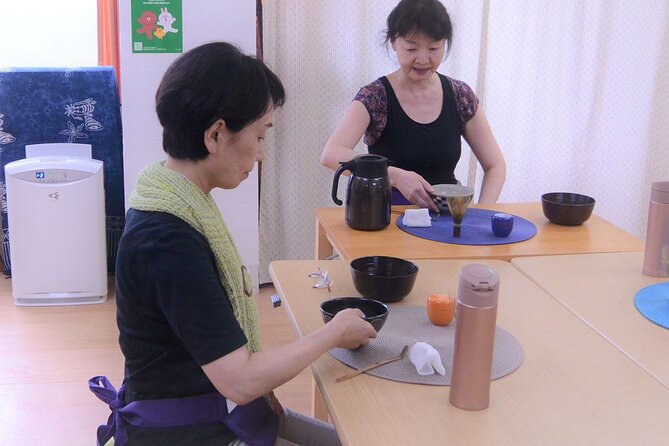
The most appealing part of this Tokyo experience is its relaxed take on tea ceremony. You sit on a chair at a table, not on the floor, while master instructor Masumi Matsumoto explains the history, manners, and spirit behind matcha. Then you drink tea prepared by the instructor before learning to whisk your own.
I like the small group limit of five, which gives the session a personal feel, and I like that you leave with a practical skill you can repeat at home. The main consideration is price: at $65.04 per person, this is not a quick cup of tea, but a focused cultural lesson lasting about two hours.
In This Review
- Key points at a glance
- A gentler way to experience Japanese tea ceremony
- Meeting Masumi Matsumoto in Meguro
- The first half: prepared matcha and seasonal wagashi
- The second half: whisking and serving your own matcha
- Why the table format matters
- A small-group activity for families and first-timers
- Getting to Toritsudaigaku in Meguro
- Is $65.04 a fair price?
- Who should book this tea experience?
- My verdict: book it for participation, not just tea
- FAQ
- How long does the matcha table tea ceremony last?
- Where does the tea ceremony take place?
- How far is the meeting point from a train station?
- Who teaches the experience?
- Is the tea ceremony conducted in English?
- Do I have to sit on the floor?
- What is included with the matcha?
- How many people can join the activity?
- Can I cancel for a full refund?
Key points at a glance
- Chair-based tea ceremony: Enjoy Japanese tea culture without kneeling or sitting on the floor.
- Masumi Matsumoto leads the session: The instructor is a master instructor with the Japan Table Tea Ceremony Association and teaches in English.
- Two-part format: First, watch and taste. Then make and serve matcha yourself.
- Seasonal wagashi included: The Japanese sweet changes through the year and accompanies the tea.
- Very small group: A maximum of five people allows room for questions and individual guidance.
- Easy Meguro access: The meeting point is a two-minute walk from Toritsudaigaku Station.
A gentler way to experience Japanese tea ceremony
Traditional tea ceremony can seem formal from the outside. There are prescribed movements, careful manners, special utensils, and a quiet atmosphere that may feel intimidating if you do not know what to do. This experience keeps those elements but presents them in a more approachable setting.
The key difference is the furniture. You sit at a table on a chair instead of kneeling on tatami. That matters if you have trouble sitting on the floor, and it also makes the activity a better fit for families with children. You can focus on the tea rather than worrying about stiff knees or getting through a long seated ritual.
This is still more than a demonstration. Masumi Matsumoto first prepares matcha and seasonal Japanese sweets for you, then teaches you how to use a special tea whisk. In the second half, you prepare and serve tea yourself. That change from watching to doing gives the experience a useful rhythm.
I especially like the balance between explanation and practice. You learn about the history, spirit, and manners of tea ceremony, but you are not expected to memorize a long list of rules before touching the whisk. The atmosphere is designed to be casual enough for beginners, while still respecting the tradition.
A few more Tokyo tours and experiences worth a look

Meeting Masumi Matsumoto in Meguro
Masumi Matsumoto is a master instructor of the Japan Table Tea Ceremony Association. The instruction is available in English, an important point if you want more than a silent demonstration of tea utensils.
The teaching style, as described through the experience, is friendly and detailed. That combination is useful because tea ceremony has many small gestures that can be hard to understand from a quick show. You can ask why a movement matters, how to hold the whisk, and how to approach the tea and sweet.
The small group setting helps here. With no more than five participants, this is not a large class where you simply watch from the back. A family can take part together, and children can follow along without the activity feeling too stiff. The experience has also been described as suitable for people who initially worry about a language barrier.
You should still expect a cultural lesson, not a comedy routine or a casual café visit. The tone is welcoming, but the subject is Japanese tea ceremony, with its emphasis on care, respect, and hospitality. If you enjoy learning the meaning behind an activity, the explanation will add real value.
The first half: prepared matcha and seasonal wagashi
The session begins with an explanation of how to enjoy matcha tea. This gives you a foundation before the tea arrives. You learn about the tea ceremony’s history, spirit, and manners, then watch as the instructor prepares the drink.
Masumi Matsumoto prepares the matcha for you in the first half. That lets you notice the appearance, aroma, texture, and serving customs without the pressure of making your own cup immediately. It is a good teaching choice: first observe the finished process, then try it yourself.
Your tea is served with seasonal wagashi, a Japanese confection designed to accompany tea. The sweet changes with the seasons, so the exact item is not fixed. That seasonal touch is part of the appeal, although you should not book this expecting a particular sweet.
Wagashi is not simply a dessert added to fill out the booking. In Japanese tea culture, the sweet balances the bitterness of matcha and helps you pay attention to the relationship between food, drink, season, and presentation. You will have a chance to taste the pairing before you make your own tea.
This first half is also the calmest part of the session. You can listen, taste, and take in the atmosphere. If you are bringing children, this is a useful time to explain that tea ceremony is about careful attention rather than speed. Families have found the format approachable, and the chair seating removes one common physical barrier.
The second half: whisking and serving your own matcha
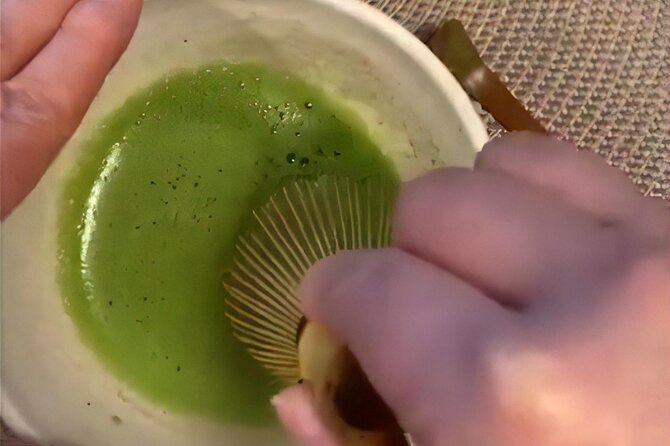
After watching the instructor, you get to prepare matcha yourself. The hands-on tutorial focuses on using the special tea whisk, the bamboo tool that creates the drink’s characteristic froth.
This is where the experience becomes more memorable than a standard tea tasting. You are not only told about matcha preparation. You handle the utensils, follow the steps, and learn how tea is served. The process gives you a small skill to take home, even if your first cup is not as smooth as the instructor’s.
Do not worry about being naturally good at it. The point is to learn the method and understand the care involved. The instructor can correct your technique and explain the movements in a way that beginners can follow. You then serve the tea, adding a social element to the lesson.
The practical benefit is clear. After the session, you can try making matcha at home if you have the tea and a whisk. You will not become a tea master in two hours, but you will understand the basic preparation and the etiquette surrounding it.
The activity is also a good choice if you prefer participation over passive sightseeing. Tokyo offers many places where you can simply look at traditional objects. Here, you use them and learn why they matter.
Why the table format matters
The table format is not just a modern convenience. It changes who can comfortably take part. Sitting on the floor for a formal ceremony can be difficult, especially for people with limited flexibility or for children who struggle to stay comfortable in one position.
A chair-based ceremony lets you concentrate on the instructor’s explanations and the tea itself. You do not need to treat floor sitting as a test of endurance. That makes the activity more inclusive without removing the central parts of the lesson.
It also creates a less formal mood. The experience retains the quiet attention and hospitality of tea ceremony, but it does not require you to arrive with prior knowledge. If you have always wanted to try tea ceremony but worried that you might break a rule, this format offers a sensible first step.
There is a tradeoff. Someone seeking a highly formal, traditional ceremony on tatami may find the table setup less ceremonial than expected. This is best understood as an accessible form of tea ceremony, not a full substitute for every style of formal Japanese tea practice.
That distinction helps set expectations. You receive instruction, prepared matcha, wagashi, and hands-on practice in a chair-based setting. You do not receive a museum lecture or a grand ceremonial performance in a historic temple.




A small-group activity for families and first-timers
The maximum group size is five people. That is one of the strongest practical features because tea ceremony depends on close observation. You need to see how the whisk is held and how the tea is prepared. A crowded class would make that harder.
Families should find the format especially workable. The English instruction, chair seating, and hands-on portion give children several ways to stay involved. They can watch the preparation, taste the sweet, learn the manners, and then make tea rather than sitting quietly through a long formal display.
Adults who are nervous about etiquette should also feel at ease. The instructor explains the details instead of assuming you already understand them. A casual atmosphere helps you concentrate on the experience rather than worrying about making an accidental mistake.
The activity can suit solo participants and couples as well, but the value increases if you enjoy personal instruction. If you want to meet a large number of people, this is not the right format. The group is intentionally small and focused.
The experience has received a top overall rating from five reviews, with particular praise for the friendly teaching, clear English, family suitability, and casual atmosphere. That is a positive signal, though the number of ratings is small. I would treat it as encouraging rather than as proof that every session will feel identical.
Getting to Toritsudaigaku in Meguro
The meeting point is at 1-chōme-9-1 Nakane, Meguro City, Tokyo 152-0031. It is a two-minute walk from Toritsudaigaku Station, and the area is served by public transportation.
That short walk is helpful in Tokyo, where an activity can become less appealing if it requires a long transfer followed by a confusing trek through residential streets. You should still allow enough time to find the exact meeting point, especially if you are unfamiliar with Meguro-ku.
The location also gives you options before or after the ceremony. Meguro River, Nakameguro Park, and the sweets theme park in Jiyugaoka are listed nearby attractions. The tea session lasts about two hours, so it can fit neatly into a half-day around Meguro rather than taking over your entire sightseeing schedule.
I would avoid packing the appointment too tightly against another timed activity. The ceremony has a set start time, and you will get more from it if you arrive calm and ready to listen. Mobile tickets are available, which makes access easier once you have your booking confirmation.
Confirmation is sent within 48 hours of booking, subject to availability. The experience is often booked well in advance, with an average booking lead time of 98 days, so you should reserve early if your Tokyo dates are fixed.
Is $65.04 a fair price?
At $65.04 per person, this sits above the price of a simple matcha drink and sweet. That comparison is not quite fair, since the fee covers about two hours of instruction, a prepared tea, seasonal wagashi, and your own hands-on tea preparation.
I see the value in the small class size and the access to a master instructor. You are paying for a guided cultural lesson, not just refreshments. The skill you practice can also be repeated at home, which gives the activity more lasting value than a one-time tasting.
The price may feel high if your main goal is simply to sample matcha. Tokyo has less expensive ways to drink green tea. It may also feel high if you prefer to watch a formal ceremony rather than participate.
For a first visit to Japan, I think the cost is easier to justify if you want context and personal instruction. Families may also find the price worthwhile because everyone can take part in one shared activity. Group discounts are available, though the exact discount is not specified, so check the booking details before assuming the final total.
Free cancellation is available if you cancel at least 24 hours before the start time. A cancellation within 24 hours is not refundable, and late changes are not accepted. Cutoff times use Tokyo local time, so keep that in mind if you are arranging plans from another time zone.
Who should book this tea experience?
I would point this activity toward:
- First-time visitors who want a clear introduction to matcha and tea ceremony
- Families looking for an activity children can actively join
- Anyone who cannot comfortably sit on the floor
- Couples or solo visitors who prefer a quiet, small-group lesson
- People interested in learning a skill they can practice at home
- Visitors who value English instruction and personal explanations
I would be more cautious if you want an elaborate, highly formal ceremony in a traditional floor-seated setting. The table format is the attraction for many people, but it is also the feature that makes this different from a more rigid tea ceremony.
The experience also works best if you are willing to pay attention to manners and preparation. It is relaxed, but not rushed. You will get more from it if you treat the ceremony as a lesson in hospitality and careful movement, not just a chance to drink something green.
My verdict: book it for participation, not just tea
I recommend the Matcha table tea ceremony if you want to understand Japanese tea culture while staying comfortable and involved. The combination of English instruction, seasonal wagashi, chair seating, a group of no more than five, and hands-on whisking gives the two hours a clear purpose.
Book it early, since dates tend to fill well ahead of time. Choose it over a simple tea stop if you want to learn how matcha is prepared and served. Skip it if you are looking only for the cheapest cup of tea or for a fully formal ceremony on tatami.
For most first-time visitors, the experience offers a friendly entry into a tradition that can otherwise seem difficult to approach. You watch, taste, practice, and leave with a better sense of why the details matter.
FAQ
How long does the matcha table tea ceremony last?
The experience lasts approximately two hours.
Where does the tea ceremony take place?
It takes place in Meguro-ku, Tokyo, at 1-chōme-9-1 Nakane, Meguro City, Tokyo 152-0031, Japan.
How far is the meeting point from a train station?
The meeting point is a two-minute walk from Toritsudaigaku Station.
Who teaches the experience?
Masumi Matsumoto leads the session. Masumi is a master instructor of the Japan Table Tea Ceremony Association.
Is the tea ceremony conducted in English?
The instructor explains the tea ceremony in English.
Do I have to sit on the floor?
No. This is a table tea ceremony, so you sit on a chair at a table rather than on the floor.
What is included with the matcha?
The first half includes matcha prepared by the instructor and a seasonal Japanese sweet called wagashi. The exact sweet changes with the seasons.
How many people can join the activity?
The activity has a maximum of five participants.
Can I cancel for a full refund?
Yes, if you cancel at least 24 hours before the experience start time. Cancellations made less than 24 hours before the start time are not refunded, and late changes are not accepted.
More Tea Ceremony & Matcha in Tokyo

More tours in Tokyo we've reviewed










Tea Ceremony & Matcha, compared.
 ★ 5.0Matcha Making Class in Tokyo with Authentic Japanese Sweets SetFrom $21
 ★ 5.0Tokyo: Traditional Tea Ceremony with a Tea MasterFrom $381 hour
 ★ 4.5Dynamic Tokyo: Tokyo Tower, Tea Experience, Bay Cruise Day TourFrom $99
 ★ 4.9Tokyo: Matcha Making Experience with Mochi Sweets in AsakusaFrom $221 hour
 ★ 4.7Tokyo: Matcha and Kimono ExperienceFrom $57
 ★ 5.0Tea Ceremony Workshop in Tokyo by the Experienced InstrucorFrom $38