
Reviewed · TEA CEREMONY & MATCHA
Private Kimono and tea ceremony at local home near Tokyo Disney
The most memorable part of this experience is the setting: you step into an ordinary Japanese home photo studio rather than a large costume shop or busy tourist venue. With no more than three participants per day, the visit feels personal, quiet, and focused on the fine details of silk, hairstyle, and traditional dress.
I like two things especially. First, you wear a genuine 100% silk kimono, including the highly formal furisode with its long sleeves and hand-painted details. Second, you leave with an SD card containing all the photos, taken with a high-quality Sony α7 camera. The main drawback is that makeup is not provided, and the service does not operate during the height of summer.
In This Review
- Key points at a glance
- Why a local home makes this kimono visit different
- Choosing between the furisode, cotton kimono, and ninja costume
- Traditional hairstyling without a makeup service
- How the photo session works
- Tea ceremony after you change back
- Timing for one person, couples, and small groups
- Is $164.19 per person a fair price?
- Getting to Shin-Urayasu Station
- Who will enjoy this most
- Small details that improve the visit
- Cancellation and booking basics
- Should you book this kimono and tea experience?
- FAQ
- Where does the kimono and tea ceremony begin?
- Where does the activity end?
- How long does the experience last?
- How many people can join?
- What clothing is included?
- Is hairstyling included?
- Is makeup included?
- Are photographs included?
- What is included with the tea ceremony?
- Is the experience available in summer?
- Can I cancel for free?
Key points at a glance
- Private home setting: The experience takes place in a local home photo studio, not a large group venue.
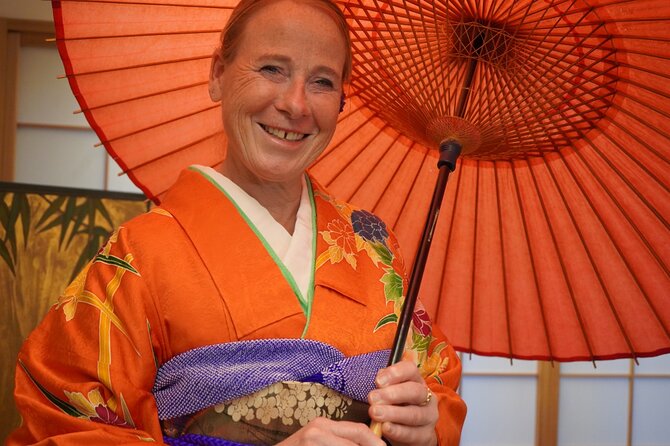
- Pure silk furisode: The collection includes formal silk kimono with long, elegant sleeves and detailed decoration.
- Small daily limit: A maximum of three people can take part, with no more than two women in one group.
- Photos included: A Sony α7 camera is used, and the full set of photo data is supplied on an SD card.
- Tea after dressing: You change back into your own clothes before having whisked green tea and traditional Japanese sweets.
- Flexible group timing: The visit lasts about 2.5 hours for one person, 3 hours for two, and 3.5 hours for three.
Why a local home makes this kimono visit different
Many kimono activities in Tokyo are built for quick turnover. You choose a costume, take a few pictures, and move on. This experience takes a slower, more personal approach. You meet at Shin-Urayasu Station in Urayasu, Chiba, then take part in a private session at a local home photo studio.
That home setting matters. You get a closer look at the clothing and its presentation without the noise of a large commercial operation. The daily limit of three people also means the attention is directed at your group. If you are hoping to ask questions about the kimono or understand why certain pieces are worn together, this format gives you more room than a crowded photo counter.
The setting is also practical for couples and small families. This is not a general admission attraction where you share the room with a stream of strangers. Only your group takes part, which makes the visit easier for people who prefer privacy or want photographs that feel more personal.
There is one rule to note before booking. A group can include no more than two women. The stated options cover one participant, two participants, three participants, couples, and two couples, but the women’s limit still applies.
A few more Tokyo tours and experiences worth a look

Choosing between the furisode, cotton kimono, and ninja costume
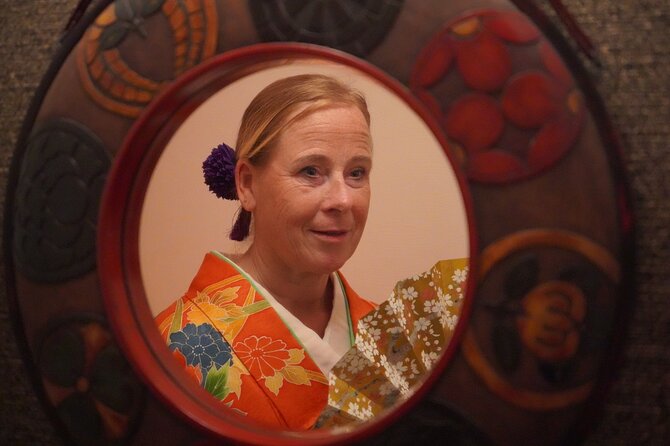
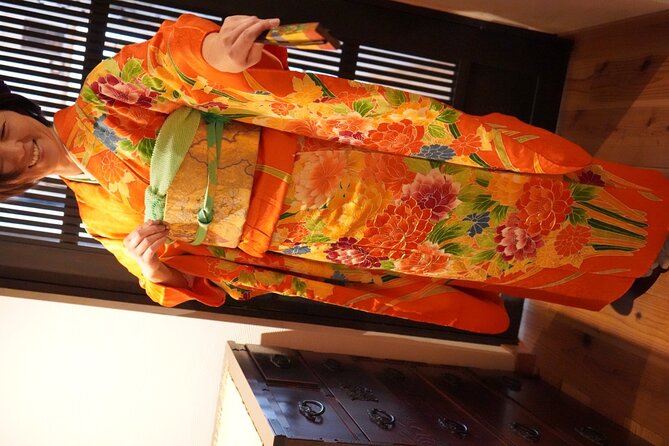
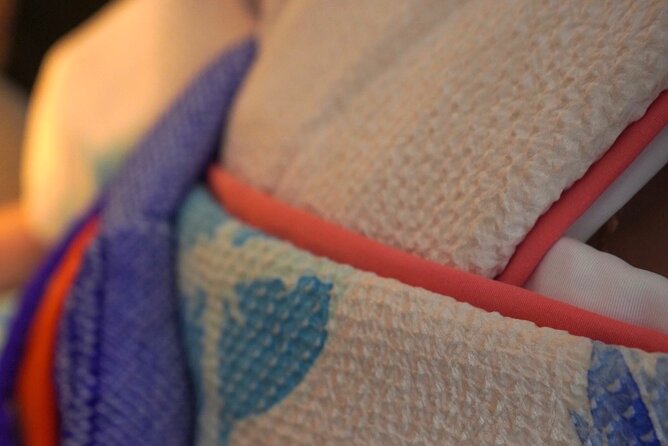
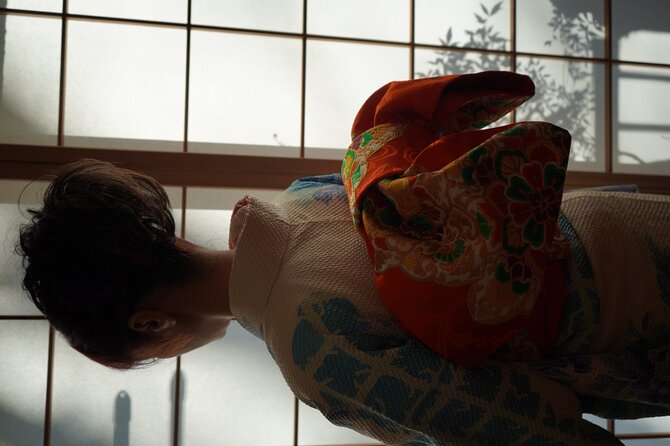
The clothing is the heart of the visit. Women are dressed in a silk kimono, with the furisode available as the most formal and visually striking choice. The long sleeves are the feature you will notice first. They give the garment a graceful shape in photographs and make ordinary movements feel more deliberate.
The silk itself is part of the point. You are not simply putting on a printed costume for a quick picture. The experience focuses on the texture of the fabric, the hand-painted decoration, and the craftsmanship shown in each piece. If you care about clothing, design, or Japanese customs, these details give the session more substance.
Men wear a cotton kimono, and the package also includes a decorative katana. Ninja costumes are available as another option. These additions make the session more playful, especially for couples or mixed-age groups, though the kimono remains the main attraction.
The clothing choices also affect the tone of your photos. A furisode creates a formal, elegant look. A cotton kimono feels simpler and more relaxed. The katana and ninja outfit add a theatrical note. I would decide in advance what kind of photographs you want, then tell the host when you arrive.
Traditional hairstyling without a makeup service
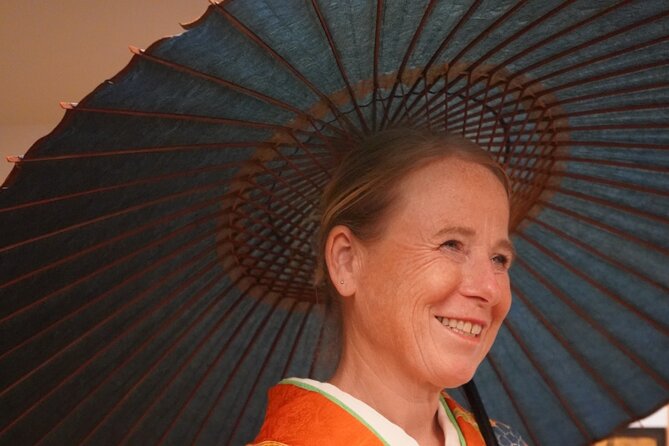
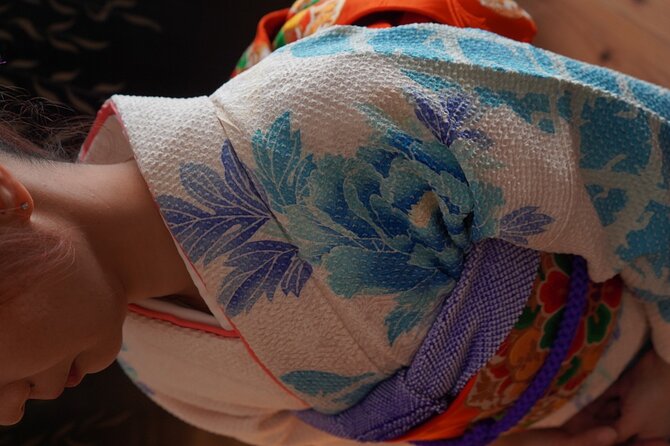
Traditional hairstyling is included, along with a selection of decorative hair accessories. This is an important finishing touch because the hairstyle helps the kimono look like a complete outfit rather than a costume worn over everyday clothing.
The service does not provide makeup. That policy is meant to reduce the chance of skin irritation, so you should arrive with your makeup already done. This is one of the few tasks you need to handle yourself, but it is worth planning carefully. You will be photographed in close detail, and the provided photos are delivered as-is without retouching.
Bring your own camera if you want extra personal shots. The Sony α7 is used for the main photo session, and the images are saved for you. The supplied information does not promise professional retouching, printed photographs, or a fixed number of edited images, so you should think of the included files as the finished product.
How the photo session works
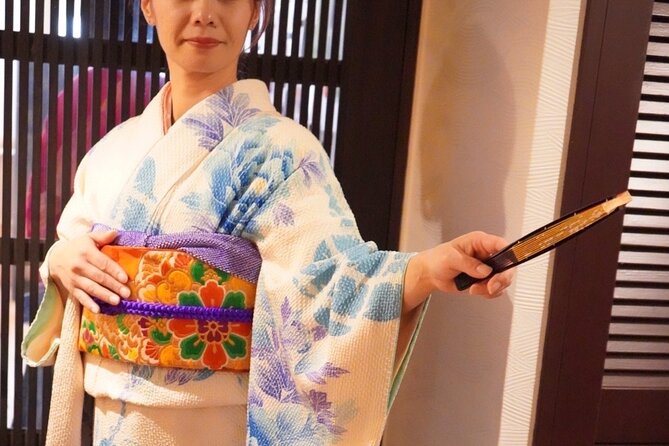
Once you are dressed and your hair is arranged, the photo session begins. The host uses a high-quality Sony α7 camera to record the experience, while you may also bring your own camera for additional pictures.
The value here is not just the camera. It is the chance to photograph the kimono after the clothing, hair, and accessories have been put together properly. A furisode can look very different in a quick rental-shop selfie than it does when the sleeves, fabric, and hair ornaments are arranged with care.
You should expect the photographs to focus on the clothing and your appearance in it. The experience is designed as a photo session, but it also includes explanations about the kimono. Understanding what you are wearing can make the pictures more meaningful later. You will know why the sleeves, fabric, and decoration matter instead of seeing them as bright patterns with no context.
You receive one SD card with all the photos when you leave. That is convenient because you do not need to wait for an online gallery or pay a separate delivery fee. Bring a way to store or back up the files after the visit, since the card is the physical handoff for your images.
Tea ceremony after you change back
The tea ceremony comes after the photo session and after you have changed back into your own clothes. That order makes sense. You can focus on the dress and photographs first, then sit down for the tea portion without worrying about spilling anything on the silk.
You receive one cup of whisked green tea along with traditional Japanese confections. Coffee, tea, and bottled water are also included. This is not presented as a long formal tea-school lesson, so you should book it for a taste of the ceremony and its manners rather than an in-depth course.
Still, the tea portion gives the visit a calmer ending. The kimono session is visual and hands-on. The tea ceremony shifts your attention to a small bowl, careful preparation, and seasonal sweets. In a short cultural activity, that contrast is useful. You see the clothing, then experience a separate Japanese custom at a slower pace.
Changing before tea also keeps the session practical. You can enjoy the sweets and green tea without spending the rest of the visit worrying about the outfit.
A few more Tokyo tours and experiences worth a look






Timing for one person, couples, and small groups
The schedule changes with the size of your party:
- One participant: about 2.5 hours
- Two participants: about 3 hours
- Three participants: about 3.5 hours
- Couples package: about 3 hours
- Two couples: about 3.5 hours
The difference is not trivial. Dressing, hairstyling, photographs, changing, and tea all take time. If you are booking around a meal, a train, or a visit to Tokyo Disney, allow room around the stated duration rather than planning a tight connection.
A solo visit is the shortest option and may suit someone who wants detailed attention and a full set of personal portraits. Couples get photographs together while still having time for individual shots. Three people can share the experience, but the visit will naturally involve more coordination.
The maximum group size keeps the session intimate, but it also means this is not a good fit for a large family or school group. Split parties would need separate arrangements, and the supplied information does not state that separate bookings can be joined.
Is $164.19 per person a fair price?
At $164.19 per person, this is not a budget kimono rental. You are paying for a private setting, dressing in silk, hairstyling, the photo session, tea, sweets, and the SD card with all the images.
The price makes more sense if you place a high value on photographs and personal attention. A basic rental with casual snapshots would likely cost less, but it would not offer the same combination of a private home setting, pure silk clothing, formal hair accessories, and a camera supplied for the session. The small daily capacity is also part of the price.
The value is weaker if you mainly want to try on a kimono for a few minutes. In that case, the included photography and three-hour time commitment may be more than you need. You should also remember that makeup, retouching, printed photos, and extra services are not included.
Group discounts are available, so the price may work better for couples or small parties than for one person. Check the exact total for your party before confirming, since the group format and package type affect the duration and likely cost.
Getting to Shin-Urayasu Station
The meeting point is Shin-Urayasu Station, at 1 Chome-1 Irifune, Urayasu, Chiba 279-0012, Japan. The activity ends back at the meeting point.
This location is useful if your plans already include the Tokyo Disney area, but it is not a central Tokyo starting point. You should check your route from your hotel and allow time to reach Shin-Urayasu. The experience is near public transportation, which makes it more practical than a private home located far from a station.
Since the activity returns to the meeting point, you do not need to arrange a separate pickup afterward. That helps if you are continuing to another planned stop. Still, the actual visit can take up to 3.5 hours for a larger group, so keep your afternoon or morning open.
The listing says the service is not offered during the height of summer. If you are visiting in July or August, confirm availability before building your plans around it. Wearing several layers and formal clothing in very hot weather would also be uncomfortable, so this seasonal limit is understandable.
Who will enjoy this most
I would recommend this experience to you if you want a cultural activity with a personal feel and a strong visual result. It suits couples, solo visitors, and small groups who care about Japanese clothing, photography, or a quieter setting.
It is especially good for:
- People who want more than a quick rental-shop photograph
- Couples looking for formal portraits together
- Anyone interested in silk, furisode design, and hair accessories
- Visitors who prefer private activities over large group tours
- Families or friends traveling in groups of three or fewer
- People staying near the Tokyo Disney area who can reach Shin-Urayasu
You may want to skip it if you need a flexible drop-in activity, dislike posed photography, or want professional makeup and retouched images. The experience has a clear structure, and you should arrive prepared with your makeup already applied.
The one 5-star rating shown for the experience is a strong signal, but the total number of ratings is small, with six reviews. I would treat that as encouraging rather than conclusive. The detailed praise centers on the full experience, including the explanations about kimono, not just the finished photographs. That is a good sign for anyone who wants cultural context along with a pretty picture.
Small details that improve the visit
Arrive with full makeup already applied. You cannot add makeup services at the studio, and the photographs are provided without retouching.
Bring your own camera if you want additional photos beyond the main Sony α7 session. You can use the supplied camera for the included images and your own device for casual shots.
Think about clothing underneath the kimono. The supplied details do not specify a required outfit, so ask the provider if you have concerns about what to wear. At minimum, choose something that makes changing simple.
Allow extra time around the appointment. The stated duration is approximate, and a three-person visit lasts longer than a solo session.
Finally, check the seasonal calendar. The activity does not operate during the height of summer, and that restriction may affect a Tokyo itinerary planned months ahead.
Cancellation and booking basics
You receive confirmation when you book, and mobile tickets are supported. Free cancellation is available if you cancel at least 24 hours before the local start time.
Inside the 24-hour window, you receive no refund, and changes are not accepted. If your Tokyo schedule is still uncertain, book only when you are comfortable committing to the date. The experience is often reserved about 35 days ahead, so popular dates may require planning.
Should you book this kimono and tea experience?
Book it if you want a private cultural visit with lasting photographs, especially if you are already planning time near Tokyo Disney or Shin-Urayasu. The pure silk furisode, hairstyling, small group size, and SD card make it more substantial than a basic costume rental.
Skip it if your budget is tight or your main goal is simply to sample matcha. At $164.19 per person, the value comes from the full package: dressing, photography, explanations, hair accessories, and the tea ceremony. Prepare your makeup, allow three hours or more for a group, and confirm the summer schedule before you pay.
FAQ
Where does the kimono and tea ceremony begin?
The meeting point is Shin-Urayasu Station at 1 Chome-1 Irifune, Urayasu, Chiba 279-0012, Japan.
Where does the activity end?
The activity ends back at the meeting point.
How long does the experience last?
One participant takes about 2.5 hours. Two participants take about 3 hours. Three participants and two couples take about 3.5 hours. The couples package takes about 3 hours.
How many people can join?
The activity is private and accommodates a maximum of three participants per day. No more than two women are allowed in one group.
What clothing is included?
The experience includes one silk kimono for the woman and one cotton kimono for the man, along with a decorative katana. Ninja costumes are also available.
Is hairstyling included?
Yes. Traditional hairstyling guidance and decorative hair accessories are included.
Is makeup included?
No. Makeup services are not provided. You are asked to arrive with your full makeup already applied.
Are photographs included?
Yes. A Sony α7 camera is used, and one SD card containing all the photos is given to you when you leave. The photo data is provided without retouching.
What is included with the tea ceremony?
You receive one cup of whisked green tea and traditional Japanese confections. Bottled water and coffee or tea are also included.
Is the experience available in summer?
The service is not offered during the height of summer. Confirm the available dates before booking a summer visit.
Can I cancel for free?
Yes, if you cancel at least 24 hours before the local start time. Cancellations within 24 hours are not refunded, and changes within that period are not accepted.
More Private Tours in Tokyo




More Theme Parks & Digital Art in Tokyo
More Tea Ceremony & Matcha in Tokyo

More tours in Tokyo we've reviewed





Tea Ceremony & Matcha, compared.
 ★ 5.0Matcha Making Class in Tokyo with Authentic Japanese Sweets SetFrom $21
 ★ 5.0Tokyo: Traditional Tea Ceremony with a Tea MasterFrom $381 hour
 ★ 4.5Dynamic Tokyo: Tokyo Tower, Tea Experience, Bay Cruise Day TourFrom $99
 ★ 4.9Tokyo: Matcha Making Experience with Mochi Sweets in AsakusaFrom $221 hour
 ★ 4.7Tokyo: Matcha and Kimono ExperienceFrom $57
 ★ 5.0Tea Ceremony Workshop in Tokyo by the Experienced InstrucorFrom $38