
Reviewed · PRIVATE
Private Harajuku Omotesando Architecture Tour
The real surprise here is that Harajuku and Omotesando are not just shopping districts. In three and a half hours, you move from the wooden gate of Meiji Shrine to bold designer buildings, then into quieter back streets where ordinary Tokyo life feels far removed from the polished storefronts.
I especially like the way the tour connects famous buildings with the city around them, rather than treating architecture as a series of isolated photo stops. I also like the private format, since guides can shape the walk around your interests, as Fuki did for guests who wanted to see particular buildings. The main drawback is simple: 210 minutes is not enough for every architectural detail, and serious design fans may want more time at each stop.
In This Review
- Key points to know before booking
- Starting beside Meiji Shrine at Jingubashi
- Seeing Yoyogi Gymnasium from the Meiji Shrine side
- Omotesando’s designer buildings as public art
- Why Omotesando feels different from Ginza
- The back streets reveal another Harajuku
- Cat Street and Harajuku’s more relaxed side
- Guides who bring different strengths
- Taking a café break in the middle
- Daylight or night for the strongest photographs
- What the private format is worth at $129
- Who will enjoy this walk most
- Should you book the Harajuku Omotesando architecture tour?
- FAQ
- Where does the tour meet?
- How do I reach the meeting point from Harajuku Station?
- How long does the tour last?
- Is the tour private?
- What language is the tour offered in?
- Is the tour wheelchair accessible?
- What is included in the price?
Key points to know before booking
- Yoyogi Gymnasium provides the opening architectural lesson, viewed from a distance near Meiji Shrine.
- Dior, Louis Vuitton, Prada, The Iceberg, and Sunny Hills show how major architects and fashion brands use Omotesando as a public showroom.
- The private group format allows a custom route, useful if you already have a list of buildings you want to see.
- A back-street detour changes the mood completely, taking you beyond the luxury stores and into local residential areas.
- Cat Street may be included, adding a more casual and youthful side of the neighborhood.
- Night tours offer a different look at the buildings, especially when illuminated storefronts and facades become part of the experience.
Starting beside Meiji Shrine at Jingubashi
Your meeting point is Café Mori no Terrace, in the broad open area beside the large wooden entrance gate of Meiji Shrine. This location matters because it can be confusing. The café is outside the shrine grounds, not the similarly named café inside Meiji Shrine.
From JR Harajuku Station, leave through the Omotesando exit and walk toward the forest. You do not pass through a Shinto gate on the way to the meeting point. That small detail can save you from wandering into the shrine grounds while trying to find your guide.
The setting gives the tour a useful beginning. Meiji Shrine represents a more traditional image of Tokyo, with its forested approach and formal entrance. Just nearby, Omotesando offers a very different visual language: glass, concrete, unusual shapes, and carefully designed retail spaces.
You meet an English-speaking licensed guide here, then begin on foot. The tour is wheelchair accessible, but you should still wear comfortable shoes. The walk lasts 210 minutes, and much of the value comes from moving through the area at street level rather than riding between isolated buildings.
Other private tours in Tokyo


Seeing Yoyogi Gymnasium from the Meiji Shrine side
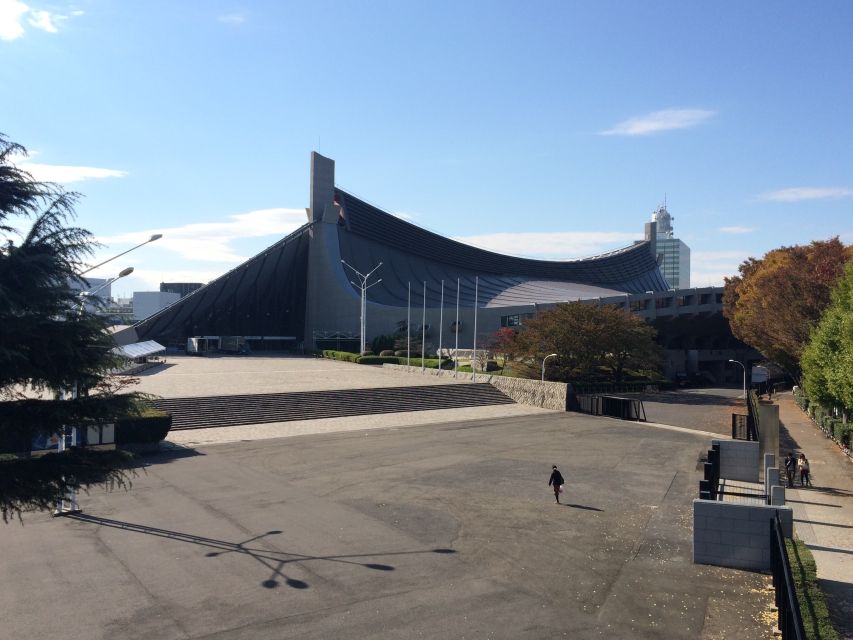
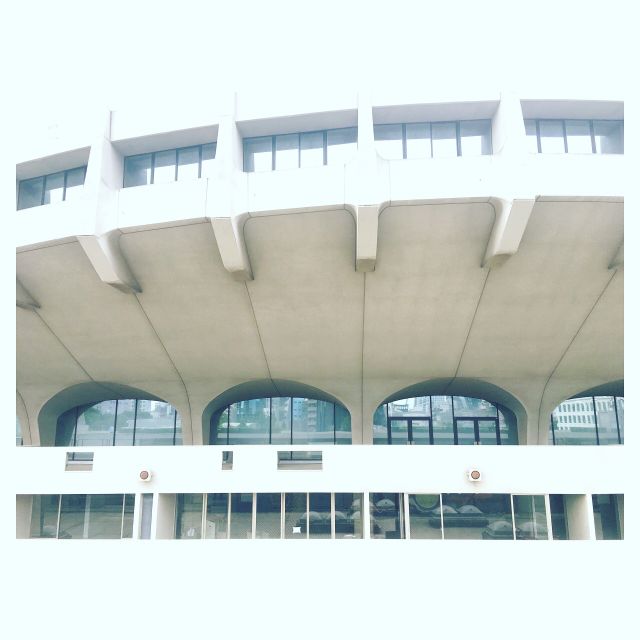
One of the first major sights is Yoyogi Gymnasium, viewed from a distance. Even without entering, it gives your guide a strong starting point for explaining Japanese architecture and the way major public buildings can shape a district.
This is not an indoor museum tour. You will not spend time examining every structural detail from inside the gymnasium. Instead, the guide uses the view as part of a wider story about Tokyo’s architectural development and the bold work associated with Japanese designers.
That approach suits you if you want context while walking. It may disappoint you if your main goal is interior access or technical study of one building. The tour is about connections: shrine, avenue, retail architecture, side streets, and the people who use them.
The distance also helps you see the building as part of its surroundings. You get a sense of how a large civic structure relates to the trees, roads, and dense urban fabric around Harajuku.
Omotesando’s designer buildings as public art
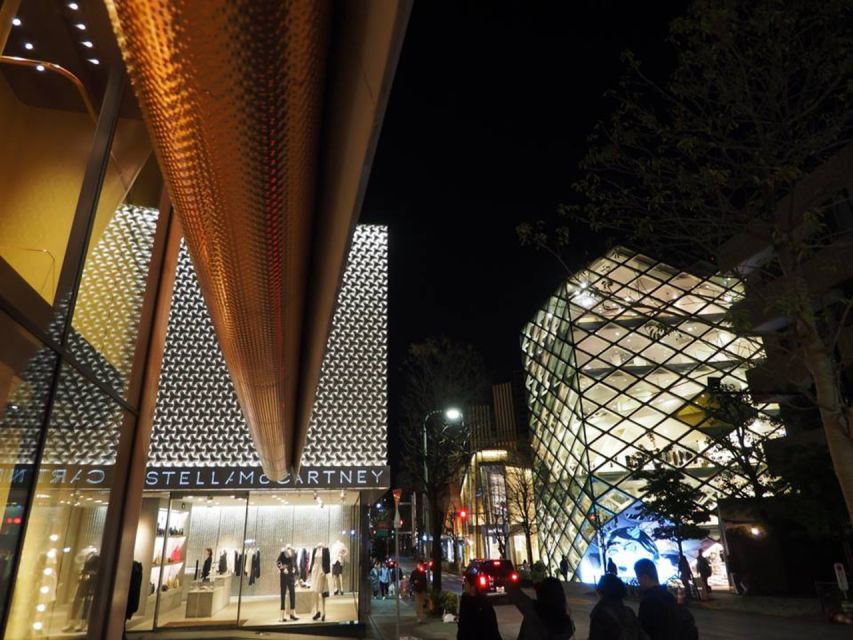
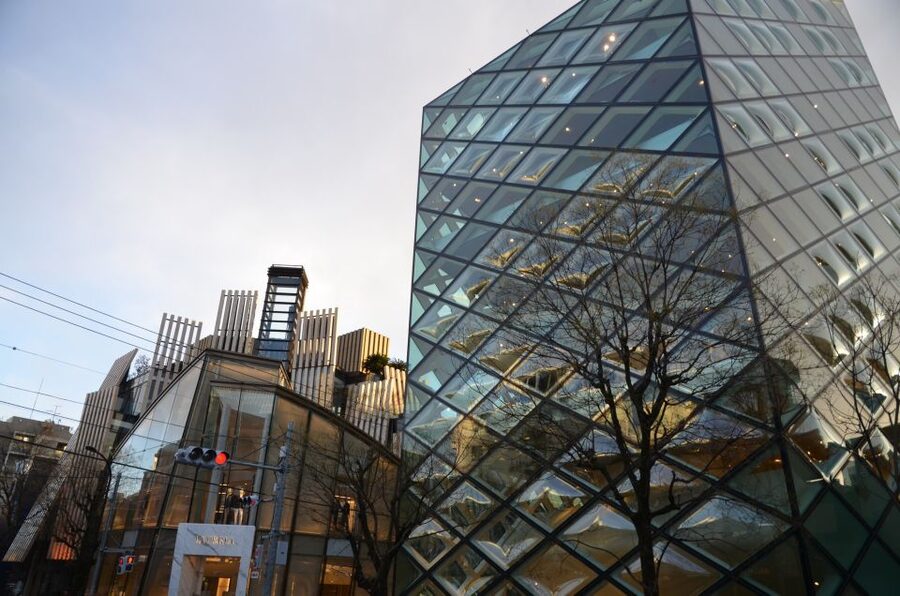
The central part of the walk focuses on contemporary buildings along Omotesando. The route includes The Iceberg, Dior, Louis Vuitton, Sunny Hills, and Prada, among other major names.
These are not simply stores with attractive signs. Their exteriors are part of the shopping experience, and the buildings turn a commercial street into something closer to an open-air architecture gallery. Your guide explains why well-known architects and designer brands are drawn to this particular avenue.
The practical benefit is that you learn how to look at buildings you might otherwise photograph and pass by. You may notice the treatment of glass, the shape of a facade, the relationship between a storefront and the pavement, or the way a brand uses architecture to create an identity.
The Iceberg gives the route a memorable early example of contemporary retail design. Dior and Louis Vuitton show how luxury fashion houses use architecture to create a strong street presence. Prada offers another approach, with a building that invites closer attention to its exterior rather than blending into a typical commercial block.
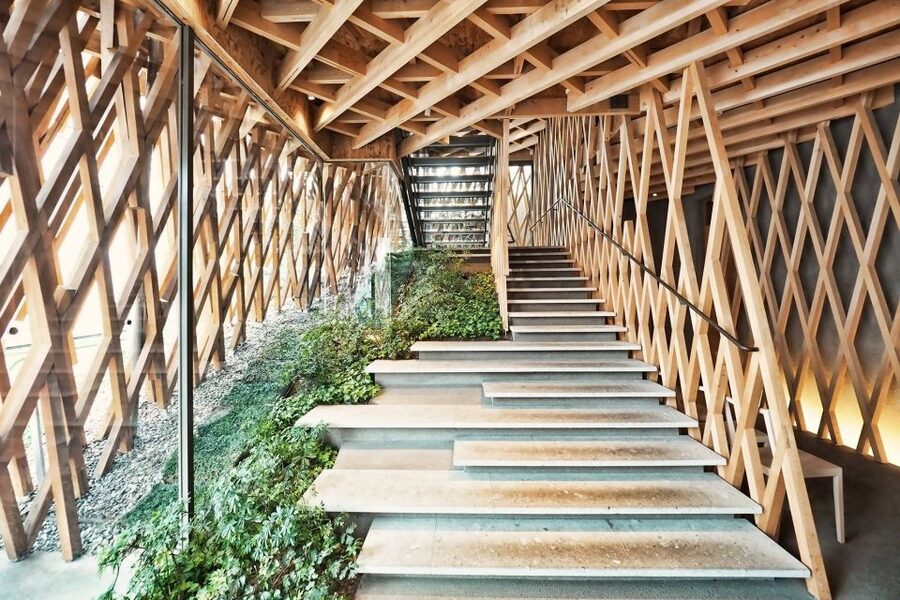
Sunny Hills adds a different note. It is another example of a brand using a distinct architectural form to make a small building worth seeking out. The contrast between these sites is more useful than seeing one famous facade alone.
You should bring a phone or camera if you enjoy architectural photography. The tour is designed with frequent photo opportunities in mind, and the buildings change character depending on the angle, weather, and time of day.
Why Omotesando feels different from Ginza
A useful part of the tour is the comparison between Omotesando and Ginza. Both are associated with luxury shopping, but they do not feel alike.
Ginza is known for its formal, established retail character and broad central avenues. Omotesando has its own polished main street, yet it also connects quickly to narrower lanes, small cafés, side roads, and residential pockets.
The difference becomes clear when you leave the main avenue. In Omotesando, a short turn can take you from international fashion labels to a quieter neighborhood where the buildings are less theatrical and daily life is more visible.
That contrast explains why the area attracts both fashion companies and architects. The main street offers status, foot traffic, and a strong urban setting. The surrounding streets provide texture and a sense of place.
You will not get the same benefit from simply shopping along Omotesando on your own. You can see the buildings, but a guide helps explain why this street became such a magnet for major design work and how it differs from another famous boutique district.
The back streets reveal another Harajuku
The side trip into the back-street neighborhood is one of the most valuable parts of the experience. Harajuku is often reduced to youth fashion, cute shops, and crowded pedestrian areas. That picture is incomplete.
Once you turn away from the main avenue, the mood changes. The tour gives you a chance to observe a wider range of Japanese lifestyles and see how commercial streets sit beside quieter local areas.
This section also adds balance. If the entire walk focused on Prada, Dior, and Louis Vuitton, the district could seem like a carefully branded shopping zone. The back streets remind you that people live and work here beyond the storefronts.
You may find this section less immediately dramatic than the large designer facades. That is part of its value. It gives your eyes a rest from polished architecture and helps you understand the neighborhood as a functioning part of Tokyo, not just a display for international brands.
The private format is particularly useful here. You can ask why a certain street feels different, stop for a photograph, or spend more time on an area that catches your attention without worrying about a large group waiting.





Cat Street and Harajuku’s more relaxed side
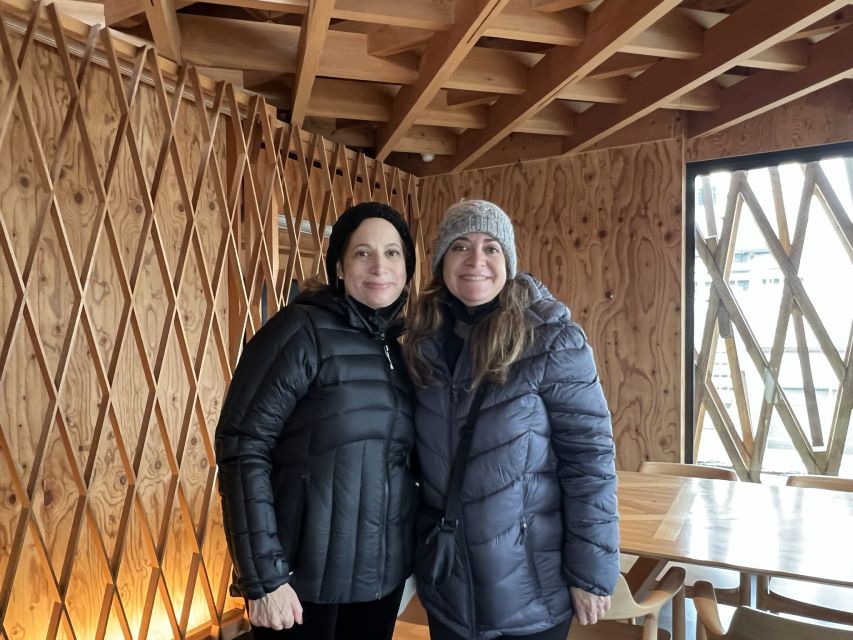
Cat Street may be part of the route, depending on your guide and interests. It adds a livelier, more casual side of the area after the formal feel of Omotesando.
The street is useful as a transition between the luxury avenue and the smaller neighborhood roads. It gives you another way to see Harajuku, with a more relaxed atmosphere and a strong connection to local shopping and street life.
One guide, Fuki, has been praised for asking in advance what buildings guests wanted to see and fitting those choices into the route. That kind of planning can make Cat Street more than an extra stop. If you are interested in the relationship between fashion, retail, and street design, it can help tie the architectural portion together.
You should not assume the tour is only for architecture specialists. The route works for first-time visitors who want to understand the area, as well as design fans who want background on Japanese architects. Still, you will get the most from it if you enjoy looking closely at buildings and asking questions.
Guides who bring different strengths
The guides named for this experience include Sakai Mari, Taka, Fuki, Yoshi, and Hal. Your actual guide will depend on availability, but the range of backgrounds suggests that the walk is not limited to memorized building descriptions.
Taka, a retired urban planner and MIT graduate, has led tours focused on Japanese architects, including several Pritzker Prize winners. That background is useful if you want more than basic facts about when a building opened or which company occupies it.
Fuki is known for shaping the route around specific interests and discussing less dramatic buildings along the way. That is an important skill on an architecture walk. The most famous structures are easy to identify, but the smaller buildings between them often explain how the district fits together.
Sakai Mari has been described as bringing strong English skills, enthusiasm, and visual materials to the walk. For you, that may make the information easier to follow, especially if architecture terms are unfamiliar.
Yoshi and Hal have also guided the experience. Since this is a private tour, the quality of the conversation matters as much as the list of stops. When booking, it is sensible to state your interests clearly: modern Japanese architecture, fashion stores, photography, urban planning, local neighborhoods, or a mixture.
Taking a café break in the middle
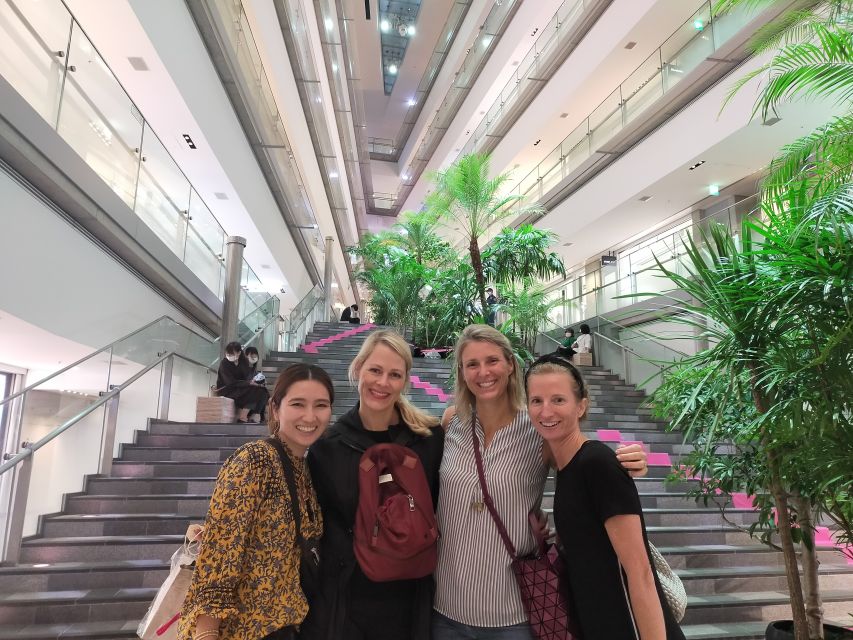
A short break with drinks is included. You can stop at a café during the walk, rest your feet, and watch people move along the sleek Omotesando streets.
This pause is practical, not just decorative. Three and a half hours on foot can feel long if you are trying to maintain a quick pace. A drink break gives you time to absorb what you have seen and ask follow-up questions.
Meals are not included, so do not treat this as a food tour. You should eat beforehand or plan a meal afterward, especially if you are traveling with children or have an early dinner reservation.
The café stop can also make the experience feel less like a lecture. You are walking, talking, taking photographs, and pausing when needed. That rhythm works well for a private outing.
Daylight or night for the strongest photographs
The tour can be taken at night, allowing you to see the buildings from another angle. This is a worthwhile option if you have already spent time in Harajuku during the day or if photography is a major reason for booking.
In daylight, you can study materials, structure, and the relationship between each facade and the street. At night, lighting, reflections, illuminated signs, and storefront displays change the mood. The architecture becomes more closely tied to the shopping activity around it.
The tradeoff is that some details may be harder to see after dark. If your priority is understanding form and materials, daylight may be better. If you want atmospheric images and a different sense of the avenue, an evening start could be more rewarding.
Starting times vary, so check the available schedule before booking. The tour lasts 210 minutes regardless of the time you choose.
What the private format is worth at $129
At $129 per person, this is not a budget walking tour. The price makes more sense when you consider what you are buying: a licensed English-speaking guide, a private group, a custom conversation, and three and a half hours in one of Tokyo’s most architecturally concentrated districts.
For a solo visitor, the cost is harder to justify than for a couple, family, or small group that can share the private experience. Yet the solo format has worked well for people who wanted to ask many questions and set their own interests.
You are also paying for interpretation. The buildings are free to view from the street, but understanding their purpose, architects, brand strategies, and relationship to Omotesando gives the walk more value.
I would not book this tour simply to collect photographs of famous storefronts. You can do that independently. I would book it if you want someone to explain what you are looking at and help you connect the major buildings with the less polished streets nearby.
The reserve-now, pay-later option gives you some planning flexibility, and cancellation is free up to 24 hours in advance. Transportation to and from the Harajuku Omotesando area is not included, so you handle your own journey to the meeting point.
Who will enjoy this walk most
This tour is a strong match for:
- Architecture students, designers, and professionals
- Visitors interested in Japanese architects and modern Tokyo
- Photographers looking for distinctive building exteriors
- First-time visitors who want more than Harajuku shopping
- Couples or small groups who prefer a private guide
- People who enjoy asking questions and adjusting a route as they go
It is less suitable if you dislike walking, want indoor access to buildings, or prefer a fast sightseeing tour with many unrelated landmarks. The focus remains on architecture, retail design, neighborhood contrasts, and the story of the area.
Comfortable shoes are essential. Wheelchair access is available, but the tour still takes place across city streets and public areas, so discussing mobility needs when booking is sensible.
Should you book the Harajuku Omotesando architecture tour?
Book it if you want to understand why Omotesando is more than a Japanese Rodeo Drive. The strongest part is the combination of major designer buildings, Japanese architectural context, and a back-street detour that keeps the walk grounded in everyday Tokyo.
It is especially worthwhile if you can share the private cost with companions or if you have a clear interest in architecture and photography. Tell the guide what you want to see, and ask about a night departure if illuminated buildings appeal to you.
Skip it if you only want shopping time or a quick look at Harajuku’s best-known streets. For everyone else, this is a thoughtful way to read the neighborhood, one facade and side street at a time.
FAQ
Where does the tour meet?
The meeting point is in front of Café Mori no Terrace, at 1 Yoyogikamizonocho, Shibuya City, Tokyo 151-0052. It is in the open area beside the large wooden entrance gate of Meiji Shrine.
How do I reach the meeting point from Harajuku Station?
From JR Harajuku Station, leave through the Omotesando exit and walk toward the forest. You do not go through any Shinto gates from the station to reach the café.
How long does the tour last?
The tour lasts 210 minutes, or three and a half hours.
Is the tour private?
Yes. It is offered as a private group experience, so the guide can discuss your interests and adjust parts of the walk accordingly.
What language is the tour offered in?
The tour is conducted in English by a licensed English-speaking guide.
Is the tour wheelchair accessible?
Yes, the activity is listed as wheelchair accessible. Comfortable shoes are recommended because the experience takes place on foot.
What is included in the price?
The price includes the licensed English-speaking guide and a break with drinks. Meals and transportation to and from the Harajuku Omotesando area are not included.
More Private Tours in Tokyo

More tours in Tokyo we've reviewed





Private, compared.
 ★ 5.0Tokyo 6hr Private Tour with Government-Licensed GuideFrom $155
 ★ 5.0Private Tour to Mt. Fuji and Hakone (Fully Licenced Operator)From $497
 ★ 5.0Tokyo Customized Private Tour (Must See Places in 1 Day)From $145
 ★ 4.9Mount Fuji Full-Day Private Tour from Tokyo (Customizable)From $393
 ★ 4.8Tokyo: Private City Highlights Tour with Local GuideFrom $1064 - 8 hours
 ★ 5.0Private Custom Tour: Tokyo in a DayFrom $159