
Reviewed · MT FUJI DAY TRIPS
Mt.Fuji Private tour from Tokyo/Yokoham (Customizable)
Mount Fuji is best seen with room to change plans. This private day trip takes you from Tokyo or Yokohama to Chureito Pagoda, Oshino Hakkai, Lake Kawaguchiko, and Oishi Park, with an English-speaking driver handling the roads and timing. If your guide is Sunny, you can expect a friendly host who has helped guests adjust stops, avoid traffic, and take photos.
I like the private vehicle for up to nine people, which makes this a good value for a family or small group. I also like the freedom to linger at a shrine, shorten a photo stop, or spend more time by the lake instead of following a rigid group schedule. The main drawback is that this is an ambitious day. You may not have time for every optional stop, and mountain weather can hide Fuji even when the rest of the day looks clear.
In This Review
- Key points at a glance
- Why a private Mt. Fuji day makes sense
- Chureito Pagoda and the famous Fuji photograph
- Oshino Hakkai, spring ponds and a bowl of soba
- Kitaguchi Fuji Shrine under tall trees
- Lake Kawaguchiko and the problem of clear skies
- Oishi Park and a flower-filled finish
- What the private car and driver add
- How to judge the 10-hour-style schedule
- Who will get the most from this tour
- My take on the value
- Should you book it?
- FAQ
- How much does the private Mt. Fuji tour cost?
- What transportation is included?
- Is an English-speaking driver included?
- Which places are included in the main route?
- Are meals and entrance fees included?
- What should I bring?
- Can I cancel the booking?
Key points at a glance
- Chureito Pagoda: Climb to one of the area’s most famous Fuji viewpoints, with traditional architecture in the foreground.
- Oshino Hakkai: Walk among clear spring ponds, thatched-roof buildings, and stalls serving local food such as soba.
- Kitaguchi Fuji Shrine: Visit a quiet wooded shrine tied to Mount Fuji’s spiritual traditions.
- Lake Kawaguchiko: Enjoy broad water views and the chance to add a boat ride if time allows.
- Oishi Park: End among seasonal flowers with a classic view back toward Fuji.
- Custom private transport: A car or minivan, English-speaking driver, and flexible pacing make the $869 group price most attractive for larger parties.
Why a private Mt. Fuji day makes sense
The distance from Tokyo to the Fuji area is only part of the problem. The bigger issue is fitting several scenic places into one day while dealing with road traffic, changing weather, and the fact that each stop has a different pace.
A private vehicle gives you a practical advantage. You can leave the city, stop for photos, and move on without waiting for a bus group. If one person in your party wants more time at Oshino Hakkai and another prefers a shrine, the driver can adjust the day where possible.
The price is $869 per group of up to nine people. That sounds high beside a shared excursion, but the calculation changes when you divide it among six to nine people. For a large family or group of friends, the car, driver, and flexible schedule can offer solid value. For one or two people, the cost is harder to justify unless privacy and convenience matter more than saving money.
Meals, drinks, attraction entrance fees, and personal spending are not included. Plan to pay separately for food, any optional boat ride, and other admission charges.
A few more Tokyo tours and experiences worth a look
Chureito Pagoda and the famous Fuji photograph
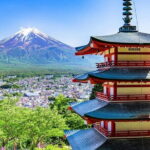
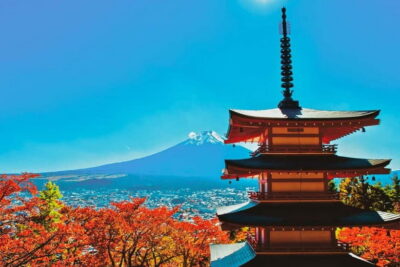
Chureito Pagoda is likely to be the visual high point of the morning. The pagoda sits above the surrounding area and gives you the classic composition of red-and-white architecture, wooded slopes, and Mount Fuji behind it when the weather cooperates.
There are a significant number of stairs to reach the viewpoint. You should wear shoes with a good grip and allow extra time if anyone in your group has trouble with steps. One useful feature of a private visit is that you do not have to rush everyone through the climb. The driver can explain the walking involved before you set off.
This stop is especially good for photography, but it is not only about taking the standard Fuji picture. The pagoda and wooded setting give you a quick sense of how Japanese religious buildings are placed within the natural world. On a clear day, the view is striking. On a cloudy day, the pagoda remains attractive, but Mount Fuji may be partly or fully hidden.
Your driver may also help with photographs. Sunny is specifically praised for taking pictures, which can make a real difference when your whole group wants to appear in the frame.
Oshino Hakkai, spring ponds and a bowl of soba
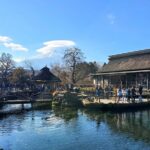
Oshino Hakkai has a gentler mood than Chureito. The village is known for clear spring-water ponds, paths, traditional thatched-roof buildings, and small food stalls. It is a pleasant place to slow down after the pagoda stairs.
The ponds are the main draw. Their clear water gives the stop a quiet, orderly feel, while the old-style buildings add visual interest. You can stroll, take pictures, and sample local food rather than simply stopping at a roadside viewpoint.
Soba is a particularly sensible lunch choice here. One account of the day singled out the noodles at Oshino Hakkai, and the dish fits the setting better than treating the stop as only a photo break. Remember that food is not included, so bring a payment method and leave room in the schedule for eating.
Oshino Hakkai can also become crowded, especially around its most photogenic corners. The private format helps your driver adjust the timing, but it cannot remove the popularity of the village. If food and a relaxed walk matter to you, tell the driver early so the stop does not get squeezed by later views.
Kitaguchi Fuji Shrine under tall trees
Kitaguchi Fuji Shrine offers a change of pace and subject. Instead of focusing only on views of the mountain, you get a chance to connect Mount Fuji with Japanese religious practice.
The shrine is dedicated to the deity of Mount Fuji and sits among tall trees. That setting gives it a calm, shaded feel. You can walk through the grounds, look at the traditional structures, and take a quiet pause between the busier scenic stops.
This is the kind of place where a guide adds useful context. An English-speaking driver can explain the shrine’s connection to Fuji and help you understand why the mountain is more than a scenic backdrop. The tour also lists Japanese and Hindi among the available languages, alongside English.
Do not expect a long formal walking tour unless you arrange one. The service is built around a driver who guides you through the area, not necessarily a specialist temple lecture. Still, the stop adds cultural weight to a day that could otherwise become a string of viewpoints.
Lake Kawaguchiko and the problem of clear skies
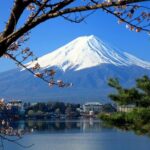
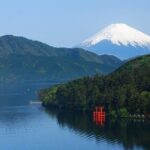
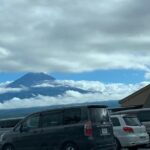
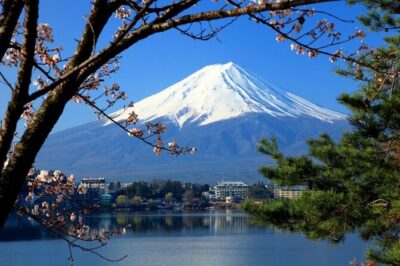
Lake Kawaguchiko gives you some of the best open views of Mount Fuji. The calm water can reflect the mountain, creating a broad, postcard-like scene that feels very different from the elevated view at Chureito.
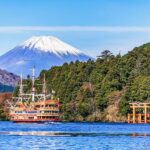
You can walk by the lake, relax, take photographs, or possibly add a boat ride if the timing and available options work for your group. The boat is not included, and the information provided does not guarantee that it will be available on every visit, so treat it as an optional extra rather than a central promise.
Weather matters greatly here. A perfectly organized day cannot force Fuji to appear. The mountain may be clear in the morning and clouded later, or the reverse. A private driver can shift the order of stops to improve your chances, and several accounts describe traffic-aware timing and adjusted plans. That flexibility is one of the strongest reasons to choose this format.
The lakeside stop is also a good place to avoid overplanning. You may find that the best use of your time is simply sitting near the water with a drink or snack. The tour does not include refreshments, so carry water and budget for your own food.
Other private tours in Tokyo


Oishi Park and a flower-filled finish
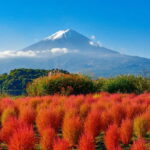
Oishi Park is the final main stop. It is known for seasonal flowers and clear views toward Mount Fuji, so the experience changes with the time of year. The garden adds color and a more open, relaxed finish after the shrine and village visits.
You can stroll, take photographs, or pause for a picnic. The park works well at the end because it does not require the same effort as the pagoda climb, and you can choose your own pace.
The word seasonal matters. The flowers will not look identical throughout the year, and Fuji visibility remains weather-dependent. If your priority is a specific flower display, confirm the season before booking rather than assuming the garden will look like a promotional photograph.
What the private car and driver add
Transportation is provided by private car or minivan, depending on the group. That matters in the Fuji region, where roads can be slow and several stops are spread around the area.
You are not simply buying a seat. You are paying for the ability to shape the day. Past accounts describe drivers changing the order to avoid traffic, stopping for photos, and allowing extra time at places that mattered to the group. Sunny is named repeatedly as a friendly and capable driver who shared facts about local culture and helped make the day comfortable.
I would still set clear expectations at the start. Ask which stops are essential, how much walking each involves, and which optional activities may need to be dropped. The standard route includes more places than most groups can explore in depth during a single day. A good custom plan means choosing priorities, not trying to collect every possible stop.
The vehicle also gives you a practical place to regroup. Bring warm clothing even if Tokyo is mild, since higher areas can feel cooler. Comfortable shoes are essential, and water will help on the walking sections.
How to judge the 10-hour-style schedule
One description of the experience refers to a 10-hour Mt. Fuji day. The exact timing can vary with pickup point, traffic, weather, and how long you spend at each stop, so you should think of this as a full-day outing rather than a quick side trip.
The route has a natural rhythm:
- Start with the elevated pagoda view and its stairs.
- Slow down at Oshino Hakkai for ponds, village paths, and food.
- Visit the wooded shrine for cultural context.
- Spend time by Lake Kawaguchiko.
- Finish at Oishi Park among seasonal flowers.
Trying to give every stop equal time may leave you feeling rushed. I would choose two priorities, such as photography and local food, or scenery and shrine visits. Tell the driver whether you prefer short photo stops or fewer places with more time at each.
Traffic planning can make or break the day. The driver can try to avoid delays, but no private tour controls road conditions. A flexible attitude will serve you better than a strict promise to reach every optional viewpoint.
Who will get the most from this tour
This trip suits families, couples traveling with friends, and groups of up to nine who want to stay together. It is also useful if you want hotel pickup and private transport rather than figuring out regional connections on your own.
Photographers should like the range of settings: a high pagoda, spring ponds, shrine trees, lake reflections, and flower gardens. Food-minded visitors can make Oshino Hakkai a meaningful stop by allowing time for soba and local snacks.
It is less suitable if you want a slow, single-site visit or if long hours in a vehicle are a concern. The route covers several places, and some walking is required. The tour is not suitable for pregnant women or people with back problems according to the supplied conditions. Anyone with limited stamina should discuss the stairs and walking before booking.
The tour is available in English, Japanese, and Hindi. Meals, drinks, entry charges, and personal purchases are extra. Bring warm layers, comfortable shoes, a camera, and water. Weapons or sharp objects, smoking, alcohol, and drugs are not allowed.
You can reserve now and pay later, and cancellation is allowed up to 24 hours before departure for a full refund. Those terms are useful when Fuji weather is uncertain, though you should still check the forecast before deciding how much photography time to request.
My take on the value
The strongest feature is not any single stop. Chureito, Oshino Hakkai, the shrine, the lake, and Oishi Park can all be visited in other ways. The value comes from having one vehicle, one driver, and control over the pace.
At $869, this is a group purchase. Split among nine people, it becomes much more reasonable. Split between two people, it is a premium day trip. Compare the price with your likely transport, time spent changing connections, and the value of having an English-speaking driver who can adjust around traffic.
The experience also depends on mountain visibility. You should book it for the wider mix of Fuji-area scenery and culture, not only for one perfect photograph. If clouds cover the summit, the shrine, village, ponds, lake, and pagoda still give you a worthwhile day, but the signature view may not appear.
Should you book it?
Book this private Mt. Fuji tour if you are traveling with a group, want door-to-door comfort, and prefer a flexible day over a fixed bus schedule. It is especially appealing if your group values photos, local food, and the option to spend longer at one stop.
Think twice if you are traveling alone or as a pair on a tight budget, or if you dislike full-day road trips with several walking stops. Also accept that customizable does not mean unlimited: traffic, daylight, weather, and the number of stops all place limits on the day.
If Sunny is assigned as your driver, the experience may be especially personal, since he is described as helping with photos, explaining local culture, and adapting the plan. Either way, agree on your top priorities before leaving Tokyo or Yokohama. That is the best way to turn a busy route into a day that feels like your own.
FAQ
How much does the private Mt. Fuji tour cost?
The price is $869 for a private group of up to nine people.
What transportation is included?
Private transportation is provided in a car or minivan, depending on the group.
Is an English-speaking driver included?
Yes. An English-speaking driver is included. Japanese and Hindi are also listed as available languages.
Which places are included in the main route?
The route includes Chureito Pagoda, Oshino Hakkai, Kitaguchi Fuji Shrine, Lake Kawaguchiko, and Oishi Park.
Are meals and entrance fees included?
No. Meals, drinks, attraction entrance fees, and personal expenses are not included.
What should I bring?
Bring comfortable shoes, warm clothing, a camera, and water. Higher areas can be cooler than Tokyo.
Can I cancel the booking?
You can cancel up to 24 hours in advance for a full refund. Payment can also be made later, so you do not have to pay at the time of reservation.
More Private Tours in Tokyo
More Mt Fuji Day Trips in Tokyo
More tours in Tokyo we've reviewed



Mt Fuji Day Trips, compared.
 ★ 5.0Mt Fuji and Hakone 1-Day Bus Tour Return by Bullet TrainFrom $163
 ★ 4.0Mt Fuji & Hakone Cruise, Drum Show Bullet Train 1 Day from TokyoFrom $149
 ★ 4.4Tokyo Mt Fuji 5th St & Hakone Cruise Bus Tour w/Bullet TrainFrom $15410 hours
 ★ 4.5From Tokyo: Mount Fuji Full-Day Sightseeing TripFrom $6810 hours
 ★ 4.7Tokyo: Mt. Fuji Tour, Hakone Ropeway, Owakudani, Lake AshiFrom $5410 hours
 ★ 4.4Tokyo:Mt.Fuji,Kawaguchiko Oishi Park,Arakurayama Sengen ParkFrom $5410 hours