
Reviewed · MT FUJI DAY TRIPS
Mt. Fuji Highlight Photo Spots One Day Tour from Tokyo
Mount Fuji gets better with variety, and this 10 to 11 hour photo tour gives you plenty of it. You move from the famous Chureito Pagoda view to lakeside scenery, a waterfall, a nostalgic street, and tea fields. Each stop shows Fuji in a different setting, which is the real point of the day.
I like the included round-trip transport, since reaching all seven stops by train and local bus would take careful planning. I also like the fixed photo stops, especially Obuchi Sasaba, where rows of tea bushes lead the eye toward Fuji. The main drawback is the long day and the possibility of limited time at each stop, particularly if traffic or weather disrupts the schedule.
- Chureito Pagoda and Fuji: Capture Japan’s classic red-pagoda view from Arakurayama Sengen Park.
- Seven photo locations: Move beyond one postcard angle with lakes, flowers, streets, waterfalls, and tea fields.
- Guides who help with photos: Yunan, Ukei, K-san, and Ok are among the guide names associated with especially helpful service.
- No planned lunch: Bring snacks or a light meal because food is not included in the schedule.
- Weather matters: Fuji visibility can change quickly, and the route may be adjusted for conditions and traffic.
- Good value for a full day: At $78.82 per person, transport and the number of stops make this appealing if you want sightseeing without arranging the route yourself.
In This Review
- Seven Ways to See Mount Fuji in One Day
- Arakurayama Sengen Park and the Famous Pagoda View
- Shimoyoshida Honcho Street and Its Nostalgic Fuji Frame
- The Lawson Photo Stop in Fujikawaguchiko
- Lake Kawaguchi for Open Water and Mountain Reflections
- Oishi Park and Seasonal Flowers
- Shiraito Falls, Where Water Replaces the Fuji View
- Obuchi Sasaba and the Tea-Field View
- What the Guides Add to a Fast Schedule
- Transport, Timing, and the Cost of $78.82
- Weather, Fitness, and Who Should Book
- Should You Book This Fuji Photo Tour?
- FAQ
- How long does the Mt. Fuji photo tour last?
- What is the price of the tour?
- Is transportation included?
- Which languages are supported?
- Is lunch included?
- How many stops are included?
- What happens if the weather is poor?
- How far in advance can I cancel for a full refund?
- Is the tour suitable for everyone physically?
Seven Ways to See Mount Fuji in One Day
This tour is built around a simple idea: do not bet the whole day on one Fuji viewpoint. Clouds can hide the summit from one direction while leaving another view open, so the route keeps changing your angle.
You begin with the classic image at Arakurayama Sengen Park, then work around the Fuji Five Lakes area and onward to Shiraito Falls and Obuchi Sasaba. The result is less a single attraction and more a full day of visual contrasts.
The tour runs from Tokyo and lasts about 10 to 11 hours. That sounds generous, but the route covers a wide area. Your included vehicle saves you from piecing together trains, buses, and local connections, yet the long driving time is part of the trade-off.
The group can reach as many as 60 people. That is worth considering if you prefer a quiet, flexible outing. You should expect a scheduled group experience, not a private photography session.
Arakurayama Sengen Park and the Famous Pagoda View
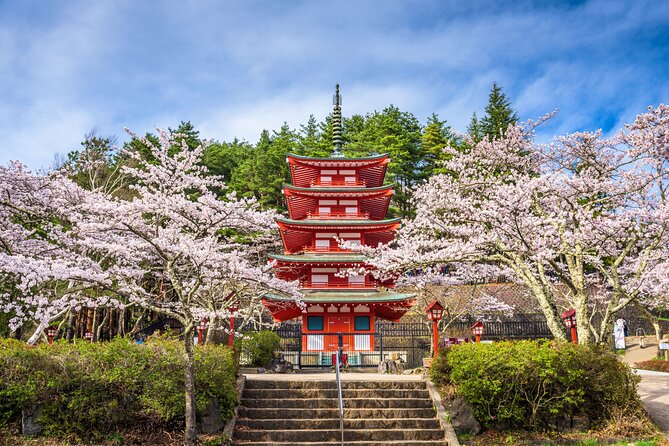
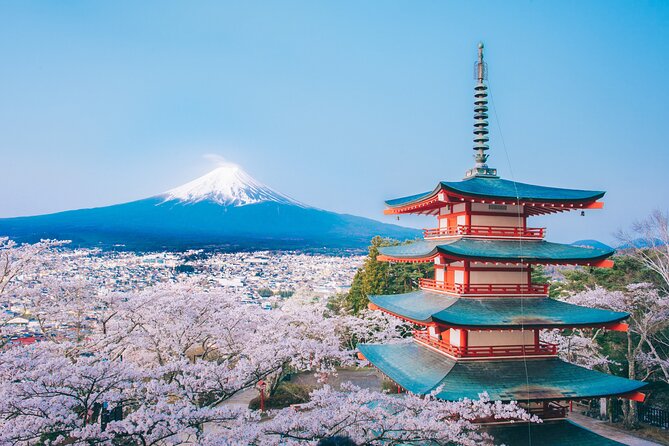
Arakurayama Sengen Park delivers the image most people associate with a Fuji photo trip: Mount Fuji behind the five-story Chureito Pagoda. The pagoda adds a strong Japanese architectural shape to the view, while Fuji supplies the huge natural backdrop.
You have about 40 minutes here. That gives you time to reach the main viewing area, frame several photos, and take in the setting, but it is not a leisurely park visit. The best-known angle can be popular, so use your time well and be ready to move when the guide calls the group together.
Cherry blossom season can make this stop especially attractive, with pink flowers joining the pagoda and mountain. Of course, blossoms are seasonal, and Fuji itself is never guaranteed to show clearly.
The park is also the most culturally grounded stop on the route. You are not only photographing a mountain. You are seeing Fuji placed beside a Buddhist-style pagoda and a Japanese shrine park, a pairing that explains why this view has become so famous.
A few more Tokyo tours and experiences worth a look



Shimoyoshida Honcho Street and Its Nostalgic Fuji Frame
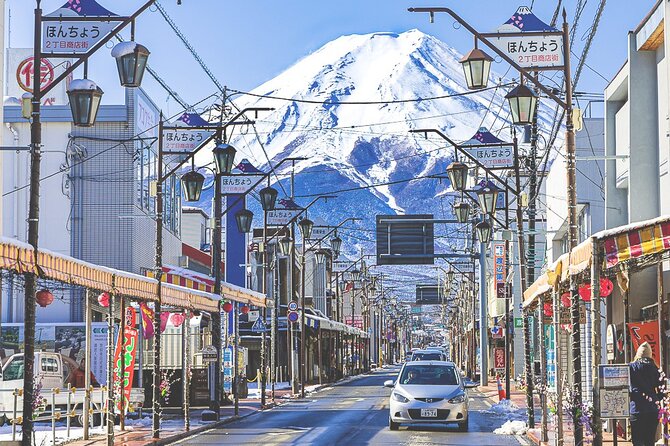
The second stop takes you to Fujiyoshida Shiei Honmachidori Parking Lot, where you can walk along Shimoyoshida Honcho Street. Here, the appeal is not a manicured viewpoint. It is the everyday town scene, with signs, lanterns, electric wires, and Mount Fuji appearing beyond the street.
You have about 40 minutes. This is a good place to experiment with composition. Point your camera down the road for a layered view, or use the shopfronts and overhead wires to create a distinctly Japanese street photograph.
The scene has a nostalgic feel, but it is still a working town street. Pay attention to where you walk and follow the guide’s directions. The mountain may not fill the frame as dramatically as it does from the pagoda, yet this stop often produces a more personal image because Fuji is part of ordinary town life.
If you care about photography, this stop earns its place. If you want grand scenery at every minute, it may feel less immediate than the park or lake.
The Lawson Photo Stop in Fujikawaguchiko
The 15-minute stop at Lawson Fujikawaguchiko Town Hall is brief and deliberately modern. The familiar convenience store sits in front of a Fuji view, creating the now-famous contrast between daily Japanese life and the country’s most recognizable mountain.
This is also your quick refreshment opportunity. The stop is too short for a proper meal, but it gives you a chance to buy something if needed, provided the schedule and local conditions allow it.
The convenience-store foreground may seem less traditional than a pagoda or tea plantation, but that is exactly why the picture works. It shows how Fuji appears within a normal town, not only from an arranged scenic platform.
Do not count on lingering here. Fifteen minutes passes quickly, so have your camera ready before you leave the vehicle.
Lake Kawaguchi for Open Water and Mountain Reflections
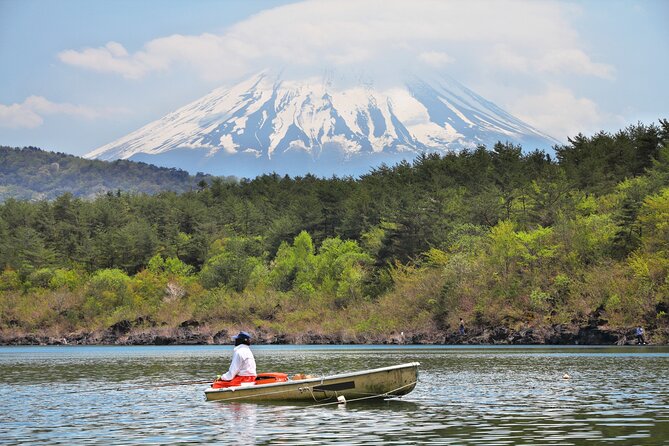
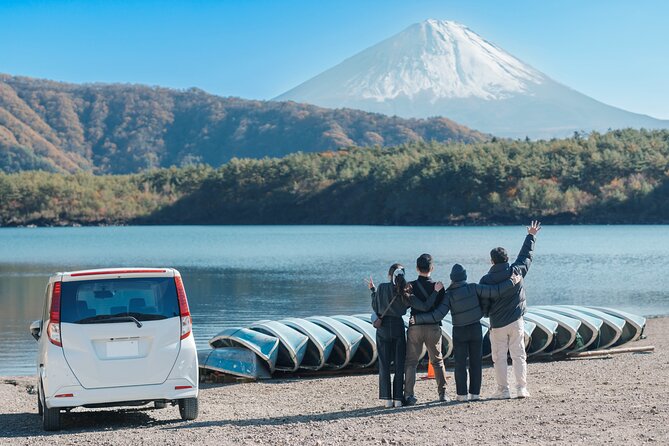
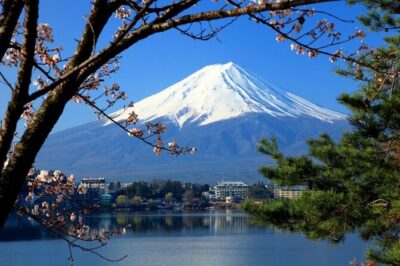
Lake Kawaguchi is one of the Fuji Five Lakes and gives you a broader, calmer view. The lake’s open water can reflect the mountain, while the shoreline offers a change from the tighter street and pagoda compositions earlier in the day.
The scheduled visit is about 20 minutes. That is enough for photographs and a short look around, but not enough for boating, fishing, or a long lakeside walk. Those activities are associated with the area, not included in this tour.
Spring brings cherry blossoms, adding another seasonal element to the shoreline. Clear weather is especially useful here because the open view makes cloud cover easy to notice. On a gray day, you may still enjoy the lake, but Fuji could fade into the sky.
I would treat this as a quick scenic pause rather than a full lake visit. The value comes from adding a spacious water view to the day’s photo collection.
Oishi Park and Seasonal Flowers
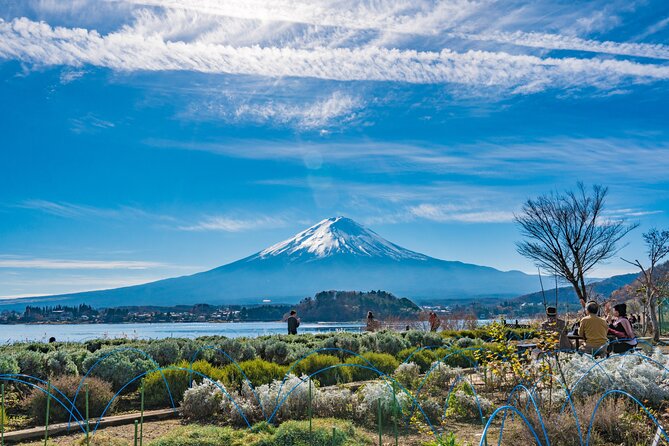
Oishi Park sits by Lake Kawaguchi and is known for Fuji views framed by seasonal flowers. Summer lavender is a major draw, while other times of year bring different colors and planting displays.
You get about 20 minutes here, so expect a focused photo stop rather than a long garden visit. The flowers give you a natural foreground, and the mountain provides the scale behind them. This is one of the easier places to take a classic postcard picture without relying on buildings or busy streets.
The exact appearance depends heavily on the season. If you book for a particular flower display, remember that bloom timing can change. The stop remains worthwhile for the lakeside Fuji view, but the floral effect may be stronger at one time of year than another.
For me, Oishi Park works best after the town street and convenience store. It returns you to open scenery and gives the day a softer, more colorful mood.
A few more Tokyo tours and experiences worth a look



Shiraito Falls, Where Water Replaces the Fuji View
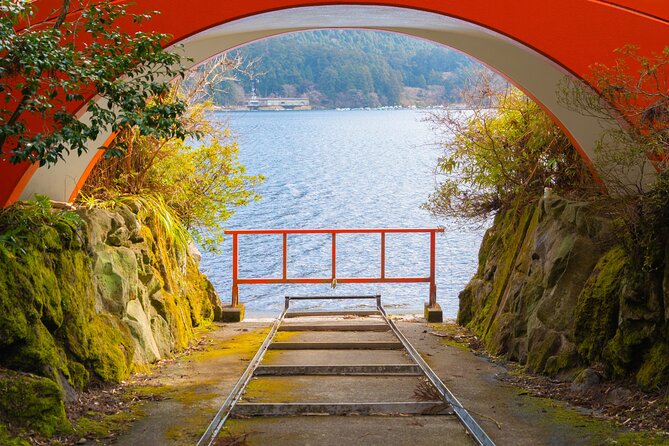
Shiraito Waterfall changes the subject entirely. Fine streams pour over a curved basalt cliff, creating the thread-like effect that gives the falls their name. The waterfall is a designated national scenic spot and one of the most visually different places on the route.
The visit lasts about 50 minutes, longer than most of the earlier photo stops. That makes sense. You need time to walk to the viewing area, find a good angle, and enjoy the sound and movement of the water.
This stop is useful when Fuji is hidden by clouds. You are no longer dependent on a clear summit for the experience to work. The waterfall has its own appeal, and it gives your photographs more variety than a day made up only of mountain views.
Wear practical shoes and be ready for moderate walking throughout the day. The tour’s physical requirement is listed as moderate, and the combination of parks, viewpoints, and waterfall access is not ideal if you need a completely effortless route.
Obuchi Sasaba and the Tea-Field View
Obuchi Sasaba is the final major photo setting, and it may be the most distinctive. Rows of green tea bushes stretch across the foreground, with Mount Fuji rising behind them. The repeating lines of the plantation create a strong composition that feels different from the pagoda, lake, and town views.
You have about 40 minutes here. That is enough time to take several compositions and enjoy a quieter rural setting. The tea fields are the reason this stop is memorable. You see a product closely tied to Japan’s daily culture presented against the country’s best-known peak.
The view depends on weather, just like every Fuji stop, but the tea plantation still offers a peaceful scene if the summit disappears. If you are choosing only a few photos to print from the day, this is a strong candidate because it is less familiar than the standard pagoda image.
What the Guides Add to a Fast Schedule
The guide’s role matters because this is a tightly timed route. You need help finding the meeting point, staying with the group, and moving between stops without losing time.
Several guide names appear in the operating experience, including Yunan, Ukei, K-san, and Ok. Yunan was especially helpful with exact coordinates for the meeting location and with taking photographs. Ukei was described as informative, funny, organized, and helpful. Ok was praised for being caring, attentive, and willing to take pictures.
The level of commentary may vary. One guide focused more on practical help than lengthy explanations of each location. That can suit you if the main goal is photography, but you should not book this expecting a full lecture at every stop.
A useful practical point: the guide may contact you through WhatsApp the night before. Save the guide’s name, check your messages, and make sure you can connect to Wi-Fi or otherwise reach the guide if you have trouble meeting the group. One missed connection resulted in a missed tour, even though the participant arrived at the stated meeting place early.
Transport, Timing, and the Cost of $78.82
At $78.82 per person, this tour offers solid value if you want to see several Fuji-area locations in one day. The price includes round-trip transportation and multilingual English, Korean, and Chinese speaking staff. Meals, insurance, and personal spending are not included.
The strongest financial argument is the transport. You would need to arrange multiple connections to reproduce this route independently, and some stops are not simply a matter of taking one train from Tokyo. The vehicle also lets you rest between locations instead of navigating every transfer.
The trade-off is control. A group of up to 60 people and fixed stop times mean you cannot stay longer at the place you like best. Each stop may also change with the season and on-site conditions.
Japanese law limits vehicle operation to 10 hours. Since the advertised day can reach 11 hours, the guide may adjust the route in real time. Traffic around Tokyo and the Fuji area can be heavy, and weather can affect both visibility and the order or length of visits.
Bring a snack or light lunch. There is no included meal period, and the schedule is too active to assume you will find time for a relaxed restaurant stop.
Weather, Fitness, and Who Should Book
This experience requires good weather, and poor conditions can lead to a different date or a full refund. Even with decent weather, Fuji may be partly or fully covered by cloud. The tour protects you from relying on a single viewpoint, but it cannot control the mountain.
You should have a moderate level of physical fitness. You will be getting on and off transport, walking around parks and streets, and spending a long day away from Tokyo. Comfortable shoes, water, and a compact camera or phone charger are sensible choices.
I would recommend it to:
- First-time visitors who want a broad Fuji sampler without planning transport
- Photographers who want several distinct compositions in one day
- Couples, families, and solo visitors who appreciate help with photos
- Visitors who have only one free day for the Fuji area
- People comfortable with a fixed group schedule
I would be more cautious if you want a private, slow-moving photography outing, a long stay at Lake Kawaguchi, or a full cultural tour with extensive commentary. The route is about coverage and access, not lingering.
Should You Book This Fuji Photo Tour?
Book it if your priority is seeing Mount Fuji from many angles in one organized day. The combination of Chureito Pagoda, Shimoyoshida Honcho Street, Lake Kawaguchi, Oishi Park, Shiraito Falls, and Obuchi Sasaba gives you a fuller picture than a single lookout trip.
The best reasons to choose it are the included transport, the number of photo settings, and the practical help offered by guides such as Yunan and Ukei. The biggest cautions are the long day, possible traffic delays, short visits, no included lunch, and a group size that can reach 60 people.
At this price, I think it is a sensible choice for a first Fuji excursion from Tokyo, especially if you want attractive photos without wrestling with the regional transport system. Keep your expectations realistic, pack food, confirm the meeting details, and remember that a cloudy day can change the mountain views. Free cancellation is available up to 24 hours before the start time, while weather cancellations offer a different date or full refund.
FAQ
How long does the Mt. Fuji photo tour last?
The tour lasts approximately 10 to 11 hours.
What is the price of the tour?
The listed price is $78.82 per person.
Is transportation included?
Yes. Round-trip transportation is included.
Which languages are supported?
English, Korean, and Chinese speaking staff are included.
Is lunch included?
No. Meals are not included. You are advised to bring snacks or a light lunch.
How many stops are included?
The route includes seven listed stops: Arakurayama Sengen Park, Shimoyoshida Honcho Street, Lawson Fujikawaguchiko Town Hall, Lake Kawaguchi, Oishi Park, Shiraito Waterfall, and Obuchi Sasaba.
What happens if the weather is poor?
If the experience is canceled due to poor weather, you will be offered a different date or a full refund.
How far in advance can I cancel for a full refund?
You must cancel at least 24 hours before the experience start time for a full refund.
Is the tour suitable for everyone physically?
A moderate level of physical fitness is recommended. The amount of time at each stop can change with the season and on-site conditions.
More 1-Day Tours in Tokyo
More Mt Fuji Day Trips in Tokyo
More tours in Tokyo we've reviewed








Mt Fuji Day Trips, compared.
 ★ 5.0Mt Fuji and Hakone 1-Day Bus Tour Return by Bullet TrainFrom $163
 ★ 4.0Mt Fuji & Hakone Cruise, Drum Show Bullet Train 1 Day from TokyoFrom $149
 ★ 4.4Tokyo Mt Fuji 5th St & Hakone Cruise Bus Tour w/Bullet TrainFrom $15410 hours
 ★ 4.5From Tokyo: Mount Fuji Full-Day Sightseeing TripFrom $6810 hours
 ★ 4.7Tokyo: Mt. Fuji Tour, Hakone Ropeway, Owakudani, Lake AshiFrom $5410 hours
 ★ 4.4Tokyo:Mt.Fuji,Kawaguchiko Oishi Park,Arakurayama Sengen ParkFrom $5410 hours