
Reviewed · MT FUJI DAY TRIPS
One Day Tour to Oishi Park and Fruit Picking in Mt. Fuji Tokyo
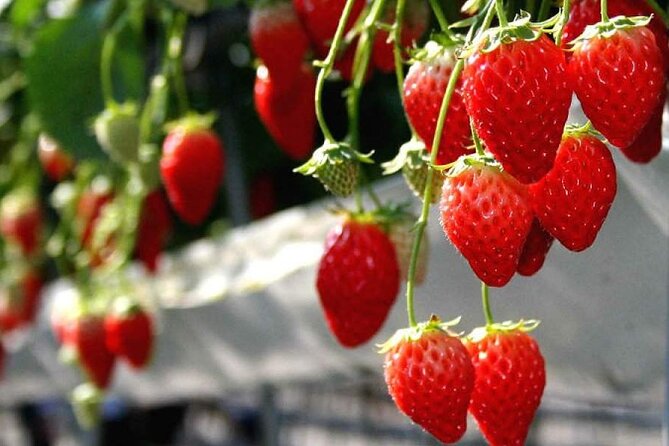
Mt. Fuji is the star here, but the seasonal fruit picking gives this long day a local feel that a simple photo stop cannot match. You may pick strawberries, cherries, peaches, grapes, or berries, then see the mountain from Oishi Park, a ropeway, and possibly the 5th Station.
I like the range packed into one outing: Yamanashi food and farms on one side, big Fuji views on the other. The main caution is timing. Traffic, weather, fruit ripeness, and seasonal route changes can shorten stops, and the tour may be canceled if the minimum of 15 people is not reached.
In This Review
- Key points to know before booking
- A full day from Shinjuku to Yamanashi
- Fruit picking in Yamanashi
- Houtou lunch and a taste of Yamanashi
- Oishi Park beside Lake Kawaguchi
- Riding the Mt. Fuji Panoramic Ropeway
- Mt. Fuji 5th Station and the mountain road
- How the bus day works
- Seasonal route changes you should expect
- Is $125.39 a fair price?
- Who should book this outing?
- My booking advice
- FAQ
- Where does the tour start?
- Where does the tour end?
- Is hotel pickup included?
- How long does the tour last?
- What fruit can I pick?
- When are strawberries available?
- Is lunch included?
- Is the Mt. Fuji Panoramic Ropeway included?
- Can the tour visit Mt. Fuji 5th Station in bad weather?
- What happens if Mt. Fuji is hidden by clouds?
Key points to know before booking
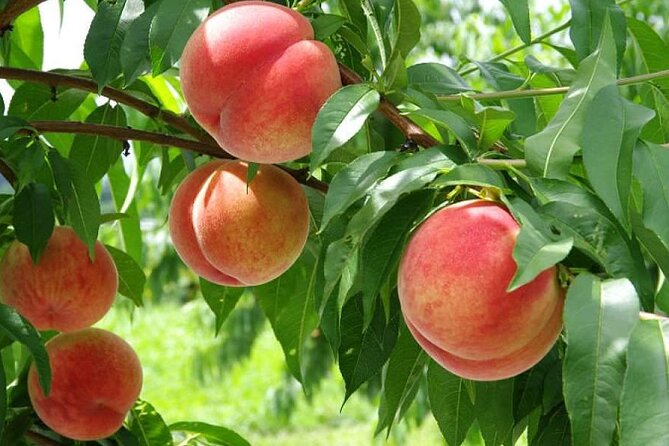
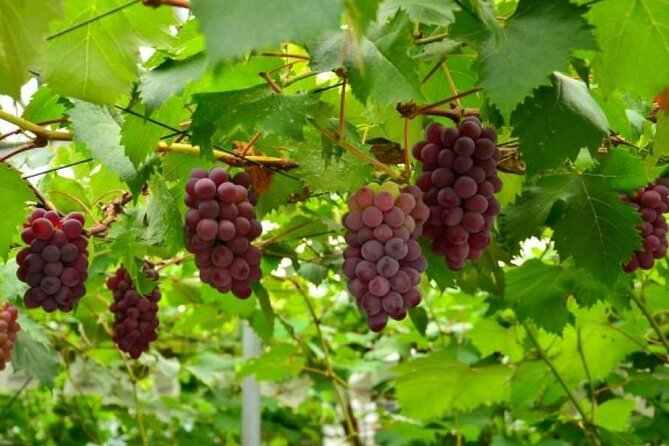
- Fruit changes with the calendar: Strawberries run from late December to May, cherries in June, peaches from mid-July to mid-August, grapes from mid-August to early October, and berries from October to mid-November.
- Three Fuji viewpoints are planned: Oishi Park, the Mt. Fuji Panoramic Ropeway at about 1,075 meters, and Mt. Fuji 5th Station, though weather and road conditions can alter the route.
- Lunch is regional, not generic: You get Yamanashi-style houtou, thick noodles served with pork and seasonal vegetables.
- The day begins and ends in Shinjuku: Meet at 8:00 am by the Robert Indiana LOVE sculpture and finish near Tokyo Mode Gakuen Cocoon Tower.
- This is a long bus day: Plan on roughly 9 to 10 hours, with translation in English or Chinese and a Japanese-speaking driver or guide.
- Fruit picking has a freshness caveat: If the crop is not ready, prepared fruit may be served on a plate or provided as a souvenir instead.
A full day from Shinjuku to Yamanashi
At $125.39 per person, this is priced as a convenient day trip rather than a bare sightseeing transfer. Your fee covers the bus, guide services, lunch, the all-you-can-eat seasonal fruit activity, and admission to the Mt. Fuji Panoramic Ropeway.
That bundle matters because reaching Yamanashi independently means arranging transport between several widely separated stops. You also avoid working out the timing between the farm, Lake Kawaguchi, the ropeway, and the mountain road.
The tradeoff is less freedom. You are following a group schedule, and the day can stretch to 10 hours. The tour can carry as many as 100 people, although a smaller group may use a minivan. If you like setting your own pace, this may feel tight. If you want several Fuji-area sights without changing hotels, it is a practical arrangement.
The meeting point is the Robert Indiana LOVE sculpture at 6-chōme-5-1 Nishishinjuku. Start time is 8:00 am. The return point is near Tokyo Mode Gakuen Cocoon Tower, also in Shinjuku, and hotel pickup is not included.
A few more Tokyo tours and experiences worth a look


Fruit picking in Yamanashi
The farm visit is scheduled for about three hours, though the actual flow depends on the season and the day’s road conditions. You begin with the Yamanashi Farm area, where staff introduce the setting and the available fruit activity.
The appeal is simple: you are not only looking at orchards from a bus window. You get a hands-on chance to pick and eat seasonal produce. The farm portion also gives the day a useful contrast to the mountain viewpoints, since Yamanashi is known here through its food and agriculture as much as through Fuji scenery.
The fruit calendar is important:
- Strawberries are scheduled from late December through early May.
- Japanese cherries are available in May and June.
- Peaches are offered in July and August, with the main peach period listed as mid-July to mid-August.
- Several grape varieties appear from August through November, with the main grape period listed as mid-August to early or mid-October.
- Apples or oranges may also be available.
- Berries are scheduled from early or mid-October to mid-November.
You should not treat these dates as a guarantee of one exact crop. Ripeness and growing conditions control what is ready. If the fruit is not suitable for picking, the operator may give you prepared fruit to taste or provide fruit as a souvenir.
That policy protects the farm from forcing an unripe crop, but it also means you should book for the broader farm experience rather than one perfect fruit-picking fantasy. Peach and cherry picking, in particular, depend heavily on a short seasonal window.
The all-you-can-eat format sounds generous, though your time in the orchard is still part of a guided day. You will not have unlimited time to wander. Families and food lovers should enjoy this stop most, while serious photographers may find the farm time less flexible.
Houtou lunch and a taste of Yamanashi
Lunch is built into the day and includes Yamanashi-style houtou noodles, pork, and fresh seasonal vegetables. Houtou is a thick, hearty noodle dish served in a pot, closer to a warming country meal than a light bowl of noodles.
This is one of the better details in the schedule because it connects the outing to the region. You are not simply stopping at a roadside restaurant for an interchangeable meal. The food gives you a clear taste of Yamanashi, where hearty noodle dishes fit the cooler mountain setting.
The lunch period itself is about 30 minutes, and that is worth noting. You get convenience, but not a long restaurant visit. If you eat slowly, have dietary restrictions, or like to linger over a meal, the pace may feel brisk.
The information provided specifies pork and seasonal vegetables, but it does not state that alternate meals are available. If you have a food concern, ask before booking rather than assuming the restaurant can adjust the dish.
Oishi Park beside Lake Kawaguchi
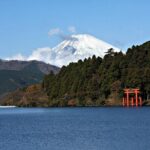
Oishi Park sits along the northern shore of Lake Kawaguchi. Its main draw is the combination of flower beds, open lake views, and Mt. Fuji in the distance when skies cooperate.
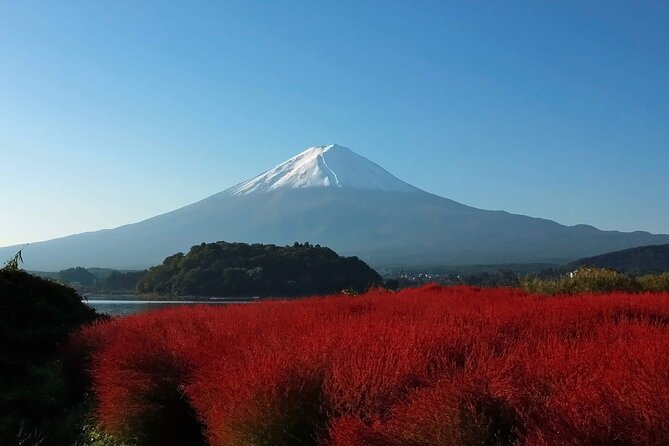
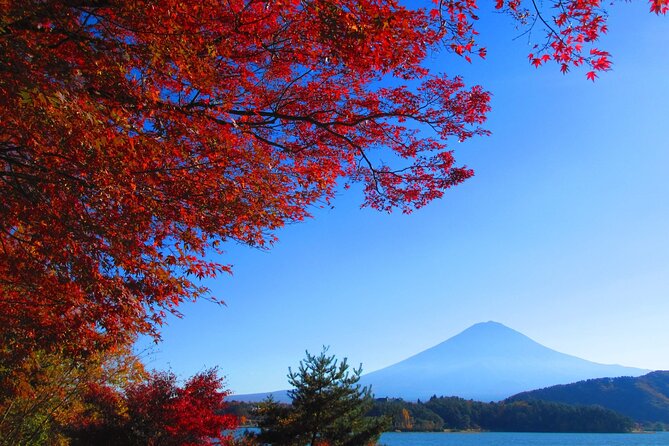
The park is particularly seasonal. Cherry blossoms are expected in April, lavender from late June to mid-July, kochia in October, and autumn leaves in November. The flower display changes the mood of the stop, so the same tour can look quite different depending on your travel month.
Summer lavender with Fuji behind it is the classic pairing, while autumn brings warmer colors around the lake. Spring can place cherry blossoms at the center of the visit. The route may shift to Kawaguchiko Lakeside Park during the cherry blossom or autumn foliage periods, so keep an open mind about the exact park.
About two hours is assigned to this part of the day, including lunch in the wider schedule. That gives you time for a walk and photographs, but it does not turn the visit into a relaxed lakeside afternoon. The mountain may also disappear behind cloud cover. The tour runs in poor visibility and does not provide a refund simply because Fuji cannot be seen.
This stop works best if you value changing scenery. You get water, flowers, and a broad mountain view rather than another close-up roadside lookout. Bring patience for weather and keep your camera ready, but do not make a clear Fuji photograph the only reason you book.
Riding the Mt. Fuji Panoramic Ropeway
The Mt. Fuji Panoramic Ropeway is scheduled for about 1 hour and 30 minutes, with admission included. The ride reaches about 1,075 meters and provides a 360-degree view of Mt. Fuji and the surrounding area.
This is a useful viewpoint because it changes your sense of scale. At Oishi Park, Fuji is framed across the lake and gardens. From the ropeway, you see the area from above, with a wider sweep of the mountain region.
The ride is also one of the clearest value points in the $125.39 price. Admission is already covered, and you do not need to arrange a separate visit during a busy day in the Fuji Five Lakes area.
The drawback is that the ropeway cannot defeat clouds, rain, or haze. If the weather is poor, your view may be limited. The operator also warns that traffic can force changes or shorten time at each stop, so the stated 90 minutes should be treated as a planned allocation rather than a promise of uninterrupted viewing.
A few more Tokyo tours and experiences worth a look



Mt. Fuji 5th Station and the mountain road
The final major mountain stop is Mt. Fuji 5th Station, also called the Sky Palace in the tour description. You can use the observation area, look toward the upper slopes, and learn about Fuji’s importance and folklore.
The 5th Station is not the summit. It is a high access point on the mountain, and the road up offers a different experience from the lake views below. You are closer to Fuji itself, with a stronger sense of the mountain’s height and presence.
The schedule assigns up to three hours here, but the road is not always passable. In bad weather, the itinerary can change to the Fuji Visitors Center or Oshino Hakkai. This is one of the most important conditions to understand before you pay.
Road traffic can also affect the stop. The route through the Fuji Subaru Line may be delayed, shortened, or replaced. The tour will not be canceled or refunded just because Fuji is hidden by clouds, though a full cancellation caused by poor weather offers a different date or a full refund under the stated policy.
If reaching the 5th Station is a personal priority, check the forecast and accept that mountain access is never fully within the operator’s control. The schedule includes it, but conditions decide it.
How the bus day works
The tour uses a bus with a Japanese-speaking professional driver or guide, plus an English or Chinese-speaking guide and translation service on the bus. That combination should help you understand the day’s instructions, though the information does not give the guides’ personal names.
You must wear a seat belt, as required by Japanese law. The bus is the practical backbone of the outing, but traffic between Tokyo and Yamanashi can be heavy. A schedule that looks neat on paper can become compressed once the road slows.
The tour requires a WhatsApp number or mobile number when you book. Confirmation is provided at booking, and the activity is near public transport at its Shinjuku meeting and end points.
A minimum of 15 participants is required for operation. If the group is small, a minivan may be used for departure. The stated maximum is 100 people, so group size can vary sharply. You should be comfortable with either a compact vehicle or a large coach-style group.
One useful booking warning is that availability can change late. A booking has been reported as unavailable only four days before departure, so I would avoid placing this tour on the one day of your Japan trip that cannot be replaced. Keep a backup plan for the Fuji area.
Seasonal route changes you should expect
The tour is not one fixed scene repeated throughout the year. Seasonal changes affect both the farm and the sightseeing stops.
In winter, from late December through March, the plan may include Saiko Iyashi no Sato Healing Village, a traditional Japanese village with views toward Fuji. In April, cherry blossoms at Kawaguchiko Sakura may replace or shape the day.
From late April through late May, the Fuji Shibazakura Festival at Motosu Lake Resort may be included, featuring pink moss phlox. In June and July, Oishi Park’s lavender fields are the main seasonal draw.
Late summer, from August through September, places more emphasis on the 5th Station. October and November may bring autumn foliage at Oishi Park or the Momiji Corridor, also known as Maple Leaf Tunnel.
These changes are a strength if you want a seasonal Japan experience. They are a weakness if you have chosen the tour for one exact stop. Read the outing as a Yamanashi and Fuji-area day with a changing seasonal program, not as a guaranteed checklist.
Is $125.39 a fair price?
I consider the price reasonable for a long, organized day from Tokyo. The cost includes lunch, fruit picking, the ropeway ticket, the bus, and language support. Buying separate transport and admissions could take more time and may not be much cheaper.
The value is strongest for a first visit to the Fuji region. You get several different views, a local meal, and an activity beyond sightseeing. The price is less attractive if you mainly want a quiet day at Lake Kawaguchi or a single clear photo of Fuji.
The non-refundable policy also matters. You cannot change or cancel for personal reasons and receive your money back. Poor weather that cancels the tour is treated differently, with a new date or full refund offered, but poor visibility alone does not trigger a refund.
Who should book this outing?
I would choose this tour if you are staying in Tokyo, want to see the Fuji area in one day, and prefer someone else to handle the roads and transfers. It suits families, first-time Japan visitors, fruit lovers, and anyone who likes mixing scenery with food.
It is also a good fit if your travel dates line up with a specific crop or flower season. Check the dates carefully before booking: strawberries, cherries, peaches, grapes, and berries each have a different window.
I would hesitate if you dislike long bus rides, need a slow lunch, want guaranteed access to the 5th Station, or need a fixed itinerary. The route can change for weather, traffic, seasonal conditions, and mountain access.
My booking advice
Book this as a flexible Fuji sampler, not a guaranteed mountain-view tour. The best parts are the range of experiences, the included regional lunch, and the chance to eat fruit where it is grown.
Before paying, check your travel month, confirm the likely fruit, review the meeting point, and leave room in your schedule for a 9 to 10 hour day. I would also keep an alternative plan for the next day in case the operator cannot run the tour.
If those conditions suit you, the $125.39 price buys a useful mix of Yamanashi countryside, local food, flowers, and Fuji viewpoints. If you need control and certainty, explore the area independently instead.
FAQ
Where does the tour start?
It starts at 8:00 am at the Robert Indiana LOVE sculpture, 6-chōme-5-1 Nishishinjuku, Shinjuku City, Tokyo 160-0023, Japan.
Where does the tour end?
The tour ends near Tokyo Mode Gakuen Cocoon Tower, 1-chōme-7-3 Nishishinjuku, Shinjuku City, Tokyo 160-0023, Japan.
Is hotel pickup included?
No. A shuttle is not included, so you need to reach the stated meeting point yourself.
How long does the tour last?
The planned duration is about 9 to 10 hours.
What fruit can I pick?
The seasonal options include strawberries, cherries, peaches, grapes, and berries. Apples or oranges may also be available.
When are strawberries available?
Strawberries are scheduled from late December through early May.
Is lunch included?
Yes. Lunch includes Yamanashi-style houtou noodles, pork, and seasonal vegetables.
Is the Mt. Fuji Panoramic Ropeway included?
Yes. Admission to the Mt. Fuji Panoramic Ropeway is included.
Can the tour visit Mt. Fuji 5th Station in bad weather?
Not always. If weather or road conditions prevent access, the schedule may change to the Fuji Visitors Center or Oshino Hakkai.
What happens if Mt. Fuji is hidden by clouds?
The tour will not be canceled or refunded just because Mt. Fuji cannot be seen. If poor weather causes the entire tour to be canceled, a different date or full refund is offered.
More 1-Day Tours in Tokyo
More Mt Fuji Day Trips in Tokyo
More tours in Tokyo we've reviewed









Mt Fuji Day Trips, compared.
 ★ 5.0Mt Fuji and Hakone 1-Day Bus Tour Return by Bullet TrainFrom $163
 ★ 4.0Mt Fuji & Hakone Cruise, Drum Show Bullet Train 1 Day from TokyoFrom $149
 ★ 4.4Tokyo Mt Fuji 5th St & Hakone Cruise Bus Tour w/Bullet TrainFrom $15410 hours
 ★ 4.5From Tokyo: Mount Fuji Full-Day Sightseeing TripFrom $6810 hours
 ★ 4.7Tokyo: Mt. Fuji Tour, Hakone Ropeway, Owakudani, Lake AshiFrom $5410 hours
 ★ 4.4Tokyo:Mt.Fuji,Kawaguchiko Oishi Park,Arakurayama Sengen ParkFrom $5410 hours