
Reviewed · TEA CEREMONY & MATCHA
Matcha Experience with of Japanese Tea Tasting in Tokyo
The most interesting part of this Tokyo experience is the chance to taste Japanese tea as a farmer understands it. Chisei spent six years growing tea in Kyoto, and he explains how cultivation and processing change the leaf before you taste the result. You do not simply order matcha and call it cultural learning.
I like the tiny group size, limited to five people, and the unusual range of teas. I also like that Rina’s homemade sweets are part of the session, and that you may even taste prepared tea leaves with ponzu. The main consideration is that this is a focused 90-minute class, not a formal, multi-hour tea ceremony in a traditional temple setting.
In This Review
- Key points at a glance
- A tea class that goes beyond matcha powder
- Starting with a seasonal welcome drink
- Comparing six Japanese teas side by side
- Seeing cultivation and processing through a farmer’s eyes
- Japanese black tea and sweets for a change of pace
- Making usucha with a bamboo whisk
- Matcha latte and hojicha latte
- Why the five-person limit matters
- Location, timing, and practical planning
- Who will get the most from this class
- Is the $57.98 price worthwhile?
- Should you book Matcha Experience with Japanese Tea Tasting?
- FAQ
- How long does the tea experience last?
- How much does the experience cost?
- How many people can join the class?
- Where does the experience begin and end?
- Which Japanese teas are included?
- Will I get to make matcha?
- Are snacks included?
- Is a mobile ticket provided?
- What is the cancellation policy?
Key points at a glance
- Taste an unusually broad lineup: Compare sencha, kabuse-cha, gyokuro, deep-steamed sencha, genmaicha, hojicha, Japanese black tea, and matcha.
- Learn from a former Kyoto tea farmer: Chisei explains farming and processing from direct experience, with diagrams and photographs.
- Make your own usucha: You finish by whisking matcha with a bamboo tea whisk and can repeat the technique at home.
- Enjoy homemade Japanese sweets: Rina prepares snacks selected to work with the teas, including Japanese black tea.
- Keep the setting personal: The maximum group size is five, so questions do not get lost in a crowd.
- Try tea in modern forms: Matcha latte and hojicha latte are included alongside traditional brewed teas.
A tea class that goes beyond matcha powder
Matcha gets most of the attention in Tokyo, but Japanese tea culture is far broader. This experience gives you a useful tour of that wider world in a compact format. You taste several teas made from the same basic plant, then compare how shade, steaming, roasting, and other processing choices affect the cup.
Chisei’s background matters here. He is not only presenting labels from a tasting sheet. He grew tea in Kyoto for six years, and he explains cultivation in plain terms, supported by diagrams and images. That makes the differences between gyokuro, sencha, and hojicha easier to understand than a menu description ever could.
The setting is at matcha tripJapan, inside Henn Na Hotel in Taito City’s Kotobuki neighborhood. The meeting point is on the second floor at Sports Bar Leaf. The activity returns to that same location, which keeps the plan simple, though you should allow a few minutes to find the hotel and the room.
At $57.98 per person, this is not the cheapest cup of tea in Tokyo. It is a fair price if you want instruction, several tastings, snacks, and a practical matcha lesson in one sitting. Buying eight separate drinks in cafes would not give you the same comparison or the farming context.
A few more Tokyo tours and experiences worth a look

Starting with a seasonal welcome drink
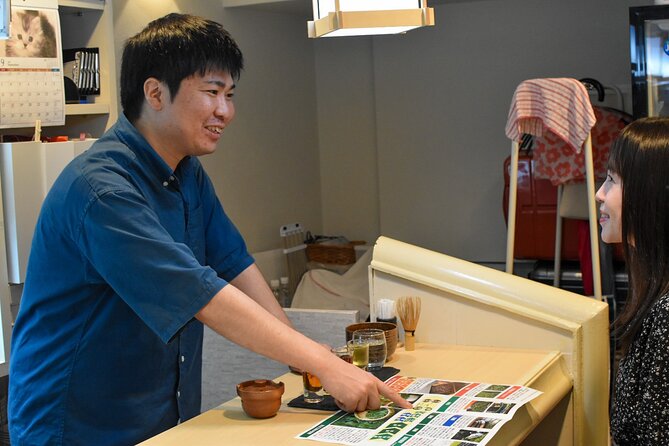
The session begins with a seasonal welcome drink. While you sip, Chisei introduces the teas you will taste and sets up the basic vocabulary for the class.
This opening is useful because Japanese tea names can blur together when you first encounter them. You get a starting point before the tasting becomes more detailed. It also gives you a chance to settle in and ask questions early.
Do not expect the welcome drink to be the main event. Its value is as an introduction, not as a separate tasting course. The class moves quickly, so listening closely from the start will help you get more from the rest of the session.
Comparing six Japanese teas side by side
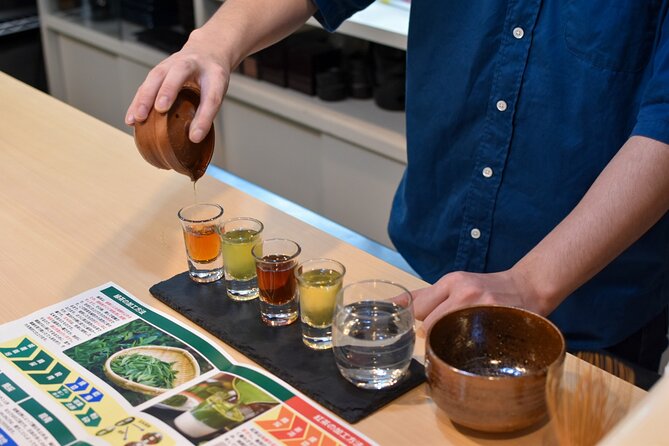
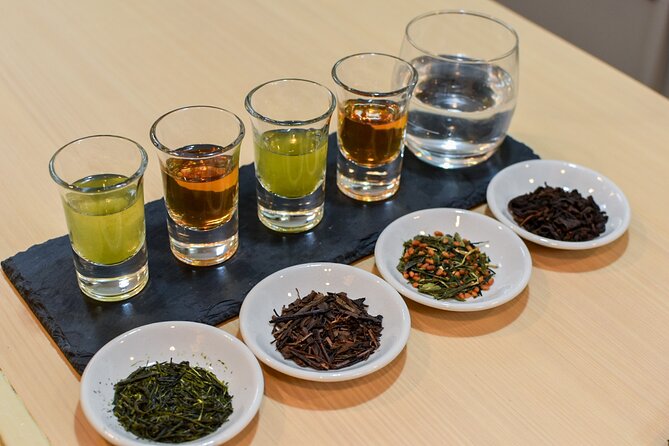
The central section compares six teas: sencha, kabuse-cha, gyokuro, deep-steamed sencha, genmaicha, and hojicha. The session focuses on making each tea in a way that brings out its best qualities.
Before each tea is prepared, you look at the color and shape of the leaves. Then you smell and taste the finished drink. That order matters. It encourages you to notice the tea before someone tells you exactly what to think about it.
Sencha is a good reference point because it is one of Japan’s familiar everyday green teas. Kabuse-cha and gyokuro give you a chance to compare teas grown with shade, while deep-steamed sencha shows how a different steaming process affects appearance and taste.
Genmaicha adds roasted brown rice to green tea, giving it a different character from the more purely vegetal styles. Hojicha is roasted green tea, and its flavor profile makes a useful contrast with the greener, more delicate cups served earlier.
The class can be especially helpful if you usually buy tea by package design or price and have trouble knowing what separates one variety from another. You can taste the differences before deciding which style you prefer.
One practical point: the schedule describes six comparison teas, while the overall experience also includes a welcome drink, Japanese black tea, matcha, and latte options. The exact serving sequence may vary, but the advertised lineup includes a substantial number of pours for a 90-minute session. Pace yourself rather than treating every cup as a full mug.
Seeing cultivation and processing through a farmer’s eyes
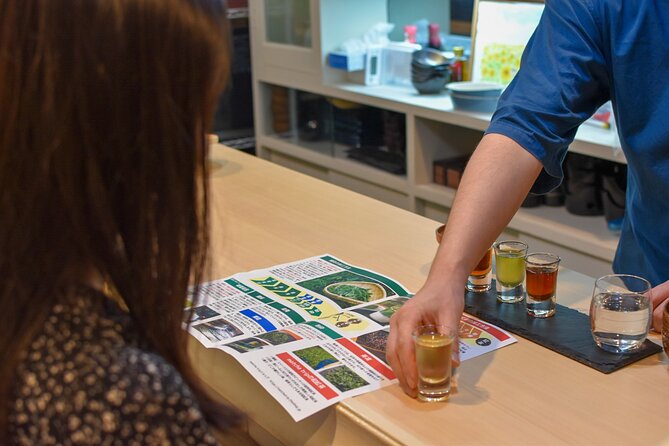
Tea tasting becomes more meaningful when you understand how the leaf got there. Chisei explains cultivation methods and processing, drawing on his years of work in Kyoto. He also uses clear diagrams and photographs to show the steps.
That farming background is one of the strongest reasons to choose this experience over a casual tea cafe. You are not only learning that gyokuro tastes different from hojicha. You are learning that growing conditions and production choices help create those differences.
The instruction is designed for people who want to learn, but you do not need a technical background. One useful feature is the open question-and-answer style. Chisei has been praised for patiently handling detailed questions and encouraging curiosity, which makes the class workable for complete beginners as well as people who already know a little about tea.
English communication is described as very good. Still, this is a lesson with a lot of information packed into a short period. If you have a particular interest, such as shaded tea, organic production, or matcha grades, ask about it while the subject is in front of you.
Japanese black tea and sweets for a change of pace
After the green tea comparison, you taste Japanese black tea with homemade sweets. This is a smart change of pace. Many people arrive expecting only bitter matcha or grassy green tea, so a Japanese black tea course helps show the range of tea made in Japan.
Rina prepares the homemade sweets, and they are intended to pair with the tea rather than function as a random snack. The sweets have received some of the warmest praise connected with this class, and one unusual detail is that you may also get to eat tea leaves with ponzu.
The food portion is modest, not a meal. If you need lunch, plan to eat separately. Its purpose is to show how sweetness and seasoning alter your perception of tea, while giving your palate a break between cups.
You should mention allergies to the hosts. Chisei has been described as proactive about asking about allergy conditions, but the supplied details do not promise a specific allergy-free menu. Homemade food can vary, so communicate your needs before or at the beginning of the session.


Making usucha with a bamboo whisk
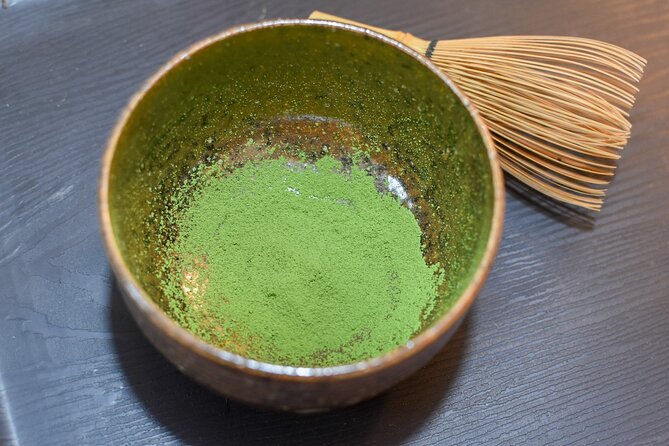
The hands-on part comes near the end. You make usucha, the thinner style of matcha commonly associated with everyday matcha preparation, using a bamboo whisk.
This is more useful than watching a ceremony from across a room. You handle the tools, practice the whisking motion, and leave with a method you can repeat at home. You do not need to be perfect. The point is to understand the basic process and gain confidence.
The class is not presented as a formal school of tea ceremony with every prescribed movement and rule. It is a practical introduction for general visitors. That makes it approachable, but people seeking a full traditional ceremony, formal etiquette instruction, or a long silent ritual may find the format too casual and short.
Two types of matcha are included, adding another comparison before or around the making lesson. The selection helps show that matcha is not one uniform product. If you buy matcha or a bowl after the class, the instruction gives you a better idea of how you want to use it.
Matcha latte and hojicha latte
The experience also includes modern tea drinks: matcha latte and hojicha latte. The details list three kinds of matcha latte, plus hojicha latte, while the schedule specifically says you can enjoy both matcha latte and hojicha latte.
These drinks are valuable for anyone who likes cafe-style tea but wants to understand the traditional ingredients behind it. Hojicha latte is especially useful as a contrast because roasted tea has a different base flavor from matcha.
The lattes are an extra rather than the main educational focus. If your priority is formal preparation, the traditional tea and whisking lesson deserve your attention. If you are deciding between this class and a simple matcha cafe visit, the latte portion gives you the best of both directions.
Why the five-person limit matters
The maximum group size is five. That is a real advantage in a lesson built around taste and questions.
In a large class, you might watch someone prepare tea without seeing the leaves clearly or getting a chance to ask why one cup tastes sweeter or more astringent than another. Here, the small format should make it easier to follow the diagrams, inspect the leaves, and speak directly with Chisei and Rina.
The small group also makes the experience feel more like a personal workshop than a scheduled attraction. The tradeoff is limited availability, especially since the experience has been drawing regular bookings. If your Tokyo dates are fixed, reserve ahead rather than assuming you can fit it in at the last minute.
Location, timing, and practical planning
The experience lasts about one hour and 30 minutes and begins and ends at the same meeting point: matcha tripJapan, 111-0042 Tokyo, Taito City, Kotobuki, 3-chome 19-8, Henn Na Hotel, 2F, Sports Bar Leaf.
It is near public transportation, but the supplied details do not identify a particular station or walking time. Use the exact address and allow time to locate the hotel and second-floor venue. A mobile ticket is provided, and booking confirmation is sent at the time of reservation.
The experience allows service animals. It is designed as a general tea class, not a commercial consultation. If you represent a business and want wholesale or commercial information, contact the provider before booking rather than using the class for that purpose.
Free cancellation is available when you cancel at least 24 hours before the local start time. Cancellations or changes made inside that window are not accepted for a refund.
Who will get the most from this class
I would choose this for you if you want more than a photogenic matcha moment. It suits people who enjoy food education, want to compare several tea styles, or like learning how agricultural choices shape what appears in a cup.
It is also a good choice for a mixed group. A matcha enthusiast can ask about cultivation and grades, while a newcomer can enjoy the sweets, lattes, and simple introduction to whisking. People who do not normally like matcha may be surprised by the range of teas and preparations.
Families and couples should note the short duration and small group limit. The format is manageable, but the class depends on listening and tasting rather than constant entertainment. Young children who cannot sit through an instructional session may not get as much from it.
You should think twice if you want a grand tea-house atmosphere, a long ceremonial performance, or a quiet cultural ritual with little explanation. This experience is conversational and educational. Its strength is access to an informed teacher, not elaborate staging.
Is the $57.98 price worthwhile?
The value comes from the number of comparisons and the personal instruction. You receive multiple Japanese teas, two types of matcha, matcha and hojicha latte options, homemade sweets, and a hands-on preparation lesson. The former tea-farmer perspective adds something you are unlikely to get from an ordinary cafe order.
The price is less compelling if you only want one attractive bowl of matcha or a quick tasting for a few minutes. Tokyo has plenty of places to buy a drink for less. You are paying here for guided comparison and the ability to repeat what you learn at home.
I also like that the session can shape future purchases. The hosts sell tea products, and people have taken home matcha, gyokuro, bowls, and other items. You are not required to buy anything, but the lesson can help you choose with more confidence if you want a tea souvenir.
Should you book Matcha Experience with Japanese Tea Tasting?
Book it if you want a compact, personal lesson led by a former tea farmer. The strongest features are Chisei’s firsthand explanations, the small five-person format, the broad range of tea, and Rina’s homemade sweets.
I would give it extra weight in a Tokyo itinerary for anyone who already drinks tea or wants a more thoughtful food experience. You can leave knowing how to whisk matcha, how several Japanese teas differ, and which flavors suit you.
Skip it if your only goal is a formal tea ceremony in a traditional setting. For everyone else, $57.98 is a reasonable price for 90 minutes of tasting, teaching, sweets, and practice, especially when you value understanding what you are drinking.
FAQ
How long does the tea experience last?
The experience lasts approximately one hour and 30 minutes.
How much does the experience cost?
The listed price is $57.98 per person.
How many people can join the class?
The experience has a maximum of five travelers.
Where does the experience begin and end?
It begins and ends at matcha tripJapan, inside Henn Na Hotel at 111-0042 Tokyo, Taito City, Kotobuki, 3-chome 19-8, on the second floor at Sports Bar Leaf.
Which Japanese teas are included?
The listed teas include hojicha, sencha, kabuse-cha, gyokuro, deep-steamed sencha, genmaicha, and Japanese black tea. The experience also includes matcha and latte options.
Will I get to make matcha?
Yes. You make usucha with a bamboo tea whisk during the final part of the class.
Are snacks included?
Yes. Homemade sweets selected to go with Japanese tea are included.
Is a mobile ticket provided?
Yes. The experience includes a mobile ticket, and confirmation is received at the time of booking.
What is the cancellation policy?
You can cancel for a full refund up to 24 hours before the experience start time. Changes or cancellations made less than 24 hours before the local start time are not accepted for a refund.
More Tea Ceremony & Matcha in Tokyo

More tours in Tokyo we've reviewed






Tea Ceremony & Matcha, compared.
 ★ 5.0Matcha Making Class in Tokyo with Authentic Japanese Sweets SetFrom $21
 ★ 5.0Tokyo: Traditional Tea Ceremony with a Tea MasterFrom $381 hour
 ★ 4.5Dynamic Tokyo: Tokyo Tower, Tea Experience, Bay Cruise Day TourFrom $99
 ★ 4.9Tokyo: Matcha Making Experience with Mochi Sweets in AsakusaFrom $221 hour
 ★ 4.7Tokyo: Matcha and Kimono ExperienceFrom $57
 ★ 5.0Tea Ceremony Workshop in Tokyo by the Experienced InstrucorFrom $38