
Reviewed · TOKYO
IKEBANA experience
The best part of this Tokyo experience is its setting: you learn ikebana in a private Japanese home, not in a large commercial classroom. Hiromi teaches in English, demonstrates the basic forms, then gives you room to create your own arrangement.
I like the calm pace and the chance to see a tatami room and garden as part of the lesson. I also like the thoughtful finish, with matcha and wagashi served when time allows. The main consideration is price: at $115.31 per person for about 90 minutes, this is a special-interest class rather than a low-cost craft activity.
In This Review
- Key Points Before You Book
- Learning Ikebana in Hiromi’s Tokyo Home
- The 90-Minute Lesson, Step by Step
- What Makes the Japanese Room Special
- Matcha, Wagashi, and a Gentle Finish
- Hiromi’s Teaching Style and English
- The Value of a $115.31 Private Experience
- Who Should Book This Class
- Practical Details at Toritsu-daigaku Station
- How to Fit It Into Your Tokyo Plans
- Should You Book Hiromi’s Ikebana Experience?
- FAQ
- Where does the ikebana class take place?
- How long does the experience last?
- Is the lesson taught in English?
- Is this a private activity?
- Are matcha and Japanese sweets included?
- What is the cancellation policy?
Key Points Before You Book
- Private class with Hiromi: Only your group takes part, so the lesson can be adjusted to your level and interests.
- Traditional Tokyo setting: The class takes place in a Japanese home with a tatami room and garden.
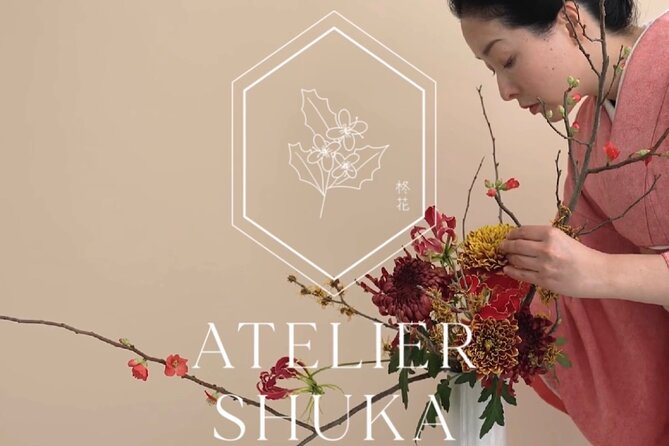
- English instruction: Hiromi explains the background, demonstrates flower cutting and arranging, and guides you through your own work.
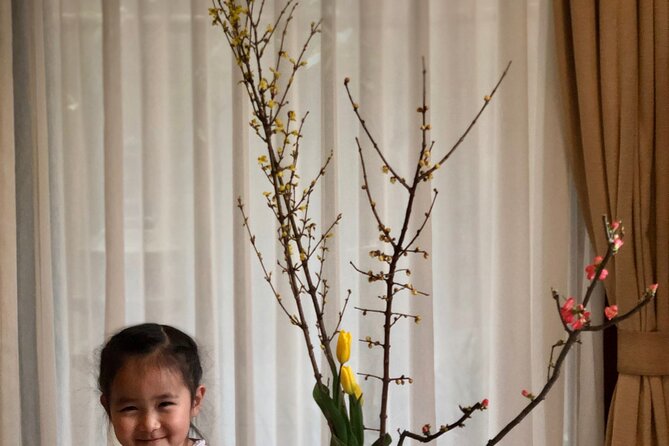
- Your arrangement is the focus: You make an ikebana piece yourself, receive comments and corrections, and take a photo afterward.
- Matcha and wagashi: Japanese tea and sweets are offered after the lesson if there is enough time.
- Good for families and beginners: The class has worked well for couples, parents and children, and even groups spanning three generations.
Learning Ikebana in Hiromi’s Tokyo Home
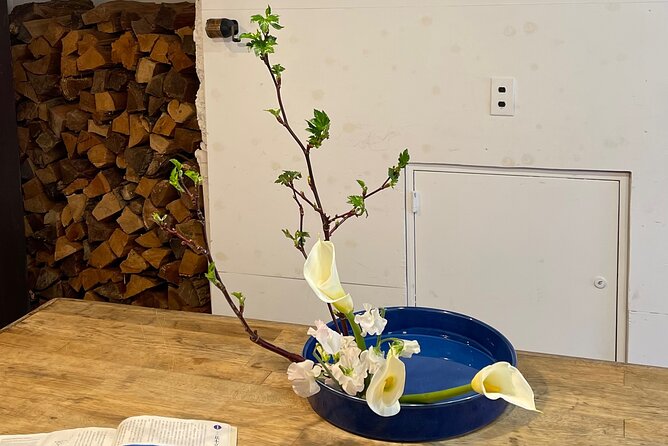
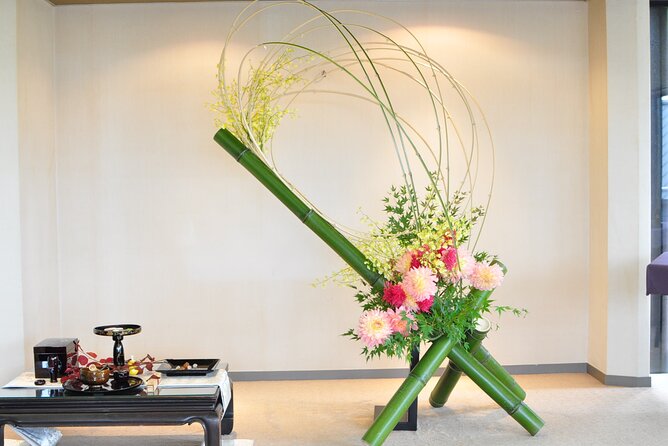
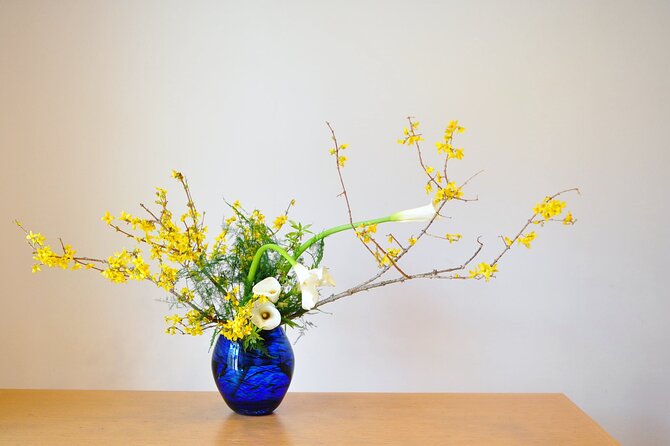
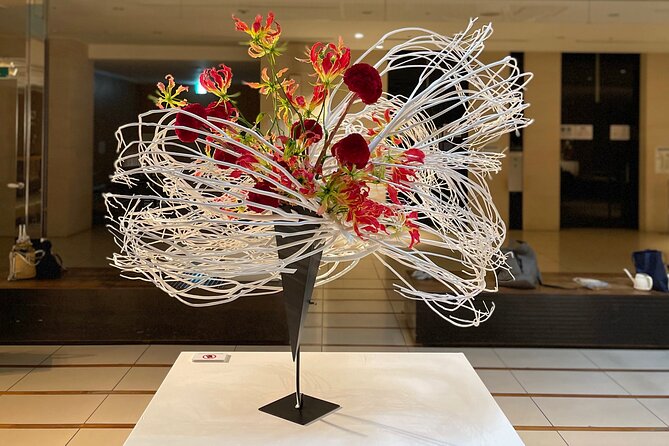
Ikebana is not simply flower arranging with a Japanese label. The lesson focuses on line, balance, space, and the character of each stem. You use relatively few flowers, so the finished arrangement is meant to show shape and movement rather than fill a large vase.
That makes this a pleasant choice after a busy day in Tokyo. You are not rushing between sights or trying to absorb a long lecture. You sit, watch Hiromi work, and then handle the flowers yourself. The quiet rhythm is part of the appeal.
The class takes place near Toritsu-daigaku Station in Meguro City. The meeting point is at the station area, and the experience returns to that same point at the end. The neighborhood itself gives you a glimpse of residential Tokyo, away from the neon and crowds of central sightseeing districts.
Hiromi teaches in English and explains the steps clearly. You do not need prior flower-arranging experience. The lesson can begin with the basics, or you can use the textbook to explore a style or approach that interests you.
If you're still narrowing it down, here are other tours in Tokyo we've reviewed.

The 90-Minute Lesson, Step by Step
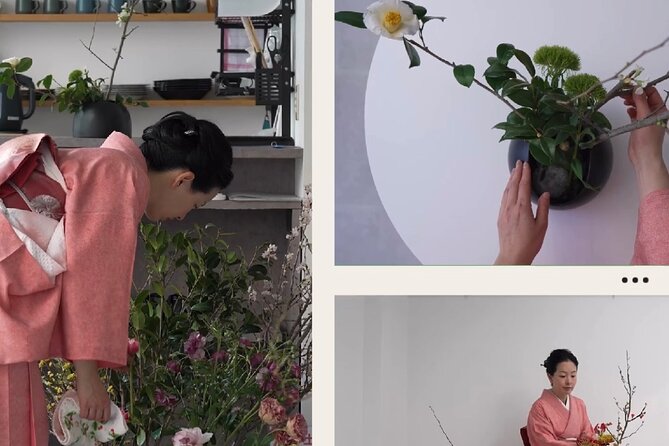
The class begins with an introduction to ikebana and its background. Hiromi uses a textbook as a guide and explains the basic principles before showing you how to work with the flowers.
Next comes the demonstration. Hiromi creates a sample arrangement while explaining what she is doing. You can watch how she cuts the stems, considers the angles, and places each element. This demonstration matters because ikebana can look simple at first glance, but small changes in height and direction alter the whole design.
Then you make your own arrangement. The class is not a watch-and-leave demonstration. You do the cutting and placing yourself, with Hiromi available to help as needed. She comments on the result, suggests changes, and may revise parts of the arrangement with you.
That balance is important. You get clear instruction without having the teacher take over your work. One of the strongest features of the experience is the room for personal taste. You can follow the basic form, but you still have a hand in the final shape.
At the end, you can take a photo of your arrangement. This is useful because ikebana is temporary. The flowers may not travel home with you, but a photograph preserves the work and gives you a reference if you want to try again.
The class lasts about an hour and a half. That is enough time for a proper first lesson, though not enough for an advanced course in several ikebana schools. If you want a broad survey of Japanese floral traditions, this may feel brief. If you want to make one arrangement and understand the basic ideas behind it, the timing is sensible.
What Makes the Japanese Room Special
The room adds something that a hotel meeting room could not. You may see a traditional Japanese-style room with tatami, along with the home’s garden and other details of ordinary domestic life.
That setting gives the class a stronger sense of place. You are not only learning about an art form. You are entering a private home and seeing how Japanese design uses simplicity, natural materials, and open space.
A tatami room also suits the mood of ikebana. The arrangement is not isolated from its surroundings. Its shape, empty space, and connection to nature make more sense when viewed in a room designed with those same ideas in mind.
The home setting does require a little flexibility. This is a personal studio rather than a purpose-built attraction with a large reception area or a fixed museum schedule. You should expect an intimate class with a host, not a polished production with many facilities.
That is a benefit for some people and a drawback for others. If you prefer personal contact and a local setting, the home studio is a major reason to book. If you want a broad group workshop with lots of equipment and a more formal classroom, this may not be your best fit.
Matcha, Wagashi, and a Gentle Finish
If time allows after the flower arrangement, Hiromi prepares matcha and Japanese sweets. The sweets may include wagashi, traditional Japanese confections served with tea.
This closing moment is more than a snack break. It gives you time to look at your arrangement, ask questions, and continue talking about Japan. Hiromi also invites questions about Tokyo and Japanese culture, so the conversation can extend beyond flowers.
The tea portion can include a basic introduction to tea ceremony if you are interested. It is not presented as a full tea ceremony course, and the main subject remains ikebana. Still, it adds another small connection to Japanese aesthetics and hospitality.
Keep the phrase if time allows in mind. The lesson comes first, and the tea and sweets are an added part of the experience rather than a guaranteed full ceremony. If this treat is the main reason you are booking, ask about the schedule when arranging your visit.
Hiromi’s Teaching Style and English
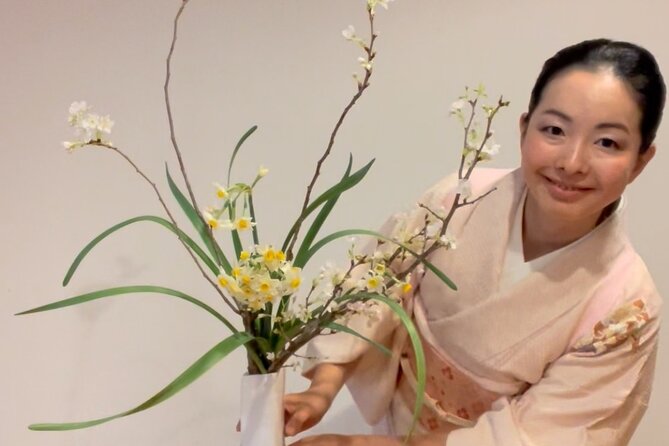
Hiromi is the central reason this experience works. She teaches in English and has been praised for speaking clearly, patiently explaining the process, and adjusting her help to the person in front of her.
That is especially useful for beginners. Ikebana has its own vocabulary and visual logic, but you are not left to guess why one stem is cut or placed in a certain way. Hiromi demonstrates first, then lets you try.
The lesson also appears comfortable for mixed-age groups. Families have included children, and a three-generation group found a way for a young child to enjoy freestyle ikebana. That does not mean every child will sit through the full class, but the flexible format gives families more room than a strict formal lesson.
Couples and solo visitors can also make good use of the private format. A partner who has never shown an interest in flower arranging may still enjoy the calm setting and hands-on work. The activity is creative without requiring artistic confidence.
Hiromi can also discuss continuing ikebana at home. Supplies have been available for purchase after class, which is helpful if you want to keep practicing once you leave Japan. Check current availability directly, since materials and sales are not described as a fixed part of every booking.




The Value of a $115.31 Private Experience
At $115.31 per person, this class costs more than a basic public craft workshop. The price makes more sense if you value the private setting, English instruction, personal corrections, and cultural details that come with the home visit.
You are paying for more than flowers and a vase. The fee includes access to a teacher’s time, a guided lesson, a finished arrangement, and a chance to see a Japanese room in a lived-in home. Matcha and sweets may also be included when the schedule permits.
The private format is another part of the value. Only your group participates, so you do not have to compete for the teacher’s attention. A couple can work at its own pace, while a family can ask for help without worrying about holding up a large class.
Still, you should be realistic about what the price does not buy. This is a 90-minute introduction, not a professional certification course or a full day of cultural study. You will leave with a first arrangement and basic principles, not mastery of ikebana.
For a special occasion, anniversary, family activity, or final afternoon in Tokyo, I think the price can be reasonable. For a budget-conscious visitor who simply wants to try arranging flowers once, a less private workshop may offer better value.
Who Should Book This Class
I would choose this for you if you want a quiet, personal activity that connects directly with Japanese culture. It suits first-time learners especially well, since the demonstration and guided practice make the art approachable.
It is also a good match for:
- Couples seeking a shared activity with a keepsake photo
- Families with children who enjoy hands-on creative work
- Solo visitors who prefer a calm local experience
- Anyone interested in Japanese homes, tatami rooms, tea, or traditional arts
- People who want to continue ikebana at home after the class
You do not need to be skilled with flowers. You also do not need to know anything about tea ceremony. Curiosity is enough.
This may not suit you if you want a fast-paced activity, a large social group, or a detailed tour of many Tokyo sights. The neighborhood and home setting are part of the experience, but this is not a sightseeing tour. The activity is centered on sitting down and paying attention.
Practical Details at Toritsu-daigaku Station
The meeting point is near Toritsu-daigaku Station at 1-chome-5-1 Nakane, Meguro City, Tokyo 152-0031. The experience ends back at the meeting point, so you can plan your next activity from there.
The location is near public transportation, which makes it easier to fit into a Tokyo day without arranging a private taxi. Since the class is in a home, pay close attention to the meeting instructions and allow enough time to find the meeting point.
A mobile ticket is provided, and confirmation is received when you book. The activity is private, so only your own group participates.
The experience requires good weather. If poor weather causes cancellation, you are offered another date or a full refund. You can also cancel for a full refund if you do so at least 24 hours before the start time. Changes or cancellations inside that 24-hour window are not accepted.
Most people can participate, though the supplied details do not give specific information about wheelchair access or other mobility needs. If that matters for you, contact the provider before booking.
How to Fit It Into Your Tokyo Plans
The 90-minute length makes this easy to place between other activities. I would avoid booking it immediately before a timed attraction on the opposite side of Tokyo, since the meeting and return point are in Meguro rather than near the main sightseeing hubs.
It also works well as a slower counterpoint to Tokyo’s crowded shopping streets and major stations. You can spend the morning sightseeing, then shift into a quieter residential setting for the afternoon.
The experience can be especially pleasant near the end of a trip. You leave with a photograph, a new skill, and perhaps supplies for making another arrangement at home. The class also creates a natural setting for questions about Japan that may not come up during a standard guided tour.
Because the tea and sweets depend on available time, do not schedule the class with an expectation of a long tea ceremony afterward. Treat that portion as a welcome extra.
Should You Book Hiromi’s Ikebana Experience?
I would book this class if you want an intimate, hands-on introduction to ikebana and are willing to pay for personal attention. Hiromi’s clear English, patient teaching, private home studio, and traditional Japanese room give the experience a strong sense of place.
The main caution is cost. At $115.31 per person, it is best for someone who values the setting and personal instruction, not someone looking for the cheapest activity in Tokyo.
For beginners, couples, families, and anyone drawn to Japanese art and quiet creative work, this is a thoughtful choice. You will make something yourself, learn why the arrangement works, and finish with a small taste of tea culture. That is a useful souvenir from Tokyo, even if the flowers themselves do not last.
FAQ
Where does the ikebana class take place?
The meeting point is near Toritsu-daigaku Station at 1-chome-5-1 Nakane, Meguro City, Tokyo 152-0031, Japan. The activity ends back at the meeting point.
How long does the experience last?
The class lasts approximately 1 hour and 30 minutes.
Is the lesson taught in English?
Yes. Hiromi teaches the lesson in English and explains the demonstration and practice steps clearly.
Is this a private activity?
Yes. Only your group participates in the activity.
Are matcha and Japanese sweets included?
If there is time after the lesson, Hiromi prepares matcha and Japanese sweets. Basic tea ceremony instruction may also be offered if you are interested.
What is the cancellation policy?
You can cancel at least 24 hours before the start time for a full refund. Cancellations and changes made less than 24 hours before the start time are not accepted. If bad weather or failure to meet the minimum number of participants causes cancellation, you are offered another date or a full refund.
More tours in Tokyo we've reviewed







Tokyo, compared.
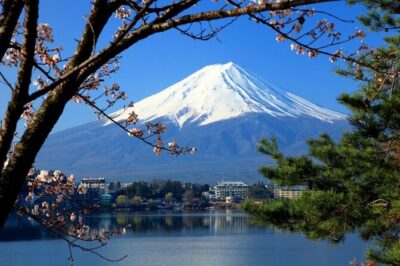 ★ 5.0Mt Fuji and Hakone 1-Day Bus Tour Return by Bullet TrainFrom $163
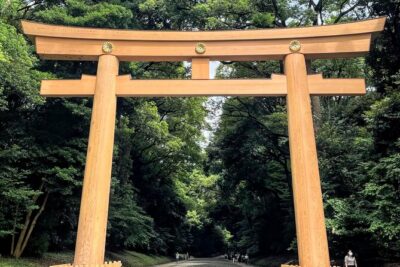 ★ 5.01-Day Tokyo Bus TourFrom $129
 ★ 4.6Tokyo: teamLab Planets TOKYO Digital Art Museum Entry TicketFrom $251 day
 ★ 4.0Mt Fuji & Hakone Cruise, Drum Show Bullet Train 1 Day from TokyoFrom $149
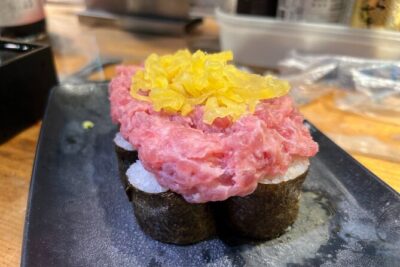 ★ 5.0Tokyo: Shinjuku Food Tour (13 Dishes at 4 Local Eateries)From $86
 ★ 4.4Tokyo Mt Fuji 5th St & Hakone Cruise Bus Tour w/Bullet TrainFrom $15410 hours