
Reviewed · COOKING CLASSES
Learn to Make Home Style Tempura Udon and Gyoza
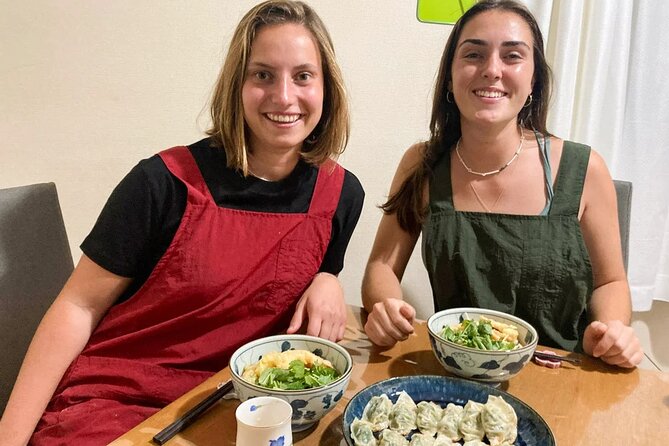
Tokyo’s best food lessons often begin with flour on your hands. In this private class near Nerima Station, Emi guides you through hand-kneaded udon, crisp tempura, and gyoza made from scratch. You finish by sitting down to eat the meal you prepared.
I like the personal instruction and the useful English recipe booklet, which turns a pleasant afternoon into something you can repeat at home. I also like the choice of gyoza filling, including a vegetable option, rather than a fixed menu.
The main consideration is timing. Two and a half hours is enough for a full meal lesson, but not enough for a broad survey of Japanese cooking. Groups of three or more should book two to three months ahead, especially in spring and autumn.
In This Review
- Key Points to Know Before You Book
- What This Nerima Cooking Class Is Really About
- Meeting Emi Near Nerima Station
- Kneading Udon Dough by Hand
- Preparing Dashi for the Udon
- Frying Tempura Without Losing the Crispness
- Filling and Folding Your Gyoza
- Sitting Down to Eat What You Made
- Is the $95.23 Price Fair?
- Who Will Enjoy This Experience Most?
- Planning Around Seasons and Cancellation
- Should You Book Emi’s Udon, Tempura, and Gyoza Class?
- FAQ
- Where does the cooking class begin?
- Where does the activity end?
- How long does the class last?
- How much does the experience cost?
- Is the class private?
- Which dishes will I make?
- What gyoza fillings are available?
- When should I provide my gyoza preference?
- Can vegetarian and pescetarian diets be accommodated?
- Is transportation included?
- Is an English recipe booklet included?
- What is included with the meal?
- How will the host contact me?
- When will I receive booking confirmation?
- Can I cancel for a full refund?
Key Points to Know Before You Book
- Knead your own udon dough: You make the noodles from scratch instead of simply assembling a prepared dish.
- Learn three Japanese staples: The class covers udon, tempura, and gyoza in one sitting.
- Cook privately with Emi: Your group receives direct instruction rather than joining a large public class.
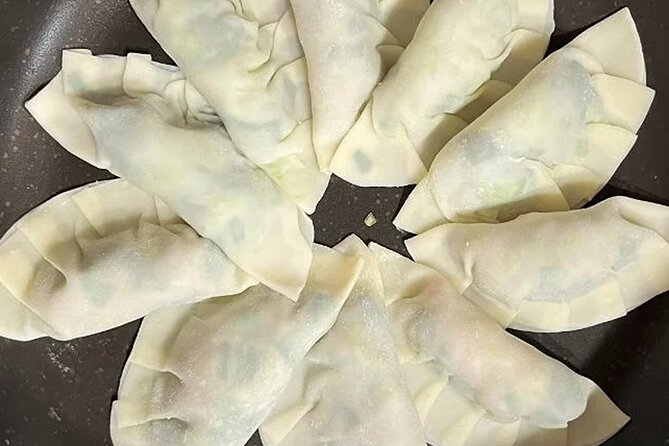
- Choose your gyoza filling: Select minced pork, minced pork with shrimp, or vegetables only when booking.
- Eat the finished meal: Your price includes udon with tempura and gyoza, along with barley tea.
- Take home practical instructions: An English recipe booklet helps you recreate the dishes after returning home.
What This Nerima Cooking Class Is Really About
This is a hands-on meal lesson, not a demonstration where you watch an instructor do all the work. You prepare the components yourself, ask questions as you go, and eat the finished dishes at the same studio.
The class takes place near Nerima Station in Tokyo. Nerima is not one of the city’s headline sightseeing districts, and that is part of the appeal. You are going to a local cooking space rather than a restaurant built around a quick tourist stop.
The experience lasts about two hours and 30 minutes. That gives Emi time to explain the methods, let you work through each recipe, and sit down with you for the meal. You should still expect a steady pace. Three dishes require preparation, cooking, and cleanup, so this is not a slow, leisurely lunch with long pauses.
The class is private, meaning only your group participates. I see that as a major advantage for anyone who wants to ask basic questions, repeat a technique, or adjust the pace. It is also useful for families and small groups with different levels of cooking skill.
Other cooking classes in Tokyo
Meeting Emi Near Nerima Station
You meet Emi at 1-chōme-3-5 Nerima, Nerima City, Tokyo 176-0001, near Nerima Station. Transportation to and from the meeting point is not included, so you need to arrange your own route and allow enough time to find the correct spot.
The exact studio arrangement depends partly on group size. For groups of three or more, the class is held in the cooking studio. That setting should give you a proper place to work through the recipes, but availability can become tight during spring and autumn.
You should provide a WhatsApp registered number when booking. This allows direct communication with the host, which matters in Tokyo when meeting instructions, timing, or last-minute details need to be clarified.
Confirmation arrives within 48 hours of booking, subject to availability. For a popular date, I would not wait until the last minute. The average booking lead time is 81 days, and groups of three or more are specifically advised to reserve two to three months ahead.
Kneading Udon Dough by Hand
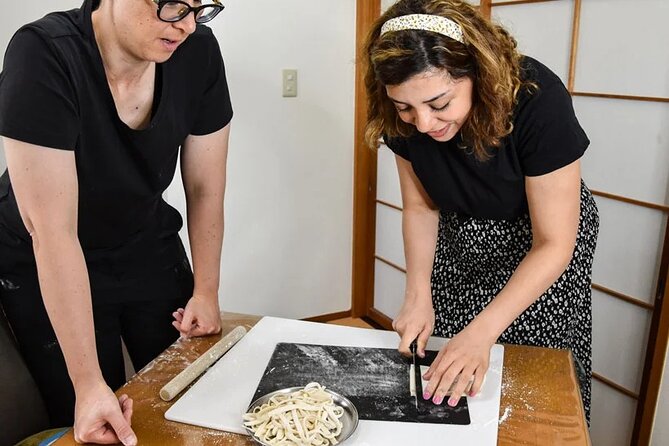
The udon portion gives the class its most tactile start. You knead the dough yourself, learning how the mixture changes as it becomes smooth enough to form noodles.
That matters because udon is easy to buy but less obvious to make well. The class lets you see the process behind the thick, chewy noodles served in Japanese homes and restaurants. You are not just learning a recipe. You are learning what the dough should feel like at each stage.
Emi’s teaching style is one of the strongest reasons to choose this activity. She explains not only what to do, but what to look for while doing it. That kind of guidance is helpful when written recipes use vague instructions such as mix until ready or cut into suitable pieces.
The recipe booklet supports this part of the class later. You can remember the broad method at home without relying on memory alone. Still, you should understand that homemade udon takes time and effort. The class gives you a workable introduction, but it does not turn the process into instant weeknight cooking.
Preparing Dashi for the Udon
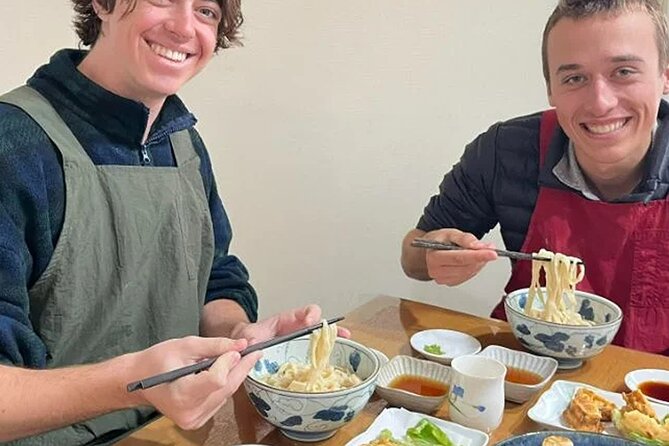
The udon is paired with dashi, the savory stock that gives the broth its Japanese character. You learn how to prepare it as part of the meal rather than treating the soup as an afterthought.
This is a useful detail for home cooks. Good noodles can be let down by a dull broth, while a carefully made stock makes a simple bowl feel complete. The class connects the noodles, soup, and toppings into one dish.
You also get barley tea while cooking. It is a small inclusion, but a practical one. Working around flour, filling, and hot oil for more than two hours can be thirsty work, and the tea gives you something refreshing between tasks.
The meal served afterward includes udon with tempura and gyoza. You get to judge the results while the techniques are still fresh in your mind. If a folding method or noodle texture needs more practice, you can ask Emi about it before leaving.
Frying Tempura Without Losing the Crispness
Tempura looks simple on a plate, but the texture depends on several small choices. In class, you learn how to prepare and fry the pieces so they come out crisp rather than heavy.
The useful part is not only eating hot tempura. It is learning the signs of a good result and seeing how the ingredients behave in the oil. Emi’s teaching focuses on practical cues, including preparation details such as how vegetables should be cut.
That is the kind of instruction I value in a cooking class. A recipe can tell you to fry until golden, but an instructor can show you what the batter and ingredients should look like along the way.
Hot oil also means you need to pay attention. The class is suitable for people who want to cook, not for anyone hoping to sit back while someone else handles the work. Families should consider the ages and confidence of children before booking, since the activity includes frying.
Other cooking classes in Tokyo




Filling and Folding Your Gyoza
For the gyoza, you choose one of three fillings:
- Minced pork
- Minced pork and shrimp
- Vegetables only
You must specify your choice when booking. This is especially important if someone in your group has a dietary preference. Vegetarian and pescetarian requirements can be accommodated with advance notice, but you should not wait until the class begins to raise the issue.
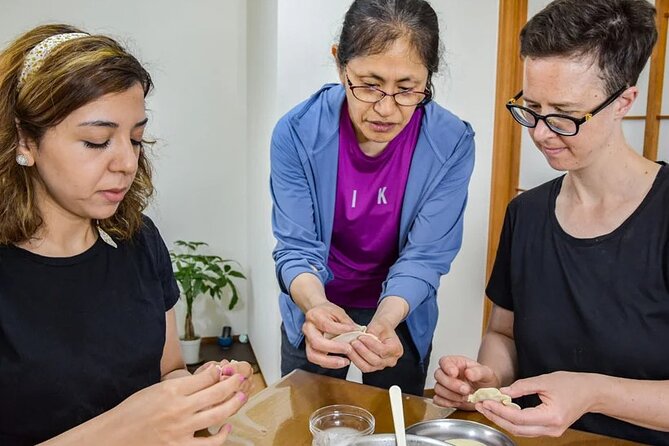
The folding stage is one of the class’s most approachable skills. You fill the wrappers, seal them, and learn how to shape them before cooking. Your first pieces may look less tidy than Emi’s, but the private format gives you room to practice without feeling rushed by a large group.
The choice of filling also makes the class easier to share among people with different tastes. One person can choose pork, another can choose pork and shrimp, and someone else can request vegetables. The available options are still limited, so this is not a fully custom menu.
The strongest praise for Emi centers on her warm, personable manner and clear explanations. She explains why each step matters, including preparation points such as cutting vegetables correctly. That makes the lesson useful for a confident home cook and a complete beginner alike.
Sitting Down to Eat What You Made
After the cooking, you sit down and eat the udon, tempura, and gyoza together. This final meal is more than a reward. It lets you see how separate techniques work together on one Japanese table.
The format also gives you time to talk with Emi about the food and about daily life in Japan. The experience is built around direct contact with a local instructor, not a scripted food tasting.
You should keep your expectations sensible. This is a home-style cooking class, not a formal restaurant meal. The value comes from participating, asking questions, and gaining methods you can use later. If you only want to eat excellent tempura, Tokyo offers easier options. If you want to understand how the dishes are made, this class makes more sense.
An English recipe booklet is included. That is one of the most useful souvenirs in the package. Small food souvenirs disappear quickly, while a recipe booklet can help you make the dishes for family and friends after your trip.
Is the $95.23 Price Fair?
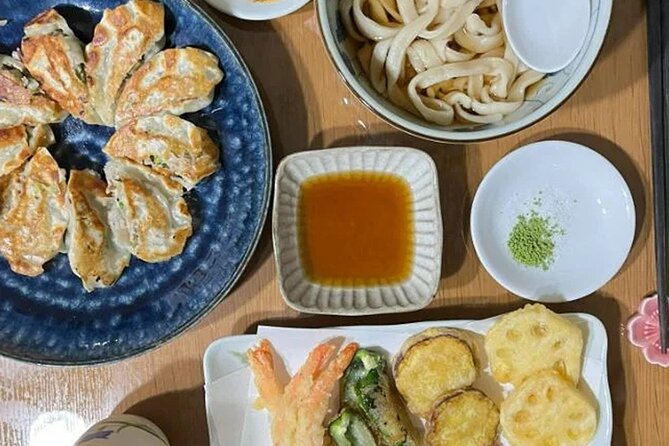
The price is $95.23 per person. At first glance, that may look high for a meal of noodles, dumplings, and fried vegetables. The comparison changes when you count the private teaching, ingredients, tools, barley tea, the meal, and the English booklet.
You are paying for instruction as much as food. A cheaper group class might be better value if you only want a quick cooking activity. This class makes a stronger case for its price if you want personal attention and a lesson you can repeat at home.
Private classes are also useful when your group has mixed needs. You can ask Emi to explain a technique again, request help with gyoza folding, or discuss vegetarian and pescetarian requirements in a direct setting.
The value is weaker for someone who already makes udon, tempura, and gyoza regularly. In that case, the social side and the Tokyo setting may still appeal, but you may not learn enough new technique to justify the cost.
Who Will Enjoy This Experience Most?
I would recommend this class to families, couples, friends, and food-focused visitors who want an active afternoon in Tokyo. It also suits anyone who likes bringing home a skill rather than another object.
It is a particularly good match for a parent and adult child or for a small group with different cooking backgrounds. Emi’s clear demonstrations and personal help can keep beginners involved while giving more experienced cooks useful detail.
The class is also a good fit for people with vegetarian or pescetarian needs, provided you tell the host in advance. The vegetable gyoza option gives you a clear choice, while the other dishes still need to be discussed with the host if your restrictions extend beyond the filling.
I would think twice if you dislike cooking, have very limited time, or mainly want a polished meal. The class requires participation, includes hot-oil cooking, and uses most of a half-day once transportation is added.
A single male participant cannot take part alone under the stated participation rule. If that applies to you, check the booking conditions before paying and do not assume you can join as a solo participant.
Planning Around Seasons and Cancellation
Spring and autumn are busy periods for the studio. For a group of three or more, reserving two to three months ahead is sensible. The average advance booking time of 81 days gives you a useful warning: popular dates may not remain open close to your trip.
Free cancellation is available if you cancel at least 24 hours before the local start time. Cancellations made less than 24 hours ahead are not refunded, and changes inside that window are not accepted.
The meeting point is also the end point, which keeps the activity simple. You arrange your own transportation, attend the class, eat your meal, collect the recipe booklet, and finish where you started.
Should You Book Emi’s Udon, Tempura, and Gyoza Class?
Book it if you want a private, practical lesson with a local cook and you like the idea of making three classic dishes in one sitting. The combination of personal instruction, a choice of filling, a full meal, barley tea, and an English recipe booklet gives the $95.23 price a reasonable basis.
I would especially choose it for a small group booking well ahead in spring or autumn. Skip it if you want a quick tasting, dislike kitchen work, or already know these techniques. For everyone else, Emi’s friendly teaching and useful explanations make this a strong way to spend two and a half hours in Tokyo.
FAQ
Where does the cooking class begin?
The class begins at Nerima Station, at 1-chōme-3-5 Nerima, Nerima City, Tokyo 176-0001, Japan.
Where does the activity end?
The activity ends back at the meeting point.
How long does the class last?
The class lasts approximately two hours and 30 minutes.
How much does the experience cost?
The listed price is $95.23 per person.
Is the class private?
Yes. Only your group participates in the activity.
Which dishes will I make?
You will make udon, tempura, and gyoza, then eat the completed meal.
What gyoza fillings are available?
You can choose minced pork, minced pork and shrimp, or vegetables only.
When should I provide my gyoza preference?
You should provide your preferred filling when booking.
Can vegetarian and pescetarian diets be accommodated?
Yes. Vegetarian and pescetarian requirements can be accommodated, but you must inform the host in advance.
Is transportation included?
No. Transportation to and from the meeting point is not included.
Is an English recipe booklet included?
Yes. You receive an English recipe booklet to take home.
What is included with the meal?
The price includes all ingredients and tools, udon with tempura and gyoza, and barley tea.
How will the host contact me?
You should provide a WhatsApp registered number when booking to support communication with the host.
When will I receive booking confirmation?
Confirmation is received within 48 hours of booking, subject to availability.
Can I cancel for a full refund?
Yes, if you cancel at least 24 hours before the experience start time. Cancellations made later are not refunded.
More Cooking Classes in Tokyo
More Cooking Classes in Tokyo
More tours in Tokyo we've reviewed







Cooking Classes, compared.
 ★ 5.0Ramen & Gyoza Cooking Class in Tokyo with Local Supermarket VisitFrom $122
 ★ 5.0Ramen and Sushi Cooking Class with Sake Pairing Set in TokyoFrom $79
 ★ 4.9Tokyo: Wagyu and 7 Japanese Dishes Cooking ClassFrom $673 hours
 ★ 5.0Tokyo Washoku 4-hour Cooking Class: From Market to TableFrom $79
 ★ 5.0Professional Ramen & Gyoza with Ramen Chef in a restaurant!From $159
 ★ 5.0Small-Group Wagyu Beef and 7 Japanese Dishes Tokyo Cooking ClassFrom $72