
Reviewed · SHINJUKU TOURS
Cherry blossom & Japanese Sake Tasting in Shinjuku
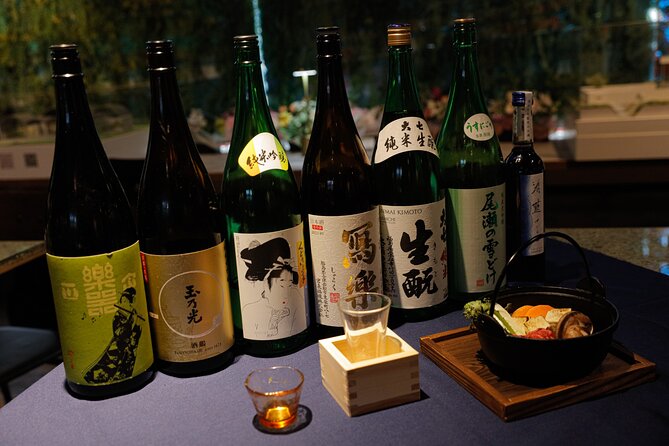
The clever part of this Shinjuku experience is its eight-sake progression. You begin with simpler pours around 15 to 16 percent alcohol, then move toward bottles with stronger aromas and more distinctive flavors. It gives you a clear path instead of asking you to judge unfamiliar sake all at once.
I like the food pairings, which help you notice how sake changes with what you eat. I also like the sweet finish with amazake, a rice-koji drink served as a dessert. The main consideration is simple: this is a short tasting, not a full meal or a long cultural tour.
In This Review
- Key points at a glance
- Eight sakes, one clear tasting path
- Shuma, music, and a relaxed Shinjuku setting
- Why the snack pairings matter
- Finishing with amazake
- The value of $39.02 for one hour
- Who will get the most from this tasting
- Practical timing and booking advice
- How to fit it into a Shinjuku day
- What makes this more than a flight of drinks
- Should you book this Shinjuku sake tasting?
- FAQ
- How long does the Japanese sake tasting last?
- Where does the activity start?
- Where does the activity end?
- How many sakes are included?
- Is food included?
- Is amazake included?
- Can anyone under 20 participate?
- What is the cancellation policy?
Key points at a glance
- Eight sakes from across Japan: Taste a broad selection of Japan-only bottles in one sitting.
- A sensible tasting order: Begin with lower-alcohol, easier-drinking sake before moving to more expressive flavors.
- Traditional snacks included: Small food pairings show how sake works with different tastes.
- Amazake ends the session: Finish with a sweet fermented rice drink often treated as a dessert.
- Shuma sets the mood: The host is associated with relaxed music, ambiance, and carefully matched sake and food.
- Easy one-hour format: Meet at A House With Flowers in Shinjuku, with the activity ending at the same address.
Eight sakes, one clear tasting path
Many first-time sake drinkers face the same problem: a menu can list several styles, but it does not tell you where to begin. This tasting solves that by arranging the pours from simpler to more distinctive.
The opening sakes usually sit around 15 to 16 percent alcohol. That is a useful starting point because you can focus on aroma, sweetness, acidity, and texture before stronger flavors enter the picture. The progression should help you notice small changes from one pour to the next.
You will taste eight carefully selected sakes, all available in Japan. That makes this a good introduction to the range of the drink, especially if your usual experience is limited to one warm cup at a restaurant.
The tasting is not presented as a technical exam. The tone is intended to be fun and accessible for newcomers, while still giving sake enthusiasts enough variety to compare. I would expect the most value from paying attention to how each pour feels different, rather than trying to remember every label.
Sake can be served at different temperatures, depending on the season and the food. That matters because warmth and chill can change how you notice its aromas and flavors. The supplied details do not specify the exact temperature of every pour, so you should not expect a fixed list of serving styles. The point is to see how sake can work in more than one form.
A few more Tokyo tours and experiences worth a look
Shuma, music, and a relaxed Shinjuku setting
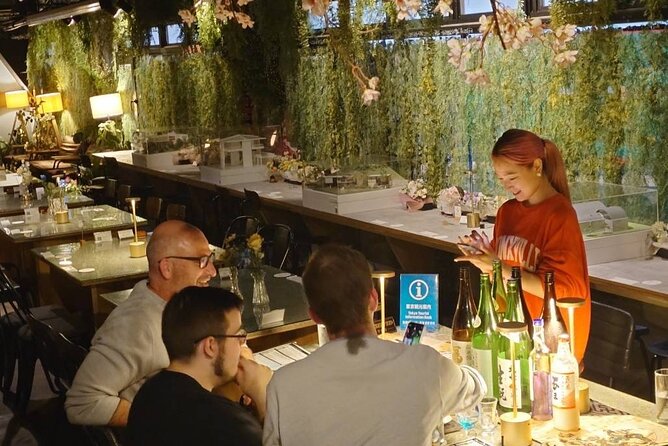
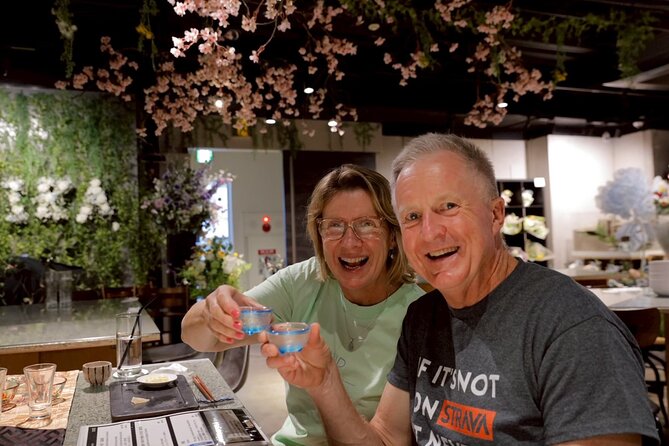
The host named for this experience is Shuma. The setting has been praised for its atmosphere, music, and friendly feel, which is important during a tasting. A stiff presentation can make unfamiliar drinks feel like homework. A relaxed room makes it easier for you to ask questions and admit which flavors you prefer.
The meeting place is A House With Flowers, at 6-7, Shinjuku 3-chome, Shinjuku City, Tokyo 160-0022, on the fourth floor of the Sixth Sanwa Building. Check the mobile ticket and confirmation carefully before setting out, since the address includes a building and floor rather than a large public attraction.
The location is near public transportation, but transportation to the meeting point is not included. You will need to make your own way there, and hotel pickup and drop-off are not offered. Build in a little extra time for finding the building and reaching the fourth floor, especially if you are unfamiliar with central Shinjuku.
The activity lasts about one hour and ends where it begins. That compact format works well before dinner, after shopping, or as one small part of a day in Shinjuku. It also limits the amount of time available for conversation, so you should view it as a focused tasting rather than an extended evening out.
Why the snack pairings matter
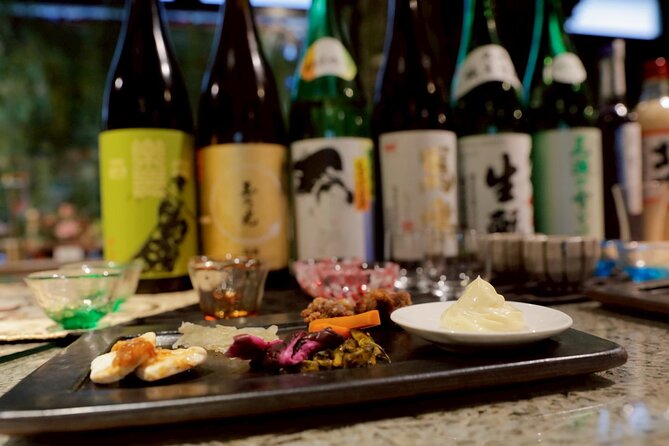
The food is not simply there to keep you from drinking on an empty stomach. Traditional Japanese snacks are included so you can see how sake changes alongside food.
A sip on its own may seem dry, sweet, light, or strongly aromatic. A bite of something salty or savory can make the same sake seem softer or more balanced. You do not need a trained palate to notice this. Take a sip, try the pairing, then take another sip. The contrast is often easier to detect than the flavor notes described by a host.
The food also gives the hour a more complete shape. Eight pours in succession could feel one-dimensional, while snacks create pauses and give you another way to compare each selection. Since additional meals and drinks are not included, however, do not count on this tasting to replace lunch or dinner.
The available information does not list the exact snacks. That is worth keeping in mind if you have allergies, dietary restrictions, or strong food preferences. Ask the provider before booking if you need precise ingredient information.
Finishing with amazake
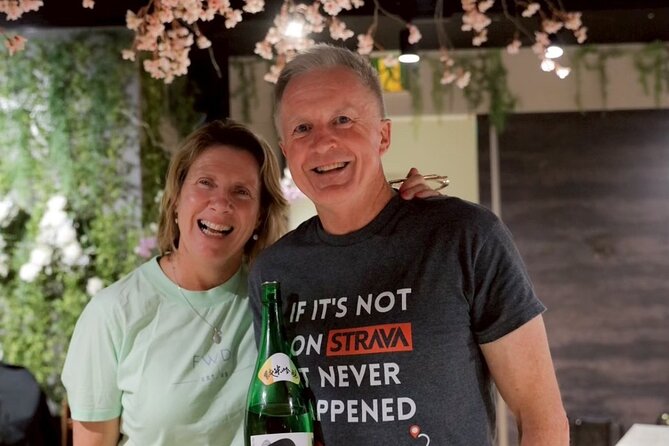
The final taste is amazake, a sweet fermented drink made from rice koji. It is often enjoyed in Japan as a dessert, so it provides a clear change from the alcoholic pours that come before it.
Amazake is sometimes called drinkable IV because of its reputation as a nourishing drink. In this experience, the practical point is its sweetness and its role as a gentle finish. After comparing eight sakes, a non-sake dessert drink gives your palate a different direction.
Do not confuse amazake with another alcoholic sake pour. The description presents it as a fermented rice drink and dessert, not as one of the eight sakes. Its inclusion is a nice touch because it shows another Japanese drink built from rice and fermentation.
For someone new to Japanese drinks, this last step adds context without turning the session into a lecture. You leave having tried both alcoholic sake and a sweet rice-based drink, with snacks linking the two.
The value of $39.02 for one hour
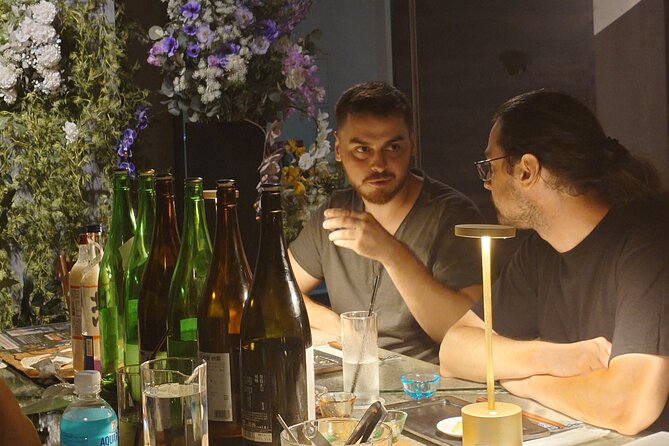
At $39.02 per person, the price is reasonable if you want a guided comparison of eight Japanese sakes in a central Tokyo setting. You are paying for the full tasting, the food pairings, the amazake, the host, and all fees and taxes. You are not paying for a meal, transportation, or drinks beyond the tasting.
The value improves if you are curious about sake but do not know how to order it on your own. Buying several bottles or glasses independently can become expensive, and you may not know how to compare them. Here, the sequence gives you a built-in reference point.
Enthusiasts may also find the price fair because the selection comes from across Japan and includes bottles available exclusively in Japan. The experience is still only about an hour, so anyone looking for a long evening of drinking will probably want to plan dinner separately.
I would compare this price with the cost of a casual Tokyo activity rather than with a full meal. If your goal is one focused cultural food-and-drink experience in Shinjuku, it offers solid value. If you want generous portions, a history lesson, or transportation included, the price covers less than that.

Who will get the most from this tasting
This works best for adults age 20 and over who enjoy trying regional drinks in a relaxed setting. The format is friendly to beginners because it starts with lower-alcohol, simpler sakes and builds gradually.
It also suits a sake fan who wants to compare several Japanese selections in one place. The eight-pour structure gives you more range than ordering one glass at a restaurant, while the snack pairings add another layer to the tasting.
Couples and small groups may appreciate the easy pace and short duration. You can fit it between other plans without giving up half a day. Solo participants can also take part, though the supplied information does not promise a private or small group. The maximum group size is 20 people.
This is not suitable for anyone under 20. Japanese law prohibits underage drinking, and participants under 20 cannot join because the activity serves Japanese sake. Anyone who does not drink alcohol should also choose another activity, since the central feature is the sake tasting.
Practical timing and booking advice
The experience is booked with a mobile ticket, and confirmation is received at the time of booking. Keep the confirmation available on your phone, along with the exact meeting address and floor information.
The activity is booked, on average, 36 days ahead. That does not guarantee that every date sells out, but it suggests that you should reserve early if your Tokyo schedule is fixed. This is especially useful if you want to place the tasting at a particular point in your Shinjuku plans.
The activity requires good weather. If poor weather causes a cancellation, you are offered another date or a full refund. It also requires a minimum number of participants, and if that number is not reached, you are offered a different date or experience, or a full refund.
You can cancel for a full refund up to 24 hours before the start time. Cancellations or changes made less than 24 hours before the start are not accepted for a refund, and all cut-off times use local Tokyo time. That 24-hour rule is manageable, but do not wait until the last morning if your plans are uncertain.
How to fit it into a Shinjuku day
Because the tasting lasts about an hour and starts and ends at the same place, it is easy to pair with other plans in Shinjuku. You might schedule it before a meal, after shopping, or during a short break from sightseeing.
Avoid treating the hour as a full dining stop. The included snacks are designed for pairing, not as additional meals, and additional food and drinks cost extra. Plan lunch or dinner separately if you expect to be hungry.
The meeting point is in Shinjuku, near public transportation, but no transport is arranged for you. I would use the address as a fixed point in your day and check the route before leaving your hotel. The building name and fourth-floor location matter more than simply searching for a broad neighborhood.
The title includes cherry blossoms, but the supplied details do not promise blossom viewing or a specific outdoor sakura stop. Book this for the sake tasting, food pairings, music, and setting. Do not assume that a cherry blossom walk is part of the hour unless the provider confirms it for your date.
What makes this more than a flight of drinks
The strongest feature is the order of the tasting. You are not simply handed eight unrelated glasses. Starting with simpler sake and moving toward more pronounced aromas gives you a way to understand the differences.
The second strength is the pairing. Food helps turn abstract flavor talk into something you can test yourself. You may not agree with every suggested match, and that is part of the point. Your own preference matters more than finding a correct answer.
The third is the ending. Amazake gives the session a distinct finish rather than stopping after the eighth alcoholic pour. It also introduces a Japanese drink that many visitors may not encounter during an ordinary restaurant meal.
The setting adds to the experience. Shuma is associated with good music, pleasant ambiance, and skillful matching of sake with food. Those details make the hour feel social and welcoming rather than formal.
The limits are just as clear. You do not receive transportation, a hotel transfer, a full meal, or unlimited drinks. The tasting is short, the group can reach 20 people, and exact sake labels, snack details, and serving temperatures are not provided in advance.
Should you book this Shinjuku sake tasting?
I would book it if you are at least 20, curious about Japanese sake, and want a compact activity with a clear beginning, middle, and end. The eight-sake sequence, traditional snacks, amazake, and relaxed atmosphere give you more substance than a single drink at a bar.
I would also choose it if you want something easy to place into a busy Tokyo schedule. At $39.02, it is a sensible spend for a guided tasting, provided you understand that the snacks are not a meal and transport is your responsibility.
Skip it if you do not drink alcohol, need detailed food information before booking, or want an outdoor cherry blossom tour. For everyone else, this is a practical introduction to sake with enough range to keep experienced drinkers interested.
FAQ
How long does the Japanese sake tasting last?
The experience lasts approximately one hour.
Where does the activity start?
It starts at A House With Flowers, Japan, 160-0022 Tokyo, Shinjuku City, Shinjuku, 3-chōme 6-7, Sixth Sanwa Building, fourth floor.
Where does the activity end?
The activity ends back at the meeting point.
How many sakes are included?
The tasting includes eight carefully selected Japanese sakes.
Is food included?
Traditional Japanese snacks are included for pairing with the sake. Additional meals and drinks are not included.
Is amazake included?
Yes. The tasting finishes with amazake, a sweet fermented drink made from rice koji.
Can anyone under 20 participate?
No. Participants must be at least 20 years old because the activity serves Japanese sake and underage drinking is prohibited under Japanese law.
What is the cancellation policy?
You can cancel up to 24 hours before the start time for a full refund. Cancellations or changes made less than 24 hours before the start are not accepted for a refund. If poor weather or insufficient participants causes cancellation, you are offered another date or experience, or a full refund.
More Shinjuku Tours in Tokyo

More tours in Tokyo we've reviewed









Shinjuku Tours, compared.
 ★ 5.0Tokyo: Shinjuku Food Tour (13 Dishes at 4 Local Eateries)From $86
 ★ 5.0Tokyo Bar Hopping Tour in Shinjuku (All-You-Can-Drink + Dinner)From $106
 ★ 4.9Tokyo: Shinjuku Food Tour (15 Dishes and 4 Eateries)From $853 hours
 ★ 5.0Best of Shinjuku: Izakaya Food Tour (4 Stops, 14+ Tastings)From $92
 ★ 4.9Tokyo: Shinjuku Local Bar and Izakaya Guided Walking TourFrom $343 hours
 ★ 5.0Tokyo Shinjuku Chopsticks Making ClassFrom $20