
Reviewed · TOKYO FOOD TOURS
Tokyo: Shibuya Food Tour, Neon Lights & Local Flavors
Shibuya is at its best after dark, when Hachiko Square, Shibuya Crossing, Center Gai, and the surrounding streets glow with signs and moving crowds. This small-group walk adds a useful local-food angle, taking you from convenience-store classics to onigiri, takoyaki or a Korean-style corndog, and Japanese sponge cake.
I like the four included tastings and the chance to see ordinary Japanese food shops alongside famous sights. I also like the mix of stops: Miyashita Park and Tokyu Hands give the evening more range than a simple restaurant crawl. The main consideration is price. At $119 per person, this makes sense if you value a guide and several tastings, but it is not a cheap way to buy dinner.
In This Review
- Key points to know before booking
- Why Shibuya works so well after dark
- Miyashita Park offers a calmer first look
- Shibuya Crossing, then convenience-store favorites
- Center Gai brings the noise and the next bite
- Don Quijote is sensory overload in the best way
- A smaller onigiri stop adds local flavor
- Tokyu Hands shifts from food to Japanese design
- A café finish lets the evening slow down
- Is $119 good value for this Shibuya walk?
- Who will enjoy this experience most?
- Practical details for a smoother evening
- Should you book the Shibuya Food Tour?
- FAQ
- Where does the tour begin?
- Where does the tour end?
- How early should I arrive?
- What food is included?
- Are drinks or additional meals included?
- What languages does the guide speak?
- Can dietary restrictions be accommodated?
Key points to know before booking
- Hachiko and Shibuya Crossing begin the evening: You meet beside the famous dog statue and walk straight into one of Tokyo’s best-known scenes.
- Four Tokyo food tastings are included: Expect examples such as onigiri, an egg sandwich, fried chicken, takoyaki or a Korean-style corndog, and fluffy sponge cake.
- The tour uses a small group: That should make busy streets and food stops easier to manage than a large coach outing.
- Shopping is part of the experience: Don Quijote and Tokyu Hands show two very different sides of Japanese retail, from odd bargains to design goods.
- It is a walking tour in all weather: Wear comfortable shoes and bring suitable clothing for rain, cold, or heat.
- The tour returns to Hachiko Square: You do not need to arrange a second pickup point at the end.
Why Shibuya works so well after dark
Shibuya can feel like a lot at first. Trains arrive, screens flash, music spills from shops, and people move in every direction. A walking tour gives you a simple route through the district, with food stops breaking up the sightseeing.
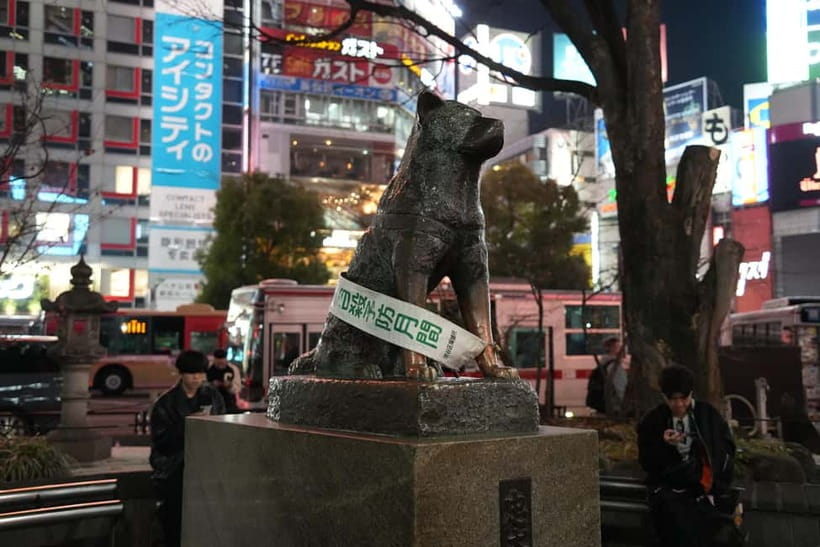
The evening begins at Hachiko Square beside the Hachiko statue. The guide shares the story of the loyal dog whose statue became a meeting point and a city symbol. This is a smart place to start because the statue is easy to identify, though the square can be crowded and confusing at busy times.
You should arrive at least 10 minutes early for check-in. Look for the guide holding an Amigo Tours sign. The guide speaks English and Spanish, which makes this a practical choice if you prefer one of those languages for explanations about food and local customs.
The tour is rated 4.4 out of 5 from seven ratings, with especially strong praise for the food choices, the places visited, and the guide’s explanations. That is a small sample, so I would treat the score as a useful signal rather than a guarantee. The consistent theme is clear: food is the heart of the evening.
A few more Tokyo tours and experiences worth a look
Miyashita Park offers a calmer first look
From Hachiko Square, the route includes Miyashita Park, a modern urban park with shops, restaurants, and a rooftop recreation area. It gives you a change of pace from the station district and shows how Tokyo turns limited city space into a place for shopping, dining, and public life.
The rooftop setting also offers different views of Shibuya than you get from street level. Do not expect a long park visit or a quiet garden walk. This is a city park with commercial spaces around it, so its appeal comes from the contrast between open air, retail, and the dense streets nearby.
I like this stop because it keeps the tour from becoming a chain of food counters. You get a little architecture and city design before the next round of snacks. If you are mainly seeking a sit-down meal, though, Miyashita Park is not a substitute for one.
Shibuya Crossing, then convenience-store favorites
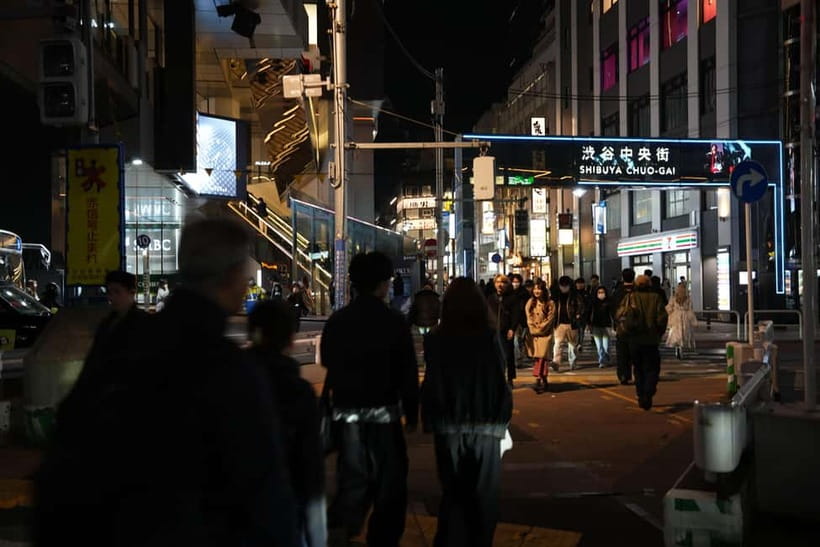
The route moves toward Shibuya Crossing, the huge intersection seen in countless photographs and films. The crossing is famous, but it becomes more interesting when your guide explains how to approach it and where to look. You get the full visual effect as streams of people cross in several directions, with giant screens and buildings forming the backdrop.
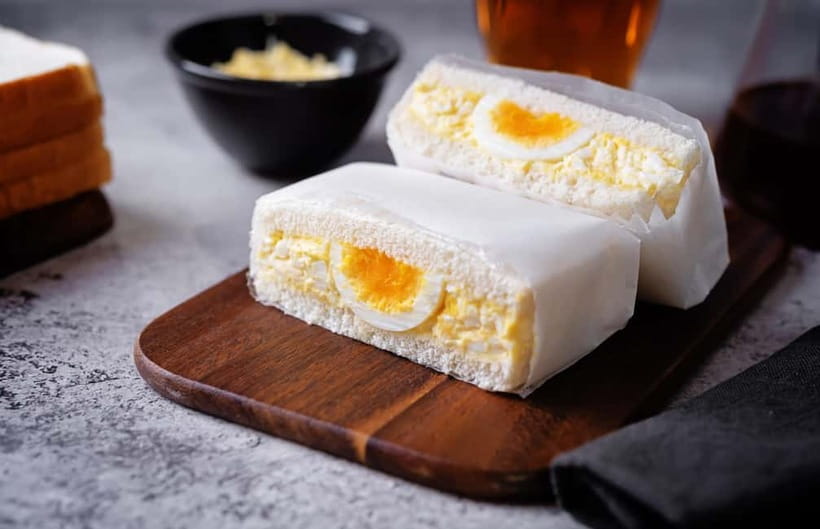
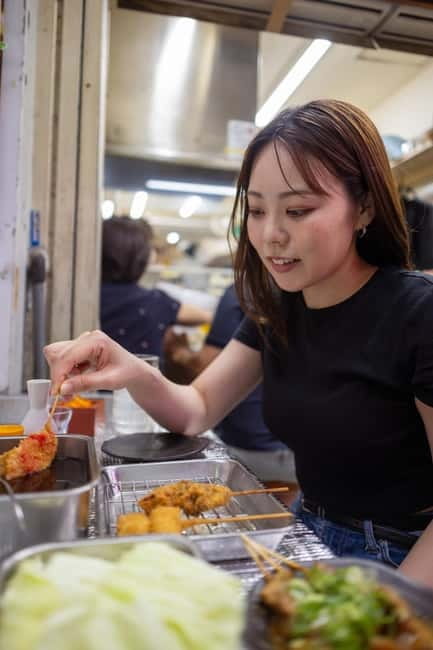
The food stop here is a Japanese konbini, or convenience store. These shops are a major part of daily life in Japan, and they offer far more than drinks and packaged candy. The planned tastings include familiar items such as an egg sandwich, onigiri, and crispy fried chicken.
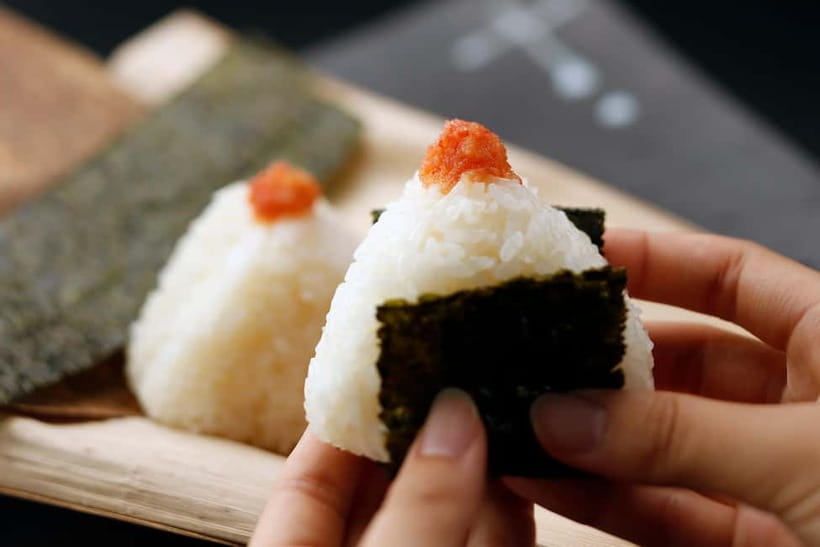
Onigiri are rice snacks wrapped or filled with ingredients, and they are among the easiest Japanese foods to understand and enjoy. They are portable, inexpensive, and available everywhere. The egg sandwich is another useful introduction to Japanese convenience-store food, especially if you want to see why a quick shop meal can be taken seriously.
The food is not served as a formal course. You are sampling everyday items while walking through one of Tokyo’s busiest districts. That is part of the point, but you should keep your expectations realistic. This is a street-food and snack experience, not a full restaurant dinner.
Center Gai brings the noise and the next bite
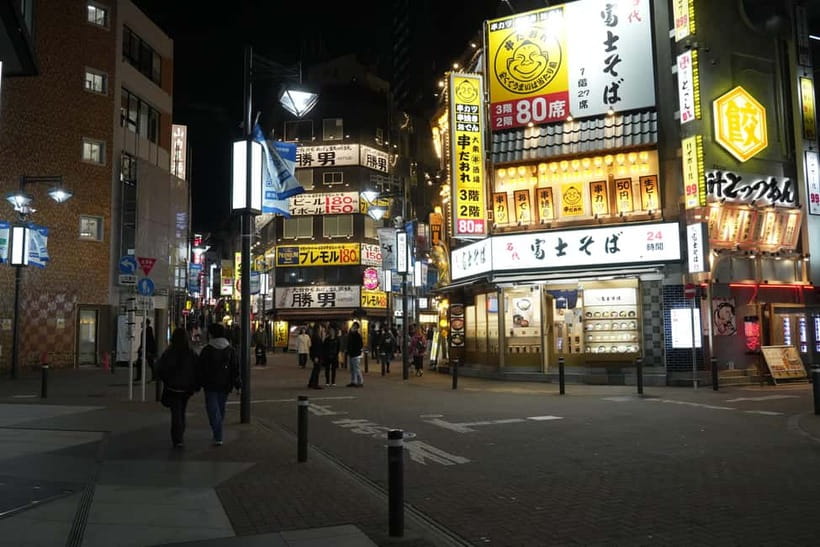
Center Gai is one of Shibuya’s main entertainment streets. It is lined with shops, quick-service restaurants, signs, and places connected to the district’s evening activity. The route gives you a chance to see Shibuya beyond the crossing itself.
A later tasting may be a Korean-style corndog or takoyaki. Takoyaki are round savory batter snacks, generally associated with Osaka but widely enjoyed across Japan. A Korean-style corndog adds a different texture and flavor to the route. Since the tour promises four iconic Tokyo dishes while presenting several food examples, the exact selection may depend on the day and the food stops available.
The guide’s role matters here. Center Gai is easy to walk through but hard to absorb on your own. With a bilingual guide, you can ask questions while you move, rather than stopping to translate every menu or sign. The guide also helps keep the group together in crowded streets.
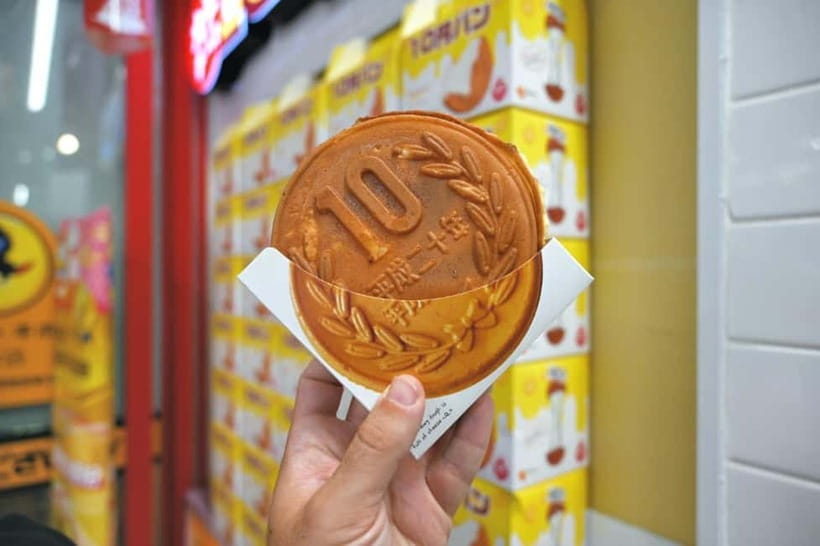
The itinerary includes picking up a 10-yen coin as a small keepsake. It is a modest detail, but it gives you a physical reminder of the evening and adds a playful touch to the shopping and snack stops.
Don Quijote is sensory overload in the best way
Don Quijote is one of Japan’s best-known discount stores, and the Shibuya branch is a useful stop for anyone curious about Japanese shopping habits. Shelves are packed with snacks, household goods, beauty products, novelty items, souvenirs, and unusual everyday products.
This is not a polished department store. The crowded displays and huge range are the attraction. You might find edible gifts, small souvenirs, or simply products that make you wonder who designed them and why they are sold in six flavors.
The tour does not include personal shopping expenses, so bring your own spending money if you want to buy something. The guide can point out items, but you should not confuse the visit with a dedicated shopping trip. You will have time to look around as part of the larger walk, not unlimited time to browse every aisle.
For me, this is one of the most useful stops for first-time visitors. It shows a side of Tokyo that grand department stores do not. It is practical, strange, crowded, and fun.
A few more Tokyo tours and experiences worth a look

A smaller onigiri stop adds local flavor
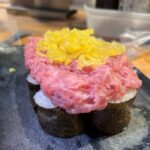
After the larger store, the route includes a more focused onigiri stand. This creates a nice contrast with the convenience-store version earlier in the evening. You can compare the simple rice snack in a more specialized setting and see why onigiri remains such a popular part of Japanese food culture.
The tour is designed around food you can understand quickly. You do not need advanced knowledge of Japanese cuisine to enjoy rice, fillings, fried chicken, sponge cake, or takoyaki. At the same time, the guide can add context that you would miss if you simply bought snacks on your own.
Four tastings are included in the $119 price. Drinks and additional meals are not included, so plan for extra spending if you have a large appetite. The included food may be enough for a light dinner, but I would not book this as your only substantial meal of the day.
The food aspect received the strongest praise in the available feedback. The descriptions repeatedly focus on delicious dishes, good food stops, and clear explanations. That matches the structure of the tour: the sights provide the setting, but the snacks provide the main reason to join.
Tokyu Hands shifts from food to Japanese design
The evening continues at Tokyu Hands, a store known for stationery, creative supplies, design goods, household items, and clever products. It is a different shopping experience from Don Quijote. Don Quijote leans toward discount variety and novelty, while Tokyu Hands puts more attention on making, organizing, writing, and design.
This stop will appeal to you if you like practical souvenirs. You may find stationery, small creative goods, or objects that are easier to pack than large decorative items. The tour does not specify a shopping allowance or included products, so purchases are your responsibility.
Including Tokyu Hands also gives the evening a broader view of Shibuya. You are not only seeing neon signs and eating quick food. You are also looking at how Japanese stores present ordinary objects with care and imagination.
The timing is useful. After several busy streets and food stops, browsing in a store gives you a more relaxed way to finish the sightseeing portion. If shopping is not your interest, this will likely be the least essential stop for you.
A café finish lets the evening slow down
The tour ends with a break at a cozy café, where you can sit and reflect on the route before returning to Hachiko Square. This is a welcome change after walking through crowded streets and standing at food counters.
The café stop is not described as an included drink or meal, so assume that anything you order there costs extra. It is best viewed as a chance to rest rather than a final included course.
Ending where you began is convenient. You return to the Hachiko area instead of being left in an unfamiliar part of Shibuya. From there, you can continue your own evening or head back to your accommodation, though the tour itself does not include onward transportation.
Is $119 good value for this Shibuya walk?
The price is $119 per person, which places this firmly in the guided-experience category rather than the casual snack-tour category. You are paying for a small group, a bilingual English and Spanish guide, route planning, explanations, and four tastings across several locations.
The value is strongest if you want someone else to organize the evening. Shibuya is easy to reach, but choosing good food stops, handling a crowded route, and understanding what you are eating takes time. The tour combines several popular sights with food that you could technically buy yourself, but the guide turns those purchases into a connected experience.
The value is weaker if your main goal is simply to eat a large dinner. Extra food and drinks cost more, and the listed tastings are snack-sized by nature. You may prefer to spend $119 on a restaurant meal or explore Shibuya independently if you are comfortable navigating Tokyo.
The small-group format helps justify the cost. It should be easier to hear the guide, ask questions, and stay together than on a large group outing. Still, the streets and shops themselves are public places, so the price is mainly for guidance and food coordination, not exclusive access.
Dietary restrictions can be accommodated with advance notice. Tell the operator before the tour rather than waiting until you arrive. The experience is not suitable for wheelchair users, and the route involves walking, crowded streets, and standing at food stops.
Who will enjoy this experience most?
I would recommend this tour to first-time visitors who want an organized introduction to Shibuya after dark. It suits you especially well if you like trying several small foods rather than sitting down for one long meal.
It is also a good fit for shoppers who want both the odd finds at Don Quijote and the design-focused goods at Tokyu Hands. The tour gives you a starting point for returning to places on your own later.
The experience may appeal to solo visitors and couples who want company for an evening walk. Families with older children could enjoy the bright signs, unusual stores, and approachable food, though the crowded streets may be tiring for young children.
You should think twice if you dislike walking, need step-free access, or want a quiet evening. Shibuya is loud and busy, and the tour operates in all weather. Comfortable shoes are essential, and you should dress for the forecast.
Practical details for a smoother evening
Meet at Hachiko Square, next to the Hachiko statue, at least 10 minutes before departure. Look for the Amigo Tours sign and allow extra time to find the square if you are coming through Shibuya Station.
Wear shoes you can walk in comfortably. Bring a camera for the crossing, neon streets, food, and shop displays, but keep it secure in crowded areas. Pets are not allowed.
The tour includes English and Spanish support. It ends back at the original meeting point. You can reserve now and pay later, which helps if your schedule is still changing, and cancellation is allowed up to 24 hours in advance for a full refund.
Because the route runs in all weather, rain or cold can affect how enjoyable the walk feels. Check the forecast and bring suitable clothing. The food stops and shopping visits are indoors at points, but the route between them is on foot.
Should you book the Shibuya Food Tour?
Book it if you want a guided evening that combines Shibuya’s famous sights with easy-to-try Japanese food. The best parts are the four tastings, the contrast between a konbini and a specialized onigiri stand, and the mix of Center Gai, Don Quijote, Tokyu Hands, and Miyashita Park.
Skip it if you are looking for a full dinner, a low-cost activity, or a slow restaurant-focused night. At $119, the tour earns its price through convenience, explanations, and variety rather than large portions.
For a first Shibuya visit, I see this as a useful orientation with plenty of flavor. You get the classic crossing and Hachiko, but you also leave with a better sense of what people buy, snack on, and browse in the district after dark.
FAQ
Where does the tour begin?
The tour begins at Hachiko Square next to the Hachiko statue. The guide will be holding an Amigo Tours sign.
Where does the tour end?
The activity ends back at the original meeting point near Hachiko Square.
How early should I arrive?
Arrive at least 10 minutes before the departure time for check-in.
What food is included?
The tour includes tastings of four iconic Tokyo dishes. Listed examples include onigiri, an egg sandwich, crispy fried chicken, takoyaki or a Korean-style corndog, and Japanese sponge cake.
Are drinks or additional meals included?
No. Additional meals and drinks not mentioned in the itinerary are not included, and personal expenses are separate.
What languages does the guide speak?
The tour provides a bilingual guide in English and Spanish.
Can dietary restrictions be accommodated?
Yes, dietary restrictions can be accommodated with prior notice.
More Food Experiences in Tokyo

More Tokyo Food Tours in Tokyo
More Shibuya Tours in Tokyo
More tours in Tokyo we've reviewed




Tokyo Food Tours, compared.
 ★ 5.0Tokyo: Shinjuku Food Tour (13 Dishes at 4 Local Eateries)From $86
 ★ 4.9Tokyo: Shinjuku Food Tour (15 Dishes and 4 Eateries)From $853 hours
 ★ 5.0Best of Shinjuku: Izakaya Food Tour (4 Stops, 14+ Tastings)From $92
 ★ 5.0Tokyo Night Foodie Tour in Shinjuku – Seasonal Sushi, Wagyu BeefFrom $111
 ★ 5.0Eat and Drink Like a Local: Tokyo Ueno Food Tour-Taverns&RamenFrom $95
 ★ 5.0Tokyo: Shibuya Food Tour (13 dishes and 4 Eateries)From $77