
Reviewed · WORKSHOPS
Kaisendon and Sashimi Cutting Workshop
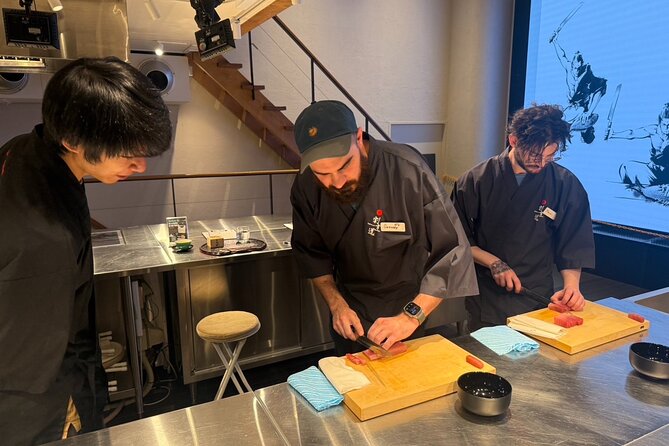
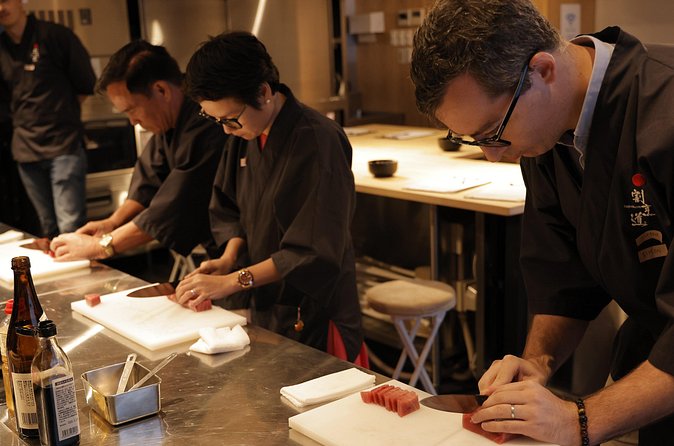
The best part of this Tokyo workshop is that you do not simply watch a chef prepare sashimi. Naoya Kumagai demonstrates Japanese knife work, then gives you a sashimi knife and lets you practice the cutting yourself before arranging the fish on rice for a homemade kaisendon.
I like the small group, capped at four people, and the clear progression from flour dumpling practice to real sashimi. I also like that the $160 price includes lunch, sake, tools, instruction, a certificate, and a 10% discount at the first-floor shop. The main consideration is the short format: this is a focused sashimi-cutting class, not a full course in Japanese knives or sharpening.
In This Review
- Key points at a glance
- What this Tokyo workshop actually teaches
- Naoya Kumagai’s demonstration sets the tone
- The flour dumpling practice is more useful than it sounds
- Cutting sashimi is the heart of the 90-minute class
- Building your own kaisendon makes the meal personal
- A schedule that moves quickly from greeting to tasting
- Four people is the right size for knife practice
- What the $160 price includes
- Who will enjoy this class most
- Should you book the Kaisendon and Sashimi Cutting Workshop?
- FAQ
- How long does the Kaisendon and Sashimi Cutting Workshop last?
- Where does the workshop take place?
- What time does the workshop start?
- What food is included?
- Do I use a real sashimi knife?
- How many people can join the class?
- Can I cancel for a full refund?
Key points at a glance
- Practice before handling fish: You begin with flour dumplings, which gives you a low-pressure way to learn the knife motion.
- A very small class: The maximum group size is four, allowing close guidance from Naoya and the workshop team.
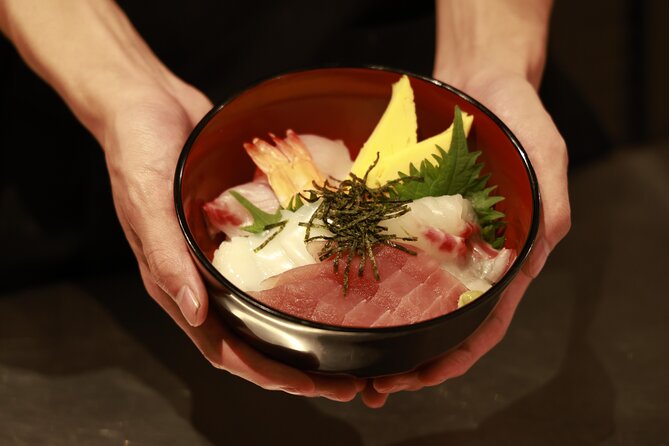
- You eat what you make: Your sliced sashimi becomes a kaisendon with vinegared rice, accompanied by miso soup.
- Sake is included: Sake tasting is available during the meal, along with the included lunch.
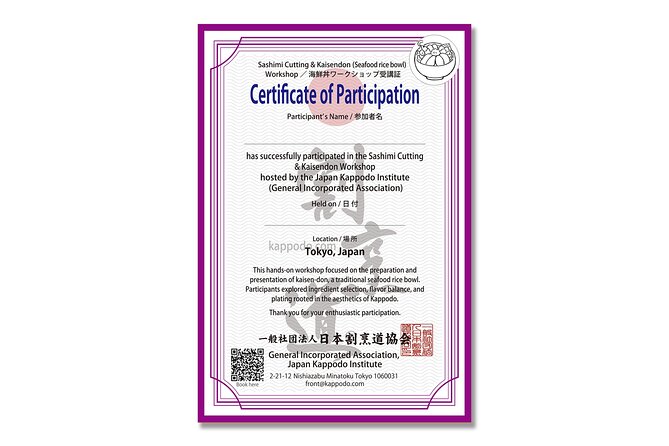
- A practical Tokyo souvenir: You receive a participation certificate and 10% off purchases at the first-floor shop that day.
- A narrow lesson focus: Choose this class for sashimi cutting and seafood bowls, not knife sharpening.
What this Tokyo workshop actually teaches
Kaisendon means a seafood bowl, usually built from vinegared rice and sashimi. The appeal here is not just the meal. You learn how the knife, the fish, and the angle of the cut work together.
The class opens with a short explanation of sashimi knives and Japanese knife techniques. Naoya then gives a demonstration, so you can watch the motion before trying it yourself. That order matters. Sashimi cutting is less about force than control, and a demonstration helps you see how the blade should travel.
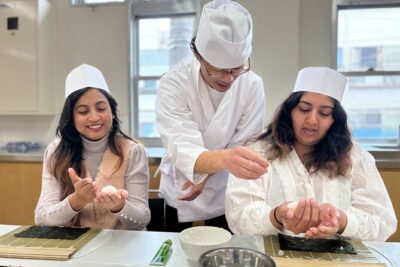
You then practice with flour dumplings. This is a smart teaching step because it lets you think about grip, pressure, and direction without worrying about wasting fish. After that, each participant cuts a piece of sashimi with a sashimi knife.
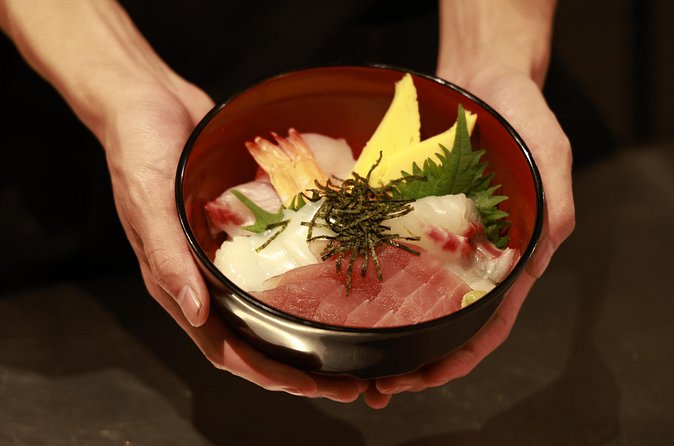
The final task is to arrange the fish over vinegared rice and make your own kaisendon. You finish with miso soup and the option of sake tasting. I like this format because the meal gives the lesson a clear purpose. You are not practicing a technique only to put the knife down and leave. You use the result immediately.
A few more Tokyo tours and experiences worth a look


Naoya Kumagai’s demonstration sets the tone
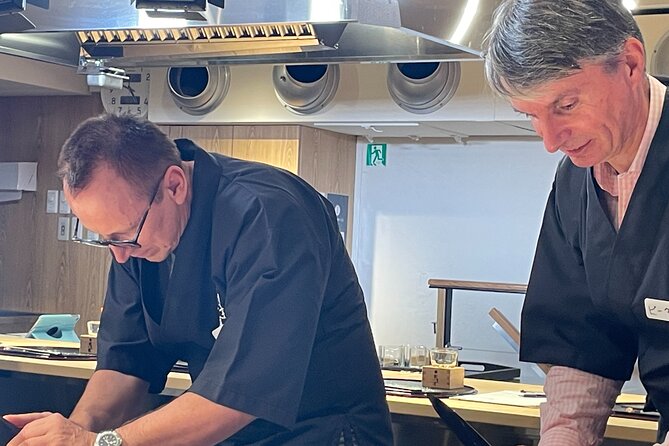
The instructor, Naoya Kumagai, is central to the class. His role includes explaining Japanese knife methods and showing how to use the knife properly. English guidance is available, and the workshop team includes an interpreter, Weixin, who has been praised for making the instruction easy to follow.
That language support is useful in a knife class. A small difference in wording can change how you hold the blade or move it through the fish. You should still expect a practical lesson rather than a long lecture, but the format gives you time to ask questions and receive direct help.
The teaching also seems friendly and relaxed. The class is designed for participation, not for watching a formal performance from a distance. That makes it a good fit if you want a hands-on cultural activity but do not consider yourself an experienced cook.
One point deserves clear attention. The supplied information includes praise for knife care and sharpening, but this particular seafood bowl class is described as a short sashimi-cutting course. If sharpening, vegetable cutting, and detailed knife maintenance are your main goals, you should book the separate Tokyo Keen Japanese Knife and Sashimi Workshop instead.
The flour dumpling practice is more useful than it sounds
The flour dumpling exercise may seem less exciting than the fish, but it is one of the class’s practical features. You get a chance to learn the feel of the knife before moving on to sashimi.
For a first-time user of a sashimi knife, this removes some pressure. You can concentrate on a smooth cut instead of hacking at the fish or worrying about making a mistake in front of the instructor. The exercise also gives Naoya a chance to watch your technique and correct it early.
You should not expect a full professional knife-training course in this short session. Still, the sequence is well judged for beginners. It offers a basic lesson in control, angle, and movement, then moves quickly to the food you came to work with.
This is also where the class differs from a standard cooking demonstration. You are not only shown a finished dish. You get a small but real lesson in the action behind it.
Cutting sashimi is the heart of the 90-minute class
After the practice round, you cut sashimi yourself. The supplied schedule describes this as individual practice with a sashimi knife, following the instructor’s demonstration.
The emphasis is on learning how different cutting angles affect the fish. That is a useful detail because sashimi is not simply raw fish placed on a plate. The cut influences the texture, size, and presentation of each piece.
I would approach this part with realistic expectations. You are unlikely to leave after 90 minutes with the precision of a sushi chef. You can, however, expect to understand more about why Japanese knives are shaped and used in particular ways, and you will have tried the technique under supervision.
This is a strong choice for someone considering a Japanese kitchen knife purchase. The included 10% discount at the first-floor shop may add value if you are already planning to browse knives or cooking tools. Do not buy a knife solely because the discount is available, though. The class is a useful introduction, but it is not presented as a complete sharpening or knife-maintenance course.
Building your own kaisendon makes the meal personal
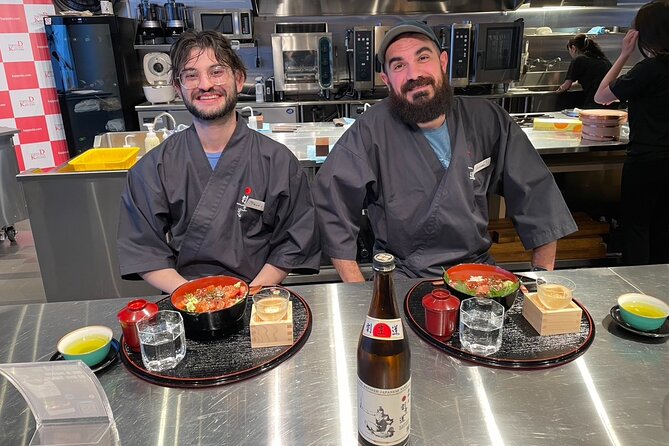
Once the cutting practice is finished, you assemble the seafood bowl. The base is vinegared rice, topped with the sashimi you have prepared.
This final step is simple, but it gives the class a satisfying shape. You learn a technique, use it on the fish, and then see the result as a complete Japanese dish. The meal is not an unrelated restaurant stop added at the end.
The seafood bowl is included in the price, as are miso soup and alcoholic beverages. Sake tasting is available during the tasting period. If you enjoy Japanese food but prefer an activity with a clear end product, this structure works well.
The meal also makes the $160 cost easier to assess. You are paying for instruction, use of specialized tools, a small class, the food, sake, a certificate, and access to the shop discount. It is not cheap for 90 minutes, but it is more than a basic lunch and more than a chef demonstration.
The value depends on your priorities. If you want a low-cost meal, this is poor value. If you want a guided food activity with a practical skill and a small group, the price is easier to justify.




A schedule that moves quickly from greeting to tasting
The published timetable shows a tightly planned session:
- Registration begins around 15 minutes before the class.
- The greeting and introduction follow.
- Naoya gives a lecture on sashimi knives.
- The knife demonstration comes next.
- Participants practice first with flour dumplings, then with sashimi.
- You assemble the kaisendon.
- The class ends with tasting, miso soup, and available sake tasting.
The full duration is about 1 hour and 30 minutes. That is enough time for a focused lesson, but not enough for a broad tour of Japanese food culture or a long knife seminar.
There is an important timing detail to check before you go. The booking information gives a 1:00 pm start at Kappodo H.Q. and Tokyo D kitchen Studio, while the detailed schedule also shows sessions beginning at 11:00 am and 1:00 pm, with registration at 10:45 am or 12:45 pm. Confirm the exact session time on your booking confirmation and arrive for registration before the stated start.
The meeting point is in Nishiazabu, Minato City, at DK Building, 2-chōme 21-12, Tokyo 106-0031. The activity ends back at the same location. No private transportation is included, but the studio is near public transportation.
Four people is the right size for knife practice
The maximum group size is four. That is one of the most important details in the booking information.
A small class matters when everyone is using a sharp knife. You want enough room to work, and you want the instructor to notice if your grip or cutting motion needs adjustment. A larger group could make the demonstration easier to watch but the practice less personal.
The class is also likely to feel more like a lesson than a staged attraction. You have a better chance to ask about the knife, cutting angles, and the preparation of sashimi without waiting behind a crowd.
The group limit can cut both ways. If you are hoping for a lively social event with many people, this may feel quiet. If you prefer direct instruction and a calmer setup, four participants is a strong advantage.
What the $160 price includes
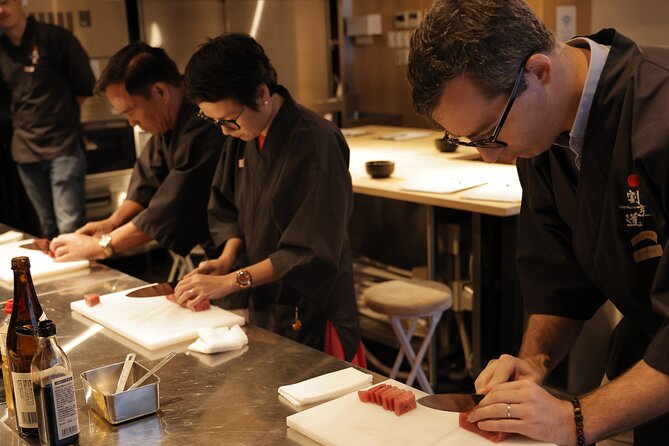
The package includes all tools used during the lesson, a tour guide, alcoholic beverages, lunch, and a participation certificate. Your lunch is the kaisendon you prepare, served with miso soup.
The same-day 10% discount at the first-floor shop is another useful extra. It matters most if you are shopping for a Japanese knife or related kitchen goods. The discount should be treated as a bonus, not as the main reason to book.
Private transportation is not included. You need to make your own way to the Nishiazabu meeting point and return from there. Since the class ends at its starting location, the activity is easy to combine with other plans in Tokyo, but you should allow time to find the building.
The booking includes free cancellation if you cancel at least 24 hours before the local start time. Within 24 hours, the payment is not refunded, and late changes are not accepted. The class also requires a minimum number of participants. If the provider cancels because that minimum is not met, you are offered another date or activity, or a full refund.
Who will enjoy this class most
I would recommend the workshop to you if you fit one or more of these descriptions:
- You enjoy Japanese food and want to do more than eat it.
- You are curious about Japanese knives and want basic hands-on practice.
- You want a short activity that fits into a Tokyo sightseeing day.
- You prefer small groups and direct instruction.
- You like leaving a class with something you prepared yourself.
- You are considering buying a Japanese knife and want to understand its use first.
It should also suit couples, friends, and solo participants who enjoy practical activities. The small group means you do not need to be an expert cook to take part.
I would be more cautious if you want detailed knife sharpening, vegetable preparation, or a long cooking course. This class has one main aim: learning to cut sashimi and turn it into a seafood bowl.
Should you book the Kaisendon and Sashimi Cutting Workshop?
Book it if you want a compact, personal food lesson with a real meal at the end. The small group, English support, named instructor, practice with flour dumplings, sashimi cutting, sake, and the shop discount give the class more substance than a simple food tasting.
At $160, it is best viewed as a specialty workshop rather than an inexpensive lunch. You are paying for access to instruction and tools, not just the bowl of seafood. I think the value is strongest for curious cooks, food-focused visitors, and anyone interested in Japanese knives.
Skip it if your main goal is knife sharpening or a full cooking course. For those aims, the separate knife workshop is the better match. Also check the exact start time, since the information lists both morning and afternoon sessions.
FAQ
How long does the Kaisendon and Sashimi Cutting Workshop last?
The workshop lasts approximately 1 hour and 30 minutes.
Where does the workshop take place?
It starts and ends at Kappodo H.Q., Tokyo D kitchen Studio, DK Building, 2-chōme 21-12, Nishiazabu, Minato City, Tokyo 106-0031.
What time does the workshop start?
The booking information lists a 1:00 pm start. The schedule also shows morning and afternoon sessions, so confirm the exact time on your booking confirmation.
What food is included?
The seafood bowl you make is included, along with miso soup. Sake tasting is also available, and alcoholic beverages are included.
Do I use a real sashimi knife?
Yes. Each participant uses a sashimi knife after receiving an explanation and demonstration of Japanese knife techniques.
How many people can join the class?
The maximum group size is four participants.
Can I cancel for a full refund?
Yes. You can cancel at least 24 hours before the local start time for a full refund. Cancellations or changes made within 24 hours are not refunded or accepted.
More Workshops & Classes in Tokyo
More tours in Tokyo we've reviewed










Workshops, compared.
 ★ 5.0Sushi Making Tokyo Roll and Authentic Japanese Sushi ClassFrom $59
 ★ 4.9Tokyo: Roll and Authentic Sushi Making Class in AsakusaFrom $581h 40m
 ★ 5.0Tokyo Shinjuku Chopsticks Making ClassFrom $20
 ★ 4.9Tokyo: Sushi Making Class in a Happi Coat near a Famous SpotFrom $421h 30m
 ★ 4.8Chopstick Making Workshop in GinzaFrom $251 hour
 ★ 5.0Tokyo Sushi Making Class in Tsukiji with Professional ChefFrom $49