
Reviewed · WORKSHOPS
Handmade Japanese Glass Art Sandblasting Workshop in Tokyo
The best part of this Tokyo activity is that you do not just buy a Japanese souvenir, you make one. In a 90-minute glass sandblasting class, you choose a design, work with provided tools, and turn a plain glass into a personal reminder of Japan. I like the tiny group size, capped at four, and I like that the workshop owner, Aki-san, gives patient, step-by-step help.
The main trade-off is time. Ninety minutes is enough for one finished piece, not a full art course. You also need to reach the workshop in Asakusabashi yourself, since hotel pickup is not included. Still, the central meeting point, easy public transportation access, and modest price make this a practical break from sightseeing.
In This Review
- Key points to know before you book
- Making a Japanese souvenir instead of buying one
- What happens during the 90-minute class
- Why the four-person limit matters
- A patient teacher and a welcoming first step
- Choosing a motif that feels like your Japan
- The sandblasting process, explained plainly
- A useful break from Tokyo sightseeing
- Is the $53.43 price good value?
- Who should book this workshop?
- Booking and cancellation details to keep in mind
- Should you book the glass art workshop?
- FAQ
- How long does the Japanese glass art workshop last?
- Where does the activity begin and end?
- How many people can join the workshop?
- What designs can I use on the glass?
- Are materials and instruction included in the price?
- Can I cancel for a full refund?
Key points to know before you book
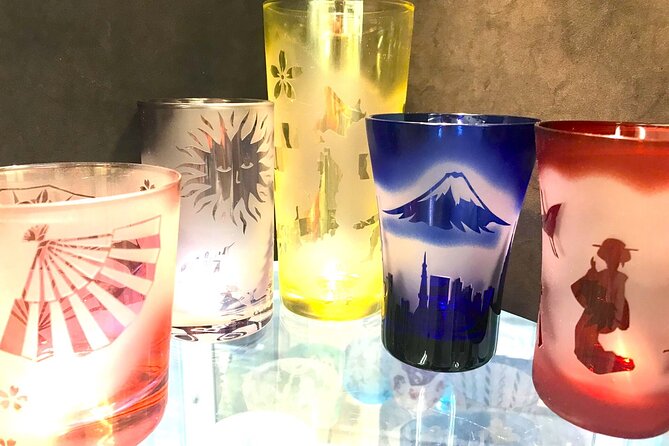
- You make one personal glass keepsake: Choose from Japanese images such as Mount Fuji, geisha, kimono patterns, and samurai.
- The group never exceeds four people: This gives you room to ask questions and receive direct help.
- Aki-san teaches the process step by step: The class suits beginners, children, adults, and people with some art experience.
- All materials and tools are included: You pay one fee for the lesson, supplies, and consumption tax.
- The class lasts about 90 minutes: Plan it as a focused creative activity, not a long studio session.
- You return to the starting point: The workshop begins and ends at 1-chōme-26-12 Asakusabashi in Taito City.
Making a Japanese souvenir instead of buying one
Tokyo gives you endless chances to shop, but a purchased trinket rarely carries the same memory as something you make yourself. This workshop changes the usual souvenir routine. You leave with a decorated glass shaped by your own choices, including the motif and the final arrangement.
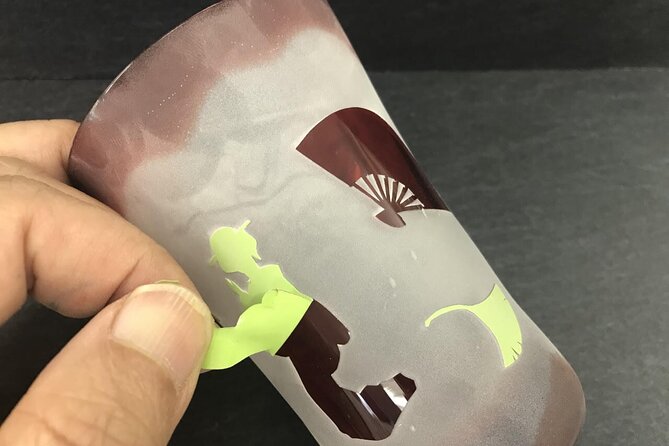
The available Japanese designs give the activity a clear sense of place. You might work with Mount Fuji, kimono patterns, geisha, samurai, or other images supplied at the workshop. That choice matters because you are not simply decorating a random object. You are selecting a small visual reminder of Japan that suits your own trip.
The finished piece is described as colorful, and it can serve as a drinking glass or display item, depending on how you want to use it. Since the class is designed for beginners, you do not need drawing skills or prior sandblasting experience. You receive the materials, tools, and instruction needed to complete the project.
I see this as a better fit for someone who values a personal souvenir over a cheap mass-produced one. It also works well if you have already spent several days visiting temples, shopping streets, and museums and want an hour and a half of slower, hands-on activity.
A few more Tokyo tours and experiences worth a look



What happens during the 90-minute class
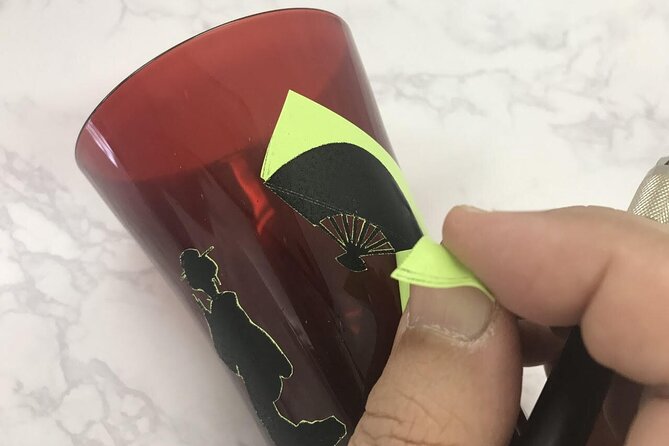
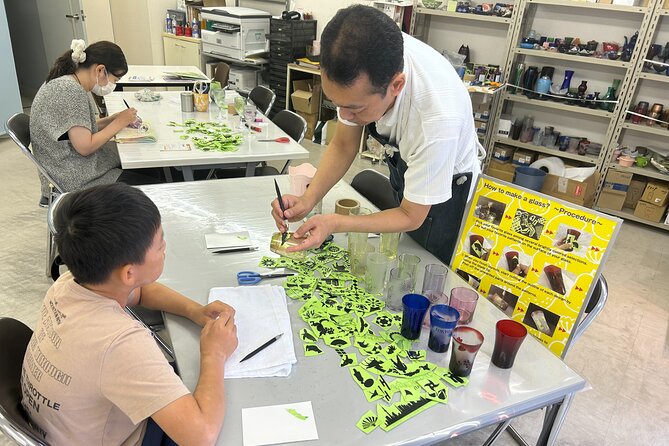
The session is short enough to fit into a Tokyo sightseeing day, but long enough to feel like a real activity. You begin by getting settled at the workshop and looking over the design choices. The workshop provides many pictures, so you can select an image and decide how you want your glass to look.
The next stage is instruction. Aki-san explains the basics of the glass sandblasting technique and shows you how to use the supplied tools. The step-by-step approach is important here. Sandblasting is not a skill most people practice at home, so clear guidance keeps the process approachable for first-time participants.
You then work on your selected design. The activity requires attention, but it is not presented as a race. One particularly useful feature is the small group limit. With no more than four people, you can ask for help when you need it instead of waiting behind a large class.
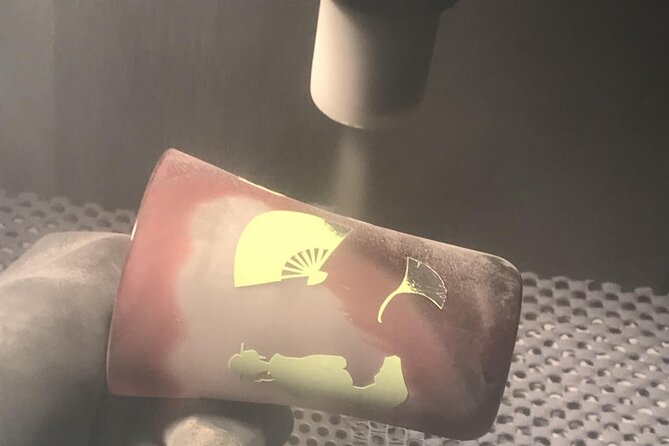
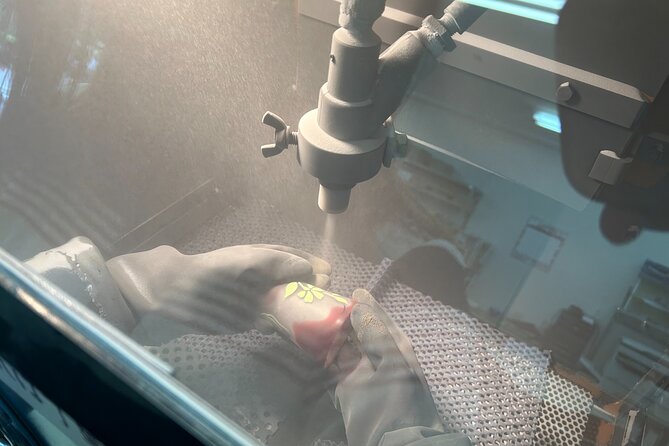
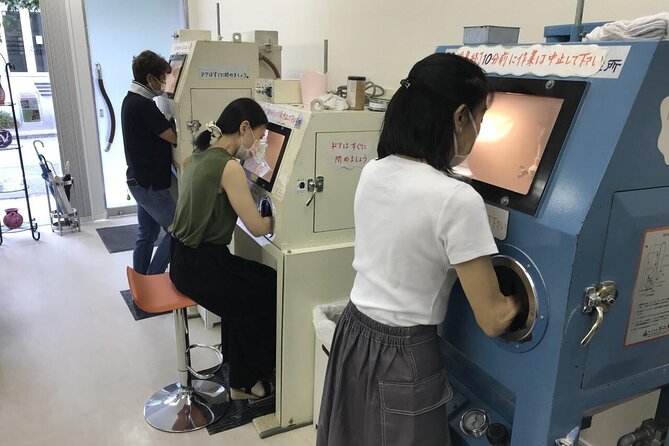
The sandblasting machine brings the chosen pattern to life on the glass. This is the point where a printed image or simple plan becomes a finished object. The process gives the glass a personalized surface and creates the distinctive look that makes the souvenir feel handmade.
At the end, you have a completed piece to take home. The class does not include a separate tour of Tokyo or several craft projects. Its strength is focus: you spend the full session making one keepsake and learning a little about the technique behind it.
Why the four-person limit matters
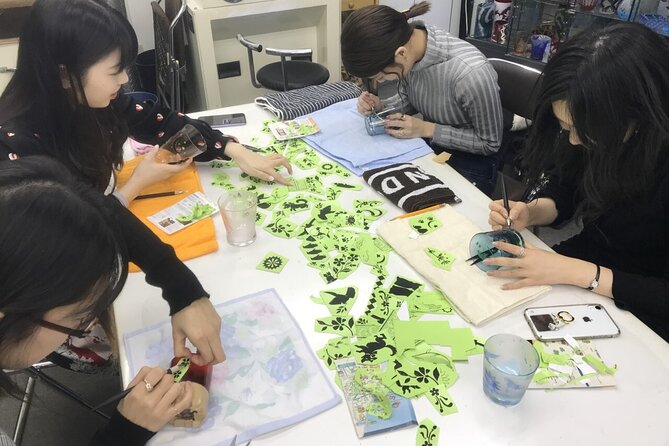
Many creative classes sound personal until you arrive and find yourself in a room full of people. That is not the setup here. The maximum of four participants gives the workshop a quieter, more direct feel and leaves room for individual questions.
I would especially value this arrangement if I were nervous about using unfamiliar equipment. You can receive help with the tools, ask for clarification about the design, and get feedback as you work. The instruction is not just a short demonstration followed by a hands-off activity.
The small capacity also makes the class useful for mixed groups. One person may be comfortable with art, while another may be trying anything like this for the first time. The format allows each participant to work at a suitable pace within the same 90-minute session.
A small group does mean availability can be limited. This activity is booked an average of 88 days in advance, so I would reserve it early if it is important to your Tokyo plans. That lead time may reflect the four-person cap as much as the activity’s popularity.
A patient teacher and a welcoming first step
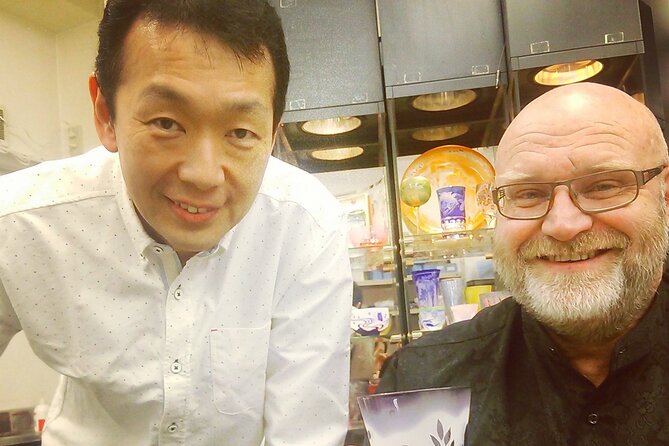
Aki-san is the workshop owner and provides the instruction. The personal nature of the class is one of its main advantages. The teaching is described as patient and helpful, which is just what you want when an activity involves unfamiliar tools and a permanent design.
You may arrive early and find a display of the artist’s work outside the workshop. One participant arrived before the scheduled time and found an easel with their name on it. Because the studio was ready and the owner was available, that person was brought inside early. This is a small detail, but it gives you a useful tip: arriving a little early may make the meeting process easier, though you should still follow your booked start time unless the workshop invites you in.
The glasswork on display can also help you picture the end result before you begin. If you are unsure which motif to choose, seeing completed pieces may help you decide between a bold Mount Fuji image, a more decorative kimono pattern, or a character-based design such as a geisha or samurai.
You should not expect a formal lecture on Japanese craft history. The value is practical instruction and personal attention. Aki-san helps you complete the project, rather than turning the class into a long talk.
Choosing a motif that feels like your Japan
The design stage is where the souvenir becomes personal. The workshop provides many pictures, so you are not forced to invent an image from scratch. This is helpful for children, anyone who does not draw, and anyone who wants to spend the limited class time actually making the glass.
Mount Fuji is an obvious choice, but it is not the only one. Kimono patterns can give the piece a more decorative look. Geisha and samurai bring a character-based image, while other Japanese motifs may suit you better if you want something less familiar.
Think about where the glass will go when you get home. A bold design may work well as a display piece, while a simpler pattern may feel more suitable for regular use. The supplied images and direct guidance let you make this decision without needing specialist art knowledge.
The class is also a good activity for families. Children and adults can create their own pieces, and the project offers a clear result within one sitting. Since the age range is not specified, I would confirm any age concerns when booking, especially for younger children who may need close adult supervision around workshop tools.





The sandblasting process, explained plainly
Sandblasting uses a machine to alter the glass surface and create the chosen design. You do not need to arrive knowing how the technique works. The lesson covers the basics, and the tools and materials are supplied.
The most appealing part is the visible change from plain glass to decorated artwork. You begin with a simple object and finish with a personalized surface. That transformation gives the activity more substance than a quick coloring project.
At the same time, you should keep your expectations realistic. This is a beginner class lasting about an hour and a half. You are learning enough to make one attractive, colorful glass, not mastering every part of professional glasswork.
The workshop’s patient instruction helps balance that limitation. You can focus on making careful choices and following the process rather than worrying about technical perfection. A handmade object usually has small signs of the maker’s hand, and that is part of its appeal.
A useful break from Tokyo sightseeing
Asakusabashi is in Taito City, and the meeting address is 1-chōme-26-12 Asakusabashi, Tokyo 111-0053. The activity is near public transportation, but hotel pickup and drop-off are not included. You need to allow time to reach the studio independently.
That arrangement gives you flexibility. You can fit the class between other plans instead of committing to a vehicle or a full-day tour. It also means you should check your route and leave enough time to find the exact entrance. The workshop may have an easel outside with your name, but do not rely on that as your only navigation plan.
The class ends where it begins, so you do not need to arrange a second pickup point. Afterward, you can continue your Tokyo plans from Asakusabashi or return to your hotel using public transportation.
I like the contrast with a packed sightseeing schedule. Tokyo can be tiring, especially when you are moving between major attractions all day. Sitting down to work on a glass gives you a quiet change of pace without taking half a day.
Is the $53.43 price good value?
At $53.43 per person, the cost covers the lesson, materials, and consumption tax. You do not need to add a separate supply fee once you arrive, which makes the total easier to understand.
The price is higher than buying an ordinary glass or small souvenir in a Tokyo shop. That comparison misses the main point, though. You are paying for the object plus 90 minutes of instruction, access to workshop equipment, help from the owner, and the chance to create a design that no shop-bought item can duplicate.
Value depends on what you want from your trip. If you mainly want low-cost shopping, this may feel expensive for one glass. If you want a hands-on activity and a useful keepsake, the price is more reasonable, especially since the class has only four places and includes all materials.
Families should multiply the per-person fee carefully before booking. The activity can suit both children and adults, but the total cost rises with each participant. Couples, solo visitors, and small family groups may find the format particularly appealing because everyone can make something during the same session.
Who should book this workshop?
I would recommend it to first-time participants who want a creative activity with clear instruction. You do not need to call yourself an artist. The supplied designs, guided process, and small group make it approachable.
It also suits people looking for a souvenir with a personal story. A glass marked with a Japanese motif and made during your Tokyo visit has more meaning than an item picked up in a hurry at an airport shop.
Families may enjoy the shared activity, provided younger children can follow directions and handle the class tools appropriately. Adults who want a calm break from sightseeing should also consider it. The experience is relaxing, but it still gives you a finished project to focus on.
Seasoned artists can join too, though they should not expect a highly advanced studio course. The class teaches the basics and prioritizes a satisfying finished piece over technical depth.
I would skip it if your schedule is too tight for a fixed 90-minute session, if you dislike hands-on crafts, or if you want an activity with hotel transportation included. You should also book well ahead if your dates are fixed, since the four-person limit can make last-minute availability difficult.
Booking and cancellation details to keep in mind
Confirmation is sent within 48 hours of booking, subject to availability. Since the class is small, wait for confirmation before treating the time as fully locked into your itinerary.
The mobile ticket makes access convenient, and the activity begins and ends at the stated Asakusabashi meeting point. Free cancellation is available if you cancel at least 24 hours before the start time. Cancellations or changes made within 24 hours are not refunded or accepted, with cut-off times based on Tokyo local time.
Should you book the glass art workshop?
Book this experience if you want to make one distinctive Japanese souvenir, learn a simple glass sandblasting process, and spend 90 minutes with a patient instructor in a group of four or fewer. The strongest reasons to choose it are the personal attention, the broad choice of Japanese motifs, and the fact that your finished glass comes home with you.
The $53.43 cost makes sense for a hands-on class, though not for someone seeking the cheapest souvenir. Reserve early, plan your route to Asakusabashi, and choose your design with care. If those details fit your trip, this is a small, memorable way to put your own mark on Tokyo.
FAQ
How long does the Japanese glass art workshop last?
The workshop lasts approximately 1 hour and 30 minutes.
Where does the activity begin and end?
It begins at 1-chōme-26-12 Asakusabashi, Taito City, Tokyo 111-0053, Japan, and ends back at the same meeting point.
How many people can join the workshop?
The class has a maximum of four participants.
What designs can I use on the glass?
You can choose from Japanese motifs such as Mount Fuji, geisha, kimono patterns, samurai, and other supplied images.
Are materials and instruction included in the price?
Yes. The fee includes the material fee, lesson fee, and consumption tax.
Can I cancel for a full refund?
Yes, if you cancel at least 24 hours before the experience start time. Cancellations or changes made less than 24 hours in advance are not refunded or accepted.
More Workshops & Classes in Tokyo

More tours in Tokyo we've reviewed












Workshops, compared.
 ★ 5.0Sushi Making Tokyo Roll and Authentic Japanese Sushi ClassFrom $59
 ★ 4.9Tokyo: Roll and Authentic Sushi Making Class in AsakusaFrom $581h 40m
 ★ 5.0Tokyo Shinjuku Chopsticks Making ClassFrom $20
 ★ 4.9Tokyo: Sushi Making Class in a Happi Coat near a Famous SpotFrom $421h 30m
 ★ 4.8Chopstick Making Workshop in GinzaFrom $251 hour
 ★ 5.0Tokyo Sushi Making Class in Tsukiji with Professional ChefFrom $49