
Reviewed · JDM & CAR CULTURE
Daikoku PA JDM Car Scene Tour in Tokyo Drift RX7
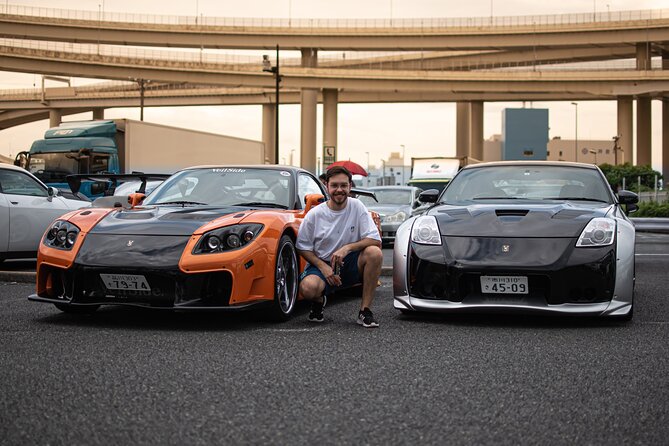
The real draw here is not simply seeing Tokyo by night. It is arriving at Daikoku Parking Area in a Tokyo Drift RX7, then stepping into one of Japan’s best-known meeting spots for tuned cars, rare JDM models, and serious petrolhead culture. The ride itself becomes part of the show.
I like the strong photo stops at Shibuya Crossing and Tokyo Tower, and I like that gas, tolls, WiFi, photography, and videography are included. You get a private outing with a local guide rather than a large bus tour, which makes this a better fit for a focused car experience.
The main drawback is the price: $573.34 for a group of up to one person makes this a costly choice, especially since it lasts only three to four hours. The tour also depends on good weather, and the stop at Daikoku is about seeing the scene, not taking part in drifting.
In This Review
- Key points at a glance
- Why the RX7 is half the experience
- Shibuya Crossing gives you the opening shot
- Tokyo Tower adds the classic backdrop
- Rainbow Bridge turns the drive into sightseeing
- Daikoku PA is the main event
- What the private format changes
- What the price includes, and what it does not
- Who will get the most from this night
- Weather, cancellation, and practical planning
- Is the Daikoku RX7 tour worth booking?
- FAQ
- Where does the tour start?
- Where does the tour finish?
- How long does the tour last?
- Is Daikoku Parking Area included?
- Are hotel pickup and drop-off included?
- What is included in the price?
- Can I cancel for a full refund?
Key points at a glance
- Tokyo Drift RX7 ride: The car is part of the attraction, not just transport between stops.
- Daikoku PA after dark: Spend about an hour at Japan’s famous JDM gathering point.
- Three strong photo settings: Shoot at Shibuya Crossing, Tokyo Tower, and along Rainbow Bridge.
- Private format: Only your group takes part, with a local guide leading the outing.
- Useful inclusions: Gas, tolls, onboard WiFi, photography, and videography are covered.
- Plan for a high price: The listed rate is for up to one person, so check the booking setup carefully before paying.
Why the RX7 is half the experience
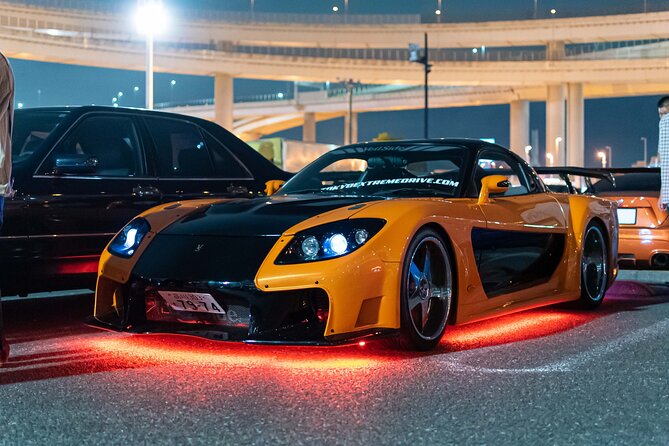
Many car tours take you to a parking lot and leave you to look around. This one makes the journey matter. You ride in an RX7 associated with the Tokyo Drift image, and that creates a different kind of night out from a standard sightseeing drive.
The car has real visual appeal. One guest specifically praised the beauty of the RX7 and how good it felt to sit inside it. Another described a Veilside RX7 drawing attention at each photo stop. That tells you something useful: the car itself may attract as much interest as the locations.
I would treat the RX7 as a featured attraction, not a quiet taxi. You are booking a car-culture experience with sightseeing attached. Have a playlist ready if that suits your mood, but keep your expectations clear. The information provided does not promise that you will drive the car yourself, and the tour is not presented as a drift lesson.
The private setup is another plus. Only your group participates, so the outing should feel more personal than a coach tour. You can focus your questions on the cars, photography, and Tokyo’s modified-car scene instead of waiting for a large group to catch up.
A few more Tokyo tours and experiences worth a look
Shibuya Crossing gives you the opening shot
The first stop is Shibuya Crossing, where the RX7 is parked for photographs. The planned stop lasts about 20 minutes, with no separate admission charge.
This is a smart starting point because the crossing gives your photos an instantly recognizable Tokyo setting. You get the contrast of a famous city intersection and a highly modified Japanese sports car. For many people, that pairing will be more memorable than a simple photograph of the crossing by itself.
The short timing matters. Twenty minutes is enough for a focused set of pictures, but it is not a long photography session with endless chances to reposition the car. I would arrive ready, keep your phone or camera prepared, and decide in advance whether you want pictures of the whole car, close details, or yourself beside it.
Shibuya is also the most obviously urban stop. If your interest is only in car meets, this part may feel like a quick photo opportunity before the main event. If you want a blend of Tokyo sightseeing and car culture, it helps give the tour a wider shape.
Tokyo Tower adds the classic backdrop
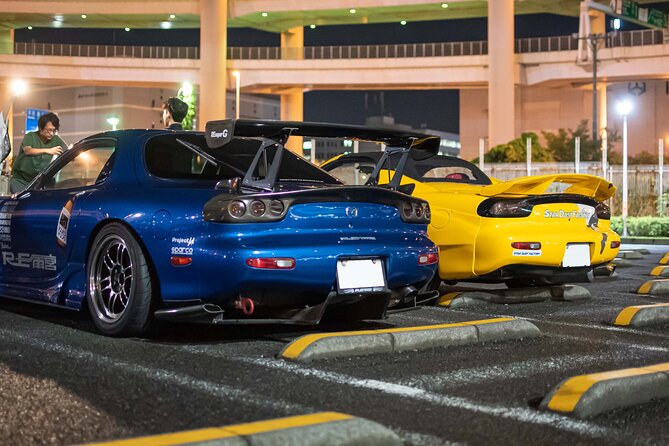
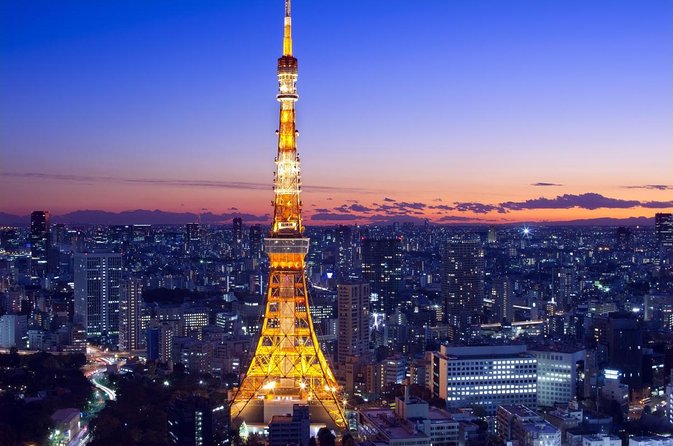
The second planned stop is beneath Tokyo Tower, also for about 20 minutes. Again, admission is free, and the focus is on parking the car in a strong position for photographs.
This should be the best spot for a polished souvenir image. The red-and-white tower gives you a clear sense of place, while the RX7 supplies the unusual foreground. I like this stop because it does not ask you to choose between a Tokyo landmark and the car scene. You get both in one frame.
The same practical limit applies as at Shibuya. Twenty minutes passes quickly when you are trying different angles, people are taking turns, and the car needs to remain safely positioned. The included photography and videography may help if you want more than quick phone snapshots, though the details of the finished files are not specified.
You should also remember that the tour is built around the car being photographed. If you prefer long visits inside attractions, this stop will feel brief. There is no tower admission included because the experience is about the exterior view and the car, not going up Tokyo Tower.
Rainbow Bridge turns the drive into sightseeing
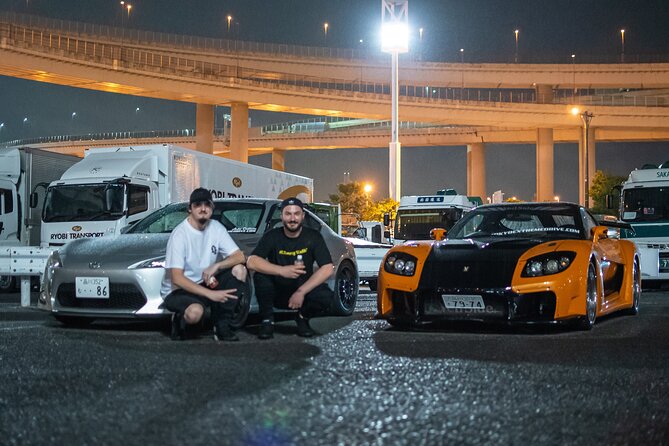
On the way to Daikoku Parking Area, the route crosses Rainbow Bridge. The bridge offers views of Tokyo’s skyline, with a different mood by day and at night.
Since this is a driving segment rather than a listed walking stop, you should think of it as a moving view. You may have chances to look out and take pictures from the vehicle, but the supplied details do not promise a dedicated parking point or photo break on the bridge.
Still, the route gives the night a useful rhythm. You begin with dense city scenes, pass Tokyo Tower, cross the water, and head toward the industrial port area where Daikoku is located. The changing setting helps explain why this is more than a meet-and-greet at one parking area.
The bridge crossing is also one reason the tour can appeal to someone who is not a serious tuner. You get a compact Tokyo night drive with recognizable sights, even if you cannot identify every engine, body kit, or wheel choice at the final stop.
Daikoku PA is the main event
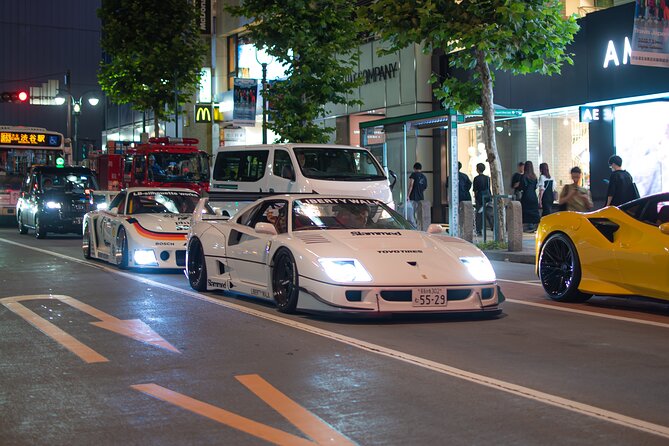
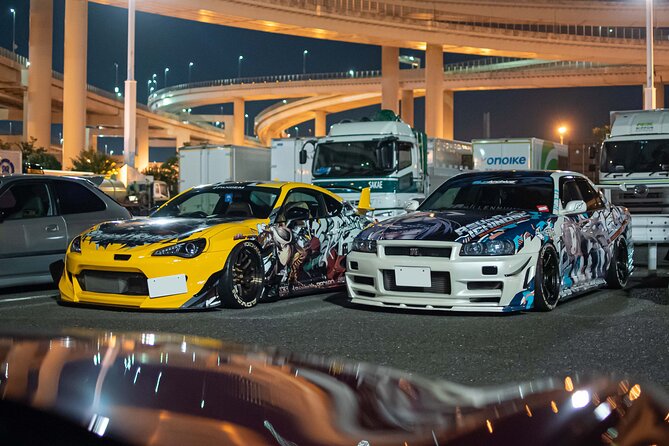
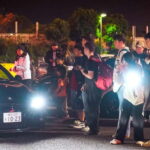
Daikoku Parking Area is the reason most people will book this tour. It is widely regarded as one of the world’s famous places to see Japan’s JDM car scene, and the parking area can hold hundreds of cars.
You get about one hour there. That is long enough to walk around, photograph cars, and take in the mix of rare models and modified vehicles. The exact cars present can change from one night to the next, so I would not book this expecting a specific make or model unless the provider confirms it ahead of time.
That uncertainty is part of the character of a car meet. You may find familiar Japanese performance cars, unusual modifications, or vehicles you did not expect. The appeal comes from seeing what has gathered that night rather than entering a fixed museum collection.
The experience also gives you a view of car culture that is difficult to recreate alone. Daikoku is not a normal tourist attraction in central Tokyo. Reaching it by public transportation is not the point of this outing, and the tour handles the long drive, tolls, and fuel.
The guide’s role matters here. You are not just dropped at a large parking area with no context. The tour includes a local guide who knows the scene, and the staff are described as friendly and easy to spend time with. That can make a major difference when you are trying to understand what you are looking at and how to behave respectfully around other people’s cars.
One important expectation: this is a viewing and photography stop. A Polish-language comment noted that the cars and service were good but wished there were drifting. That is a fair warning. The tour is called a car scene experience, not a drift show, so do not pay this price expecting stunts or a performance.
What the private format changes
A private tour gives you a more relaxed structure than a shared group outing. You are not squeezed into a schedule designed for several unrelated parties, and you can concentrate on the parts that interest you most.
The listed duration is approximately three to four hours. That includes the meeting, the city photo stops, the bridge crossing, the trip to Daikoku, the hour at the parking area, and the return to the starting point. The timing may feel full without being exhausting.
The meeting point is at 1-chōme-2-6 Minamiaoyama in Minato City. The tour ends back there, so you need to make your own way to and from that location. Hotel pickup and drop-off are not included.
The experience is near public transportation, which helps, but the meeting point still needs attention. I would allow extra time to find the exact address, especially if you are traveling through Tokyo at night or arriving from another neighborhood.
Mobile ticketing keeps the booking simple. Confirmation is sent within 48 hours, subject to availability. Since the tour is booked on average 31 days ahead, I would not leave it until the last few days of a short Tokyo visit.
What the price includes, and what it does not
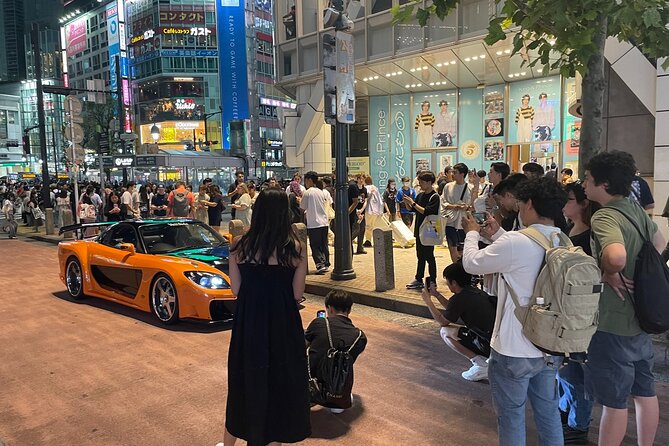
At $573.34 per group of up to one person, this is not a casual budget activity. It is priced like a private, specialty outing built around a particular car and access to a hard-to-reach car meet.
The value improves if you care about all three parts: the RX7, the Tokyo photo locations, and Daikoku PA. Paying for only a quick look at parked cars would be harder to justify. Paying for the car, the private guide, the driving route, and the included production help makes more sense for a committed enthusiast or photographer.
Gas and tolls are included, which is useful because the route includes a substantial drive to Daikoku and a bridge crossing. WiFi onboard is another small convenience. Photography and videography are also included, but you should ask what footage and images you receive if that material is important to you.
Food and drinks are not included. The tour lasts only part of an evening, so this is easy to handle, but you should not expect a meal stop. Hotel transportation is also excluded, so include the cost and time of reaching Minamiaoyama when you compare the total value.
The phrase up to one person deserves special attention. If you are planning to attend with a partner or friend, confirm how the provider handles additional people before booking. The supplied rate clearly lists a group size of one, while one past booking described a couple attending together, so the capacity and pricing should be checked directly.
Who will get the most from this night
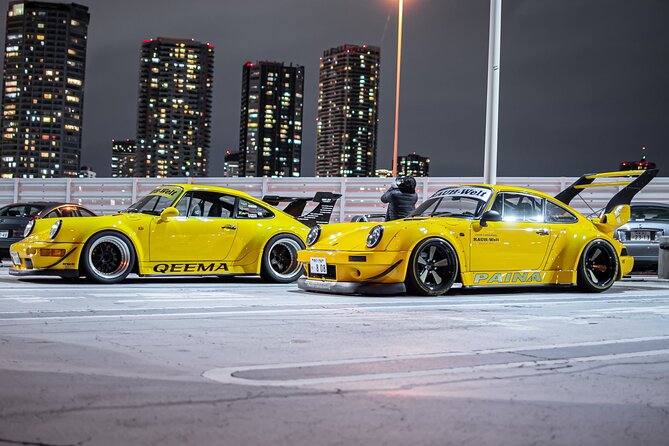
I would recommend this experience first to people who already care about Japanese performance cars, tuning, body kits, motorsport photography, or the Tokyo Drift style of car culture.
It also suits a photographer who wants unusual subjects in recognizable Tokyo locations. Shibuya Crossing and Tokyo Tower provide clean city backdrops, while Daikoku offers a less polished and more spontaneous setting.
You do not need to know every JDM model to enjoy the night. The RX7, the skyline drive, and the chance to see a large gathering of modified cars can carry the experience on their own. Still, the more interested you are in cars, the more value you are likely to find in the guide’s scene knowledge and the time at Daikoku.
I would be less likely to recommend it to someone who wants a broad Tokyo sightseeing tour. You will not visit museums, enter Tokyo Tower, or spend long periods at each landmark. The route is a backdrop for the car experience, not a complete introduction to the city.
It is also not the right choice if you want to drift, race, or ride as part of a motorsport demonstration. The tour provides access to the car scene and a striking vehicle, but no drifting is promised.
Weather, cancellation, and practical planning
Good weather is required. If poor weather cancels the experience, you are offered another date or a full refund. That matters because the photo stops and the Daikoku visit are central to the appeal.
You can cancel for a full refund if you do so at least 24 hours before the start time. Cancellations or changes made inside that window are not accepted for a refund, and the cut-off follows local Tokyo time.
I would book early if this is a priority. With an average booking lead time of 31 days and confirmation subject to availability, this is not an activity I would leave until the night before.
Wear something comfortable for a short city outing and time at the parking area. The provided details do not specify a dress code or special equipment, but a phone or camera with enough battery is sensible when photography is a major part of the night.
Is the Daikoku RX7 tour worth booking?
Book it if the thought of riding in a Tokyo Drift RX7, photographing it beneath Tokyo Tower, and seeing the changing cars at Daikoku sounds like a highlight of your Tokyo visit. The strongest parts are the distinctive vehicle, the private format, the friendly staff, and the chance to spend a proper hour at the main car meet.
Think twice if $573.34 feels steep for a three to four-hour outing, if you want a larger group experience, or if you expect drifting. This is a specialist tour, and its value depends heavily on your interest in Japanese car culture.
For a dedicated car fan, I can see this being one of the most memorable nights in Tokyo. For everyone else, it works only if you also want the photo stops and the night drive across Rainbow Bridge. Check the one-person pricing, confirm what photography and video you receive, and book with the right expectations.
FAQ
Where does the tour start?
The meeting point is 1-chōme-2-6 Minamiaoyama, Minato City, Tokyo 107-0062, Japan.
Where does the tour finish?
The activity ends back at the meeting point in Minamiaoyama.
How long does the tour last?
The experience lasts approximately three to four hours.
Is Daikoku Parking Area included?
Yes. The tour includes about one hour at Daikoku Parking Area, with no separate admission charge.
Are hotel pickup and drop-off included?
No. You need to reach the meeting point yourself, and hotel transportation is not included.
What is included in the price?
The price includes onboard WiFi, gas, tolls, photography, and videography. Food and drinks are not included.
Can I cancel for a full refund?
Yes. You can receive a full refund if you cancel at least 24 hours before the experience start time. Poor-weather cancellations offer a different date or a full refund.
More JDM & Car Culture in Tokyo
More tours in Tokyo we've reviewed
JDM & Car Culture, compared.
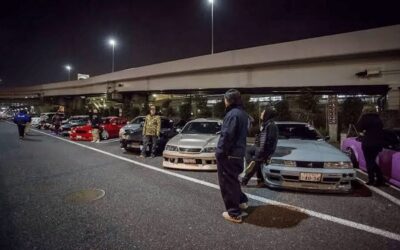 ★ 4.7FAST&FURIOUS EXPERIENCE Tokyo Car Club membershipFrom $138
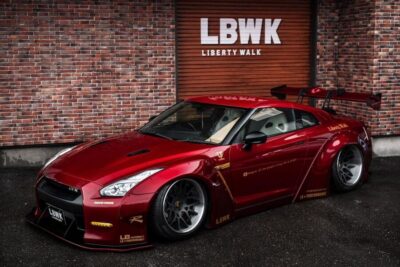 ★ 4.8GT-R35 800hp Club Membership – secret underground car meetFrom $205
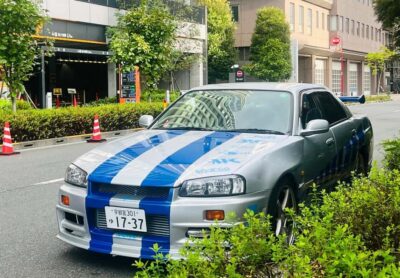 ★ 4.8Tokyo: Fast & Furious Tokyo Drift 3 Experience (Kaila Yu SP)From $157
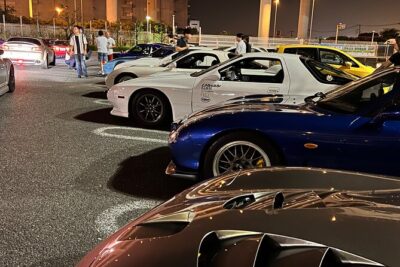 ★ 4.8Tokyo: Daikoku JDM Car Meet & Night Car Culture TourFrom $984 hours
 ★ 4.8Secret Car Meet: R34 Skyline Car Club MembershipFrom $236
 ★ 4.7Tokyo Drift: Daikoku PA Supreme Car Experience 大黒PAFrom $583 hours