
Reviewed · GO-KARTS
Go Karting Tokyo Uptown Experience|7 Top Destinations in 120 Mins
Tokyo is at its most surprising when you are outside the train system, and this go-kart tour gives you a quick, open-air look at seven major sights. In about 1 hour 40 minutes, you pass the Tokyo Skytree, Sumo Stadium, Tokyo Station, the Imperial Palace, Tokyo Tower, Ginza, and Kabukiza Theater.
I like the small maximum of 10 people, which keeps the outing more personal than a large bus tour. I also like that the guide handles photos and videos while you concentrate on driving and taking in the city. The main catch is simple: you need the correct original driving documents, and poor weather can cancel the outing.
In This Review
- Key points to know before you book
- What this Tokyo go-kart route really offers
- Starting in Katsushika City
- Tokyo Skytree: a dramatic first landmark
- Ryogoku and the Sumo Stadium
- Tokyo Station and the Marunouchi district
- The Imperial Palace and Tokyo’s central avenues
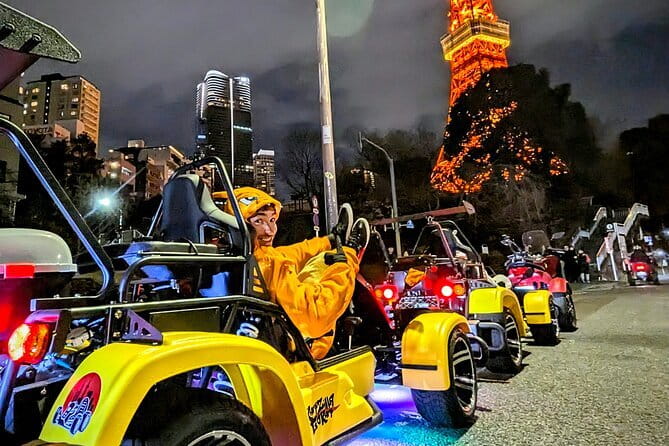
- Tokyo Tower and a symbol of postwar Tokyo
- Ginza, where Tokyo turns polished and expensive
- Kabukiza Theater and classical performance
- Costumes, cameras, and the social side of the ride
- Driving documents are the most important requirement
- Weather, timing, and who will enjoy it most
- Should you book the Tokyo go-kart experience?
- FAQ
- How long does the go-kart tour last?
- How many landmarks does the route visit?
- Where does the tour begin?
- Where does the tour finish?
- Is transportation to the meeting point included?
- What does the price include?
- What driving documents are required?
- Can I cancel for a refund?
Key points to know before you book
- Seven famous sights in about 100 minutes: This is a fast-moving introduction to Tokyo, not a long stop-and-tour visit at each landmark.
- Costumes and media are included: You can dress up for photographs, while the guide takes pictures and videos during the route.
- A small group of no more than 10: The limited size should make instructions and group movement easier to manage.
- Strict driving paperwork: You need your original local license and a 1949 Geneva Convention International Driving Permit, unless you qualify under one of the listed exceptions.
- The starting point is in Katsushika City: You must reach Japan, 124-0014 Tokyo, Katsushika City, Higashiyotsugi, 1-chōme202, 小島貸事務所, on your own.
- Weather can change the plan: The tour runs only in good weather, with another date or a full refund offered if conditions force cancellation.
What this Tokyo go-kart route really offers
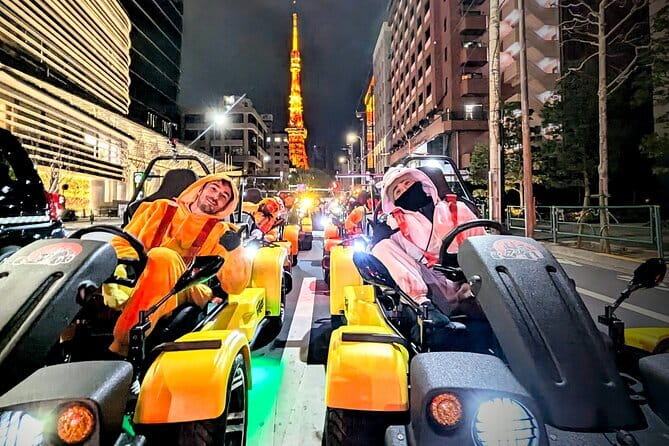
This is best understood as a moving city tour with a playful twist. You are not booking a formal visit inside Tokyo Tower or the Imperial Palace. Instead, you drive past major landmarks, get a quick sense of several districts, and collect photographs that show you in costume behind the wheel.
That makes the experience useful early in a Tokyo stay. In less than two hours, you get a broad view of areas that can otherwise take several train rides to connect. The route also gives you a feel for how Tokyo shifts from the old sumo quarter of Ryogoku to the polished streets of Ginza and the grand avenues around the Imperial Palace.
The listed price is $117.27 per person. That is not cheap for a sightseeing outing, but the fee covers the kart, fuel, insurance, guide, costume, water, and photo and video service. You are paying for the unusual format and the equipment as much as for the sightseeing.
The value is strongest if you would otherwise pay separately for a costume photo session and a city orientation tour. It is weaker if your main goal is detailed sightseeing, museum time, or long stops at each landmark. The route gives you many views, but only a short look at each one.
If you're still narrowing it down, here are other tours in Tokyo we've reviewed.
Starting in Katsushika City
The meeting point is in Higashiyotsugi, in Tokyo’s Katsushika City, at Japan, 124-0014 Tokyo, Katsushika City, Higashiyotsugi, 1-chōme202, 小島貸事務所. The tour returns to this same location.
That starting point matters. This is not a central Tokyo hotel pickup, and pickup and drop-off are not included. Check your route carefully before booking, since arriving late at a distant meeting point could put the whole outing at risk.
The activity is near public transportation, and confirmation is sent at booking. You should still allow extra time to find the exact office and complete the required checks before driving.
The tour is capped at 10 participants. That is a useful middle ground. It is small enough to avoid the feel of a large coach group, but not necessarily a private outing. If you want a completely personal route or a very slow pace, this is not advertised as a private tour.
Tokyo Skytree: a dramatic first landmark
The Tokyo Skytree is one of the route’s biggest visual moments. At 634 meters, it is the world’s tallest broadcasting and communication tower and the third tallest structure in the world.
From a go-kart, the tower works well as a landmark because it is easy to spot above the city. You get a memorable sense of its scale without spending time inside an observation deck. That is useful if you already have a separate Skytree visit planned, or if you only want to see it from street level.
The trade-off is that a drive-by view cannot replace the tower’s indoor exhibitions or city views from above. Treat this part as a strong photograph and orientation point, not a complete Skytree visit.
Ryogoku and the Sumo Stadium
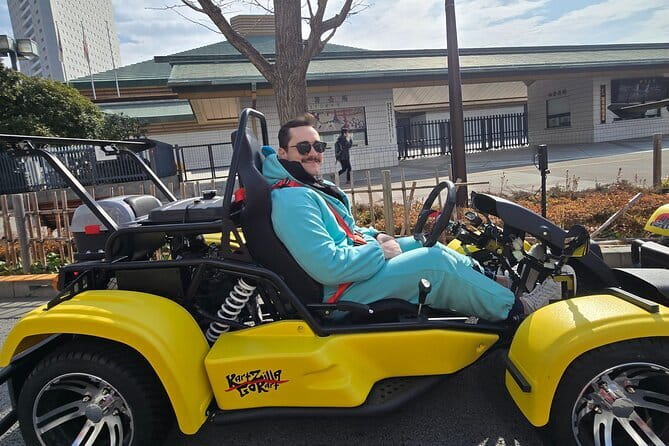
The route then brings you through Ryogoku, Tokyo’s sumo district, with the Sumo Stadium as its main point of interest. This part adds cultural character to an itinerary that could otherwise focus only on modern towers and shopping streets.
Ryogoku is a good reminder that Tokyo is not one single type of city. Its identity includes ancient sporting traditions, neighborhood streets, and a deep connection to sumo culture. The go-kart format gives you a quick look at that setting while linking it with the city’s newer districts.
Do not expect a sumo match or a stadium tour to be included. The stop is a pass-by sight, so check the sumo calendar separately if attending a bout is important to you.
Tokyo Station and the Marunouchi district
Tokyo Station provides a change of mood. The tour moves through Marunouchi, one of the city’s major business districts, with the station’s historic early 20th-century architecture as the focal point.
The station is more than a transport hub. Its red-brick exterior and broad setting offer a sharp contrast to the glass towers around it. From the road, you can appreciate the station as an architectural marker while also seeing how central Tokyo’s business core is arranged.
This is another quick viewing stop rather than an architectural tour. If you want close-up photographs of the station, you may need to return on foot later. The benefit here is the connection between Tokyo’s past and its financial center, seen in one short stretch of the route.
The Imperial Palace and Tokyo’s central avenues
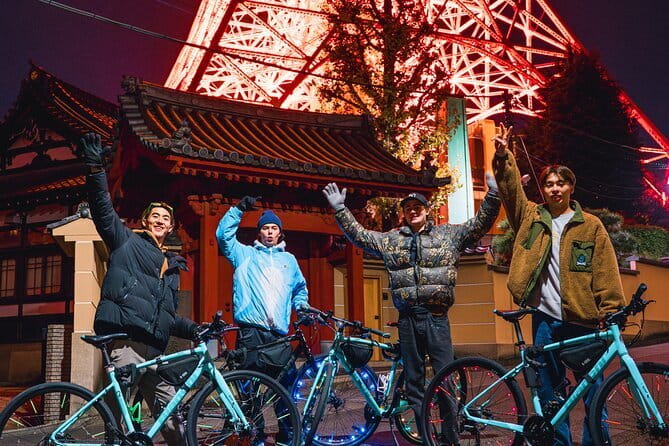
The Imperial Palace is the route’s main historical sight. The palace grounds occupy the former Edo Castle site, and the castle began in 1457 under Ota Dokan. Today, the area is associated with the residence of the Japanese Emperor and Empress.
You will appreciate this part most if you enjoy seeing how history sits inside a modern capital. The wide roads and formal surroundings give the route a different pace from Ryogoku or Ginza, even though the tour does not include an interior palace visit.
The important practical point is to keep your expectations realistic. You are seeing the palace area from the route, not joining a detailed palace grounds excursion. If palace gardens, gates, or historical explanations are high on your list, reserve separate time for them.
Tokyo Tower and a symbol of postwar Tokyo
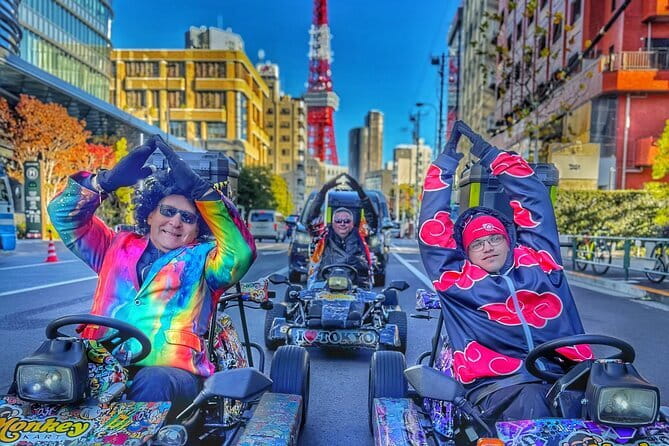
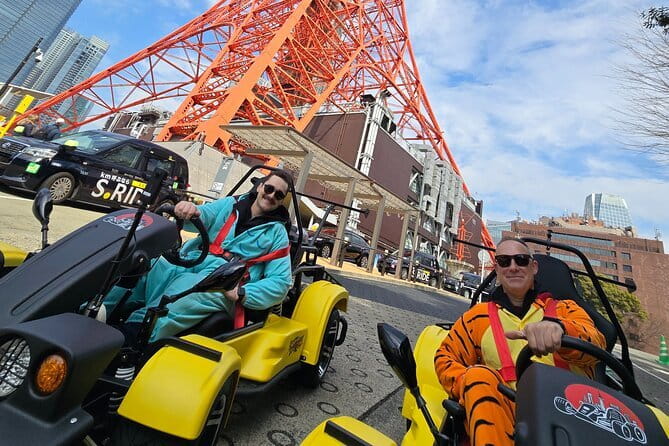
Tokyo Tower is another major photo stop. At 333 meters, it rises above the city and is slightly taller than the Eiffel Tower.
The tower carries more than visual appeal. It is linked with Japan’s postwar rebuilding, economic recovery, and national confidence. Seeing it after the Imperial Palace also creates a neat contrast: one landmark connects to imperial history, the other to modern growth and renewal.
Again, the kart tour offers an exterior view. You do not get an observation deck ticket or an indoor visit as part of the stated inclusions. If you have already seen Tokyo from the Skytree, you may prefer to enjoy Tokyo Tower from the streets and save time for another activity.
Ginza, where Tokyo turns polished and expensive
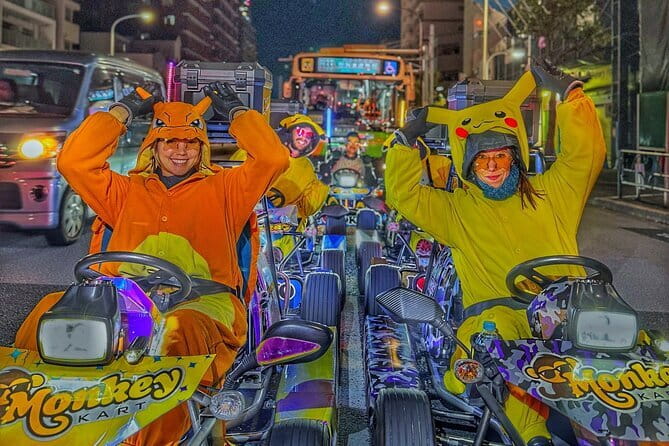
Ginza is Tokyo’s best-known upscale shopping, dining, and entertainment district. The route passes boutiques, galleries, restaurants, nightclubs, and cafes in one of the city’s most carefully presented commercial areas.
A go-kart gives you an entertaining way to see the contrast between Ginza’s refined streets and the more traditional character of Ryogoku. You will not have time to browse shops or sit down for a meal, though. Food is not included, and the tour is designed to keep moving.
I see Ginza as one of the better orientation stops. You can note the district’s layout and return later if you want dinner, shopping, or a closer look at its galleries. The kart experience helps you decide which neighborhoods deserve more of your time.
Kabukiza Theater and classical performance
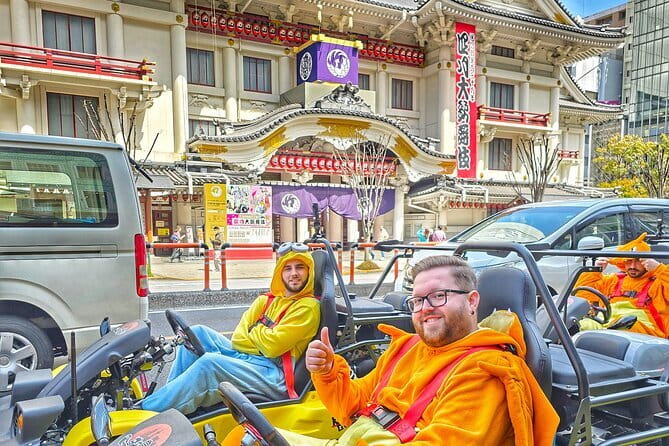
Kabukiza Theater adds a cultural finish to the central Tokyo portion of the route. It is associated with Kabuki, a classical Japanese dance-drama known for stylized acting, elaborate makeup, and dramatic costumes.
Even if you do not attend a performance, the theater gives the tour another layer. Tokyo’s culture is not limited to neon streets and high-rise towers. Kabukiza points to a formal stage tradition that still has a visible place in the modern city.
The tour does not include a Kabuki ticket or theater visit. If you want to see a performance, plan that separately. The drive-by view is best used as a prompt to learn more, rather than as a substitute for the theater itself.
Costumes, cameras, and the social side of the ride
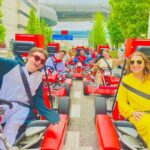
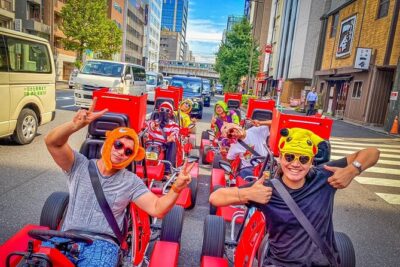
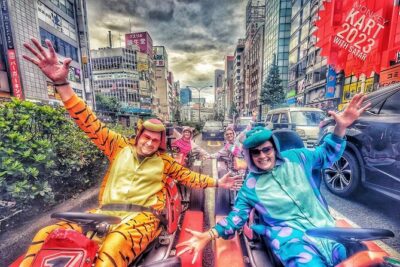
Costumes are included, which is a central part of the experience rather than a minor extra. They make the photographs more distinctive and add a deliberately playful mood to a route filled with serious landmarks.
The guide also takes photos and videos along the way. This is useful because taking pictures while driving is not practical and would distract from the road. You can focus on the ride, then receive visual memories from the route.
An Insta360 camera data card is not included but is available for purchase. Check this detail before you arrive if 360-degree footage matters to you. Standard photo and video service is included, but the separate data card charge means the final media package may depend on what you choose.
The experience includes water, fuel, and insurance. Those inclusions keep the price easier to understand and reduce the number of small costs you need to handle on the day.
Driving documents are the most important requirement
Do not book this casually if you have not checked your license paperwork. The tour requires a local driving license and an International Driving Permit issued under the 1949 Geneva Convention.
You must bring the original local license and the original IDP. A failure to provide the required originals results in cancellation with no refund. This is the point I would verify before paying, especially if you are booking close to your departure date.
There are specific exceptions. Nationals of Switzerland, Germany, France, Belgium, Monaco, and Taiwan may drive if they have a Japanese translation of their driving license. The provider asks people who need translation help to make contact a month in advance.
For US Forces in Japan, a SOFA Driving License is required. Most people can participate if they meet the document rules, but the paperwork is not a minor formality. Bring your passport as well.
Weather, timing, and who will enjoy it most
The tour lasts approximately 1 hour 40 minutes, despite the promotional shorthand of visiting seven destinations in 120 minutes. That is enough time for a broad circuit, costume photos, and a sense of Tokyo’s scale, but not enough for long visits at each landmark.
The experience requires good weather. If rain or other poor conditions cause cancellation, you are offered another date or a full refund. You can cancel for a full refund up to 24 hours before the start time, but cancellations or changes inside that window are not refunded or accepted.
I would recommend this to first-time visitors who want a fast city overview, couples or friends who enjoy unusual photographs, and anyone tired of enclosed sightseeing vehicles. It also suits people who like the journey as much as the destination.
I would be more cautious if you dislike driving in an unfamiliar city, need a relaxed pace, or want substantial time at museums and historic sites. The tour is active, exposed to weather, and built around the road rather than extended sightseeing on foot.
The guide can make a real difference to the day. Satar is specifically praised for being helpful and for making the outing work well, so if he is leading your departure, you can expect a guide with a strong reputation for the activity. Guide assignments can change, so do not assume he will be present unless the provider confirms it.
Should you book the Tokyo go-kart experience?
Book it if you want a lively way to connect several Tokyo districts, and if your driving documents are already in order. The small group, included costume, guide-led route, fuel, insurance, and photo service give the $117.27 price a reasonable case, especially for a special occasion.
Skip it if you want deep visits inside the landmarks, dislike organized driving, or are unwilling to plan around the Katsushika meeting point and weather. For the right person, this is a memorable city sampler. It is not a replacement for Tokyo’s museums, palace grounds, observation decks, or Kabuki performances.
FAQ
How long does the go-kart tour last?
The experience lasts approximately 1 hour 40 minutes.
How many landmarks does the route visit?
The route passes seven main sights: Tokyo Skytree, the Sumo Stadium in Ryogoku, Tokyo Station, the Imperial Palace, Tokyo Tower, Ginza, and Kabukiza Theater.
Where does the tour begin?
It begins at Japan, 124-0014 Tokyo, Katsushika City, Higashiyotsugi, 1-chōme202, 小島貸事務所.
Where does the tour finish?
The activity ends back at the meeting point.
Is transportation to the meeting point included?
No. Pickup and drop-off are not included, so you must make your own way to and from the starting location.
What does the price include?
The price includes go-kart rental, a tour guide, costume, fuel, insurance, photos and video, and water.
What driving documents are required?
You need your original local driving license and an International Driving Permit issued under the 1949 Geneva Convention. A passport is also required. Some nationals can drive with a Japanese license translation, and US Forces in Japan require a SOFA Driving License.
Can I cancel for a refund?
You can cancel up to 24 hours before the start time for a full refund. Changes or cancellations made less than 24 hours before the experience are not accepted or refunded. If poor weather cancels the tour, you are offered another date or a full refund.
More tours in Tokyo we've reviewed


Go-Karts, compared.
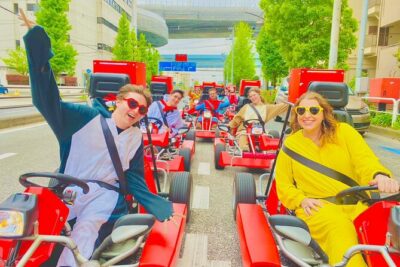 ★ 5.0Flagship 2-Hours Official Street Go-Kart Tour – Tokyo Bay ShopFrom $642 hours to 2 hours 30 minutes (approx.)
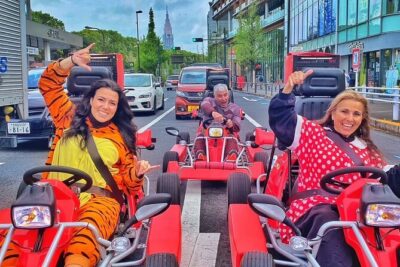 ★ 5.0Official Street Go-Kart in ShibuyaFrom $76
 ★ 5.0Official Street Go-Kart Tour – AkihabaraFrom $61
 ★ 5.0Tokyo Go Kart: Asakusa, Skytree, and Akihabara **IDP MUST**From $99
 ★ 5.0Shibuya Official Street Go-Kart in Shibuya AnnexFrom $69
 ★ 4.7Tokyo: Asakusa, Skytree & Akhihabara Go-Kart City ExperienceFrom $961h 10m