
Reviewed · GO-KARTS
Go Karting Tokyo Old Town Experience | 8 Destinations in 100 Mins
Tokyo sightseeing usually means trains, crowded sidewalks, and looking out a taxi window. This tour puts you in the driver’s seat, taking you through eight major Tokyo areas in about 100 minutes, from Tokyo Skytree and Ryogoku to Akihabara, Asakusa, and the Imperial Palace.
I like the small group limit of 10, which should make it easier to follow the guide and keep the ride moving. I also like that the price includes the kart, fuel, insurance, costume, water, and photos and video. The big consideration is legal, not optional: you need your original local driving license and a physical 1949 Geneva Convention International Driving Permit. A digital copy will not work.
In This Review
- Key points at a glance
- What this Tokyo go-kart ride is really like
- Tokyo Skytree gives the ride its big opening view
- Ryogoku brings sumo into the picture
- The Tokyo Sword Museum adds a quieter cultural note
- Tokyo Station and Marunouchi show a formal side of the capital
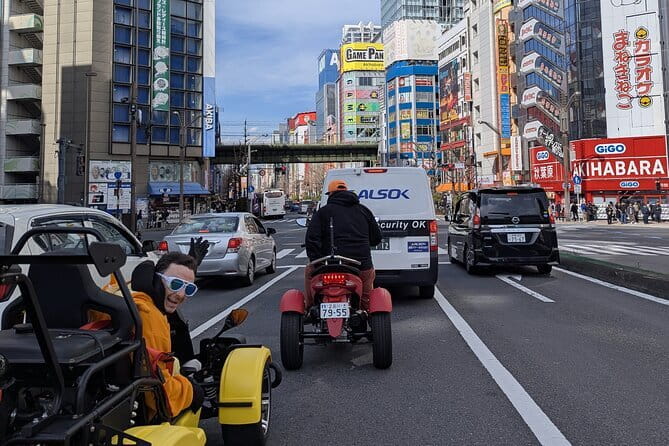
- Akihabara supplies the loudest pop-culture contrast
- Ueno links temples, art, and city life
- Asakusa offers the clearest old-Tokyo atmosphere
- The Imperial Palace closes the route with national history
- What the 100-minute schedule does well
- Price, inclusions, and what you still pay for
- The document check is the most important practical detail
- Weather, accessibility, and cancellation terms
- Who will enjoy this ride most
- Should you book the Tokyo Old Town go-kart experience?
- FAQ
- How long does the Tokyo go-kart experience last?
- How many destinations are included?
- Where does the tour start and finish?
- What documents do I need to drive?
- Is the experience available in poor weather?
- Can I cancel for a full refund?
Key points at a glance
- Eight Tokyo sights in 100 minutes: The route covers Skytree, Ryogoku, the Tokyo Sword Museum, Tokyo Station, Akihabara, Ueno, Asakusa, and the Imperial Palace.
- Small-group street driving: The group is capped at 10 people, with a guide leading the way on public roads.
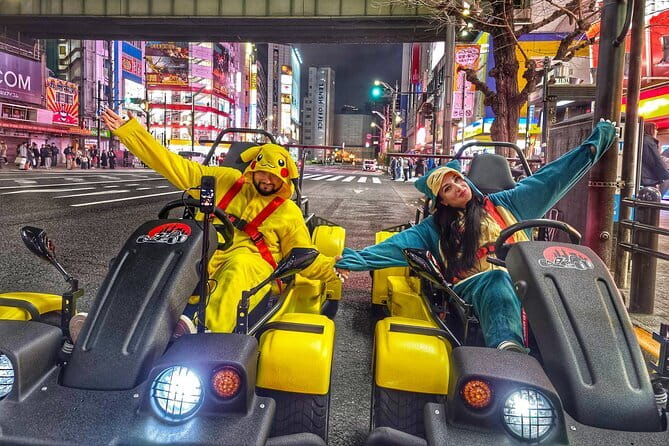
- Costumes are included: You can choose a quirky outfit before setting off, adding a playful touch to the sightseeing.
- Photos and video are part of the package: The operator provides photo and video coverage, while an Insta360 data card costs extra.
- Strict driving documents: Bring your physical IDP, original driving license, and passport. Missing documents can mean cancellation without a refund.
- Weather can change the plan: The experience requires good weather, with a new date or full refund offered if the operator cancels.
What this Tokyo go-kart ride is really like
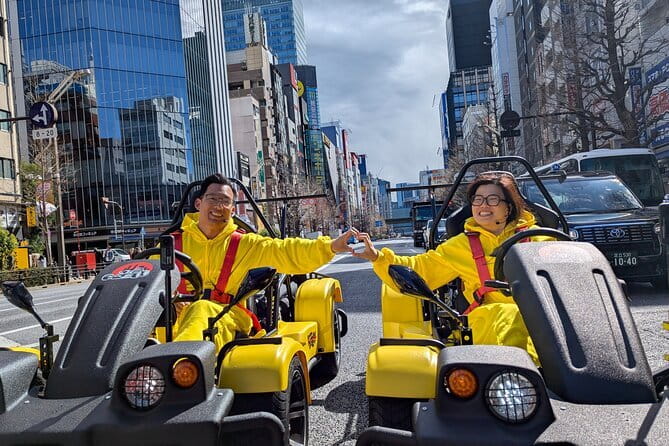
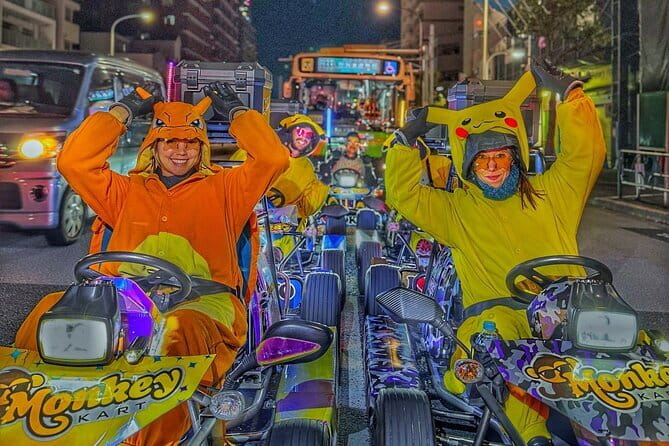
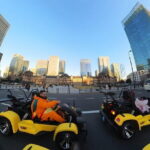
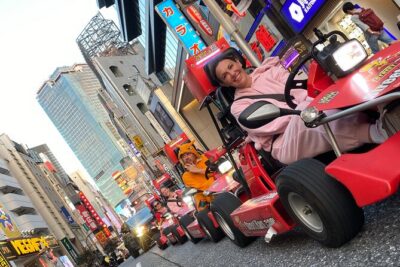
The appeal is simple: instead of passing Tokyo’s landmarks through a train window, you see them from street level while driving your own kart. This is sightseeing with a motor, a costume, and a bit of theatre.
The route is designed for people who want a quick look at several famous parts of the city rather than a long visit inside one attraction. You will not have time to tour the Tokyo Sword Museum or climb Tokyo Skytree during this activity. The value comes from the changing scenery, the fun of the ride, and the chance to connect several districts in one short outing.
A local guide leads the group, and the maximum size is 10 people. That is a useful limit on busy Tokyo roads. You still need to pay close attention, follow the guide, and treat this as a road-driving activity rather than a theme-park circuit.
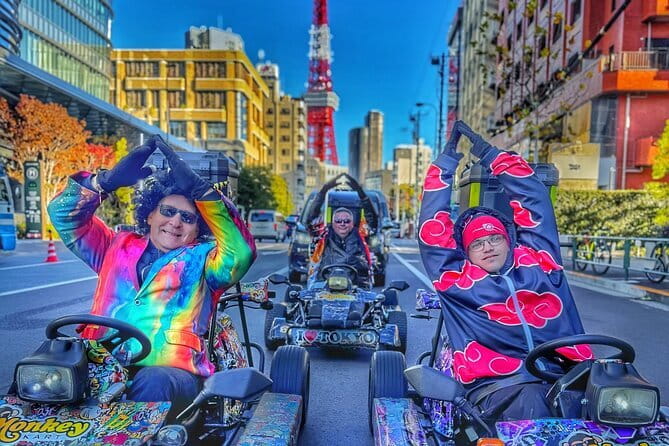
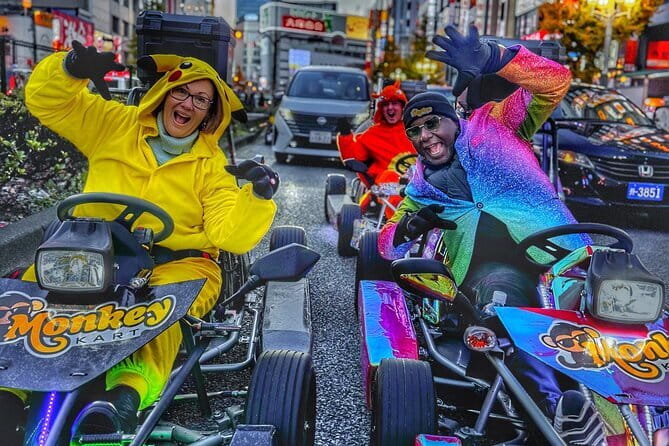
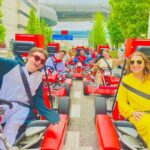
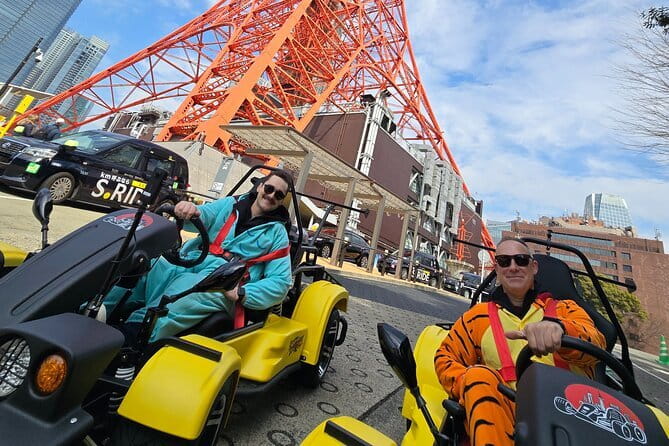
Before departure, you can help yourself to a costume. The outfits are part of the experience, and they make the included photos and videos more memorable. If you prefer ordinary sightseeing clothes, you can simply skip that part and focus on the drive.
The tour starts and ends at 1-chome 202, Higashiyotsugi, Katsushika City, Tokyo 124-0014. Pickup and drop-off are not included, so you need to arrange your own way to the meeting point. The location is near public transportation, but the supplied information does not name a specific station or give a transfer time, so check your route carefully before booking.
If you're still narrowing it down, here are other tours in Tokyo we've reviewed.
Tokyo Skytree gives the ride its big opening view
Tokyo Skytree is the tallest broadcasting and communication tower in the world and the third tallest structure overall. It rises over Sumida City and gives this tour an unmistakable Tokyo landmark at the beginning of its sightseeing story.
From a go-kart, you are seeing the tower from the surrounding streets rather than from its observation decks. That matters because the experience is about movement and street-level views, not spending time inside the attraction. If Skytree is your main goal, book a separate visit for the tower itself.
The stop also helps you understand the scale of eastern Tokyo. The tower rises above a district that includes traditional neighborhoods, newer development, and the nearby Asakusa area. You get a fast visual introduction before the route moves on.
Ryogoku brings sumo into the picture
Ryogoku is the home of Tokyo’s sumo culture, with the Sumo Stadium at the center of the area. The district gives the route a strong connection to one of Japan’s most recognizable traditions.
You should think of this as a pass-through sightseeing stop, not a sumo match or museum visit. The kart ride lets you see the area in context, but the 100-minute schedule does not leave room for a long stop or a full cultural program.
That quick look can still be worthwhile. Tokyo is often presented as futuristic and high-tech, while Ryogoku offers a reminder of older sporting traditions. The contrast becomes one of the pleasures of the route.
The Tokyo Sword Museum adds a quieter cultural note
The Tokyo Sword Museum preserves important Japanese swords. These objects are treated not only as weapons, but also as symbols of authority, art, and religious devotion.
The museum gives the tour a more reflective subject than the flashy districts that follow. You will pass a place connected with Japanese craftsmanship and samurai culture, though the activity does not include museum admission or a dedicated museum tour.
If you are especially interested in Japanese swords, allow time to return separately. A quick drive-by cannot replace seeing the collection. Still, including the museum in the route shows that this is not only a pop-culture or photo outing.
Tokyo Station and Marunouchi show a formal side of the capital
The route continues through Tokyo Station and the Marunouchi district. Tokyo Station dates from the early twentieth century and is known for its architectural importance.
This part of the drive shifts the mood again. After the traditional associations of Ryogoku and the Sword Museum, Marunouchi presents a more formal business district anchored by a grand station. From the kart, you get a moving view of the station’s place in the city rather than an interior architectural tour.
Tokyo Station is also one of the capital’s major transport hubs, but you are not using it as a transfer point during the activity. The practical benefit here is seeing how the station fits into the surrounding district. The route makes the city feel connected, with historic buildings, business streets, and major roads all sharing the same urban space.
Akihabara supplies the loudest pop-culture contrast
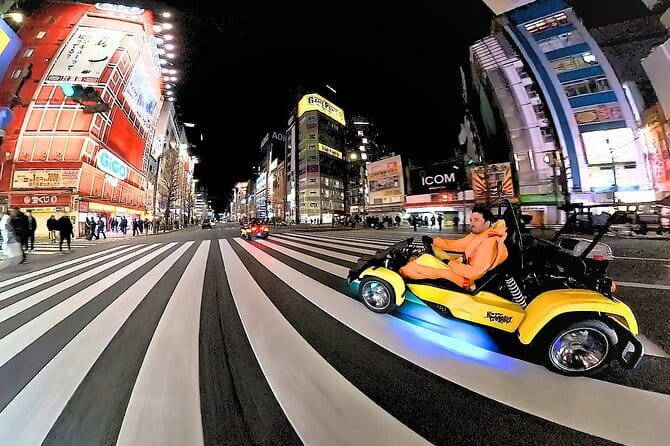
Akihabara is known for electronics, anime, and Japanese pop culture. Its identity developed over time, and today it is widely associated with otaku culture.
This is likely to be one of the most entertaining sections for anyone who enjoys anime, games, gadgets, or unusual Tokyo street scenes. The go-kart format fits the area’s playful character, especially if you have chosen a costume for the ride.
The limitation is the same as at the other stops: you are passing through, not shopping. You will not have time to browse stores or explore the arcades as part of the 100-minute route. If Akihabara is high on your personal list, use this ride as an orientation, then return on foot or by train later.
Ueno links temples, art, and city life
Ueno became important after the Tokugawa Shogunate was established in Edo in 1603. It first developed around Buddhist temples and local residents, then became a major center for modern Japanese art and culture during the Meiji period.
The area gives the ride another change of pace. Ueno is not presented only as a shopping district or a modern business center. Its religious beginnings and cultural institutions add depth to the route, even if you see them only from the road.
For me, this is one reason the tour works better than a random city drive. The eight stops are not all the same kind of attraction. You move between old neighborhoods, cultural sites, transport landmarks, pop culture, and imperial history.
Asakusa offers the clearest old-Tokyo atmosphere
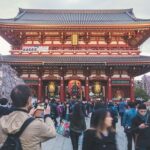
Asakusa traces its origins back around 1,400 years and is one of the best-known areas for experiencing Tokyo’s shitamachi, or low-city, character. It is the part of the route most closely tied to the idea of old Tokyo.
The district is known for traditional charm, and the drive gives you a quick look at a side of the capital that feels different from Marunouchi or Akihabara. This is a useful stop for first-time visitors who want more than glass towers and neon signs.
Again, the kart is not a substitute for walking Asakusa. The area rewards a slower visit, especially if you want to spend time at its temples, streets, shops, and food stalls. The tour gives you a taste and a sense of direction, then you can decide if you want to return.
The Imperial Palace closes the route with national history
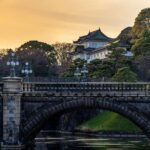
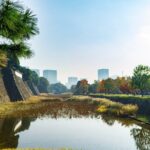
The Imperial Palace is the residence of the Japanese Emperor and Empress. Its grounds connect to Edo Castle, which was constructed in 1457 by Ota Dokan.
The palace gives the final part of the route a strong historical and ceremonial setting. It is a fitting counterpoint to the playful costumes and small engines because it reminds you that Tokyo is also the political and imperial center of Japan.
This is another exterior sightseeing experience. The activity does not include palace entry, and the short schedule is not designed for a full palace visit. You are seeing the setting from the road, which works well as part of a broad city overview.
What the 100-minute schedule does well
The tour’s main strength is coverage. In 1 hour and 40 minutes, you reach eight destinations that would take much longer to connect on foot. The guide’s route gives you a ready-made introduction to several districts without asking you to plan a complicated day of train transfers.
The tradeoff is depth. Each area receives only a portion of the total time, and driving requires concentration. You may not absorb every landmark or hear a long explanation at every stop. If you want detailed museum visits, neighborhood walks, or extended time at temples, this is the wrong format.
I would treat the ride as a lively city sampler. Use it to identify places that deserve a second visit. That approach makes the schedule feel useful rather than rushed.
The group limit helps. With no more than 10 people, the guide can lead a manageable line of karts, and the experience should feel more personal than a large coach tour. The available details do not name the guides, so do not book expecting a particular guide by name.
Price, inclusions, and what you still pay for
The cost is $91.45 per person. That is not a bargain if you judge it as a simple kart rental. It becomes more reasonable when you count the guide, fuel, insurance, costume, drinking water, and photo and video service.
You are paying for a guided sightseeing route on public roads, not just time behind the wheel. The eight-location plan also saves you from organizing transport between several separate districts.
Food is not included, and pickup and drop-off are not included. An Insta360 camera data card is available for purchase, so confirm the photo and video arrangements if high-quality camera files matter to you.
The price makes the most sense for someone who values the activity itself. If you mainly want detailed cultural information or plenty of time at each landmark, put the money toward conventional tours and transport instead.
The document check is the most important practical detail
Do not arrive with only a phone photograph or email copy of your International Driving Permit. The operator requires the original local driving license and original physical IDP issued under the 1949 Geneva Convention, plus your passport.
A digital IDP copy is not accepted for this public-road activity. One booking ended without the customer driving because a digital proof from email was presented instead of the required physical document. The result was especially painful because failure to provide the correct original documents can lead to cancellation without a refund.
There are special rules for certain nationalities:
- Citizens of Switzerland, Germany, France, Belgium, Monaco, and Taiwan may drive with a Japanese translation of their driving license.
- US Forces personnel in Japan need a SOFA Driving License.
- If you need help arranging a Japanese license translation, contact the operator a month in advance.
Take this requirement seriously. It is not a minor check at the desk. It determines if you can participate.
Weather, accessibility, and cancellation terms
The activity requires good weather. If poor weather causes the operator to cancel, you are offered another date or a full refund.
You can cancel for a full refund up to 24 hours before the local start time. Within 24 hours, cancellations and changes are not accepted and the amount paid is not refunded.
The experience is listed as wheelchair accessible, and most people can participate. Since the activity involves operating a go-kart on public roads, contact the provider in advance with specific mobility questions rather than relying only on the general accessibility label.
Who will enjoy this ride most
I would recommend it to you if you want an energetic first look at Tokyo and enjoy unusual ways of seeing a city. It suits visitors who like driving, costumes, photos, and a fast sequence of different neighborhoods.
It also works well for a small group of friends or family members who want an activity that feels different from a standard walking tour. The 10-person limit keeps the outing from becoming a huge organized procession.
You may want to skip it if you dislike driving in city traffic, need long stops, or want deep explanations at every attraction. The tour is not a replacement for visiting Skytree, the Sword Museum, Asakusa, or the Imperial Palace properly.
Should you book the Tokyo Old Town go-kart experience?
Book it if the ride is as important as the sightseeing. For $91.45, you get a guided route through eight contrasting Tokyo areas, along with fuel, insurance, a costume, water, and photos and video. That is fair value for an activity rather than a basic transport service.
Before paying, check your documents twice. A physical IDP, original driving license, and passport are essential, and a digital copy will not save the booking. If your paperwork is correct and the weather cooperates, this is a memorable way to connect Tokyo’s old neighborhoods, modern districts, cultural sites, and grand landmarks in one brisk outing.
FAQ
How long does the Tokyo go-kart experience last?
The experience lasts approximately 1 hour and 40 minutes, or 100 minutes.
How many destinations are included?
The route includes eight destinations: Tokyo Skytree, Ryogoku, the Tokyo Sword Museum, Tokyo Station and Marunouchi, Akihabara, Ueno, Asakusa, and the Imperial Palace.
Where does the tour start and finish?
It starts and ends at Japan, 124-0014 Tokyo, Katsushika City, Higashiyotsugi, 1-chome 202, Kojima Office. Pickup and drop-off are not included.
What documents do I need to drive?
You need your original local driving license, a physical International Driving Permit issued under the 1949 Geneva Convention, and your passport. A digital IDP copy is not accepted.
Is the experience available in poor weather?
The activity requires good weather. If it is canceled because of poor weather, you can choose a different date or receive a full refund.
Can I cancel for a full refund?
Yes. You can cancel at least 24 hours before the local start time for a full refund. Cancellations or changes made within 24 hours are not accepted and are not refunded.
More tours in Tokyo we've reviewed
Go-Karts, compared.
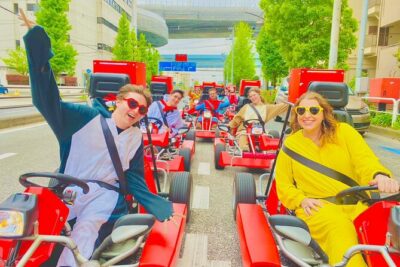 ★ 5.0Flagship 2-Hours Official Street Go-Kart Tour – Tokyo Bay ShopFrom $642 hours to 2 hours 30 minutes (approx.)
 ★ 5.0Official Street Go-Kart in ShibuyaFrom $76
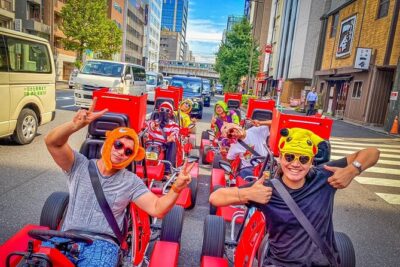 ★ 5.0Official Street Go-Kart Tour – AkihabaraFrom $61
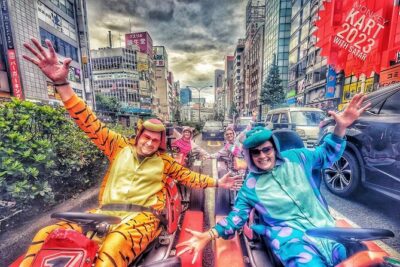 ★ 5.0Tokyo Go Kart: Asakusa, Skytree, and Akihabara **IDP MUST**From $99
 ★ 5.0Shibuya Official Street Go-Kart in Shibuya AnnexFrom $69
 ★ 4.7Tokyo: Asakusa, Skytree & Akhihabara Go-Kart City ExperienceFrom $961h 10m