
Reviewed · GO-KARTS
GINZA: Go Kart Experience with NEO GINZA
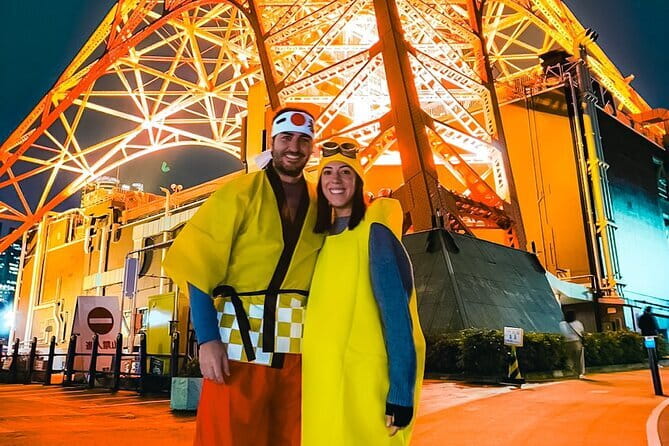
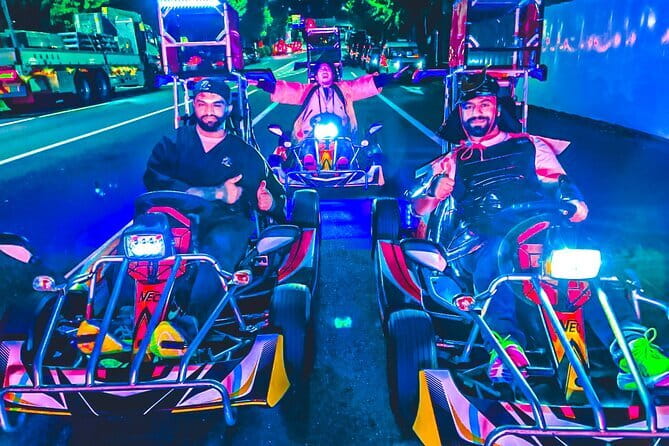
Tokyo looks very different from the seat of a small go-kart. For one hour, you cruise through Ginza and central Tokyo in costume, passing Tokyo Tower, Zojoji Temple, and Kabuki-za while two guides manage the route and traffic. It is sightseeing with a silly streak, and that is the point.
I like the small groups of up to six and the photo service. The guides keep the ride organized, and Patrick has earned special praise for explaining buildings and suggesting other places to visit. I also like the choice of a night departure, when Tokyo Tower glows above the streets.
The main catch is simple: you must arrive with the correct driving documents. An International Driving Permit is required for most countries, and you cannot fix that problem online after reaching Japan. The one-hour route also gives you snapshots of major sights, not long visits inside them.
In This Review
- Key points at a glance
- What this Ginza go-kart ride is really like
- Why the small group makes a difference
- The route from Zojoji Temple to Tokyo Tower
- Passing the Imperial Palace Outer Gardens
- Tokyo Station and the visual rhythm of central Tokyo
- Kabuki-za brings the ride back to Ginza
- Costumes, photos, and the fun factor
- Is $64 a fair price?
- The driving documents you must arrange before Japan
- Clothing and conduct for a safe ride
- Who will enjoy this most?
- Booking details worth keeping in mind
- Should you book the NEO GINZA go-kart ride?
- FAQ
- How long does the NEO GINZA go-kart experience last?
- Where does the activity start and finish?
- Which landmarks does the route pass?
- Are costumes included?
- Are photos included?
- What languages do the guides speak?
- How many people can join the group?
- What documents do I need to bring?
- Can anyone drive the karts?
Key points at a glance
- Two guides for a six-person group: English and Japanese-speaking staff lead the route and help keep the ride orderly.
- A costume turns sightseeing into a show: Choose from playful outfits before setting off, then expect plenty of photo moments.
- Five central Tokyo sights in one loop: The route passes Zojoji Temple, Tokyo Tower, the Imperial Palace Outer Gardens, Tokyo Station, and Kabuki-za.
- Night rides add the best visual payoff: Tokyo Tower lit up above you gives the drive a more memorable feel.
- Your documents matter more than your costume: Bring your physical passport, physical driving permit, and domestic license when required.
- $64 buys a compact city adventure: Insurance, the kart, costume, staff, and photos are included, but hotel transfers and GoPro rental cost extra.
What this Ginza go-kart ride is really like
This is not a traditional sightseeing tour with long stops and a guide speaking beside a parked bus. You are behind the wheel, moving through Tokyo streets as part of a small group. The open-air kart gives you a clear view in every direction, but it also means you feel the traffic, weather, road noise, and pace of the city.
The route begins at the Shintomicho 1-chome Building, written in the meeting details as 新富町一丁目ビル. From there, the two-person support team guides the group toward the major sights and brings you back to the same place after about 60 minutes.
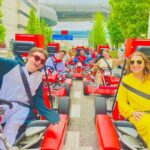
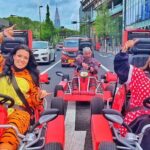
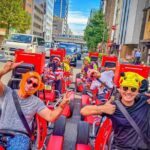
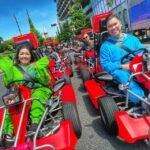
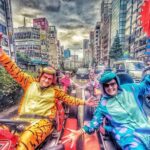
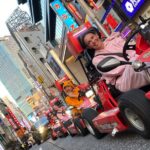
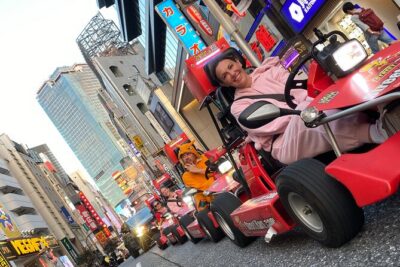
You can choose a costume before departure. The selection is designed for fun photos, and the guides take pictures along the way. The service is included, which matters because you can enjoy the ride without trying to handle a phone while driving.
I would think of the tour as a moving photo session with sightseeing built into it. You will see important places, but you should not expect museum visits, detailed interior tours, or a long stop at each landmark.
A few more Tokyo tours and experiences worth a look
Why the small group makes a difference
The maximum group size is six people, supported by two guides. That is a useful setup for a city drive. You are not trying to follow a large line of unfamiliar vehicles, and the staff can keep a close eye on the group.
The guides are part of the appeal. Patrick has been singled out for pointing out monuments and buildings, explaining local culture and daily life, and offering ideas for other places to see in Tokyo. That suggests the ride can be more than a route from one photo stop to the next, especially if you enjoy casual conversation while you drive.
The two-guide format also helps with comfort. One guide leads while the other supports the group and takes photos. The activity description specifically highlights two guides, and several comments praise the team for being polite, active, friendly, and safety-minded.
Still, this remains a street activity. A guide can organize the route, but you are responsible for controlling your own kart and following Japanese road rules. If driving in an unfamiliar city makes you tense, the fun may be reduced.
The route from Zojoji Temple to Tokyo Tower
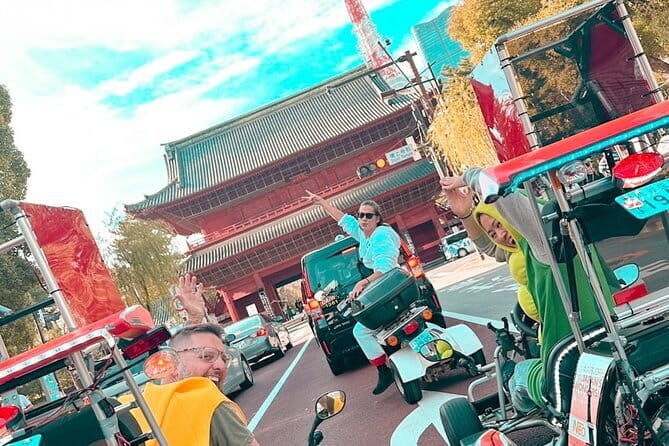
The first major sight is Zojoji Temple, one of Tokyo’s best-known Buddhist temples. It sits near Tokyo Tower, creating one of the city’s most recognizable combinations: traditional temple grounds with a tall modern structure behind them.
You pass the temple rather than tour its halls. That distinction matters. The stop is suited to a quick photo or a guide’s explanation, not a quiet temple visit. If you want to explore Zojoji properly, set aside separate time on another day.
From Zojoji, the route continues toward Tokyo Tower. This is likely the visual high point of the drive. The tower is easy to spot from the open kart, and a night ride gives you the extra pleasure of seeing it illuminated.
Several riders have preferred the evening departure because the city feels more striking after dark. I can see why. At night, Tokyo Tower provides a strong focal point, and the costume, lights, and small vehicle make the outing feel more like a city performance than a normal drive.
The tradeoff is that daylight may help you notice more architectural detail. The provided schedule does not promise a particular time of day, so check the available start times and choose based on your priority: clearer daytime views or Tokyo Tower lit against the night.
Passing the Imperial Palace Outer Gardens
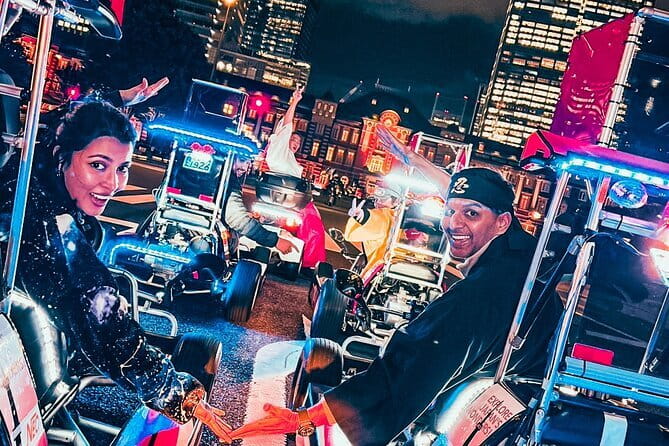
The route then heads toward the Imperial Palace Outer Gardens. This is a chance to see one of central Tokyo’s major open spaces while remaining in the kart.
Again, this is a pass-by and photo stop, not an Imperial Palace tour. You will not be entering palace buildings or receiving a full historical visit. The value is in the setting and the contrast between broad palace grounds and the dense city around them.
The open kart helps here. From a bus, you get a window view. From the kart, you have an unobstructed view around you, which makes passing landmarks feel more immediate. You also have fewer passengers blocking your sightline because the group is limited to six.
The ride moves quickly, so keep your eyes open and listen to the guides. This is not the time to expect a slow, reflective look at palace grounds. It is a good way to connect several central districts in a short period.
Tokyo Station and the visual rhythm of central Tokyo
Tokyo Station comes next. Its historic red-brick exterior is one of the city’s most recognizable buildings, and it provides a different kind of sight from the temple and tower.
The route includes sightseeing and scenic views on the way, but the schedule does not promise a lengthy stop. You will get a look at the station area and a chance for photos, then continue toward Ginza.
I like this mix of sights because it shows Tokyo through several layers: a Buddhist temple, a landmark tower, imperial grounds, a major transport hub, and a traditional theater district. You do not need to spend a full day moving between them, and you get a feel for how close these parts of central Tokyo are to one another.
The drawback is that a moving tour cannot provide the same detail as visiting Tokyo Station on foot. If the station is high on your list, return later to see the interior and surrounding streets at your own pace.
A few more Tokyo tours and experiences worth a look
Kabuki-za brings the ride back to Ginza
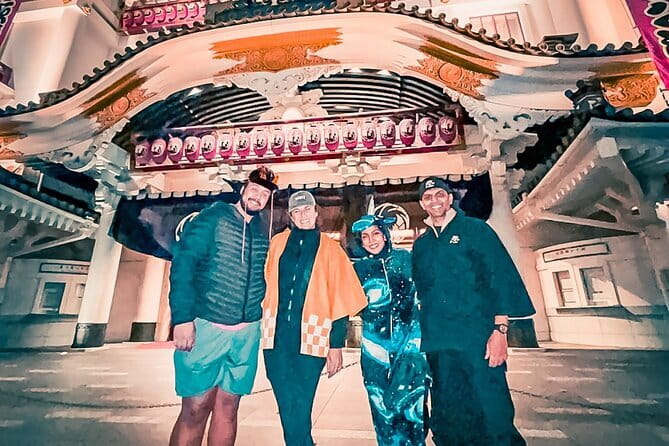
The final named landmark is Kabuki-za, the famous theater in Ginza. Its distinctive design gives the route a fitting finish, since the ride begins and ends in the same central Tokyo area.
Kabuki-za is another pass-by and photo stop. You are not attending a kabuki performance, and admission to a show is not included. The theater is still worth seeing from outside, especially if you are already exploring Ginza on foot.
This part of the route helps explain the tour’s name and focus. Ginza is not only department stores and polished avenues. It is also a district tied to traditional performance, formal architecture, and Tokyo’s older entertainment culture.
After Kabuki-za, you return to 新富町一丁目ビル. The loop lasts about an hour, so you can fit it into a larger day without giving up an entire afternoon.
Costumes, photos, and the fun factor
The costume choice is central to the mood. You can select a playful outfit before driving, then pose for photos as you pass the sights. A few riders have described dressing as unusual characters, including a lion, which gives you an idea of how lighthearted the activity can become.
You should choose a costume only if you are comfortable being noticed. The whole point is to attract attention and create memorable pictures. If you prefer quiet sightseeing and blending into the crowd, this may feel too public.
The photo service is included. The guides take pictures during the ride and share them afterward, according to the activity details and direct tour accounts. That is a real benefit, since using a phone while operating a kart is not allowed.
GoPro rental and an SD card are not included. You can pay for those separately if available, but the included guide photos cover the basic need for a record of the outing.
Is $64 a fair price?
At $64 per person, the price is reasonable for a one-hour activity if you value the combination of driving, costumes, staff support, insurance, and photos. You are not paying for a long guided tour, so judge the price against the unusual format rather than against a full-day sightseeing pass.
A regular bus ride may show more commentary and offer a more relaxed seat, but it will not give you the same open-air view or the feeling of driving through Ginza yourself. A private car tour would likely cost more, while a normal walking tour would be cheaper but far less playful.
The value is strongest for a first Tokyo visit, a special evening, or anyone who wants one activity that produces strong photos. It is weaker if your main goal is detailed history, indoor access, or a slow look at each landmark.
Insurance, costume use, English and Japanese-speaking staff, the 60-minute kart ride, and photo shooting are included. Hotel pickup and drop-off are not, so you need to make your own way to the starting building. Personal spending is also separate.
The driving documents you must arrange before Japan
This is the most important practical detail. Every participant who drives must obtain the special documents required for driving in Japan. For most countries, that means an International Driving Permit issued in the booklet format under the 1949 Geneva Convention.
The permit must be issued by the same country that issued your domestic license. You cannot obtain a valid permit online while already traveling in Japan. Bring the physical permit, not a digital copy, along with your physical passport.
Drivers from Switzerland, Germany, France, Taiwan, Belgium, and Monaco need a Japanese translation of their license from the Japan Automobile Federation, known as JAF. They do not use an International Driving Permit for this activity.
Licenses from countries not covered by the 1949 Geneva Convention, including China, Indonesia, Mexico, Qatar, and Saudi Arabia, are not permitted for driving in Japan under the stated rules. If your country falls into an exception, check the requirement before paying for the booking.
You also need to be at least 18 years old and hold a valid driver’s license. The staff will require your documents, so do not leave them in your hotel room.
Clothing and conduct for a safe ride
Wear flat, secure shoes. High heels and slippers are not allowed, and sensible footwear will make kart controls easier to manage.
Alcohol and drugs are prohibited. Cellphones are also not allowed during the activity, which is sensible for a driving tour and explains why the guide photo service matters.
The activity is not suitable for anyone without a driver’s license or for drivers under 18. The supplied information does not provide further details about vehicle size, weather procedures, or physical accessibility, so ask NEO TOKYO KART directly if you have a specific concern.
Who will enjoy this most?
I would recommend this for confident drivers who want something more playful than a standard city tour. It suits couples, friends, solo drivers who enjoy small groups, and anyone marking a first trip to Tokyo with a memorable outing.
It is especially appealing if you want:
- A short activity that fits into a busy itinerary
- Photos in a costume against major Tokyo sights
- A night ride with Tokyo Tower lit up
- A small group rather than a large coach
- A guide who can add local suggestions during the drive
I would think twice if you dislike public attention, are uneasy driving in city traffic, or want serious sightseeing detail. The route is quick, and the landmarks are viewed from the road.
Booking details worth keeping in mind
The experience lasts one hour and returns to its starting point. Live guidance is available in English and Japanese, and the group is limited to six participants.
You can reserve now and pay later, which helps if your Tokyo schedule is still shifting. Cancellation is free up to 24 hours before the activity for a full refund.
There is no hotel pickup or drop-off. Plan your route to 新富町一丁目ビル and leave enough time to arrive with your passport and driving documents ready.
Should you book the NEO GINZA go-kart ride?
Book it if you want Tokyo sightseeing with a strong dose of fun. The best parts are the compact route, two-guide support, costume photos, and the open-air view of Tokyo Tower, Zojoji Temple, the Imperial Palace Outer Gardens, Tokyo Station, and Kabuki-za.
Choose an evening start if the lit Tokyo Tower appeals to you, though daytime may suit you better if clear architectural views matter most. Before booking, settle the International Driving Permit question. If your documents are correct and you enjoy driving, this is a memorable $64 addition to a Tokyo itinerary. If you want a quiet, detailed cultural tour, spend that hour elsewhere.
FAQ
How long does the NEO GINZA go-kart experience last?
The experience lasts 60 minutes, or one hour, including the drive through the Ginza and central Tokyo area.
Where does the activity start and finish?
It starts and ends at 新富町一丁目ビル, also written as the Shintomicho 1-chome Building.
Which landmarks does the route pass?
The route passes Zojoji Temple, Tokyo Tower, the Imperial Palace Outer Gardens, Tokyo Station, and Kabuki-za in Ginza.
Are costumes included?
Yes. A costume is included, and you can choose from the available options before the ride.
Are photos included?
Yes. Photo shooting by the guides is included. GoPro rental and an SD card are not included.
What languages do the guides speak?
The live guides speak English and Japanese.
How many people can join the group?
The activity is limited to six participants, with two guides supporting the group.
What documents do I need to bring?
Bring your physical passport or ID card and your physical International Driving Permit. If you are from Switzerland, Germany, France, Taiwan, Belgium, or Monaco, bring your physical domestic license and the official Japanese translation required from JAF.
Can anyone drive the karts?
No. You need a driver’s license and must be at least 18 years old. The activity does not allow drivers from countries not covered by the 1949 Geneva Convention under the stated rules.
More Go-Kart Tours in Tokyo
More Ginza Tours in Tokyo

More tours in Tokyo we've reviewed



Go-Karts, compared.
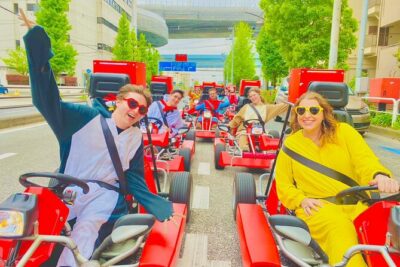 ★ 5.0Flagship 2-Hours Official Street Go-Kart Tour – Tokyo Bay ShopFrom $642 hours to 2 hours 30 minutes (approx.)
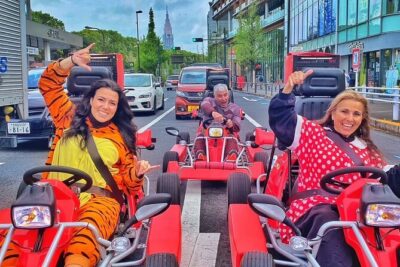 ★ 5.0Official Street Go-Kart in ShibuyaFrom $76
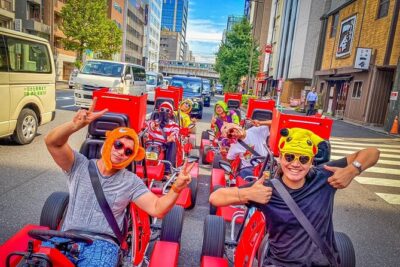 ★ 5.0Official Street Go-Kart Tour – AkihabaraFrom $61
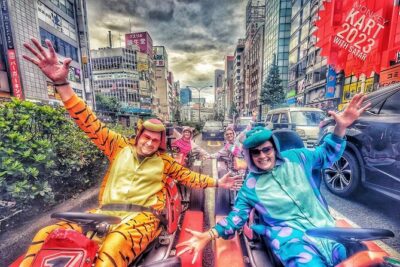 ★ 5.0Tokyo Go Kart: Asakusa, Skytree, and Akihabara **IDP MUST**From $99
 ★ 5.0Shibuya Official Street Go-Kart in Shibuya AnnexFrom $69
 ★ 4.7Tokyo: Asakusa, Skytree & Akhihabara Go-Kart City ExperienceFrom $961h 10m