
Reviewed · GO-KARTS
Go-kart tour Tokyo Tower to Shibuya (IDP&Passport Required)
The best part of this Tokyo go-kart tour is the unusual view you get from street level. You pass beneath Tokyo Tower, run through Roppongi, and arrive at Shibuya Scramble Crossing in a small convoy of go-karts. It is sightseeing with a motor, not a museum visit.
I like the small group of up to 10 and the guide-led format. The guide helps keep the group together at traffic lights, and one recent departure used both a lead guide and a following support vehicle. I also like that photo data is included, so you can concentrate on the ride instead of trying to take pictures yourself.
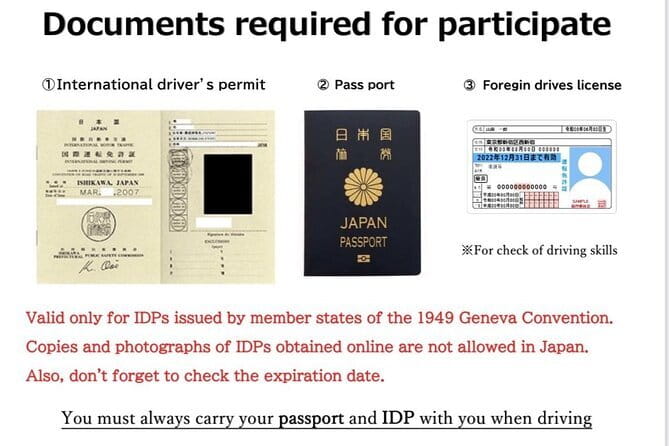
The main consideration is the paperwork. You must bring your physical passport and a booklet-style Geneva 1949 International Driving Permit, or the accepted Japanese translation documents for certain countries. If your documents are wrong or incomplete, you may be turned away without a refund.
In This Review
- Key points before you book
- Starting near Hamamatsucho Station
- Tokyo streets from a low driving seat
- Tokyo Tower from the street
- Roppongi after dark or in the city rush
- The approach to Shibuya Scramble Crossing
- A possible glimpse of Harajuku style
- What the guide and photo service add
- The license rules are not a small detail
- Is $96 good value for one hour?
- Who should book this Tokyo kart ride?
- Should you book the Aloha Kart Tokyo route?
- FAQ
- How long is the go-kart tour?
- How much does the tour cost?
- Where is the meeting point?
- What languages are available?
- How many people can join the group?
- What documents must I bring?
- Can I use a 1968 Vienna Convention IDP?
- Do drivers from Switzerland, Germany, France, Taiwan, Belgium, or Monaco need extra paperwork?
- What is included in the price?
Key points before you book
- Tokyo Tower from below: The route gives you a street-level view of the tower that you will not get from an observation deck.
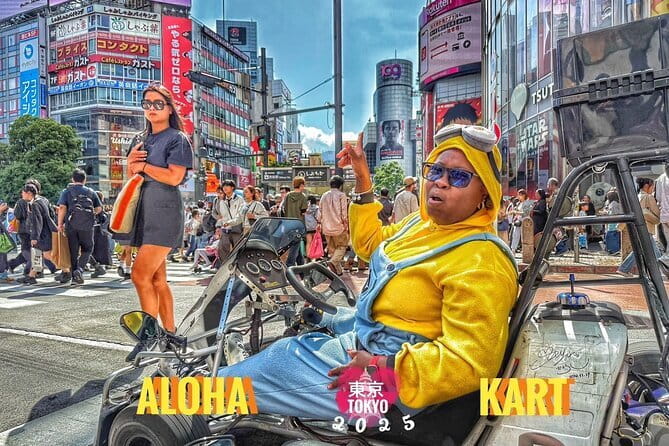
- Shibuya by go-kart: You pass through one of the world’s best-known crossings as part of a guided group.
- Roppongi and possible Harajuku views: The route links nightlife, major sights, and a possible glimpse of kawaii fashion.
- Photo data included: The guide takes pictures during the activity, and some departures have also included printed photos.
- Correct IDP is essential: A 1968 Vienna permit, phone photo, PDF, A4 copy, or card-style IDP is not accepted.
- One-hour format: The listed duration is one hour, though one recent participant reported a ride of about 1.5 hours, so allow extra time in your plans.
Starting near Hamamatsucho Station
Your meeting point is close to the center of the action, but not directly at Tokyo Tower. From the South Exit of JR Hamamatsucho Station, it is about a five-minute walk. From Daimon subway station, use Exit A1 or A3 and allow about seven minutes.
This location works well if you are already sightseeing around Tokyo Tower, Shiba, or the business district south of central Tokyo. Give yourself enough time to find the shop, complete the check-in process, and handle the license inspection without rushing.
The experience provider is AIPA Inc., trading here as Aloha Kart. English and Japanese support is available, and the supplied information also lists Korean staff. The tour is designed for a small group, capped at 10 people, which matters on Tokyo roads. A small convoy is easier for a guide to manage than a large parade of karts.
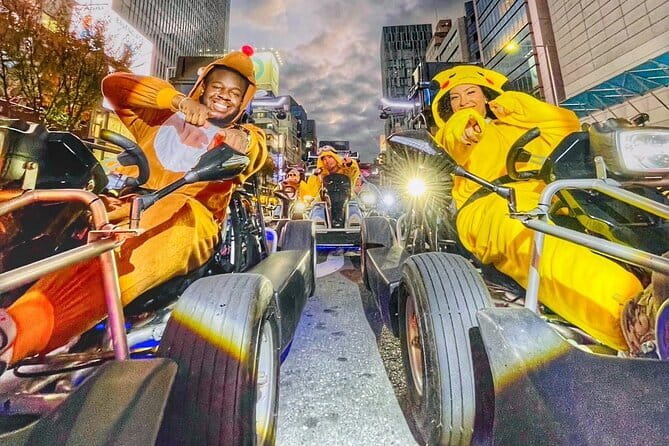
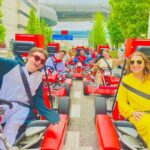
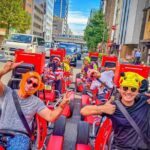
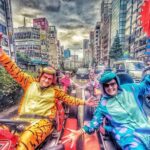
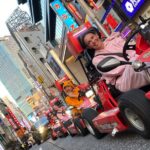
At the shop, you receive basic instructions before setting off. Gasoline, insurance, a locker, eyewear, rain protection, and a costume are included. The costumes add a playful touch, though they are not compulsory sightseeing gear. If you prefer to keep the experience low-key, you can still enjoy the route without treating it like a costume party.
A few more Tokyo tours and experiences worth a look
Tokyo streets from a low driving seat
A go-kart changes the scale of Tokyo. From a normal car or bus, you see the city through glass. From a kart, you sit low, feel the air, and notice the rhythm of signals, lanes, and turning traffic. The experience is active, but the point is not to race other drivers.
The word race appears in the tour description, but you should think of this as a guided road tour rather than a competition. Tokyo’s streets require attention. You follow the guide, obey traffic signals, and keep your place in the group. A recent participant specifically praised the guide for knowing when the lights were about to change and preventing the group from being split up.
That kind of escorting is one of the tour’s most important features. The route passes through busy parts of the city, so the guide’s job is not just to point out sights. The guide sets the pace, leads the convoy, and helps the group move through intersections together.
You should also know that this is not a private road or a closed track. You are driving in city traffic. The kart format feels lively, but it calls for sensible expectations and careful attention to instructions.
Tokyo Tower from the street
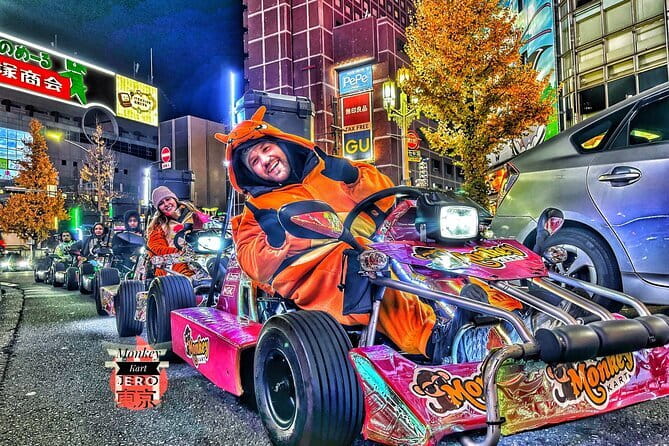
Tokyo Tower is the first major visual reward. The route takes you beneath the tower, giving you a wide upward view of its orange and white frame. From directly below, its structure feels much larger than it does in distant skyline photographs.
This is a different Tokyo Tower experience from paying to go up. You do not get a view across the city from the observation decks, but you do get the dramatic approach and the sense of passing through the neighborhood around one of Tokyo’s best-known landmarks.
The tour description calls this the closest shop to Tokyo Tower, which makes the location useful if the tower is your main reason for booking. Still, the activity is not limited to the tower area. The ride connects several districts, so you should choose it for the moving route rather than for a long stop at the monument.
Do not expect a formal guided visit inside Tokyo Tower. The sightseeing happens from the kart, with the guide offering information about the places along the way. The available information does not promise a stop, tower admission, or time for a separate visit.
Roppongi after dark or in the city rush
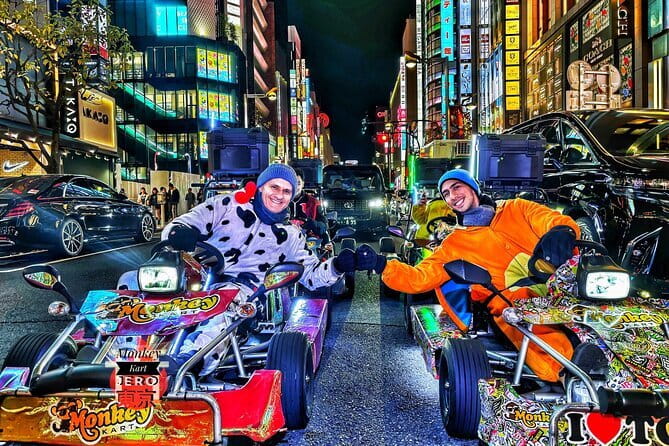
The route also passes through Roppongi, a district known for nightlife, restaurants, high-rise buildings, and late hours. From a go-kart, you get a quick street-level look at this side of Tokyo. The appeal is the movement between districts rather than a detailed walking tour of Roppongi.
Timing will shape the mood. A daytime ride gives you clearer views of buildings and streets. An evening departure brings more signs, lights, and nightlife energy. Starting times vary, so check availability when you book rather than assuming the tour runs only at night.
The Roppongi section helps make this more than a single-landmark outing. You see how quickly Tokyo changes from the quiet open space around major monuments to commercial streets filled with shops and evening activity.
The tradeoff is that you will not have much time to stop and explore. This is a panoramic pass-through, not a neighborhood food tour. If you want to browse restaurants, visit galleries, or spend time in Roppongi’s entertainment areas, plan that separately before or after the kart ride.
The approach to Shibuya Scramble Crossing
Shibuya is the big finish. The famous crossing is known for the coordinated movement of people in several directions when the signals change. From your kart, the crossing becomes part of a moving city scene rather than a single photo stop.
The tour description presents Shibuya Scramble Crossing as one of the central highlights, and that is fair. It is one of those Tokyo places that looks familiar from photographs but feels different when you approach it through the city streets.
You should keep your expectations practical. A one-hour tour cannot give you a long stop at every sight. The kart route lets you see and pass through the area, but you may want to return on foot if you want to cross several times, shop, visit the nearby observation areas, or take your own close-up photographs.
The group format helps here. You do not need to work out the route or worry about finding the crossing on your own. You follow the guide and share the moment with the other drivers. The small convoy also makes it easier to stay together when traffic signals change.
A few more Tokyo tours and experiences worth a look


A possible glimpse of Harajuku style
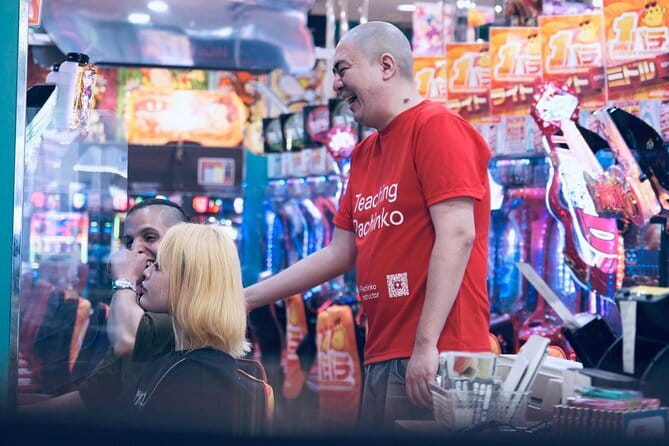
The route may also offer a glimpse of Harajuku and its kawaii fashion scene. This is a useful detail for anyone interested in Tokyo’s youth culture and street style, but it is not presented as a guaranteed stop.
That distinction matters. You are not signing up for a Harajuku shopping walk, costume fitting, or fashion lesson. You might catch colorful clothing and storefronts as you pass through or near the area. If Harajuku is high on your list, add a separate walking visit to your schedule.
The kart tour works best as a broad city sampler. In a short time, you connect Tokyo Tower, Roppongi, Shibuya, and possibly Harajuku. You see the spaces between the famous sights, which is often where a city begins to make sense.
At the same time, the route is fast. You will not absorb every district in detail. Think of it as a lively introduction that helps you decide where you want to return later.
What the guide and photo service add
The guide is the difference between simply hiring a kart and joining a tour. Instructions are provided in English or Japanese, and the guide leads the route. The supplied information also lists Korean staff, which may help at check-in or during preparation.
The most useful guide skill is traffic management. The tour operates as a group, and the guide must keep the karts together through signals and intersections. The strongest practical detail available is that a guide timed the group’s movement around traffic lights so nobody was left behind.
Photo data taken by the guide is included. That gives you a record of the ride without forcing you to handle a phone while driving. One recent departure also included two printed photographs, but treat those as an extra possibility rather than a guaranteed part of every booking.
An action camera is not included. If you want footage from the kart itself, you need to arrange that separately, and you should follow the operator’s rules about equipment. The included guide photos are the safer and simpler option.
Free costumes, eyewear, and a raincoat are provided. The raincoat is useful because the tour runs outdoors, though the supplied details do not explain every weather cancellation rule. Check the operator’s instructions for your date and dress for the conditions.
The license rules are not a small detail
This is the part I would check before paying. Japan does not accept every international driving permit in the same way, and this tour has strict document requirements.
For most eligible drivers, bring all of the following in physical form:
- Your passport
- Your driver’s license
- A booklet-style International Driving Permit in the Geneva 1949 format
A photograph, PDF, A4 printout, card-style IDP, or 1968 Vienna Convention permit is not accepted for this activity. Do not rely on a digital copy stored on your phone.
Drivers with licenses issued in Switzerland, Germany, France, Taiwan, Belgium, or Monaco need a Japanese translation from the Japan Automobile Federation, known as JAF. You must bring the physical passport, physical driver’s license, and physical Japanese translation paper.
A license from a country not covered by the 1949 Geneva Convention, including Mexico, Kuwait, China, Colombia, and Saudi Arabia, cannot be used to operate the kart in Japan. If you are unsure about your country’s status, settle the question before booking.
Drivers must be at least 18 years old. The experience is not suitable for people who are pregnant, people with mobility impairments, wheelchair users, or anyone over 75. High heels, sandals, and flip-flops are not allowed. Alcohol and drugs are also prohibited.
Is $96 good value for one hour?
At $96 per person, this is not a cheap way to get from Tokyo Tower to Shibuya. You are paying for the kart, gasoline, guide, insurance, costume, locker, rain protection, and photo data. The price also covers the novelty of driving through central Tokyo instead of sitting on a sightseeing bus.
I see the value if you want an active experience and have already seen Tokyo’s major sights in more traditional ways. The ride links several famous areas in a short period, and the guide handles the route and group movement. The included photos are useful because you leave with more than a memory of the drive.
The value is weaker if you want detailed cultural explanations, long stops, or a relaxed look at each district. At one hour, this is a fast overview. You are paying for access to the experience of driving through Tokyo, not for an in-depth tour of Roppongi, Harajuku, or Shibuya.
There is also a small timing question. The official duration is one hour, but one recent participant described a 1.5-hour experience. Build some flexibility into your day, especially if you have a restaurant booking, train connection, or timed attraction afterward.
Free cancellation up to 24 hours before the activity helps reduce the risk, and you can reserve now and pay later. Still, cancellation flexibility does not fix a document problem. The license rules deserve attention before you make the reservation.
Who should book this Tokyo kart ride?
I would recommend it to adults who enjoy unusual city sightseeing, are comfortable driving, and want a memorable way to connect Tokyo’s major districts. It is especially suited to people who have already visited Tokyo Tower or Shibuya on foot and want to experience them from another angle.
It can also work well for a small group of friends or couples who want shared photos and a playful activity between more traditional sightseeing stops. The maximum of 10 people keeps the outing personal enough for guide support without making it a private tour.
I would not choose it for young children, anyone without the required license, or anyone who dislikes driving in city traffic. It is also a poor fit if your priority is food, shopping, museum time, or long conversations about local history.
Bring proper shoes, your documents, and a willingness to follow the guide’s pace. Leave the high heels and loose assumptions at the hotel.
Should you book the Aloha Kart Tokyo route?
Book this tour if you want street-level Tokyo with a little speed and plenty of spectacle. The strongest reasons are the Tokyo Tower approach, the run through Shibuya, the small group, and the guide-led traffic support. The included photos make the $96 price easier to justify.
Skip it if you cannot confirm the Geneva 1949 IDP or required Japanese translation, or if you want a slow, detailed visit to each district. This is a compact, active city ride. With the documents in order and the right expectations, it offers a memorable look at Tokyo that a standard bus or train ride cannot provide.
FAQ
How long is the go-kart tour?
The listed duration is one hour. One recent participant described an experience of about 1.5 hours, so allow extra time around the scheduled activity.
How much does the tour cost?
The price is $96 per person.
Where is the meeting point?
The meeting point is about a five-minute walk from the South Exit of JR Hamamatsucho Station. From Daimon subway station, it is about a seven-minute walk from Exit A1 or A3.
What languages are available?
Live tour guide support is available in Japanese and English. Korean staff are also listed as available.
How many people can join the group?
The tour is limited to 10 participants.
What documents must I bring?
Bring your physical passport and a physical booklet-style International Driving Permit in the Geneva 1949 format. You must also bring your driver’s license.
Can I use a 1968 Vienna Convention IDP?
No. A 1968 type IDP is not accepted. Photos, PDFs, A4 paper copies, and card-style IDPs are also not accepted.
Do drivers from Switzerland, Germany, France, Taiwan, Belgium, or Monaco need extra paperwork?
Yes. Those drivers need a Japanese translation of their license from the Japan Automobile Federation, along with the physical passport and physical driver’s license.
What is included in the price?
The price includes an experienced guide, gasoline, insurance, English or Korean staff support, a free locker, a free costume, eyewear, a raincoat, and photo data taken by the guide. Food, drinks, transportation to the meeting point, and an action camera are not included.
More Tickets & Passes in Tokyo
More Go-Kart Tours in Tokyo
More Shibuya Tours in Tokyo

More tours in Tokyo we've reviewed










Go-Karts, compared.
 ★ 5.0Flagship 2-Hours Official Street Go-Kart Tour – Tokyo Bay ShopFrom $642 hours to 2 hours 30 minutes (approx.)
 ★ 5.0Official Street Go-Kart in ShibuyaFrom $76
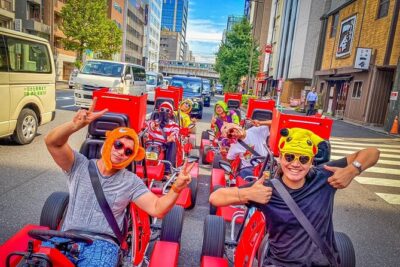 ★ 5.0Official Street Go-Kart Tour – AkihabaraFrom $61
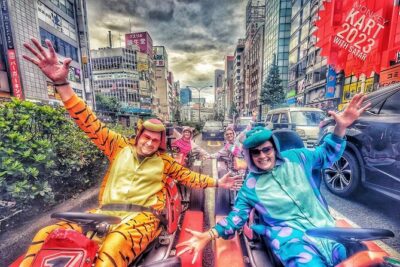 ★ 5.0Tokyo Go Kart: Asakusa, Skytree, and Akihabara **IDP MUST**From $99
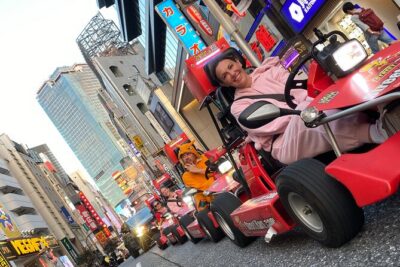 ★ 5.0Shibuya Official Street Go-Kart in Shibuya AnnexFrom $69
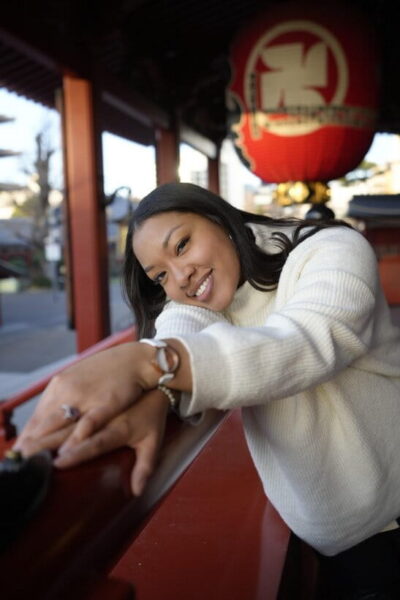 ★ 4.7Tokyo: Asakusa, Skytree & Akhihabara Go-Kart City ExperienceFrom $961h 10m