
Reviewed · TOURS
Horse Racing Tour with Local Fans in Tokyo Racecourse
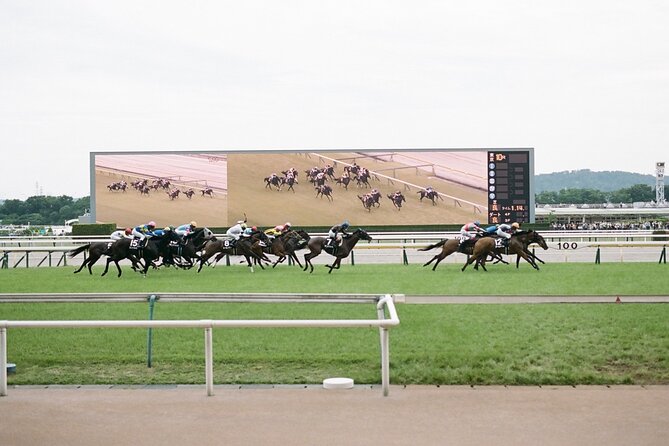
Tokyo horse racing is part sporting event, part social ritual, and this four-hour outing puts you beside local fans rather than leaving you to decode the racecourse alone. Your guide explains the rules in plain English, walks you through betting, and helps you follow several live races.
I like the train ride with the guide, which makes the trip feel social from the start. I also like the chance to visit the paddock and place bets for several races, not just watch one event from a distance. The main consideration is cost: the $100 fee covers the guide, but transport, food, drinks, and bets come separately.
In This Review
- Key points
- Meeting at Shibuya and Riding the Train Together
- Learning Japanese Horse Racing Without Japanese
- The Paddock, the Horses, and the Main Event
- Japanese Food, Sake, and Race-Day Conversation
- Walking Around Tokyo Racecourse
- Is the $100 Price Fair?
- Who Will Enjoy This Racecourse Outing?
- Practical Tips for a Smoother Day
- Should You Book the Tokyo Racecourse Tour?
- FAQ
- Where does the tour start?
- Where does the activity end?
- How long does the tour last?
- Is transportation included in the price?
- Are food and drinks included?
- Do I need cash?
- How many people can join the tour?
Key points
- Local race-day guidance: Learn how Japanese horse racing works without needing Japanese-language skills.
- Several live races: The experience lasts about four hours and ends around 4:00 PM.
- Paddock access: You can watch horses being prepared before the race and use that view when considering a bet.
- Food and drinks: Sake, cocktails, and Japanese street food are available, but you pay for them separately.
- Small group format: The maximum group size is 12 people, which should make questions and betting help easier.
- Cash matters: Bring Japanese yen for race bets, and allow ¥320 per person for public transportation.
Meeting at Shibuya and Riding the Train Together
The day begins at SHIBU HACHI BOX, at 2-chōme-1-1 Dōgenzaka in Shibuya. From there, you travel by train with the guide to Tokyo Racecourse. The public transportation cost is ¥320 per person, and it is not included in the tour price.
I like this start because the train ride gives you time to ask basic questions before reaching the track. If you have never attended Japanese horse racing, you can use this part of the outing to say plainly that you know nothing about betting. The guide’s job is to get you comfortable before the action begins, not assume you already understand racing terms.
The meeting point is central, but you should still plan your route carefully and arrive with time to spare. Tokyo rail stations can be confusing, especially if you are carrying luggage or trying to find a particular street-level meeting point. The experience ends back at the same meeting point, so you do not need to work out a separate return route from the racecourse.
This is a four-hour activity, with the day ending around 4:00 PM. The exact amount of time spent inside the racecourse can depend on the pace of the day, but you should have time for several races, food, drinks, conversation, and a walk around the grounds.
A few more Tokyo tours and experiences worth a look
Learning Japanese Horse Racing Without Japanese
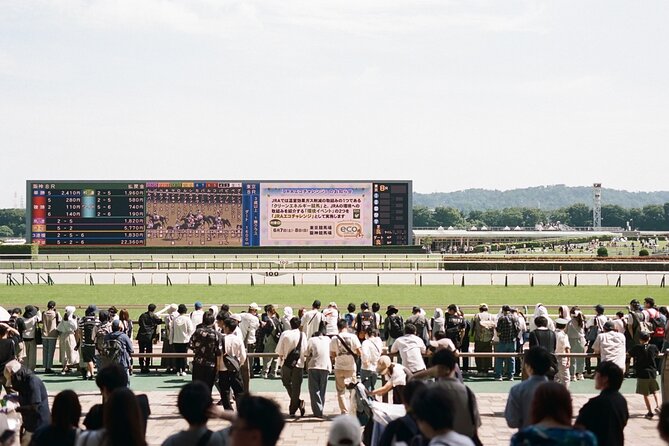
At the racecourse, the guide gives you a simple introduction to Japanese horse racing. That explanation is central to the experience. Without help, the betting forms, race information, and choices can feel like a wall of unfamiliar Japanese text.
You learn how to place a bet and how to take part at your own level. The guide can assist complete beginners, while people who already know racing can still use the local setting and predictions to sharpen the day.
The guide also offers race predictions. Treat these as part of the fun, not as a promise of profit. Horse racing is gambling, and even a confident prediction can lose. Set a small budget before you arrive, and regard any money spent on bets as entertainment money.
I appreciate that the betting lesson takes place between races. You do not have to absorb every rule at once. You can watch one race, ask questions, place a modest bet on the next, then see how the results affect your understanding.
Bring Japanese yen in cash. Betting typically requires cash, and you should not count on using a foreign card for this part of the day. Since food and drinks are also extra, cash gives you more freedom to join in without stopping to solve a payment problem.
The Paddock, the Horses, and the Main Event
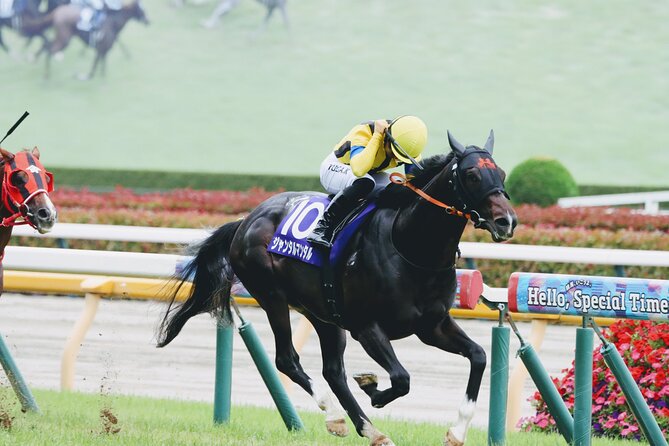
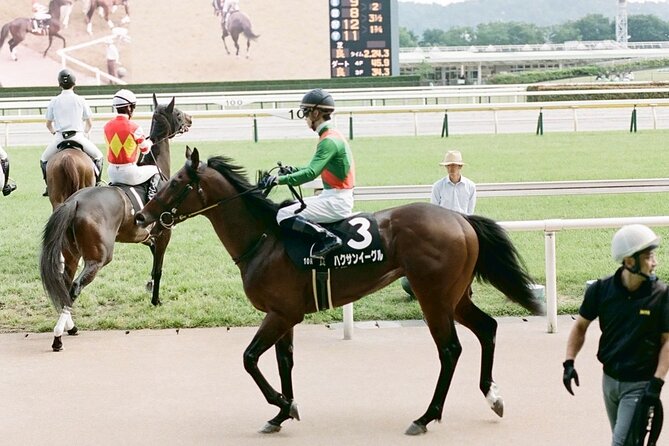
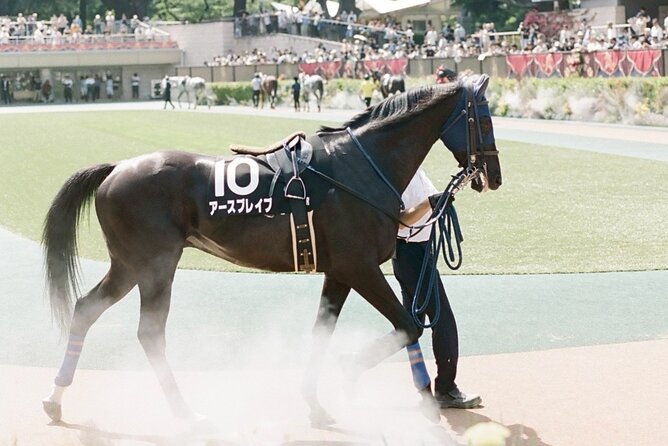
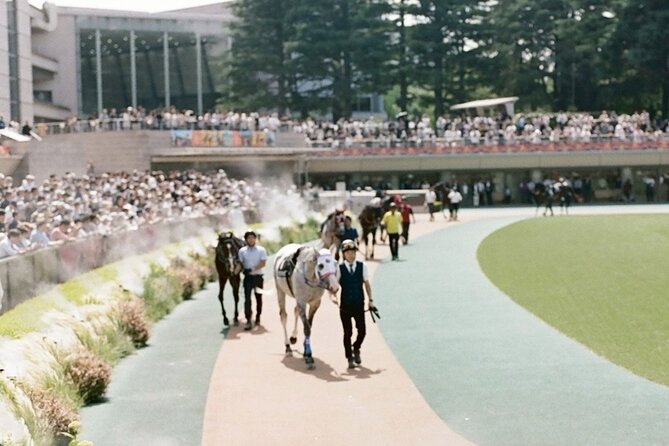
One particularly useful part of the outing is the chance to watch at the paddock. This is where you can see the horses before a race, rather than only watching them thunder past the finish line.
For a first-time visitor, the paddock adds a physical sense of preparation and anticipation. You see the horses before the noise and speed take over. The guide can help connect what you observe with the betting process, so the race becomes more than colored silks moving around a track.
The race itself supplies the drama. Fans cheer for their chosen horses, and the mood grows louder as the start approaches. You do not need to speak Japanese to understand the basic emotion of the moment. The cheers, sudden silence, and rush toward the result communicate plenty.
The tour gives you time to watch several races. That matters because one race can feel like a quick sample, while several rounds let you learn the rhythm of the day. You can make a first cautious bet, see how the race unfolds, and decide how much more you want to participate.
Do not expect every bet to win, and do not let the guide’s predictions push you beyond your budget. The value here is the explanation and shared excitement, not a guaranteed return.
Japanese Food, Sake, and Race-Day Conversation
Food and drinks help turn the outing into a social afternoon. Japanese street food is available, along with drinks such as sake and cocktails. These are not included in the $100 price, so you will need to pay for anything you order.
I like this part because a racecourse can be easier to enjoy when you are not treating it as a strict sporting lesson. A snack and a drink give you something to do between races, and the guide can explain what is happening while you take a break.
The wording around drinks is worth noting. Sake and cocktails are described as part of the experience, but alcoholic beverages are listed as an extra cost. Budget separately for them, and do not assume that premium drinks are included in the tour fee.
The food is described as gourmet Japanese street food, but no particular dishes are specified. That means you should approach the food as an opportunity to try what is available at the racecourse rather than expect a fixed restaurant meal or a set tasting menu.
You may find this social side more important than the betting itself. A day at the races offers easy conversation, and the guide can help connect you with the local atmosphere. One person who took the tour enjoyed chatting with the guide on the train and at the track, and the guide even helped with a gift-shop visit and an escort back to the hotel. The standard end point remains the Shibuya meeting point, so treat any hotel escort as something that may be arranged, not a listed part of the regular service.
Walking Around Tokyo Racecourse
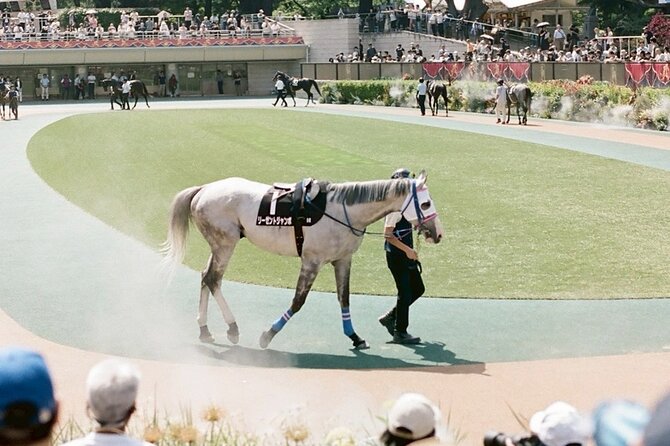
The tour includes time to walk around and explore the racecourse. That gives you a better feel for the place than sitting in one location for four hours.
You can watch fans gather around the races, follow the movement between events, and take in the changing mood as each result comes in. The guide helps you know where to go and what deserves attention, which is useful when the venue feels unfamiliar.
The experience involves standing and walking, plus train travel. A moderate level of physical fitness is recommended. You do not need to be an athlete, but this is not a seated food tour. Comfortable shoes make sense, especially if you want to see the paddock, follow the races, and visit other parts of the grounds.
The group maximum is 12 people. That is small enough for a guide to answer questions and help several people with betting basics, though it is not a private tour. If everyone wants help before the same race, you may need to listen closely and act quickly.
Service animals are allowed, and the meeting point is near public transportation. The supplied details do not describe specific seating, indoor shelter, or the exact route inside the racecourse, so you should be ready for a day shaped by the venue and race schedule.
Is the $100 Price Fair?
At $100 per person, this tour is not simply an admission ticket. The fee pays for a guided introduction, shared train travel, help with betting, race predictions, and support while you explore the course.
You also need to add the ¥320 transportation cost. Food, alcoholic drinks, and the money you choose to bet are separate. A realistic budget therefore depends on how much you eat, drink, and wager.
I see the price as reasonable for someone who wants a social introduction to Japanese horse racing. The guide removes the language barrier and gives structure to an activity that could otherwise be hard to follow. The paddock visit, several races, and local fan atmosphere add more value than simply entering the venue and wandering alone.
The price is less attractive for a person who already knows Japanese racing, speaks Japanese, and feels comfortable reading betting information without help. That person may prefer to attend independently and spend the saved money on food or bets.
The small group helps the value. A maximum of 12 people is more manageable than a large coach group, especially when betting instructions need to be clear. Still, you are paying for access to guidance and company, not for included meals, drinks, or a winning ticket.
Who Will Enjoy This Racecourse Outing?
This tour suits a first-time racegoer who wants to understand what is happening. It also works well for a visitor who enjoys sports, people-watching, and local entertainment but does not want to face a Japanese racecourse alone.
You do not need to be a serious gambler. In fact, the experience may be best when you place only small bets and focus on learning the process. The guide’s predictions can add a playful angle, but the day still works if you decide to wager very little.
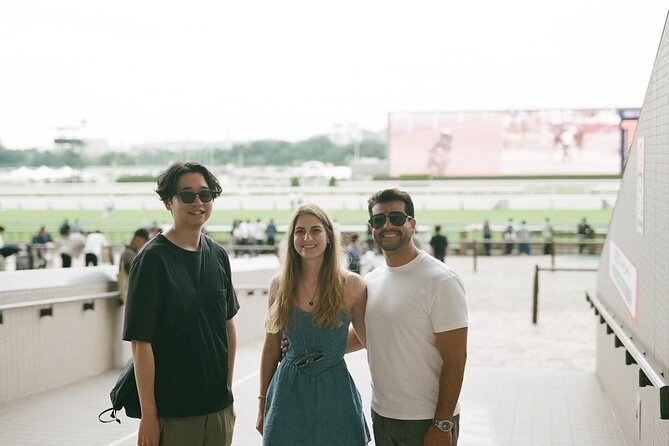
It is also a good fit for someone who enjoys meeting a guide and talking during the journey. The train ride and time between races leave room for conversation, and the smaller group should make it easier to ask about Japanese customs and racing.
I would be more cautious about recommending it to someone seeking a quiet cultural tour. The crowd noise, betting, and race-day energy are the point. It may also be a poor match if you dislike walking, standing, or paying for extras after booking a tour.
The 37-day advance booking average suggests that planning ahead is sensible, especially if your Tokyo dates are fixed. Confirmation arrives at booking, and free cancellation is available up to 24 hours before the start time. If you cancel inside that window, you do not receive a refund, and late changes are not accepted.
Practical Tips for a Smoother Day
Bring cash in Japanese yen. You need it for betting, and it is useful for the separate transportation, food, and drink costs.
Set your betting limit before you leave Shibuya. The excitement can build quickly once the crowd starts cheering, and a fixed budget lets you enjoy the activity without chasing losses.
Wear comfortable shoes and keep your schedule open until after 4:00 PM. The tour ends back at the original Shibuya meeting point, but you should not plan a tight appointment immediately afterward.
Arrive ready to ask basic questions. The guide’s explanations are meant to make Japanese racing easy to follow, so there is no advantage in pretending you understand a betting option when you do not.
If you want food or alcohol, budget for both separately. The guide fee is included, but the tour price does not cover alcoholic beverages, food, bets, or the ¥320 transport fare.
Should You Book the Tokyo Racecourse Tour?
Book this tour if you want a friendly introduction to Japanese horse racing, live local energy, and practical help with betting. The strongest reasons are the guide’s clear explanations, the chance to see the paddock, and enough time to watch several races rather than rushing through a single event.
Skip it if you want an all-inclusive package or already know exactly how Japanese racing works. The $100 price is only the starting cost, and every bet, snack, drink, and train fare comes afterward.
For most curious first-timers, I think the tour offers a useful bridge into an unfamiliar part of Tokyo life. Keep your gambling budget modest, bring yen, wear good shoes, and treat the predictions as entertainment. That leaves you free to enjoy the horses, the crowd, and the unusual pleasure of spending an afternoon at the races with someone who can explain the rules.
FAQ
Where does the tour start?
It starts at SHIBU HACHI BOX, 2-chōme-1-1 Dōgenzaka, Shibuya, Tokyo 150-0043, Japan.
Where does the activity end?
The activity ends back at the meeting point in Shibuya.
How long does the tour last?
The experience lasts approximately four hours and concludes around 4:00 PM.
Is transportation included in the price?
No. Public transportation costs ¥320 per person and is not included.
Are food and drinks included?
No. Food and alcoholic beverages are not included. Sake, cocktails, and Japanese street food are available at an additional cost.
Do I need cash?
Yes. Bring Japanese yen because betting typically requires cash. You may also need money for transportation, food, and drinks.
How many people can join the tour?
The maximum group size is 12 people.
More Horses in Tokyo
More tours in Tokyo we've reviewed











Tours, compared.
 ★ 5.0Mt Fuji and Hakone 1-Day Bus Tour Return by Bullet TrainFrom $163
 ★ 5.01-Day Tokyo Bus TourFrom $129
 ★ 5.0Tokyo: Shinjuku Food Tour (13 Dishes at 4 Local Eateries)From $86
 ★ 4.4Tokyo Mt Fuji 5th St & Hakone Cruise Bus Tour w/Bullet TrainFrom $15410 hours
 ★ 5.0Flagship 2-Hours Official Street Go-Kart Tour – Tokyo Bay ShopFrom $642 hours to 2 hours 30 minutes (approx.)
 ★ 4.7Tokyo: Mt. Fuji Tour, Hakone Ropeway, Owakudani, Lake AshiFrom $5410 hours