
Reviewed · NIKKO DAY TRIPS
Chartered Private Tour – Tokyo to Nikko, Toshogu, Edo Wonderland
Nikko gives you Japan in two very different moods: gold-leaf shrine halls and Tokugawa power in the morning, then waterfalls, mountain roads, or costumed samurai in the afternoon. This private Tokyo day trip makes that contrast easy, with hotel pickup, a chauffeur, and a guide who can adjust the day to your group.
I like the freedom to choose roughly four to six sights instead of racing through every listed stop. I also like the thoughtful family service described by guests, including guides such as Ken, Ayaka, Yoshimi, Bob, and Noriko helping with children, umbrellas, food, and special birthday touches.
The catch is distance. Tokyo to Nikko can take two to three hours each way, so this is a long day, and the $1,286.89 group price is a serious outlay unless you fill the vehicle or place a high value on private transport.
In This Review
- Key points before you book
- Why Nikko works as an ambitious Tokyo day trip
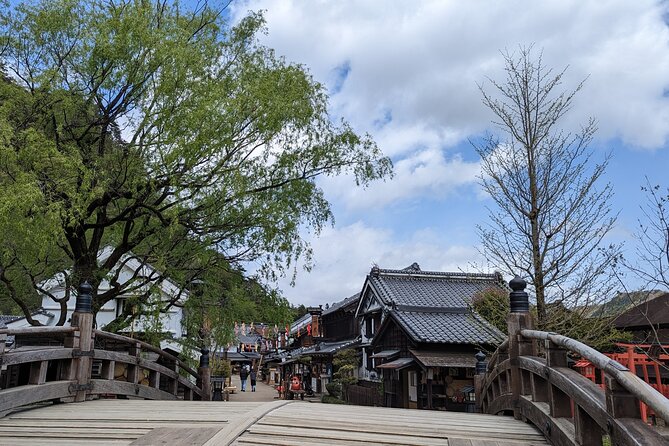
- Shinkyo Bridge and the first look at Nikko
- Toshogu Shrine deserves the extra minutes
- Taiyuimbyo and Futarasan add depth to the shrine district
- Tamozawa Villa offers a quieter change of pace
- Kanmangafuchi Abyss is short, atmospheric, and easy to miss
- Akechidaira, Kegon Falls, and Lake Chuzenji make the scenic half
- Edo Wonderland is fun, but it changes the day
- Optional seasonal stops near Tochigi
- What the private service adds
- Who should book this Nikko tour
- Should you book it?
- FAQ
- How long does the Tokyo to Nikko tour last?
- How many people can join the private tour?
- Can I choose which Nikko sights to visit?
- Is hotel pickup and drop-off included?
- Are admission tickets and lunch included?
- Which languages are available for the guide?
- What happens if the weather affects the views?
Key points before you book
- Private vehicle for up to eight: Hotel pickup and drop-off remove the need to manage trains, buses, and local connections.
- Choose four to six sights: You can focus on shrines and nature, add Edo Wonderland, or ask for other suggestions after booking.
- Toshogu is the cultural centerpiece: Allow more than a quick photograph if ornate gates, carvings, and Tokugawa history interest you.
- Edo Wonderland is hands-on history: Costumes, shows, and the popular ninja performance make it especially good for families.
- The mountain section depends on conditions: Akechidaira, Kegon Falls, and Lake Chuzenji can be affected by traffic, weather, and visibility.
- Admissions and lunch cost extra: The tour covers the vehicle, guide, fuel surcharge, and bottled water, not entrance tickets, food, or gratuity.
Why Nikko works as an ambitious Tokyo day trip
Nikko is far enough from Tokyo to feel like a change of country, yet close enough for a very full day by car. The road leaves the city behind and climbs toward forests, shrines, waterfalls, and Lake Chuzenji. That range is the main reason to consider this tour.
The private format matters here. Nikko’s sights are spread across several areas, and a group of eight would find public transport slower and less flexible. With a chauffeur, you can leave your hotel, stop at the bridge, visit the shrine district, then continue toward the mountain sights without piecing together every connection.
Still, do not mistake private for short. The drive from Tokyo is often around two hours and can stretch toward three when traffic is heavy. One group left Tokyo at 8 a.m. and returned around 7:30 p.m., a useful picture of the day’s scale.
The operator says you should select about four to six places. That advice is sound. The full list includes far more stops than an 11-hour day can handle comfortably, especially if you want time for Toshogu, lunch, photographs, and a walk.
A few more Tokyo tours and experiences worth a look
Shinkyo Bridge and the first look at Nikko
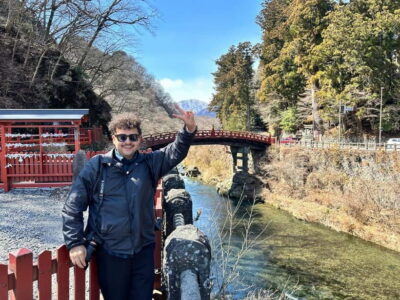
Shinkyo Bridge is a brief but meaningful opening stop. Its red structure crosses the river at the entrance to the sacred area, traditionally marking the passage from the ordinary human world toward the spiritual world. You get about 10 minutes and do not pay an entrance fee.
This is mainly a photo and orientation stop. If your group wants more time at Toshogu, you could reasonably skip it or keep it brief. If you arrive early and the bridge is quiet, it gives you a graceful introduction to Nikko before the larger shrine complex.
Toshogu Shrine deserves the extra minutes
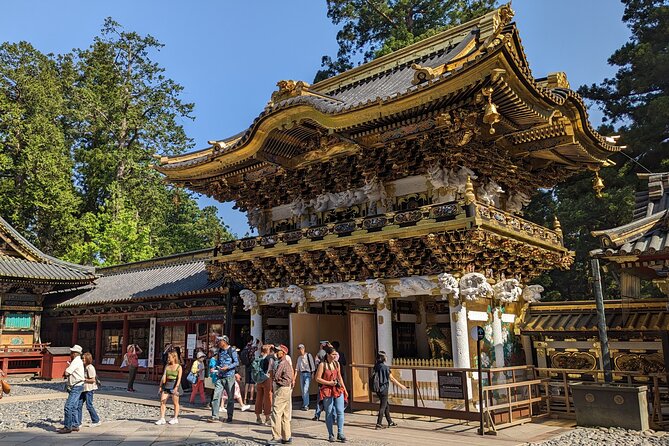
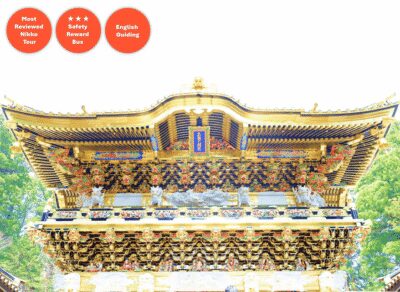
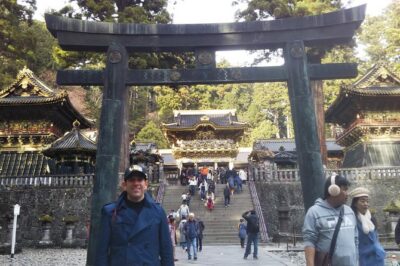
Toshogu is the day’s essential stop. It is the mausoleum of Tokugawa Ieyasu, founder of the shogunate that ruled Japan for centuries. The site is famous for its elaborate workmanship, strong color, carved animals, and layers of gates and halls.
The main gate, Higurashi no Mon, is described as so magnificent that you could spend a full day looking at it. That is not an invitation to linger for eight hours, but it is a warning against treating Toshogu as a quick checkbox. The scheduled visit is about 60 to 90 minutes, and many groups will want every minute.
Admission is not included. You should also expect walking, steps, and crowds at the major shrine buildings, although the private vehicle helps reduce the strain between separate parts of the day.
This is where a good guide earns the fee. The architecture can look like a dazzling wall of detail if you do not know what you are seeing. Guides such as Ken, Ayaka, Yoshimi, and Bob have been praised for explaining the buildings, religious customs, and Japanese culture in clear, personal ways. Your assigned guide will depend on availability and language selection, so do not assume you will receive a particular person.
Taiyuimbyo and Futarasan add depth to the shrine district
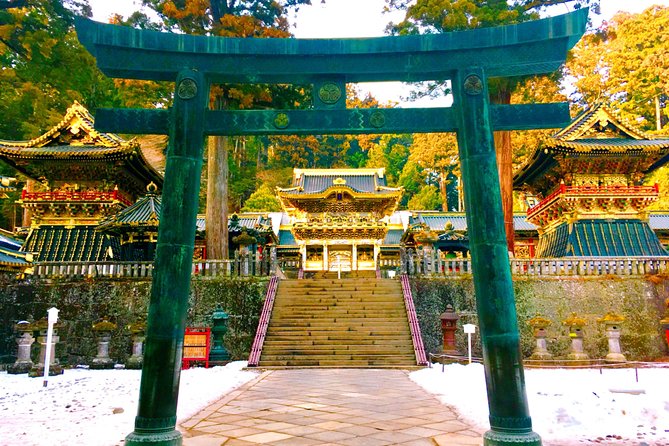
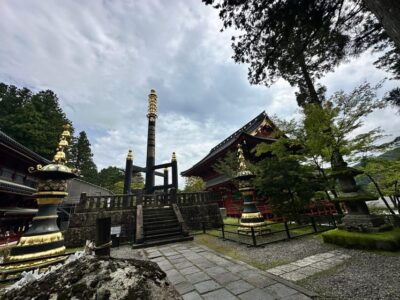
Taiyuimbyo Shrine is the mausoleum of Tokugawa Iemitsu, Ieyasu’s grandson. It is also part of Nikko’s UNESCO World Heritage site and gives you a second look at the Tokugawa family’s religious presence.
The suggested visit lasts 30 to 60 minutes. That makes it a good companion to Toshogu, especially if you want a cultural day rather than a drive-by tour of scenic stops. You will need to pay admission.
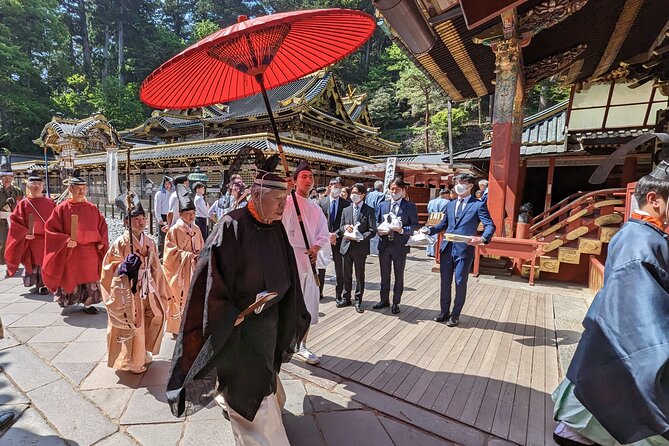
Nikko Futarasan Shrine is another World Heritage site and can be visited without an admission charge according to the tour details. Its inclusion helps show that Nikko is not only about one famous mausoleum. The shrine district works best when you allow yourself time to notice the setting, ritual details, and forested approach instead of rushing straight back to the car.
A practical choice is to spend more time at Toshogu and Taiyuimbyo, then keep Futarasan shorter if the mountain section matters more to you. One group specifically wished for more Toshogu time and less time at Edo Wonderland, which is a useful reminder that priorities differ.
Tamozawa Villa offers a quieter change of pace
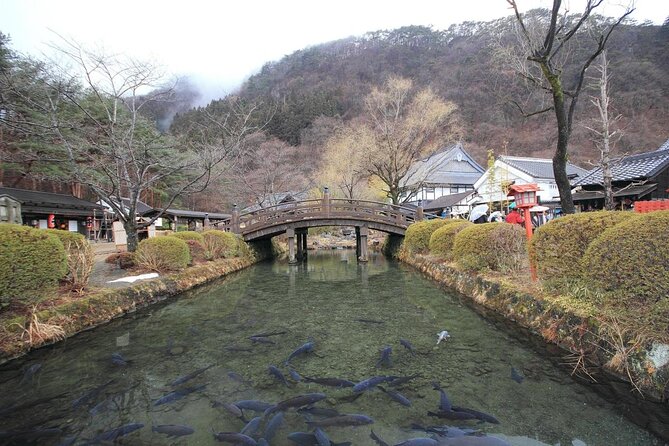
Nikko Tamozawa Imperial Villa Memorial Park is a former Tokugawa family residence later moved and rebuilt as a villa for the Taisho Emperor. The suggested stop lasts 45 to 60 minutes, and admission is extra.
This is a strong choice for anyone interested in Japanese domestic architecture and imperial-era interiors. It also breaks up the shrine visits with a calmer indoor stop. The tour information does not promise a detailed visit format, so ask your guide how much time is practical on your date.
If your group includes small children or anyone eager for waterfalls, you may prefer to leave this out. If you enjoy buildings, woodwork, and quiet rooms more than staged entertainment, it may be one of the day’s best additions.
Other private tours in Tokyo



Kanmangafuchi Abyss is short, atmospheric, and easy to miss
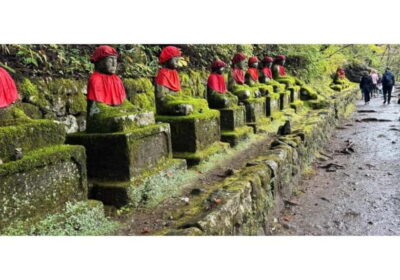
Kanmangafuchi Abyss is known for its line of Jizo statues, Buddhist figures associated with protection and compassion. A local story says the number seems different when counted a second time, giving the stop its mysterious nickname.
You get about 20 to 30 minutes, with no admission fee listed. This is a small, atmospheric walk rather than a grand monument. It is worth choosing if you want something less polished and more reflective.
The word abyss sounds dramatic, but keep expectations measured. This stop is brief, and the main appeal is the riverside setting and row of statues, not a large attraction with many facilities.
Akechidaira, Kegon Falls, and Lake Chuzenji make the scenic half
The climb from Toshogu toward Lake Chuzenji follows a winding road known for autumn maples. The drive itself is part of the experience, particularly in fall, though traffic can slow the schedule.
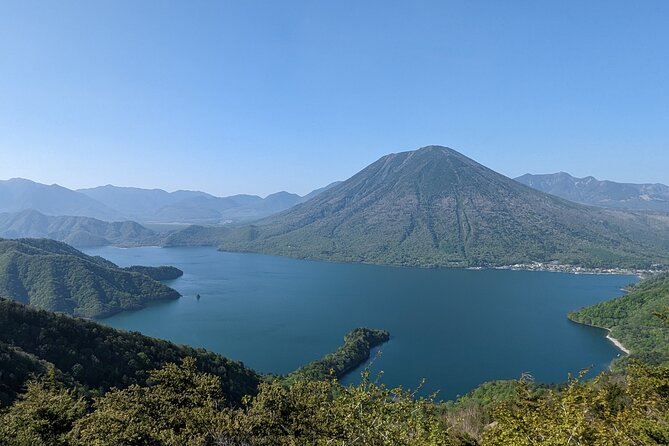
Akechidaira Observation Area offers views over Nikko and Lake Chuzenji. The planned stop is around 30 to 60 minutes, with admission not included. Visibility is central here, so clouds or rain can take away the wide views. The tour does not promise a refund if weather hides part of the scenery, and the schedule can change because of weather or traffic.
Kegon Falls is one of Japan’s most famous waterfalls and usually receives about 30 minutes. Admission is extra. The stop is compact, but the scale of the falling water makes it a natural highlight for a first visit to the area.
Lake Chuzenji receives another 30 minutes and has no admission fee listed. Together, the lake, falls, and observation point create a satisfying nature segment. You can ask your guide to shape the timing around your interests. A group that wants a hike and several waterfalls should not also expect a long Edo Wonderland visit and leisurely shrine touring.
The natural stops are especially attractive in autumn, when the road and hillsides take on strong color. Other seasons bring different conditions, but the supplied information only specifically identifies spring wisteria at Ashikaga and strawberry season from late December through May at Berry’s Fan.
Edo Wonderland is fun, but it changes the day
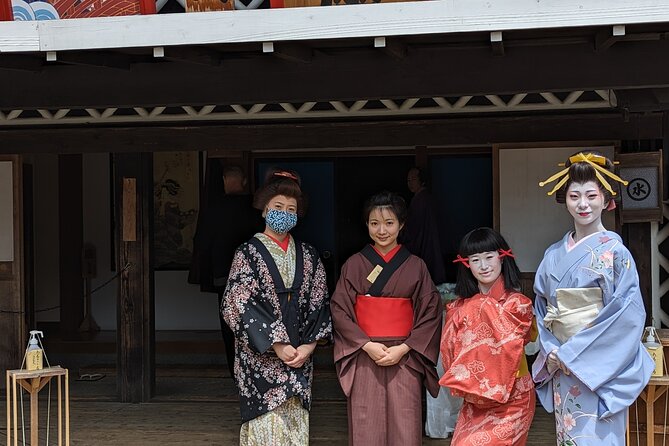
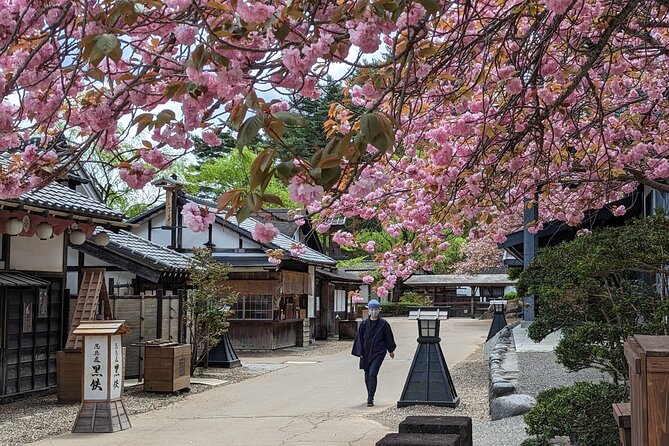
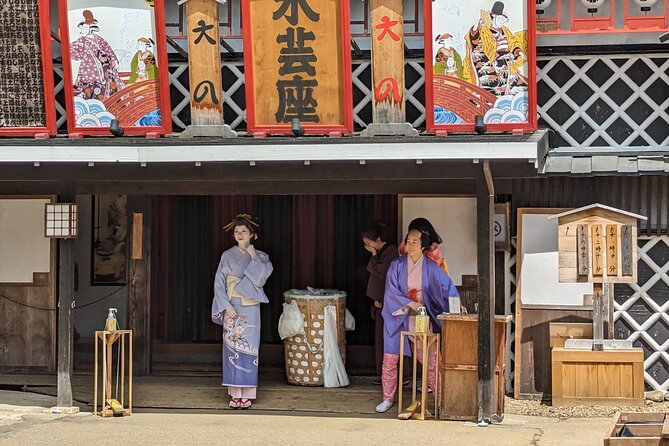
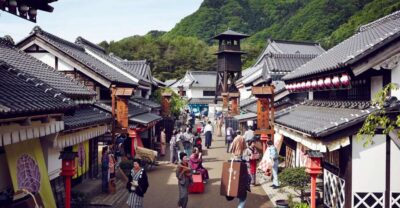
Edo Wonderland Nikko Edomura recreates the feel of Japan’s Edo period through costumes, performances, and themed settings. You can dress as a samurai, ronin, feudal lord, or kimono-clad princess. The ninja show is a popular draw, and children can become part of the scene rather than simply look at old buildings.
The suggested visit is two to two and a half hours, with admission extra. That is a substantial block of the day. Add the long drive and shrine visits, and you can see why some groups choose either more time at Toshogu or more time in Edo Wonderland, but not both in full.
For families, Edo Wonderland may be the deciding feature. Guides including Ken have been particularly good with young children, helping them enjoy costumes, shows, and even small food-related missions. Families with toddlers have used the private format to keep the pace flexible, and one birthday group received help arranging a surprise and strawberry tart during lunch.
For adults focused on actual historic sites, Edo Wonderland can feel theatrical rather than authentic. That is not a flaw, but you should know what you are choosing. It is historical entertainment, not a preserved Edo neighborhood.
Optional seasonal stops near Tochigi
Ashikaga Flower Park is listed as an additional stop, with a suggested visit of 60 to 90 minutes and admission extra. Its Japanese wisteria is especially popular in spring, while different flowers appear through the seasons. The park also has illumination during the Christmas season.
Berry’s Fan offers all-you-can-eat Japanese strawberries, with up to 11 Tochigi varieties, from late December through May. Admission is extra, and the stop is planned for about 30 minutes.
These additions are not sensible on the same day as every Nikko sight. Think of them as alternatives for a customized plan, not promises that you will complete the entire list. If flowers or strawberries are your main goal, tell the company when booking and ask how the day should be rearranged.
What the private service adds
The package includes hotel pickup and drop-off, a private guide, private chauffeur, fuel surcharge, hop-on hop-off service, and one bottled water per person. Guides are available in English, French, Spanish, Chinese, and Korean, and the company says its staff is entirely Japanese.
The strongest practical benefit is not luxury. It is control. You can stop for a local lunch, ask for advice, and adjust the balance between shrines, nature, and entertainment. Vegetarian food can be requested, and specific dietary needs should be given at booking.
The vehicle size deserves attention. A group of six found a larger nine-seater van more comfortable, especially on the long road to Nikko, because people could shift seats and spread out. The advertised capacity is up to eight people, but comfort depends on the vehicle assigned, so ask about the larger van if space matters.
The tour price is $1,286.89 per group, not per person, for up to eight. That can be reasonable for a full vehicle, especially for families or friends who would otherwise need several taxis, local fares, and a day of navigation. For one or two people, it is hard to call it economical. You are paying for time, privacy, a driver, and a guide, not simply transportation.
Lunch, drinks, admission tickets, and a suggested gratuity of 5 to 20 percent are extra. Budget for Toshogu, Taiyuimbyo, Tamozawa Villa, Akechidaira, Kegon Falls, Edo Wonderland, or seasonal attractions according to your chosen route.
Who should book this Nikko tour
I would choose this for a family, multigenerational group, or party of four to eight that wants one efficient day outside Tokyo without handling connections. It is also a good fit if your group wants a guide to explain shrine customs and Tokugawa history rather than simply deliver you to a gate.
The tour suits people who like choices. You can build a culture-heavy day around Toshogu, Taiyuimbyo, Futarasan, and Tamozawa Villa, or mix Toshogu with Kegon Falls and Lake Chuzenji. Families can trade some shrine time for Edo Wonderland.
I would hesitate if you dislike long car rides, need a low-cost excursion, or want a slow visit to Nikko. One day only scratches the surface. A stay of one or two nights, with a car for two or three days, would give you more time, though that is outside this experience.
The guide and driver pairing can shape the day. Past pairings have included Ken with Toshi or Tak, Ayaka with Toshi, Yoshimi with Toshi, Bob with Tak, and Noriko with Tak. Availability varies, but the service places clear value on communication, flexibility, and family care.
Book at least a day ahead if your plans are firm, and note that the experience is often reserved well in advance, around 75 days on average. Free cancellation is available up to 24 hours before the start time. Changes or cancellations inside that window are not accepted for a refund.
Should you book it?
Book this private Tokyo to Nikko tour if you want a guided, flexible day with a full vehicle, especially for a family or group. Its best combination is Toshogu, one or two nearby World Heritage sites, and either the mountain scenery or Edo Wonderland.
Before paying, decide what matters most. Ask for extra Toshogu time if ornate architecture and Tokugawa history are your priority. Choose Edo Wonderland for costumes and ninja shows. Choose Kegon Falls, Akechidaira, and Lake Chuzenji for nature, while accepting that weather may limit the views.
The tour is not the cheapest way to reach Nikko, and the road can make the day tiring. But for a group that values a private car, local guidance, hotel service, and the freedom to change plans, it offers a practical way to see far more than a standard fixed-route excursion.
FAQ
How long does the Tokyo to Nikko tour last?
The experience lasts approximately 11 hours. The drive between Tokyo and Nikko can take around two to three hours, depending on traffic.
How many people can join the private tour?
The price covers one private group of up to eight people. Only your group participates in the activity.
Can I choose which Nikko sights to visit?
Yes. The listed stops are options, and you should select approximately four to six sites. You can ask the guide for advice and suggestions after booking.
Is hotel pickup and drop-off included?
Yes. Hotel pickup and drop-off are included, along with a private chauffeur, private guide, fuel surcharge, and one bottled water per person.
Are admission tickets and lunch included?
No. Food, drinks, lunch, gratuity, and admission fees for the facilities are not included. This can apply to Toshogu, Taiyuimbyo, Tamozawa Villa, Akechidaira, Kegon Falls, Edo Wonderland, and seasonal attractions.
Which languages are available for the guide?
Professional guides are available in English, French, Spanish, Chinese, and Korean.
What happens if the weather affects the views?
The schedule may change or be canceled because of weather or traffic conditions. The tour will not be canceled or refunded solely because some sights are not fully visible due to weather.
More Private Tours in Tokyo
More Nikko Day Trips in Tokyo
More tours in Tokyo we've reviewed






Nikko Day Trips, compared.
 ★ 4.6Nikko: Kegon Falls, Lake Chuzenji & Toshogu TempleFrom $8911 hours
 ★ 4.5Tokyo: Nikko Toshogu Shrine and Kegon Waterfall TourFrom $8410h 30m
 ★ 5.0Nikko Full-Day Private Tour with Government-Licensed GuideFrom $155
 ★ 4.9From Tokyo: Nikko World Heritage Site Private Full-Day TripFrom $4831 day
 ★ 4.3Nikko: Edo Wonderland Edomura Cultural Theme Park TicketFrom $351 day
 ★ 4.8Tokyo: Nikko World Heritage Private Day Trip Hotel Pick-upFrom $39011 hours - 1 day