
Reviewed · MT FUJI DAY TRIPS
Mount Fuji Day Tour:Lake Kawaguchi, HealingVillage,Oshino Hakkai
Mount Fuji is the star, but the best part of this day is how many different sides of Japan you see around it. From the famous pagoda view at Arakurayama Sengen Park to the old thatched houses at Saiko Iyashi no Sato Nemba, this tour gives you four scenic stops without making you wrestle with trains, buses, and confusing connections.
I like the range of views and the chance to visit Oshino Hakkai, where eight clear ponds are fed by Fuji snowmelt. I also like the price: at $46.91 per person, transport, a professional driver, road costs, and the 500-yen village admission are included. The main concern is timing. A full day of driving, crowds, and four stops can feel rushed, and Fuji may hide behind clouds.
- Four Fuji-area stops in about 10 hours, including Lake Kawaguchi, Oshino Hakkai, Arakurayama Sengen Park, and Saiko Healing Village.
- Arakurayama’s classic pagoda view gives you one of the most recognizable Mount Fuji photographs in Japan.
- Oshino Hakkai’s eight ponds offer clear water, mountain scenery, and a taste of rural Japan.
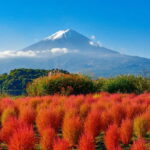
- Oishi Park changes with the season, with lavender in summer and red foliage in autumn.
- The 500-yen admission to Saiko Healing Village is included, but food and drinks are not.
- Return traffic can be serious, especially on weekends, during cherry blossom season, and on Japanese holidays.
In This Review
- Four Fuji views from Tokyo in one long day
- Arakurayama Sengen Park and the pagoda photograph
- Oshino Hakkai and eight clear ponds
- Oishi Park beside Lake Kawaguchi
- Saiko Iyashi no Sato Nemba, the thatched-roof village
- What the $46.91 price really covers
- The guide, the vehicle, and the day’s rhythm
- Who will get the most from this Fuji tour
- Practical ways to make the day better
- Should you book this Mount Fuji day tour?
- FAQ
- How long is the Mount Fuji day tour?
- What locations does the tour visit?
- Is admission included at every stop?
- Is food included?
- Is Mount Fuji guaranteed to be visible?
- Can the tour return late to Tokyo?
- How many people can join the tour?
- Is the tour conducted in one language?
- What is the cancellation policy?
Four Fuji views from Tokyo in one long day
This is a sightseeing day built around variety. You are not simply driven to one lookout, given ten minutes for a photograph, and sent home. The route includes a hilltop park, a traditional water village, a lakeside flower park, and a recreated rural settlement beside Lake Saiko.
The tour lasts about 10 hours. That is a substantial day, but the driving is part of the bargain. Mount Fuji is outside Tokyo, and reaching several points around the mountain by public transport would take careful planning and more time. Here, a professional driver handles the roads, tolls, fuel, and parking.
The vehicle can carry up to 40 people, so I would not assume an intimate minibus experience. It is described as a small-group tour, but the stated maximum is large enough that the feel may vary by departure. People speaking different languages may share the vehicle, and the multilingual guide may need to manage several languages during the day.
The tour is commonly booked about 30 days ahead. That is useful to know if your Tokyo dates are fixed, particularly in spring and autumn. The operator sends important details around 9 PM the evening before, including the guide’s phone number, driver information, and vehicle license plate. Send your email address to the supplier after booking, since the booking platform does not pass it along automatically.
Arakurayama Sengen Park and the pagoda photograph
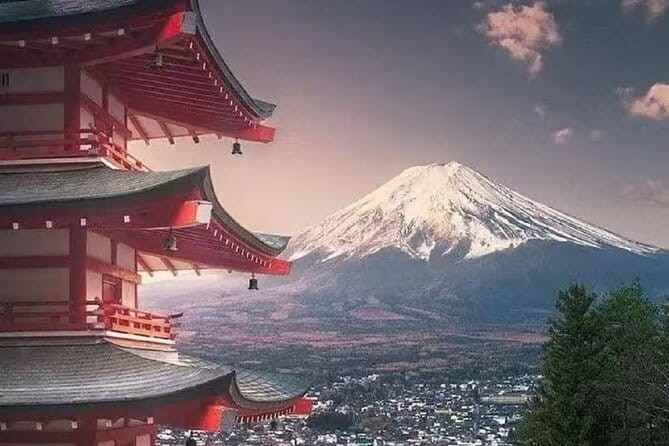
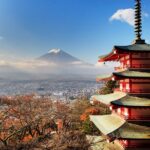
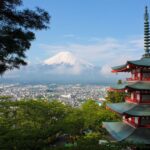
The first stop is Arakurayama Sengen Park, with about 1 hour and 10 minutes available. This is the stop most likely to appear in your mental picture of Mount Fuji: a red pagoda, wooded slopes, and Fuji rising behind it when the weather cooperates.
The setting combines a Shinto shrine area, hillside scenery, and a famous elevated viewpoint. You get a sense of why Fuji has such a strong place in Japanese art and travel photography. The view is not just a mountain panorama. It is a carefully layered scene with architecture in the foreground and Japan’s highest mountain behind it.
There is one practical catch: admission is not included, and the park involves a hillside approach. The exact walking conditions can vary, but you should be ready for steps and an uphill route. Comfortable shoes will make this first stop much easier.
One hour and 10 minutes sounds generous until you account for getting off the vehicle, walking to the viewpoint, taking photographs, and returning on time. If Fuji is clear, you may wish you had longer. If clouds cover the summit, the pagoda and surrounding town still give you worthwhile photographs, but the signature view loses much of its force.
A few more Tokyo tours and experiences worth a look
Oshino Hakkai and eight clear ponds
Oshino Hakkai receives another 1 hour and 10 minutes. This is one of the most interesting stops because it feels different from a standard mountain lookout. The village is known for eight ponds fed by snowmelt from Mount Fuji, filtered through volcanic rock over many years.
The water is the attraction, but the setting matters just as much. Small channels, traditional buildings, mountain views, and local food stalls create a more grounded picture of the Fuji region. You can photograph the ponds, look for reflections, and spend time walking through the village rather than simply staring at a distant peak.
This is also the place to keep some cash handy. The tour information specifically warns that some scenic spots, restaurants, and other businesses around Mount Fuji accept cash only. Food and drinks are not included, so Oshino Hakkai may be a useful place to buy something, though you should not count on every meal purchase accepting a card.
The phrase Japanese Jiuzhaigou is used to describe the ponds, but do not arrive expecting a huge national park. Oshino Hakkai is a compact cultural and scenic stop. Its appeal comes from the clear water, traditional atmosphere, and Fuji connection.
The schedule gives you enough time for a proper look, though a meal stop or a crowded path can use up that time quickly. On busy days, stay aware of the meeting instructions. The vehicle cannot wait indefinitely, and the rest of the route still lies ahead.
Oishi Park beside Lake Kawaguchi
Oishi Park is the Lake Kawaguchi stop, with about 40 minutes set aside. The park is known for changing color through the year. Lavender is highlighted for summer, while autumn brings red foliage. That seasonal shift gives the same viewpoint a different character depending on your date.
Lake Kawaguchi is one of the best-known Fuji viewpoints because the water creates a broad foreground and the mountain can appear beyond it. The open setting makes this a good place to take wide photographs rather than close architectural shots. If Fuji is visible, the combination of lake, mountain, and seasonal planting can be excellent.
Forty minutes is short, so think of this as a scenic pause rather than a full visit to the lake area. You will have time to walk, photograph the view, and perhaps buy a drink, but not to explore every corner at a relaxed pace.
There is a seasonal change to the route. From October 26 to November 20, the tour visits the Kawaguchiko Maple Corridor instead of Oishi Park. That swap makes sense during the autumn color period, but it means you should check the expected stop if flowers or fall foliage are important to you.
The weather is the deciding factor at all Fuji viewpoints. The mountain can be hidden even when the rest of the day is pleasant. The operator does not guarantee visibility, and that is a fair warning. You are booking access to the Fuji region and several good viewpoints, not a guaranteed clear summit.
Saiko Iyashi no Sato Nemba, the thatched-roof village

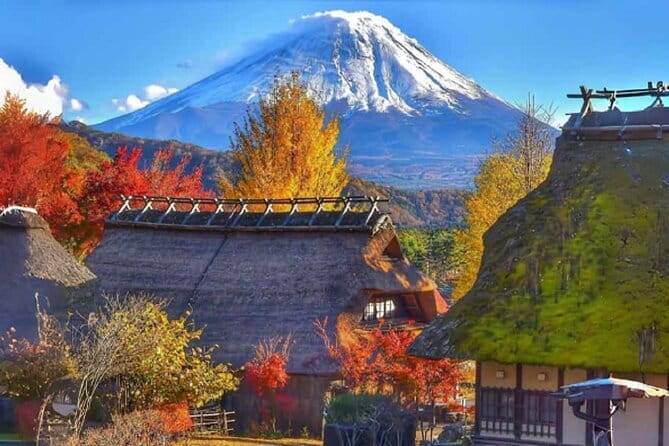
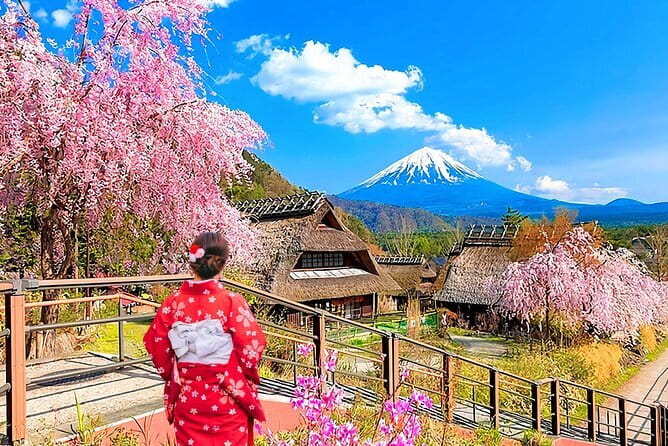
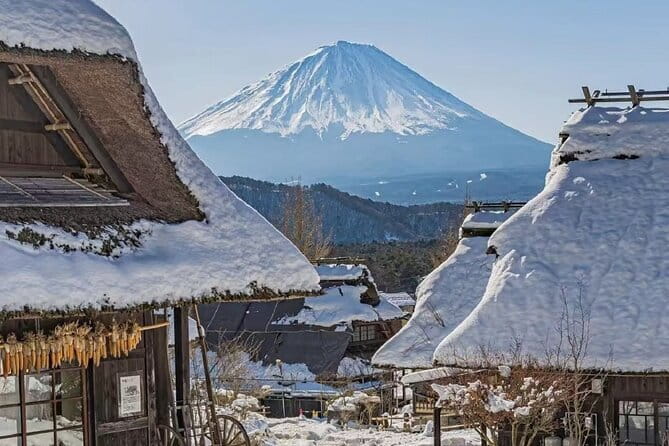
The final major stop is Saiko Iyashi no Sato Nemba, also called Saiko Healing Village or the Healing Hometown Root Field. You receive about one hour here, and the 500-yen admission is included.
This traditional village is built around thatched-roof houses and is often compared with Shirakawa-go. The comparison helps explain the visual appeal, though this is a Fuji-area cultural site rather than the famous mountain village in Gifu. The houses, mountain setting, and quiet paths offer a slower finish after the busier viewing points.
I find this stop valuable because it adds culture to a day that could otherwise become a sequence of mountain photographs. The village gives you a chance to see traditional rural design and imagine how homes in this region once looked. It also provides photographs with a different mood: roofs, paths, and Fuji country rather than a single panoramic lookout.
The admission is covered, but food and drinks remain your responsibility. One hour should be enough to walk through the village and take photographs, though visitors who enjoy museums, craft displays, or careful architectural details may want more time than the schedule allows.
What the $46.91 price really covers
At $46.91 per person, this is inexpensive for a full-day excursion from Tokyo. The value comes mainly from the transport package. You receive a multilingual guide, professional driver, pickup and drop-off at the designated meeting point, tolls, parking, and fuel.
Those included road costs matter. A self-drive day would bring rental arrangements, navigation, parking decisions, and the burden of returning through Tokyo traffic. Public transport could work, but reaching four separate stops in one day would require more planning and less flexibility.
The price does not include food, drinks, or admission to Arakurayama Sengen Park and Oshino Hakkai. The 500-yen Saiko Healing Village ticket is included. Bring cash so a small purchase or entrance fee does not become a problem.
The low price also comes with tradeoffs. The maximum group size is 40, the vehicle may include people speaking different languages, and the schedule is fixed. You are paying for access and convenience, not a private guide or a slow custom itinerary.



The guide, the vehicle, and the day’s rhythm
The guide is responsible for keeping a mixed-language group moving and explaining the stops. One highly positive account names Rachel, also identified as Wanting in the tour information, as a helpful and informative guide. That is encouraging, but the specific guide is not guaranteed for every departure.
The departure process deserves attention. One very poor experience began about 45 minutes late because the guide did not arrive on time. The stated explanation was a Tokyo subway service interruption. This appears to have been an unusual disruption, but it shows why you should not schedule a flight, train, dinner reservation, or other fixed activity immediately after the tour.
Traffic is the bigger regular risk. Weekends, cherry blossom season, and holidays can delay the return to Tokyo. The company says it covers guide and driver overtime, but that does not recover your lost evening. I would leave a generous buffer after the scheduled return.
Eating is not allowed on the bus under Japanese law. Plan to eat before departure or during an appropriate stop, and bring water if needed. Food and drinks are not supplied.
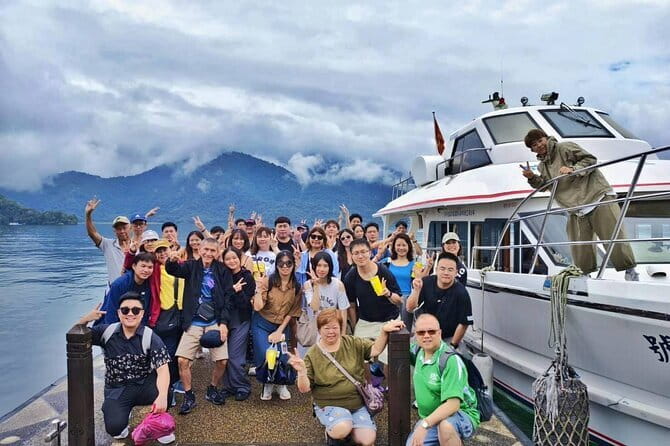
The meeting point is designated in the booking information, and the final gallery images show the actual meeting area. Read the evening email carefully. It should provide the contact details and vehicle license plate needed to identify your ride.
Who will get the most from this Fuji tour
I would choose this tour if you have one free day in Tokyo and want to see Fuji without driving. It suits first-time visitors who want a broad introduction to the mountain area, especially those who value photographs, traditional buildings, and a simple transport plan.
It also works well for people who want more than a single observation deck. Arakurayama gives you the pagoda composition, Oshino Hakkai provides clear ponds and village scenery, Oishi Park brings the lake, and Saiko adds thatched-roof architecture.
I would hesitate if you need a relaxed pace. Four stops, a long driving day, and possible traffic create a packed schedule. The tour may also disappoint if your main goal is a guaranteed Fuji summit photograph, since weather can block the mountain.
It is less suitable for anyone with a hard evening appointment. The return can be late, and stop times may be shortened, adjusted, or canceled because of traffic or other conditions. Most people can participate, but the hillside setting at Arakurayama means you should be comfortable with some walking.
Practical ways to make the day better
Bring cash, comfortable shoes, and a phone or camera with enough battery for a full day of photographs. Cash is particularly useful because some area businesses and scenic spots may not accept cards.
Check the weather, but keep expectations sensible. A poor Fuji forecast does not erase the ponds, village architecture, lake, and seasonal park scenery, yet the experience will be different without the mountain in view.
Send your email address to the supplier after booking and watch for the message sent around 9 PM the evening before. Save the guide’s phone number, driver details, and license plate before leaving your hotel.
Do not book a tight connection or evening event afterward. The tour may return on time, but the operator clearly warns about delays during weekends, blossom season, and holidays.
Free cancellation is available if you cancel at least 24 hours before the start time. Changes or cancellations inside that window are not accepted for a refund.
Should you book this Mount Fuji day tour?
Book it if you want good Fuji-area coverage at a low price and prefer a driver to public transport. The route offers more variety than a simple lake excursion, and Saiko Healing Village plus Oshino Hakkai give the day a useful cultural side.
Skip it if you want a private experience, a slow pace, or certainty about seeing Mount Fuji. For most visitors with one open day in Tokyo, though, the combination of four viewpoints, included transport costs, and a 500-yen village ticket makes this a sensible outing. Just protect your evening from traffic, bring cash, and treat clear Fuji views as a welcome bonus rather than a promise.
FAQ
How long is the Mount Fuji day tour?
The tour lasts approximately 10 hours.
What locations does the tour visit?
The route includes Arakurayama Sengen Park, Oshino Hakkai, Oishi Park beside Lake Kawaguchi, and Saiko Iyashi no Sato Nemba.
Is admission included at every stop?
No. Admission is not included for Arakurayama Sengen Park or Oshino Hakkai. The 500-yen ticket for Saiko Healing Village Root Field is included.
Is food included?
No. Food and drinks are not included.
Is Mount Fuji guaranteed to be visible?
No. Weather conditions are unpredictable, and the operator does not guarantee views of Mount Fuji.
Can the tour return late to Tokyo?
Yes. Weekend traffic, cherry blossom season, and Japanese holiday traffic may delay the return. Stop times may also be shortened, changed, or canceled.
How many people can join the tour?
The tour can have a maximum of 40 participants.
Is the tour conducted in one language?
The tour includes a multilingual guide, and people speaking different languages may share the same vehicle.
What is the cancellation policy?
You can cancel for a full refund up to 24 hours before the experience begins. Cancellations and changes made less than 24 hours before the start time are not accepted for a refund.
More Mt Fuji Day Trips in Tokyo
More tours in Tokyo we've reviewed





Mt Fuji Day Trips, compared.
 ★ 5.0Mt Fuji and Hakone 1-Day Bus Tour Return by Bullet TrainFrom $163
 ★ 4.0Mt Fuji & Hakone Cruise, Drum Show Bullet Train 1 Day from TokyoFrom $149
 ★ 4.4Tokyo Mt Fuji 5th St & Hakone Cruise Bus Tour w/Bullet TrainFrom $15410 hours
 ★ 4.5From Tokyo: Mount Fuji Full-Day Sightseeing TripFrom $6810 hours
 ★ 4.7Tokyo: Mt. Fuji Tour, Hakone Ropeway, Owakudani, Lake AshiFrom $5410 hours
 ★ 4.4Tokyo:Mt.Fuji,Kawaguchiko Oishi Park,Arakurayama Sengen ParkFrom $5410 hours