
Reviewed · TOKYO
Turn Antique Kimono into Take-Home Interior Art
Some Tokyo workshops give you a souvenir. This one lets you choose a piece of antique kimono and turn it into a small work of interior art. At Atelier + Gallery QUADRO, Lena explains the fabric, colors, seasonal symbols, and traditional techniques before guiding you through the hands-on work.
I like the personal choice here: you select the pattern and the panel shape rather than receiving a standard craft kit. I also like the setting on Meguro Interior Street, where the gallery’s art and design focus fits the activity. The main consideration is the price, $97.73, which is fair for a guided, all-inclusive art class but more than a simple souvenir purchase.
In This Review
- Key points to know before booking
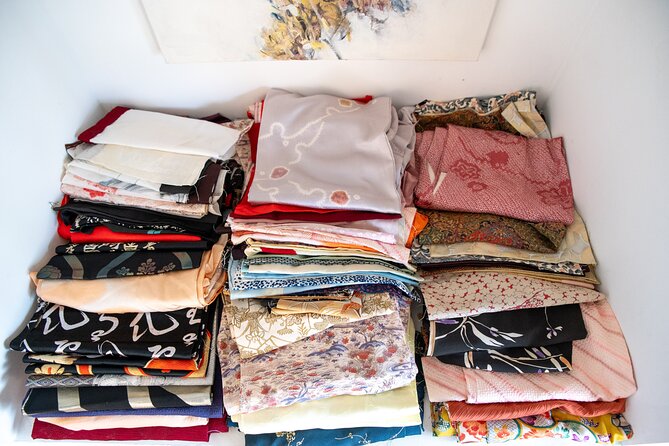
- Choosing your kimono from more than 200 pieces
- What the kimono patterns tell you
- The 90-minute workshop, step by step
- A small gallery setting on Meguro Interior Street
- What the $97.73 price includes
- Why this makes a good final-day activity
- Guidance from Lena and the hands-on balance
- The finished panel as art, not just a souvenir
- Who should book this Tokyo workshop
- Should you book Turn Antique Kimono into Take-Home Interior Art?
- FAQ
- Where does the kimono art workshop take place?
- How long does the experience last?
- How many people can join the workshop?
- What can I make during the activity?
- Can I take the finished artwork home?
- Are materials and tools included?
- What is the cancellation policy?
Key points to know before booking
- More than 200 antique kimonos: Look for the color, motif, and texture that speak to you.
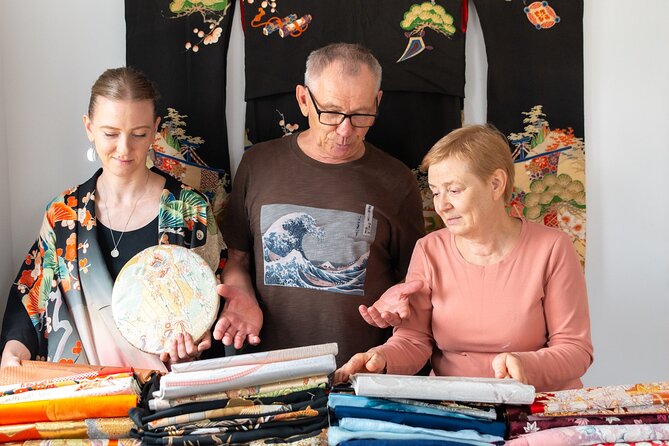
- Lena leads the workshop: She explains kimono techniques, pattern meanings, and design choices while letting you do the work.
- Your finished piece goes home with you: Materials, tools, fabric, and the completed panel are included.
- Choose a round or rectangular panel: Your frame style helps shape the final look.
- A small group of up to five: The format allows for personal help during the 90-minute session.
- A design-minded Tokyo location: The workshop takes place at an art gallery on Meguro Interior Street.
Choosing your kimono from more than 200 pieces
The heart of the experience is the fabric selection. You browse more than 200 antique kimonos and choose the colors and patterns for your panel. That makes the finished item personal from the start. You are not simply decorating a preselected object. You are deciding which fragment of Japanese textile art you want to preserve.
Kimono fabric can carry a lot of visual information in a small space. A pattern may suggest a season, a flower, a bird, a plant, or another familiar Japanese symbol. Some fabrics attract the eye through color. Others work through fine weaving, dyeing, or hand-painted detail.
I would take your time at this stage. The first bright pattern you notice may not be the best choice for your home. Look at the fabric as a small picture, since that is how it will function once attached to the panel. Consider the wall, shelf, or desk where you might display it, even though the workshop does not require you to decide on a location in advance.
The quantity of fabric is important, but so is the variety. More than 200 antique kimonos give you a real range of possible colors and motifs. You might find something bold and graphic, or you might prefer a quieter pattern with delicate detail. The experience works best if you enjoy making visual choices rather than being handed a finished design.
If you're still narrowing it down, here are other tours in Tokyo we've reviewed.


What the kimono patterns tell you
Before you attach the fabric, Lena explains the background of the selected kimono pattern and the meaning of its design. She also discusses the symbolic meaning of Japanese seasons. This gives context to what could otherwise be just a pretty piece of cloth.
That explanation adds value in two ways. First, it helps you make a more informed choice. A pattern can have a cultural association or seasonal reference that you might not recognize at first glance. Second, it gives your finished artwork a story you can share when you display it at home.
The introduction also covers traditional kimono methods, including dyeing, weaving, and hand-painting. You do not learn every part of kimono production in 90 minutes, but you do gain a better sense of why the fabric deserves careful handling.
I especially like this balance between information and making. The workshop is not presented as a lecture, and it is not only a craft session. The meaning behind the fabric stays connected to the practical work in front of you.
The 90-minute workshop, step by step
The activity lasts about one hour and 30 minutes and begins and ends at Atelier + Gallery QUADRO. The format is compact enough to fit into a Tokyo sightseeing day, but long enough to include selection, explanation, design decisions, and construction.
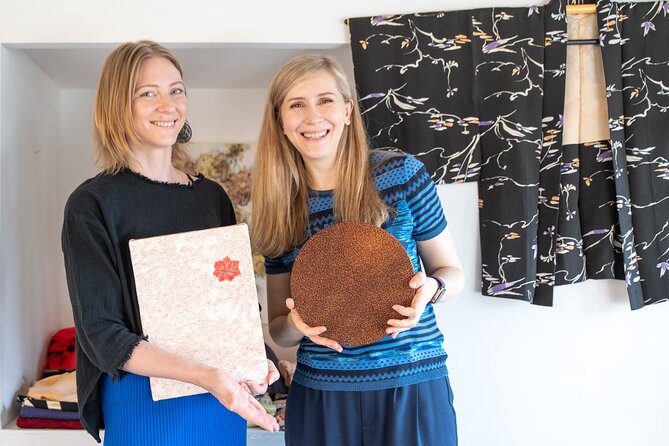
You begin by looking through the antique kimono fabrics. Once you have selected a favorite pattern and color combination, you choose the style of panel. The available options include a rectangle or a round canvas. This decision affects how the kimono design will be framed and which part of the fabric becomes the focal point.
Next comes the explanation of the fabric and its design. Lena shares information about the relevant kimono techniques, the chosen motif, and seasonal symbolism. This is the point where you can ask about details that catch your eye and think about how the design will work as a small interior piece.
The main activity uses traditional Japanese backing techniques. You attach the selected fabric to the panel with the supplied tools and materials. Lena provides tips during each step, so you are doing the work but are not left to guess how to handle the cloth or position it.
That hands-on element matters. The finished panel is not merely something you bought in Japan. You made the key design choices and took part in producing it. The process also gives you a better appreciation for the care required when working with textile art.
At the end, you take the finished original artwork with you. It can serve as a decoration for your home or office, or as a compact souvenir with a clear connection to your time in Japan.
A small gallery setting on Meguro Interior Street
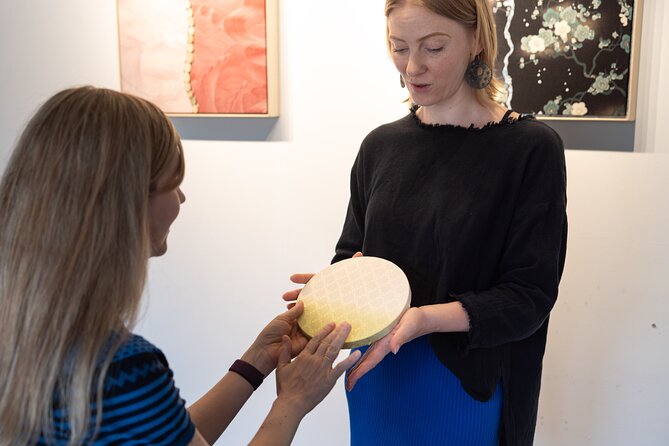
The workshop takes place at Atelier + Gallery QUADRO, an art gallery at 6-chome 16-13, Shimomeguro, Meguro City, Tokyo 153-0064. The gallery setting suits the activity better than a generic classroom would. You are surrounded by art and design while making an object intended for display.
Meguro Interior Street is also a useful match for this type of outing. The area is known for interior design, so the activity can appeal to you if you are interested in furniture, textiles, decoration, and Japanese visual style.
The supplied information does not specify a particular train station or walking time, so check the exact map location before you leave. Public transportation is nearby, and private transportation is not included. Plan to arrive at the stated meeting point rather than expecting pickup from your hotel.
The group size is capped at five people. That is a useful limit for an activity involving fabric selection and careful attachment. You should have a better chance of getting individual guidance than in a large class, although the experience is not described as a private session.
What the $97.73 price includes
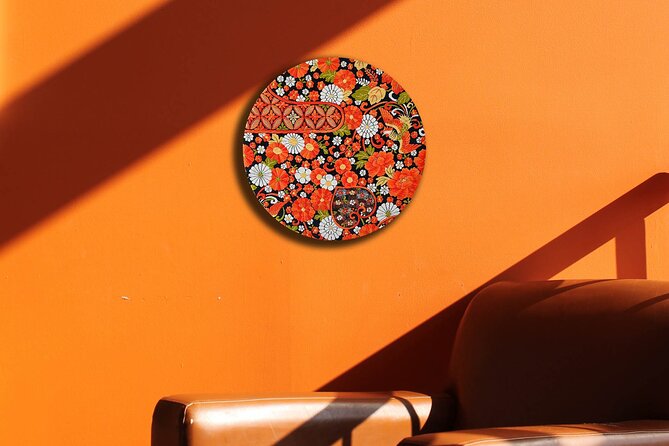
At $97.73 per person, this is not the cheapest way to bring home a Japanese souvenir. You could spend much less on a small textile item in a shop. The comparison is not quite fair, though, because this price includes the materials, the antique kimono fabric, the panel, the tools, the instruction, and the finished work.
The stronger value is in the combination of cultural explanation and personal making. You receive help understanding the design, then use that knowledge while producing something yourself. The result is more distinctive than a mass-produced decoration, and you do not need to buy separate supplies or arrange finishing work afterward.
The activity is also a practical choice if you want a souvenir that fits into a home or office. A completed art panel is easier to display than a full kimono, and it gives you a daily reminder of Japan without requiring a large storage space.
Still, the price makes the workshop best for someone who values the process. If you only want an inexpensive piece of kimono fabric, this is probably not the right purchase. If you want a guided activity and a finished object with a personal story, the cost is easier to justify.






Why this makes a good final-day activity
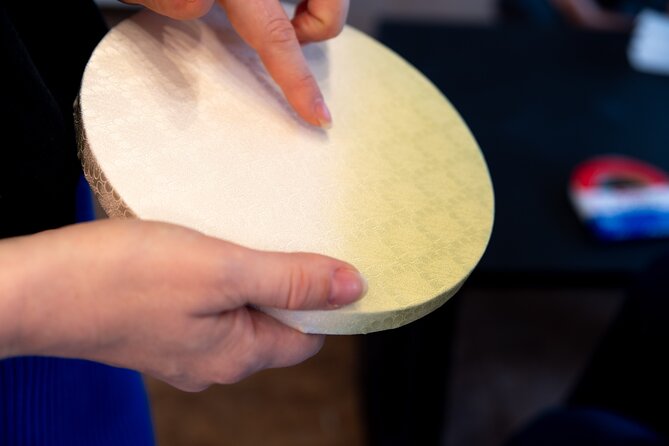
This workshop can work especially well near the end of a Japan trip. By then, you have likely seen temples, gardens, shops, and museums, but you may still want to bring home something more personal than a standard gift.
The panel gives you a way to preserve a small part of the trip while the experience is still fresh. Each time you see it at home, the colors may bring back the act of choosing the fabric, hearing about the motif, and working with your hands in the gallery.
Several elements make the activity feel personal. You choose the kimono. You select the shape. You attach the fabric yourself. Lena’s guidance helps you understand the object rather than treating it as anonymous decoration.
It is also a calmer option after several busy days in Tokyo. The session has only five places, lasts 90 minutes, and stays in one gallery. You do not spend the activity rushing between locations or trying to keep up with a large group.
Guidance from Lena and the hands-on balance
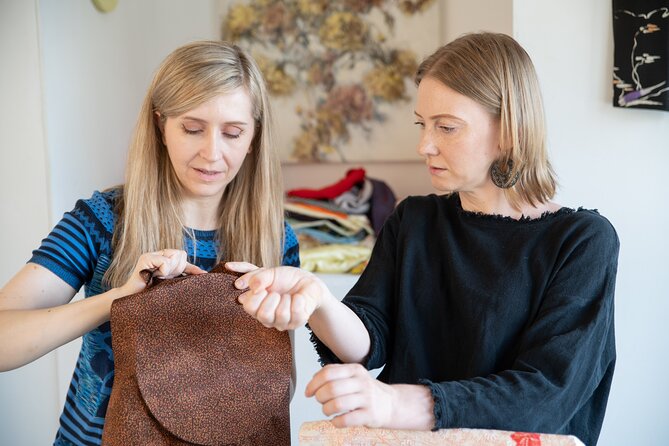
Lena is central to the experience. She brings experience with kimono fabric and its history, explains the meaning behind the designs, and offers practical design advice. The most useful balance is that she guides the process without taking the creative decisions away from you.
That matters for anyone who worries about being artistic enough. You select the pattern, but you receive help with the panel style and the steps needed to attach the fabric. The work is hands-on, yet there is support when you need it.
The workshop is also suitable for most people, according to the activity details. Service animals are allowed, and the venue is near public transportation. No special artistic background is required in the information provided, but you should be comfortable taking part in a craft process that involves making choices and handling materials.
The small group cap should help keep the pace manageable. If you are attending with a companion, you can each create your own piece and compare your choices. The finished panels can also become paired decorations, although the activity does not promise a matching set.
The finished panel as art, not just a souvenir
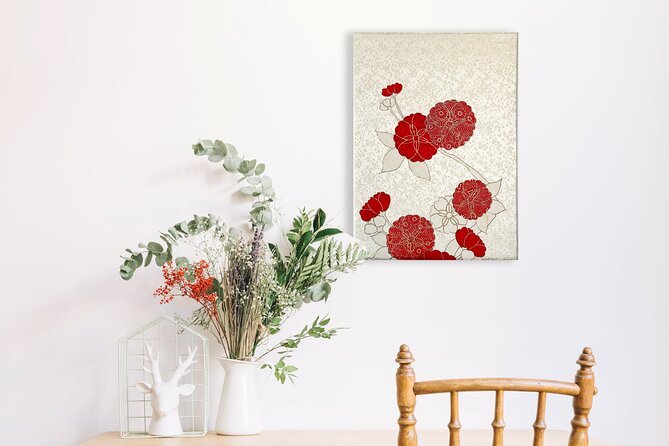
The final object is designed as interior decoration. You can display it in your home or office, and the choice of a round or rectangular canvas gives you some control over how it will fit your space.
The best result will depend on your fabric choice. A strong motif may work well as a focal piece, while a subtler pattern could suit a smaller or quieter area. Since the fabric comes from antique kimonos, the appeal is partly in retaining visible signs of traditional textile work rather than making something that looks newly manufactured.
There is also a sustainability angle. The activity gives older kimono material a new use instead of leaving it unworn and stored away. You are helping turn a garment with no current use for you into an object that can continue to be enjoyed.
Do keep your expectations practical. This is a small art panel made during a 90-minute class, not a full kimono restoration or a museum-level textile conservation project. Its value comes from the fabric, the story, and your participation.
Who should book this Tokyo workshop
I would recommend it most strongly if you like textiles, Japanese design, interior decoration, or small-group creative activities. It is also a good fit if you want a souvenir that you helped make and can display immediately.
Couples and friends may enjoy choosing different fabrics and seeing how their finished pieces reflect different tastes. Solo participants can also make good use of the format, since the activity centers on your own design choice rather than group performance.
Families should check the practical fit for their children before booking. The details say most people can participate, but they do not specify a minimum age or child-specific format.
You may want to skip it if your schedule is extremely tight, you dislike craft activities, or you are looking for a low-cost shopping stop. The workshop requires a fixed 90-minute commitment and costs more than buying a simple textile souvenir.
Booking is commonly made well ahead of time, with an average lead time of 17 days. If this is important to your Tokyo plans, reserve before your itinerary fills up. Confirmation is provided at booking, and free cancellation is available up to 24 hours before the start time. Changes or cancellations inside that window are not refunded.
Should you book Turn Antique Kimono into Take-Home Interior Art?
Book this experience if you want to understand a little of kimono design, make your own decisions, and leave Tokyo with a display piece that carries a personal memory. The choice of more than 200 antique kimonos, Lena’s guidance, the small group size, and the included finished panel make the $97.73 price reasonable for the right audience.
Skip it if you only want a quick look at kimono or the least expensive souvenir possible. This is a creative workshop, not a passive exhibition. For anyone who enjoys thoughtful design and wants to take home something made rather than merely purchased, it offers a distinctive hour and a half in Meguro.
FAQ
Where does the kimono art workshop take place?
It takes place at Atelier + Gallery QUADROJapan, 1F, Shimomeguro, 6-chome 16-13, Meguro City, Tokyo 153-0064. The venue is an art gallery on Meguro Interior Street.
How long does the experience last?
The workshop lasts approximately one hour and 30 minutes.
How many people can join the workshop?
The activity has a maximum of five participants.
What can I make during the activity?
You use selected antique kimono fabric to create an original interior art panel. You can choose between a rectangular or round canvas.
Can I take the finished artwork home?
Yes. The completed original artwork is included, and you can take it home to use as decoration for your home or office.
Are materials and tools included?
Yes. The price includes the kimono fabric, panel, tools, and other materials needed for the activity.
What is the cancellation policy?
You can cancel for a full refund up to 24 hours before the experience start time. Cancellations or changes made less than 24 hours before the start time are not accepted for a refund.
More tours in Tokyo we've reviewed











Tokyo, compared.
 ★ 5.0Mt Fuji and Hakone 1-Day Bus Tour Return by Bullet TrainFrom $163
 ★ 5.01-Day Tokyo Bus TourFrom $129
 ★ 4.6Tokyo: teamLab Planets TOKYO Digital Art Museum Entry TicketFrom $251 day
 ★ 4.0Mt Fuji & Hakone Cruise, Drum Show Bullet Train 1 Day from TokyoFrom $149
 ★ 5.0Tokyo: Shinjuku Food Tour (13 Dishes at 4 Local Eateries)From $86
 ★ 4.4Tokyo Mt Fuji 5th St & Hakone Cruise Bus Tour w/Bullet TrainFrom $15410 hours