
Reviewed · FOOD
Tokyo Pre Japan Planning Kit Itineraries, Food & Survival
Tokyo is too large for a one-size-fits-all tour, and this four-day digital plan takes a sensible approach: it gives you a route, then lets you ignore it when a side street, café, shrine, or department store catches your eye. You move independently, start and stop whenever you want, and avoid being tied to a group schedule.
I like the clear spread of Tokyo neighborhoods, from Tsukiji and Asakusa to Shibuya, Akihabara, Odaiba, and Shinjuku. I also like the practical extras: local food recommendations and a Japanese survival card can save you research time and help with basic communication.
The main catch is that this is not a guided tour. The PDF is fairly short, around eight pages according to one buyer, and some information may feel light if you want detailed cultural background or step-by-step transport directions. Order it before your trip, too, since one customer received the document after leaving Tokyo.
In This Review
- Key points to know before buying
- What this Tokyo plan really gives you
- Day one: Tsukiji seafood, Asakusa tradition, and a free city view
- Day two: Imperial grounds, Harajuku style, and Shibuya Crossing
- Day three: Ueno market energy and Akihabara pop culture
- Day four: Odaiba waterfront, Shinjuku gardens, and nightlife
- Food advice and the Japanese survival card
- Is $26.06 good value for a group of 15?
- Timing, delivery, and cancellation details
- Who should use this four-day Tokyo plan?
- Should you book it?
- FAQ
- Is this a guided tour with a physical guide?
- How long does the Tokyo experience last?
- What is included in the purchase?
- Are admission tickets included?
- Can I skip stops or change the schedule?
- How many people can use one booking?
- Where does the activity start and end?
- Can I cancel for a refund?
Key points to know before buying
- Four days of flexible sightseeing: Follow the suggested stops closely, choose only a few, or use the plan as a starting point for your own schedule.
- A broad Tokyo introduction: The route covers historic Asakusa, market food around Tsukiji, youth culture in Harajuku, electronics and anime in Akihabara, waterfront Odaiba, and Shinjuku after dark.
- Useful food and language help: You receive personal food recommendations from locals and a Japanese survival card for basic travel needs.
- No physical guide: You explore alone with a mobile ticket and downloadable PDF rather than meeting a guide or joining a group.
- Good value for a flexible visit: At $26.06 per group of up to 15 people, the cost is modest if several people use the same plan.
- Plan ahead for delivery: Confirmation comes at booking, but the digital document needs to reach you before departure, and the cancellation deadline is 24 hours before the start time.
What this Tokyo plan really gives you
Think of this as a planning shortcut, not a traditional excursion. You are buying a ready-made four-day framework that reduces the time spent deciding where to go next.
That distinction matters in Tokyo. The city has countless districts, stations, shops, temples, parks, and restaurants, so the hardest part is often not finding something good. It is choosing a sensible order and resisting the urge to spend the whole day in one neighborhood.
The suggested schedule groups major areas into manageable days. You can use the full route, cut it down, or swap stops around. The people who get the most from it will be comfortable navigating on their own and happy to make final decisions as they go.
The guide includes a mobile ticket, a self-guided PDF, food advice, a Japanese survival card, and a discount on an eSIM. It does not include admission to Shinjuku Gyoen, and there is no physical guide to explain temples, history, local customs, or public transport in person.
A few more Tokyo tours and experiences worth a look


Day one: Tsukiji seafood, Asakusa tradition, and a free city view
The first day begins at Tsukiji Fish Market, with about two hours suggested. Tsukiji was once the world’s largest and busiest seafood market, and the area remains a useful place to start a Tokyo visit if you want food, movement, and an immediate sense of the city.
The biggest value here is freedom. A fixed food tour might hurry you from one tasting to the next, while this plan lets you decide how much time to spend browsing and eating. The suggested food advice may help you choose what to try, though the supplied material does not name specific stalls or dishes.
Give yourself room to adjust this stop. A market visit can be quick if you only want a look, or much longer if you stop for several small bites. The two-hour suggestion is a guide, not a rule.
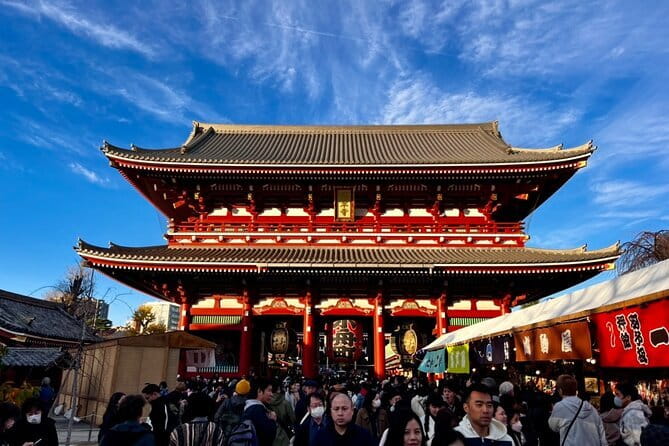
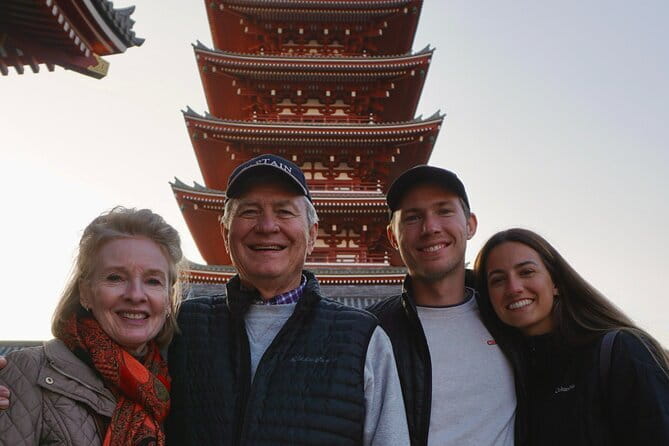
From Tsukiji, the plan moves to Asakusa and Sensoji, Tokyo’s oldest and most recognizable Buddhist temple. The Kaminarimon entrance gate and Nakamise shopping street provide a strong contrast with the seafood market.
This is one of the best pairings in the four-day schedule. Tsukiji shows present-day food culture, while Asakusa gives you a more traditional setting with temple architecture, religious activity, and souvenir shops. You can spend about two hours here, though the area rewards a slower pace if you want to browse.
Remember that Sensoji is an active Buddhist temple, not just a photo stop. The digital guide may point you in the right direction, but it will not replace a live explanation of temple etiquette or symbolism.
The final listed stop is the Tokyo Metropolitan Government Building Observation Decks in Shinjuku. The observation decks are on the 45th floor, and admission is free. That makes this a smart budget stop, especially if you are comparing it with Tokyo viewpoints that charge an entry fee.
The city view is most useful as a way to understand Tokyo’s enormous scale. You can see the dense urban spread from above and get your bearings before spending more time in Shinjuku. The suggested visit lasts one hour.
The day contains three distinct sides of Tokyo without charging an admission fee at the listed stops. The tradeoff is distance and energy. You will need to organize your own transport between districts, and the plan does not include a guide to smooth out those transitions.
Day two: Imperial grounds, Harajuku style, and Shibuya Crossing
Day two starts at the Imperial Palace, the Emperor’s historic residence in central Tokyo. The East Gardens and surrounding grounds provide a quieter opening than the city’s shopping districts.
The suggested time is two hours, and that should let you see the main garden areas without turning the stop into an all-day visit. This is a good choice when you want a break from signs, crowds, and tall buildings.
The description gives you the broad appeal of the palace area, but do not expect access to every part of the imperial compound. The plan highlights the gardens and historic structures rather than promising a full palace tour. Since there is no physical guide, you may want additional information if palace history is a major reason for your visit.
Next comes Harajuku Station and the surrounding district, with two hours suggested. Harajuku is known for street fashion, unusual boutiques, Takeshita Street, and a youthful shopping scene.
This stop works well for people who want a change of pace. After the formal palace grounds, Harajuku brings you into Tokyo’s playful, trend-focused side. You can browse shops, watch the street scene, and decide how much of the fashion culture interests you.
The limitation is that Harajuku can be easy to oversimplify. A short route centered on Takeshita Street gives you the famous part of the district, but not necessarily the quieter streets and other nearby attractions. The flexible format helps because you can extend the stop if you find something worth your time.
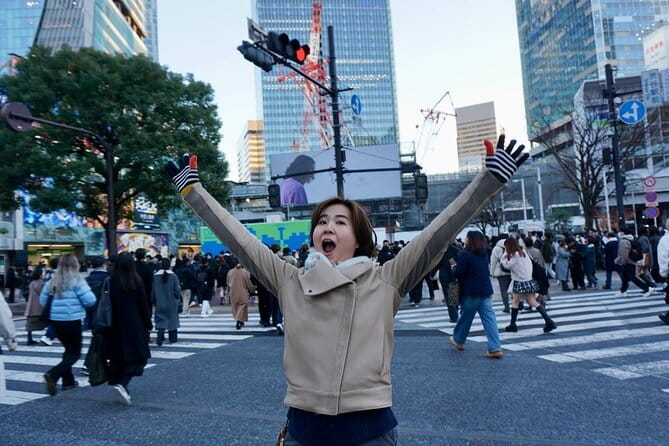
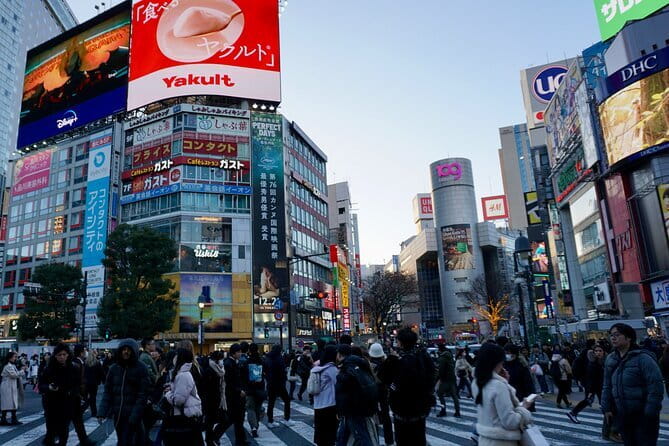
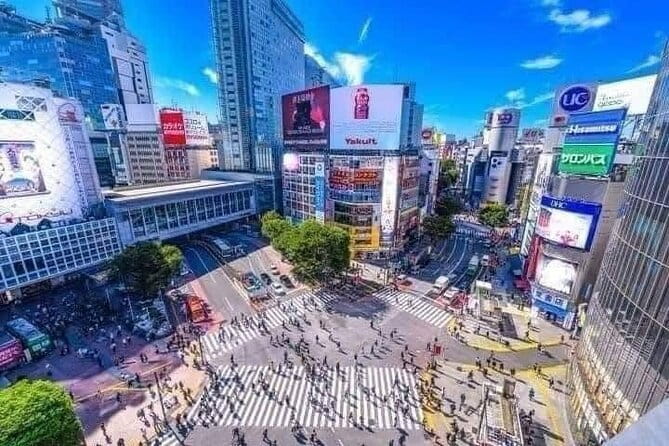
The day ends at Shibuya Crossing, with two hours suggested. This is the famous multi-directional intersection surrounded by tall advertising screens, shops, and urban activity.
You do not need a ticket to experience the crossing, so the stop is easy to fit into a budget-conscious day. Two hours gives you time to cross more than once, look for a view from above if you choose to pay for one separately, and explore nearby streets.
The guide does not list paid viewing admission as included, so keep your expectations clear. The free experience is the crossing itself and the surrounding district. This is also a useful evening stop, although the four-day format leaves the exact timing to you.
Day three: Ueno market energy and Akihabara pop culture
Day three focuses on Ueno and Akihabara, two areas that appeal to different interests but connect well by public transport.
Ueno Ameyoko is suggested for three hours. This open-air market street mixes shops, food stalls, seafood, clothing, and everyday shopping. It is less polished than some of Tokyo’s major commercial districts, which is part of its appeal.
The longer time allocation makes sense. You can browse without rushing, stop for food, and see how the market changes from one block to the next. The local food recommendations included with the plan may be particularly useful here, since a market district can feel confusing when you do not know what is worth trying.
As with Tsukiji, you are not being led from stall to stall. You will need to choose your own food and manage your spending. That independence is a strength for some people and a weakness for anyone who wants tastings or personal introductions.
Akihabara follows, with two hours suggested. This is Tokyo’s famous electronics and anime district, with gadgets, games, pop culture merchandise, and shops aimed at fans of Japanese entertainment.
Akihabara is a focused stop rather than a universal one. If you enjoy electronics, games, anime, or manga, two hours may pass quickly. If those subjects do not interest you, you can shorten this section and use the time elsewhere.
The route is especially useful for a first visit because it puts two very different commercial areas on the same day. Ueno offers a market atmosphere and food, while Akihabara is about technology and fandom. You get variety without spending four days in similar shopping districts.
Day four: Odaiba waterfront, Shinjuku gardens, and nightlife
The final day begins in Odaiba, a futuristic district on Tokyo Bay. The suggested two-hour visit covers ultramodern buildings, entertainment sites, waterfront views, and the giant Gundam statue.
The description also mentions teamLab Borderless, but no admission to that attraction is included. Treat it as an optional extra that requires its own ticket and planning. The free elements of Odaiba are the district itself, its public areas, and the views.
Odaiba can feel quite different from central Tokyo. Its open waterfront setting and modern architecture offer a break from narrow shopping streets and packed stations. The weakness is that the district can take time to reach, and the plan does not provide detailed transport instructions in the supplied information.
Next comes Shinjuku Gyoen National Garden, with two hours suggested. The garden combines Japanese, English, and French design styles and offers a green pause in the middle of the city.
Admission is not included, so budget separately for the entrance fee. This is the only listed stop that clearly identifies an admission charge, and the garden may be less appealing if you are visiting during poor weather or on a tight schedule.
The final stop is Shinjuku at night, with three hours suggested. Neon-lit streets, izakayas, karaoke bars, and late-evening crowds give you a classic Tokyo night out.
This is a strong finish because Shinjuku works best when you have time to wander rather than rush through a short photo stop. The food recommendations may help you decide where to eat, but no restaurant reservation or hosted meal is part of the experience.
You should also notice the balance of this day. Odaiba and Shinjuku are not next-door stops, and adding the paid garden visit makes the schedule more active than the first three days. Use the flexibility to shorten Odaiba or the garden if nightlife is your priority.


Food advice and the Japanese survival card
The food recommendations are one of the most useful extras because eating in Tokyo can take as much planning as sightseeing. You receive personal suggestions from locals, but the provided details do not specify the restaurants, dishes, prices, or dietary coverage.
Use the advice as a starting list rather than a reservation service. The best value is the time saved. Instead of opening several apps and trying to compare every neighborhood, you have a few ideas connected to your four-day route.
The Japanese survival card is another practical addition. It is intended to help with basic needs while you are out exploring, although the exact phrases and contents are not specified. That makes it useful in principle, but you should not treat it as a full language guide.
The eSIM discount may lower your connectivity costs, but it is only a discount, not an included eSIM or data plan. You will still need to arrange the service separately.
Is $26.06 good value for a group of 15?
At $26.06 per group of up to 15, the price is low compared with a private guide or a series of paid Tokyo tours. If two or more people use the same PDF, the per-person cost drops sharply.
The real value is not admission savings. Most listed stops are free, and Shinjuku Gyoen is not included. You are paying for a ready-made structure, local food suggestions, the survival card, and the convenience of having four days planned before you arrive.
I would consider it good value for first-time Tokyo visitors who are short on planning time. I would be less enthusiastic if you already have a detailed plan, need transport instructions at every step, or want a historian, guide, or food expert beside you.
The current score is 4.4 from eight ratings, with strong praise for the flexible format and practical suggestions. The main criticism is that the material is not highly elaborate. That is a fair warning: you get a compact framework, not a full guidebook.
Timing, delivery, and cancellation details
The experience is available every day from midnight to 11:30 p.m. during the stated operating period, which runs from May 12, 2024, through February 22, 2027. Since this is self-guided, the broad hours fit an early market visit, a late night in Shinjuku, or a schedule built around your own arrival time.
Your booking confirmation arrives at the time of booking, and the activity is near public transportation. The maximum group size is 15, though that limit matters mainly because the product is digital and self-guided rather than because you will join a group.
Order well before you fly. One customer accidentally bought the product twice and had trouble receiving a refund, while another received the document after already leaving Tokyo. You can cancel for a full refund up to 24 hours before the experience start time. Cancellations or changes inside that window are not accepted.
Who should use this four-day Tokyo plan?
I would recommend it to independent visitors who want direction without a fixed schedule. It is also a sensible choice for couples, families, or small groups who can share one digital plan and make their own decisions.
It suits a first Tokyo visit especially well because it covers major districts and gives you a useful citywide spread. The food suggestions and survival card add value for anyone who does not want to spend weeks researching.
You may want something else if you need wheelchair or stroller details, detailed station-by-station routes, extensive historical explanation, or someone to answer questions in person. None of those features is promised here.
Should you book it?
Book this if you want a low-cost, flexible starting point for four days in Tokyo and understand that you are buying a compact digital guide, not a hosted tour. The strongest reasons are the range of neighborhoods, the freedom to skip stops, and the practical food and language extras.
Skip it if your schedule is already full or you expect detailed commentary and personal guidance. If you do buy it, do so before departure, download the material early, and use the suggested stops as a framework rather than a rulebook.
FAQ
Is this a guided tour with a physical guide?
No. This is a self-guided experience using a digital PDF itinerary. There is no physical tour guide.
How long does the Tokyo experience last?
The suggested program covers four days, with individual stop times ranging from about one to three hours.
What is included in the purchase?
You receive a self-guided PDF itinerary, personal Tokyo food recommendations from locals, a Japanese survival card, and a discount on an eSIM.
Are admission tickets included?
Most listed stops have free admission. Admission to Shinjuku Gyoen National Garden is not included. The description also mentions teamLab Borderless in Odaiba, but no admission is included for that attraction.
Can I skip stops or change the schedule?
Yes. The suggested stops are designed for flexibility, so you can follow them, skip them, or explore at your own pace.
How many people can use one booking?
The activity has a maximum of 15 travelers, and the price is listed per group of up to 15 people.
Where does the activity start and end?
The stated start point is Shinjuku City, Tokyo. The activity ends back at the meeting point.
Can I cancel for a refund?
Yes. You can receive a full refund if you cancel at least 24 hours before the experience start time. Cancellations and changes made less than 24 hours before the start time are not accepted.
More Food Experiences in Tokyo


More tours in Tokyo we've reviewed










Food, compared.
 ★ 5.0Tokyo: Shinjuku Food Tour (13 Dishes at 4 Local Eateries)From $86
 ★ 5.0Tokyo Tsukiji Fish Market Food and Culture Walking TourFrom $99
 ★ 4.9Tokyo: Shinjuku Food Tour (15 Dishes and 4 Eateries)From $853 hours
 ★ 5.0Best of Shinjuku: Izakaya Food Tour (4 Stops, 14+ Tastings)From $92
 ★ 5.0Tokyo: Tsukiji Fish Market Food and Walking tourFrom $30
 ★ 5.0Tokyo Night Foodie Tour in Shinjuku – Seasonal Sushi, Wagyu BeefFrom $111