
Reviewed · FULL-DAY
Tokyo to Kyoto 1-Full Day Private Guided Tour
Kyoto’s temples, shrine gates, old streets, and food market make a sharp contrast to Tokyo, and this tour gives you a way to see the city in a single, very full day. I like the private format, which lets your guide adjust the pace for your group, and I like the help with bullet train connections, station changes, and timing.
I also like that guides such as Ahmed, Yuka, Midori, and Yukari have been praised for clear explanations, useful photos, food advice, and patience with families. The major drawback is the price structure: the advertised $490 covers the tour service, but transportation, bullet train tickets, some entrance fees, and lunch are extra, so your final bill can be far higher.
In This Review
- Key points to know before booking
- A big Kyoto day that starts in Tokyo
- The Bamboo Forest and Tenryu-ji gardens
- Kinkaku-ji, Kyoto’s Golden Pavilion
- Nishiki Market, Kyoto’s food street
- Pontocho and Gion after the market
- Fushimi Inari and the red torii gates
- What the private guide adds
- The real price: far more than $490
- Train, car, or public transport
- Who will get the most from this tour
- Booking advice and final call
- FAQ
- How long does the Tokyo to Kyoto private tour last?
- How many people can join the private tour?
- Is transportation included in the $490 price?
- How much do the bullet train tickets cost?
- Is a private car and driver included?
- Is pickup at Tokyo Station included?
- Which Kyoto sights are included in the route?
- Are lunch and entrance fees included?
- Can I cancel for a full refund?
Key points to know before booking
- Tokyo to Kyoto in one day: You get a quick but substantial introduction to Kyoto, though the round trip makes for a long day.
- Private group of up to 10: You avoid a large tour group and can ask for help with food, photos, shopping, or pacing.
- Six major Kyoto areas: The route includes the Bamboo Forest, Kinkaku-ji, Nishiki Market, Pontocho, Gion, and Fushimi Inari.
- Transport costs need careful checking: Bullet train tickets cost about ¥28,000 per person for the round trip, while local private transport can add ¥100,000.
- Guides are a major strength: Ahmed, Yuka, Midori, Yukari, Mini, and Kazz have received especially warm praise for personal service and local knowledge.
- Expect a packed schedule: Nine hours is enough for highlights, not a relaxed look at Kyoto.
A big Kyoto day that starts in Tokyo
This is not a gentle day trip. It is a carefully packed sightseeing run that begins with a bullet train from Tokyo and moves through several parts of Kyoto before returning to the station.
The schedule is built for people who have only one open day. Depending on your train and arrangements, you may leave Tokyo around 6:30 or 8:00 in the morning, reach Kyoto roughly two hours later, and spend the main part of the day moving between temples, markets, shrine paths, and old districts. Some schedules finish at Kyoto Station around 5:00 p.m., while others run closer to a 7:00 p.m. return train.
I like the logic behind the plan. Kyoto’s sights are spread across the city, and fitting the western hills, northern temple district, central market area, Gion, and southern shrine area into one day takes careful coordination. A private guide can help you keep moving instead of spending your limited time working out train platforms, taxis, and directions.
The tradeoff is simple: you will see a lot, but you will not experience Kyoto slowly. You may have only an hour at a major temple or market, and the journey from Tokyo means that part of your day is spent on trains. If you have two or more free days, Kyoto deserves its own stay. If you have just one day, this tour can make that day count.
Other guided tours in Tokyo

The Bamboo Forest and Tenryu-ji gardens
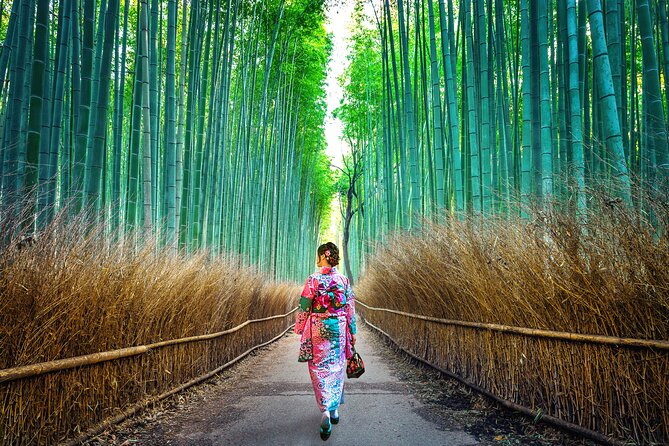
The first listed stop is Bamboo Forest Street in Arashiyama. Tall bamboo stalks rise on both sides of the path, creating one of Kyoto’s most recognizable scenes. The admission cost for the forest itself is free, and the planned visit lasts about an hour.
The forest is more than a quick photo stop. The narrow path gives you an early taste of Kyoto’s quieter, greener western side, though it can feel crowded at popular times. Your guide can help you make the most of the short visit and connect the bamboo setting to nearby cultural sights.
The plan also includes Nonomiya Shrine and the garden at Tenryu-ji. Tenryu-ji adds a more formal garden experience after the tall bamboo. The pairing works well because you get a natural setting, a small shrine, and a major temple garden without using half the day in one place.
The drawback is time. Arashiyama has more to offer than this schedule can cover, and an hour goes quickly once you account for walking and photos. If the Bamboo Forest is your main reason for visiting Kyoto, ask your guide in advance how much time can be reserved for it.
Kinkaku-ji, Kyoto’s Golden Pavilion
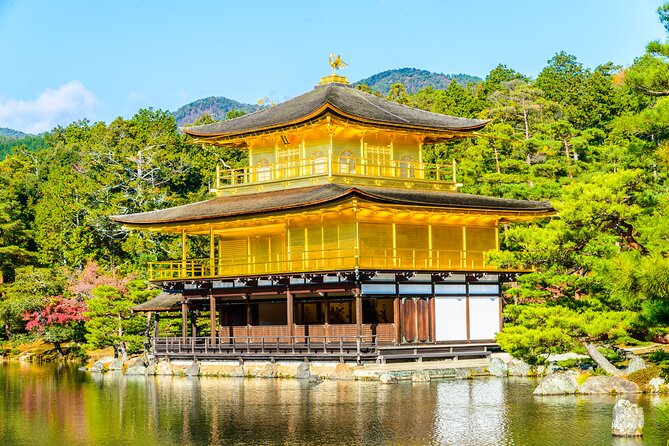
Kinkaku-ji, also called the Golden Pavilion, is the visual centerpiece of many first visits to Kyoto. The gold-covered upper stories reflect over a pond, with carefully arranged gardens around the path.
The planned stop lasts about an hour. That is enough to see the pavilion, walk through the grounds, and hear the basic story of the temple, but it leaves little room for a slow garden visit. Admission is listed separately, so confirm the current amount and payment method before the day begins.
This is one place where a guide adds useful context. The pavilion is easy to photograph, but the meaning of the building, its setting, and its place in Kyoto’s temple culture are harder to grasp from a quick walk alone. Guides Ahmed, Kazz, Midori, and others have been praised for explaining the background without turning every stop into a lecture.
Kinkaku-ji is a must for many first-time visitors, but it is also one of Kyoto’s most popular sights. You should expect other people around the pond and along the garden route. The private format does not make the temple empty. It simply means you have your own guide rather than following a large group.
Nishiki Market, Kyoto’s food street
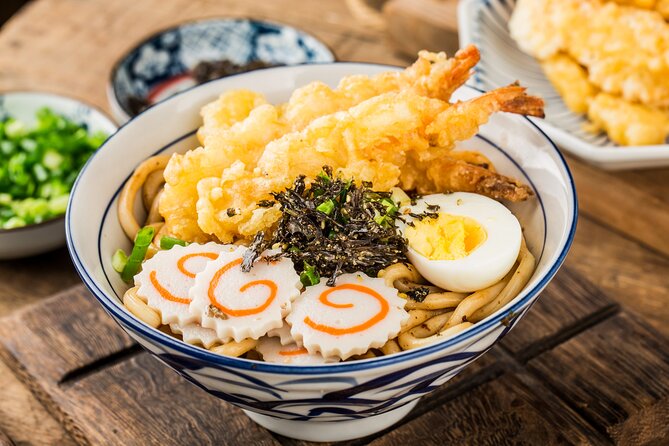
Nishiki Market gives the day a change of pace. Known as Kyoto’s Kitchen, this five-block market has more than a hundred stalls and shops selling food, ingredients, snacks, and small goods.
The planned visit lasts about an hour, and there is no general admission charge. That hour can be used in several ways. You might sample local foods, browse kitchen items, ask your guide to explain unfamiliar ingredients, or stop for a quick lunch.
I especially like this part of the itinerary because it gives you contact with everyday Kyoto rather than only famous religious buildings. Several guides have helped visitors choose places to eat and communicate at shops. Some have also accommodated dietary requests, which is useful if your group has food restrictions.
Still, Nishiki is not a full restaurant lunch. You need to budget separately for food, and the narrow market lanes can make it hard to move quickly. Tell your guide what matters most: tasting, shopping, or eating a proper meal. With only an hour, you may not have time for all three.
Pontocho and Gion after the market
Pontocho Alley receives about 20 minutes on the schedule. This narrow historic lane runs beside the Kamogawa River and is lined with traditional wooden buildings, restaurants, and nightlife spots.
Twenty minutes is enough for a walk-through and a few photographs, but not enough to settle in for a meal or explore the lane in depth. That short stop makes sense as a scenic link between Nishiki Market and Gion, but you should not expect a full evening in Pontocho.
Gion gets about an hour. This is Kyoto’s best-known geisha district, with wooden machiya houses, teahouses, and narrow streets that preserve an older city feel. Admission is listed separately, although much of the district is experienced outdoors.
Your guide can explain the difference between seeing historic streets and entering private establishments. Please be respectful with photography and avoid blocking lanes. Gion is a neighborhood, not a stage set, and the best visit is a quiet walk with attention to the buildings and atmosphere.
An hour allows you to see the main streets, but it does not leave time for a traditional performance or a long tea experience. If Gion matters more to you than the market, discuss that priority before the tour starts.
Other private tours in Tokyo

Fushimi Inari and the red torii gates
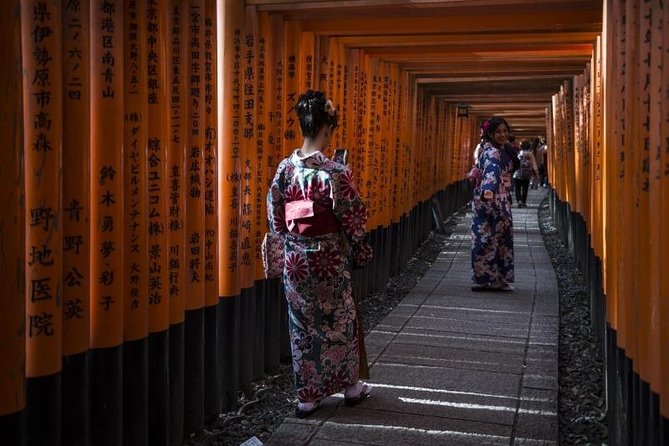
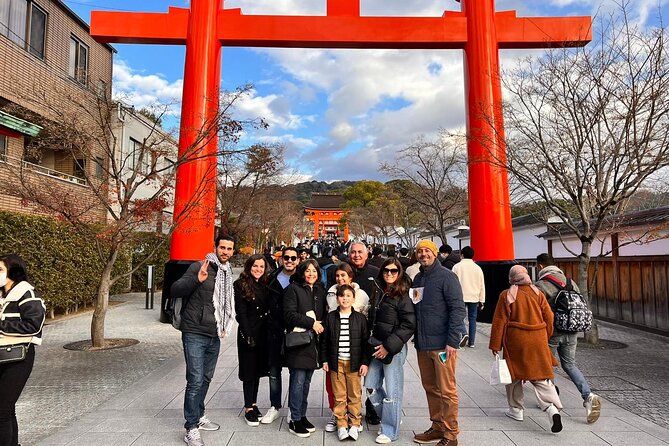
Fushimi Inari-taisha is the final major stop listed, with about an hour planned. Its thousands of red torii gates form a long path through wooded hills behind the shrine.
This is an unforgettable place even on a short visit. The gates begin near the main shrine buildings and continue upward, so the amount you see depends on your pace and energy. You do not need to walk the entire route to understand why Fushimi Inari is one of Kyoto’s signature sights.
The stop is also physically different from the other locations. Expect steps and an uphill path if you go beyond the lower section. One guide paid close attention to a guest with a knee problem, but you should still tell your guide about mobility concerns before setting the pace.
Admission is listed separately. The shrine itself is a public religious site, but the tour information indicates that entrance fees are not included, so clarify exactly what you will pay at each stop.
What the private guide adds
The strongest part of this experience is the guide, not the basic sightseeing list. A route through Kyoto is easy to print. Getting between six major areas, understanding what you are seeing, and making sensible decisions when time gets tight is harder.
Ahmed has been praised for history explanations, patience, train help, and keeping a large family group organized. Yuka has been singled out for local food suggestions, translation help, photographs, and detailed explanations of statues, gates, and pagodas. Midori has adjusted plans for an authentic local meal and separately arriving family members, while Yukari has been praised for making historic stops fun.
Other named guides include Mini and Kazz. The praise is not uniform, and one very negative account described an unfriendly, unhelpful guide. That is worth keeping in mind. Guide quality can shape the whole day, so ask whether you can request a specific guide when booking, though the information does not promise that a request will be available.
The private setup works best if you use it actively. Tell the guide what your group cares about. Ask for less explanation if you want more time for photos, or ask for more background if temples and traditions are your priority. Several positive experiences came from guides who helped with photos, food, train platforms, and translation, not just speeches at monuments.
The real price: far more than $490
The headline price is $490 per group of up to 10. That amount covers guiding services, tour management, and transportation arrangement, but not the actual transportation.
The listed extra charges require serious attention:
- Bullet train tickets from Tokyo to Kyoto and back are about ¥28,000 per person, depending on the ticket selected.
- Local transportation is listed as cash, up to ¥100,000 for groups of up to five, with the description also listing ¥100,000 per booking for larger groups. Confirm this point directly because the wording is unclear.
- A Tokyo Station pickup by the guide can add ¥60,000 in cash.
- Lunch is extra.
- Entrance fees are not consistently presented in the details, so confirm which sites require payment and who pays.
- Gratuities are appreciated but not required.
For a group of four, the bullet train alone can add about ¥112,000. Add the possible ¥100,000 vehicle cost and the total becomes many times higher than the advertised tour price, before lunch and admission fees. For a group of eight or ten, the per-person cost of a ¥100,000 vehicle falls, but the rail tickets still add up quickly.
This can still be good value for a family or group that wants private help and does not feel ready to manage Tokyo and Kyoto rail connections alone. It is poor value if you assume the $490 includes the train, car, driver, guide pickup, meals, and temples.
Get every extra charge in writing before the 24-hour cancellation window closes. Some people misunderstood the difference between private guiding and included transportation, and that confusion caused much of the dissatisfaction. The tour can be worthwhile, but only when you price it as a complete Tokyo to Kyoto day, not as a $490 excursion.
Train, car, or public transport
The tour can be arranged around different transport choices, but the details make clear that the private car option is expensive. A private car and driver in Kyoto saves time between distant areas and is useful when you are trying to fit Arashiyama, Kinkaku-ji, central Kyoto, Gion, and Fushimi Inari into one day.
That convenience matters. Kyoto’s sights are not arranged in a neat line, and public transport can take time when you are changing areas. A car also helps families, older adults, and groups carrying bags or managing a tight return train.
You do not have to assume a car is the only sensible choice. A group of four used public transportation and found it easy, with help from the guide. That option can cut the total cost sharply, but you need to be comfortable walking, using stations, and accepting a little less control over the timetable.
The bullet train is a key part of the day. Guides have helped people select departure times, find platforms, and get back through Kyoto Station. Book your return with enough margin for the tour schedule, and ask the guide what finish time is realistic. A 7:00 p.m. train may give you more time than a 5:00 p.m. station drop-off, but the exact plan must be agreed in advance.
Who will get the most from this tour
I would consider this tour for a first visit to Japan when Tokyo is your base and Kyoto is a priority but you cannot spend the night. It is also a practical fit for families, groups of friends, and people who want explanations rather than a self-guided checklist.
It suits you if you value:
- A private guide for your own group
- Help with bullet train stations and local movement
- A broad look at Kyoto’s best-known sights
- Food and shopping suggestions
- Assistance with translation and photographs
- A planned route that reduces research time
It is less suitable if you want long temple visits, quiet walks, a relaxed lunch, or time to explore each neighborhood. It is also not the best choice if your budget is tight. Public transport and an independent Kyoto visit will cost less, though you will do more planning yourself.
The 9-hour estimate also needs a realistic reading. It does not mean nine relaxed hours inside Kyoto. It includes a fast itinerary and must fit around the Tokyo to Kyoto train journey and the return connection.
Booking advice and final call
I would book this only after confirming four things: the exact meeting point, the guide pickup fee, the local transport cost, and whether you will use a private car or public transport. Also ask which admission fees are included, because the details conflict on that point.
The tour earns its 4.3 out of 5 rating from the guides who turn a difficult day into a manageable one. Ahmed, Yuka, Midori, Yukari, Mini, and Kazz have all been praised for warmth, history, timing, food help, photos, and station assistance. But the low ratings point to a real problem: the final cost is easy to misunderstand.
Book it if Kyoto is a must and you have only one day from Tokyo, especially if your group wants personal help and can handle the extra expense. Skip it if you can spend a night in Kyoto, want a slower visit, or need a simple all-inclusive price. Kyoto rewards time, but this tour gives you a practical way to catch its biggest sights when time is the thing you do not have.
FAQ
How long does the Tokyo to Kyoto private tour last?
The experience lasts approximately 9 hours.
How many people can join the private tour?
The private tour is for your personal group, with up to 10 people.
Is transportation included in the $490 price?
No. Transportation costs are listed as extra, including bullet train tickets and local transportation.
How much do the bullet train tickets cost?
The listed round-trip cost from Tokyo to Kyoto is about ¥28,000 per person, depending on the ticket selected.
Is a private car and driver included?
No. Local transportation is an additional cash charge listed as up to ¥100,000 for up to five travelers. Confirm the exact amount for your group before booking.
Is pickup at Tokyo Station included?
A Tokyo Station pickup by the guide may cost an additional ¥60,000 in cash.
Which Kyoto sights are included in the route?
The route includes Bamboo Forest Street, Nonomiya Shrine, Tenryu-ji Temple Garden, Kinkaku-ji, Nishiki Market, Pontocho, Gion, and Fushimi Inari-taisha Shrine.
Are lunch and entrance fees included?
Lunch is not included. The details also list entrance fees as not included at several stops, so confirm the exact admission arrangements before the tour.
Can I cancel for a full refund?
Yes, if you cancel at least 24 hours before the experience start time. Cancellations or changes made less than 24 hours in advance are not accepted for a refund. If poor weather causes the tour to be canceled, you will be offered another date or a full refund.
More Full-Day in Tokyo

More Private Tours in Tokyo
More Guided Tours in Tokyo

More tours in Tokyo we've reviewed




Full-Day, compared.
 ★ 4.5From Tokyo: Mount Fuji Full-Day Sightseeing TripFrom $6810 hours
 ★ 4.9Mount Fuji Full-Day Private Tour from Tokyo (Customizable)From $393
 ★ 5.0Tokyo Private Full-Day Tour by Car or VanFrom $321
 ★ 4.7From Tokyo: Must-Visit Mount Fuji Highlight Full-Day TourFrom $6911 hours
 ★ 4.5Mt. Fuji, Hakone Full-Day Private Tour with English Driver GuideFrom $495
 ★ 4.8From Tokyo: Mount Fuji Full-Day Customizable Private TourFrom $48310 hours