
Reviewed · 1-DAY TOURS
Tokyo Private Day Trip – Enjoy Your First-Time Visit to Tokyo!
Tokyo can feel like several cities stitched together, and this private day trip gives you a useful first look at many of them. You begin in Harajuku among quiet shrine woods and youthful fashion, then move through Tsukiji, Tokyo Tower, and old Asakusa with a guide who helps you handle Tokyo’s trains and subways.
I like the private format, since your guide can adjust the pace, explain local customs, and help with lunch or shopping. I also like the route’s range: Meiji Shrine, Takeshita Street, a fish market, a city icon, and Tokyo’s oldest temple all appear in one day.
The main catch is the pace. Seven hours, several train rides, and plenty of walking leave little room to linger, and the $99.49 price does not include transport, food, or most entrance fees. You should also expect guide quality to vary, so clear communication at the start matters.
In This Review
- Key points to know before booking
- Why this route works for a first day in Tokyo
- Meiji Shrine: a quiet start in central Tokyo
- Takeshita Street and Omotesando: two sides of Harajuku
- Tsukiji: a lunch stop with a changed identity
- Tokyo Tower: a short look at the city symbol
- Senso-ji in Asakusa: finishing with old Tokyo
- What the private format is really worth
- Customizing the day without losing the route
- Walking, weather, and the practical details
- Who should book this Tokyo day trip
- Should you book it?
- FAQ
- How long does the Tokyo private day trip last?
- Where does the standard tour begin?
- Where does the tour end?
- Is this a private tour?
- Is hotel pickup included?
- What sights are included?
- Is lunch included?
- Are transportation costs included?
- Is Tokyo Tower admission included?
- Can the itinerary be customized?
- What should I wear?
Key points to know before booking
- A useful first-day route: You see modern, religious, historic, and food-focused Tokyo in one outing.
- Private guidance by public transport: Your guide helps you use the subway and trains, a skill that can save time for the rest of your trip.
- Five major stops: The planned route includes Meiji Jingu Shrine, Takeshita Street, Tsukiji Fish Market, Tokyo Tower, and Senso-ji Temple.
- Custom plans are possible: Contact the guide two weeks ahead if you want to replace the standard route with your own priorities.
- Budget beyond the tour price: Bring money for train fares, lunch, Tokyo Tower admission, and personal purchases.
- Expect a full day on your feet: Sneakers, water, and some tolerance for crowds will serve you well.
Why this route works for a first day in Tokyo
Tokyo is too large to understand from one neighborhood. A day spent only around Shibuya gives you bright signs, department stores, and the famous crossing, but not much sense of older Tokyo. A day only in Asakusa gives you temples and traditional streets, but misses the city’s youth culture and modern symbols.
This route connects those pieces. You meet at Harajuku Station and finish near Asakusa Station, moving east through the city rather than circling one small area. Along the way, your guide explains customs, history, transport, and everyday city life.
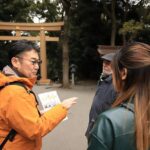
That transport help may be the most practical part of the experience. Tokyo’s rail system is fast and reliable, but station signs, multiple operators, and crowded interchanges can unsettle you on your first morning. Guides such as Yutaka, Meg, Taku, and Mark have helped people learn how to buy tickets, read the system, and find their way back to a hotel or onward train.
You are not simply driven between sights. You use public transportation and walk, which means you see ordinary streets between the headline attractions. The tradeoff is that your day depends on walking speed, train connections, weather, and how long you stop for food or shopping.
Other private tours in Tokyo

Meiji Shrine: a quiet start in central Tokyo
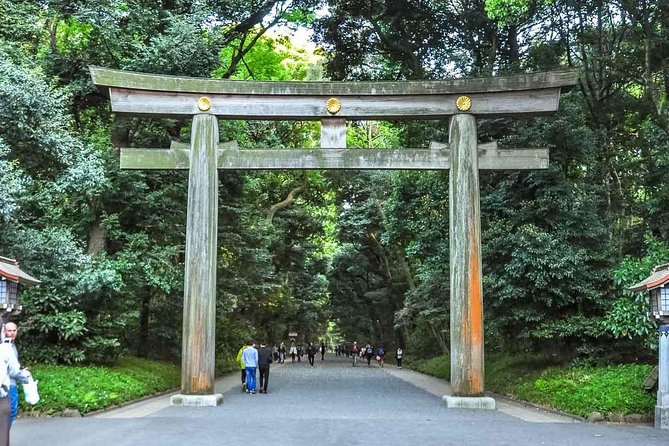
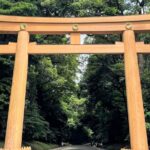
The first stop is Meiji Jingu, one of Tokyo’s best places to see Shinto practice in a calm setting. Its wooded grounds create a sharp change from Harajuku’s shops and crowds, even though the shrine sits in one of the city’s busiest districts.
Plan on about 50 minutes here. Your guide can explain the basic customs, including how to behave at the shrine, and give context for the site’s place in modern Japanese life. The shrine is free to enter, so this is an easy opening stop with no extra admission cost.
The value of beginning here is contrast. You start with quiet paths and traditional worship before stepping into Takeshita Street’s fashion scene. If you are taking photos, listen to your guide before treating the grounds like a photo set. This is an active religious place, not just a pretty backdrop.
The route may feel short if you want time to wander. A private guide can adjust the pace, but five stops in seven hours means you should tell your guide early if Meiji Shrine matters more to you than shopping or the tower.
Takeshita Street and Omotesando: two sides of Harajuku
From the shrine, the tour moves into Harajuku’s fashion district. Takeshita Street is associated with youth culture, colorful shops, snack stops, and a dense flow of pedestrians. Omotesando offers a different mood, with major fashion names and a more polished street scene.
The official timing gives this area about 50 minutes. That is enough to get a feel for both streets, but not enough for a serious shopping session. If you want souvenirs, clothes, or specialty stores, say so before the tour begins. Guides including Toshi have helped people choose souvenirs, while other guides have shifted the day toward shopping for people who had already seen Tokyo’s main sights.
This is one of the clearest benefits of booking a private tour instead of a fixed group excursion. You can ask for more time in Harajuku, but the guide may need to shorten another stop. A first-time visitor who wants a broad introduction will probably prefer the standard balance.
Do not expect Takeshita Street to feel serene. It can be crowded, and the narrow street makes the stop more about atmosphere and people-watching than careful sightseeing. Omotesando adds architectural interest, but the emphasis here is modern Tokyo rather than old temples.
Tsukiji: a lunch stop with a changed identity
The tour allows about 90 minutes at Tsukiji Fish Market, making this the longest stop. Tsukiji was once the city’s famous wholesale fish market, but that wholesale operation moved to Toyosu in 2018. The Tsukiji area still has food shops, restaurants, and a strong connection to Tokyo’s market culture.
This distinction matters. You are not visiting the old wholesale market in its former form. You are visiting the historic Tsukiji district as it exists today, with places to eat and browse.
Lunch is not included, so plan to pay directly for your meal. A guide can help you choose a place and order, which is especially useful if you want to try seafood or need help understanding menus. Several guides have taken people to affordable local restaurants, including small places they would not have found alone.
Market days need attention. Many shops around Tsukiji close on Wednesdays, Sundays, and public holidays. On those days, your guide may direct you to open shops or shift lunch to nearby Ginza or Tsukishima. You should also carry cash because some spots accept cash only.
The market can be crowded and humid, and the operator recommends bringing a mask if possible. Keep your expectations practical: this is a food and shopping stop with historical context, not a full market tour with every stall open.
Tokyo Tower: a short look at the city symbol
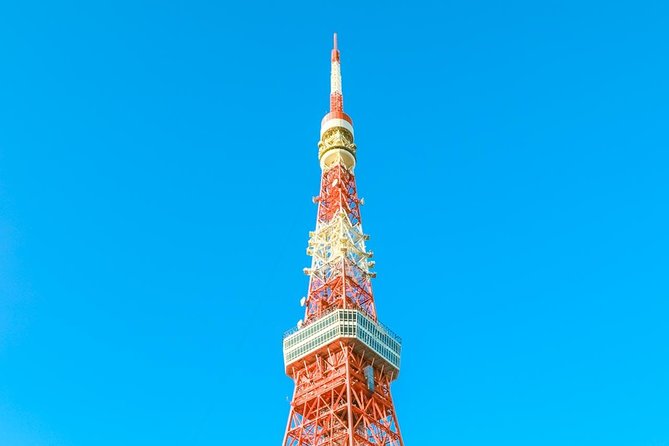
Tokyo Tower receives about 45 minutes. Built in 1958, it remains one of Tokyo’s most recognizable structures, even though Tokyo Skytree is taller. Its orange and white frame rises above the dense city, and the tower gives your day a clear modern landmark.
Admission is not included. The supplied cost estimate for the pre-planned route is ¥2,780 per person, but that amount is separate from the tour price and does not replace every possible personal expense. Confirm with your guide what you will pay on the day, especially if you want to go inside the tower.
The short time allocation suggests that Tokyo Tower may be an exterior visit or a quick stop rather than a long observation-deck session. If going up the tower is important to you, ask about timing at the beginning. Some people have added extra sights, including Tokyo Skytree, but extra time is not guaranteed and may change the route.
I like the tower’s place in the itinerary because it gives you a visual marker for postwar Tokyo. Still, it is the stop most likely to feel rushed if trains run late, lunch takes longer than planned, or you request extra shopping time.
A few more Tokyo tours and experiences worth a look

Senso-ji in Asakusa: finishing with old Tokyo
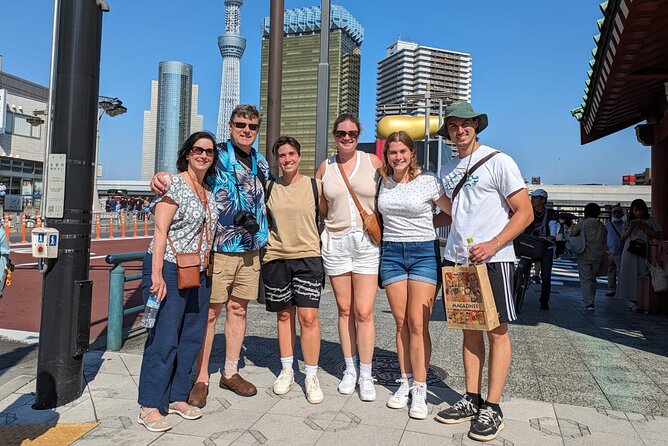
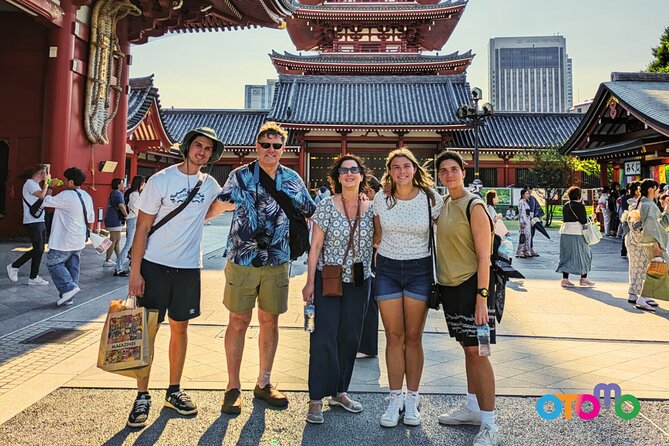
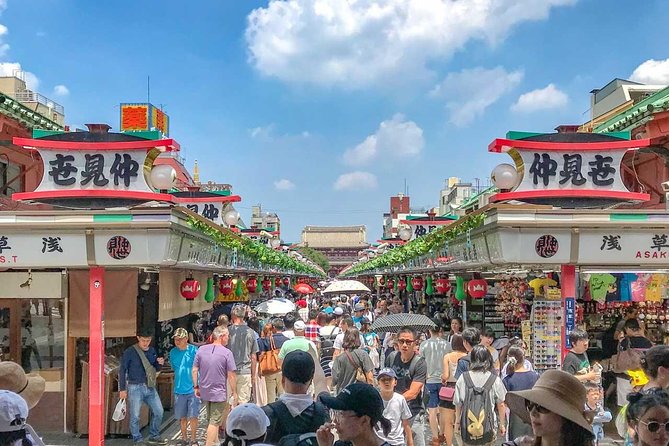
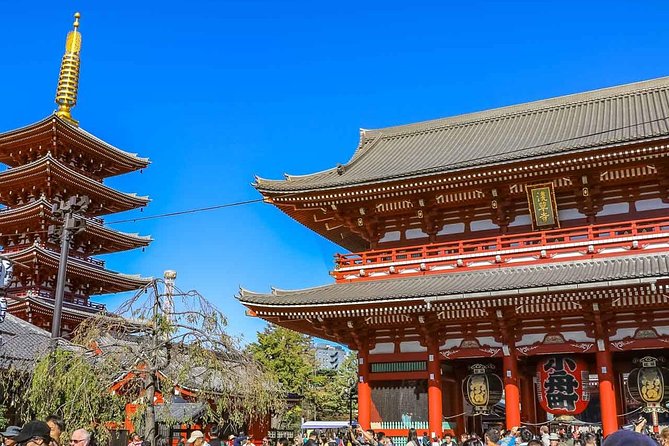
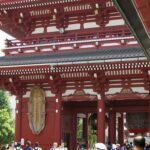
The final planned sight is Senso-ji, Tokyo’s oldest temple and the centerpiece of Asakusa. The large red lantern at Kaminarimon Gate is one of the city’s familiar images, and the approach to the temple offers plenty to see, browse, and photograph.
You have about 45 minutes here, with free admission to the temple grounds. Your guide can explain the difference between the Buddhist temple and the Shinto shrine you visited earlier. That comparison adds real value, since the two traditions can look similar to a first-time visitor but follow different customs.
Asakusa is also a good place to finish because the atmosphere changes again. After Harajuku’s fashion streets, Tsukiji’s food stalls, and Tokyo Tower’s modern silhouette, Senso-ji brings you back to older religious and neighborhood Tokyo.
The tour ends at Asakusa Station. If you need to return to your hotel, ask your guide to show you the correct route before saying goodbye. Guides such as Meg and Mark have helped people continue safely through the rail system, and that final lesson can be as useful as the sightseeing itself.
What the private format is really worth
The listed cost is $99.49 per person. For a private seven-hour outing, that can be good value if you are sharing the guide with family or friends and want help with Tokyo’s transport system. Group discounts may also be available, so the per-person cost becomes more attractive as your party grows.
You still need to budget for train and subway fares, lunch, Tokyo Tower admission, and shopping. The pre-planned route lists estimated additional costs of ¥2,780 per person, while the customizable option may require you to cover entrance fees and necessary expenses for the guide.
The strongest value is not admission savings. It is time and confidence. A guide can reduce the chance of taking the wrong train, help you order lunch, explain etiquette, and point out useful details you might pass without noticing. That is especially helpful on your first full day in Tokyo.
The value falls if you already know the train system, prefer slow independent sightseeing, or want to spend hours inside one museum or market. You are paying for a broad introduction, not a relaxed deep visit to each stop.
Customizing the day without losing the route
The standard itinerary is best if you want someone else to make the major decisions. For a custom plan, contact the guide two weeks in advance and explain what you want to see. You can request different meeting points if the location is within Tokyo, including a designated hotel meeting point.
Custom planning has worked well for people who wanted more shopping, a particular restaurant, a pop-up art installation, or extra transport experiences. One party even added a bullet train ride, but you should treat such additions as examples, not guaranteed inclusions.
Be specific about your priorities. Tell the guide if food matters more than Tokyo Tower, if you have already seen Meiji Shrine, or if you need a slower pace for an older family member. Also respond to the operator’s messages. If you do not reply about the custom option, the standard route will be used.
Private does not mean unlimited. Your guide can rearrange stops, but seven hours still has a firm limit. A short list of top priorities will produce a better day than trying to add every famous neighborhood.
Walking, weather, and the practical details
This is a walking tour connected by public transport. Wear sneakers and expect frequent movement between stations, platforms, streets, and attractions. Tokyo’s summer heat and humidity can make the day harder, and rain may lead to changed transport, destinations, or routes.
A guide has adjusted plans for rain and for older family members, but you should explain mobility needs before the tour starts. Most people can take part, and the activity is near public transportation, yet the amount of walking remains a real consideration.
The meeting point for the standard tour is Harajuku Station, at 1 Chome-18 Jingumae. The end point is Asakusa Station, at 1-chōme-1-3 Asakusa. Hotel pickup is not included with the pre-planned route.
The experience has a 4.9 rating from 793 ratings and a 97 percent recommendation rate. Praise centers on guides who speak clear English, explain Japanese customs, adapt the route, take photos, help with meals, and teach the rail system. Names that appear often in strong accounts include Toshi, Taku, Meg, Eriko, Usha, Ken, Tatsu, and Murayama-san.
You should also know the weak point. A small number of accounts describe guides who gave little historical explanation, lacked structure, or mishandled a train-platform meeting. The operator apologized for those cases and said it was retraining guides and tightening procedures. To protect your own day, confirm the meeting plan, keep the group together at stations, and ask questions if the commentary feels thin.
Who should book this Tokyo day trip
I would choose this tour for a first visit, especially if you are nervous about trains or want to see several very different parts of Tokyo in one day. Families, cruise passengers, and people with only a short stay can gain a lot from having one person manage the route.
It also suits you if you want food help at Tsukiji, practical shopping suggestions, or a day adjusted to your interests. The private setup gives you far more control than a fixed group outing.
I would skip it if you want a slow day, dislike public transport, or plan to spend most of your time inside Tokyo Tower or at the market. The route is broad and active, and extra costs can push the final price above the headline figure.
Should you book it?
Book it if you want an efficient first look at Tokyo and value a friendly guide who can explain the city while helping you use the trains. The best version of this experience comes from setting priorities early, wearing good shoes, carrying cash, and treating the route as an introduction rather than a complete visit to every neighborhood.
For a custom tour, contact the guide two weeks ahead. For the standard plan, arrive ready for a full seven hours of walking, short visits, lunch at your own expense, and a useful lesson in getting around Tokyo.
FAQ
How long does the Tokyo private day trip last?
The tour lasts approximately seven hours.
Where does the standard tour begin?
The standard tour begins at Harajuku Station, 1 Chome-18 Jingumae, Shibuya, Tokyo.
Where does the tour end?
The standard tour ends at Asakusa Station, 1-chōme-1-3 Asakusa, Taito City, Tokyo.
Is this a private tour?
Yes. Only your group participates in the private activity.
Is hotel pickup included?
Hotel pickup is not included for the pre-planned must-see tour. Custom tour customers can choose a meeting point at a hotel within Tokyo.
What sights are included?
The planned route includes Meiji Jingu Shrine, Takeshita Street and Omotesando, Tsukiji Fish Market, Tokyo Tower, and Senso-ji Temple.
Is lunch included?
No. Lunch and all food and drink costs are paid by you.
Are transportation costs included?
No. You pay the train and subway fares used during the tour.
Is Tokyo Tower admission included?
No. Tokyo Tower admission is not included.
Can the itinerary be customized?
Yes. Choose the customizable option and contact the guide two weeks before the tour to discuss your plans. If you do not respond, the standard itinerary will be used.
What should I wear?
Wear sneakers because the day includes a lot of walking. You should also bring cash, since some places accept cash only.
More 1-Day Tours in Tokyo
More Private Tours in Tokyo

More tours in Tokyo we've reviewed




1-Day Tours, compared.
 ★ 5.0Mt Fuji and Hakone 1-Day Bus Tour Return by Bullet TrainFrom $163
 ★ 5.01-Day Tokyo Bus TourFrom $129
 ★ 4.0Mt Fuji & Hakone Cruise, Drum Show Bullet Train 1 Day from TokyoFrom $149
 ★ 4.5Tokyo: DisneySea 1-Day PassportFrom $571 day
 ★ 4.6Tokyo Disneyland 1-Day PassportFrom $571 day
 ★ 4.2Tokyo: Mt. Fuji 5th Station & Hakone Cruise 1-Day Bus TourFrom $12911 hours