
Reviewed · MT FUJI DAY TRIPS
Tokyo: Mount Fuji One Day Trip Lake Kawaguchi & Lake Yamanaka
Mount Fuji provides the star power here, but the real appeal is the range of stops around it. In one long day, you’ll see Lake Kawaguchi, Lake Yamanaka, Oshino Hakkai, and Chureito Pagoda, with plenty of chances to photograph Japan’s most famous peak.
I like the broad mix of nature and local sights, and I like the low price of $58.90, which covers transport and taxes. Guides such as Taiyo, Yuan, Kyo, Saki, and Lucy have been praised for clear instructions, local tips, and help with photos. The tradeoff is a tight schedule, long periods on the road, and a busy morning meeting point.
In This Review
- Key points to know before booking
- What this Mount Fuji day trip is really offering
- Lake Kawaguchi starts the Fuji views
- Oishi Park combines flowers, water, and Fuji
- Lake Yamanaka, the quieter lake with a closer Fuji view
- Oshino Hakkai adds water, village scenes, and local food
- Lawson offers the most modern photo stop
- Chureito Pagoda is the day’s signature view
- Arakura Fuji Sengen Shrine brings a quieter pause
- Hikawa Clock Shop shows Fuji in an ordinary town
- Guides can make the schedule work
- The bus ride is part of the bargain
- Is $58.90 good value?
- Who should book this Fuji outing?
- Should you book this Mount Fuji day trip?
- FAQ
- How long does the Mount Fuji day trip last?
- Where does the tour start?
- What transport is included?
- Is lunch included?
- Which places does the tour visit?
- How large can the group be?
- Can I bring a stroller or large luggage?
- What is the cancellation policy?
Key points to know before booking
- Two Fuji lakes in one day: Lake Kawaguchi offers classic shore views, while Lake Yamanaka is the largest and closest of the five lakes to Mount Fuji.
- The classic postcard stop: Chureito Pagoda gives you the familiar view of a red pagoda, Mount Fuji, and Fujiyoshida City, but you’ll need to manage a substantial climb.
- Small stops, many photo chances: Oishi Park, Hikawa Clock Shop, Lawson, and Arakura Fuji Sengen Shrine each add a different view or cultural detail.
- A budget-friendly day out: The $58.90 price includes an air-conditioned vehicle and all listed fees, but lunch and personal purchases are extra.
- Expect a large group: The vehicle may carry up to 45 people, and the departure area can be confusing when several tour buses gather.
- Weather controls the main event: You may get a clear Fuji view, but the mountain can disappear behind cloud, as it often does in the region.
What this Mount Fuji day trip is really offering
This is a sightseeing circuit, not a slow country escape. You leave central Tokyo at 8:00 am, travel by air-conditioned vehicle, and return to the same meeting point after roughly 10 hours.
That format works well if you have only one free day and want to see several famous places without piecing together trains, buses, and local connections. You get a guide, transport, and a planned route for $58.90. For many visitors, that is a sensible price for reaching several Fuji-area sights in a single day.
You should also set your expectations correctly. Each stop is short except Oshino Hakkai and Chureito Pagoda, which receive about an hour apiece. This means you’ll collect a lot of views, but you won’t have much time to linger, wander off-route, or sit beside the lakes with a coffee.
The group limit is 45 people. That is large enough for the tour to feel organized rather than intimate, but the pace depends on everyone returning to the vehicle on time. Clear instructions matter here. Guides such as Taiyo have been praised for keeping people on schedule, and a WhatsApp group has been useful for meeting-point updates and departure reminders.
A few more Tokyo tours and experiences worth a look
Lake Kawaguchi starts the Fuji views
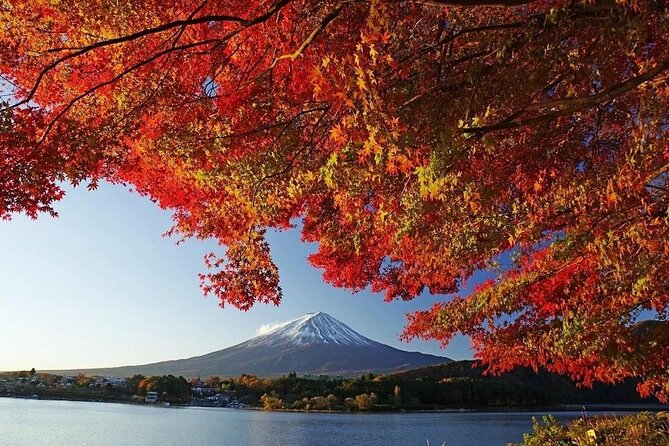
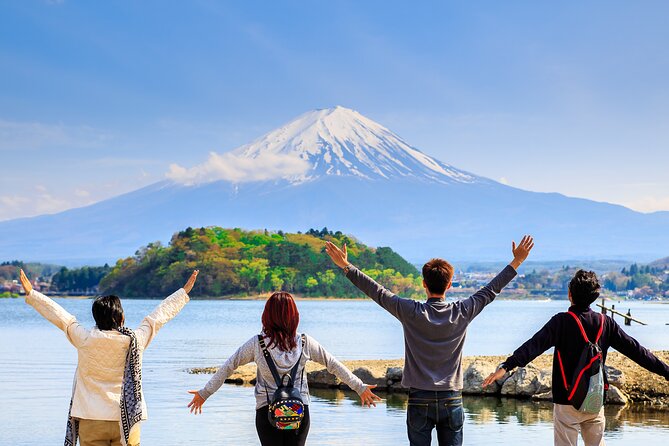
Lake Kawaguchi is the most popular of the Fuji Five Lakes and has the longest shoreline. Its main attraction is simple: on a clear day, you can see Mount Fuji rising beyond the water.
You get about 25 minutes here, with no admission fee. That is enough for a quick lakeside look and photographs, but not enough to explore the shoreline in any serious way. If Fuji is visible, this first stop gives you the classic broad composition of water, mountain, and open sky.
The lake is also a useful opening stop because it shows why the Fuji region is so popular. The mountain is not an isolated attraction behind a gate. It is part of the view from roads, parks, villages, and quiet shorelines.
Cloud is the great unknown. One person can have a wonderful day and see the peak clearly, while another arrives under gray cover. The tour can take you to the viewing places, but it cannot guarantee the mountain will appear.
Oishi Park combines flowers, water, and Fuji
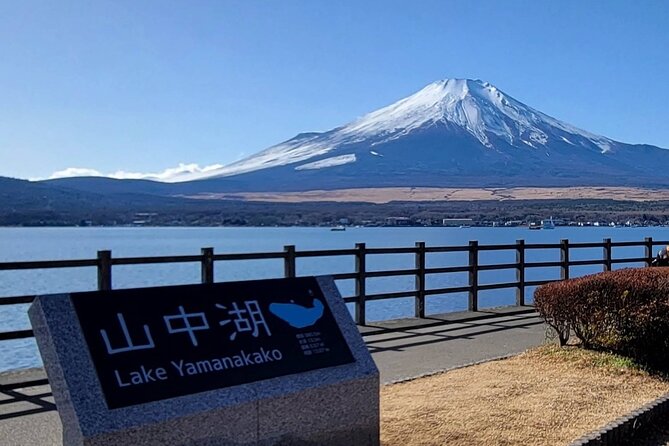
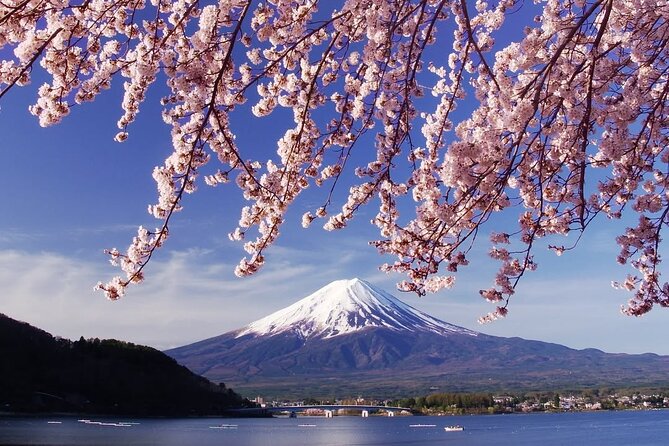
Oishi Park sits beside Lake Kawaguchi and gives you another 25-minute photo stop. Its appeal changes with the season, since flowers bloom along the lakeside promenade at different times of year.
The composition is unusually generous. You can frame flowers in the foreground, Lake Kawaguchi in the middle distance, and Mount Fuji behind it. Even if the peak is hidden, the park still offers a pleasant walk beside the water.
I would treat this as a focused photo break rather than a garden visit. You will not have enough time to study every planting area, and the stop comes early in a day that already has many destinations. Still, it adds color and variety after the first lake.
Lake Yamanaka, the quieter lake with a closer Fuji view
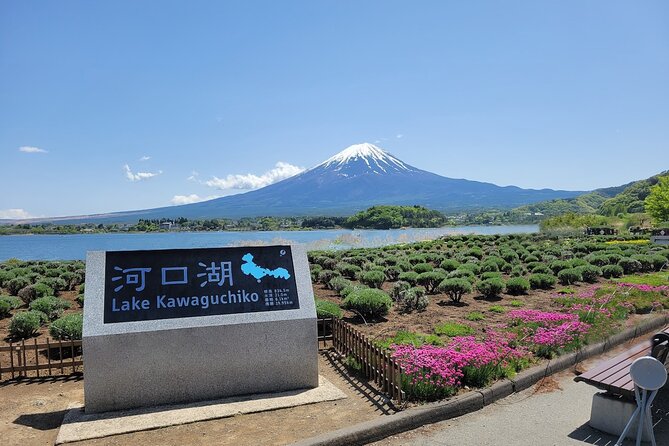
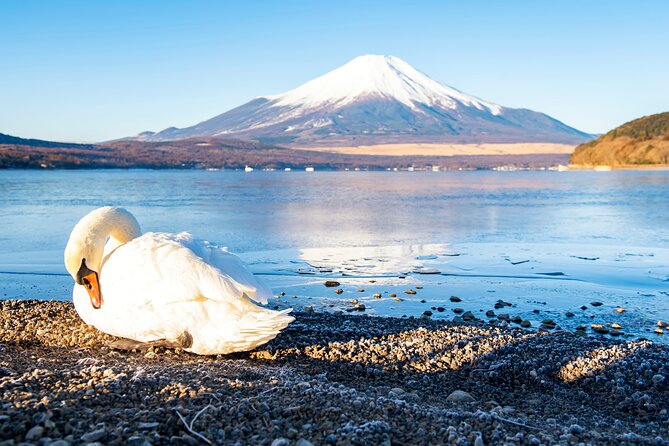
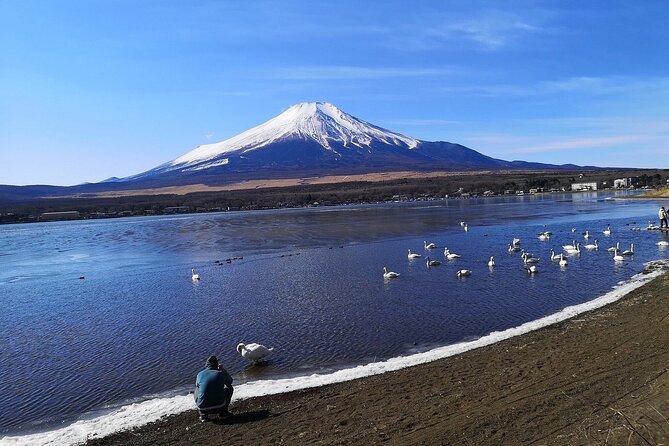
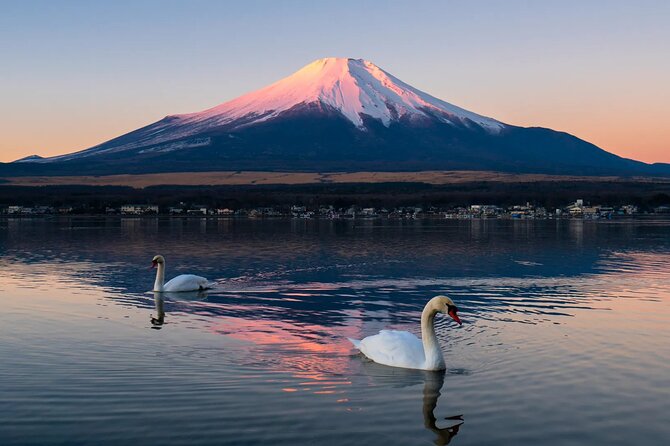
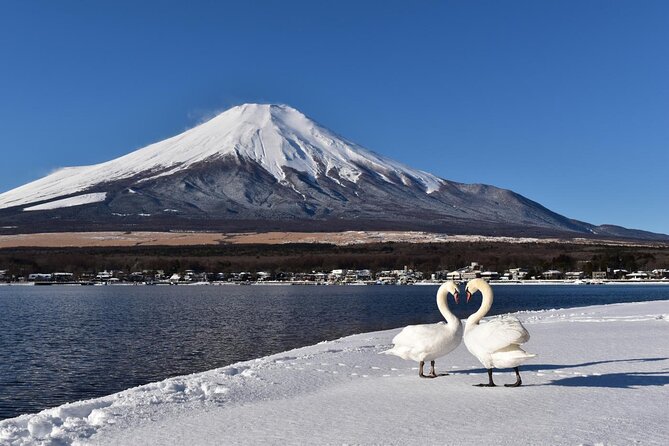
Lake Yamanaka is the largest of the five Fuji lakes and the closest to Mount Fuji. It is also known as Swan Lake. The stop lasts about 25 minutes and is free to enter.
This lake gives you a different sense of scale from Kawaguchi. Its closeness to the mountain can make Fuji feel more immediate, while the open shore gives you another angle for photographs. The name Swan Lake points to one of the area’s familiar features, though the supplied tour details do not promise a wildlife encounter.
With only 25 minutes, you should be ready to get out, take your photos, and return promptly. If you prefer a quiet, unhurried lakeside visit, the short timing may frustrate you. If your goal is to compare two Fuji lakes in one day, it is a useful addition.
Oshino Hakkai adds water, village scenes, and local food
Oshino Hakkai is one of the most worthwhile stops because it offers more than a scenic backdrop. The village is known for eight clear spring ponds, recognized among Japan’s Top 100 Famous Waters. It is also a Natural Monument and part of the Mount Fuji World Heritage area.
You get about one hour here, making it one of the day’s better chances to move at your own pace. You can look at the ponds, take in the village setting, and seek out food or small purchases. Lunch is not included, and one important practical tip is to bring cash. A past participant specifically advised doing so for lunch.
This is also the place where the tour’s focus shifts from wide mountain photographs to details. Clear water, traditional village features, and food give the day a more grounded Japanese feel. The site may be busy, but the ponds and village setting provide a welcome change from roadside photo stops.
Do not assume lunch is arranged for you. The tour includes no meal, so use this hour wisely. If you want to eat, carry enough cash and keep an eye on the departure time.
A few more Tokyo tours and experiences worth a look



Lawson offers the most modern photo stop
The Lawson Fujikawaguchiko Town Hall stop lasts about 15 minutes. It is known online for a distinctive view of Mount Fuji above a convenience store, a very Japanese collision of everyday life and famous scenery.
This is a quick stop, and the store gives you a chance to buy ice cream, drinks, or local snacks. It is also a practical place to refresh yourself if you have spent much of the morning on the bus.
The appeal is more playful than cultural. You will not be visiting an old shrine or historic village here. You are photographing a familiar Japanese chain against one of the world’s most recognizable mountains. For social media photos, it is useful. For a deeper sense of the region, it is less important than Oshino Hakkai or the shrine.
Chureito Pagoda is the day’s signature view
Chureito Pagoda sits in Arakurayama Sengen Park and is probably the stop most people picture when they hear about a Mount Fuji day trip. From the park, you can see the five-story pagoda, Mount Fuji, and Fujiyoshida City arranged in one sweeping view.
The visit lasts about one hour and admission is free. The key point is physical effort. The pagoda is reached by a climb, so wear comfortable shoes and keep some energy in reserve. The tour schedule gives you time to make the ascent and take photographs, but the route is not a flat stroll.
This view is famous for a reason. It brings together Japanese architecture, a sacred setting, a city below, and Mount Fuji in the distance. When the weather cooperates, it is the strongest visual moment of the day.
When Fuji is hidden, the pagoda and city still make a worthwhile scene, but the famous three-part composition is incomplete. Plan to enjoy the place itself rather than treating the stop as a guaranteed photograph.
Arakura Fuji Sengen Shrine brings a quieter pause
The Arakura Fuji Sengen Shrine was built in 705 and has served as the guardian shrine of Arakura Village for more than 1,300 years. It is connected with protection from bad luck and the wish for harmony.
You get about 15 minutes here. That is enough to see the grounds and understand the shrine’s role, but not enough for a long visit or a detailed study of its religious traditions.
I like this short stop because it adds context after the highly photographed pagoda. The pagoda is the image most people seek, while the shrine helps explain the sacred character of the site. Keep your behavior respectful, especially if worship is taking place.
Hikawa Clock Shop shows Fuji in an ordinary town
Hikawa Clock Shop is another brief photo stop, lasting about 20 minutes. The setting is a traditional-looking town street with a view toward Mount Fuji, giving you a chance to photograph the mountain within everyday Japanese surroundings.
This is a different kind of Fuji image. At the lakes, the mountain is paired with water and open space. Here, the town street leads your eye toward the peak. The view connects the famous mountain with ordinary shops and local streets instead of presenting it as a distant wilderness scene.
Because the stop is short, you should not expect a full neighborhood visit. It is a carefully timed look at one attractive street view. Follow the guide’s instructions and avoid blocking shop entrances while taking photographs.
Guides can make the schedule work
The strongest part of a large group tour is often the guide’s ability to make the day understandable. Guides named in the supplied feedback include Taiyo, Yuan, Kyo, Saki, Lucy, and others. Taiyo was praised for clear meeting points and departure times, while Saki was noted for a helpful manner and for taking good photos. Another guide was praised for clear explanations, and drivers were described as punctual.
That praise points to what you should value on this tour: not a long lecture at every stop, but clear timing, simple directions, and help when the day gets crowded. A WhatsApp group may also help with coordination.
The quality can vary by guide. One account described the commentary as thin and the reminders about departure times as stressful. That is a fair concern. With eight stops in 10 hours, the guide must keep the group moving, and some of the talk may be brief.
The tour is best for you if you want efficient sightseeing and are comfortable managing your own time. It is less suited to you if you want a specialist guide, long historical explanations, or a small private group.
The bus ride is part of the bargain
A full circuit from Tokyo to the Fuji area and back involves a lot of road time. The tour covers substantial ground, so you should expect the vehicle to be a central part of the experience.
The supplied details promise an air-conditioned vehicle, but one past account reported that the air conditioning did not work for the first hour or two and that the bus was not in good repair. That may not happen on your departure, but it is worth recognizing the risk that comes with a low-cost, large-group outing.
Bathroom access can also vary during the day. Stops are built around sightseeing rather than a fixed comfort schedule, so use facilities when the opportunity appears. Oshino Hakkai and the convenience-store stop may be practical moments, but the exact arrangements are not guaranteed.
The meeting point is STAND TJapan at 1-5-1 Marunouchi, Chiyoda City, Tokyo, on the first floor. The morning gathering can feel disorderly when several buses and groups meet at once. Arrive early, confirm the vehicle and guide, and keep your booking details ready on your phone.
Is $58.90 good value?
At $58.90 per person, the tour is priced for access and convenience. You pay for an air-conditioned vehicle and all listed fees, while lunch and personal purchases remain your responsibility.
The value is strongest when you want quantity: two lakes, a park, a spring-water village, a pagoda, a shrine, a town street, and the convenience-store photo stop. Reaching all these places independently would require careful planning and a willingness to manage connections outside Tokyo.
The value is weaker if you dislike short visits or large groups. You are paying for transport between many stops, not for long stretches of free time. The day can feel like a series of photographs connected by bus rides.
I would bring cash for lunch and snacks, comfortable shoes for Chureito Pagoda, and a fully charged phone for the mobile ticket and photo stops. Ask about your guide’s departure instructions at the start, especially if you are meeting family or friends who booked separately.
If you are traveling with a stroller or large luggage, note that when booking. You should also tell the operator at least one day ahead if relatives or friends made separate bookings, since this can help keep everyone in the same vehicle.
Who should book this Fuji outing?
I would choose this tour if you are staying in Tokyo, have one open day, and want a broad first look at the Mount Fuji region. It suits first-time visitors who value a clear route, included transport, and lots of famous photo points.
Families and mixed-age groups may also find the format useful, provided everyone can handle the Chureito climb and the long day. Most people can participate, but the physical demands and group pace still deserve attention.
I would look elsewhere if your priority is quiet nature, deep cultural explanation, or a flexible schedule. A private tour or a slower independent plan would give you more time at each site, though likely at a higher cost.
Should you book this Mount Fuji day trip?
Book it if you want the best-known Fuji-area sights in one affordable day and accept a busy schedule. The two lakes, Oshino Hakkai, and Chureito Pagoda give the tour a good mix, while the shrine and town stops keep it from becoming only a mountain-view circuit.
Skip it if a long bus day sounds tiring or if a cloud-covered Mount Fuji would ruin the experience for you. The route can take you to excellent viewing points, but no day trip can control the weather.
For the strongest chance of enjoying it, arrive early, bring cash, wear good shoes, watch the departure times, and keep your expectations focused on variety rather than depth. With that mindset, this is a practical and reasonably priced way to get beyond Tokyo for a day.
FAQ
How long does the Mount Fuji day trip last?
The experience lasts approximately 10 hours. It starts at 8:00 am and ends back at the meeting point in Tokyo.
Where does the tour start?
The meeting point is STAND TJapan, 1-5-1 Marunouchi, Chiyoda City, Tokyo, on the first floor.
What transport is included?
An air-conditioned vehicle is included, along with all listed fees and taxes.
Is lunch included?
No. Lunch is not included, and personal expenses are also separate. Bring cash if you plan to buy lunch.
Which places does the tour visit?
The route includes Lake Kawaguchi, Oishi Park, Lake Yamanaka, Oshino Hakkai, Lawson Fujikawaguchiko Town Hall, Chureito Pagoda, Arakura Fuji Sengen Shrine, and Hikawa Clock Shop.
How large can the group be?
The activity can have a maximum of 45 participants.
Can I bring a stroller or large luggage?
You should indicate when booking if you are bringing a stroller or large luggage.
What is the cancellation policy?
You can cancel for a full refund if you do so at least 24 hours before the experience start time. Cancellations or changes made less than 24 hours before the start time are not accepted for a refund.
More 1-Day Tours in Tokyo
More Mt Fuji Day Trips in Tokyo
More tours in Tokyo we've reviewed











Mt Fuji Day Trips, compared.
 ★ 5.0Mt Fuji and Hakone 1-Day Bus Tour Return by Bullet TrainFrom $163
 ★ 4.0Mt Fuji & Hakone Cruise, Drum Show Bullet Train 1 Day from TokyoFrom $149
 ★ 4.4Tokyo Mt Fuji 5th St & Hakone Cruise Bus Tour w/Bullet TrainFrom $15410 hours
 ★ 4.5From Tokyo: Mount Fuji Full-Day Sightseeing TripFrom $6810 hours
 ★ 4.7Tokyo: Mt. Fuji Tour, Hakone Ropeway, Owakudani, Lake AshiFrom $5410 hours
 ★ 4.4Tokyo:Mt.Fuji,Kawaguchiko Oishi Park,Arakurayama Sengen ParkFrom $5410 hours