
Reviewed · TEMPLES & MEDITATION
Tokyo Meiji Shrine & Harajuku: Walk Through Japanese Culture
Harajuku can change mood in a single block. One minute you are among candy shops, bright clothing, and young Tokyo style on Takeshita Street. Soon after, you are beneath a huge torii and walking through the quiet forest of Meiji Shrine. I like that this small-group walk makes the contrast the main story, rather than treating each place as a separate photo stop. I also like the chance to learn the meaning behind simple Shinto customs, such as washing at the purification fountain and drawing an omikuji fortune.
The guides are a major part of the experience. Mika is described as kind and attentive, while Lakki and Nicolas are praised for answering questions and explaining why the sites matter. The possible drawback is the pace: two hours is enough for a useful introduction, but not enough for a long visit to every shop, shrine corner, or garden feature. You will need comfortable shoes and a willingness to keep moving.
In This Review
- What makes this Tokyo walk worth your time
- From Takeshita Street to the polished side of Harajuku
- Tokyu Plaza’s mirrored entrance and Omotesando views
- Omotesando, Tokyo’s formal shopping avenue
- Crossing the torii into Meiji Jingu
- Purification, prayers, and omikuji
- The guide makes the difference
- What $39.02 buys you
- Timing, meeting point, and practical planning
- Who will enjoy this experience most
- Should you book this Harajuku and Meiji Shrine walk?
- FAQ
- How long does the Tokyo Meiji Shrine and Harajuku tour last?
- What locations are included?
- Where does the tour start?
- Where does the tour finish?
- How many people can join the tour?
- Is the tour offered with a mobile ticket?
- Does the tour include shrine admission?
- Can I cancel for a full refund?
What makes this Tokyo walk worth your time
- The sharpest city contrast: Move from Takeshita Street’s youth fashion to the calm forest of Meiji Shrine.
- A capped group of 10: The small size should make it easier to ask questions and hear the guide.
- Hands-on Shinto customs: Learn how to purify, pray, and use omikuji rather than simply looking at shrine buildings.
- Three different views of Harajuku: See youth culture, polished Omotesando, and the shrine district in one route.
- Guides with distinct strengths: Mika brings warmth, Lakki adds context, and Nicolas is noted for clear answers.
- A useful two-hour format: The tour fits neatly into a morning or afternoon without taking over your day.
From Takeshita Street to the polished side of Harajuku
The walk begins at the UNIQLO Harajuku location. That is a practical starting point because it puts you close to the center of Harajuku, though the supplied address includes basement and ground-floor details, so I would check the exact meeting instructions before setting out.
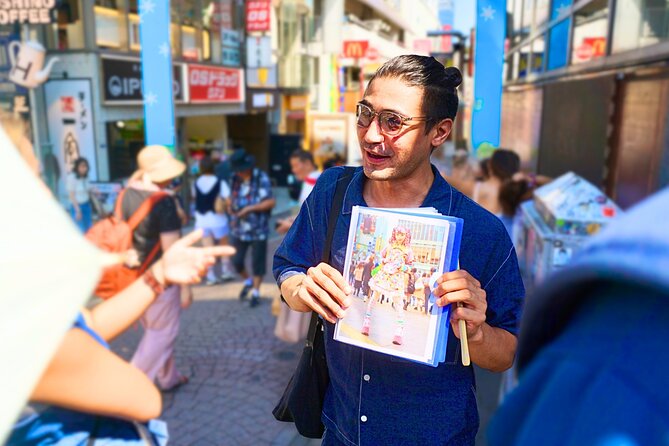
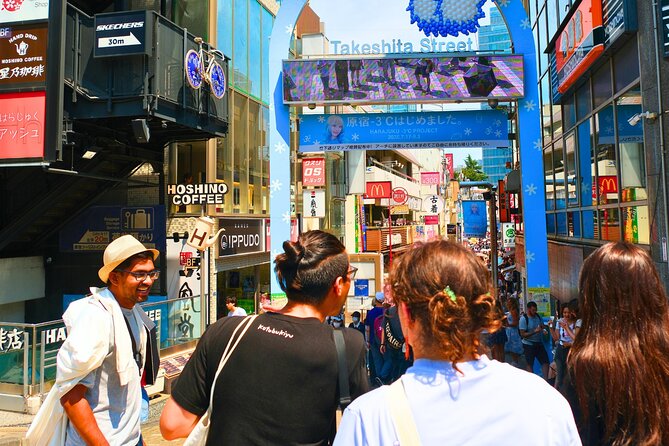
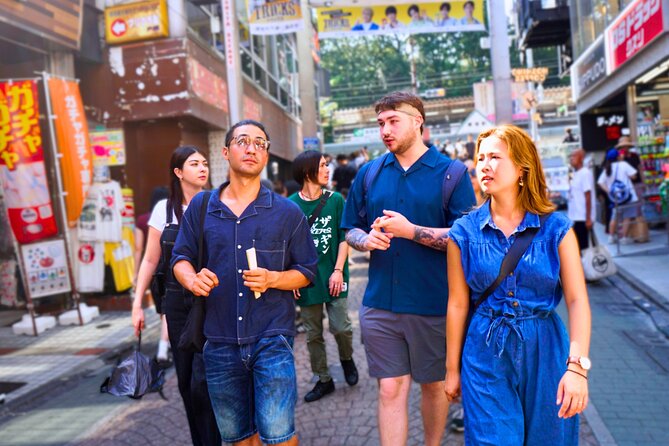
Takeshita Street gets the first 15 minutes. This pedestrian road is one of Tokyo’s best-known displays of youth culture, with colorful fashion, unusual shops, and sweet treats. It is not a quiet introduction to the neighborhood. You should expect a lively, crowded-feeling street scene, especially compared with the shrine grounds later in the walk.
The short stop works best as a cultural snapshot. Your guide can help connect the clothes, food, and shopfronts to Harajuku’s reputation as a place where young people test new styles. The tour description also links this scene to global fashion influence, including inspiration associated with Lady Gaga. That gives the street more meaning than a quick shopping detour.
Still, 15 minutes is brief. You will not have time for a serious shopping trip or a long snack break unless the group moves quickly. Think of Takeshita Street as an introduction to Harajuku’s public face, not a full retail visit. If you already know you want crepes, clothing, or character goods, return later on your own.
A few more Tokyo tours and experiences worth a look

Tokyu Plaza’s mirrored entrance and Omotesando views
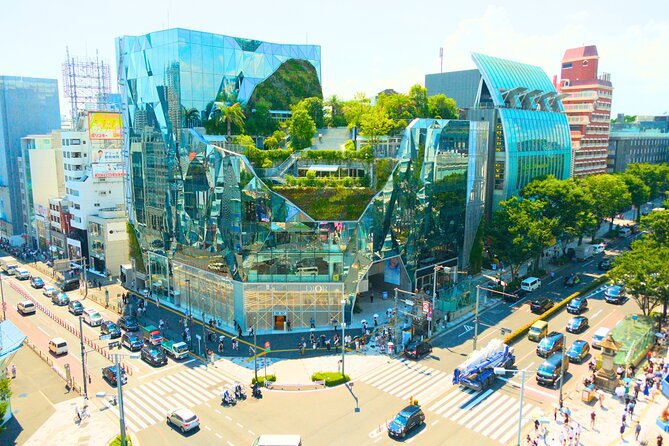
The next stop is Tokyu Plaza Omotesando Harajuku, also for about 15 minutes. The mirrored entrance creates a kaleidoscope effect and is designed for a quick photo. It is a playful counterpoint to the formal shrine architecture that comes later.
You also go to the rooftop terrace for a view over Omotesando. This is useful because it lets you see the area from above before walking along its main avenue. The stop does not require a separate admission ticket, and the format keeps the day moving.
I like this portion because it explains Harajuku through design as well as fashion. Takeshita Street feels youthful and spontaneous. Tokyu Plaza is more polished and image-conscious. The tour gives you both within a few minutes.
The tradeoff is simple: a photo stop is not the same as a long architectural visit. If the mirrored entrance is busy, your time there may pass quickly. Keep your camera ready, and do not expect a detailed retail tour inside the building.
Omotesando, Tokyo’s formal shopping avenue
The 15-minute walk along Omotesando shifts the tone again. The avenue is tree-lined and often compared with the Champs-Élysées. Its international shops, clean lines, and stylish buildings offer a more controlled version of Tokyo than Takeshita Street.
This section matters because it prevents an oversimplified view of Harajuku. The neighborhood is not only about youth fashion and novelty sweets. It also has major architecture, luxury retail, and a broad international outlook. Your guide can show how the streets fit together before the route turns toward Meiji Shrine.
The contrast is one of the best reasons to choose this experience. You see three layers of modern Tokyo in a short time: experimental youth style, a photo-ready commercial center, and a grand avenue built for presentation.
There is one practical limit. Fifteen minutes gives you a stroll, not a full design tour. If you care most about Omotesando’s buildings or shops, plan extra time after the activity. The guided portion is meant to create a clear connection between places, not cover every detail.
Crossing the torii into Meiji Jingu
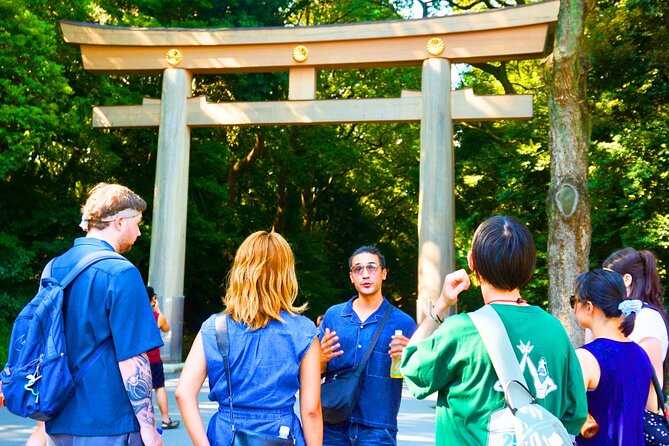
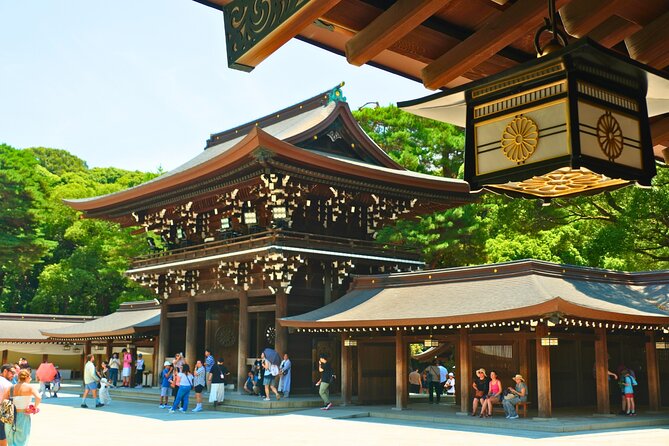
The mood changes at Meiji Jingu Shrine. You pass under a massive torii gate and enter a forested setting that feels far removed from the commercial streets nearby. The walk through the trees is the heart of the tour for many people because the change is so sudden.
The guide explains Shinto beliefs and the Meiji era as you go. That background helps you understand why the shrine is more than an attractive wooded path. You are learning how sacred space is marked, how visitors approach it, and why the shrine carries national importance.
One detail gives the walk special historical weight: the tour explains how Emperor Meiji’s period helped shape Japan’s opening to the wider world. The story adds context to the modern Tokyo you have just seen. Harajuku’s international style did not appear in isolation. It belongs to a country whose connection with the outside world changed greatly during the Meiji era.
The route allows about 15 minutes for Meiji Jingu itself, followed by about an hour in the shrine and Imperial Garden area. That timing suggests the first shrine stop is mainly about entering the grounds and setting the scene, while the longer section handles rituals, explanations, and the remaining path.
Purification, prayers, and omikuji
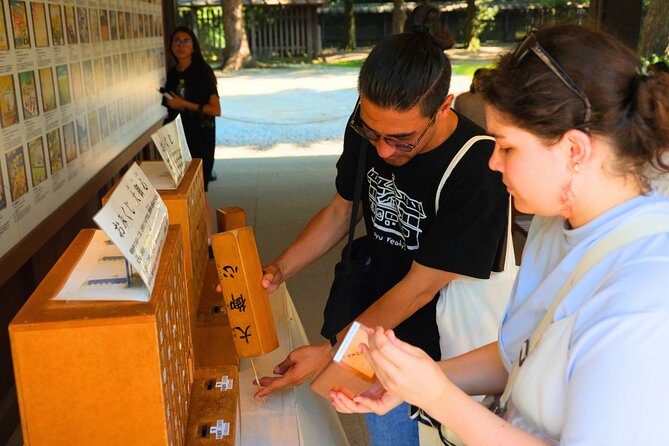
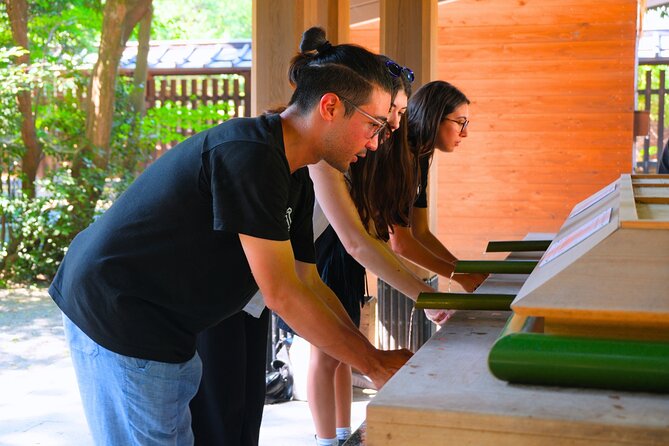
The Meiji Shrine Imperial Garden portion is where the walk becomes more participatory. You learn how to purify yourself with water, offer a prayer, and try omikuji, or fortune slips. These actions can seem mysterious if you do them alone. A guide gives you the basic meaning and helps you approach them with respect.
I especially value this kind of explanation because the customs are easy to copy without understanding. The point is not to perform a ritual perfectly for a photograph. It is to see how small actions express respect within Shinto practice.
Omikuji adds a lighter touch. You receive a fortune slip and learn how it fits into shrine life. The activity description specifically includes the history and meaning of these practices, so this is more than a quick stop beside a water basin.
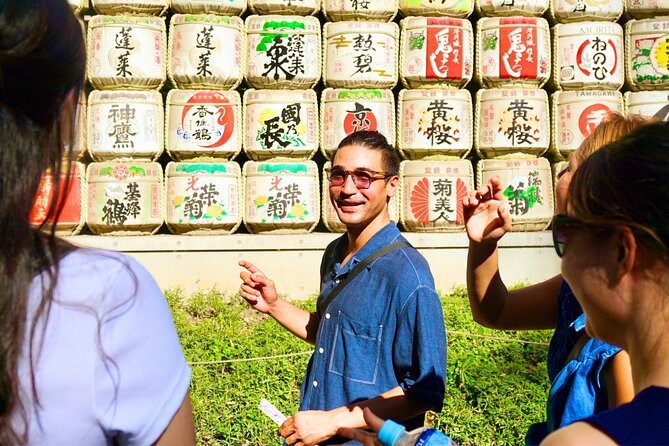
The tour ends back at the original meeting point, along a path lined with sake barrels. Those barrels make a memorable final image and link the shrine to traditional offerings. Since the walk lasts about two hours, you should still have time afterward for lunch, shopping, or a longer independent visit to Harajuku.
Other walking tours we've reviewed in Tokyo



The guide makes the difference
This experience depends heavily on the person leading it. A walking route through Harajuku and Meiji Shrine is easy to follow on a map. The value comes from knowing what to notice and having someone explain the connection between modern street culture and religious tradition.
Mika is described as warm, kind, and helpful. That combination matters if you are traveling with children, visiting a shrine for the first time, or simply prefer a calm guide who welcomes questions.
Lakki is praised for giving the background needed to understand what you are seeing. That is especially important at Meiji Shrine, where a grand gate, forest path, and prayer ritual can otherwise remain attractive but unclear.
Nicolas is described as highly informed and quick to answer questions. If you like a lively discussion rather than a one-way talk, that style may suit you well. The operator appears to use several guides, so you cannot choose a particular person from the information provided. Still, the consistent theme is warmth, energy, and clear explanations.
A group limit of 10 is another strength. It is small enough for the guide to respond to individual questions, yet large enough to retain the social feel of a shared walk. The actual group may be smaller, but the maximum is 10.
What $39.02 buys you
At $39.02 per person, this is not the cheapest way to walk through Harajuku. You can enter Takeshita Street, Omotesando, and Meiji Shrine without paying an admission charge. If you only want directions and photographs, you can do the route independently.
The price makes more sense if you want interpretation. You are paying for a compact route, a guide who explains Shinto traditions, and a bridge between places that can otherwise feel unrelated. The small group also improves the value because you are not simply following a large crowd with a flag.
The strongest value comes from the shrine section. Rituals such as purification and prayer have small steps that are easy to miss. Clear instruction can prevent awkwardness and help you treat the place with care.
I would not book it mainly for shopping time. The 15-minute Takeshita Street stop is too short for that. I would book it for the stories, the cultural connection, and the chance to cover several very different parts of Harajuku without planning the route yourself.
The public rating is a perfect 5 from five published ratings, but that is a small sample. I would treat it as encouraging rather than final proof. The specific comments consistently praise the guides’ explanations, kindness, and ability to make the shrine meaningful. Those are the qualities that matter most on this type of tour.
Timing, meeting point, and practical planning
The tour lasts approximately two hours and returns to the starting point. That makes it easy to pair with other Tokyo plans, especially if you schedule it before a meal or an afternoon in Shibuya.
The meeting point is UNIQLO Harajuku, at the listed Jingumae address in Shibuya. The activity uses a mobile ticket, and confirmation is provided when you book. It is near public transportation, which helps in a part of Tokyo where several busy streets meet.
I would arrive early. Harajuku can be confusing at street level, and the address includes floor information. You do not want to begin the walk by searching for the group.
Most people can participate, according to the supplied details. No special fitness requirement is given, but this is a walking tour through streets, shrine grounds, and forest paths. Wear shoes suited to two hours on foot, and keep your phone available for the mobile ticket.
The tour has free cancellation up to 24 hours before the start time. Changes or cancellations made inside that 24-hour window are not accepted for a refund. Tokyo operates on local time for the cutoff, so plan accordingly.
Who will enjoy this experience most
I would recommend this walk to first-time visitors who want a simple introduction to Harajuku without giving up cultural context. It is also a good fit for solo visitors who want company, couples looking for a balanced neighborhood walk, and families who may appreciate having shrine customs explained in plain language.
It suits you if you like contrasts. The route moves from fashion and sweets to mirrored architecture, a formal avenue, and a wooded shrine. That range gives you a quick but useful picture of Tokyo’s modern and traditional sides.
It may be less suitable if your priority is shopping. Takeshita Street receives only a short stop, and the route does not promise time for extended browsing. It may also disappoint anyone seeking a long, quiet shrine visit, since the activity has a fixed two-hour structure.
I would also think carefully about your preferred pace. The route covers several areas and includes a forest walk, so you need to stay with the group. The reward is variety, but the experience is not built around lingering at one location.
Should you book this Harajuku and Meiji Shrine walk?
Book it if you want to understand why Harajuku is more than a shopping district. The best feature is the sudden passage from colorful youth culture into the calm grounds of Meiji Shrine, supported by a guide who explains what that contrast means.
At $39.02, the tour offers solid value for a compact introduction, especially with a maximum of 10 people and hands-on instruction about Shinto customs. I would skip it if you already know Harajuku well or want several hours for shopping and independent shrine exploration.
For most first visits, though, this is a smart way to get your bearings. You leave with photographs, a better sense of local tradition, and a clear idea of which parts of Harajuku deserve a longer return visit.
FAQ
How long does the Tokyo Meiji Shrine and Harajuku tour last?
The tour lasts approximately two hours.
What locations are included?
The route includes Takeshita Street, Tokyu Plaza Omotesando Harajuku, Omotesando Hills, Meiji Jingu Shrine, and the Meiji Shrine Imperial Garden area.
Where does the tour start?
It starts at UNIQLO Harajuku in Jingumae, Shibuya, Tokyo. The listed address includes basement and ground-floor details, so check the meeting information before arrival.
Where does the tour finish?
The activity ends back at the original meeting point.
How many people can join the tour?
The group has a maximum of 10 participants.
Is the tour offered with a mobile ticket?
Yes. A mobile ticket is provided, and confirmation is received at the time of booking.
Does the tour include shrine admission?
The listed stops have no separate admission ticket charge. The tour includes guidance through Meiji Shrine and instruction about purification, prayer, and omikuji.
Can I cancel for a full refund?
Yes, if you cancel at least 24 hours before the experience start time. Cancellations or changes made less than 24 hours before the start time are not accepted for a refund.
More Walking Tours in Tokyo
More Temples & Meditation in Tokyo
More tours in Tokyo we've reviewed










Temples & Meditation, compared.
 ★ 4.7Tokyo: Meiji Shrine, Asakusa, Skytree Bus Tour and CruiseFrom $12210 hours
 ★ 4.8Tokyo: Asakusa Walking Tour with Sensoji Temple VisitFrom $222 hours
 ★ 4.6Nikko: Kegon Falls, Lake Chuzenji & Toshogu TempleFrom $8911 hours
 ★ 4.5Tokyo: Kamakura & Enoshima Day Trip including Temple TicketsFrom $589 hours - 570 minutes
 ★ 4.5Tokyo: Nikko Toshogu Shrine and Kegon Waterfall TourFrom $8410h 30m
 ★ 4.5Tokyo Panoramic 1 Day: Meiji Shrine, Asakusa, Odaiba and SKYTREE®From $85