
Reviewed · JDM & CAR CULTURE
DAIKOKU excursion by car DRIFT automobile encounter
Tokyo’s car culture gets much more interesting once you leave the central streets. This four-hour private outing takes you toward Daikoku Parking Area in a Japanese drift-style car, with guide and driver Clément sharing stories about the local scene along the way. Daikoku is not practical to reach by train, bus, or on foot, so the car is not just decoration. It is the key to the experience.
I like two things right away: the private format, which keeps the outing personal, and the chance to ride in a JZX rather than a standard sightseeing vehicle. I also like that Clément takes you beyond a simple parking-lot visit, pointing out places connected with car rallies and lesser-known stops.
The main catch is that Daikoku’s access and activity can change. Police closures have caused at least one outing to become only a partial visit, and the provider does not appear to offer a guaranteed backup plan. This is best for someone who accepts that Japanese car culture can be unpredictable.
In This Review
- Key points to know before booking
- Why Daikoku is the center of this car outing
- Riding in a JZX instead of a tour van
- What the four-hour route includes
- The strongest part: personal guidance from Clément
- The Daikoku risk: police closures and changing access
- Is $216.95 per person a fair price?
- Who will enjoy this most
- How to prepare for the outing
- Should you book the Daikoku JZX outing?
- FAQ
- How long does the Daikoku car excursion last?
- Where does the activity begin and end?
- Is transportation included?
- Is the tour private?
- Are dinner, snacks, or WiFi included?
- Can the activity be canceled because of weather or low bookings?
Key points to know before booking
- A JZX ride makes the transport part of the experience, not just a way to get from Tokyo to Daikoku.
- Clément is the named guide, and his explanations cover Japanese car culture, drift, and local car-scene stories.
- Daikoku Parking Area is hard to reach independently, since it is not accessible by train, bus, or walking route.
- The four-hour outing is private, so only your group takes part.
- Police closures are a real possibility, and the visit may not unfold exactly as planned.
- The price is $216.95 per person, with private transport and parking included, but no dinner, snacks, or onboard WiFi.
Why Daikoku is the center of this car outing
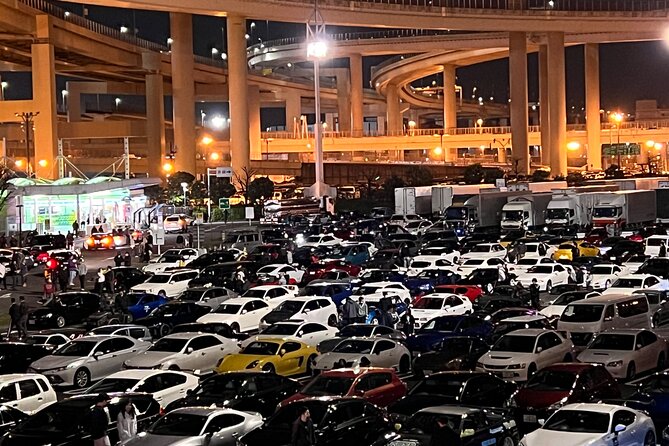
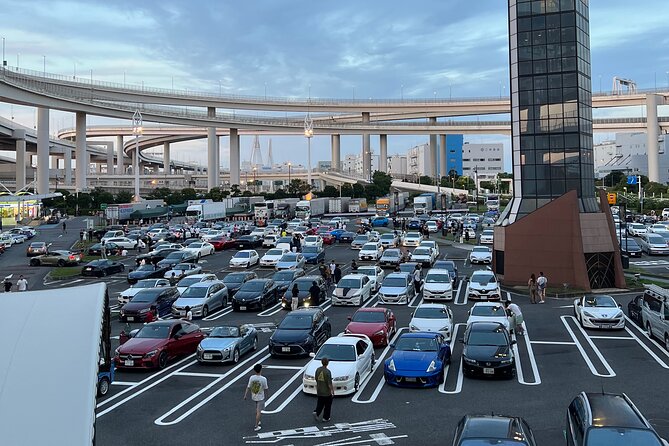
Daikoku Parking Area is not a normal Tokyo attraction. It is a large roadside stopping point in the port area, known among car fans as a place where Japanese performance cars and tuned vehicles may gather. The appeal comes from seeing the cars in their natural setting, not from visiting a museum display arranged for tourists.
That distinction matters. You are not buying a fixed exhibition with guaranteed cars on show. You are buying access, transport, local context, and a chance to see what is happening on the night of your visit.
The setting also explains why this experience is difficult to arrange alone. Daikoku is inaccessible by train, on foot, or by regular bus service. A taxi could get you closer to the area, but it would not give you a driver who knows the car scene or can point out related spots. Here, the vehicle and the guide are central to the value.
The best attitude is to treat Daikoku as a living meeting place. Some nights may offer plenty to see. Other nights may be quieter, or access may be restricted. If you need a guaranteed display of famous cars, this is the wrong type of tour. If you want a chance to see Japanese car culture as it actually operates, the uncertainty is part of the deal.
A few more Tokyo tours and experiences worth a look

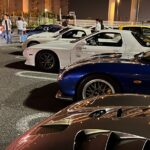
Riding in a JZX instead of a tour van
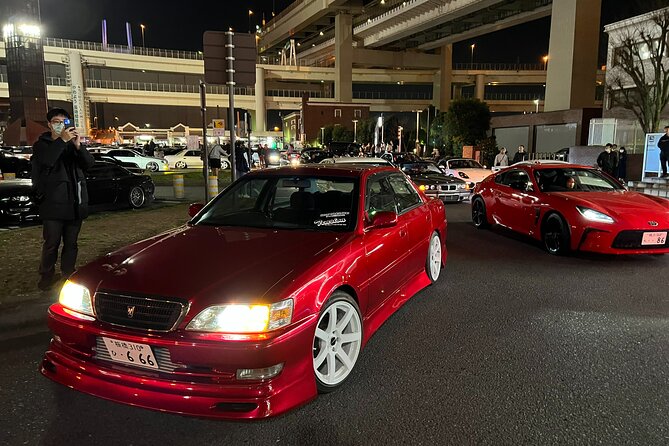
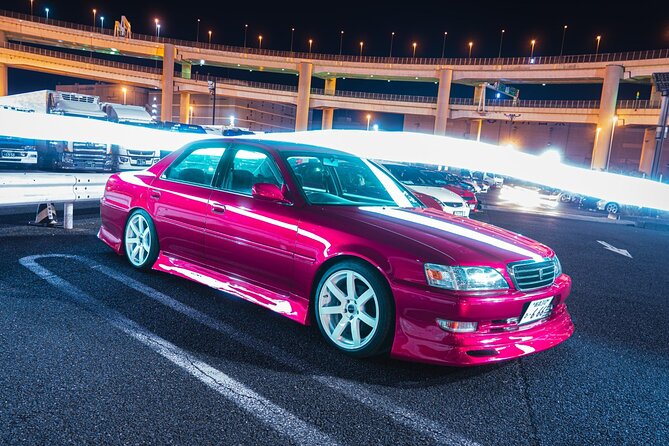
The vehicle is one of the clearest reasons to consider this outing. The guide uses a JZX, a model closely tied to Japan’s performance and drift culture. The supplied details identify Clément as the organizer and driver, and several strong responses specifically praised the chance to travel to Daikoku in his JZX.
That changes the mood from ordinary transport to a car-focused outing from the moment you meet. You are not simply sitting in a minivan while someone points out a distant attraction. The drive itself gives you a direct connection to the subject of the tour.
Clément also uses the journey to talk about Japan, drift, and the local car scene. One particularly useful feature is that the ride includes anecdotes about Japanese culture as well as cars. That gives the experience more shape than a quick trip to a parking area and back.
You should be clear about what is promised. The information describes a drift-car encounter and a ride in a JZX, but it does not promise a specific drift performance or a ride on a racetrack. Think of this as a car-culture excursion by an enthusiast’s vehicle, not a motorsport lesson or a controlled drift session.
The car may also affect comfort. A performance-oriented vehicle is part of the appeal, but it may not offer the same space as a large sightseeing vehicle. The available details do not specify passenger capacity, so ask the provider if you need to confirm seating before paying.
What the four-hour route includes
The outing begins in Tokyo, with pickup at your hotel according to the activity details. The meeting information also describes Tokyo, Japan as the start point and says the experience ends back at the meeting point. Confirm the exact pickup instructions after booking, since the general location is broad.
From there, you head toward Daikoku. The guide’s role is more than driving. He is expected to show you places connected with car rallies and take you to secret spots associated with the scene. The precise stops are not listed in advance, which gives the guide room to adjust the route to conditions on the night.
That flexibility can work in your favor. Car gatherings are not a fixed daily show, and a local driver may know where activity is taking place. It also means you should not expect a detailed, guaranteed stop-by-stop schedule. The experience is built around the guide’s judgment and current access.
The main stop is Daikoku Parking Area, and admission is included. Parking fees and private transportation are also included, so you do not need to budget separately for those listed costs.
There is no dinner, snack service, or WiFi onboard. Four hours is long enough that you may want to eat before departure. Do not assume you will be able to purchase food during the outing, since no snack or meal provision is included.
The strongest part: personal guidance from Clément
The most praised feature is the personal contact with the guide. The private format means your group is not combined with strangers, and that gives you more freedom to ask questions about Japanese cars, drift, tuning, or the route.
Clément has been described in the supplied material as easygoing and pleasant, with strong knowledge of the JDM scene. One account also highlights his ability to explain car culture in a way that feels educational rather than technical for its own sake. That is useful if you love cars but do not know every Japanese model or motorsport term.
The private setup can also help families or mixed-interest groups. A dedicated car fan can ask detailed questions, while someone less focused on engines can learn about the social side of Japanese car culture. You are not locked into a large group’s pace.
Still, guide quality is personal, and the available comments are not entirely positive. One poor account raised serious concerns about the guide’s personal presentation and communication during the ride. I would not ignore that simply because most of the praise focuses on the car knowledge. If close quarters and guide chemistry matter greatly to you, understand that the experience depends heavily on the individual assigned to your group.
The listing names Clément, but booking information should confirm who will lead your specific departure. If you are choosing this activity mainly for his particular car or expertise, it is sensible to verify that point before finalizing.
The Daikoku risk: police closures and changing access
The biggest practical warning is access. Daikoku can be closed off by police, and that has already affected a departure. In that situation, the group received a partial refund, but the planned visit became a limited experience.
This is not a minor footnote. Daikoku is an active public facility, not a private attraction controlled by the tour operator. Police activity, restrictions, or other local conditions can change the result on the day. A guide may know the roads and the culture, but cannot guarantee that the parking area will remain open to the group.
The activity also requires good weather and a minimum number of participants. If poor weather cancels the outing, you are offered another date or a full refund. If the minimum is not met, the provider offers another date, another experience, or a full refund.
For the best chance of a satisfying evening, keep your schedule flexible. Do not book this as the one event that must happen on your final night in Tokyo. Give yourself room for a changed date, and remember that the car scene itself is not fully predictable.
The provider should ideally explain what happens if Daikoku is closed before you book. The existing information confirms that a partial refund has occurred, but it does not state a fixed replacement route or a standard refund formula. That uncertainty is worth clarifying.
Is $216.95 per person a fair price?
At $216.95 per person, this is not a budget way to see Tokyo at night. The value depends on how much you care about the car itself, the guide’s stories, and the difficulty of reaching Daikoku without private transport.
For a car enthusiast, the price covers more than a transfer. You receive a private vehicle, a driver with ties to the JDM and drift scene, parking fees, and roughly four hours of access to a part of Tokyo that is awkward to reach independently. The JZX is also a major part of the attraction.
For someone who simply wants to visit Daikoku once, the price may feel high, especially if the area is closed or quiet. You are paying for the possibility of seeing the scene, not for a guaranteed number of cars or a fixed performance.
The private format improves the calculation for couples, friends, or small groups who would rather avoid a large coach. It also lets you ask questions and set the tone of the ride. Solo visitors should compare the cost with their level of interest, since the per-person price remains substantial.
Parking is included, which removes one small source of surprise. Dinner, snacks, and WiFi are not included, but those are manageable costs. The bigger value question is access and atmosphere. If you would otherwise struggle to reach Daikoku, the private ride solves a genuine transport problem.
Who will enjoy this most
I would recommend this to a visitor who already has a strong interest in Japanese cars, JDM models, drift culture, or the social side of automotive gatherings. You will get the most from the outing if you want to ask questions and notice the details of the car used for the ride.
It also suits someone who has already seen Tokyo’s major sights and wants a very different evening. This is not a standard city tour. You trade temples, observation decks, and neat scheduling for a specialized local scene that may change from night to night.
The activity may work well for a private group of friends. Only your party takes part, so you can share the ride with people who enjoy the same subject. It is also useful for visitors who do not want to navigate unfamiliar roads or arrange a complicated taxi journey to the port area.
I would be cautious about booking it for someone who dislikes uncertainty, needs a guaranteed attraction, or expects a formal drift demonstration. It may also be a poor fit if you want meals, WiFi, or a clearly published list of every stop.
Most travelers can participate according to the supplied booking information, and the experience is near public transportation, though Daikoku itself remains difficult to reach by public means. The activity is private, which helps with group comfort, but the exact vehicle capacity is not stated.
How to prepare for the outing
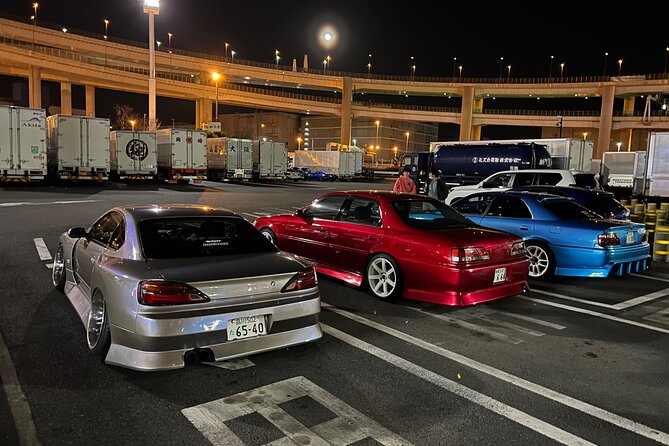
Eat before you go. Dinner and snacks are not included, and the four-hour duration can make that omission noticeable.
Wear clothing that is comfortable for sitting in a car for several hours. The tour is primarily vehicle-based, with the main stop at a parking area, so you do not need to prepare for a long walking route. The details do not state how much walking takes place at the stops, so practical shoes are still a sensible choice.
Keep your phone charged, but do not count on onboard WiFi. You may want to photograph the car and the parking-area scene, although you should follow the guide’s instructions about where and when photography is appropriate.
Leave flexibility in your evening plans. The operator can cancel for poor weather or insufficient bookings, and Daikoku access may change even after the trip begins. A relaxed schedule will make the experience easier to enjoy.
Finally, bring questions. The ride becomes more valuable when you engage with the guide. Ask about the JZX, local drift culture, car rallies, and how the Daikoku scene fits into Tokyo’s wider automotive world.
Should you book the Daikoku JZX outing?
Book it if the car is part of your reason for visiting Japan. The combination of a private ride in a JZX, Clément’s car-culture explanations, and access to Daikoku gives you something far more specialized than a normal Tokyo tour.
I would not book it solely because you want a guaranteed lineup of famous cars. Police closures and changing activity can limit the visit, and there is no promise of a backup route with the same appeal. The $216.95 price makes that uncertainty important.
My practical call is simple: car fans with a flexible evening should consider it, especially if they value personal guidance and cannot reach Daikoku on their own. Casual sightseers should spend the money elsewhere unless the JZX ride and Japanese drift culture genuinely excite them.
FAQ
How long does the Daikoku car excursion last?
The experience lasts approximately four hours.
Where does the activity begin and end?
It begins in Tokyo, with hotel pickup described in the activity details, and ends back at the meeting point.
Is transportation included?
Yes. Private transportation and parking fees are included.
Is the tour private?
Yes. Only your group participates in the activity.
Are dinner, snacks, or WiFi included?
No. Dinner, snacks, and onboard WiFi are not included.
Can the activity be canceled because of weather or low bookings?
Yes. Poor weather or failure to meet the minimum number of participants can lead to cancellation. In those cases, you are offered another date or experience, or a full refund.
More JDM & Car Culture in Tokyo

More tours in Tokyo we've reviewed


JDM & Car Culture, compared.
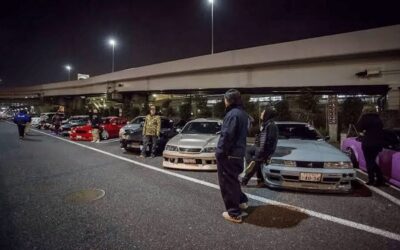 ★ 4.7FAST&FURIOUS EXPERIENCE Tokyo Car Club membershipFrom $138
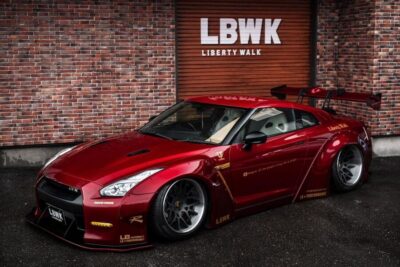 ★ 4.8GT-R35 800hp Club Membership – secret underground car meetFrom $205
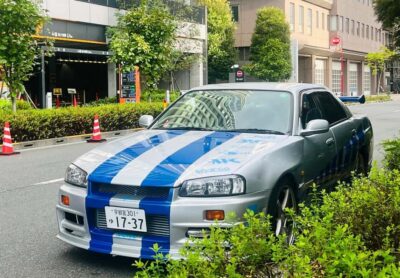 ★ 4.8Tokyo: Fast & Furious Tokyo Drift 3 Experience (Kaila Yu SP)From $157
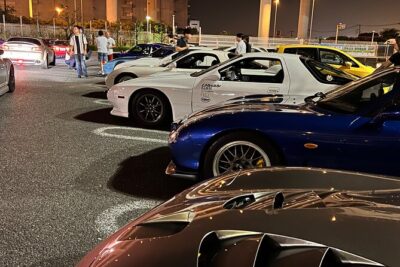 ★ 4.8Tokyo: Daikoku JDM Car Meet & Night Car Culture TourFrom $984 hours
 ★ 4.8Secret Car Meet: R34 Skyline Car Club MembershipFrom $236
 ★ 4.7Tokyo Drift: Daikoku PA Supreme Car Experience 大黒PAFrom $583 hours