
Reviewed · MT FUJI DAY TRIPS
Tokyo Hakone : Mt.Fuji, Owakudani, Open Air Museum, Hakone Shrine
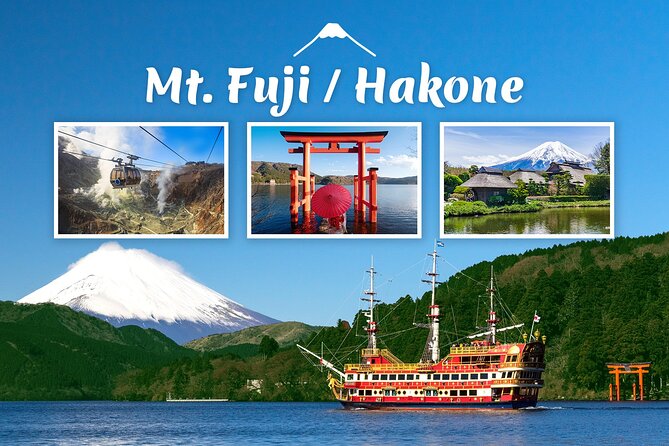
Hakone packs art, volcanoes, mountain views, and Shinto tradition into one long day. This tour takes you from Tokyo to the Hakone Open-Air Museum, steaming Owakudani, and the wooded shore of Lake Ashi, with a chance to see Mt. Fuji when the sky is clear.
I like the unusual mix of stops: Henry Moore and Picasso share the day with sulfur vents and a 1,200-year-old shrine. I also like that the route can include the black eggs of Owakudani, a small but memorable local tradition.
The tradeoff is time. Ten to 11 hours is a serious day out, and traffic can be heavy in peak seasons. Ropeway and pirate ship rides are optional, cost extra, and may not operate in poor weather.
In This Review
- Key points to know before booking
- From Tokyo to Hakone in one full day
- Art among the trees at the Hakone Open-Air Museum
- Optional views from the Hakone Ropeway
- Sulfur steam and black eggs at Owakudani
- Lake Ashi and the optional pirate ship
- Hakone Shrine and the Torii of Peace
- What the $75.80 price really covers
- Guides, timing, and practical choices
- Who will enjoy this Hakone day trip?
- Should you book it?
- FAQ
- How long does the tour last?
- How much does the tour cost?
- What is included in the tour?
- Are meals included?
- Are the Hakone Ropeway and pirate ship included?
- Can I see Mt. Fuji on this tour?
- Can the itinerary change?
- How many people can join the tour?
- What languages do the tour staff speak?
Key points to know before booking
- Art in a mountain setting: Spend about two hours among sculptures by Henry Moore and Joan Miró, plus a dedicated Picasso collection.
- Owakudani is the most dramatic stop: See sulfur steam, volcanic ground, and Mt. Fuji on a clear day.
- Lake Ashi brings the quiet: Walk toward Hakone Shrine and the red Torii of Peace beside the water.
- Optional rides are not included: The Hakone Ropeway and pirate ship require separate payment and depend on local conditions.
- This is a full Tokyo day trip: Expect roughly 10 to 11 hours, with traffic and weather able to change the order.
- English and Korean support: Guides associated with the tour include Patrick and Gilbert, and staff speak English and Korean.
From Tokyo to Hakone in one full day
Hakone is close enough to reach from Tokyo, but its sights are spread across mountains, a volcanic valley, and the shores of Lake Ashi. That makes a guided day trip useful. You do not have to piece together several local trains, buses, ropeways, and boats on your own.
The day lasts about 10 to 11 hours. That includes transportation between stops, sightseeing, and the possibility of delays on busy roads. Japanese law limits vehicle operation to 10 hours, so the guide may adjust the route when traffic or road conditions threaten the schedule.
I would treat this as a highlights tour rather than a slow Hakone stay. You get a broad sample of the area, but each stop has a set window. Bring snacks or a light lunch, since meals are not included and the schedule may not leave much time for a relaxed restaurant meal.
The group can include up to 60 people. That is a large group, so expect a less personal feel than you would get on a small private outing. The benefit is a straightforward way to cover a lot of ground without arranging the transport yourself.
A few more Tokyo tours and experiences worth a look

Art among the trees at the Hakone Open-Air Museum
The first major stop is the Hakone Open-Air Museum, with about two hours to explore. I like this opening because it is a gentle start to a busy day. Instead of entering a crowded indoor gallery, you walk through landscaped grounds with mountains and greenery around the sculpture displays.
Works by Henry Moore and Joan Miró give the visit a strong modern-art focus. A dedicated gallery holds a collection of Picasso works, adding an indoor portion to the outdoor walk. The museum’s glass-walled entrance also makes the surrounding scenery part of the visit.
Two hours is enough to see a good selection, though you will need to choose your pace. If Picasso is your main reason for coming, allow time for the dedicated collection rather than spending the whole visit outside. If you prefer sculpture and photography, the outdoor paths and mountain setting deserve more attention.
This stop also gives the tour variety early in the day. Hakone is often sold mainly as a Mt. Fuji viewing area, but the museum shows why the region appeals to more than landscape photographers. You get art, gardens, architecture, and mountain air before moving into the volcanic part of the route.
Optional views from the Hakone Ropeway
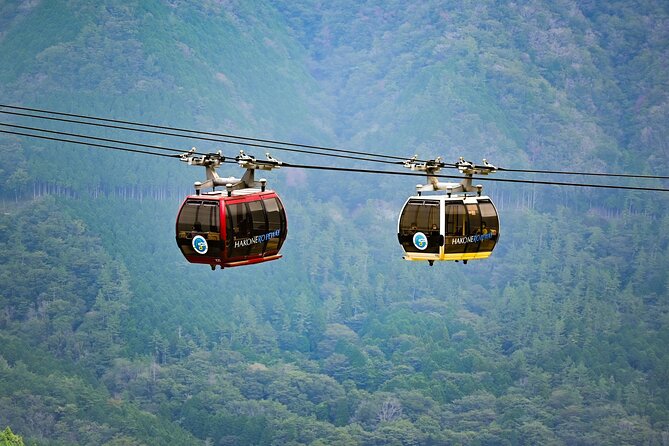
The Hakone Ropeway may be offered as an on-site option. The listed route runs between Sounzan and Owakudani, giving you a high view over the volcanic valley and its sulfur smoke. The ropeway ticket is not included.
This can be a strong addition if the cabins are operating and the weather is clear. The elevated route lets you see the scale of Owakudani before reaching it on foot. It also changes the experience from simply visiting a volcanic site to viewing the valley from above.
Do not assume the ride is guaranteed. Weather and local conditions can affect the option, and the guide may adjust the plan in real time. If you want to take it, tell the guide early and confirm the extra cost before joining.
The route may also be reversed during peak periods. That is not a flaw in the tour so much as a practical response to Hakone’s narrow roads and heavy traffic. Keep an open mind about the order of the day.
Sulfur steam and black eggs at Owakudani
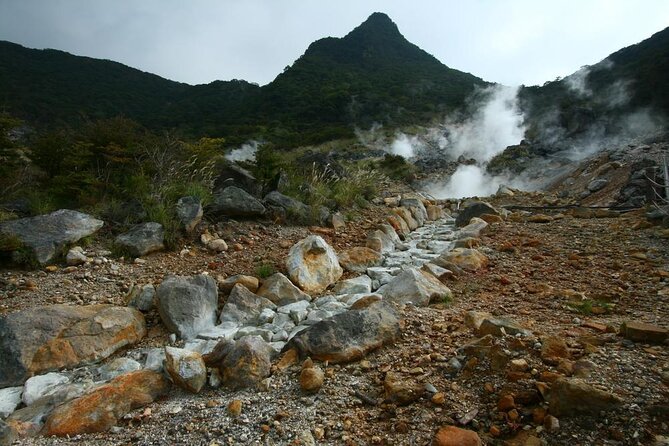
Owakudani is the day’s most unusual natural stop. This active volcanic valley has sulfur vents, hot springs, steaming ground, and broad views toward Mt. Fuji when the weather cooperates. You have about an hour and a half here.
The first thing you notice is the smell of sulfur and the steam rising from the valley. This is not a polished garden attraction. It is a direct look at geothermal activity, with a rougher and more dramatic feel than the museum or shrine.
The famous local snack is the Kuro-Tamago, or black egg. These eggs are boiled in natural hot spring water, which darkens the shells. Local belief says eating one adds seven years to your life. It is a fun custom, not a substitute for sensible health advice, but the eggs make a memorable stop.
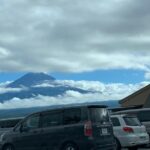
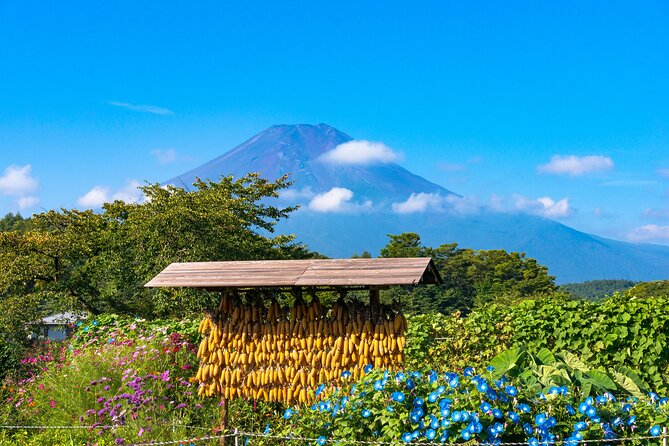
Mt. Fuji views are never guaranteed. On a clear day, the mountain can appear beyond the volcanic valley and give you one of the day’s best photographs. Clouds, haze, and weather can hide it completely. I would enjoy Owakudani for its own volcanic character rather than judging the whole tour by one view.
The walk may not suit everyone equally. Most people can participate, but the area includes outdoor paths and exposed volcanic scenery. Comfortable shoes and a jacket are sensible choices, especially if steam, wind, or changing weather makes the stop feel cooler than expected.
Lake Ashi and the optional pirate ship
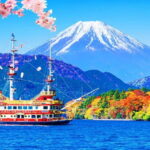
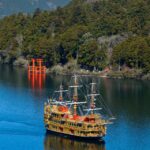
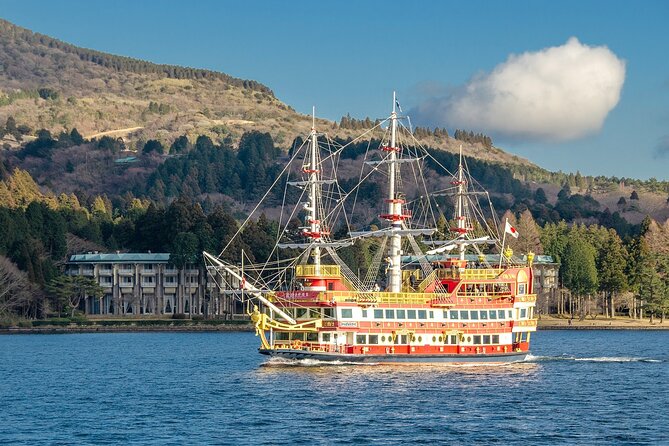
After Owakudani, the route may continue toward Togendai Port, where you can consider the Hakone Pirate Ship. The ride lasts about 25 to 40 minutes and travels toward Moto-Hakone Port. The ticket is an extra expense.
The ship gives you a different view of Hakone. Instead of looking across the lake from shore, you see the wooded hills and volcanic surroundings from the water. Onboard, pirate-themed attractions and 3D art provide an easy diversion for children and adults.
I would choose the boat if you value the lake experience and the timing works. I would skip it if you would rather spend more time at the shrine or want to keep costs down. Since both the boat and ropeway are optional, the basic tour price does not cover every major activity you may see advertised in Hakone.
Lake Ashi, also called Ashinoko, is a volcanic crater lake formed after the last eruption of Mount Hakone more than 3,000 years ago. Its calm water and wooded shores provide a welcome change after the sulfur and steam of Owakudani.
You may have only about 20 minutes specifically assigned to the lake, unless the optional boat becomes part of your day. That is enough for a quick look and photographs, but not a long lakeside walk. If time is important to you, ask the guide how the optional ride will affect your shrine visit.
A few more Tokyo tours and experiences worth a look

Hakone Shrine and the Torii of Peace
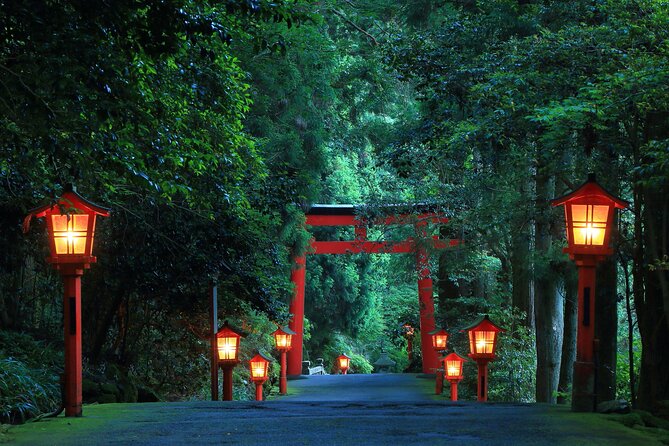
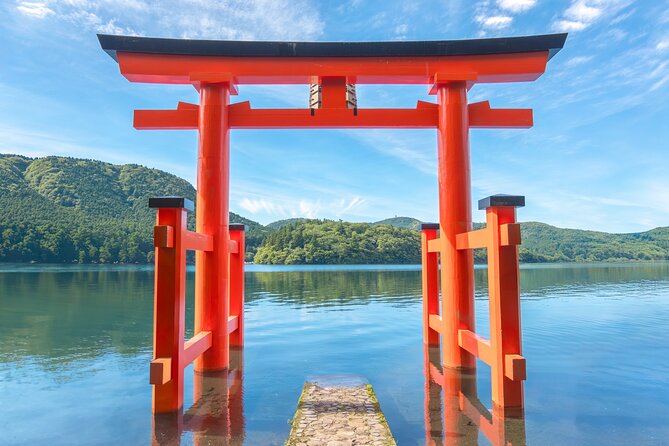
Hakone Shrine sits near the shore of Lake Ashi and traces its history back more than 1,200 years. The approach includes a forest path, which gives the visit a quiet, shaded feel after the open volcanic valley.
The shrine is free to enter. You can walk among the trees, see the traditional religious setting, and then continue toward the Torii of Peace at the water’s edge. The shrine is associated with productivity in the workplace, an appealing detail for anyone hoping to bring a little good fortune back to Tokyo.
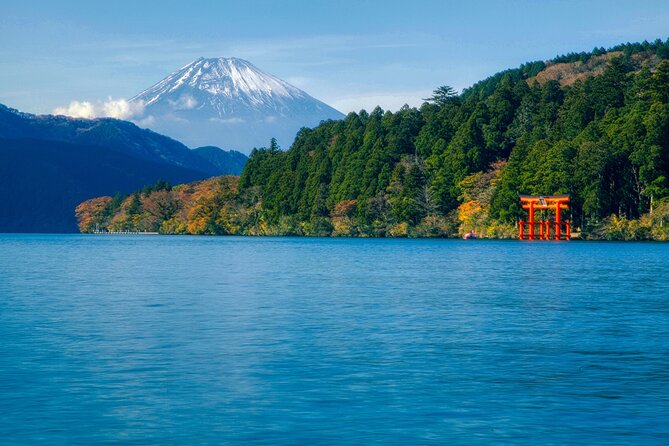
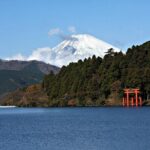
The Torii of Peace is the famous red gate standing in the lake. It is part of Hakone Shrine and creates a strong contrast with the water and surrounding trees. This is one of the most photographed places in Hakone, so patience may be needed if you want a clear photograph.
The shrine visit is listed at about 30 minutes, with another 30 minutes for the Torii of Peace. That should give you time to see the main features, but not necessarily enough for a long reflective visit or an extensive walk around the shrine grounds.
Lunch is at your own expense. The schedule does not promise a particular restaurant or meal, so carry a snack or light lunch if you prefer to avoid searching for food during a short break. This is one of the tour’s practical weak points, but it is easy to manage with a little planning.
What the $75.80 price really covers
At $75.80 per person, the tour offers reasonable value if you want transportation from Tokyo and a broad introduction to Hakone. The price includes transportation, English or Korean-speaking staff, and the listed admission tickets. It also removes the need to coordinate several parts of a complicated regional route.
The value is strongest for first-time visitors with only one day available. You see modern art, volcanic scenery, a crater lake, a shrine, and a well-known torii gate in one outing. Organizing all of that independently could require careful timing and several separate fares.
The price does not include meals, insurance, personal expenses, the Hakone Ropeway, or the pirate ship. Those extras can change the final cost. I would decide in advance whether you want to pay for one of the optional rides, then keep some flexibility in case weather prevents it.
Ten or more bookings in the previous month suggest regular demand, but the group may reach 60 people. If you value a quiet pace, private conversation, or detailed help at every stop, this may feel too large. If you value convenience and coverage, the group format is easier to accept.
The tour offers free cancellation up to 24 hours before the start time. Changes or cancellations inside that window are not accepted for a refund. Since weather matters so much to Owakudani and Mt. Fuji views, check the forecast early and keep the cutoff in mind.
Guides, timing, and practical choices
English and Korean-speaking staff support the tour. Patrick and Gilbert are among the guides associated with this experience. Patrick has been described as pleasant and attentive, while Gilbert helped make a clear-sky Mt. Fuji day especially enjoyable. You should still expect the guide’s role to include managing transport and timing, not providing a private lecture at every stop.
The mobile ticket makes the tour easy to carry on your phone. Confirmation is provided at booking, and the tour is near public transportation. The exact pickup or meeting details are not supplied here, so read the confirmation carefully before the day begins.
Peak-season traffic can change the order of stops. You might visit the shrine before Owakudani, for example, rather than following the listed sequence. That flexibility helps the vehicle stay within Japanese operating rules, but it means you should not plan a separate reservation immediately after the tour.
Most people can participate, and the operator asks you to report if you are bringing a baby stroller. The outdoor portions, forest path, volcanic valley, and possible ropeway or boat transfer make it wise to pack light and wear shoes suited to walking.
Who will enjoy this Hakone day trip?
I would recommend it to you if you are staying in Tokyo and want to see Hakone without spending a night there. It is also a good match if you want more than Mt. Fuji photographs. The art museum and shrine give the day cultural weight, while Owakudani adds something strange and memorable.
Families may like the mix of sculpture, volcanic steam, black eggs, and the pirate-themed boat option. Couples and photographers will appreciate Lake Ashi and the Torii of Peace, especially on a clear day. The optional activities give you some control over how active or scenic the day feels.
I would be more cautious if you dislike long days, group transport, or changing plans. You will spend many hours getting to and between Hakone’s sights, and traffic can reduce time at individual stops. The tour also cannot promise Mt. Fuji visibility, since that depends on the weather.
Should you book it?
Book this tour if you want a practical overview of Hakone from Tokyo and like the idea of combining modern art, volcanic scenery, and Shinto culture in one day. At $75.80, the included transport and broad route make sense for a first visit.
Skip it if you want a slow lakeside day, a private guide, or guaranteed time on the ropeway and pirate ship. Bring snacks, budget for optional rides, and accept that weather may hide Mt. Fuji. With those expectations, this is a lively and useful introduction to Hakone rather than a rushed attempt to see every corner of it.
FAQ
How long does the tour last?
The tour lasts approximately 10 to 11 hours. Traffic, weather, and the legal limit on vehicle operation in Japan can affect the schedule.
How much does the tour cost?
The listed price is $75.80 per person.
What is included in the tour?
Transportation, English and Korean-speaking staff, and the listed admission tickets are included.
Are meals included?
No. Meals are not included, and lunch at Hakone Shrine is at your own expense. Bringing snacks or a light lunch is recommended.
Are the Hakone Ropeway and pirate ship included?
No. Both are optional on-site experiences, and their tickets cost extra.
Can I see Mt. Fuji on this tour?
You can see Mt. Fuji from Owakudani and around Lake Ashi on clear days, but visibility depends on weather.
Can the itinerary change?
Yes. Traffic and weather can change the route or order of stops. During peak season, the order may be reversed.
How many people can join the tour?
The maximum group size is 60 people.
What languages do the tour staff speak?
The tour provides English and Korean-speaking staff. Guides associated with the experience include Patrick and Gilbert.
More Temples & Meditation in Tokyo

More Hakone Day Trips in Tokyo
More Mt Fuji Day Trips in Tokyo
More tours in Tokyo we've reviewed










Mt Fuji Day Trips, compared.
 ★ 5.0Mt Fuji and Hakone 1-Day Bus Tour Return by Bullet TrainFrom $163
 ★ 4.0Mt Fuji & Hakone Cruise, Drum Show Bullet Train 1 Day from TokyoFrom $149
 ★ 4.4Tokyo Mt Fuji 5th St & Hakone Cruise Bus Tour w/Bullet TrainFrom $15410 hours
 ★ 4.5From Tokyo: Mount Fuji Full-Day Sightseeing TripFrom $6810 hours
 ★ 4.7Tokyo: Mt. Fuji Tour, Hakone Ropeway, Owakudani, Lake AshiFrom $5410 hours
 ★ 4.4Tokyo:Mt.Fuji,Kawaguchiko Oishi Park,Arakurayama Sengen ParkFrom $5410 hours