
Reviewed · UENO & YANAKA WALKS
Mini Origami Lamp and Mizuhiki knot Belt Workshop in Ueno
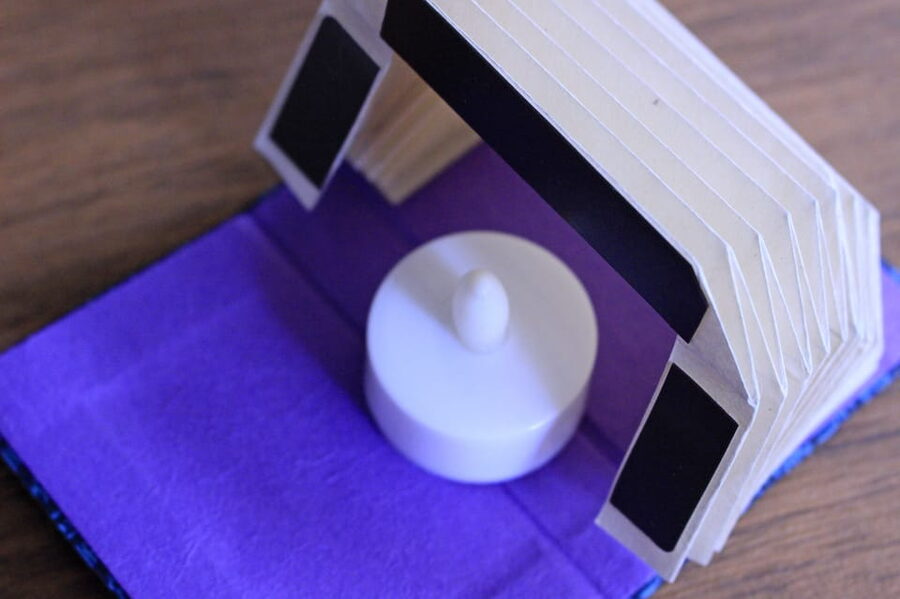
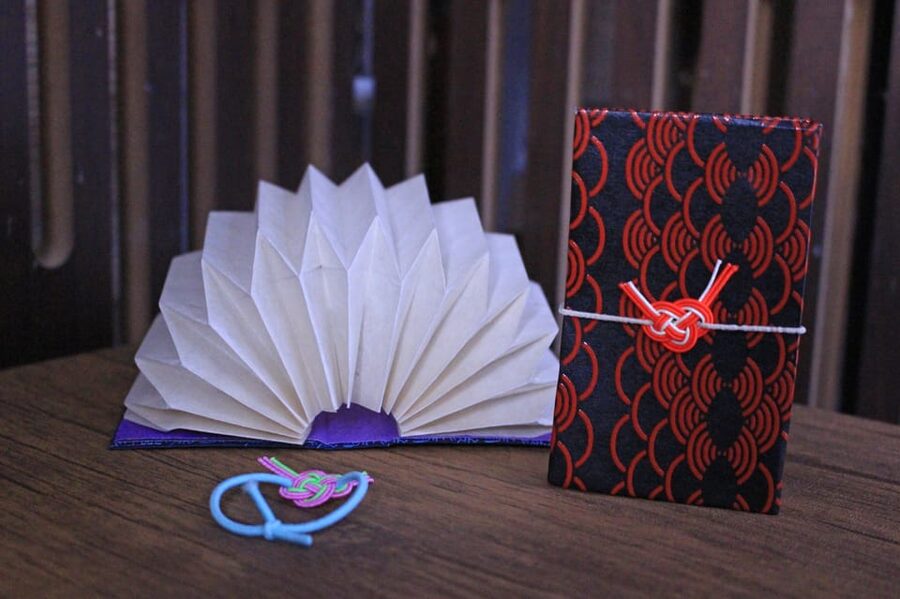
The most appealing part of this Ueno workshop is that you leave with two handmade pieces: a folding washi paper lamp and a mizuhiki knot ornament for a belt. The lamp closes like a book, then opens into a bellows shape that glows softly when you place a small light inside.
I like the calm, hands-on pace and the chance to learn why different mizuhiki knots suit different gifts. I also like the thoughtful finish: Japanese sweets and a cup of special Japanese paper tea are served after the craft work. The main consideration is that the fine folding and gluing require patience, so this is not a good pick for children under 10.
In This Review
- Key points to know before booking
- Folding washi paper into a lamp
- Why washi makes a good souvenir
- Adding meaning with a mizuhiki knot
- A private class with room for careful work
- The final tea and Japanese sweets
- What the 150 minutes feels like
- Who will enjoy this Ueno workshop
- What the ratings tell you about the experience
- Booking details and practical value
- Should you book the washi lamp workshop?
- FAQ
- Where does the workshop take place?
- How long does the activity last?
- How much does the workshop cost?
- What will I make during the session?
- What is included in the price?
- What languages does the instructor speak?
- Is this a private workshop?
- Can children attend?
Key points to know before booking
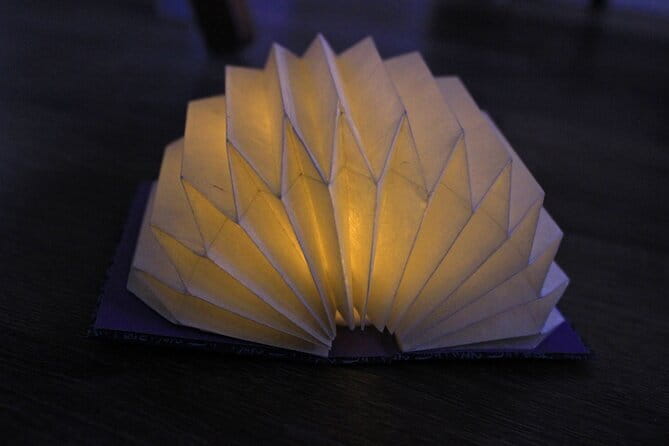
- The lamp folds flat like a book: Open it into a bellows shape for a warm, gentle glow.
- You make a second souvenir: Tie a mizuhiki paper-cord knot ornament for a belt.
- Washi is the main lesson: A guide document explains why this handmade paper is light, durable, and useful for art and interior decor.
- The group is private: You can work at the instructor’s pace rather than in a large public class.
- The workshop lasts 150 minutes: Allow enough time for careful folding, gluing, knot tying, and tea.
- A Japanese and English-speaking instructor leads it: Four supplied ratings give the activity a perfect five-star score, with particular praise for the helpful teaching and enjoyable atmosphere.
Folding washi paper into a lamp
This workshop begins with an introduction to washi, traditional Japanese paper made for more than writing. Here, you learn how its lightness and strength make it suitable for decorative objects. A guide document covers the basics, giving you something to refer to as you work rather than asking you to remember every explanation at once.
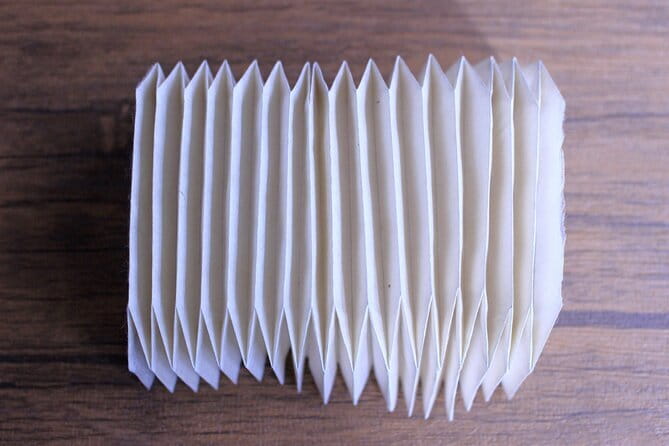
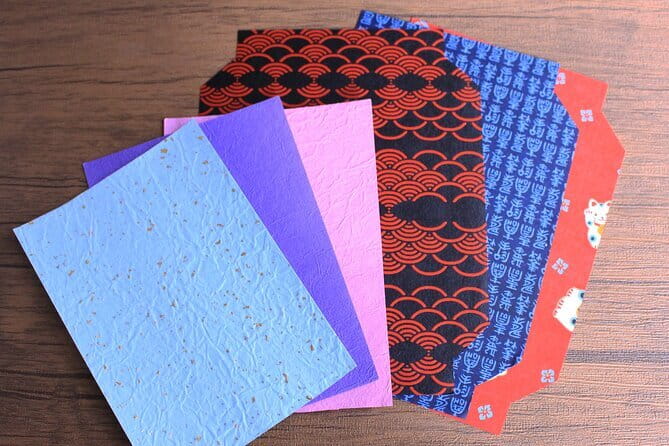
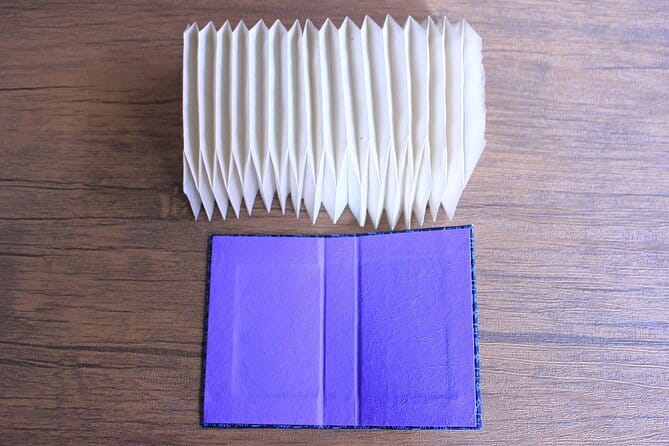
The main project uses several sheets of handmade washi paper. You fold and glue them into a repeated bellows pattern. That structure is the clever part. When closed, the lamp resembles a slim book. When opened, the folds spread out and create a three-dimensional shade.
A small lamp placed inside the folded paper produces a soft, warm light. The effect is simple rather than flashy, which is part of its appeal. You are making an object that can sit on a shelf or table and function as a small piece of interior decor, not just a craft project that goes into a suitcase.
The work calls for care. Each fold affects the next one, and glue needs to be applied neatly so the paper holds its shape. The session is not described as a quick, casual children’s craft. If you rush, the finished lamp may not have the clean accordion shape that makes it work so well.
I would treat the 150 minutes as useful working time, not dead time between demonstrations. The instructor shows you how to fold, glue, and fix the parts together, then you build the lamp step by step. That makes the class suitable for someone who enjoys making things with their hands and wants a finished item with a clear purpose.
A few more Tokyo tours and experiences worth a look


Why washi makes a good souvenir
Washi has a practical quality that sets it apart from ordinary decorative paper. It is light enough to carry home easily, yet durable enough to be used for an object rather than a single flat sheet. That combination matters when you are buying or making souvenirs in Japan.
A fragile ornament can be lovely but awkward to pack. The folding lamp offers a better balance. It closes into a book-like form, so you can transport it in a compact shape. Once home, you can open it again and use the lamp as a small light or display piece.
The workshop also gives you a better sense of what washi can do. Instead of seeing it only in framed artwork or stationery, you handle it, fold it, join it, and watch it become a functioning object. The guide document adds useful context without turning the class into a lecture.
You should still handle the finished lamp with care. The activity information describes washi as durable, but it remains a handmade paper object. The value is in its character and construction, not in treating it like a mass-produced lamp.
Adding meaning with a mizuhiki knot
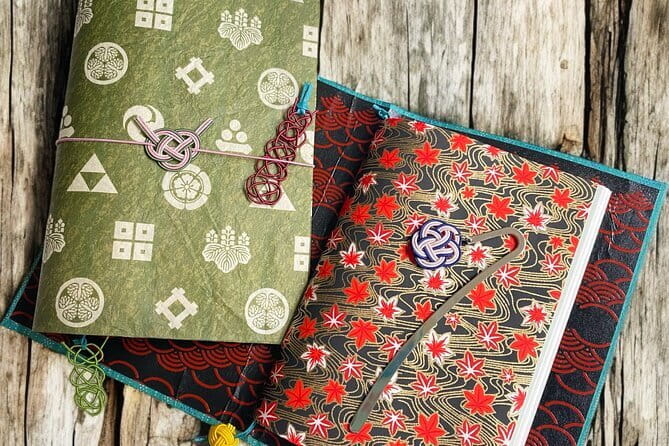
The second project introduces mizuhiki, a decorative paper cord with a twisted washi-paper core wrapped in nylon or film. Mizuhiki can look like simple colored string at first. The important point is that the knots carry meanings, and those meanings affect when the ornament is appropriate as a gift.
You create a mizuhiki knot ornament for a belt. This gives the session a useful contrast. The lamp teaches repeated folds and careful assembly, while the knot project focuses on cord handling and symbolism. You get to work with another traditional material and take home something much smaller and easier to give away.
This part may be especially interesting if you enjoy Japanese gift customs. Knowing what a knot means can help you choose one for a celebration or present. The workshop does not merely ask you to copy a decorative shape. It explains why the knots are used and how their meaning connects to gifts.
The ornament is also a practical extra. If you are already making a lamp, a small second piece gives you another way to remember the class. You might keep it for yourself, attach it to a belt, or save it as a gift, depending on the style and meaning you learn.
A private class with room for careful work
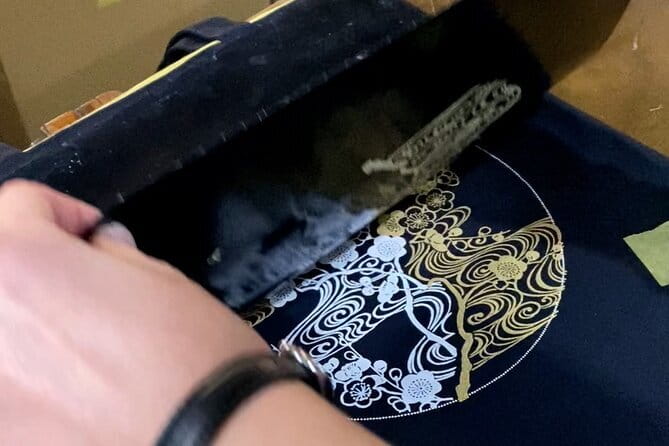
The private-group format is one of the strongest reasons to consider this activity. Detailed paper folding is easier when you can ask for help at the exact moment a fold goes wrong. You are not trying to catch up with a large class while the instructor moves on.
The instructor teaches in Japanese and English. The supplied information does not give the instructor’s name, but the teaching approach includes demonstrations of folding, gluing, and fixing the assembled pieces. That hands-on guidance matters here because a written guide alone would not show you how the paper should sit or how the bellows shape should open.
One supplied five-star review specifically praised the instructor as nice and helpful. Another described the workshop as relaxing and enjoyable, with the finished souvenir being a particular success. Those comments match the nature of the activity: this is best approached as a quiet making session, not a high-speed attraction.
The private format can also make the $106 price easier to assess. That is a substantial amount for a 150-minute craft class, especially compared with a simple souvenir purchase. You are paying for instruction, all materials, a personal finished lamp, a mizuhiki ornament, the washi introduction, and a small tea-and-sweets service.
The value is strongest if you care about the process as much as the object. If you only want a cheap lamp, buying a finished item may cost less and take less time. If you want to understand the material, make the folds yourself, and take home an object with a story, the price has a clearer purpose.
The final tea and Japanese sweets
At the end, the workshop includes a Japanese sweet and a cup of unusual Japanese paper tea. The tea is described as Japanese paper tea and is presented as something not offered elsewhere in this experience information. It is a distinctive way to close the class, especially after two and a half hours of concentrated handwork.
Do not expect the tea and sweet to be the main event. They are a short finishing touch, not a separate food tour. Their real value is the pause they provide after the lamp and knot are complete. You can look at what you made, ask final questions, and enjoy a small taste connected to the workshop’s paper theme.
One supplied review praised both the snacks and tea, while another singled out the pleasant atmosphere and even mentioned a mascot cat being present. The cat is not presented as a guaranteed part of the class, so I would treat that as a possible friendly detail rather than something to book around.
The tea service helps the workshop feel personal rather than purely instructional. It gives the session a clear ending and adds a small cultural touch without taking time away from the main craft.
A few more Tokyo tours and experiences worth a look




What the 150 minutes feels like
The scheduled duration is 150 minutes. The activity information does not give an exact minute-by-minute timetable, so you should think of it as a sequence rather than a rigid clock:
- An introduction to washi and its uses, supported by a guide document.
- Demonstration and hands-on construction of the folding lamp.
- Folding and gluing several sheets into the bellows form.
- Creating a mizuhiki knot ornament for a belt.
- Japanese sweets and Japanese paper tea at the end.
The lamp is the larger project, and it deserves most of your attention. The repeated folds are attractive when finished, but they can be fussy while you are making them. The mizuhiki project adds variety and gives you a smaller task after the lamp’s longer construction.
Because the class involves detailed skills, you should not schedule it when you need to hurry to another appointment. A relaxed pace will help you produce a better-shaped lamp and enjoy the explanations. You also need enough energy for close work with paper and glue.
This is a good rainy-day or low-key Ueno activity, provided you want time indoors with a craft. It is less suitable if you prefer sightseeing that keeps you moving from place to place.
Who will enjoy this Ueno workshop
I would recommend this activity to adults, older children, couples, solo visitors, and small private groups who like Japanese design or hands-on cultural activities. It suits you especially well if you want a souvenir that you made yourself instead of another shop-bought object.
It is also a good match for anyone curious about traditional materials. You learn about washi, see how it changes from flat sheet to lamp, and discover that mizuhiki knots have meanings tied to gift giving. The class offers more context than a basic craft table.
The minimum age is 10. The reason is clear from the activity itself: the lamp needs detailed folds and gluing, and the knot ornament involves careful handwork. Families with younger children are directed toward a different private workshop focused on making paper said to last 1,000 years.
You should choose another activity if your main aim is a quick family outing for very young children. You may also want to skip this class if you dislike projects where the final result depends partly on your own precision. Handmade charm includes a little unevenness, and that is part of the bargain.
What the ratings tell you about the experience
The activity has a five-star rating from four supplied reviews. That is a small sample, so I would not treat it as proof that every session will be perfect. Still, the praise is consistent in the areas that matter most here.
The instructor receives repeated approval for being helpful and kind. One detailed account describes the materials being set out and the guide showing each participant how to fold, glue, and fix the pieces together. That suggests the session is organized around actual instruction rather than handing you supplies and leaving you to work alone.
The finished souvenir is another strong point. You are not making a disposable item. The lamp has a folding design and a use at home, while the mizuhiki ornament carries cultural meaning.
The mood also comes through clearly. The class is described as relaxing and enjoyable, with tea and snacks at the end. That makes it a better choice for a quiet afternoon than for anyone seeking loud energy or a packed schedule.
Booking details and practical value
The cost is $106 per person, and the session lasts 150 minutes. Materials for both projects, the washi guide document, Japanese sweets, and Japanese paper tea are included. The group is private, and instruction is available in Japanese and English.
You can cancel up to 24 hours before the activity for a full refund. You can also reserve now and pay later, which helps if your Japan schedule is still changing. Starting times depend on availability, so check the options that fit your day before committing.
The activity takes place in Ueno, but no exact meeting point or transportation details are provided here. Check the confirmed booking information carefully for the precise address and arrival instructions. That is especially important in a busy city district where a few minutes of wrong turns can cut into your craft time.
Pack the finished work with care after the class. The lamp’s ability to close like a book should make it easier to carry, but you should still protect the folded paper from crushing and moisture.
Should you book the washi lamp workshop?
Book this experience if you want a useful handmade souvenir, a quiet private class, and a closer look at Japanese paper traditions. The combination of lamp making, mizuhiki symbolism, sweets, and paper tea gives the 150 minutes a clear shape and enough variety.
The $106 cost is fair only if you value instruction and the making process. It is not the right choice for a bargain souvenir or a fast family activity. Children under 10 are not suitable, and anyone who becomes frustrated by precise folding should think twice.
For adults and older children with patience, this is a thoughtful Ueno choice. You return home with a lamp that folds flat, a meaningful knot ornament, and a better understanding of why washi remains such a useful Japanese craft material.
FAQ
Where does the workshop take place?
The workshop takes place in Ueno, in Honshu, Japan.
How long does the activity last?
The workshop lasts 150 minutes.
How much does the workshop cost?
The listed price is $106 per person.
What will I make during the session?
You will make a folding origami lamp from handmade washi paper and a mizuhiki knot ornament for a belt.
What is included in the price?
All materials for both projects, a guide document about washi paper basics, Japanese sweets, and Japanese paper tea are included.
What languages does the instructor speak?
Instruction is available in Japanese and English.
Is this a private workshop?
Yes. The activity is offered for a private group.
Can children attend?
Children under 10 are not suitable for this workshop because it requires detailed craft skills.
More Workshops & Classes in Tokyo
More Ueno & Yanaka Walks in Tokyo

More tours in Tokyo we've reviewed







Ueno & Yanaka Walks, compared.
 ★ 5.0Eat and Drink Like a Local: Tokyo Ueno Food Tour-Taverns&RamenFrom $95
 ★ 4.5The Old Quarter of Tokyo – Yanaka Walking TourFrom $40
 ★ 5.0Yanaka Walking Tour: Historic and Traditional District of TokyoFrom $72
 ★ 4.8Tokyo: Old Quarter Yanaka Walking TourFrom $323 hours
 ★ 5.0Tokyo: Food Tour in Ueno with 10+ Tastings of Japanese ClassicsFrom $142
 ★ 4.9Tokyo:Stroll in Old traditional culture towns~Yanaka & NezuFrom $293h 30m