
Reviewed · ASAKUSA TOURS
Tokyo: Asakusa Walking Tour with Japanese Comedian
Asakusa is more than Tokyo’s famous red gate and temple postcard. On this 90-minute walk with Ryo, a local comedian and former rickshaw driver, you get the stories behind the statues, rituals, and streets that many independent visitors pass without noticing. He also adds humor from his work as a Japanese standup comic in English.
I like the way this tour starts with views of Tokyo Skytree and the Asahi Beer Company before entering the temple district. I also like its small size, limited to eight people, which gives you room to ask about Japanese religious customs, local history, and places to eat or shop afterward.
The main consideration is pace and scope. Ninety minutes goes quickly, and the tour follows a set route without a food or shopping stop. One recent booking described Ryo as pleasant but not especially enthusiastic, so this is best for travelers seeking clear local context rather than a high-energy performance.
In This Review
- Key points to know before booking
- Why this Asakusa walk is more than a temple visit
- Meeting at Tokyo Cruise near Asakusa Station
- Sumida Park and the first look at Tokyo’s old and new sides
- Kaminarimon Gate and the icon of Asakusa
- Nakamise Shopping Street, with history before shopping
- Asakusa Shrine and the Japanese religious mix
- Senso-ji Temple and the statues easy to miss
- What Ryo adds as a local comedian
- Is $31 good value for 90 minutes?
- Who should book this Asakusa tour?
- My call: a useful first look at Asakusa
- FAQ
- How long is the Asakusa walking tour?
- Where does the tour begin?
- Where does the tour finish?
- Who leads the tour?
- Does the tour include food or shopping stops?
- Is the tour available in English and accessible by wheelchair?
Key points to know before booking
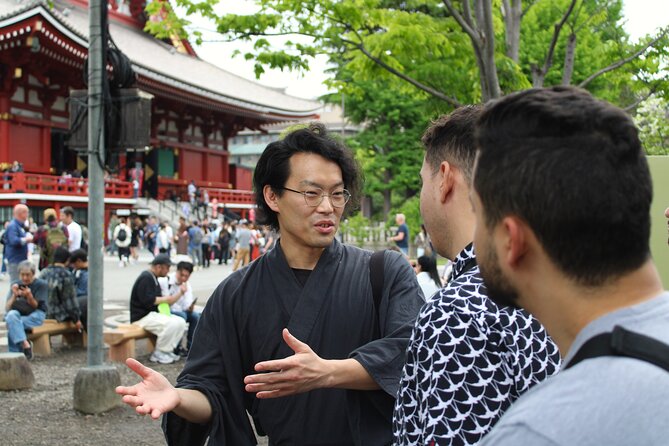
- Ryo brings two useful perspectives: six years driving a rickshaw in Asakusa and experience performing English-language comedy.
- The free rooftop view gives you a helpful orientation to Asakusa before the temple visit begins.
- You see both Buddhist and Shinto sites, making the walk a practical introduction to how these traditions exist side by side in Japan.
- Small groups are limited to eight people, a good setup for questions and conversation.
- The walk covers major sights and quieter religious details, including Buddhist statues that are easy to miss on your own.
- At $31 per person, the value depends on how much you want interpretation rather than simply seeing the sights.
Why this Asakusa walk is more than a temple visit
Asakusa is one of the easiest historic districts in Tokyo to visit on your own. You can walk to Kaminarimon Gate, follow Nakamise Shopping Street, and enter Senso-ji without paying for a guide. The reason to book this experience is not access. It is context.
Ryo’s route helps connect separate sights into one story. You begin near the Sumida River, look toward Tokyo’s modern skyline, then move into a district shaped by Buddhist worship, Shinto practice, popular devotion, shopping, war, and changing political power. That context can make the area feel less like a string of photo stops.
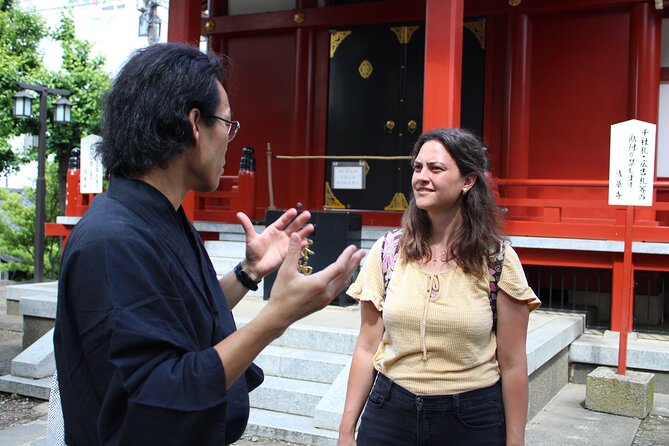
I especially like the religious angle. Asakusa Shrine and Senso-ji sit close together, yet they belong to different traditions. A guide can explain why a Buddhist temple and a Shinto shrine can share the same neighborhood without treating Japanese religion as a simple either-or choice. For a first visit to Japan, this is often more useful than memorizing dates.
Ryo also brings a local working connection to the district. His six years as an Asakusa rickshaw driver mean he has spent a lot of time watching people encounter the area for the first time. His comedy background gives the walk a lighter touch, though you should see the humor as an added feature rather than expect a full standup show.
A few more Tokyo tours and experiences worth a look


Meeting at Tokyo Cruise near Asakusa Station
The meeting point is in front of Tokyo Cruise, the water bus station near Asakusa. It is about a one or two-minute walk from Asakusa Station on the Tokyo Metro Ginza Line, which makes the starting point fairly simple to reach.
You should arrive five minutes early. The walk starts on time, and the guide cannot wait for late arrivals. That matters in Asakusa, where station exits, crowds, and large streets can make a short distance take longer than expected.
The tour ends at the main hall of Senso-ji, rather than returning you to the starting point or escorting you to a station. This is useful because you can continue exploring the temple area afterward, but you should plan your next move yourself.
The group is limited to eight people, and the tour is wheelchair accessible. English and Japanese are available. At $31 per person, the price is reasonable if you want a live explanation of the area and a chance to ask questions. It is less compelling if you already know Asakusa well or prefer to wander at your own speed.
Sumida Park and the first look at Tokyo’s old and new sides
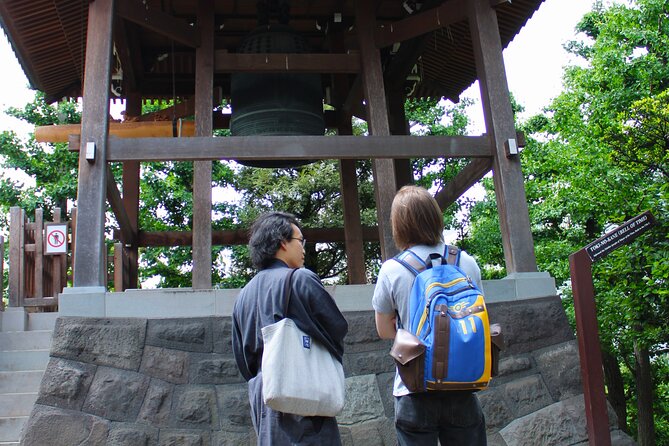
Before heading to Senso-ji, Ryo shows you landmarks including Tokyo Skytree and the Asahi Beer Company. These modern landmarks help place Asakusa on the wider Tokyo map.
You also get a view of Asakusa from the top of a nearby building at no extra cost. That short stop is a smart start to the walk. From above, you can better understand how the temple district, river area, commercial streets, and modern towers fit together.
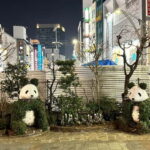
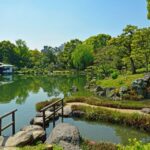
Sumida Park is included as a guided sightseeing stop. The park gives the route a little breathing room before you enter the denser temple streets. Depending on the season, you might also find flowers or other small details that add to the walk. One winter visit included a cherry blossom tree, a reminder that Tokyo’s seasons do not always follow the calendar in a strict way.
This opening section is not the main attraction, but it gives the tour a useful rhythm. You get orientation first, then religion and history, rather than being placed immediately in front of the temple with no sense of the surrounding district.
Kaminarimon Gate and the icon of Asakusa
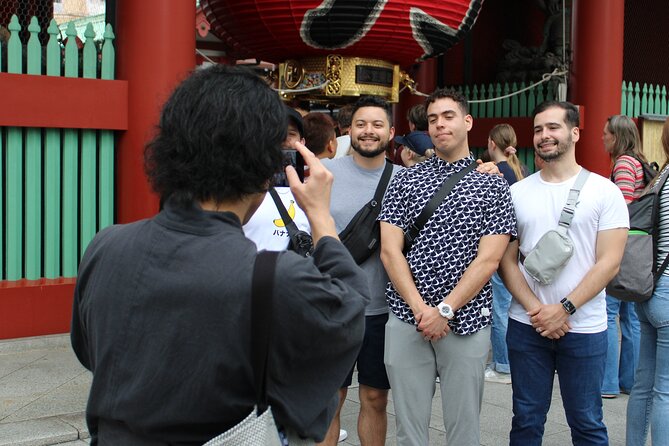
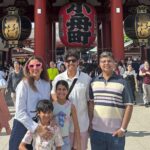
Kaminarimon, or the Thunder Gate, is the grand entrance most people associate with Asakusa. Its enormous lantern makes it an obvious photo stop, but the gate is more interesting when you know it is the threshold to Senso-ji’s approach rather than an isolated monument.
Ryo guides you through the gate area and explains what you are seeing. This is where a guide earns his fee quickly, since the entrance can be crowded and easy to treat as a quick picture before moving on. You can pause, look up, and understand the gate’s role in the larger temple approach.
The route does not promise a private or crowd-free experience. Kaminarimon is one of Tokyo’s best-known sights, so you should expect other people around you. The benefit of a small group is not solitude. It is having someone point out details and keep the visit organized.
If you want dramatic photographs, this stop gives you time to take them. If you want a quiet spiritual experience, the gate itself may feel too busy. The walk handles that tradeoff by moving beyond the famous entrance into smaller religious sites and the temple grounds.
Nakamise Shopping Street, with history before shopping
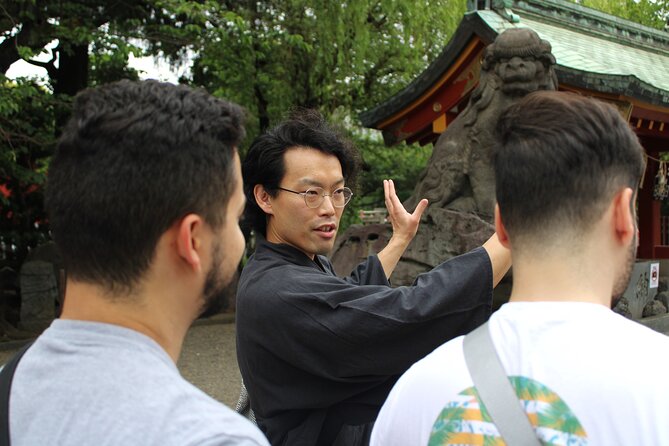
Nakamise Shopping Street leads from Kaminarimon toward Senso-ji. It is lined with souvenir shops and traditional snacks, but this tour does not stop for food or shopping. That is important to understand before you book.
Ryo uses the street to explain the origin of Senso-ji and how the temple received support from different groups over time, including local people and powerful generals from several periods. He also uses illustrations to help tell the story. That can be helpful if you prefer visual explanations and want more than a spoken list of names.
You will have time to look at the shops as you walk, but the activity is not designed as a shopping tour. If you want melon pan, souvenirs, or other treats, save those for after the walk. Ryo can recommend places to shop once the official route is over, and one particularly useful food tip led to a highly praised melon pan purchase.
This arrangement has a clear advantage. The group stays on schedule and does not lose time while people browse. The drawback is that you cannot pause whenever something catches your eye. If Nakamise is a major reason for your visit, plan to return after the tour.
Other walking tours we've reviewed in Tokyo



Asakusa Shrine and the Japanese religious mix
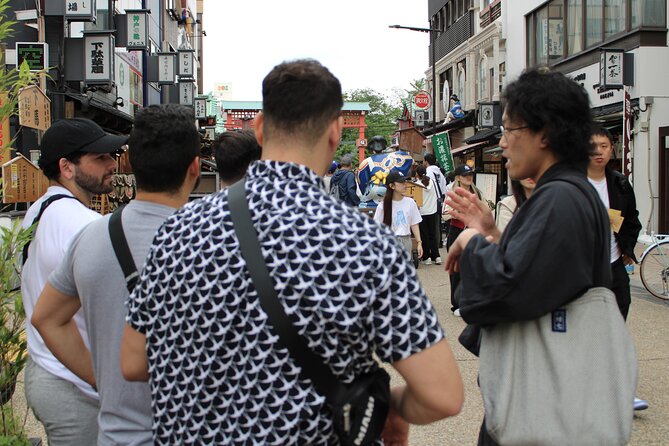
Asakusa Shrine provides the clearest chance to discuss the relationship between Shinto and Buddhism. The area is distinctive because a Shinto shrine and a Buddhist temple stand next to each other, allowing you to see both traditions within one compact visit.
Ryo explains how Japanese people may engage with both traditions in everyday life. This is one of the tour’s most useful subjects because visitors often try to divide Japanese religious practice into neat categories. In Asakusa, the physical layout shows a more layered picture.
The shrine stop is guided sightseeing rather than a formal ceremony. You can look at the buildings, learn about their role, and ask questions about customs and religious views. Ryo’s explanations are aimed at helping you understand the place without turning the walk into an academic lecture.
I would pay close attention here, especially if this is your first visit to Japan. Small details about how people approach a shrine or temple can make later visits across the country less confusing. You leave with a better idea of what you are looking at and why the two sites can exist side by side.
Senso-ji Temple and the statues easy to miss
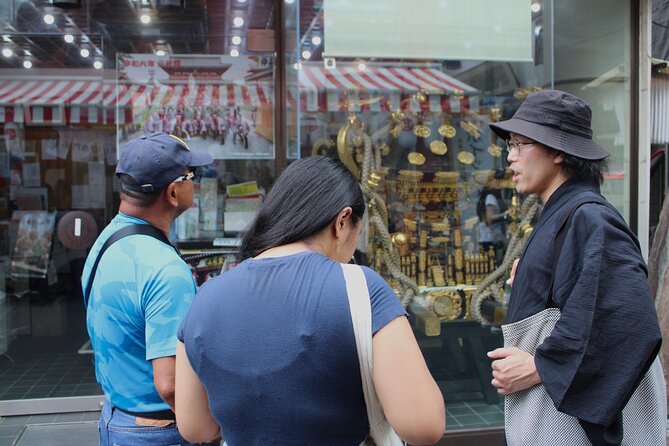
Senso-ji is the main event, and the walk saves the temple area for the latter part of the route. Ryo takes you through the grounds and introduces the major buildings, along with smaller temples, shrines, and statues of Buddhist deities nearby.
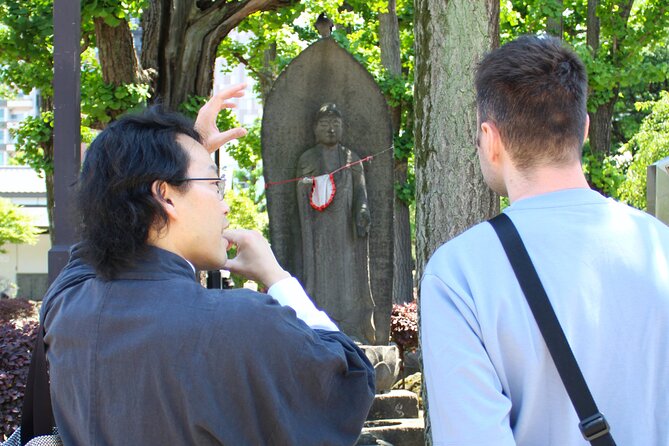
The statues are a strong reason to choose a guided walk. On your own, you might see rows of figures and move on. Ryo explains their significance, giving you a way to distinguish one religious image from another and understand why particular figures matter.
The tour also connects the temple to the people who supported it over time. That helps turn Senso-ji from a beautiful structure into a place with a long public life. The temple has been loved, repaired, and sustained by different parts of society, not just preserved as a relic for sightseers.
The walk finishes at the main hall. That ending is practical because you can stay in the area, revisit a detail, take photographs, or follow Ryo’s shopping suggestions. It also means you should not expect a final transfer back to Asakusa Station.
What Ryo adds as a local comedian
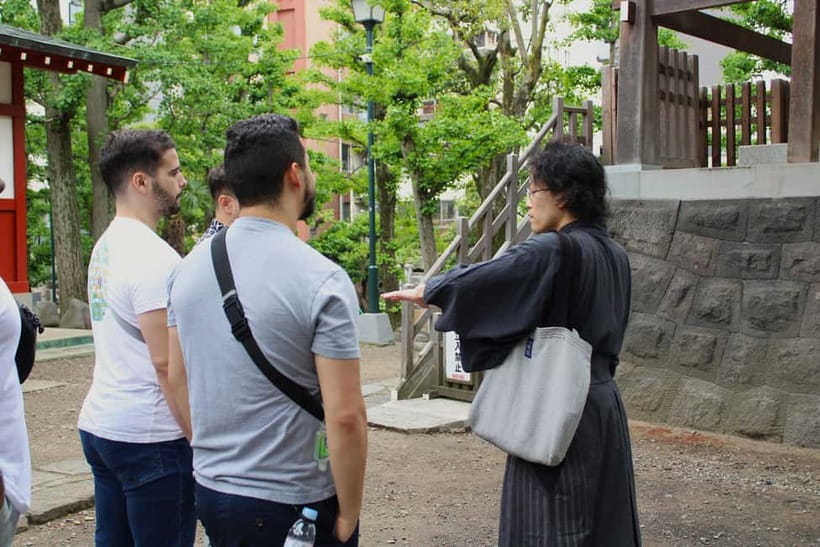
Ryo’s English-language comedy is part of the tour’s character. His humor comes from his experience as a Japanese performer, so it offers a local voice rather than a generic sightseeing script. For some people, that makes the historical material easier to remember.
His six years as a rickshaw driver are just as important. A rickshaw driver works close to the streets, landmarks, and daily flow of Asakusa. That background gives Ryo practical familiarity with the district and helps explain why certain corners, statues, and routes deserve attention.
The tone may not suit anyone looking for a constantly energetic entertainer. The feedback is mostly very warm, with repeated praise for Ryo’s kindness, humility, detailed explanations, and ability to answer questions. One less favorable experience found him pleasant but not especially animated as a guide. I would book this for relaxed conversation and cultural explanation, not for a theatrical comedy act.
His strongest quality is the way he adds details beyond the obvious sights. He can point out places you might miss and give recommendations for later shopping. That is valuable in Asakusa, where the main route is easy to find but the meaning behind it is not always clear.
Is $31 good value for 90 minutes?
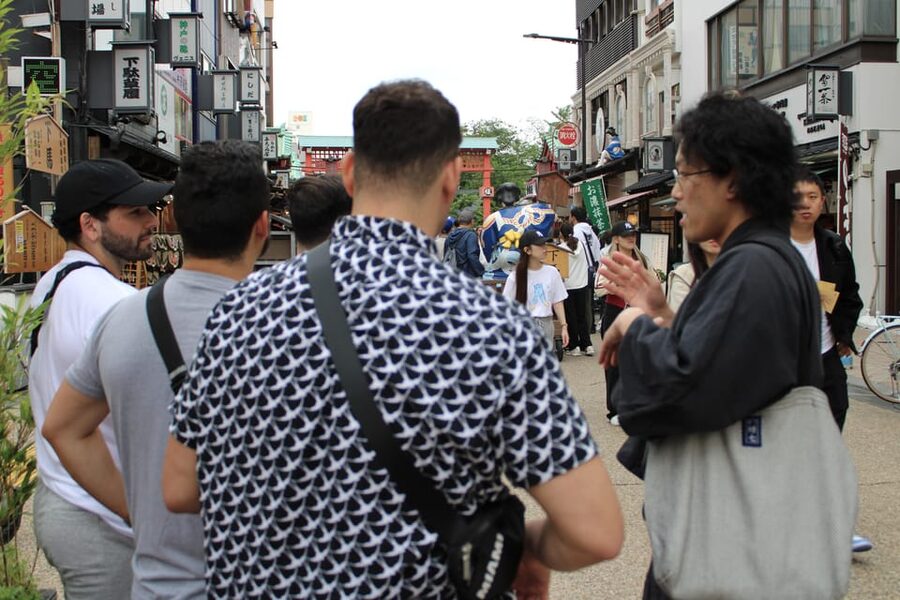
At $31, this is not the cheapest way to see Senso-ji. The temple itself is accessible without a tour, and the streets around it are free to explore. The question is what you want your money to buy.
You are paying for a small group, a live English-speaking guide, a planned route, a free elevated view, and explanations that connect the sites. You also get the chance to ask about Japanese culture in real time. For a first morning or afternoon in Tokyo, that can be a useful investment.
The value is strongest if you are new to Japan, interested in history and religion, or want help getting your bearings in Asakusa. It is also a good fit if you enjoy local personality and prefer a guide who can mix serious information with humor.
The value is weaker if you want a food tour, long shopping stops, extensive temple interiors, or a full half-day experience. Ninety minutes is enough for an introduction, but it cannot cover every corner of Asakusa in detail.
A flexible booking policy helps reduce the risk. You can cancel up to 24 hours in advance for a full refund, and you can reserve now and pay later. Those terms are useful when you are building a Tokyo schedule around weather, jet lag, and changing plans.
Who should book this Asakusa tour?
I would recommend it to first-time visitors who want a clear introduction to one of Tokyo’s historic districts. Families and small groups may also like the limited group size and straightforward route, while anyone using a wheelchair can benefit from the stated accessible format.
It suits you especially well if you want answers to questions such as how Shinto and Buddhism relate, why Senso-ji matters, and what the statues around the temple represent. The tour also works well near the start of a Tokyo stay, since the rooftop view and local orientation can help you understand where you are.
You may want to skip it if your priority is independent wandering. The route is fixed, the group does not stop to shop, and the guide cannot adjust the meeting or ending point to your hotel plans. You should also avoid booking it if you expect a nonstop comedy show.
My call: a useful first look at Asakusa
Book this tour if you want local explanation, religious context, and a small-group walk through Asakusa’s best-known sights. Ryo’s mix of rickshaw experience and English comedy gives the route a personal angle, while the temple, shrine, statues, and historical stories provide real substance.
Skip it if you already know Senso-ji, want to spend your time eating and shopping, or prefer to set your own pace. For most first visits, though, $31 is a fair price for a well-organized introduction, especially when you use the finished tour as a starting point for your own exploration of Nakamise and the temple district.
FAQ
How long is the Asakusa walking tour?
The tour lasts 90 minutes. Starting times vary, so you need to check availability when booking.
Where does the tour begin?
You meet in front of Tokyo Cruise, the water bus station. It is about a one or two-minute walk from Asakusa Station on the Tokyo Metro Ginza Line.
Where does the tour finish?
The walk ends at the main hall of Senso-ji Temple. The guide does not take you back to a station or hotel after the tour.
Who leads the tour?
Ryo leads the walk. He has six years of experience working as an Asakusa rickshaw driver and also performs standup comedy in English.
Does the tour include food or shopping stops?
No. The route does not stop for food or souvenir shopping. Ryo can provide shopping recommendations for after the tour.
Is the tour available in English and accessible by wheelchair?
Yes. The tour is offered in English and Japanese, and it is listed as wheelchair accessible.
More Walking Tours in Tokyo
More Asakusa Tours in Tokyo
More tours in Tokyo we've reviewed




Asakusa Tours, compared.
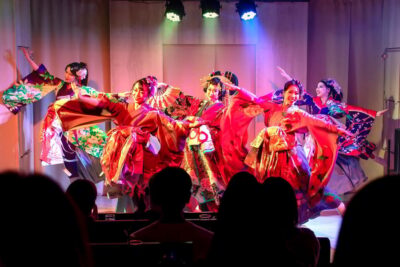 ★ 4.8Tokyo: Japanese Dance Cabaret Theater Asakusa-Kaguwa TicketFrom $492 hours
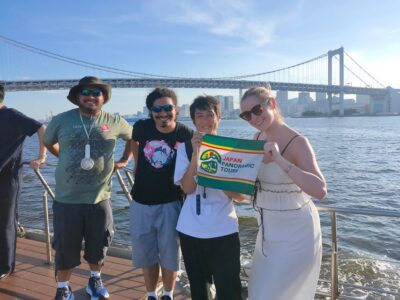 ★ 4.7Tokyo: Meiji Shrine, Asakusa, Skytree Bus Tour and CruiseFrom $12210 hours
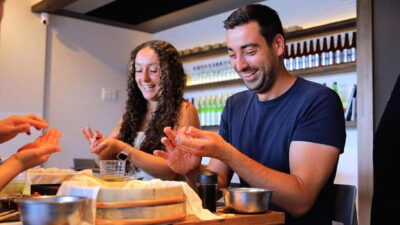 ★ 4.9Tokyo: Roll and Authentic Sushi Making Class in AsakusaFrom $581h 40m
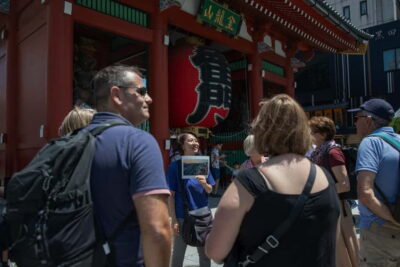 ★ 4.8Tokyo: Asakusa Walking Tour with Sensoji Temple VisitFrom $222 hours
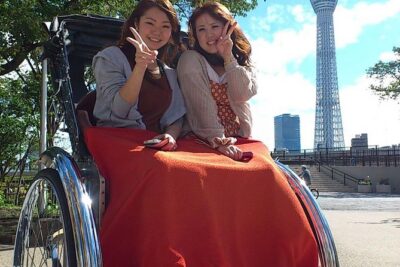 ★ 5.0Tokyo Asakusa Rickshaw TourFrom $42
 ★ 4.5Tokyo Panoramic 1 Day: Meiji Shrine, Asakusa, Odaiba and SKYTREE®From $85