
Reviewed · JDM & CAR CULTURE
Tokyo and Daikoku Guided Tour in a Nissan GTR R34
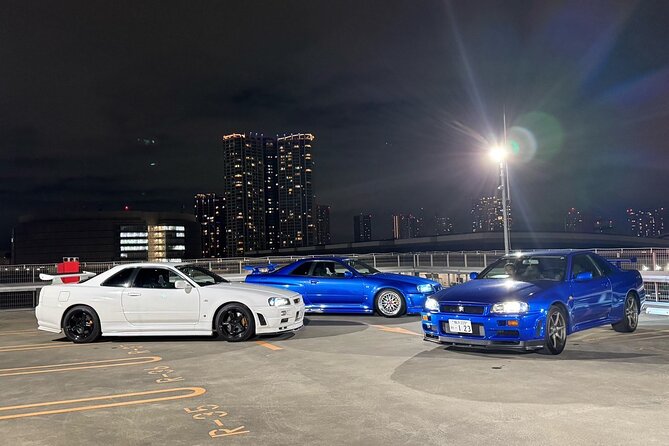
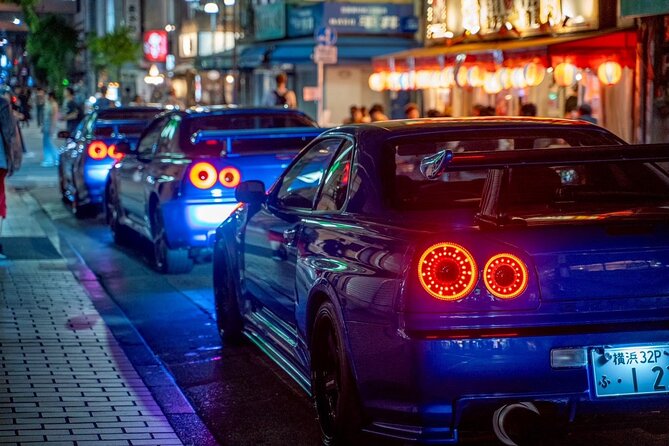
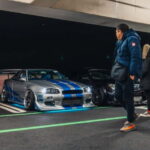
The main attraction here is not simply seeing Tokyo from a car. You get to experience the city through Japan’s JDM car culture, riding in a modified Nissan GT-R R34 and heading out to Daikoku Parking Area, the famous gathering place for Japanese performance cars. The route also includes Rainbow Bridge, Tokyo Tower, and selected city roads.
I like the very small group size, capped at three people, and the fact that the guides are active car enthusiasts rather than general sightseeing hosts. I also like the free photo opportunities at major stops, especially the chance to frame a real GT-R R34 with Tokyo Tower. The main consideration is that this is a car-focused outing, not a full sightseeing tour, and the route can change on Fridays, Saturdays, and Sundays when Daikoku closes early.
In This Review
- Key points at a glance
- What this Tokyo GT-R tour is really about
- Starting in Marunouchi and heading into the city
- A-PIT Super Autobacs: a useful stop for car fans
- Rainbow Bridge at night
- Daikoku Parking Area, the main event
- Tokyo Tower and the final photo stop
- What the guide adds to the drive
- Is $182 good value?
- Who will enjoy this most?
- Booking tips that matter
- FAQ
- Where does the tour start?
- Where does the tour finish?
- How long does the tour last?
- What cars may be available?
- Is Daikoku Parking Area included?
- Is A-PIT Super Autobacs included every day?
- Are meals included?
- Are photos included?
- How many people can join?
- Can I cancel for a full refund?
- Should you book this Tokyo GT-R experience?
Key points at a glance
- Ride in a genuine Japanese performance car: Vehicle choices can include the Nissan GT-R R34, R32, or JZA80 Supra, with a self-drive option available if arranged.
- Daikoku Parking Area is the centerpiece: You spend about an hour at Japan’s best-known JDM meeting spot in Yokohama.
- The group is limited to three people: That gives the guide room to talk cars and adjust the experience to the small party.
- Arata has made a strong impression as a host: He speaks great English, knows Tokyo’s car scene, and explains the places you pass.
- Night views are part of the appeal: Rainbow Bridge is lit each evening, and driving across it in a JDM car adds real atmosphere.
- Weekend timing matters: A-PIT Super Autobacs may be skipped on Friday, Saturday, and Sunday because Daikoku Parking Area closes early.
What this Tokyo GT-R tour is really about
This is a short, high-energy city outing built around cars. You meet at the entrance to the Marunouchi Building parking area, at 2 Chome-4 Marunouchi in Chiyoda City, then head out for a roughly three to four hour drive.
The experience works best if you see Tokyo’s roads as part of the attraction. You are not being taken from one indoor sight to another. Instead, you ride through the city, cross major bridges, stop at car culture landmarks, and spend time around machines that matter to Japanese performance-car fans.
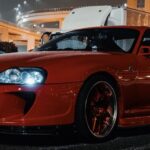
The available cars may include a modified Nissan GT-R R34, an R32, or a JZA80 Supra. Those are not interchangeable choices for a serious enthusiast. Each has its own following, styling, and place in Japan’s performance-car story. Confirm the exact car before booking if one model is the main reason you want to go.
Some arrangements may also allow you to drive yourself. The supplied information does not set out the precise requirements, so you should confirm availability and terms before relying on that option. If you simply want to ride and take in the city, the guided format keeps things easy.
The small group limit is one of the best practical features. With no more than three people, the guide has time to answer questions, explain the cars, and keep the outing personal. You are not being loaded onto a large bus with a fixed script.
A few more Tokyo tours and experiences worth a look
Starting in Marunouchi and heading into the city
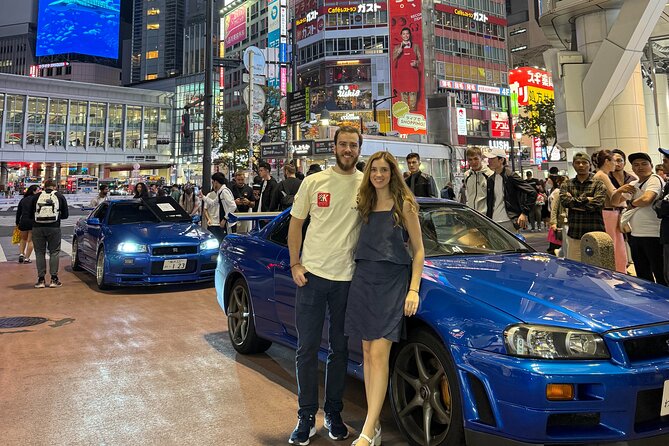
The meeting point is central and near public transportation, which is useful if you are staying in Tokyo and want to reach the start without a long transfer. Look for the entrance to the Marunouchi Building parking area rather than assuming the tour begins inside a hotel or at a major train station.
The precise departure time matters. A three to four hour outing can occupy much of an evening, especially once driving time and stops are included. Build in a little extra time to reach the meeting point, since a late arrival could be difficult for a small operation with a set route.
From the start, the city itself becomes part of the show. Tokyo’s bridges, expressways, towers, and illuminated streets give you the setting that a car meet alone cannot provide. The guide may point out passing sights and explain the car scene as you go.
Arata is specifically noted as an English-speaking host who explains the locations along the way. That helps turn a fast-moving drive into something you can follow. He has also been praised for handling a booking mix-up and accommodating a guest’s schedule, though you should still check your confirmed time and vehicle in advance.
A-PIT Super Autobacs: a useful stop for car fans
When the schedule allows, the first major stop is A-PIT Super Autobacs Shinonome. This is a large car accessory and apparel shop, and shopping is free. You can browse parts, merchandise, and automotive items, even if you have no plan to buy anything.
There is also a Starbucks inside, which gives you an easy place to take a short break. The stop lasts about 30 minutes, so think of it as a quick look rather than a long shopping session.
For a casual visitor, this may be the least essential stop. If your interest is limited to Tokyo’s famous sights, shelves of car accessories may not hold your attention for long. For a JDM fan, though, it offers a look at the commercial side of Japan’s car culture and a chance to see the sort of products that support the hobby.
The important scheduling tip is simple: A-PIT is not included on Fridays, Saturdays, or Sundays because Daikoku Parking Area closes early on those days. The route is adjusted so the group can reach Daikoku in time. If visiting both places matters to you, ask which day and schedule you are booking.
Rainbow Bridge at night
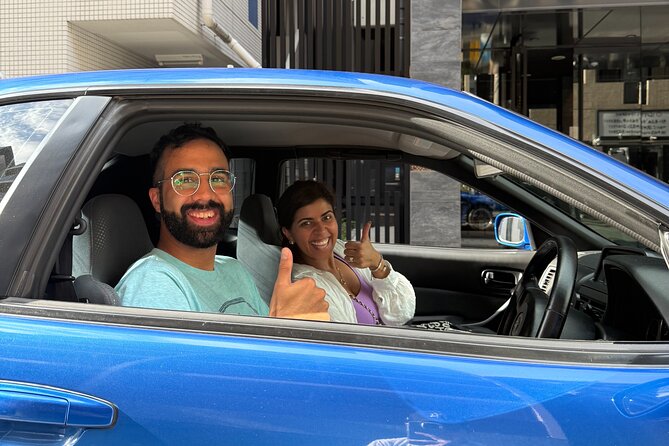
Rainbow Bridge is one of the route’s scenic highlights. It is Tokyo’s largest bridge, and its lights come on every night. Crossing it in a JDM car gives the ride a strong sense of place, especially if you enjoy the mix of city lights, elevated roads, and performance cars.
The bridge is not listed as a long walking stop. Its value comes from the drive itself and the views around it. You should not expect an extended sightseeing session or a special bridge admission ticket. This is a moving part of the experience, so keep your camera ready but do not let photography distract from the ride.
Driving through Tokyo’s expressway network is part of the thrill. Some past guests specifically enjoyed the Wangan route toward Daikoku and the feeling of being on the road with other Japanese performance cars. The tone can be exciting, with music and spirited driving mentioned in the feedback, but the exact pace depends on the guide and road conditions.
That point deserves a little balance. The tour is designed to feel energetic, but public roads are not a racetrack. If you prefer a calm ride, tell the guide. If you book for speed and excitement, understand that the experience takes place within normal traffic and city driving conditions.
Daikoku Parking Area, the main event
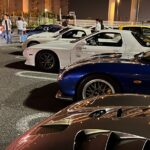
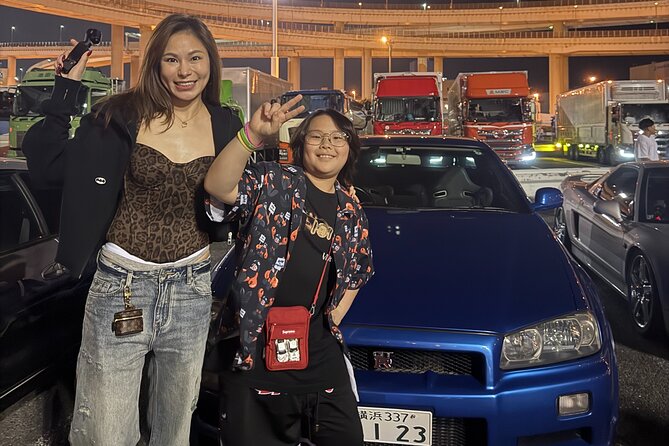
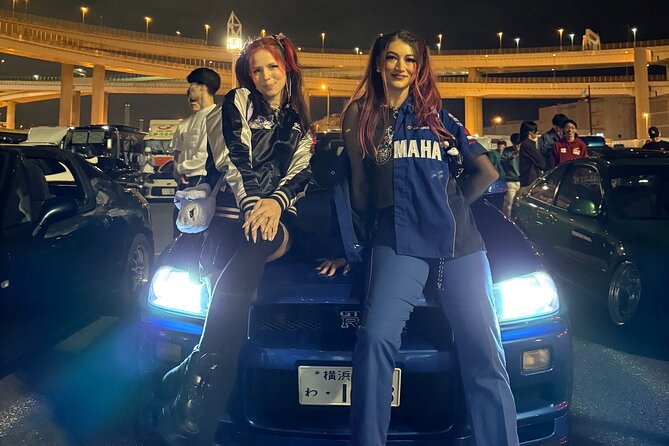
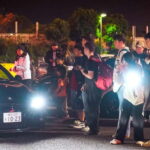
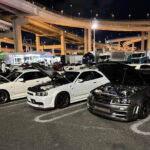
Daikoku Parking Area in Yokohama is the heart of the outing. It is widely known as a meeting point for Japan’s JDM scene, making it far more than a standard highway rest stop.
You spend about an hour here. That gives you time to look at the cars, take photographs, and talk with the guide about what you are seeing. The mix can change from one visit to another, which is part of the appeal. You may find a range of Japanese performance cars gathered in one place, though no particular vehicle lineup can be guaranteed.
This stop gives the tour its strongest sense of authenticity. You are not merely being shown a famous car from outside a showroom. You are visiting a place tied to an active enthusiast culture, where the cars and the people who bring them are the focus.
Daikoku’s location also explains why the outing takes several hours. It is in Yokohama, outside central Tokyo, so the drive there and back is a major part of the experience. If you want a quick photo with a GT-R and little road time, this may feel too long. If you want the full car culture setting, the journey is the point.
The schedule can be affected by early closure, especially at the end of the week. Do not assume every departure follows the same route. Confirm the day’s plan if Daikoku is your top priority.
Other guided tours in Tokyo

Tokyo Tower and the final photo stop
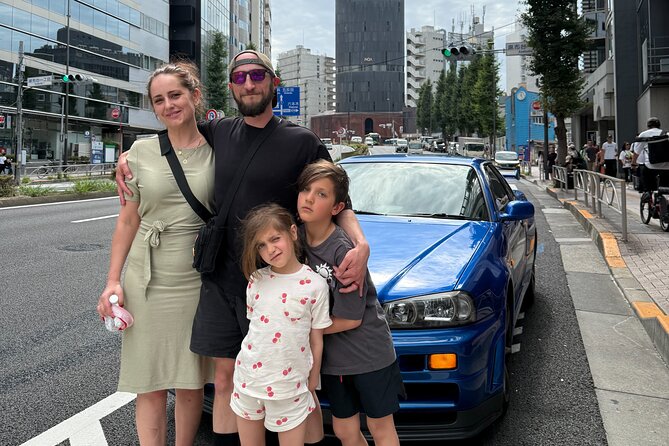
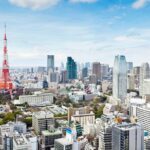
The Tokyo Tower stop is short, around 10 minutes, but it is highly photogenic. The plan is to photograph the real GT-R R34 with Tokyo Tower in the background, a combination that neatly joins Tokyo’s skyline with Japan’s performance-car identity.
Free photo service is included at major stops, and photography is available at Tokyo Tower. The supplied details do not specify exactly how many photos you receive or whether every image is professionally edited, so ask the guide what is included if the pictures are important to you.
Ten minutes is enough for a quick set of shots, but not for a relaxed visit to Tokyo Tower itself. You are not booking tower admission or a long observation-deck stay. This is an exterior photo opportunity linked to the car, so keep your expectations focused.
For many people, this will be the most memorable picture from the outing. A regular Tokyo Tower visit shows you the tower. This stop gives you a distinctive image of the tower beside a rare Japanese performance car.
What the guide adds to the drive
A car tour can easily become a simple ride with a few photo stops. The guide makes the difference. Arata is described as an English-speaking host who explains the places along the route and understands Tokyo’s car scene well.
You can expect the guide to provide context as you pass the city’s roads and landmarks. The experience is also shaped by the driver’s style. Some feedback highlights smooth driving, entertaining conversation, music, and an exciting trip through Tokyo with other JDM cars nearby.
That mix will suit some people more than others. You may love the energy if you came specifically for a GT-R ride and a taste of the Wangan scene. If you want a quiet, polished sightseeing tour, the music and spirited driving may feel less comfortable.
The best approach is to be clear about what you want at the start. Ask about the chosen car, the route, the planned stops, and whether the drive will be relaxed or energetic. With such a small group, there is a good chance your preferences can shape the tone, but no special request is guaranteed.
Is $182 good value?
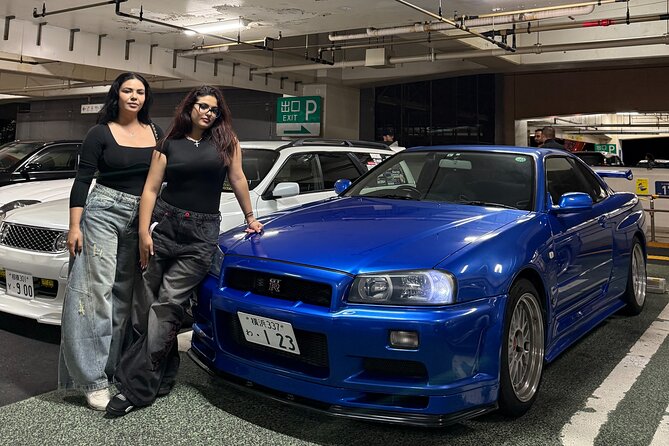
At $182, this is not a cheap way to see Tokyo. You are paying for access to a rare performance car, a specialist guide, a small group, several hours of driving, the Daikoku visit, and photo opportunities. Meals are not included, so plan to eat before or after the outing.
For a general visitor who only wants Tokyo landmarks, the price may be hard to justify. You can see Tokyo Tower, Rainbow Bridge, and Shibuya from other tours or on your own for much less.
For a serious GT-R, Supra, or JDM fan, the value looks better. The car is the attraction, and the route connects several places that would be awkward to combine independently, particularly Daikoku Parking Area and the scenic expressway drive. The three-person maximum also gives this a more personal feel than a standard group bus tour.
Group discounts are available, so the cost may work better if you are booking with companions. Check the current discount before paying, since the exact saving is not specified here.
Remember that the price does not guarantee a particular model unless the booking confirms it. If the R34 is essential, verify that point first. Paying for a GT-R-themed outing and receiving a different available car could change the experience for you.
Who will enjoy this most?
I would recommend this to a few clear groups:
- JDM enthusiasts who already know the difference between an R34, R32, and JZA80 Supra.
- Visitors who want to see Daikoku Parking Area rather than only central Tokyo.
- Couples or small groups who prefer a personal outing over a large organized tour.
- Photographers who want a GT-R and Tokyo Tower in the same frame.
- Curious visitors who enjoy Japanese car culture and want an English-speaking guide to explain it.
I would be more cautious about recommending it to families with young children, people who dislike fast or energetic driving, or anyone seeking a broad introduction to Tokyo’s history and neighborhoods. The tour focuses on cars and roads, not museums, temples, food, or long walks through local districts.
Most people can participate, and the meeting point is near public transportation. Still, the supplied information does not give detailed vehicle accessibility specifications, so contact the provider if you have mobility needs or require special seating arrangements.
Booking tips that matter
Choose your date with care. Friday, Saturday, and Sunday departures may skip A-PIT because Daikoku closes early. That does not mean the experience stops being worthwhile, but it changes the balance between the car shop and the car meet.
Confirm the exact vehicle. The experience may use an R34 GT-R, an R32, or a JZA80 Supra, and a self-drive option may be available. Ask what is secured for your date rather than treating the vehicle list as a guarantee.
Allow three to four hours for the outing, then add time before and after for reaching the meeting point. The tour returns to the same Marunouchi meeting location, so it is easy to continue your Tokyo plans afterward.
Free cancellation is available if you cancel at least 24 hours before the start time. Within 24 hours, you receive no refund, and changes are not accepted. That cut-off uses Tokyo local time, so pay attention if you are arranging the booking from another country.
FAQ
Where does the tour start?
The tour starts at the entrance to the Marunouchi Building parking area, 2 Chome-4 Marunouchi, Chiyoda City, Tokyo 100-0005, Japan.
Where does the tour finish?
The experience ends back at the original meeting point.
How long does the tour last?
The tour lasts approximately three to four hours.
What cars may be available?
Vehicle choices can include a Nissan GT-R R34, a Nissan R32, or a JZA80 Supra. A self-drive option may also be available if arranged.
Is Daikoku Parking Area included?
Yes. The route includes a visit to Daikoku Parking Area in Yokohama, with about one hour scheduled there.
Is A-PIT Super Autobacs included every day?
No. On Fridays, Saturdays, and Sundays, the tour does not go to A-PIT because Daikoku Parking Area closes early.
Are meals included?
No. Meals are not included in the tour price.
Are photos included?
Free photo service is provided at major stops. Photography services are also available at the Tokyo Tower stop.
How many people can join?
The activity has a maximum of three participants.
Can I cancel for a full refund?
Yes, if you cancel at least 24 hours before the experience start time. Cancellations within 24 hours are not refunded, and changes within that period are not accepted.
Should you book this Tokyo GT-R experience?
Book it if the words Daikoku Parking Area, GT-R R34, and Japanese car culture make you sit up a little straighter. The small group, English-speaking car guide, city-night route, and Tokyo Tower photo stop create a focused experience with a clear purpose.
Skip it if you mainly want classic sightseeing, a guaranteed visit to A-PIT on a weekend, or a quiet ride through Tokyo. Before paying, confirm the exact car and the day’s route. For the right enthusiast, this is one of the more distinctive ways to see Tokyo, not because it covers every famous sight, but because it connects the city to the cars that helped make Japan’s performance scene famous.
More Guided Tours in Tokyo
More JDM & Car Culture in Tokyo
More tours in Tokyo we've reviewed


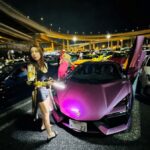
JDM & Car Culture, compared.
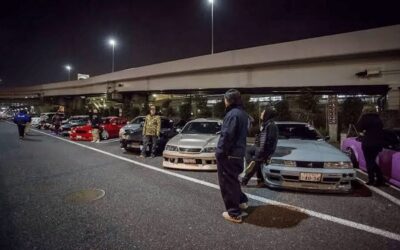 ★ 4.7FAST&FURIOUS EXPERIENCE Tokyo Car Club membershipFrom $138
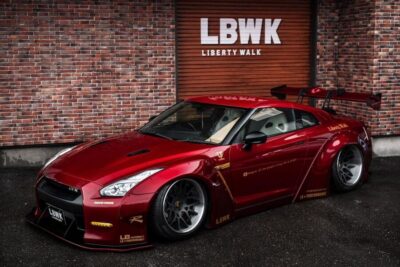 ★ 4.8GT-R35 800hp Club Membership – secret underground car meetFrom $205
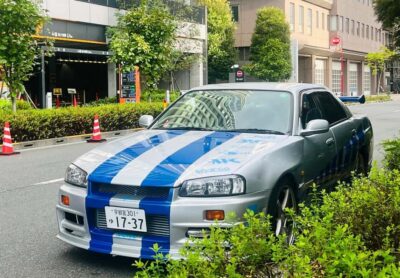 ★ 4.8Tokyo: Fast & Furious Tokyo Drift 3 Experience (Kaila Yu SP)From $157
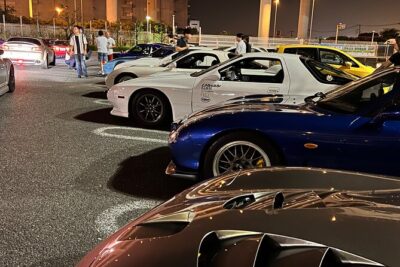 ★ 4.8Tokyo: Daikoku JDM Car Meet & Night Car Culture TourFrom $984 hours
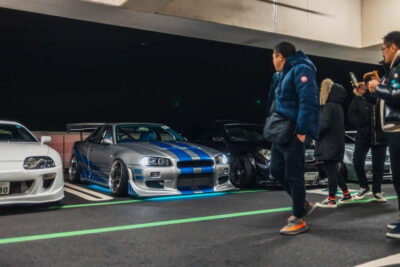 ★ 4.8Secret Car Meet: R34 Skyline Car Club MembershipFrom $236
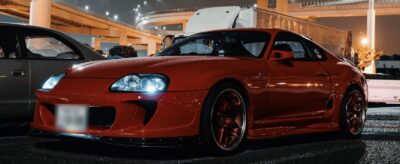 ★ 4.7Tokyo Drift: Daikoku PA Supreme Car Experience 大黒PAFrom $583 hours