
Reviewed · SHINJUKU TOURS
Tokyo After Dark Shinjuku Tour of Tradition and Pop Culture
Shinjuku changes character after sunset. This 90-minute walking tour moves from smoky-looking old alleyways and a quiet Shinto shrine to neon streets, giant signs, and the modern Tokyu Kabukicho Tower. It gives you a quick, clear introduction to the district’s old and new sides without asking you to plan every turn.
I like the way the tour links Omoide Yokocho and Golden Gai with a Purikura photo session. I also like the small maximum of 12 people, which should make it easier to hear the guide and ask questions. The tradeoff is time: 90 minutes is enough for an introduction, but not enough for a long meal, extended photography, or a relaxed look inside every stop.
In This Review
- Key points at a glance
- Why this short Shinjuku walk works after dark
- Meeting at the Shinjuku East Exit
- Omoide Yokocho and the feel of postwar Tokyo
- Kabukicho under the neon signs
- Tokyu Kabukicho Tower’s modern Tokyo
- Golden Gai, tiny bars and big character
- Hanazono Shrine, quiet at the end of the route
- Purikura makes the tour feel local and playful
- Is $31.87 a fair price?
- Who should book this experience?
- Timing, group size, and cancellation details
- Should you book this Shinjuku night tour?
- FAQ
- How long does the Tokyo After Dark Shinjuku Tour last?
- How much does the tour cost?
- Where does the tour start?
- Where does the tour end?
- What places are visited?
- Is Purikura included?
- Are meals included?
- How large is the group?
- Is the tour accessible by public transportation?
- Can I cancel for a refund?
Key points at a glance
- Old and new Shinjuku in one walk: Visit Omoide Yokocho, Golden Gai, Hanazono Shrine, Kabukicho, and Tokyu Kabukicho Tower.
- A real Japanese pop-culture moment: The Purikura booth fee is included, giving you more than a standard sightseeing walk.
- Small group size: The tour accepts a maximum of 12 people, a useful limit in narrow streets and crowded entertainment areas.
- A short evening orientation: At about 1.5 hours, this works well as a first look before dinner or a longer night out.
- Free cancellation up to 24 hours ahead: You can receive a full refund if you cancel at least one day before the local start time.
- Convenient finish: The walk ends at Hanazono Shrine, close to dining options and public transportation.
Why this short Shinjuku walk works after dark
Shinjuku can feel like several cities packed into one district. One block may hold a solemn shrine, while the next is filled with flashing signs, narrow drinking alleys, game centers, and themed restaurants. If you arrive without a plan, it is easy to spend the evening simply following the biggest lights.
This tour gives your night a useful shape. You begin at the Shinjuku Station East Exit Police Box, walk through older parts of the neighborhood, then move toward its modern entertainment center. You finish at Hanazono Shrine rather than returning to the station, leaving you free to eat nearby or continue exploring.
The route also helps you read the area instead of only photographing it. Omoide Yokocho and Golden Gai are not just attractive backdrops. They connect to postwar Tokyo and the city’s long nightlife traditions. Kabukicho and Tokyu Kabukicho Tower show how that entertainment culture continues in a newer form.
The tour’s five main stops are close enough to fit into a compact evening, but the schedule remains brisk. The listed stop times add up to about 50 minutes, so the remaining time covers walking, explanations, and the Purikura activity. You should expect an introduction, not a long, slow neighborhood study.
A few more Tokyo tours and experiences worth a look

Meeting at the Shinjuku East Exit
The meeting point is the police box at Shinjuku Station’s East Exit, at 3-chome-38-1 Shinjuku. That is a practical place to start because Shinjuku Station is large and can be confusing, so allow time to find the East Exit before the tour begins.
The experience uses a mobile ticket, and confirmation arrives when you book. Keep the ticket easy to open on your phone, particularly if you are moving through the station in the evening.
The walk stays in Shinjuku and is near public transportation. Most people can participate, and service animals are allowed. Since the group is capped at 12, you get a more manageable setting than a large city walk, especially in narrow lanes where a big group can quickly block the way.
No meals are included. That is not a problem if you treat the tour as a starter for the evening. In fact, ending near many dining choices makes it easy to turn the walk into a longer night out.
Omoide Yokocho and the feel of postwar Tokyo
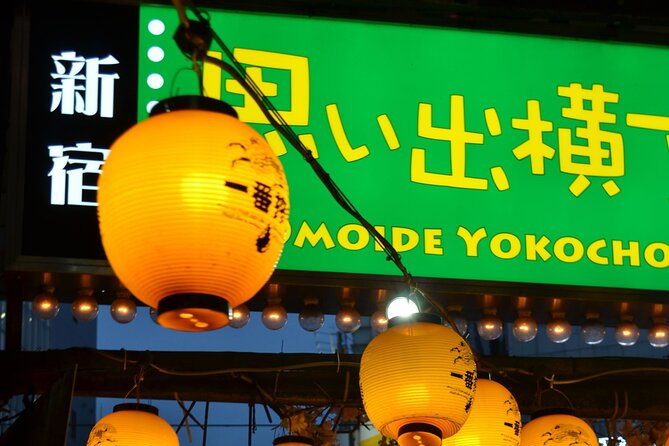
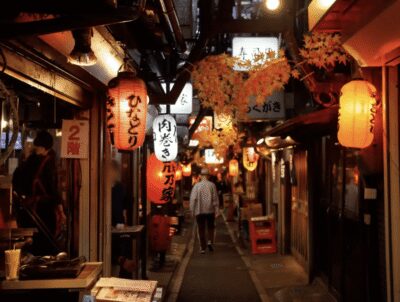
Omoide Yokocho is one of the quickest ways to see Shinjuku’s older nightlife image. Its narrow, lantern-lit lanes offer the kind of close-up city scenes that look very different from the broad avenues around the station.
You have about 10 minutes here, with admission included. That is enough to get a sense of the alleyways, hear the guide explain their connection to postwar Tokyo, and take a few photographs. The guide can also help you take pictures in front of some of the most recognizable spots.
The short visit has both a strength and a weakness. It keeps the tour moving and prevents the first stop from taking over the whole evening. But if you want to eat in one of the small establishments or carefully photograph every lane, you will need to return on your own.
Treat Omoide Yokocho as a visual and historical introduction. The point is not a full dinner stop. It is a quick lesson in how Tokyo’s informal drinking culture survived and remains part of the city’s nighttime identity.
Kabukicho under the neon signs
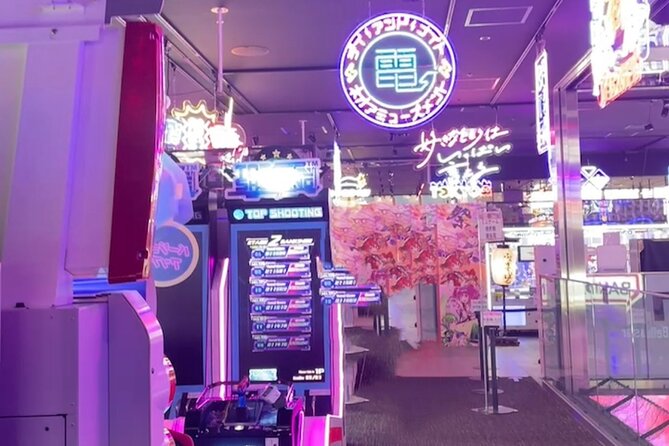
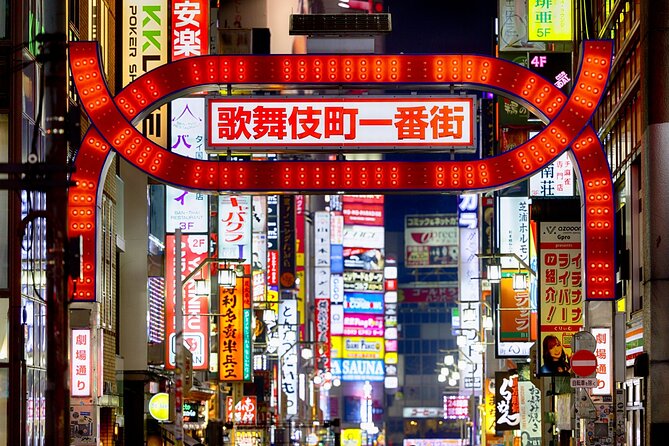
From the older alleyways, the route shifts to Kabukicho, Japan’s famous entertainment district. Here, the mood changes quickly. The narrow lanes give way to flashing signs, themed restaurants, game centers, and streets that keep their energy after dark.
The walk through Kabukicho is guided, which matters in a district known for its many signs and side streets. A guide can give the area some order and explain what you are seeing instead of leaving you to make sense of it from a map.
The supplied details do not assign a separate time to this part of the route, so think of it as a connecting walk and a major visual section rather than a formal admission stop. You will see the district from the street. The experience does not include meals or entry to individual restaurants and venues.
For a first evening in Tokyo, this is useful orientation. You can note the streets and places that appeal to you, then decide later where to spend more time. If your main goal is nightlife itself, keep your expectations in check. A 90-minute walking tour can show you the district, but it cannot replace an entire evening in Kabukicho.
Tokyu Kabukicho Tower’s modern Tokyo
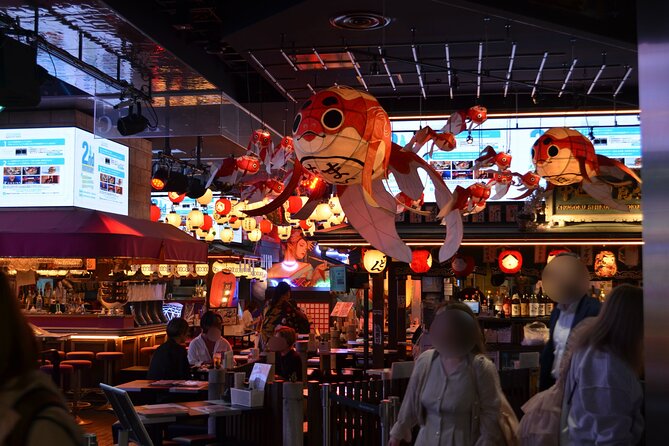
Tokyu Kabukicho Tower represents a newer version of Shinjuku entertainment. The group spends about 20 minutes exploring the complex, which brings food, nightlife, and city views together in a large modern setting.
One feature is a nostalgic-style izakaya food court. This creates an interesting contrast with the older alleys visited earlier. Omoide Yokocho shows a more compact, traditional nightlife setting, while the tower gathers similar food and social ideas inside a contemporary entertainment complex.
The tour does not include meals, so you will not be receiving a food allowance as part of the price. Still, the stop helps you decide if you want to return for dinner or drinks. It also gives you a change of pace after the tighter lanes of Omoide Yokocho and Golden Gai.
The 20-minute visit is the longest listed stop, which makes sense. There is more ground to cover in the building, and the contrast between old and new Tokyo is one of the tour’s main ideas. If views are important to you, note that the experience includes the complex and mentions city views, but it does not promise a special observation-deck admission.

Golden Gai, tiny bars and big character
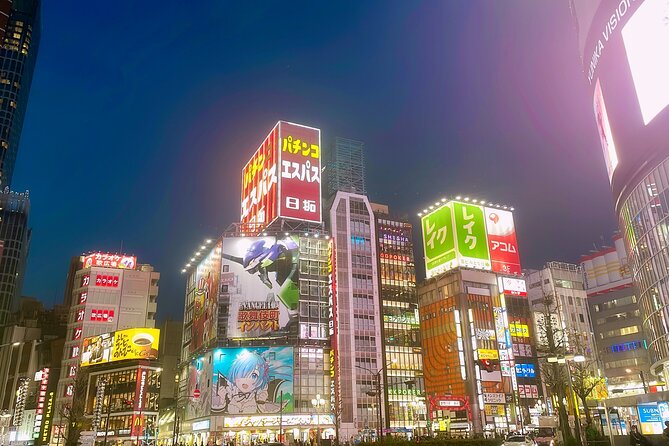
Golden Gai is a maze of narrow lanes filled with more than 200 tiny bars. Each place has its own theme, owner, and personality, giving the area a strong sense of individuality even when you are only seeing it from the outside.
You spend about 10 minutes here. That is enough to walk through a few lanes, hear about the area’s nightlife traditions, and take in the unusual scale of the bars. The closeness of the buildings and the small entrances make this one of the most distinctive photographic sections of the tour.
Golden Gai is also a place where patience and good manners matter. The tour gives you a brief look rather than promising entry into a selection of bars. Do not assume that the walking portion includes drinks, food, or a seat at one of the tiny establishments.
I see the short visit as a useful preview. If Golden Gai catches your interest, you can return later with a clear idea of what you want to explore. The guide’s context is especially helpful here because the district can otherwise look like a collection of tiny doorways with no obvious way to understand the whole.
Hanazono Shrine, quiet at the end of the route
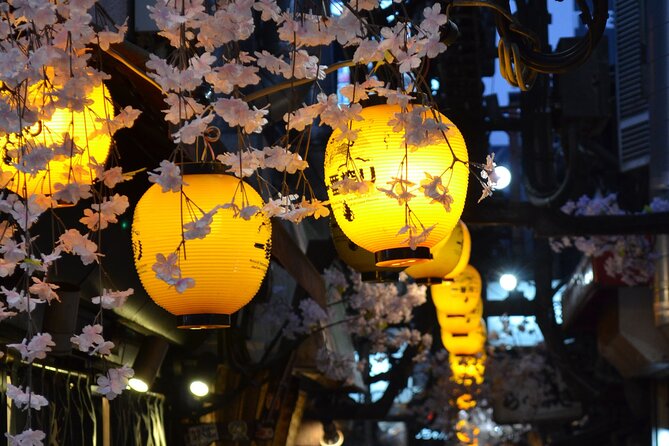
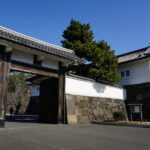
Hanazono Shrine provides the tour’s strongest change in mood. Only a short distance from Shinjuku’s neon streets, this Shinto sanctuary offers a calmer setting and a chance to pause after the entertainment districts.
The shrine has watched over the city for centuries, and the tour uses it to show that modern Shinjuku did not erase older religious life. You spend about 10 minutes here, enough for a look around and an explanation of the site’s role.
Ending at the shrine is a smart choice. A walk that began with postwar alleyways and moved through bright entertainment streets finishes with a quieter piece of Tokyo. You are not rushed back to the station, and the surrounding area has dining options for the next part of your evening.
The experience ends at Hanazono Shrine, at 5-chome-17-3 Shinjuku. The guide can help with directions or restaurant suggestions afterward. If you want a meal immediately after the tour, this finish is more useful than ending in the middle of a station concourse.
Purikura makes the tour feel local and playful
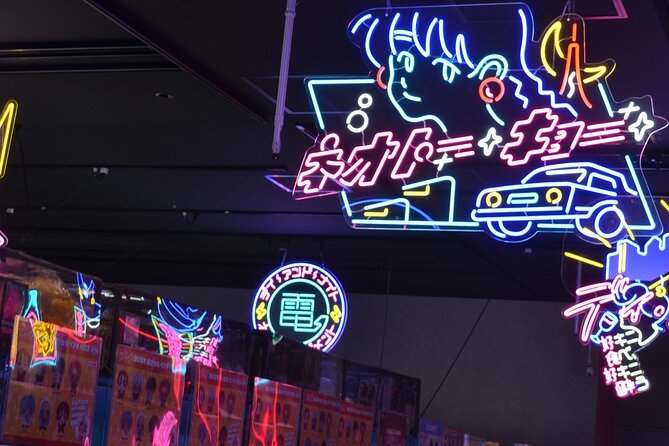
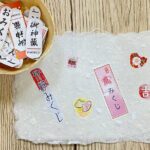
The included Purikura session is the tour’s most unusual feature. Purikura photo sticker booths are popular with Japanese teenagers and young adults. They allow you to create decorated photo stickers rather than simply taking a standard snapshot on your phone.
The booth fee is included, so you do not need to budget separately for this part of the activity. It adds a hands-on pop-culture experience to a route that might otherwise feel like a conventional neighborhood walk.
Purikura also gives the tour a lighter moment. The shrine and old nightlife districts provide context and atmosphere, while the photo booth lets you participate in a current social pastime. That mix suits people who want both cultural background and something fun to do.
The provided details do not specify the exact booth location or how much time is set aside for it. Because of that, you should view Purikura as a planned part of the walk, not as a long standalone activity. If you want a large collection of edited photos or lots of time to experiment, you may need to visit another booth later.
Is $31.87 a fair price?
At $31.87 per person, the price is reasonable for a short guided walk that includes a local guide and the Purikura fee. You are paying for direction, local explanation, and a planned route through several parts of Shinjuku, not for meals, transport, or attraction admissions.
The value is strongest if you are new to Tokyo or want a simple first evening in Shinjuku. The guide helps you connect places that can feel unrelated at first, and the small group limit should make the walk easier to follow.
The value is weaker if you already know Shinjuku well or mainly want to spend time eating and drinking. You could walk through several of these areas yourself, but you would miss the structured history and the included photo booth session.
The price also makes sense as a first-night activity. You get your bearings, identify places to revisit, and finish near restaurants. Just remember that the tour lasts about 1.5 hours, so the cost is for a compact introduction rather than a full evening program.
Who should book this experience?
I would recommend it to first-time Tokyo visitors who want to understand Shinjuku before exploring it alone. It also suits photographers who like lantern-lit lanes, neon streets, and the contrast between a shrine and a modern tower.
Pop-culture fans will appreciate the Purikura stop and the modern entertainment side of Kabukicho. People interested in urban history will get useful context from Omoide Yokocho, Golden Gai, and Hanazono Shrine.
The tour may be less satisfying for you if you want a food tour. Meals are not included, and the stops are too short for a long restaurant visit. It is also not the right choice if you want a nightlife crawl with drinks inside several bars.
Families and mixed-age groups may like the variety, though the entertainment district has an adult nightlife identity. The available information says most people can participate, and the group maximum is 12, but it does not provide a detailed age policy or route description for mobility needs.
Timing, group size, and cancellation details
The experience lasts approximately 1 hour and 30 minutes. Since it takes place after dark and includes several walking sections, wear shoes you can use comfortably on city streets and keep your phone charged for the mobile ticket and photographs.
The maximum group size is 12 people. That is small enough for a more personal walk, but it is still a group experience, not a private tour. No individual guide name is provided, so you should not book expecting a particular named guide.
Free cancellation is available if you cancel at least 24 hours before the local start time. Cancellations within 24 hours are not refunded, and changes within that period are not accepted. This policy is worth noting if your Tokyo plans depend on weather, train timing, or a late arrival.
Should you book this Shinjuku night tour?
Book it if you want a well-shaped first look at Shinjuku, especially one that combines postwar nightlife, a shrine, neon Kabukicho, a modern tower, and Purikura. The guide, small group size, and convenient restaurant-filled finish add real value to a short evening.
Skip it if you already know the district or want a full food and bar experience. For $31.87, the tour works best as an introduction and orientation. Use the remaining night to return to the alley, restaurant, or bar that caught your attention.
FAQ
How long does the Tokyo After Dark Shinjuku Tour last?
The tour lasts approximately 1 hour and 30 minutes.
How much does the tour cost?
The listed price is $31.87 per person.
Where does the tour start?
It starts at the Shinjuku Station East Exit Police Box, at 3-chome-38-1 Shinjuku, Shinjuku City, Tokyo 160-0022, Japan.
Where does the tour end?
The tour ends at Hanazono Shrine, at 5-chome-17-3 Shinjuku, Shinjuku City, Tokyo 160-0022, Japan.
What places are visited?
The route includes Omoide Yokocho, Kabukicho, Tokyu Kabukicho Tower, Shinjuku Golden Gai, and Hanazono Shrine.
Is Purikura included?
Yes. The Purikura Japanese photo sticker booth experience fee is included.
Are meals included?
No. Meals are not included in the tour price.
How large is the group?
The experience has a maximum of 12 participants.
Is the tour accessible by public transportation?
Yes. The experience is near public transportation, and it starts at Shinjuku Station’s East Exit.
Can I cancel for a refund?
Yes. You can receive a full refund by cancelling at least 24 hours before the experience start time. Cancellations made within 24 hours are not refunded.
More Shinjuku Tours in Tokyo

More tours in Tokyo we've reviewed





Shinjuku Tours, compared.
 ★ 5.0Tokyo: Shinjuku Food Tour (13 Dishes at 4 Local Eateries)From $86
 ★ 5.0Tokyo Bar Hopping Tour in Shinjuku (All-You-Can-Drink + Dinner)From $106
 ★ 4.9Tokyo: Shinjuku Food Tour (15 Dishes and 4 Eateries)From $853 hours
 ★ 5.0Best of Shinjuku: Izakaya Food Tour (4 Stops, 14+ Tastings)From $92
 ★ 4.9Tokyo: Shinjuku Local Bar and Izakaya Guided Walking TourFrom $343 hours
 ★ 5.0Tokyo Shinjuku Chopsticks Making ClassFrom $20