
Reviewed · TOKYO FOOD TOURS
Explore Akihabara The Ultimate Anime & Food Tour Free For Kids
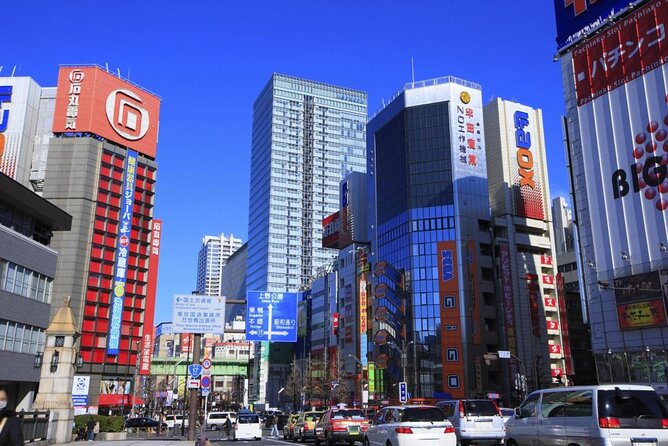
Akihabara is easiest to enjoy when someone helps you cut through the noise. This four-hour tour takes you from collectible-filled Radio Kaikan to retro games, maid cafés, a quiet shrine, and the Kanda River, giving you a quick but varied look at Tokyo’s Electric Town.
I like the small-group format, which keeps the walk more personal, and I like that food is part of the plan rather than an afterthought. Guides including Chisato, Shoko, and Marin have been praised for patience, clear English, and helpful advice. The tradeoff is pace: eight stops in four hours means limited time in each shop.
I also appreciate the mix of pop culture and local tradition. You get anime stores and arcade games, but you also learn shrine manners at Kanda Shrine. The main drawback is the price, $177.36 per person, which is substantial if you mainly want to browse shops on your own.
In This Review
- Key points to know before booking
- Why Akihabara works better with a guide
- Radio Kaikan: your first look at Akihabara’s collectibles
- Kanda Shrine: a quiet cultural pause
- Maidreamin: a first taste of maid café culture
- Animate Akihabara: a quick pass through anime culture
- GiGO Akihabara: games, photo booths, and UFO catchers
- Kanda River: a photo break between bright streets
- HoneyHoney: a second maid café with a different feel
- Super Potato: a nostalgic finish for game fans
- Food, drinks, and the real value of the $177.36 price
- Timing, meeting point, and who will enjoy it
- Should you book this Akihabara tour?
- FAQ
- How long is the Akihabara anime and food tour?
- Where does the tour begin and end?
- What food and drinks are included?
- Is the maid café admission included?
- How large is the tour group?
- Can I cancel for a full refund?
Key points to know before booking
- Eight stops in four hours: Expect a brisk route through shops, cafés, games, a shrine, and the river.
- Anime shopping without guesswork: Radio Kaikan, Animate, and Super Potato cover figures, manga, merchandise, and classic games.
- Two maid cafés are included: One includes an entrance fee and drink, with a sweet ice cream and a cosplay-style show.
- Food is built into the outing: Lunch, soft drinks, snacks, and a drink are included, with food choices tailored to your taste.
- A guide changes the experience: Chisato, Shoko, Marin, Tomomi, and Hiko are among the guides associated with the tour.
- The group is kept small: The information gives a maximum of 8 travelers in one place and 10 in another, so confirm the final group size when booking.
Why Akihabara works better with a guide
Akihabara can feel simple at first. You see huge signs, game centers, anime characters, and crowds moving between the station and the main shopping streets. Then you enter a building and find several floors of shops, each aimed at a different corner of Japanese pop culture.
That is where a guide helps. Instead of spending your first hour working out which building sells figures, which one focuses on manga, and which café needs an entrance fee, you follow a planned route. You can ask questions while you shop, and the guide can explain the local culture behind places that may look strange or confusing at first.
The tour is aimed at anime lovers, but you do not need to be an expert. You might enjoy it most if you want an introduction to Akihabara without spending time researching every stop. Fans with a strong personal shopping list may find the schedule too tight, since each visit is timed rather than open-ended.
The group size is a real advantage. The tour is described as a maximum of 10 in one section and a maximum of 8 in the practical details. Either way, this is much more manageable than a large walking group. You can hear the guide, ask about a character or product, and keep moving through busy streets without being lost in a crowd.
A few more Tokyo tours and experiences worth a look



Radio Kaikan: your first look at Akihabara’s collectibles
The tour begins at Akihabara Radio Kaikan, a multi-level building packed with independent shops selling manga, anime figures, collectibles, and related goods. Fifteen minutes is not enough for a serious shopping session, but it is enough to show you why Akihabara can be overwhelming.
This stop is useful as an orientation. You can see the range of merchandise in one place and ask your guide what to look for later. Depending on your interests, you might find figures, cards, apparel, or other character goods. The building’s many small shops also give you a better sense of Akihabara than a single large chain store would.
The limitation is obvious: fifteen minutes goes quickly. If you spot something you want to examine carefully, you may need to make a note of the shop and return later. I would treat this visit as a preview, not your main shopping opportunity.
If you are buying expensive figures or collectibles, ask your guide about the difference between new and second-hand goods. The route includes places with different kinds of merchandise, and a quick explanation can help you shop with more confidence.
Kanda Shrine: a quiet cultural pause
Kanda Shrine provides a sharp change of mood. After the bright signs and character goods, you visit a shrine and learn about Japanese customs and proper shrine manners. The stop lasts about 15 minutes and admission is free.
The shrine is described as thousands of years old, and the tour presents it as one of Tokyo’s beautiful, less obvious cultural spots. The value here is not a long historical lecture. It is the chance to understand how a traditional religious site fits into a modern neighborhood famous for anime, electronics, and games.
Your guide can explain how to approach the shrine respectfully. That matters because a shrine visit is not simply a photo stop. Small actions, such as how you enter the grounds and behave near the worship area, are part of the experience.
Fifteen minutes is brief, so do not expect a full visit or quiet personal time. Still, this pause keeps the outing from becoming a string of shops. It also gives you a useful cultural contrast before the tour returns to Akihabara’s pop culture scene.
Maidreamin: a first taste of maid café culture
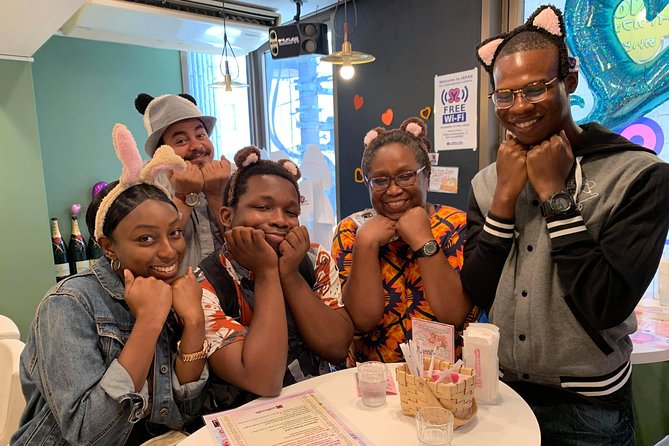
At Maidcafe Maidreamin Akihabara idol-dori Store, you spend around 30 minutes. The entrance fee and one drink are included, and the visit includes a cute sweet ice cream and a cosplay-style show.
Maid cafés are built around performance, playful service, and a very specific idea of cuteness. For newcomers, a guide can make the experience less awkward by explaining what is happening and how the café works. You are not simply sitting down for an ordinary coffee. The atmosphere is part restaurant, part stage show, and part character performance.
The included drink helps with value, though you should not expect a full meal here. The ice cream and show are the main points. If you enjoy Japanese pop culture and do not mind a highly theatrical setting, this should be one of the more memorable stops.
If you prefer quiet cafés or dislike audience participation, this part may feel uncomfortable. The tour is aimed at anime and pop culture fans, so the playful style is central rather than incidental. Your guide can help you understand the customs, but cannot change the nature of the café.
Animate Akihabara: a quick pass through anime culture
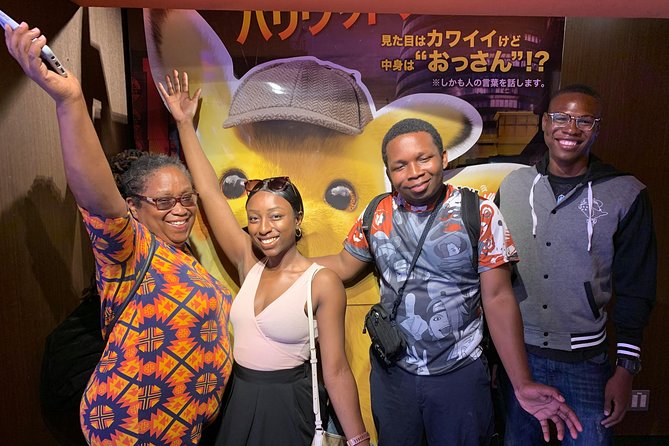
Animate Akihabara is scheduled for about 30 minutes. The store sits in one of the world’s best-known anime districts and represents the mainstream side of Japanese pop culture shopping.
This stop is good for browsing merchandise and seeing how broad the anime market is. You may find manga, character goods, apparel, and other products connected to current series. The guide can help you understand what you are looking at and point you toward sections that match your interests.
Again, the time is short. Animate can reward a long visit, especially if you are searching for a particular title or character. On this tour, you get an introduction rather than the freedom to inspect every floor at leisure.
I would use this stop to mark down products and return later if you want to buy. That is one of the practical benefits of a guided first look. You learn where things are, then decide if a second visit fits your schedule.
A few more Tokyo tours and experiences worth a look



GiGO Akihabara: games, photo booths, and UFO catchers
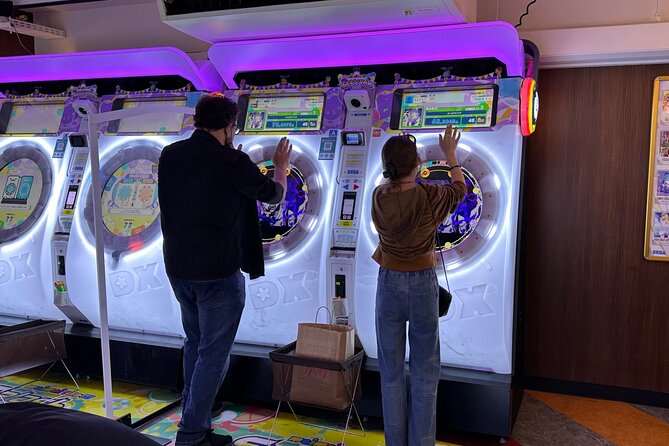
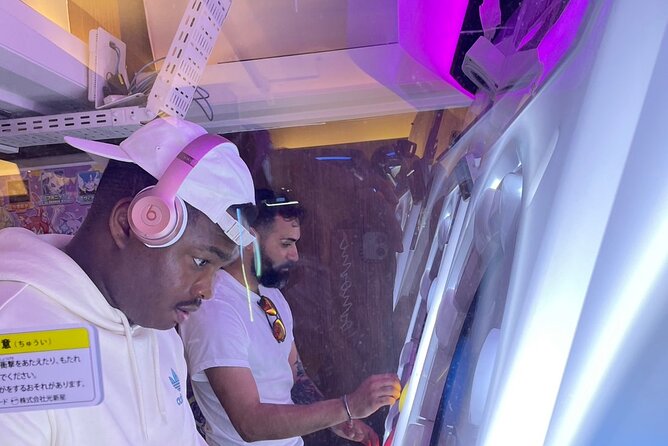
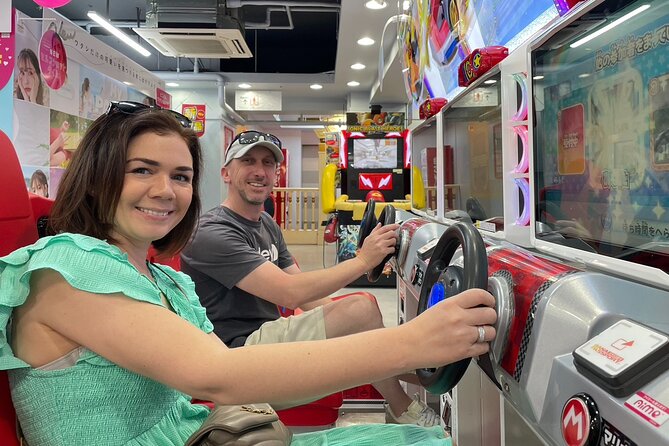
The GiGO Akihabara building, formerly known as Sega Akihabara Building 3, receives about 45 minutes. It includes UFO catchers, video games, sticker photo machines, and music games.
This is the longest single entertainment stop on the route, and that makes sense. Unlike a shop, a game center is more fun when you have time to try something. You can watch the machines, play, or take photos, although the supplied tour details do not state that game credits are included.
Ask your guide which machines are worth trying before you spend money. UFO catchers can eat through coins quickly, and a little advice may help you avoid wasting your entire budget on one prize. The same applies to music games and photo machines, where the fun is often in trying something new rather than winning.
This stop suits mixed groups well. One person can play while another watches, and you do not need detailed anime knowledge to enjoy the arcade. It is also a welcome change from shopping, especially for children and adults who would rather interact with the neighborhood than look at shelves.
Kanda River: a photo break between bright streets

The route includes about 30 minutes by the Kanda River. You will see part of one of Tokyo’s longer rivers and have time for photos.
This is not presented as a major sightseeing cruise or a long riverside walk. Think of it as a visual break. The river gives you a different view of Tokyo and lets you step away from the concentrated commercial energy of Akihabara.
The value depends on your expectations. If you want famous landmarks or a long scenic stroll, this stop may feel modest. If you enjoy small changes of scenery and taking pictures, it helps the four-hour route breathe.
Since the tour requires good weather, outdoor portions such as this one may be affected by rain. If poor weather cancels the activity, you are offered another date or a full refund.
HoneyHoney: a second maid café with a different feel

HoneyHoney Akihabara lasts about 45 minutes and is described as a recommended choice among the area’s many maid cafés. It is less well known than some of the larger names, which may make it feel more personal, though the exact entertainment program is not specified.
Having two maid café visits gives you a chance to compare different styles. Maid cafés are not all identical, and the guide can explain what makes this one different from Maidreamin. The longer visit also leaves more room for food and conversation than the first café stop.
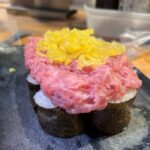
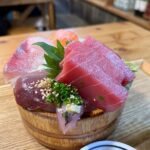
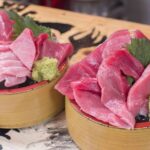
The tour includes food at this stage as part of its wider plan, but the exact dishes are not listed. You are promised lunch, soft drinks, snacks, one lunch drink, and visits to three restaurants tailored to your taste. Ask the guide about the day’s food choices if you have strong preferences.
Alcohol is not included, though it is available to buy. That is worth remembering if you are calculating the final cost.
Super Potato: a nostalgic finish for game fans
Super Potato is the final listed stop, with about 30 minutes for browsing and playing classic games. This is the place for retro gaming and older consoles, with the chance to buy games that bring back childhood memories.
The store adds an important layer to Akihabara. The district is not only about current anime releases and new arcade machines. Older games, used items, and nostalgia are part of its appeal. You might find a title you remember, or discover how much Japanese game culture differs from what you know at home.
Thirty minutes is enough for a taste, but serious collectors will want more time. Prices and stock can change, and the tour does not promise that a specific game will be available. Use the guide for context, then return later if you want to browse carefully.
Ending here makes sense. After the bright modern arcades and current anime stores, you finish with older games and a slower kind of excitement.
Food, drinks, and the real value of the $177.36 price
At $177.36 per person, this is not a cheap way to walk around Akihabara. You are paying for a four-hour guided route, admission to a maid café, one drink there, lunch, soft drinks, snacks, and food stops tailored to your taste.
The price makes the most sense if you value structure and explanation. A first-time visitor can easily spend hours wandering between stores without knowing what is worth entering. A guide also gives you a cultural bridge at the shrine and maid cafés, two places where context improves the visit.
The value is weaker if you already know Akihabara well or mainly want uninterrupted shopping time. You could spend four hours exploring the stores yourself and keep the money for figures, games, or meals. The tour’s schedule also limits how long you can stay at any one shop.
Food is a useful part of the package, but the details are broad rather than specific. You are promised lunch, snacks, drinks, and three restaurants matched to your taste, yet the exact restaurants and menu are not stated. If you have dietary needs, ask before booking so you know how the tailoring works.
Timing, meeting point, and who will enjoy it
The tour starts at 11:00 am at Akihabara Station, at 1 Chome Sotokanda, Chiyoda City, Tokyo 101-0028. It ends back at the meeting point, which is convenient if you plan to continue shopping in the area afterward.
The mobile ticket is practical, and confirmation is provided when you book. The route is near public transportation, but hotel pickup, hotel drop-off, and private transportation between attractions are not included.
Most people can take part, but you should be ready for four hours of walking, standing, shopping, and moving between stops. The tour is advertised as free for kids, but the supplied details do not state the qualifying age or how the child policy applies, so confirm that point before paying.
The best match is:
- First-time visitors to Akihabara
- Anime and manga fans who want help choosing shops
- Families looking for a planned introduction
- People curious about maid cafés but unsure how they work
- Retro game fans who want Super Potato included
- Visitors who enjoy food as part of a walking tour
It is less suitable for serious collectors who need long shopping sessions, or for anyone who dislikes theatrical cafés and a tightly timed schedule.
Should you book this Akihabara tour?
Book it if you want a guided introduction that mixes anime shopping, food, arcade games, shrine customs, and maid café culture in one half-day. The small group, included food, and friendly guides such as Chisato, Shoko, and Marin add real value for a first visit, especially if you want clear explanations rather than a solo wander.
Skip it if your main goal is to shop at your own pace. At $177.36, the tour needs to save you time and add cultural insight to justify the cost. It does that best for newcomers and families. Before booking, confirm the child age policy, the final group-size limit, and the day’s restaurant choices.
FAQ
How long is the Akihabara anime and food tour?
The experience lasts approximately four hours and starts at 11:00 am.
Where does the tour begin and end?
It begins at Akihabara Station at 1 Chome Sotokanda, Chiyoda City, Tokyo 101-0028, Japan. It ends back at the meeting point.
What food and drinks are included?
Lunch, soft drinks, snacks, one lunch drink, and one drink at a maid café are included. The tour also includes food at three restaurants tailored to your taste. Alcoholic drinks are not included, but you can buy them separately.
Is the maid café admission included?
Yes. The entrance fee and one drink at a maid café are included. The Maidreamin visit also includes a sweet ice cream and a cosplay-style show.
How large is the tour group?
The practical information gives a maximum of 8 travelers, while another description gives a maximum of 10. Confirm the final group size when booking.
Can I cancel for a full refund?
Yes. You can cancel at least 24 hours before the local start time for a full refund. Changes or cancellations made less than 24 hours before the start time are not accepted for a refund. If poor weather cancels the activity, you are offered another date or a full refund.
More Food Experiences in Tokyo


More Tokyo Food Tours in Tokyo
More Akihabara & Anime Tours in Tokyo


More tours in Tokyo we've reviewed





Tokyo Food Tours, compared.
 ★ 5.0Tokyo: Shinjuku Food Tour (13 Dishes at 4 Local Eateries)From $86
 ★ 4.9Tokyo: Shinjuku Food Tour (15 Dishes and 4 Eateries)From $853 hours
 ★ 5.0Best of Shinjuku: Izakaya Food Tour (4 Stops, 14+ Tastings)From $92
 ★ 5.0Tokyo Night Foodie Tour in Shinjuku – Seasonal Sushi, Wagyu BeefFrom $111
 ★ 5.0Eat and Drink Like a Local: Tokyo Ueno Food Tour-Taverns&RamenFrom $95
 ★ 5.0Tokyo: Shibuya Food Tour (13 dishes and 4 Eateries)From $77