
Reviewed · SHIBUYA TOURS
Shibuya: Ramen Dojo Tokyo | Make All 3 (Tonkotsu/Shoyu/Miso)
The clever part of this Ramen Dojo Tokyo class is the three-bowl finish: you make one batch of noodles, then taste tonkotsu, shoyu, and miso side by side. You also handle the dough, use a professional noodle machine, prepare chicken chashu, and adjust the soup to your liking.
I like the hands-on noodle making, which gives you a real skill to take home rather than just a cooking demonstration. I also like the small groups, with no more than eight people, and the clear English instruction from teachers such as Kazuki and Kensei. The main drawback is that the broths are prepared in advance, since proper ramen stock takes far longer than 90 minutes.
In This Review
- Key points
- Three ramen bowls make this more than a cooking demonstration
- Finding the studio from Shibuya Station
- The first 10 minutes set up the ramen lesson
- Preparing chicken chashu in five minutes
- Kneading and cutting the fresh noodles
- Finishing the chicken and preparing three soup bases
- Plating the Instagram-worthy ramen trio
- Tasting takes 30 minutes, so go easy before class
- Is $64 good value for a 90-minute class?
- Who will enjoy this ramen class most?
- Small details that make the experience run well
- Should you book Ramen Dojo Tokyo?
- FAQ
- How long does the Ramen Dojo Tokyo class last?
- What types of ramen will I make?
- Are the ramen broths made from scratch during class?
- Is the class taught in English?
- Is the activity suitable for children?
- Can the class accommodate vegetarian or vegan diets?
Key points
- Three ramen styles in one sitting: Compare tonkotsu, shoyu, and miso in three filling mini bowls.
- Fresh noodles from scratch: Knead, roll, and cut your dough with professional kitchen equipment.
- A practical home-cooking lesson: The method is designed to be repeated without special equipment at home.
- English-led and beginner-friendly: Instructors explain each step clearly and keep the class moving.
- Small-group setting: With a maximum of eight participants, it is easy to ask questions and get involved.
- Convenient Shibuya timing: The class lasts 90 minutes and starts and ends at the same studio.
Three ramen bowls make this more than a cooking demonstration
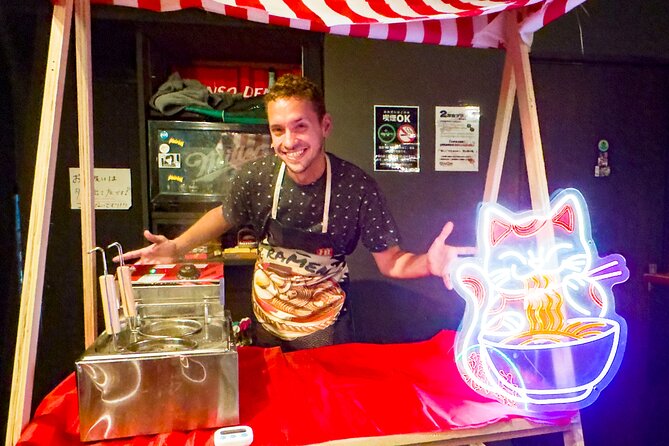
Ramen Dojo Tokyo gives you a compact lesson in one of Japan’s most familiar comfort foods. The goal is not to turn you into a professional ramen chef in an afternoon. It is to show you the parts you can realistically make at home, then let you compare three major styles in one sitting.
That format works well. A single ramen class can leave you wondering how much of the meal you actually made. Here, you knead and cut the noodles, prepare the chicken chashu, adjust the soup, and plate the finished bowls. The long-cooked broth is already prepared, but that is a sensible trade-off for a 90-minute activity.
The result is three small bowls rather than one large serving. Do not mistake mini for insubstantial. Several people found the full tasting surprisingly filling, so I would avoid eating a large meal just before class.
A few more Tokyo tours and experiences worth a look



Finding the studio from Shibuya Station

The studio is about a 10-minute walk from Shibuya Station, at 1F, 2-16-29 Ohashi, Meguro-ku, Tokyo 153-0044. The activity begins and ends there, with no hotel pick-up or drop-off.
That makes the class easy to fit into a Tokyo day. You can schedule it around a morning in Shibuya, then continue sightseeing afterward without crossing the city. It also works as a lunch or early dinner plan, since the three bowls form a substantial meal.
Pay attention to the arrival rule. Doors open 10 minutes before the start, and there is no waiting area or early entry. Arrive five to 10 minutes before class, not much earlier. A late arrival of five minutes or more may mean joining in progress or being refused without a refund, because the kitchen work involves safety and timing.
The studio has stairs only. If stairs are difficult for you, this is not the right choice.
The first 10 minutes set up the ramen lesson
The class opens with check-in and a short briefing. Your English-speaking instructor explains the plan, the ingredients, and the basic differences between the three ramen styles.
The instructors change by session, but Kazuki and Kensei receive especially warm praise for their clear, friendly teaching. Other named instructors include Kai, Arata, Kensei, Rin-san, Ivy, Rick, Atari, and Onodera. The common thread is an attentive teaching style, with step-by-step directions rather than a fast demonstration you simply watch.
This opening matters for beginners. Ramen can look simple in a bowl, but the dough, boiling time, soup strength, and toppings all affect the final result. A good briefing helps you understand what you are doing before flour and hot water enter the picture.
The class is limited to eight participants. That is large enough to give the room some energy, but small enough for the instructor to check your technique and answer questions. If your session happens to have only two people, you may get even more time for questions, though the exact group size depends on bookings.
Preparing chicken chashu in five minutes
The chicken chashu preparation is brief, but it gives you another useful part of the meal to handle yourself. You work with the chicken, learn how it fits into the bowl, and return to finish it later in the session.
This is a good example of the class’s practical balance. You do not spend the whole 90 minutes on tasks that would be hard to repeat at home. Instead, the instructor gives you a manageable preparation job while the other components are organized around it.
The ingredient list includes chicken, pork, egg, wheat, and soy. The class cannot guarantee protection from cross-contamination. If you have severe allergies to wheat, gluten, egg, or soy, celiac disease, or a strong sensitivity to airborne flour, you should not book this activity.
No-chicken, no-pork, vegetarian, and vegan adjustments may be possible if you ask in advance. They are not guaranteed, and strict dietary requirements may not be suitable here. Drinks and alcoholic beverages are not included.
Kneading and cutting the fresh noodles
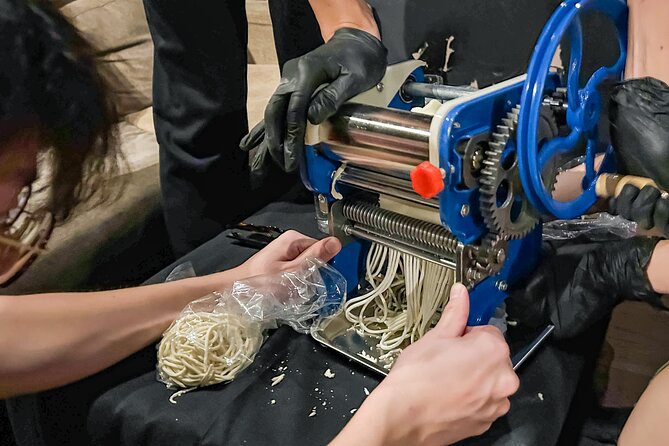
The noodle section is the heart of the class and takes about 20 minutes. You knead the dough, roll it, and cut it into noodles using professional equipment.
This is the point where the activity feels most different from a normal ramen meal. You can see how a basic dough becomes the strands that carry the soup. The machine gives you a consistent result, but the instructor still guides your hand position and technique.
One useful detail for home cooks is that the method does not depend entirely on electronic equipment. The instruction includes hand techniques, and the approach can be repeated back home without a professional noodle machine. You will not recreate every studio step with identical speed, but you leave with a workable process rather than a recipe that requires a restaurant kitchen.
Expect some flour on your clothing. Aprons are provided, but flour can still reach your clothes during kneading and rolling. Wear something casual and avoid your most precious dark outfit if you want stress-free photographs.
The class is recommended for ages six and up. Children who enjoy hands-on food preparation should find the noodle work engaging, though an adult still needs to pay attention to staff instructions and kitchen safety.




Finishing the chicken and preparing three soup bases
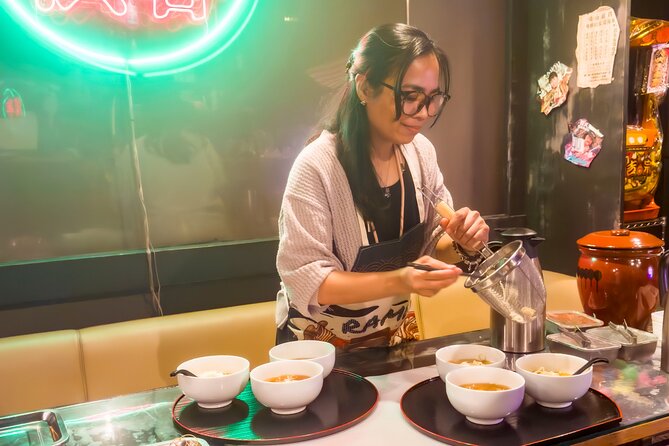
After the noodle work, you spend about 10 minutes finishing the chicken chashu. The schedule then moves into boiling the noodles and preparing the soups, which takes another 10 minutes.
The broth bases are made ahead of time. That is important to understand before booking. You are not spending hours simmering pork bones or building a complex stock from raw ingredients. Instead, you learn how the finished bases are adjusted and matched with noodles and toppings.
That approach lets you focus on taste. Tonkotsu is the creamy pork-bone style, shoyu is soy-sauce based, and miso brings a stronger, fermented flavor. The exact balance can be adjusted to your preferred strength, so you can make the bowl lighter or more assertive.
Tasting all three in one class gives you a useful comparison. At a ramen shop, you might order only one style and leave with a single impression. Here, you can compare the color, smell, saltiness, and weight of each soup in the same setting.
The experience is also suitable for people who already eat plenty of ramen but want to understand the differences. It stays easy enough for a first-time cook, yet the three-style format gives the session more substance than a basic noodle-making lesson.
Plating the Instagram-worthy ramen trio
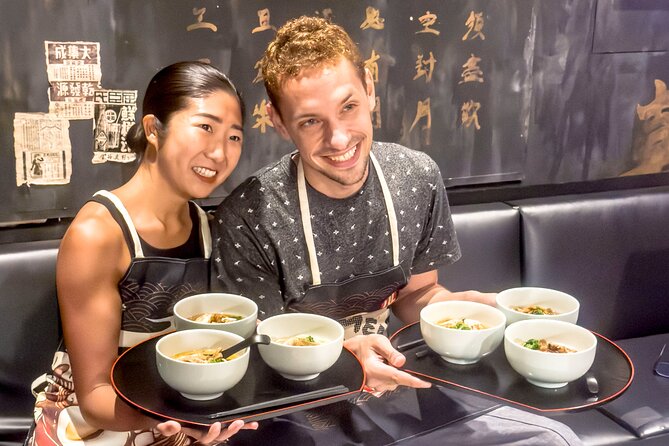
Plating takes about five minutes, but it is where the separate tasks come together. You divide the noodles among three bowls, add the different soup bases, place the chicken chashu and toppings, then adjust the final presentation.
This is the most photo-friendly moment. Photography is welcome, and the finished trio gives you a natural before-you-eat picture. You may also be asked to use the class hashtag, #RamenDojoTokyo, if you post your food.
The photos are fun, but the practical value is in learning proportion. Too much noodle can overwhelm the soup. Too many toppings can hide the bowl. Making three versions helps you see how small changes affect both appearance and taste.
Because the portions are served as three mini bowls, couples and friends can compare their work as they eat. It is a social activity without requiring anyone to perform for the group. The teacher keeps the process moving, and the atmosphere is described as relaxed, friendly, and sometimes humorous.
Tasting takes 30 minutes, so go easy before class
The final 30 minutes are set aside for tasting and photographs. You sit down with your three bowls and try them side by side.
I would book this as a meal, not as a quick snack. The three portions can add up, and eating too close to the workshop may leave you too full to enjoy the result. That is an easy mistake to avoid: have a light breakfast or lunch, then arrive ready to eat.
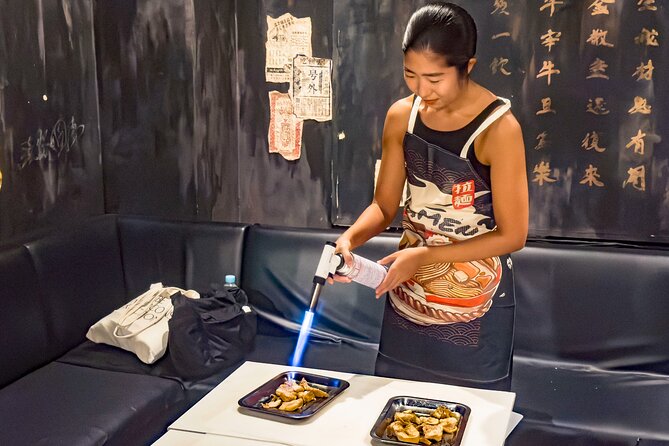
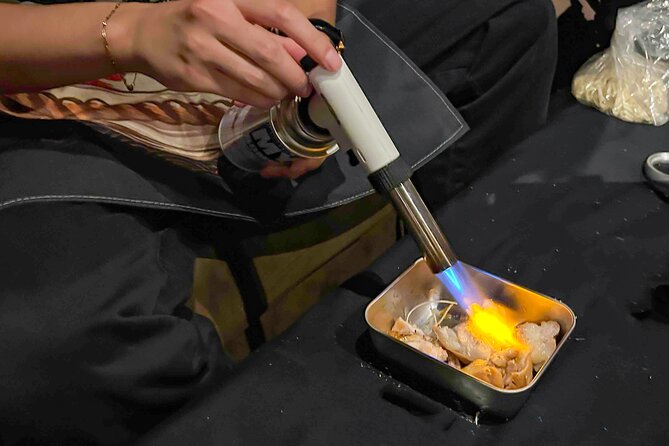
The tasting also gives the instructor time to explain the different broths and answer questions. Some sessions include a blowtorch step for finishing the meat, handled with instructor guidance. You should follow staff directions closely around heat, boiling water, and kitchen equipment.
The food itself is central to the value. You are not paying $64 simply to roll dough for a few minutes. You receive the ingredients, equipment, instruction, three finished ramen bowls, an apron loan, and a digital recipe after class. The recipe gives the experience a useful afterlife, especially if you want to try the method in Australia, the United States, or elsewhere after returning home.
Is $64 good value for a 90-minute class?
At $64 per person, the class costs more than a casual bowl of ramen in Tokyo. That comparison is not quite fair, since the price includes instruction, kitchen use, ingredients, a full tasting, and a recipe.
The better comparison is with other food activities. You get a cooking lesson and a meal in one booking, with three styles instead of one. For a visitor who values participation and wants something more memorable than another restaurant stop, that is a reasonable price.
The value is strongest if you will use the recipe later. The class shows you a home-friendly noodle process and explains the parts that are already prepared for time reasons. If you want a fully from-scratch broth lesson, this will feel limited. If you want a practical introduction that fits into a travel day, the format makes sense.
The 90-minute length is another advantage. Tokyo has plenty to fill a day, and this class does not consume a half-day or require travel to a distant area. You can finish, eat, and return to Shibuya sightseeing with time left.
Who will enjoy this ramen class most?
I would recommend Ramen Dojo Tokyo for:
- First-time cooks who want clear, guided instruction.
- Couples looking for a shared food activity.
- Families with children age six and older who can follow kitchen rules.
- Ramen fans who want to compare tonkotsu, shoyu, and miso.
- Visitors who prefer a small group over a large demonstration.
- Anyone who wants a useful recipe rather than a one-off souvenir.
It is less suitable if you want to create the broth entirely from raw ingredients. The stocks are prepared in advance, and the lesson concentrates on noodles, chicken chashu, soup adjustment, and plating.
It also is not a good fit for severe wheat, egg, or soy allergies, celiac disease, strong airborne flour sensitivity, strict vegan or religious dietary rules, or anyone unable to use stairs. Ask about dietary changes before booking, not after you arrive.
Small details that make the experience run well
The class is conducted in English, with Japanese also available. Clear demonstrations and patient explanations make it approachable even if you have never kneaded dough or handled fresh noodles.
Bring curiosity and arrive on time. The studio has no early waiting area, and late arrival can disrupt the class or lead to refusal. Contact the provider before the start time if you are delayed. The class-day contacts are Instagram @ramendojo_japan and [email protected].
Aprons are supplied, but flour is part of the fun and may land on your clothes. Wear comfortable clothing, follow hygiene and safety instructions, and keep the photography focused around the moments when it will not interrupt the cooking.
You can cancel for a full refund up to 24 hours before the activity. A reserve-now, pay-later option is also available, which helps if your Tokyo schedule is still changing.
Should you book Ramen Dojo Tokyo?
Book it if you want to eat ramen and understand how the meal comes together. The strongest parts are the fresh noodle work, the three-bowl comparison, the friendly English instruction, and the recipe you can use later.
Skip it if you expect a long broth-making apprenticeship or need strict control over ingredients. For most visitors, though, the class offers a well-sized slice of Japanese food culture, a filling meal, and a skill you can try again at home, all within 90 minutes near Shibuya.
FAQ
How long does the Ramen Dojo Tokyo class last?
The class lasts 90 minutes. The schedule includes briefing, chicken preparation, noodle making, noodle boiling, soup preparation, plating, tasting, and photo time.
What types of ramen will I make?
You will prepare and taste three styles: tonkotsu, shoyu, and miso. They are served as three mini bowls so you can compare the different soup bases.
Are the ramen broths made from scratch during class?
No. The broths are prepared in advance because long-cooked ramen stock takes more time than the 90-minute session. You adjust the soup strength and combine the bases with your fresh noodles and toppings.
Is the class taught in English?
Yes. The class is conducted in English, and Japanese is also available. The group size is limited to eight participants.
Is the activity suitable for children?
The class is recommended for children ages six and older. All participants must follow the staff’s hygiene and safety instructions.
Can the class accommodate vegetarian or vegan diets?
Partial accommodation may be possible for no chicken or pork, vegetarian, and vegan requests if you ask in advance. The activity cannot guarantee strict dietary compliance or prevent cross-contamination, and it uses wheat, egg, soy, chicken, and pork.
More Shibuya Tours in Tokyo


More tours in Tokyo we've reviewed











Shibuya Tours, compared.
 ★ 5.0Official Street Go-Kart in ShibuyaFrom $76
 ★ 4.9Tokyo: Street Kart Experience in ShibuyaFrom $741 hour
 ★ 5.0Shibuya Meltdown Nightlife Tour: All-You-Can-Drink Bar HoppingFrom $106
 ★ 5.0Shibuya Official Street Go-Kart in Shibuya AnnexFrom $69
 ★ 5.0Tokyo: Shibuya Food Tour (13 dishes and 4 Eateries)From $77
 ★ 5.0Best of Shibuya Food TourFrom $217