
Reviewed · SHINJUKU TOURS
Private Zen Meditation in English in Shinjuku, Tokyo
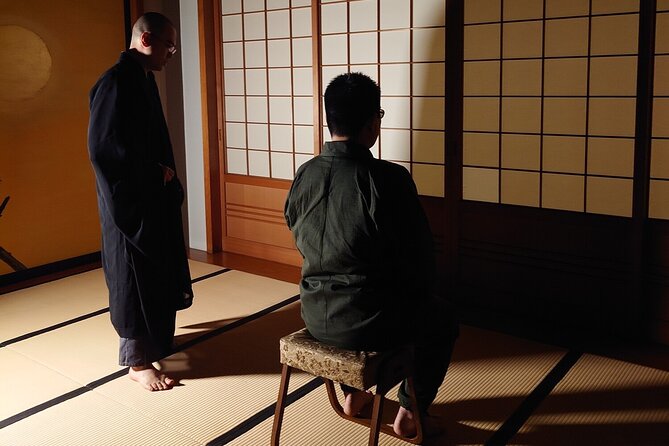
At Denchuji Temple, you learn Zen meditation from a monk rather than simply sitting in a quiet room with an audio guide. The roughly 90-minute session explains the three basics of Zazen: posture, breathing, and the mind. It is designed for beginners, families, and anyone curious about the connection between Zen and the samurai spirit.
I like the private format, since you can ask direct questions without feeling self-conscious. I also like the English instruction and the option for chair Zazen, which makes the experience more practical for children and anyone who cannot sit cross-legged. The main drawback is the price: at $169.08 per person, it is a costly hour and a half unless personal attention and cultural context matter to you.
In This Review
- Key points to know before booking
- Why Denchuji Temple gives the session more meaning
- What happens during the 90-minute Zazen experience
- The private format is the real advantage
- Learning the samurai connection without turning Zen into a show
- Sitting position, chair Zazen, and family practicality
- English instruction and the local guide team
- How the $169.08 price measures up
- Timing, meeting point, and planning advice
- Who will get the most from this experience
- Should you book the Denchuji Temple Zazen session?
- FAQ
- How long does the Zen meditation experience last?
- Where does the experience begin?
- What time does the session start?
- Is the Zazen instruction provided in English?
- Can I practice Zazen in a chair?
- Is this a private activity?
- Are other languages available?
- Is the experience refundable if I cancel?
Key points to know before booking
- Historic Denchuji Temple: This Soto Zen temple dates to 1628 and has been linked with Zazen practice since 1640.
- English instruction by a monk: You receive direct guidance instead of trying to follow a silent meditation session on your own.
- Three simple foundations: The session focuses on adjusting your posture, regulating your breathing, and settling your mind.
- Private group setting: Only your party participates, making it easier to ask questions and discuss the practice.
- Chair Zazen available: Request a chair in advance if you have physical limitations or are bringing children.
- Late-afternoon timing: The meeting time is 5:30 pm, with the starting point near Edogawabashi Station in Bunkyo City.
Why Denchuji Temple gives the session more meaning
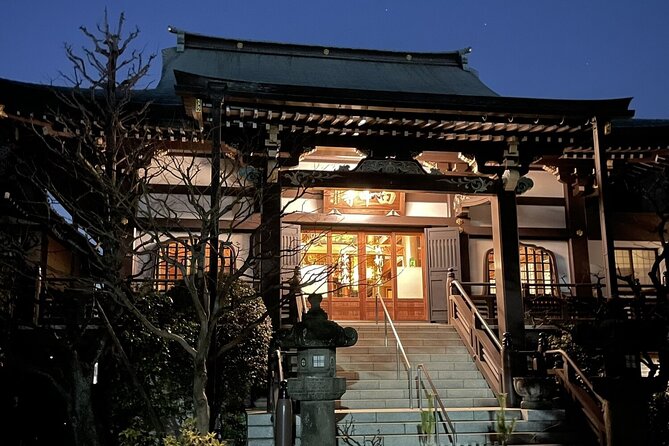
A meditation class can take place almost anywhere. Here, the setting adds a useful layer of context. Denchuji Temple was established in 1628, during the early Edo period, and its name appeared on maps from that time. It was named by Tokugawa Iemitsu, the third shogun of the Tokugawa government.
The temple has been associated with Zazen since 1640. That does not turn the session into a museum visit, but it helps explain why this is more than a general relaxation class. You are practicing in a place with a long connection to Soto Zen.
Denchuji also has a link with Eiheiji Temple in Fukui Prefecture, one of the Soto school’s head temples. The former head priest of Denchuji, Zen Master Hata Egyoku, later served as the 76th chief priest at Eiheiji. For you, the practical value is simple: the meditation is connected to a recognized Soto Zen tradition rather than being presented as a vague wellness exercise.
A few more Tokyo tours and experiences worth a look


What happens during the 90-minute Zazen experience
The session begins at 5:30 pm. The listed meeting point is at 1-chome-19-6 Sekiguchi, near Edogawabashi Station in Bunkyo City. Pickup is offered, but you should confirm the exact arrangement when booking because the published starting point is the temple-area meeting location.
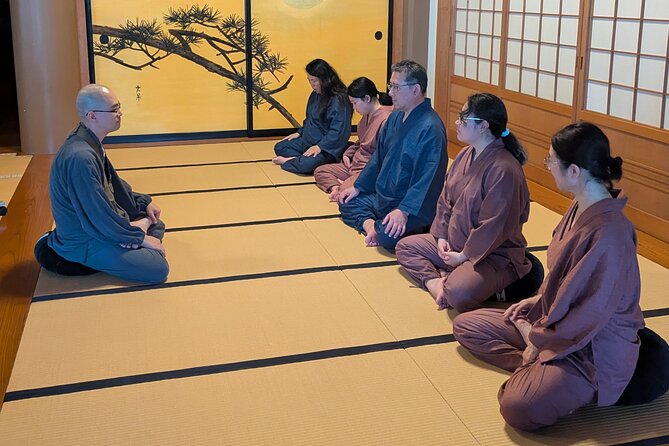
Once the session begins, the monk provides instruction in English. That matters even if you have tried meditation before. Zazen is often presented as something you simply do in silence, but beginners usually have questions about how to sit, where to place their attention, and what to do when the mind wanders.
The teaching is built around three parts:
- Adjusting your posture
- Regulating your breathing
- Adjusting your mind
This simple structure is one of the best features of the experience. You do not need to arrive knowing Buddhist terms or meditation methods. The aim is to understand the basic mechanics first, then practice without feeling that you must perform perfectly.
The session also uses a visual explanation to make the central ideas easier to follow. That can be especially useful for families and first-time participants, since abstract ideas about Zen are easier to understand when they are shown clearly.
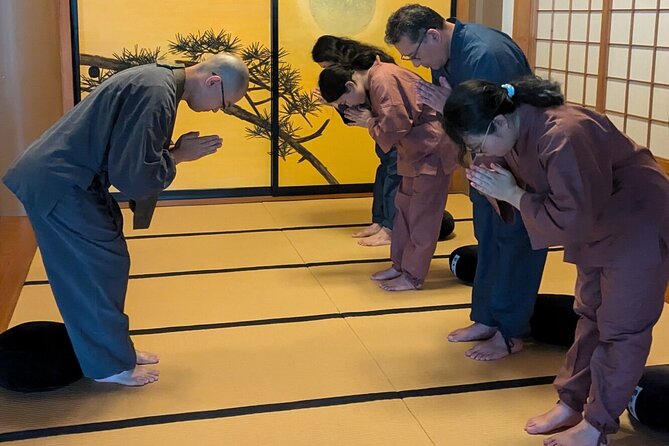
You should not expect a long sightseeing itinerary. This is a focused experience in one temple, with instruction, meditation, and discussion rather than multiple stops. Its value comes from attention and setting, not from the number of activities packed into the schedule.
The private format is the real advantage
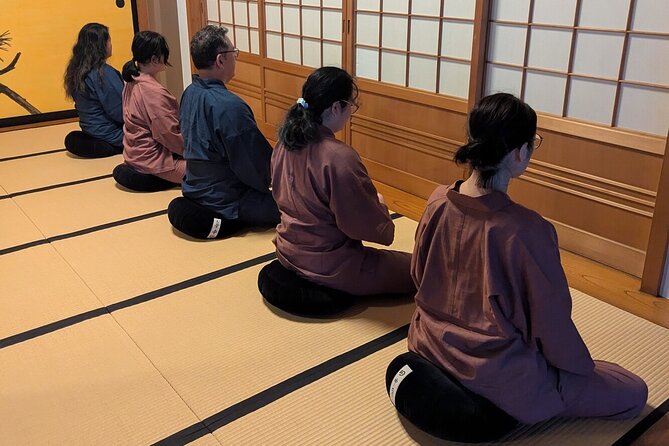
The group size is private, meaning only your party takes part. That changes the tone of the session. If you are unsure about your posture, nervous about meditation, or simply curious about the monk’s explanation, you can ask questions without speaking in front of strangers.
I find this especially useful for families. Children may need more explanation or a different sitting position, and a private group gives the guide room to respond. It also helps couples and small groups who want a quiet cultural activity without joining a large class.
The private setting does not guarantee that every part of the session will match your personal interests. The core subject remains Zazen, and the experience lasts about an hour and a half. Still, private instruction makes that time feel more personal than a standard temple visit.
Past feedback places strong emphasis on the peaceful mood, the direct teaching, and the kindness of the guiding team. One account also describes a discussion of Shintoism, Kannushi-led meditation, and the relationship between Shinto beliefs and Buddhism. These subjects may be included as cultural discussion rather than as a separate sightseeing stop, so you should book this for Zen instruction first, with broader spiritual conversation as a possible added benefit.
Learning the samurai connection without turning Zen into a show
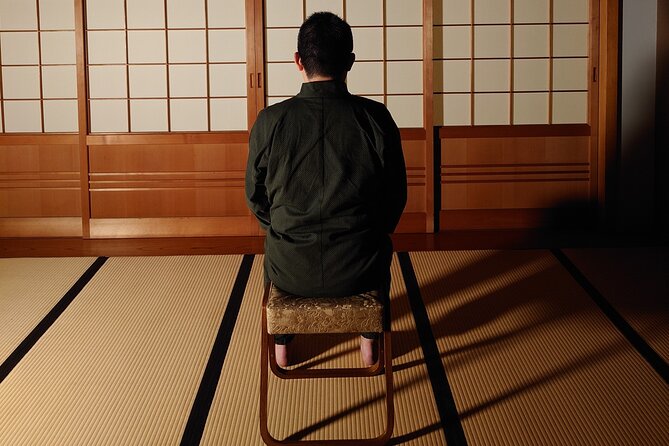
The experience presents Zen as part of the samurai spirit. That theme can help you understand why meditation is often linked with discipline, focus, and controlled action in Japanese history.
You should keep your expectations grounded. This is not a samurai demonstration, martial arts lesson, or historical performance. There is no indication of weapons, costumes, or a staged presentation. Instead, the connection comes through the ideas behind the practice: posture, breathing, concentration, and composure.
That approach is a good fit if you want cultural background alongside meditation. It is less suitable if you are hoping for a broad lesson in samurai history or a detailed tour of Edo-period Tokyo.
Sitting position, chair Zazen, and family practicality
Traditional meditation can be physically demanding. Sitting cross-legged or in a formal posture is not comfortable for everyone, especially after a full day of sightseeing. This experience offers chair Zazen for children and people with physical limitations.
You need to request chair meditation in advance. The option is not just a minor convenience. It means you can focus on breathing and attention instead of worrying about pain or struggling to maintain a position your body cannot manage.
The available information says most people can participate, and service animals are allowed. The experience is near public transportation. It does not provide a detailed list of temple accessibility features, so you should ask about any specific mobility needs before confirming your booking.
For families, I would also clarify how many children are attending and request chair seating early if needed. The private format is helpful, but the temple’s exact room setup and seating arrangements are not specified.
A few more Tokyo tours and experiences worth a look

English instruction and the local guide team
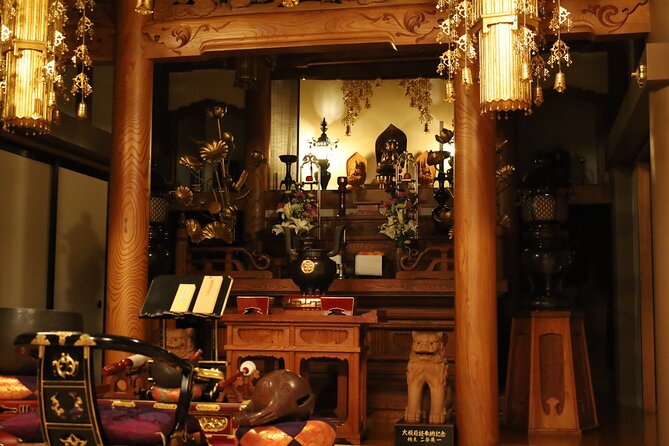
The monk guides the Zazen session in English. That is the central reason to choose this experience over simply visiting a temple and sitting quietly on your own.
A multilingual local guide is also included, with support in English, French, German, and Spanish. The guide helps with planning and communication, while the monk provides the religious instruction. The materials identify Shinya Yamada in the provider’s correspondence, but they do not identify the individual monk or other guides by name.
That distinction is useful when you book. If meeting a particular guide matters to you, ask who will accompany your group. The important point is that the activity is arranged for international visitors, and the session itself is intended to be understandable in English.
The teaching style appears to be gentle rather than strict. The instruction encourages you to relax and enjoy the practice instead of worrying about perfect technique. That is good news for beginners, since meditation can become stressful when people treat every detail as a test.
How the $169.08 price measures up
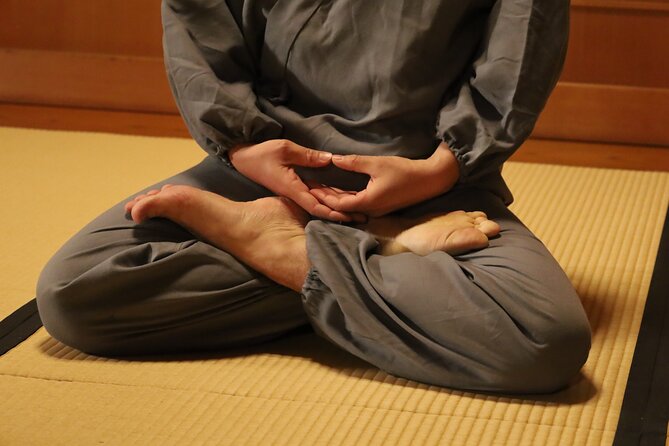
The cost is $169.08 per person. Lunch and dinner are not included, but that is not a serious issue because the activity lasts only about 90 minutes and begins at 5:30 pm.
This is expensive compared with visiting a temple independently or joining a general meditation class. The price makes the most sense for a private party that values direct English instruction, a monk-led session, and the chance to ask questions in a quiet setting.
For one person, the cost may feel hard to justify. For a family or small group, the private format can make the fee more reasonable, particularly if everyone wants the same activity and needs flexible guidance. Group discounts are available, so check the final rate for your party rather than assuming that the listed per-person price is your only option.
I would not book this solely for the temple building. The experience is about guided practice and cultural explanation. If you only want to see Denchuji Temple, a regular visit is likely better value. If you want a structured, English-led introduction to Soto Zen, the higher price pays for access and personal attention.
Timing, meeting point, and planning advice
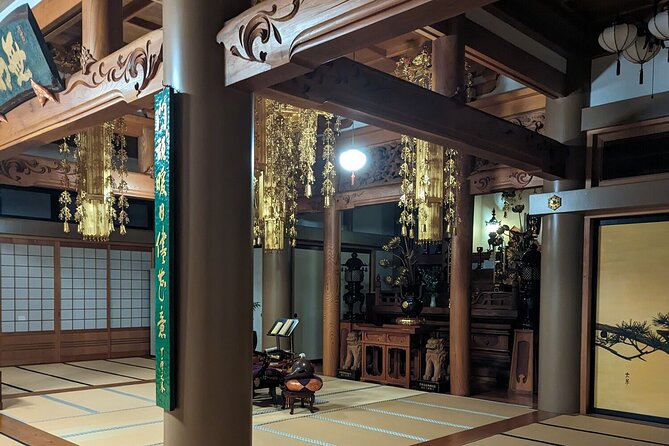
The scheduled start is 5:30 pm, making this easy to place after daytime sightseeing in Tokyo. The meeting point is near Edogawabashi Station, at 1-chome-19-6 Sekiguchi, Bunkyo City, Tokyo 112-0014.
The activity is not in the busiest center of Shinjuku, despite being marketed as a Shinjuku-area experience. Check your route carefully and allow time to reach the meeting point. Pickup is offered, but you should confirm where and when you will be collected.
Confirmation arrives within 48 hours of booking, subject to availability. The activity is private, and the operator may require a minimum number of participants. If that minimum is not met and the experience is canceled, you are offered another date or experience, or a full refund.
The cancellation rule is strict. Once booked, the experience is non-refundable and cannot be changed for any reason. I would wait until your Tokyo schedule is firm before paying, especially since the activity is commonly booked about seven days ahead.
Who will get the most from this experience
This is a strong choice for:
- First-time visitors who want a structured introduction to Zen
- Families seeking a calm cultural activity
- Couples or small groups who prefer private instruction
- People who want to ask questions in English
- Anyone interested in the link between Zen, Japanese spirituality, and the samurai ideal
- Participants who need chair meditation
It may not suit you if you want a long temple tour, a low-cost activity, or a meditation session with no explanation. It is also not the best fit if your schedule is uncertain, because the cancellation terms leave little room for changes.
The strongest elements are the private setting, the monk’s direct English guidance, and the peaceful, personal character of the practice. Those qualities receive the greatest emphasis in the available feedback. The experience is repeatedly described as relaxing, meaningful, and special, with particular appreciation for the monk’s understanding manner and the guides’ friendly support.
Should you book the Denchuji Temple Zazen session?
Book it if you want to understand what you are doing while you meditate. The session gives you a historic Soto Zen setting, English instruction, a private group, and a practical chair option that many temple activities do not offer.
Skip it if you are mainly searching for a cheap way to spend an hour or a traditional sightseeing tour. At $169.08 per person, this is a premium cultural experience. It earns that price through personal attention and access to a monk, not through a long list of sights.
For a family, couple, or small group with a firm Tokyo schedule, I think it is a thoughtful choice. Request chair Zazen in advance if needed, confirm the pickup details, and arrive ready to sit quietly rather than chase a packed itinerary.
FAQ
How long does the Zen meditation experience last?
The experience lasts approximately 1 hour and 30 minutes.
Where does the experience begin?
The listed starting point is 1-chome-19-6 Sekiguchi, Bunkyo City, Tokyo 112-0014, Japan, near Edogawabashi Station.
What time does the session start?
The scheduled start time is 5:30 pm.
Is the Zazen instruction provided in English?
Yes. A monk at Denchuji Temple guides the Zazen experience in English.
Can I practice Zazen in a chair?
Yes. Chair Zazen is available for children and people who cannot sit cross-legged. You should request it in advance.
Is this a private activity?
Yes. Only your group participates in the private tour or activity.
Are other languages available?
A multilingual local guide is available in English, French, German, and Spanish.
Is the experience refundable if I cancel?
No. The experience is non-refundable and cannot be changed for any reason. If the operator cancels because the minimum number of participants is not met, you are offered another date or experience, or a full refund.
More Private Tours in Tokyo


More Temples & Meditation in Tokyo
More Shinjuku Tours in Tokyo

More tours in Tokyo we've reviewed









Shinjuku Tours, compared.
 ★ 5.0Tokyo: Shinjuku Food Tour (13 Dishes at 4 Local Eateries)From $86
 ★ 5.0Tokyo Bar Hopping Tour in Shinjuku (All-You-Can-Drink + Dinner)From $106
 ★ 4.9Tokyo: Shinjuku Food Tour (15 Dishes and 4 Eateries)From $853 hours
 ★ 5.0Best of Shinjuku: Izakaya Food Tour (4 Stops, 14+ Tastings)From $92
 ★ 4.9Tokyo: Shinjuku Local Bar and Izakaya Guided Walking TourFrom $343 hours
 ★ 5.0Tokyo Shinjuku Chopsticks Making ClassFrom $20