
Reviewed · MT FUJI DAY TRIPS
Private tour – Scenic Fuji Escape: Hakone, Peace Park & More
Mount Fuji is the star here, but the real appeal is how many different ways you see it in one day: from Hakone’s volcanic valleys and Lake Ashi to flower-lined Oishi Park and the famous Chureito Pagoda viewpoint. I like the private vehicle and pickup, which spare you the strain of piecing together a long route by train and bus. I also like the mix of nature and culture, with clear spring ponds, a cedar-shaded shrine, and a Buddhist peace park.
The main drawback is the schedule. Nine hours is a lot of ground to cover, and Fuji views depend heavily on weather. You should also note the conflicting timing information: the tour is advertised at about nine hours, while the additional notes call it an eight-hour tour and say extra time costs more.
In This Review
- Key points to know before booking
- Why this private Fuji day is appealing
- Hakone and the first Fuji-country views
- Lake Yamanaka and the spring ponds at Oshino Hakkai
- A quiet forest at Kitaguchi Hongu Fuji Sengen Shrine
- Lake Kawaguchi and Oishi Park
- Mount Fuji 5th Station and the limits of a day trip
- Chureito Pagoda and the famous photo angle
- Peace Park in Gotemba
- Timing, meals, and the true cost
- Who should book this Fuji tour?
- FAQ
- How long does the private Fuji tour last?
- How many people can join the private tour?
- Is pickup from Tokyo included?
- What is included in the price?
- Are meals and entrance fees included?
- Does the tour guarantee a view of Mount Fuji?
- Is the tour physically demanding?
- Should you book it?
Key points to know before booking
- Private transport for up to six people: The $465 group price can be good value when shared by several people, especially with pickup, highway charges, and an English-speaking guide included.
- Nine major sightseeing stops: You visit Hakone, Lake Yamanaka, Oshino Hakkai, two major Fuji-area shrines, Lake Kawaguchi, Oishi Park, the 5th Station, Chureito Pagoda, and Peace Park.
- Guide Puskal receives the strongest praise: He is described as friendly, punctual, helpful with pictures, and good at explaining the places along the way.
- Fuji views are never guaranteed: Clouds and rain can hide the mountain, so the cultural stops matter almost as much as the viewpoints.
- Extra costs are possible: Entrance fees and lunch are not included, and any time beyond the provider’s stated eight-hour limit may cost more.
- A moderate level of fitness helps: Chureito Pagoda requires 398 steps, and several stops involve walking.
Why this private Fuji day is appealing
This is a sightseeing day built around variety. You are not simply driven to one lookout, given ten minutes for a photograph, and sent back to Tokyo. The route brings together Hakone’s hot-spring country, Mount Fuji’s Five Lakes area, traditional religious sites, rural scenery, and two very different panoramic parks.
I especially like the private format. Your group alone takes part, so the day should feel more personal than a large coach excursion. Pickup and drop-off are included, along with private transport and highway charges. That matters on a route covering several distant places, since public transport connections in the Fuji region can take time and may not line up neatly with a packed sightseeing plan.
The group limit is six people. At $465 per group, the cost works out to about $77.50 each for six people, before lunch and entrance charges. For two people, it is a much steeper $232.50 each, so this tour makes the most financial sense for a family or group of friends.
The guide can shape the feel of the day. Puskal is named in the available feedback and receives repeated praise for being friendly, punctual, helpful with photos, and willing to accompany you through the sights. That last point is useful at places such as the shrine grounds and Chureito Pagoda, where a guide can help you understand where to go instead of leaving you at a parking area.
A few more Tokyo tours and experiences worth a look
Hakone and the first Fuji-country views
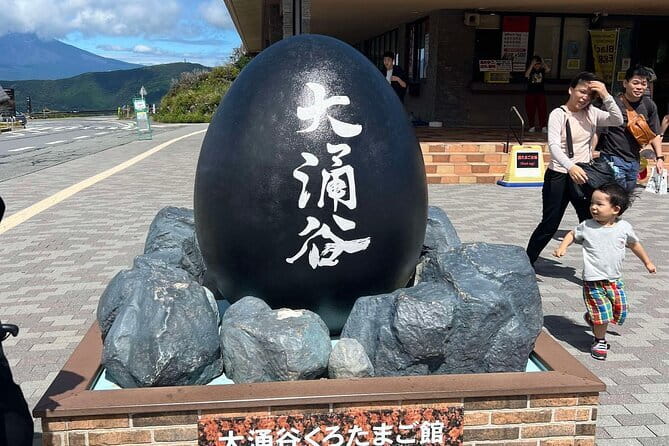
The day begins in Hakone-machi, part of Fuji-Hakone-Izu National Park west of Tokyo. Hakone is known for hot springs, mountain scenery, Lake Ashi, Hakone Shrine, and the sulfurous Owakudani Valley.
The tour description highlights the Hakone Ropeway and volcanic valleys, although the stop details do not promise a separate ropeway ticket or a fixed ride. Ask about the exact plan before departure if riding the ropeway is essential to you. Entrance fees are generally not included, so you should budget for any paid activity.
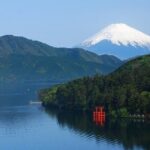
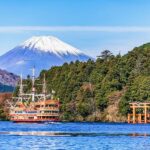
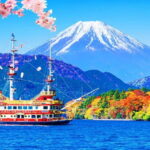
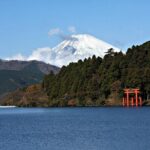
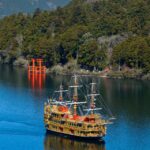
Hakone gives the day a strong opening because it shows Fuji country in a different setting from the Five Lakes. You get steep mountain terrain, volcanic features, and the possibility of seeing the red torii gate associated with Hakone Shrine beside Lake Ashi. The scheduled stop is about one hour, which is enough for a focused visit but not enough for an extensive Hakone circuit.
That short timing is worth keeping in mind. Hakone has enough attractions for a full day by itself, so this tour treats it as one part of a much bigger route. I would not book this outing if you want a slow onsen stay, a long lake cruise, or a detailed visit to every Hakone sight.
The overview also refers to a Lake Kawaguchiko cruise and ramen, but the listed stops do not assign a specific cruise duration or include a boat ticket. Lunch is not included. Consider those details as possible additions rather than guaranteed parts of the fixed schedule, and confirm them with Mogambo Tours before you pay for anything extra.
Lake Yamanaka and the spring ponds at Oshino Hakkai
Lake Yamanaka is one of the Fuji Five Lakes and offers a calmer pause after Hakone. You have about 30 minutes here, enough for a look at the water and a few photographs, but not enough for boating, fishing, or a full walk around the shore.
The lake is described as a place for outdoor activities and quiet views of Mount Fuji. Admission is not included, though simply stopping for the scenery may not require a ticket. As with every Fuji viewpoint, the mountain may be clear, partly hidden, or completely covered depending on the day.
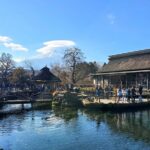
Oshino Hakkai receives a more generous hour. Its eight spring-fed ponds are supplied by snowmelt from Mount Fuji, and the water is known for its clarity. Traditional thatched-roof buildings and a rural setting give the visit a distinctly different feel from the more developed lake parks.
I like this stop because it adds texture to the day. You are not only looking at Fuji from a distance. You are also seeing how the mountain shapes local water sources, village scenery, and older forms of settlement.
Admission is not included here. Allow room in your budget for entrance fees, and remember that the one-hour visit is a compact introduction rather than a slow village walk. The combination of ponds, old-style houses, and Fuji views can be especially rewarding if the summit is hidden, since the site has its own interest beyond the mountain photograph.
A quiet forest at Kitaguchi Hongu Fuji Sengen Shrine
Kitaguchi Hongu Fuji Sengen Shrine is one of the most atmospheric stops on the route. It is one of roughly 1,300 Asama shrines connected with the worship of volcanoes and Mount Fuji, and it forms part of the Mount Fuji UNESCO World Cultural Heritage site designated in 2013.
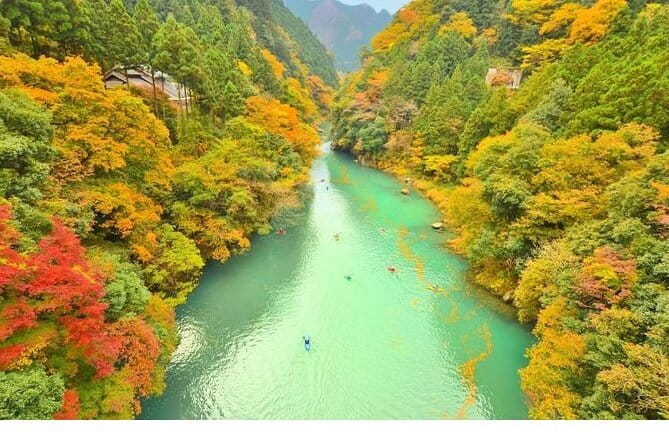
The approach runs through a large old-growth forest. Mossy stone lanterns and tall cedar trees line the route, creating a shaded, solemn setting that feels far removed from the busy photo stops around the lakes.
The shrine grounds cover about 99,000 square meters. Four enormous trees are said to be about 1,000 years old, with trunks measuring around 23 meters in girth. Those details help explain why this is more than a quick religious building stop. The forest itself is central to the visit.
You have about 45 minutes here. That should allow time to walk the approach and see the main grounds, but you may need to keep moving. Admission is not included, and the stop requires walking over shrine paths rather than simply viewing the site from the vehicle.
For me, this is one of the route’s most valuable cultural moments. Fuji tourism can sometimes become a hunt for the perfect photograph. At this shrine, the mountain’s sacred role is easier to understand through trees, ritual space, and the long approach.
Lake Kawaguchi and Oishi Park
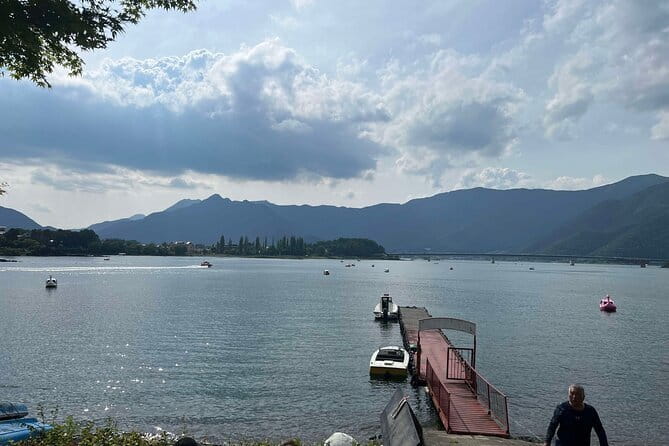
Fujikawaguchiko brings you to Lake Kawaguchi, the lowest and second-largest of the Fuji Five Lakes by surface area. The planned stop is about 45 minutes, giving you time to take in the shore and look for a clear view of Fuji.
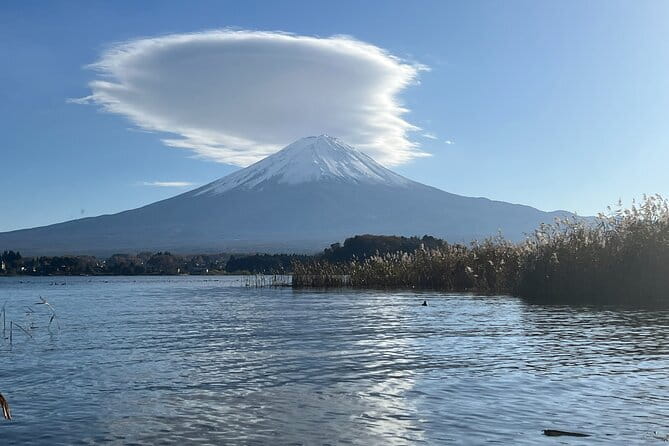
Oishi Park, on the north shore, offers one of the route’s best combinations of lake, flowers, and mountain. Seasonal blooms line the promenade, and the view changes during the year. On a clear day, you can frame the lake and Fuji together with flowers in the foreground.
This is a good place for photographs, but it is also a sensible rest stop. The park has a large free parking area and is used as a break point by people touring the area on bicycles and motorcycles. Your visit is brief, so expect a stroll rather than a long stay among the gardens.
The route lists both Fujikawaguchiko and Oishi Park as separate stops, each lasting about 45 minutes. In practice, they are closely linked geographically, so the value lies in having time to see the lake from more than one point. If flowers are important to you, ask what is normally in bloom during your travel month. The park’s appeal changes with the season.
A few more Tokyo tours and experiences worth a look

Mount Fuji 5th Station and the limits of a day trip
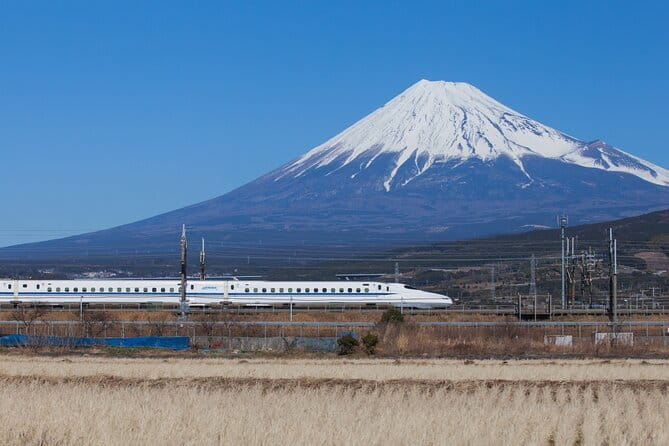
The 5th Station is the highest listed point on the route. Mount Fuji rises to 3,776 meters and has long been a pilgrimage site as well as a popular hiking destination. The 5th Station gives you a chance to experience the mountain at elevation without committing to a summit climb.
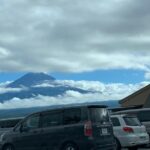
The visit is scheduled for one hour, and admission is not included. The exact conditions at the station can differ from those in the towns below. Cloud cover, rain, or restricted access can affect what you see, so do not treat this stop as a guaranteed summit panorama.
I see the 5th Station as a useful choice for anyone who wants a closer connection with Fuji itself. At the lake parks, the mountain is a distant subject. Here, you are on the lower slopes of the volcano, which gives the mountain a different scale and presence.
Still, this is a packed day. You are unlikely to have time for a serious hike, and the tour is not presented as a climbing trip. If you want to walk high on Fuji, plan a separate outing rather than expecting this private tour to provide it.
Chureito Pagoda and the famous photo angle
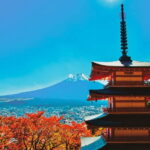
Chureito Pagoda is reached by climbing 398 steps in Arakurayama Sengen Park. The five-story pagoda was added in 1963 as a peace memorial and belongs to the Arakura Fuji Sengen Shrine complex.
This is one of the most recognizable viewpoints in the Fuji area. When the weather is clear, the pagoda and Mount Fuji can appear together in a single frame. That view is a major reason people add this stop to a Fuji day.
The climb is the important practical detail. The tour notes call for moderate physical fitness, and the steps can make this the most demanding part of the route. Take your time, especially after several hours of sightseeing.
The scheduled hour allows for the climb, the viewpoint, and a short look around. Admission is listed as free. Because Fuji views are weather-dependent, the pagoda may still be worth visiting in cloud or rain, but the classic image is not assured.
Puskal’s reported habit of helping with pictures is especially useful here. The site has a clear visual goal, and a guide who comes along can help you find the right area and avoid wasting time after the climb.
Peace Park in Gotemba
The final stop is Fuji Bussharito Heiwa Park, also called Peace Park, in Gotemba. It sits on the mountainside along the outer rim of the Hakone crater and looks toward Mount Fuji and the city.
The park’s white stupa is its main landmark. It holds Buddha’s ashes presented by former Indian Prime Minister Jawaharlal Nehru, and four golden Buddha images are also housed there. Guardian dogs representing different Asian countries line up near the stupa.
A circuit-style Japanese garden adds another reason to walk beyond the main viewpoint. The stop lasts about 45 minutes and admission is free. Like Chureito Pagoda and Oishi Park, it gives you another chance at a Fuji view, but with a Buddhist setting rather than a lakeside or shrine setting.
This is a fitting final stop because it combines scenery with a message of peace. It also gives the day one more kind of cultural setting, broadening the route beyond shrines and rural ponds.
Timing, meals, and the true cost
The listed price is $465 per group of up to six. That includes an air-conditioned vehicle, private transport, an English-speaking guide, pickup and drop-off, and highway charges. For a full group, that is a reasonable way to cover a broad route without paying separate fares for every train, bus, and transfer.
You need to add lunch and entrance fees. The tour overview mentions ramen, but lunch is explicitly excluded, and the stop information does not give a fixed restaurant or meal cost. Several sites also list admission as not included, so ask for a rough estimate before setting your daily budget.
Timing needs special attention. The main details describe about nine hours, while the additional information calls it an eight-hour experience and says extra hours incur an added charge. Since the route includes nine stops spread across Hakone, Yamanashi, and Gotemba, confirm the actual included duration, pickup time, and overtime rate in writing.
Free cancellation is available until 24 hours before the start time. A cancellation within 24 hours is not refundable, and late changes are not accepted. Pickup begins in Tokyo and the activity ends back at the meeting point.
Who should book this Fuji tour?
I would recommend it most strongly to a group of friends or family members who want to see many Fuji-area highlights in one day and value a private vehicle. It also suits first-time visitors who would rather have someone explain the shrines, help with directions, and keep the route moving.
The tour is a good match if you want:
- Several Fuji viewpoints instead of one single lookout
- A private day with no unrelated group members
- Cultural stops alongside lakes and parks
- Pickup and return in Tokyo
- A guide who can help with photos and explain the sites
I would be cautious if you dislike busy schedules, want a long Hakone visit, or need guaranteed clear views. You should also reconsider if climbing 398 steps is not comfortable, or if you are traveling as only one or two people and find the per-person cost too high.
The strongest praise attached to the tour centers on Puskal’s punctuality, friendly manner, site explanations, and hands-on help. Those qualities matter on a day with this many stops. They cannot control the weather, but they can make a crowded, complicated route easier to manage.
FAQ
How long does the private Fuji tour last?
The tour is described as lasting approximately nine hours, but the additional information calls it an eight-hour experience. Any time beyond the stated eight-hour limit may incur an extra charge, so confirm the exact duration before booking.
How many people can join the private tour?
The private vehicle and activity are available for one group of up to six people. Only your group participates.
Is pickup from Tokyo included?
Yes. Pickup and drop-off are included, and the tour begins and ends at the meeting point in Tokyo.
What is included in the price?
The price includes an air-conditioned vehicle, private transportation, an English-speaking guide, pickup and drop-off, and highway charges.
Are meals and entrance fees included?
No. Lunch is not included, and entrance fees are also excluded. Some stops are free, while others list admission as not included.
Does the tour guarantee a view of Mount Fuji?
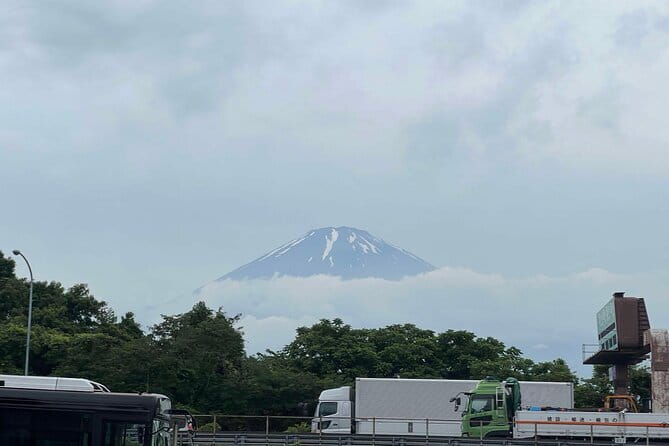
No. The route includes many places with views of Mount Fuji, but weather can hide the mountain. One available account specifically describes a cloudy and rainy day, so you should keep expectations flexible.
Is the tour physically demanding?
A moderate level of physical fitness is recommended. The clearest challenge is Chureito Pagoda, which requires climbing 398 steps. Several other stops also involve walking through shrine grounds, parks, and sightseeing areas.
Should you book it?
Book this tour if you want a wide-ranging private day from Tokyo and prefer convenience over a slow, single-area visit. The route covers an impressive number of settings, and the combination of lakes, volcanic scenery, shrines, ponds, pagodas, and parks gives you a fuller sense of the Fuji region.
I would book it for four to six people, confirm the eight-hour versus nine-hour timing, and ask about the ropeway, boat ride, ramen stop, entrance fees, and overtime charge before departure. If the weather forecast is poor, the forest shrine, Oshino Hakkai, and Peace Park still give the day substance.
For a relaxed Hakone holiday or a dedicated Fuji hike, choose a narrower plan. For a practical, photo-friendly introduction to the region with a private guide and door-to-door transport, this tour is a sensible choice.
More Private Tours in Tokyo


More Hakone Day Trips in Tokyo
More Mt Fuji Day Trips in Tokyo
More tours in Tokyo we've reviewed





Mt Fuji Day Trips, compared.
 ★ 5.0Mt Fuji and Hakone 1-Day Bus Tour Return by Bullet TrainFrom $163
 ★ 4.0Mt Fuji & Hakone Cruise, Drum Show Bullet Train 1 Day from TokyoFrom $149
 ★ 4.4Tokyo Mt Fuji 5th St & Hakone Cruise Bus Tour w/Bullet TrainFrom $15410 hours
 ★ 4.5From Tokyo: Mount Fuji Full-Day Sightseeing TripFrom $6810 hours
 ★ 4.7Tokyo: Mt. Fuji Tour, Hakone Ropeway, Owakudani, Lake AshiFrom $5410 hours
 ★ 4.4Tokyo:Mt.Fuji,Kawaguchiko Oishi Park,Arakurayama Sengen ParkFrom $5410 hours