
Reviewed · GUIDED
Private Tour Guide in English or Spanish (Español)
Tokyo is easier to enjoy when someone meets you at your hotel, learns what you want to see, then leads you through the city’s huge subway and train network. This private tour can include Asakusa, Meiji Shrine, Tsukiji, Akihabara, Shibuya, Shinjuku, and Ueno, but your guide can also reshape the route around your group.
I like the hotel pickup, which removes the usual first-day scramble, and I like the practical help with Tokyo’s transit system. Guides such as Taisei, Himena, Chisato, and Junsei have been praised for clear English, advance planning, patience with children, and good local suggestions. The main catch is simple: covering all seven listed districts in only two hours is not realistic, and public transit, food, and admission costs are extra.
In This Review
- Key points to know before booking
- A private start to Tokyo, without the station stress
- Asakusa and Senso-ji, Tokyo’s traditional opening
- Meiji Jingu, a quieter change of pace
- Tsukiji, a food stop with extra costs
- Akihabara for electronics, anime, and pop culture
- Shibuya Crossing, a quick look at Tokyo’s famous pulse
- Shinjuku, skyscrapers and neon in one district
- Ueno, museums, park space, and local texture
- What the guides add beyond directions
- The real price, and what you still pay
- Who should book this private Tokyo tour
- Should you book it?
- FAQ
- Where does the tour begin?
- How long does the tour last?
- Is the tour private?
- Is the tour available in Spanish?
- Are public transportation costs included?
- Are attraction entrance tickets included?
- Is food included?
- Is airport pickup included?
- What is the cancellation policy?
Key points to know before booking
- Your guide meets you at your hotel, so you do not need to find a meeting point in an unfamiliar city.
- The route is private and adjustable, making it useful for families, couples, first-time visitors, and groups with specific interests.
- Taisei, Himena, Chisato, and Junsei are among the guides praised for communication, transit help, patience, and thoughtful planning.
- The listed route covers seven major areas, but a 4-hour tour gives you only a taste of each, not a full visit.
- You pay separately for trains, meals, and attraction tickets, so the $58.27 per-person price is not the complete day’s cost.
- English and Spanish options are advertised, but the included details specifically name an English-speaking guide, so confirm your preferred language before booking.
A private start to Tokyo, without the station stress
Tokyo is not hard because its trains are poor. It is hard because the system is extensive, the stations can be enormous, and several lines may serve the same area. A private guide gives you a human map for the first few hours.
Your guide comes to your hotel lobby. That small detail matters, especially after a long flight or during your first morning in Japan. From there, the day can focus on traditional sights, pop culture, food, shopping, gardens, or a mixture of neighborhoods.
The tour runs for approximately 2 to 4 hours. That range makes it more of an introduction than a full Tokyo sightseeing day. I would treat it as a way to get your bearings, learn how to use public transportation, and identify places to return to later.
The private format is the biggest advantage. You are not tied to the pace or interests of strangers. Families can slow down for children, couples can skip places that do not appeal, and a first-time visitor can ask basic questions without feeling rushed.
The strongest pattern in the guide feedback is advance communication. Taisei and Himena, in particular, contacted people before the tour to ask what they wanted to see. Junsei also helped build a plan around a group’s priorities, while Chisato was praised for staying patient with slower walkers.
That kind of planning is worth more than a fixed checklist. Tell the guide clearly if you want temples, anime, shopping, food, gardens, photography, or transit practice. The more specific you are, the more useful the short tour should be.
Other guided tours in Tokyo

Asakusa and Senso-ji, Tokyo’s traditional opening
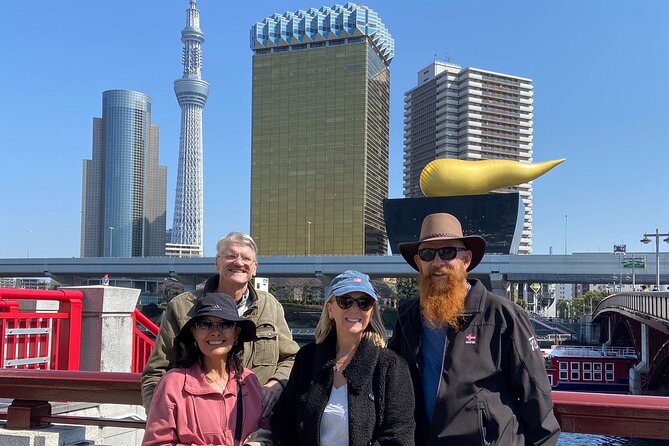
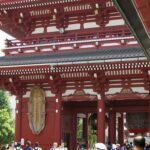
Asakusa is the natural choice if you want an early look at old Tokyo. The centerpiece is Senso-ji, the city’s oldest Buddhist temple, where the setting gives you a strong contrast with Tokyo’s modern towers and commercial districts.
The planned stop is about 30 minutes, with no admission charge. That is enough for a quick introduction, a look at the temple grounds, and an explanation of the site’s religious importance. It is not enough for a slow exploration of every lane and shop around the temple.
This stop suits first-time visitors who want cultural context. Ask your guide about temple etiquette, how Buddhist temples differ from Shinto shrines, and what to notice as you move through the grounds.
If you have already spent time in Asakusa, you can use this part of the tour for another neighborhood. The private setup gives you that choice, which is more useful than repeating a sight you have already seen.
Meiji Jingu, a quieter change of pace
Meiji Jingu Shrine honors Emperor Meiji and Empress Shoken, and it offers a different experience from Senso-ji. The shrine is reached through a broad wooded approach, so even a short visit can give you a break from Tokyo’s signs, traffic, and tall buildings.
The planned stop is about 30 minutes and admission is free. That short visit works well if you want to understand shrine customs and see one of Tokyo’s best-known Shinto sites without spending half a day there.
I would ask your guide to explain how to behave at the entrance, where to bow, and how to approach the main shrine area. Practical cultural advice is one of the best reasons to book a private guide rather than simply follow a map.
Meiji Jingu pairs well with Shibuya because the two areas are close enough to create a striking shift in mood. You can move from a calm shrine setting to one of the city’s most famous crossings in the same outing.
Tsukiji, a food stop with extra costs
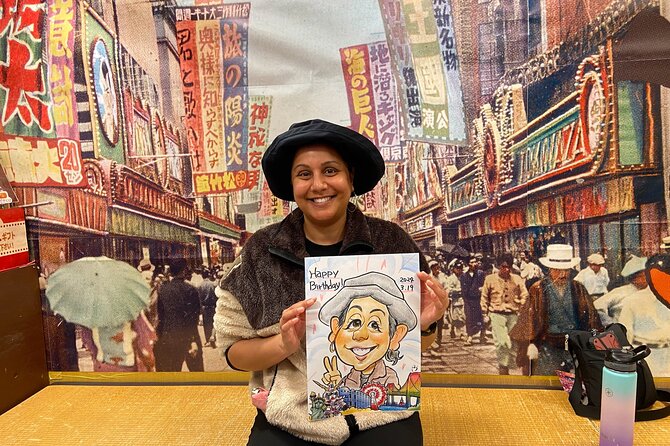
Tsukiji Fish Market is listed as a 40-minute stop. The original wholesale market moved to Toyosu, but the Tsukiji area remains a well-known place for seafood shops, prepared food, and market-style browsing.
There is no admission charge for the stop, but food and drinks are not included. Budget extra if you want to taste something. Since the tour is private, you can tell the guide if you want to spend your limited time eating, looking, or simply learning about the area.
Forty minutes is enough for a sample rather than a full food crawl. If lunch is important to you, say so before the tour. The guide can help decide if Tsukiji should be a short walk or the main focus of your time.
This is also a useful place to clarify expectations. The experience is not a paid meal tour, and the guide does not cover your food bill. You are paying for the guide’s time and direction, then choosing and buying anything you eat.
Akihabara for electronics, anime, and pop culture
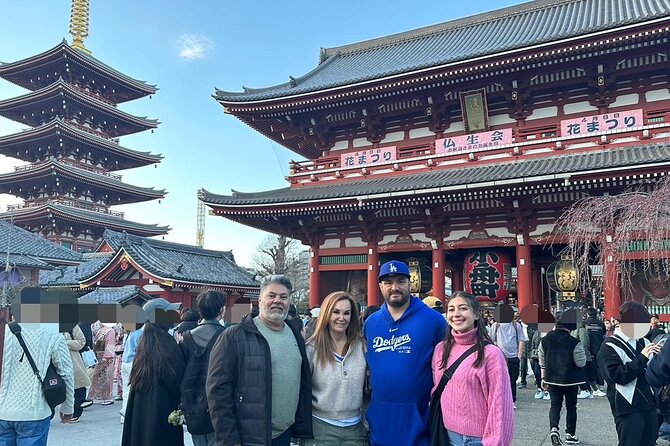
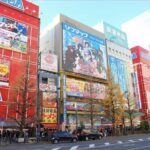
Akihabara, often called Electric Town, brings a completely different side of Tokyo. The area is linked with electronics, anime, manga, games, and Japanese pop culture.
The planned stop is about 40 minutes. That is enough to introduce the district and point you toward areas that match your interests, but not enough for serious shopping. If you want specific manga, Nintendo, gaming, or electronics stops, send that information ahead of time.
Several families used the private format to balance different interests. One child could look for manga or Nintendo-related places while adults visited gardens or tea spots. That is a real benefit of a private guide: the day can be adjusted instead of forcing everyone through the same fixed route.
Keep in mind that purchases are your own responsibility, and the tour does not include admission to paid attractions. If you want a museum, observation deck, or interactive attraction, check the ticket cost and timing before adding it.
Other private tours in Tokyo

Shibuya Crossing, a quick look at Tokyo’s famous pulse
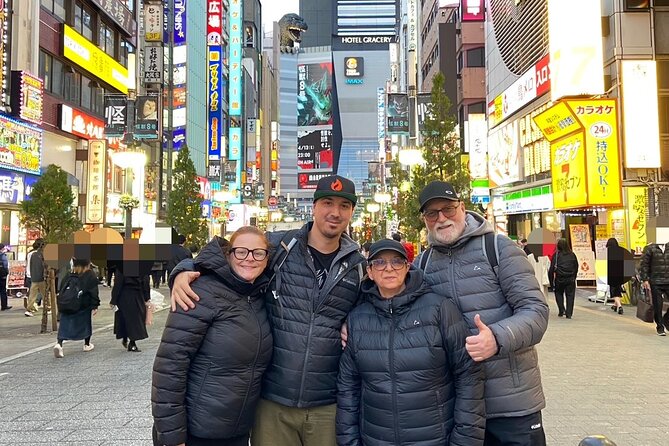
Shibuya Crossing is scheduled for about 20 minutes, the shortest stop on the route. That makes sense for a first look. You can watch the crossing, take photos, and get a quick explanation of the surrounding shopping district.
I would not expect this stop to cover all of Shibuya. The neighborhood has department stores, side streets, restaurants, and many places that reward more time. If your priority is shopping, fashion, or nightlife, use the crossing as an orientation point and ask to stay longer.
Shibuya is also a good test of what you want from the tour. Some people want the famous view and then prefer a quieter neighborhood. Others want to spend their whole visit exploring the district. A private route lets you make that call.
Shinjuku, skyscrapers and neon in one district
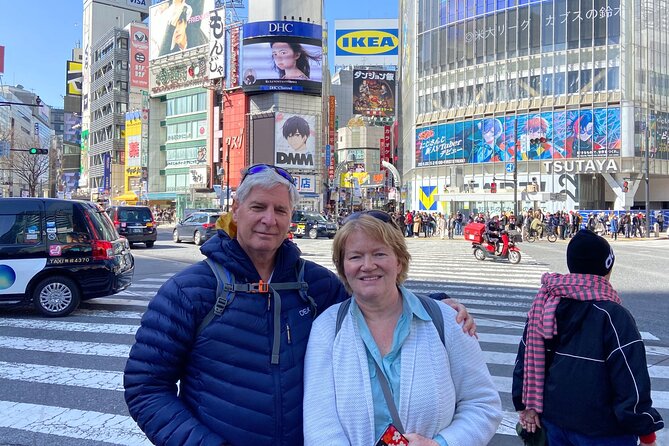
Shinjuku receives about 40 minutes on the suggested route. It is one of Tokyo’s busiest districts, with tall buildings, bright streets, shops, restaurants, and major transport connections.
A short stop works as a broad introduction. You can learn how the district is arranged and decide where to return after the tour. It is less useful if you expect detailed shopping or a full evening out.
Because Shinjuku is a major transit area, this is another place where a guide can save time. You will have someone showing you where to go rather than spending your limited tour hours studying signs and station maps.
The exact experience will depend on your interests. Tell your guide if you care more about views, food, shopping, photography, or the district’s evening atmosphere. The route should not try to give every part of Shinjuku equal time.
Ueno, museums, park space, and local texture
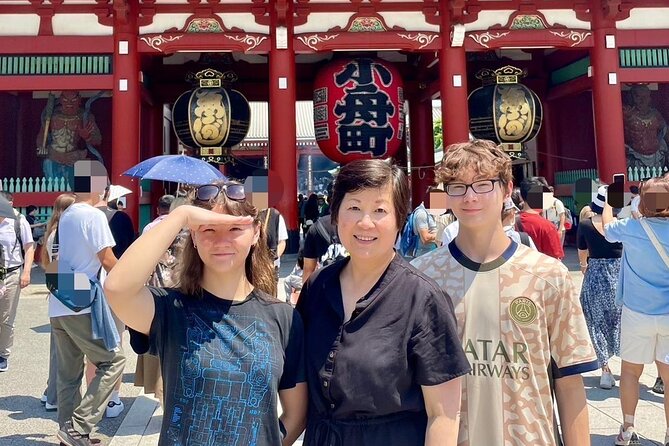
Ueno is assigned about 40 minutes and adds another useful contrast. The district is known for Ueno Park, museums, seasonal blossoms, and a busy local atmosphere.
This stop is best for people who want culture and open space, not just towers and shopping streets. It can also work well for families, since the area offers several possible directions instead of one narrow attraction.
One family used a half-day route through Ueno, Asakusa, and Tokyo Skytree, with the guide helping them manage the subway and a young child. That example points to the tour’s practical strength, but also to the need for realistic planning. A 4-hour outing can connect a few nearby areas. It cannot give seven districts equal attention.
If Ueno matters most to you, say so before the guide builds the route. A shorter list of places usually produces a better experience than racing through every name on the suggested plan.
What the guides add beyond directions
The guides are not simply there to lead you from station to station. The most useful part is the combination of local explanation and practical help.
Taisei has been praised for clear English, thoughtful preparation, patience, and an ability to explain the subway with maps. He also adjusted routes for tired visitors, helped families with a stroller, and suggested places to see after the tour.
Himena has been praised for planning ahead, working well with children and teenagers, and shaping the day around very different interests. She has also been described as fluent in English and Japanese. Chisato has received strong praise for her patience with slower walkers and her ability to keep the group comfortable.
Junsei has been noted for excellent English, early arrival at the hotel, and clear explanations while moving around Tokyo. These details matter because your guide’s communication style can affect the whole day.
The provider offers English or Spanish experiences, but the included information specifically lists an English-speaking guide. If Spanish is important to you, confirm that option before you pay. Do not assume that the available language will be assigned automatically.
The real price, and what you still pay
The listed price is $58.27 per person, with group discounts available. For a private guide, that can be good value, especially if you are sharing the experience with family or friends and want help during your first Tokyo outing.
The price covers hotel pickup and an English-speaking guide. It does not cover private transportation, bicycle use, public transportation, entrance tickets, food, or drinks.
That means your actual cost depends on the route. A simple walking tour with a few train rides will cost less than a route involving several paid attractions. Tickets for places such as Tokyo Skytree or TeamLab are not included, and the guide may wait outside unless you provide a ticket for them.
I like the transparent structure, but you need to budget carefully. The guide can help you navigate the city, but you are still buying your own train fares and meals. Airport pickup is also not included.
The tour has a 4.9 rating from 87 ratings, and 98 percent recommendation is a strong signal. Still, the best value comes when you use the guide for things that are hard to do alone: planning a route, learning transit, understanding customs, and finding the right mix of neighborhoods.
Who should book this private Tokyo tour
I would recommend it most strongly to:
- First-time visitors who want a clear introduction before exploring alone
- Families with children, teenagers, strollers, or mixed interests
- Couples who want a route built around their own priorities
- People nervous about using Tokyo’s train and subway system
- Visitors with only a short stay who need help choosing what to see
- Anyone who wants English or Spanish assistance rather than a large group tour
It is less suitable if you want a full-day sightseeing program with private vehicles or all admission fees included. It is also not the right pick if you prefer to spend several hours at one museum, market, or shopping district.
The walking format requires you to be physically able to walk through pedestrian areas and use public transportation. Take care of your own belongings and follow the guide’s safety advice. Travel insurance is recommended by the provider, especially for medical issues, accidents, cancellations, or lost items.
Free cancellation is available when you cancel at least 24 hours before the start time. Cancellations inside 24 hours are not refunded, and late changes are not accepted.
Should you book it?
Book this tour if you want a private Tokyo orientation, not a rigid list of seven completed sightseeing stops. The best use is a carefully chosen route through two or three areas, with time for questions, train practice, and local context.
For a first day, I would ask the guide to meet you at the hotel, explain the transit system, and combine one traditional stop with one modern district. Asakusa and Shibuya, or Meiji Jingu and Shinjuku, could give you a useful first contrast. If food or anime matters more, build the route around Tsukiji or Akihabara instead.
At $58.27 per person, the tour offers solid value for a private guide, especially for a group. Just confirm the language, name your priorities before the meeting, and remember that trains, meals, and paid attractions cost extra.
FAQ
Where does the tour begin?
The guide can meet you at your hotel. A meeting point is not required.
How long does the tour last?
The approximate duration is 2 to 4 hours.
Is the tour private?
Yes. Only your own group participates in the activity.
Is the tour available in Spanish?
The experience is advertised in English or Spanish. The included information specifically lists an English-speaking guide, so confirm the Spanish option before booking.
Are public transportation costs included?
No. You are responsible for your own public transportation fees.
Are attraction entrance tickets included?
No. Entrance fees for places such as Tokyo Skytree or TeamLab are not included.
Is food included?
No. Lunch, dinner, snacks, drinks, and other food purchases are at your own expense.
Is airport pickup included?
No. The included pickup service is hotel pickup, not airport pickup.
What is the cancellation policy?
You can cancel at least 24 hours before the start time for a full refund. Cancellations or changes made less than 24 hours before the start time are not accepted and are not refunded.
More Private Tours in Tokyo
More Guided Tours in Tokyo

More tours in Tokyo we've reviewed




Guided, compared.
 ★ 5.0Tokyo 6hr Private Tour with Government-Licensed GuideFrom $155
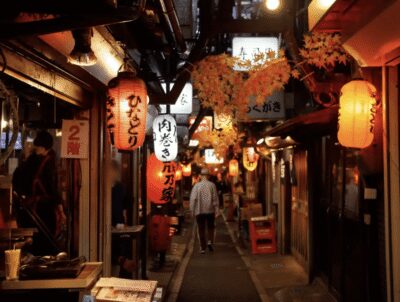 ★ 4.9Tokyo: Shinjuku Local Bar and Izakaya Guided Walking TourFrom $343 hours
 ★ 4.8Tokyo: Private City Highlights Tour with Local GuideFrom $1064 - 8 hours
 ★ 4.9Tokyo: Tsukiji Fish Market Guided Walking TourFrom $222 hours
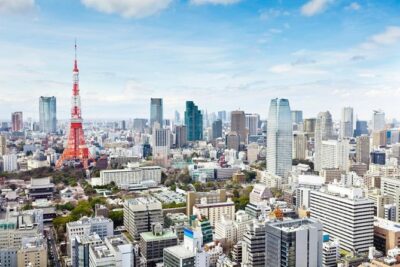 ★ 5.0Tokyo 4hr Private Tour with Government-Licensed GuideFrom $109
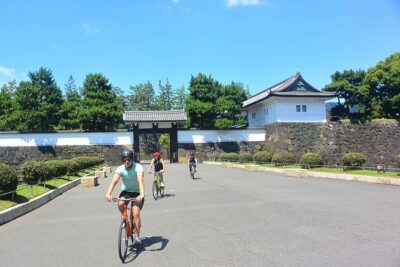 ★ 5.0Tokyo Guided Small-Group Biking TourFrom $106