
Reviewed · JDM & CAR CULTURE
TOKYO PREMIUM CAR TOUR: Daikoku PA & Japan’s Amazing JDM Car Meet
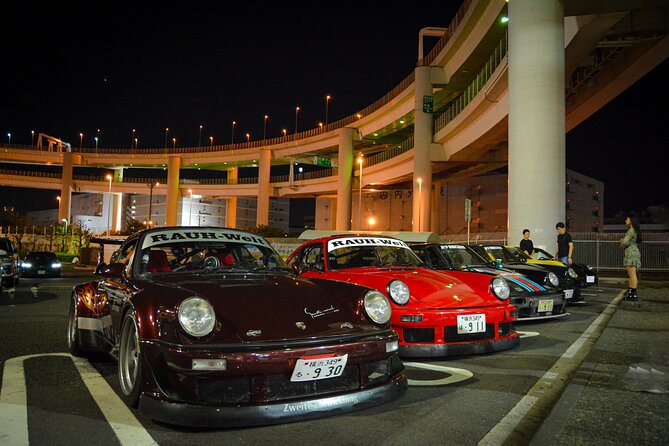
Daikoku Parking Area is the main event: a huge Yokohama rest stop where Japan’s car culture gathers after dark. This small-group ride connects it with Liberty Walk Tokyo, A-PIT Super Autobacs, the Shuto Expressway, and Rainbow Bridge, giving you far more context than a simple taxi ride to Daikoku.
I like the chance to ask a guide about the cars and the local driving scene, and I like the return drop-off, which saves you from working out a late train ride. The main drawback is that Daikoku meetups depend on timing and weather, so the exact mix and number of cars cannot be guaranteed.
In This Review
- Key points at a glance
- Why Daikoku PA is worth the late-night trip
- Meeting in Shibuya and getting set for the ride
- Liberty Walk Tokyo in 15 minutes
- A-PIT Super Autobacs, Japan’s giant car shop
- The C1 loop and the Shuto Expressway
- Two hours at Daikoku Parking Area
- The ride back to Tokyo
- Is $297.23 a fair price?
- Who will enjoy this tour most?
- Weather, cancellation, and planning tips
- Should you book the Daikoku JDM tour?
- FAQ
- How long does the Tokyo Premium Car Tour last?
- Where does the tour begin?
- How many people can join the tour?
- Is transportation included?
- Is Tokyo hotel drop-off included?
- Does the tour guarantee GT-Rs or supercars?
- Can I cancel for a full refund?
Key points at a glance
- Daikoku PA after dark: Spend about two hours at Yokohama’s best-known car gathering point.
- Liberty Walk Tokyo: Start with a 15-minute look at merchandise, apparel, and possibly an LB vehicle.
- A-PIT Super Autobacs: Browse Japan’s largest kind of automotive parts and accessory store for 30 minutes.
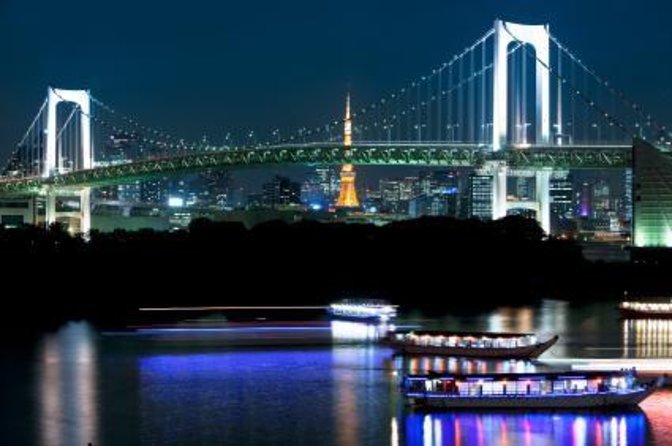
- Rainbow Bridge views: Cross the Bayshore Route with Tokyo’s lights spread around you.
- Small group of up to nine: You get a better chance to ask questions than on a large bus tour.
- Tokyo drop-off included: Select locations receive a courtesy return ride, but you should confirm eligibility before booking.
Why Daikoku PA is worth the late-night trip
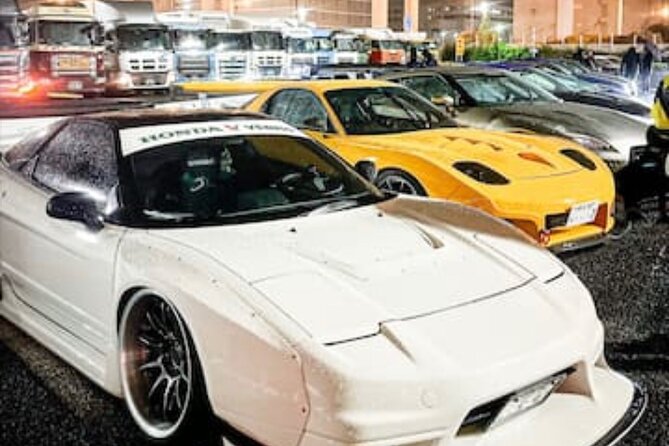
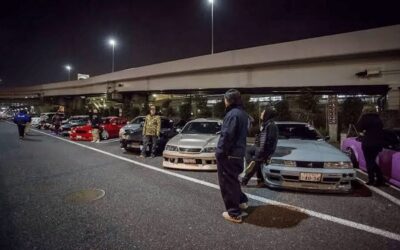
If you love Japanese Domestic Market cars, Daikoku Parking Area is not just another photo stop. It is a working expressway rest area in Yokohama that has become a meeting place for car owners and enthusiasts. The appeal comes from the mix: classic Japanese cars, modified machines, luxury vehicles, and modern performance cars may all appear in the same evening.
That mix is also the reason to keep your expectations flexible. This is not a scheduled motor show with a fixed display. The cars present can change from one night to the next, and the weather can affect the gathering. You might see an impressive crowd of vehicles, or a quieter evening with fewer cars.
I like that the tour treats Daikoku as part of a wider car-culture evening. You first see the retail and tuning side of the scene, then take in Tokyo’s expressways, and finally reach the famous meeting point. That progression gives the night more shape than simply arriving, looking around, and leaving.
The roughly two-hour visit is the longest stop on the schedule. That matters because you have time to walk around, compare cars, take photographs, and ask questions instead of rushing through in 20 minutes.
A few more Tokyo tours and experiences worth a look

Meeting in Shibuya and getting set for the ride
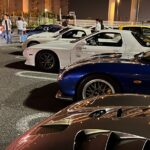
The tour begins outside the ticket gates at Shibuya Station, near the Hachiko ticket gate, by the information board in the B2F area. The listed address is 2-2-23 Dogenzaka, Shibuya, Tokyo 150-0043. Shibuya is easy to reach by train, but the station has several levels and exits, so allow time to find the correct meeting spot.
The experience uses a mobile ticket, and confirmation is sent within 48 hours when space is available. The group limit is nine people, which usually means the ride feels more personal than a coach excursion. It also gives you a practical chance to ask about the cars, the routes, and the difference between ordinary Japanese motoring and the highly modified cars you see at the meet.
Group tours typically use a 2023 Toyota Alphard Executive or a modified JDM Toyota. The supplied details do not promise a particular vehicle for every departure, so you should book this for the destinations and access to the scene rather than for a guaranteed supercar ride.
Liberty Walk Tokyo in 15 minutes
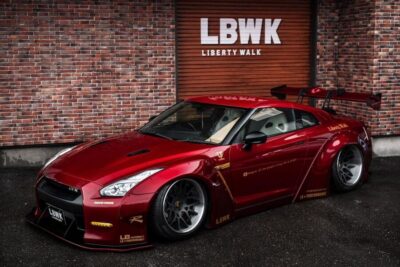
The first stop is Liberty Walk Tokyo, with about 15 minutes to look around. Liberty Walk is one of Japan’s best-known names in aggressive wide-body styling, and its shop gives you a quick introduction to the visual side of modern JDM and imported performance culture.
You can browse merchandise and apparel, and there may be an LB vehicle parked outside. The short stop is useful as an opener, especially if you want a few branded souvenirs or photographs before the longer parts of the evening.
Still, keep the timing in mind. Fifteen minutes is enough for a quick look, not a full shopping session or a detailed technical discussion. If you are mainly interested in the cars rather than clothing, the next stop and Daikoku PA will likely give you more time to explore.
A-PIT Super Autobacs, Japan’s giant car shop
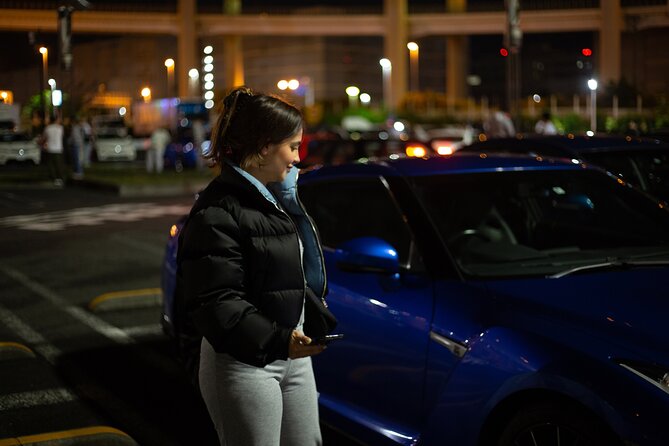
A-PIT Super Autobacs is the most practical stop on the route. You get about 30 minutes to browse accessories, parts, automotive goods, and souvenirs at a store described as the largest of its kind in Japan.
For a car fan, this is a useful window into the everyday side of Japanese tuning. You can see what parts and accessories are sold to ordinary enthusiasts, not just look at finished show cars. Even if you do not plan to buy anything, the store helps explain how Japan’s performance scene is supported by a large retail culture.
Thirty minutes is a fair amount of time for a focused visit, but it will not cover every aisle. You may want to decide in advance if you are hunting for apparel, parts, model items, or gifts. The tour does not list purchases as included, so anything you buy is at your own cost.
The C1 loop and the Shuto Expressway
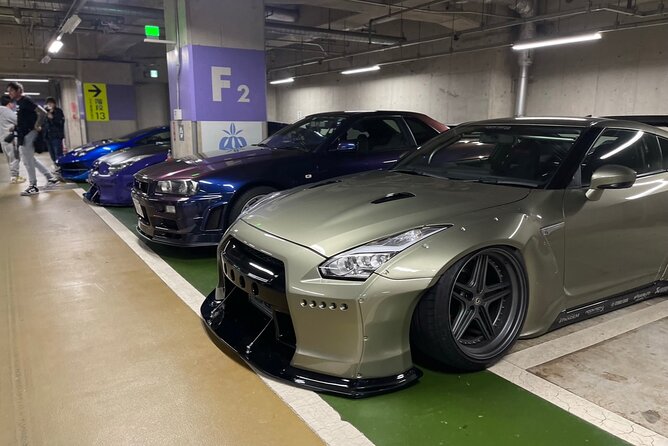
After the shops, the ride moves onto the Shuto Expressway and the famous wangan routes. The plan includes a scenic loop on the C1, with about 45 minutes for the broader Tokyo driving section and quick stops connected to the street-racing history of the route.
This part is valuable because it shows the roads as part of the car culture, not just as a way to get from one attraction to another. The guide shares facts about the locations and explains why some famous central Tokyo parking areas are no longer what they once were. The tour also addresses why street racers no longer gather there in the same way.
An optional quick stop may be made at a well-known Tokyo central parking area for photographs and background information. Since it is optional, you should not treat it as a guaranteed full stop. The important point is that the guide adds context about how the scene has changed rather than presenting every parking area as an active racing meet.
You are riding on public expressways, so this is not a private racing session. The attraction is the route, the city lights, and the connection to Japanese car culture. The schedule also lists a crossing of Rainbow Bridge on the Bayshore Route, where you can look toward Tokyo’s illuminated skyline and take photographs if conditions allow.
The bridge crossing helps break up the car-focused stops. Even if you are less interested in engines and body kits, the city views give you a broader Tokyo night experience. For photographers, this is one of the more useful moments to keep your camera ready.
Two hours at Daikoku Parking Area
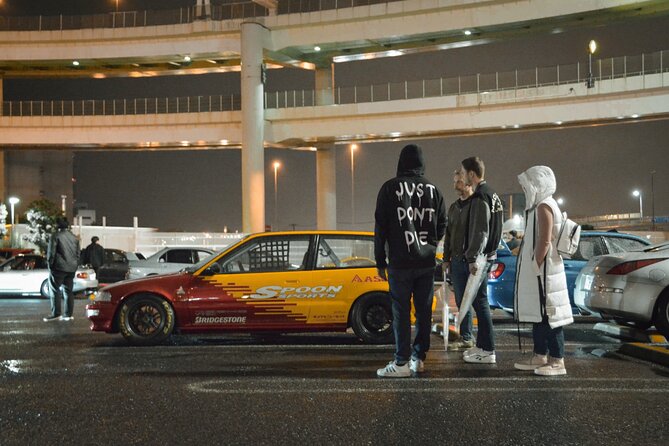
Daikoku PA is where the tour spends most of its time. The listed visit lasts about two hours, giving you room to wander among the vehicles and take in the gathering at a relaxed pace.
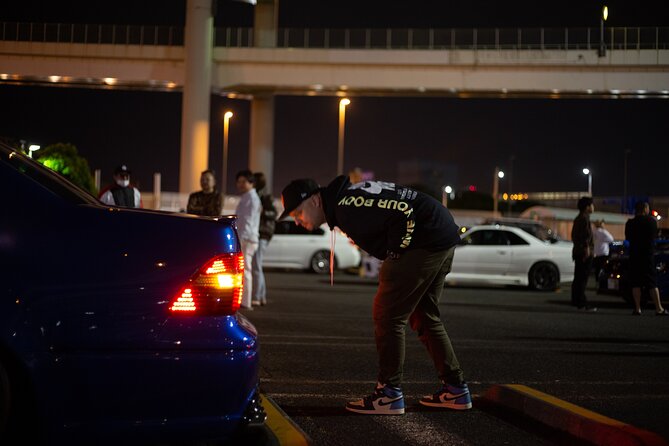
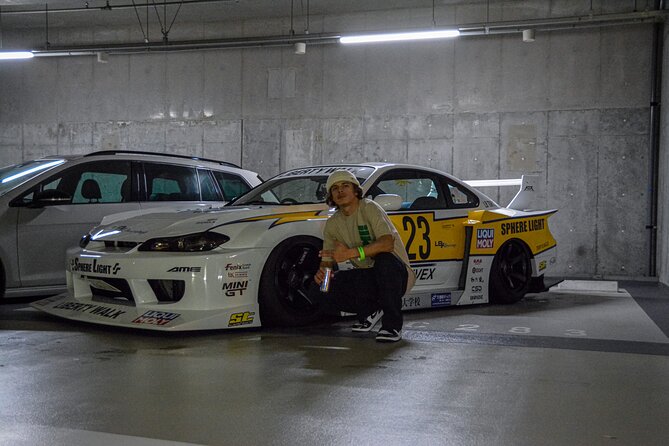
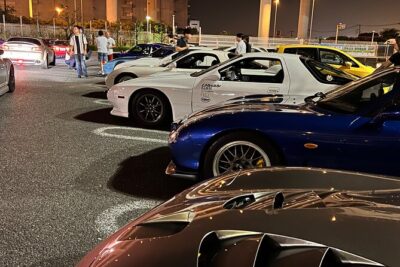
The setting is different from a conventional exhibition. Cars arrive and leave, groups form around particular vehicles, and the mix can shift during your visit. You may find classic JDM models beside modified cars, luxury vehicles, and high-performance machines. The appeal lies in seeing how owners present and enjoy their cars in a real meeting place.
I would treat the stop as a chance to observe respectfully rather than as a guaranteed photo shoot with a particular model. The tour does not promise a fixed number of cars, a specific make, or access to a private collection. Weather, the day of the week, and the timing of the visit all matter.
The guide is especially useful here. A good explanation can help you understand what makes a vehicle notable, why certain modifications matter, and how the scene differs from the polished displays at a motor show. In a group of no more than nine, you should have a better chance to ask questions without competing with a crowd.
The site is also part of an expressway system, so the practical mood is more roadside meeting point than museum. That means the experience is strongest for people who enjoy the atmosphere of cars arriving, owners talking, and vehicles appearing without a formal presentation.
The ride back to Tokyo
After Daikoku, the vehicle returns toward Tokyo by a different route and provides a courtesy drop-off at select locations. The return portion takes about an hour, and the drop-off can make a real difference after a late evening in Yokohama.
You must confirm the eligible locations before booking or soon afterward. The advertised drop-off is limited, and the standard meeting point is also listed as the end point, so do not assume that every Tokyo hotel is covered.
This return ride is one of the tour’s strongest practical features. Without it, you would need to plan your own way back after visiting a location away from central Tokyo. The drop-off does not turn the tour into a private transfer, but it removes one of the most awkward parts of a late-night outing.
The total experience runs at least four hours from meeting to the final drop-off, with the full schedule described as approximately four to five hours. Allow some flexibility, since traffic and the timing of the car meet can affect the evening.
Is $297.23 a fair price?
At $297.23 per person, this is not a budget sightseeing trip. The value depends on what you would otherwise spend to reach Daikoku, visit the other stops, and arrange a late return to Tokyo.
You are paying for a small group, a guide, transportation throughout the route, the Liberty Walk and Super Autobacs visits, the expressway drive, the Rainbow Bridge crossing, and time at Daikoku. The included drop-off at limited Tokyo locations adds practical value, especially if you do not want to navigate trains late at night.
The price makes less sense if you only want to see Daikoku for a short time or if you already have a local car enthusiast showing you around. It makes more sense if you want the full evening, prefer not to organize several stops yourself, and value explanations along the way.
The tour is booked an average of 65 days ahead, which signals strong demand. Space can be limited, and automatic confirmation is not guaranteed. Direct bookings receive priority, and the provider asks you to check availability through Instagram, @nichedrive, particularly if you are booking within two to four weeks of the date.
Who will enjoy this tour most?
This is a strong fit for JDM fans, tuning enthusiasts, photographers who enjoy night scenes, and visitors who want a social evening with people who share the same interest. It also works for a curious non-specialist who wants a guide to explain what they are seeing.
You do not need to be an expert. The small group gives you room to ask basic questions, and the route covers more than cars alone. Rainbow Bridge and the Tokyo expressway drive add city views, while Super Autobacs offers a look at the retail side of Japanese motoring.
I would be more cautious about booking if your main goal is a guaranteed Nissan GT-R, a particular supercar, or a specific famous vehicle. GT-R and supercar upgrades are offered separately through the provider, so the standard tour should not be treated as a promise of a premium car experience.
The tour also suits people who want a late-night plan without ending at a distant Yokohama station. It may be less suitable for anyone who dislikes flexible schedules, vehicle-focused stops, or the possibility that weather changes the evening.
Weather, cancellation, and planning tips
Good weather is required. If poor weather cancels the experience, you are offered a different date or a full refund.
You can cancel for a full refund up to 24 hours before the local start time. Changes or cancellations inside that 24-hour window are not accepted, so check your plans before the deadline.
I would confirm the drop-off area before paying, then contact @nichedrive directly if your date is close or if the booking system declines the reservation. Confirmation is subject to availability, and the provider says some automatically declined bookings may still be worth checking directly.
Wear comfortable clothing and shoes for standing and walking around the parking area, though the supplied information does not list a formal dress code. Bring a phone or camera with enough battery for the shops, bridge views, and Daikoku.
Should you book the Daikoku JDM tour?
Book it if you want a planned, social introduction to Tokyo’s car scene, with Daikoku PA as the centerpiece and several worthwhile stops before it. The small group, two-hour Daikoku visit, expressway routes, and Tokyo drop-off give the experience more value than a simple ride to a parking area.
Skip it if you need a guaranteed car list, a private tour, or the lowest possible price. The gathering changes from night to night, and the standard package does not include GT-R or supercar upgrades.
For the right person, this is a practical way to see a side of Tokyo that is easy to miss. Confirm availability early, check the drop-off zone, and arrive ready for an evening built around cars, city lights, and the unpredictable appeal of a real meet.
FAQ
How long does the Tokyo Premium Car Tour last?
The tour lasts approximately four to five hours from the meeting time through the final drop-off.
Where does the tour begin?
It begins outside the ticket gates at Shibuya Station, near the Hachiko ticket gate and the nearby information board in the B2F area.
How many people can join the tour?
The maximum group size is nine travelers.
Is transportation included?
Yes. The tour uses a group vehicle for the route, including the expressway sections and the journey to Daikoku Parking Area.
Is Tokyo hotel drop-off included?
A courtesy Tokyo drop-off is included at limited locations. You should confirm the available locations before booking or after your reservation.
Does the tour guarantee GT-Rs or supercars?
No. GT-R and supercar upgrades are not included in the standard tour. They are available separately through the provider.
Can I cancel for a full refund?
Yes. You can cancel at least 24 hours before the local start time for a full refund. Poor-weather cancellations offer a different date or a full refund.
More JDM & Car Culture in Tokyo
More tours in Tokyo we've reviewed

JDM & Car Culture, compared.
 ★ 4.7FAST&FURIOUS EXPERIENCE Tokyo Car Club membershipFrom $138
 ★ 4.8GT-R35 800hp Club Membership – secret underground car meetFrom $205
 ★ 4.8Tokyo: Fast & Furious Tokyo Drift 3 Experience (Kaila Yu SP)From $157
 ★ 4.8Tokyo: Daikoku JDM Car Meet & Night Car Culture TourFrom $984 hours
 ★ 4.8Secret Car Meet: R34 Skyline Car Club MembershipFrom $236
 ★ 4.7Tokyo Drift: Daikoku PA Supreme Car Experience 大黒PAFrom $583 hours