
Reviewed · TOURS
Japanese Garden & Western Architecture: Akasaka exploration tour
A 400-year-old garden, a castle-like state guesthouse, and a quiet stroll beneath ginkgo trees make this a fine way to see a calmer side of Tokyo. The route links Edo-period tradition with Japan’s modern imperial and diplomatic story, all within a few hours.
I like the private format, which gives you room to ask questions and adjust the pace. I also like the mix of gardens, architecture, and art rather than another tour of Tokyo’s tall buildings. The main drawback is cost: the $82.42 price does not include the roughly ¥2,000 Akasaka Palace admission, and you should expect a fair amount of walking.
In This Review
- Key points to know before booking
- Why Akasaka makes a good half-day walk
- Hotel New Otani Japanese Garden: a quiet start with four centuries behind it
- Akasaka Palace: the tour’s grandest stop
- Meiji Memorial Picture Gallery: art that explains a changing Japan
- Jingu Gaien’s ginkgo avenue: a memorable finish
- What the Tokugawa and Meiji stories add
- Price, private format, and what you actually receive
- Walking, weather, and practical details
- Who should book the Akasaka walk?
- Should you book it?
- FAQ
- How long does the Akasaka exploration tour last?
- Where does the tour begin?
- Where does the tour finish?
- Is this a private tour?
- Is the Akasaka Palace admission included?
- Are transportation costs included?
- Is food included?
- What should I wear?
- Can I cancel for a full refund?
Key points to know before booking
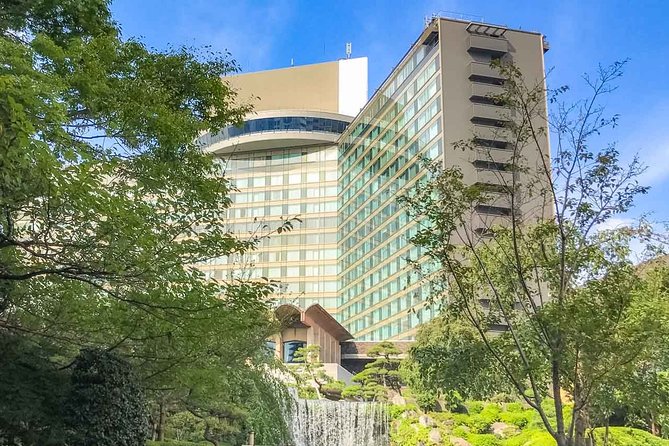
- A 400-year-old Japanese garden begins the route: Waterfalls, ponds, and seasonal plants provide a gentle start.
- Akasaka Palace is the major architectural highlight: You can see Japan’s formal state guesthouse, with admission costing ¥2,000 per person.
- The private guide format keeps the walk personal: Guides such as Sayaka, Mutsuko Takano, Ume, and Ayako have led this experience.
- The tour connects several Tokyo eras: Edo garden design, imperial Meiji art, and modern diplomatic use all appear in one route.
- The walk ends at Gaiemmae Station: You finish in a different part of Tokyo from where you started at Akasaka-Mitsuke Station.
- Bring cash and comfortable shoes: Some stops may not accept credit cards, and the route involves substantial walking.
Why Akasaka makes a good half-day walk
Akasaka is a useful change of pace when Tokyo begins to feel like one long wall of glass and concrete. The district has government buildings, grand hotels, shrines, parks, museums, and older traces of the city’s ruling past. You are not simply checking off famous sights. You are watching different chapters of Tokyo meet within a compact area.
The tour lasts about three to four hours. That is long enough to give each stop some attention without taking over your day. You could pair it with an afternoon in Aoyama, Harajuku, or another part of central Tokyo, since the final stop is near Gaiemmae Station.
This is a private tour, so only your party takes part. That matters here. A garden walk is more useful when you can stop to ask why a bridge, waterfall, or planting arrangement matters. A guide can also explain the connection between the Tokugawa shogunate, the Edo period, and the later Meiji era instead of leaving you with a series of attractive but disconnected sights.
The tour description also refers to Inari Shrine and Shimizudani Park as part of the Akasaka experience. The detailed route focuses on four main stops: the Hotel New Otani Japanese Garden, Akasaka Palace, Meiji Memorial Picture Gallery, and Jingu Gaien’s ginkgo avenue. Routes can change because of weather, temporary closures, or local conditions, so treat the sequence as a useful plan rather than a fixed promise.
If you're still narrowing it down, here are other tours in Tokyo we've reviewed.

Hotel New Otani Japanese Garden: a quiet start with four centuries behind it
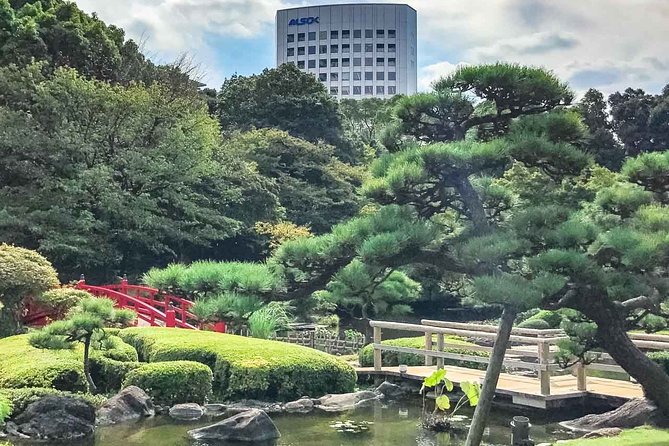
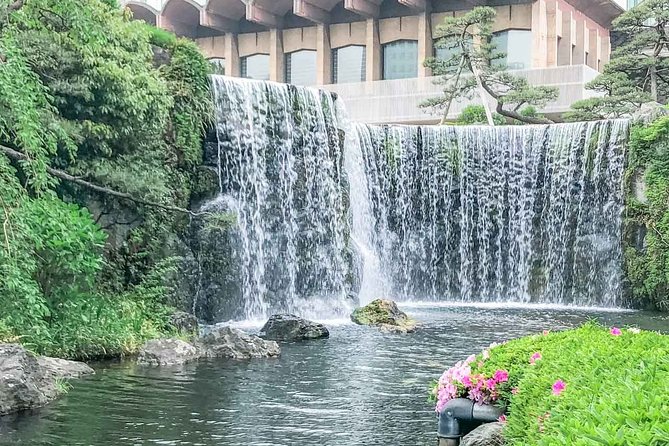
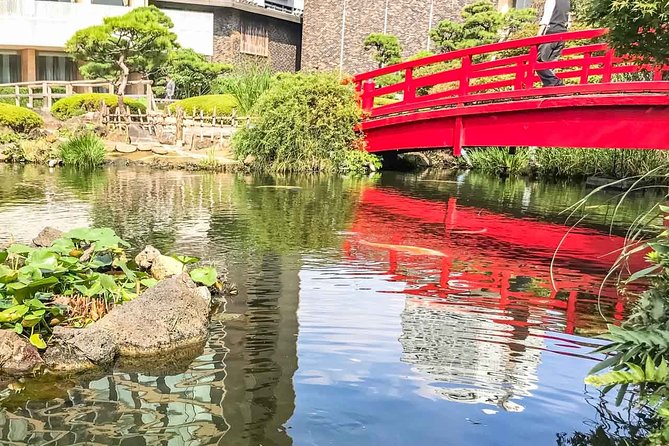
The first stop is the Hotel New Otani Japanese Garden, a large garden with a history of about 400 years. It gives you an immediate contrast with Tokyo’s busy streets. Expect waterfalls, ponds, and seasonal plants, with the garden’s appearance changing through the year.
Spring brings cherry blossoms. Summer offers thick green growth. Autumn adds colorful foliage and seasonal illumination. The exact display depends on your date, but the garden is designed to reward a slow walk rather than a hurried photograph.
Admission to this stop is included at no charge. The listed visit lasts about 40 minutes, which should give you time to see the main features while still keeping the overall tour moving. A guide can help you notice the design choices that are easy to miss, such as how water, rocks, paths, and planted areas frame one another.
I especially like this opening because it sets up the historical story without starting with a lecture. You first experience the garden as a place of calm, then learn how older Japanese power and culture shaped the setting. One useful detail from the tour’s feedback is that a newly married couple was spotted in traditional dress taking photographs in the garden. Encounters like that are not guaranteed, but they show how the setting still serves as a living part of Japanese ceremony and daily life.
You may also get help arranging a tea experience. One guide assisted with a reservation at an authentic tea shop, but that is not listed as a standard part of the tour. Ask your guide if tea interests you, and be prepared to pay separately.
Akasaka Palace: the tour’s grandest stop
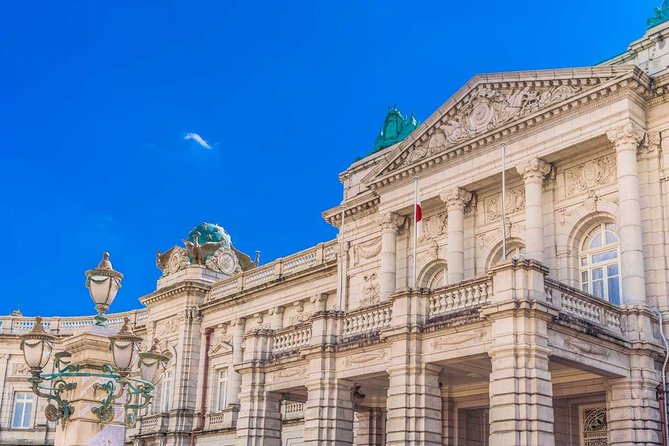
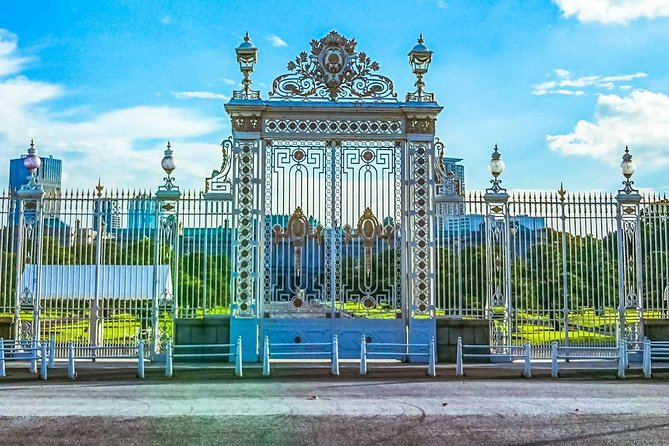
Akasaka Palace, also called the State Guesthouse, is the route’s most imposing sight. It receives kings, presidents, and other official visitors from around the world. Its exterior has a European palace appearance, a striking contrast to the Japanese garden you have just visited.
The visit is scheduled for about 50 minutes. Admission is not included, and the stated fee is ¥2,000 per person. That extra charge is important when you compare the total price with other Tokyo walking tours. The base price is $82.42 per person, and this entrance fee brings your expected cost higher before any drinks or other purchases.
The palace is especially useful for understanding Japan’s modern state. The garden points back toward older Japanese design and the Tokugawa era. The palace shifts the story toward formal government, international diplomacy, and the way Japan presented itself on the world stage.
You can expect a polished, formal setting rather than an intimate neighborhood building. The appeal is the combination of architecture and purpose. This is not just a pretty palace. It is a working reception facility with a role in Japan’s diplomatic life.
The tour notes that you may feel like a VIP here. That should be read as a description of the atmosphere, not as special access. The tour does not promise private rooms, exclusive entry, or special treatment. It does give you a guide who can explain why the building matters and help place its grand style in Japan’s wider story.
Several people who took the tour especially liked Akasaka Palace. I can understand why. It is the easiest stop to appreciate even if you are not an expert in Japanese gardens or art. Still, check the opening arrangements on your date through the operator if the palace is your main reason for booking. Temporary closures can lead to an alternative stop.
Meiji Memorial Picture Gallery: art that explains a changing Japan
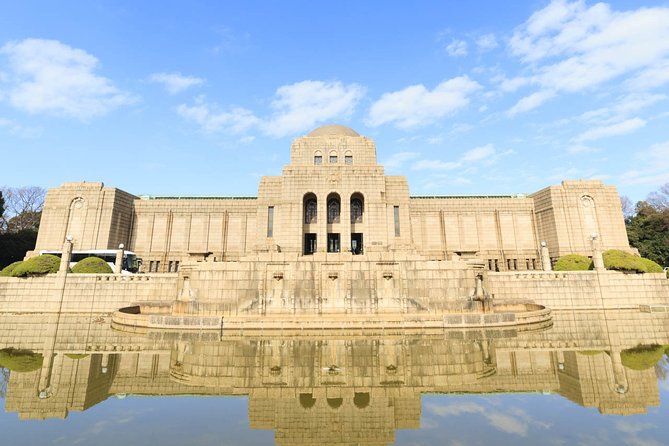
The Meiji Memorial Picture Gallery has a very different character. Its dome-shaped building focuses on the Meiji era, a period of major political, social, and cultural change. Inside, paintings and murals present scenes connected with that time.
The scheduled visit is about 40 minutes, and admission is not included. The information provided does not give a separate entrance price for this museum, so you should confirm any charge with the guide or operator before entering. The only clearly stated admission cost is the ¥2,000 fee for Akasaka Palace.
The gallery is valuable because it adds visual evidence to the historical explanation. A guide can tell you about the Meiji period, but paintings and murals show how important events, public figures, and national identity were represented. You are moving from the ceremonial power of the palace to a place where history is presented through images.
The building itself also deserves attention. Its dome gives it a formal presence, while the view from the entrance toward the outer garden and Aoyama Street adds an outdoor element to the stop. You are not spending the entire tour indoors, which helps maintain the easy walking rhythm.
This part will suit you most if you enjoy history, museums, and context. If you prefer gardens and outdoor scenery, 40 minutes inside a picture gallery may feel less exciting than the first and final stops. The private format helps here because you can ask the guide to focus on the parts that interest you rather than simply following a fixed group explanation.
Guides have included Sayaka, Mutsuko Takano, Ume, and Ayako. The comments about Sayaka describe an enthusiastic guide who answered many questions. Mutsuko Takano was noted for speaking clear English and explaining lesser-known details about Japan. Ume was praised for showing quiet gardens and small streets. Ayako was new when she led some tours, yet she was described as calm and flexible. Your assigned guide may be different, but these examples suggest that the experience depends partly on the individual guide’s style and preparation.
Jingu Gaien’s ginkgo avenue: a memorable finish
The route ends at Jingu Gaien’s ginkgo tree-lined street, one of Tokyo’s most recognizable seasonal scenes. The avenue creates a long visual corridor, with ginkgo trees forming arches over the road and paths.
The visit lasts about 20 minutes and has no admission charge. Autumn is the obvious season for the famous golden color, but the avenue also changes through spring and summer. In other seasons, you are visiting for the tree-lined setting and the contrast between the broad avenue and the surrounding city.
This is a short final stop, but it works well after the palace and museum. The tour ends outdoors, giving you room to take photographs and absorb the day without another formal presentation. From here, you finish at Gaiemmae Station, near 2-chome-7-16 Kitaaoyama.
The different end point is practical rather than inconvenient. You can continue into Aoyama or use the station for your next destination instead of retracing your steps to Akasaka-Mitsuke. Just remember that the tour does not return you to the starting station unless you arrange a change with the guide.


What the Tokugawa and Meiji stories add
The historical thread is the strongest reason to choose this walk over a simple garden visit. The Tokugawa shogunate ruled Japan during the Edo period, and the garden gives you a physical sense of the older aesthetic and political world. The later stops show how Japan changed during and after the Meiji era, when the country developed a new relationship with foreign powers and modern government.
The route does not offer one single preserved Edo neighborhood. Instead, it places different kinds of evidence side by side: a garden with centuries of history, a formal state building, a museum devoted to Meiji-era images, and a modern Tokyo avenue shaped by public space and seasonal beauty.
I like that structure because it helps you see Tokyo as a city built in layers. You do not need to remember every date. Pay attention to the shifts in style and purpose. The garden is intimate and natural. The palace is official and ceremonial. The gallery interprets national history. The ginkgo avenue returns you to an open, public setting.
A guide is particularly useful for this kind of route. Without explanation, the stops can feel unrelated. With a good guide, the walk becomes a clear story about power, presentation, culture, and urban change.
Price, private format, and what you actually receive
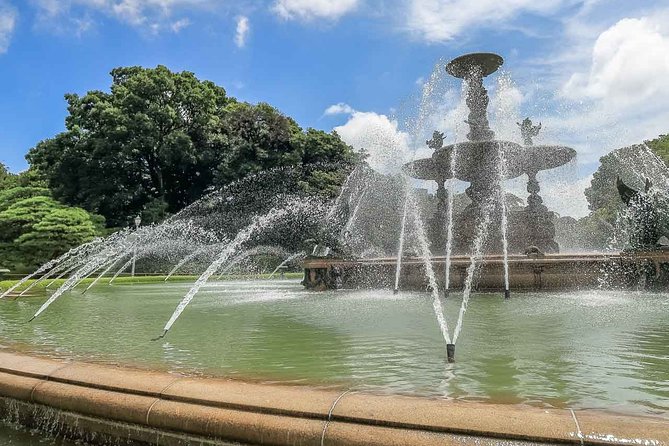
The advertised price is $82.42 per person. The tour includes a guide, private participation for your group, and the necessary expenses of the guide during the walk. Transportation for the guide is listed as ¥0, and no meal is included.
You should budget at least another ¥2,000 per person for Akasaka Palace. The listed estimated tour expenses also place admission at ¥2,000 per person, with no meal cost and no transportation cost. Drinks, food, and any other purchases at the stops are your responsibility.
The value depends on how much you want explanation and flexibility. For one person or a couple, the price is higher than joining a large sightseeing group. For a family or small party, the private format can make the per-person cost more reasonable, especially if group discounts apply to your booking.
You are paying for a guided connection between several sites, not merely entry tickets. If you already know Tokyo’s history and mainly want to stroll through a garden, you may find the price hard to justify. If you want an English-speaking guide, historical background, and a route that avoids a standard skyscraper-focused day, the cost makes more sense.
The tour is commonly booked well ahead, with an average booking time of about 164 days in advance. That does not mean you must reserve six months ahead, but it is a useful warning for peak seasons and popular travel dates.
Walking, weather, and practical details
Wear comfortable clothing and shoes. The tour involves a lot of walking, and the route covers gardens, streets, a palace area, a museum, and an avenue rather than one concentrated site.
Bring cash. Some places visited on the day may not accept credit cards, and the palace admission is an extra cost. There is no dining stop built into the experience, so eat beforehand or plan food after the tour.
The tour begins at Akasaka-Mitsuke Station, at 3-chome-1-6 Akasaka, Minato City. It finishes at Gaiemmae Station, at 2-chome-7-16 Kitaaoyama. Both locations are near public transportation, but check your route in advance because the starting and finishing stations are different.
Bad weather can change the transportation, destinations, or walking route. A site may also be replaced if it closes temporarily. Tell the guide if you want a different finishing point, though any change will depend on what is practical that day.
Confirmation arrives when you book. Most people can participate, but the amount of walking remains the key physical consideration. Free cancellation is available up to 24 hours before the start time. Cancel later than that and the payment is not refunded, and last-minute changes are not accepted.
Who should book the Akasaka walk?
I would choose this tour if you want a quieter Tokyo morning or afternoon with real historical explanation. It suits people who enjoy gardens, formal buildings, museums, photography, and questions about Japanese culture.
It is also a good fit for families or small groups who value a private guide. You can ask for more time on the parts you care about, and the guide can adjust explanations to your interests. English-speaking guides have led the tour, including Mutsuko Takano, Sayaka, Ume, and Ayako, though no particular guide is guaranteed.
I would think twice if you want a food tour, a shrine-heavy itinerary, or a short walk with very little standing. The advertised Akasaka theme includes Inari Shrine and Shimizudani Park, but the detailed route lists the four main stops described above. Confirm the day’s exact route if one particular site is essential to you.
Should you book it?
Book this Akasaka tour if you want Tokyo’s history explained through places rather than presented as a classroom talk. The 400-year-old garden and Akasaka Palace are the main reasons to go, while the Meiji gallery and ginkgo avenue give the walk a useful beginning-to-end shape.
The extra ¥2,000 palace fee and the amount of walking are the two points to weigh carefully. For a private group that wants a relaxed pace, an informed local guide, and a route linking Japanese gardens with state architecture, it offers solid value. If you only want free outdoor sights, skip it and visit the garden and ginkgo avenue independently.
FAQ
How long does the Akasaka exploration tour last?
The tour lasts approximately three to four hours.
Where does the tour begin?
It begins at Akasaka-Mitsuke Station, at 3-chome-1-6 Akasaka, Minato City, Tokyo.
Where does the tour finish?
It finishes at Gaiemmae Station, at 2-chome-7-16 Kitaaoyama, Minato City, Tokyo.
Is this a private tour?
Yes. Only your group participates in the private tour or activity.
Is the Akasaka Palace admission included?
No. Akasaka Palace admission costs ¥2,000 per person and is paid separately.
Are transportation costs included?
The necessary expenses for the guide are included, and the listed guide transportation cost is ¥0. Any transportation costs you incur during the tour are your responsibility.
Is food included?
No. The tour does not include a dining stop, and meal costs are not included.
What should I wear?
Wear comfortable clothing because you will be walking a lot.
Can I cancel for a full refund?
Yes, if you cancel at least 24 hours before the experience start time. Cancellations made less than 24 hours before the start time are not refunded.
More tours in Tokyo we've reviewed











Tours, compared.
 ★ 5.0Mt Fuji and Hakone 1-Day Bus Tour Return by Bullet TrainFrom $163
 ★ 5.01-Day Tokyo Bus TourFrom $129
 ★ 5.0Tokyo: Shinjuku Food Tour (13 Dishes at 4 Local Eateries)From $86
 ★ 4.4Tokyo Mt Fuji 5th St & Hakone Cruise Bus Tour w/Bullet TrainFrom $15410 hours
 ★ 5.0Flagship 2-Hours Official Street Go-Kart Tour – Tokyo Bay ShopFrom $642 hours to 2 hours 30 minutes (approx.)
 ★ 4.7Tokyo: Mt. Fuji Tour, Hakone Ropeway, Owakudani, Lake AshiFrom $5410 hours